Ranthambore National Park

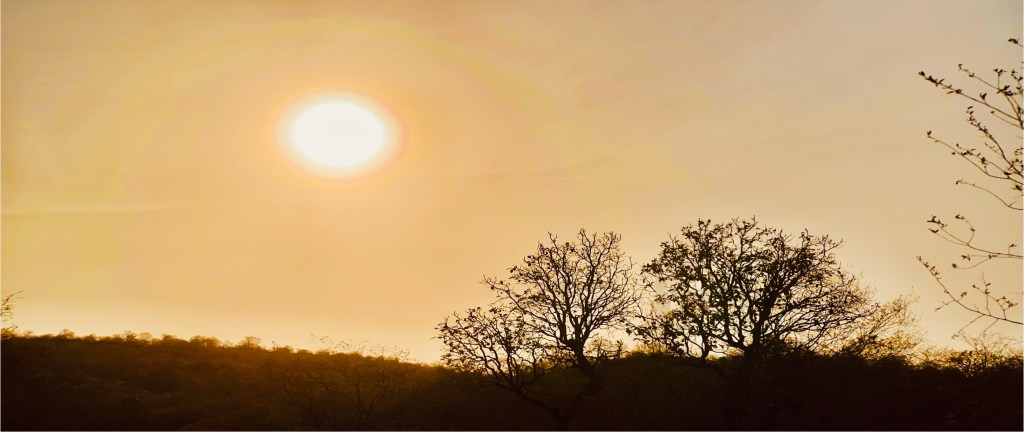
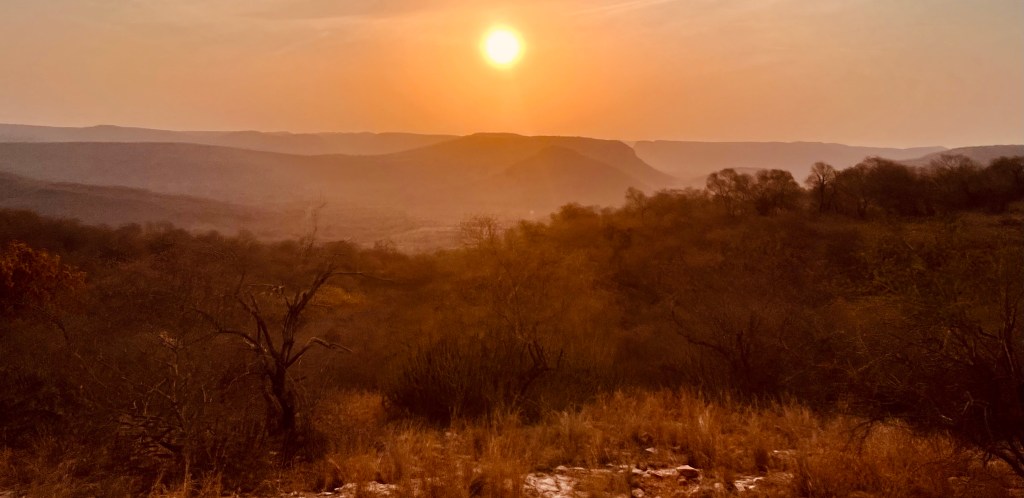
Majestic tigers and verdant landscapes exotic flora and fauna. A natural wilderness.
Once a private game reserve of the royal House of Jaipur. It has now gone full circle and is one of the world’s best-known conservation and wilderness areas
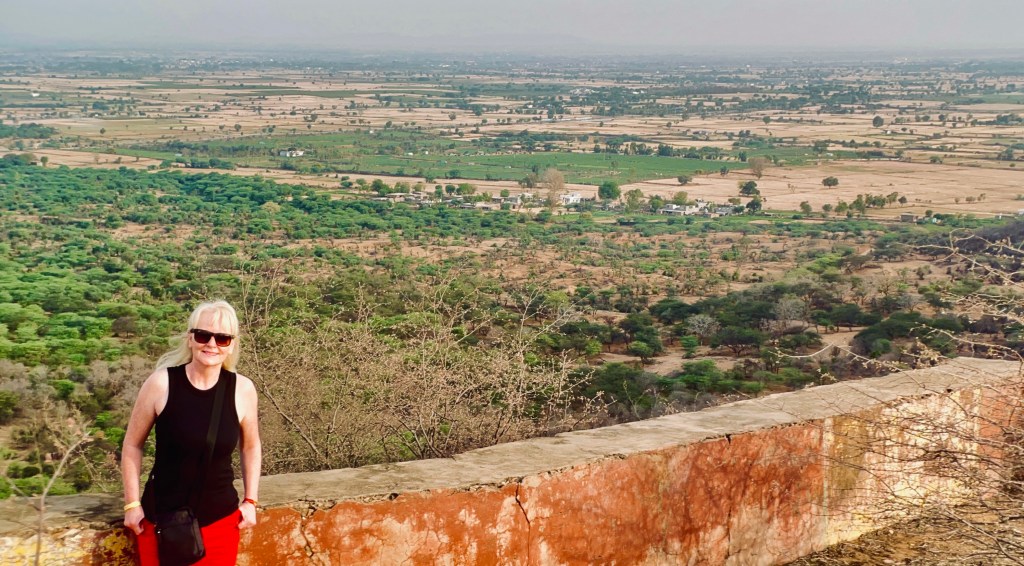
The park is located in the Sawai Madhupur district of Southern Rajasthan. It’s about 130 miles from the Rajasthan capital Jaipur and is a favored stop on the Golden Triangle tourist route.

The park extends over an area of 500 sq km. It was initially set up as a game sanctuary in 1955 by the Indian Government. In 1973 it was declared one of India’s project tiger reserves. In 1980 it was officially declared a national park.
The forests beside the park were named Sawai Man Singh Sanctuary. Although the Bengal tigers are undoubtedly the main attraction there is a rich diversity of wildlife which calls the park home.

The flora and fauna are equally impressive, including the largest banyan tree in the world which is the national tree of India and is considered sacred.

Ranthambore Fort is situated within the park built over 1000 years ago it is one of the most important structures in Rajasthan. The park is named after the fort and it is a UNESCO World Heritage Site.

We pre-booked the game drives with our tour operator Llama Travel. This made things much easier. It is slightly more expensive than booking directly but it takes the hassle of arranging guides and transferring to the relevant zone. Many hotels will also arrange a game drive.

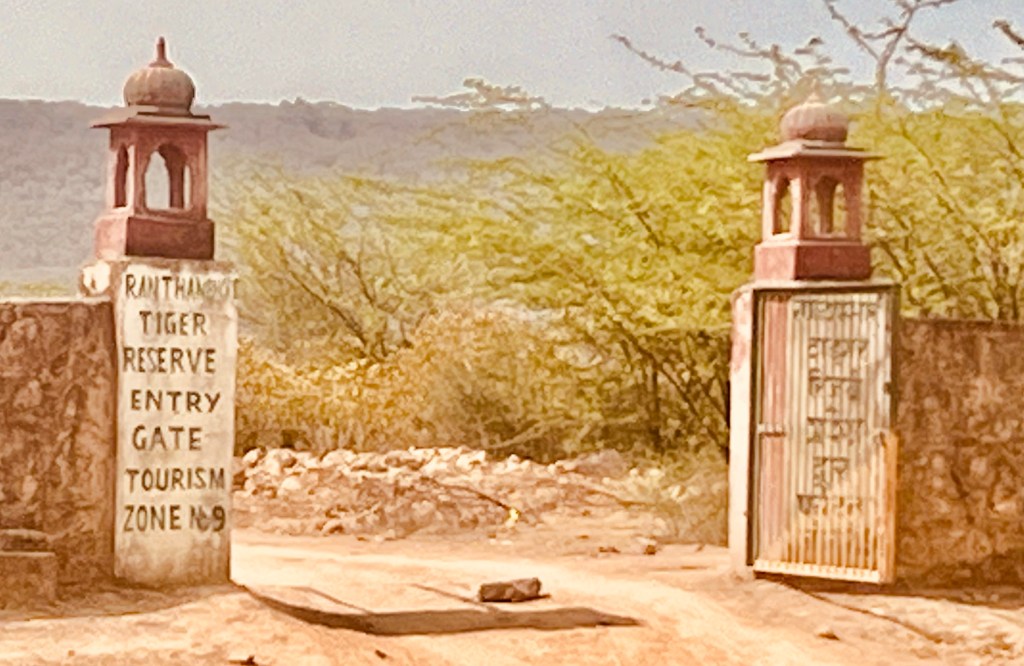
The park itself is divided into 10 different wildlife zones. Visitors can only enter on a guided safari tour and zones were allocated to us on the day. We were split into groups of four and transferred to our zone for that morning’s game drive.

Adventures can be very mixed we booked two game drives on the same day. In retrospect, I wouldn’t have done this, distances between the zones allocated to us are far-flung, I personally got more opportunities to view wildlife in the morning than I did in the afternoon.

“Gypsy vehicle”

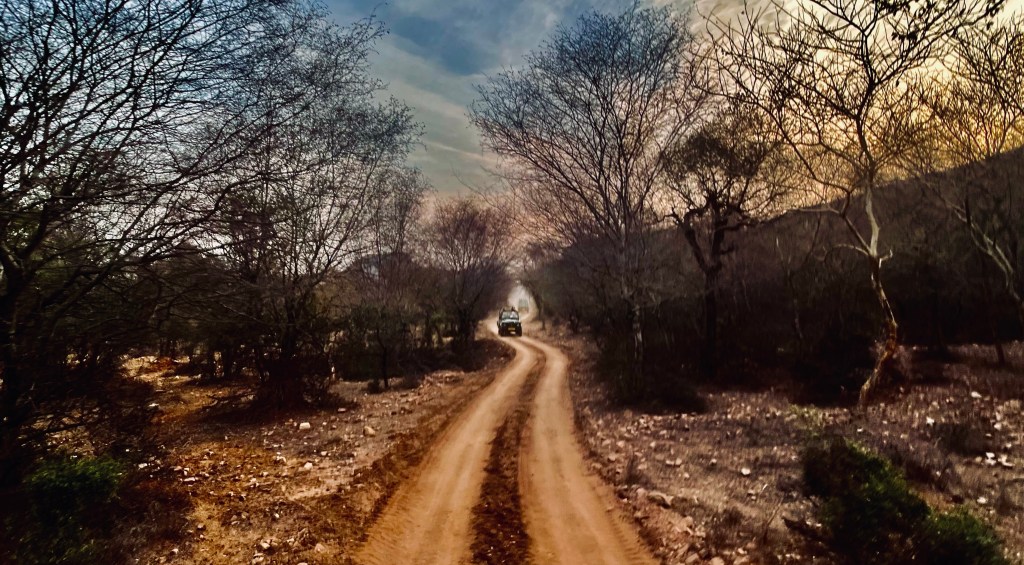
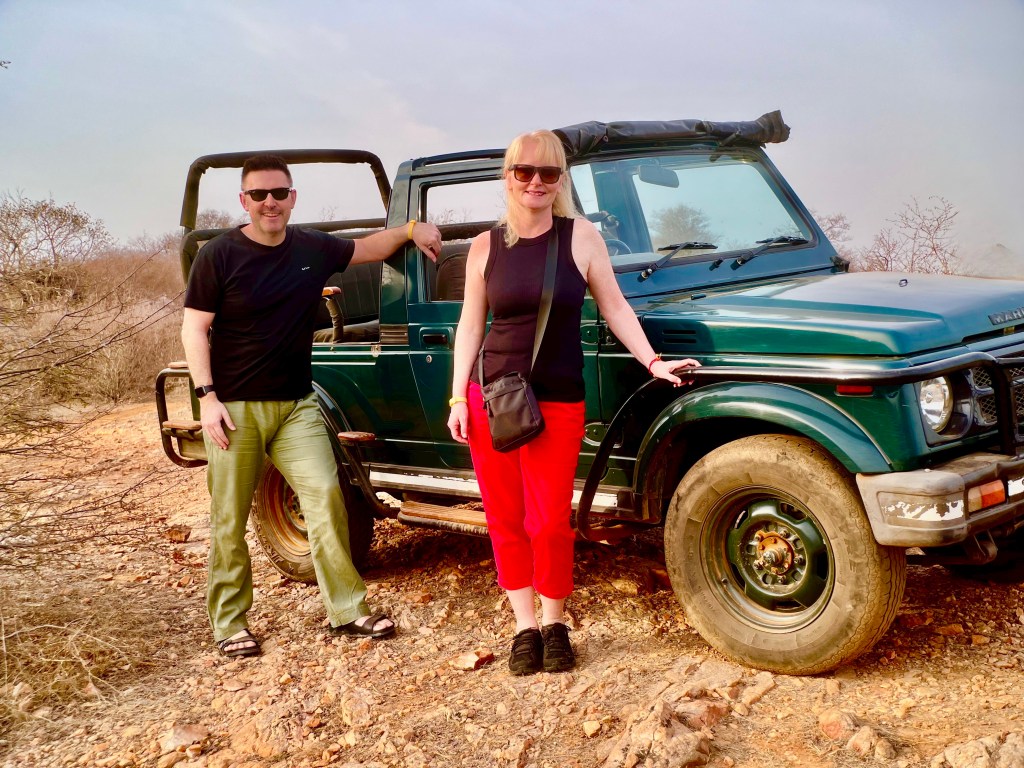
We were booked in a gypsy which is an open-topped jeep which usually sits 6, our tour party was 4 as the vehicle had been arranged by Llama. This certainly gave us an intimate experience compared to some of the large open-top trucks we had seen, not to mention a lot more manoeuvrability around the park.

Some zones are very busy, when numerous jeeps converge in one area, people shout between vehicles, and the disturbance is not ideal for viewing animals. So getting a good guide and driver is essential.

The operations here are a lot different from what I experienced in African safaris. I am not saying this is a bad thing just different. Again the experience certainly depends on your driver and guide.

The morning drive was the better of the two. Our allocated zone was only a 15-minute transfer from our hotel, we did manage to see some wildlife, but no tigers unfortunately, sightings are never guaranteed, one out of the four groups in our tour party got to see tigers and leopards, so it’s the luck of the draw.

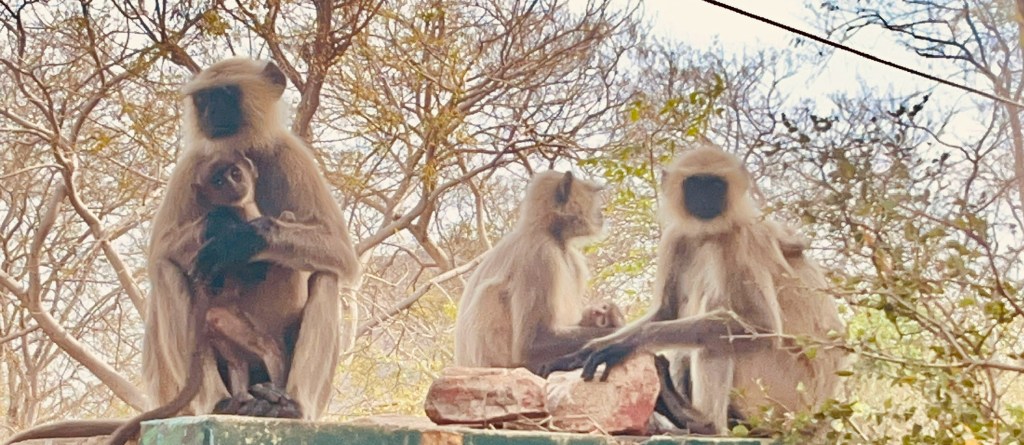
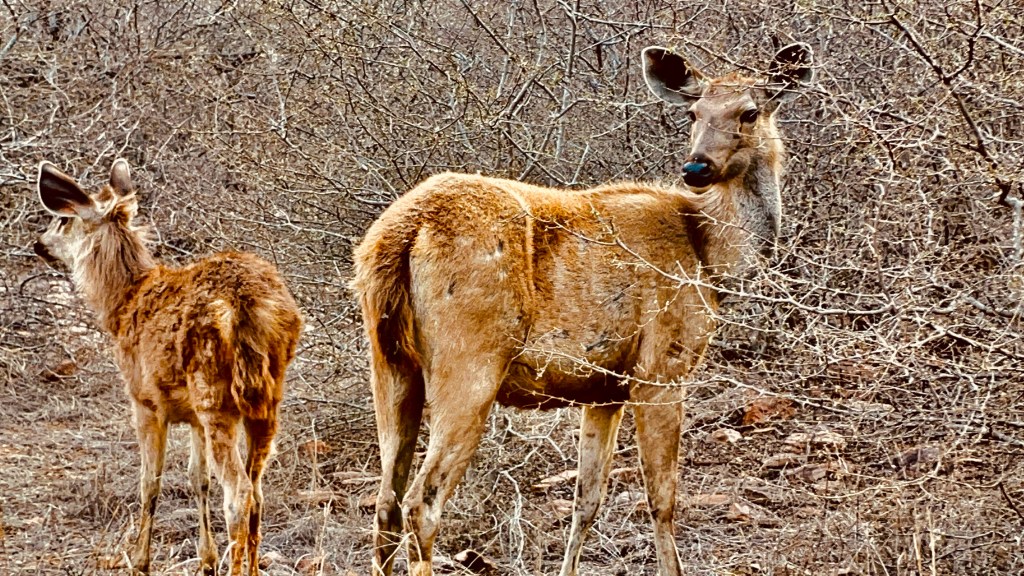
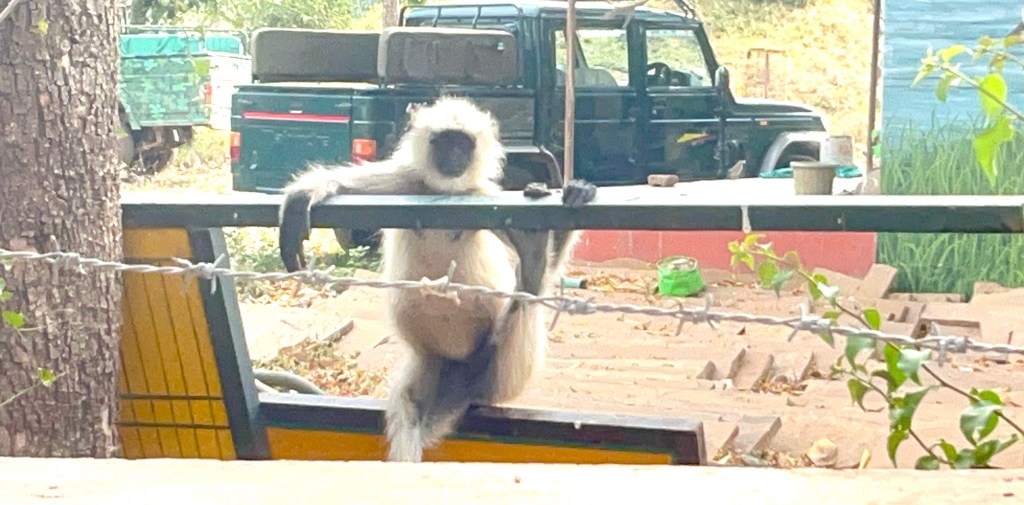
We did manage to see langur monkeys, samba deers, mongoose and countless species of birds. At the end of the day, it’s not a zoo and it helps to reign in my expectations and just enjoy what I see in front of me

Spending hours in an open-top vehicle in the blazing afternoon sun wasn’t ideal for our second game drive of the day. It was nearly a two-hour transfer from our hotel, the vehicle wasn’t four-wheel drive which made for poor traction during parts of the game drive.

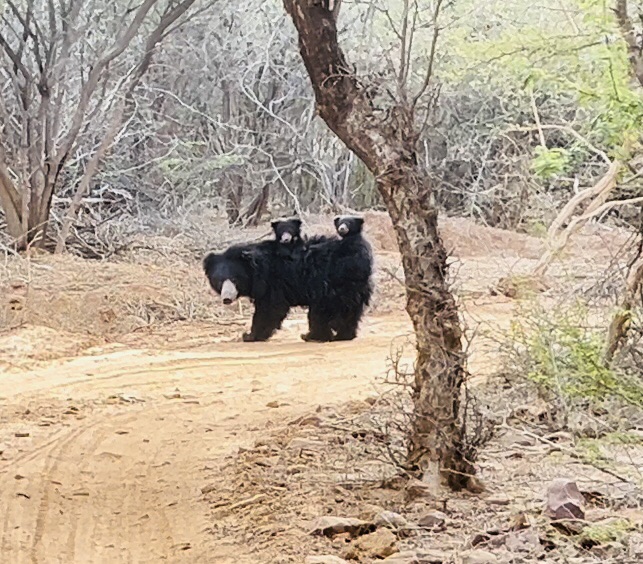
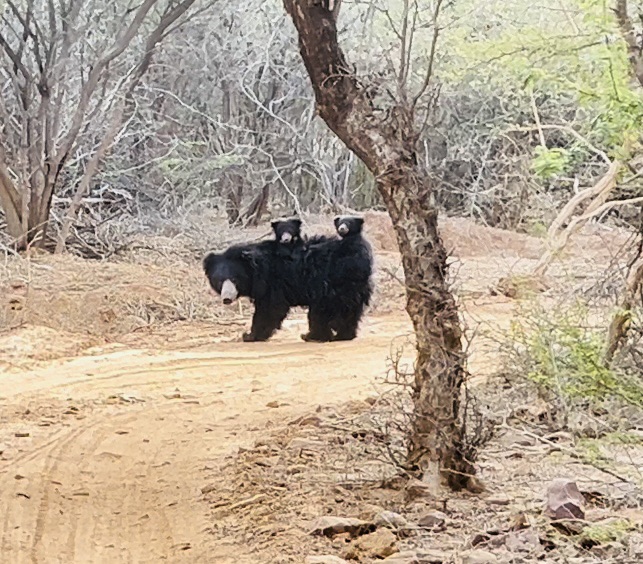
However, my personal favourite experience during the game drive was a chance sighting of a sloth bear as we were waiting beside a water source in the vain hope of spotting a tiger, at the end of a rather fruitless afternoon drive.

One of our tour party noticed the sloth bear creeping behind us with two cubs on her back. The guide said it was very unusual to see a bear during the day as they were usually nocturnal. We only caught a fleeting glimpse but it was enough to make an otherwise uneventful game drive worthwhile.

Then after that momentous experience of spotting a sloth bear with cubs as they are generally nocturnal, it was a two-hour drive back to our hotel in Sawai Madhapur. Where we certainly experienced the sights and sounds of India 🇮🇳

There are no hotels within the park but lots of options in Sawai Madhapur which is considered the gateway to Ranthambore National Park. Although we couldn’t get much closer less than 5 minutes away to the nearest zone and not much further from the furthest zone about 2 hours away.

It was however a fantastic hotel to relax after two-long game drives. A great place to catch up at the bar after dinner with the rest of the group discussing our shared experiences of Ranthambore.

It may sound a bit entitled but it can be a long day on dusty and bumpy roads in an open-top vehicle with blazing sun and didn’t get to see any tigers.

However, it was still an experience worth doing, I know many people would love to have the opportunity to do this and for me, it was still an enjoyable time and a privilege to be able to do so.

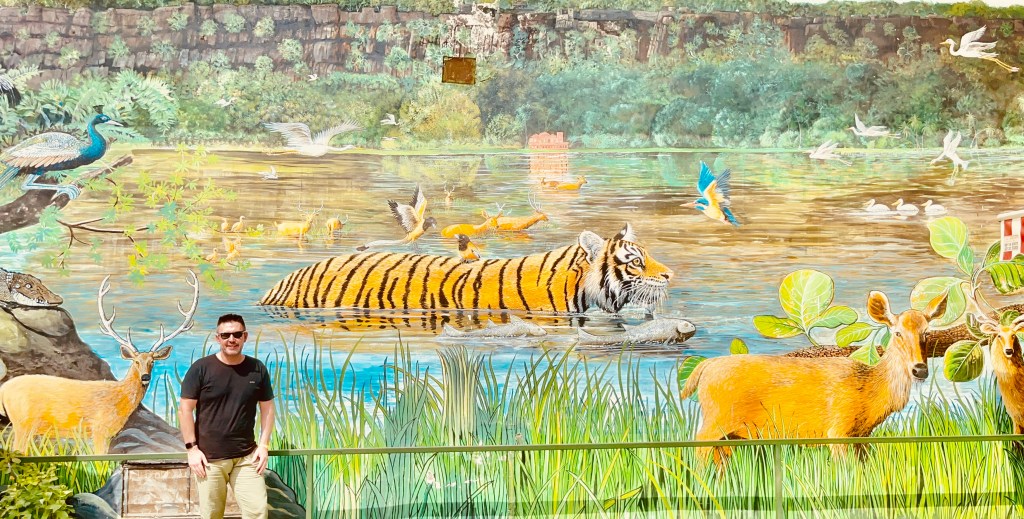
All was not lost though as I managed to spot a tiger 🐅 on my travels, albeit in the form of a giant mural that was located very close to the hotel.

Jaipur “The Pink City”

A bustling energetic place full to the brim with sights, sounds and flavours that unequivocally present Rajhistian in all its glory

Jaipur epitomises Rajhastan’s colour its regal heritage and its artisan culture. It was first painted pink to honour the visit of the Prince of Wales in 1876.

This very picturesque city with numerous forts palaces and historical monuments. Along with Dehli and Agra, it forms part of India’s famous Golden Triangle.

Jaipur is the largest city in Rajasthan and its capital. Although it has a rich heritage, it is a fast-developing city with many development projects ongoing.

Jaipur’s nickname The Pink City comes from its distinct pink-coloured buildings which were painted this colour to imitate the red sandstone architecture of Mughal Cities.

The present earthy red colours first came to prominence when buildings were repainted for the visit of the Prince of Wales in 1876. It was India’s very first architectural planned city.

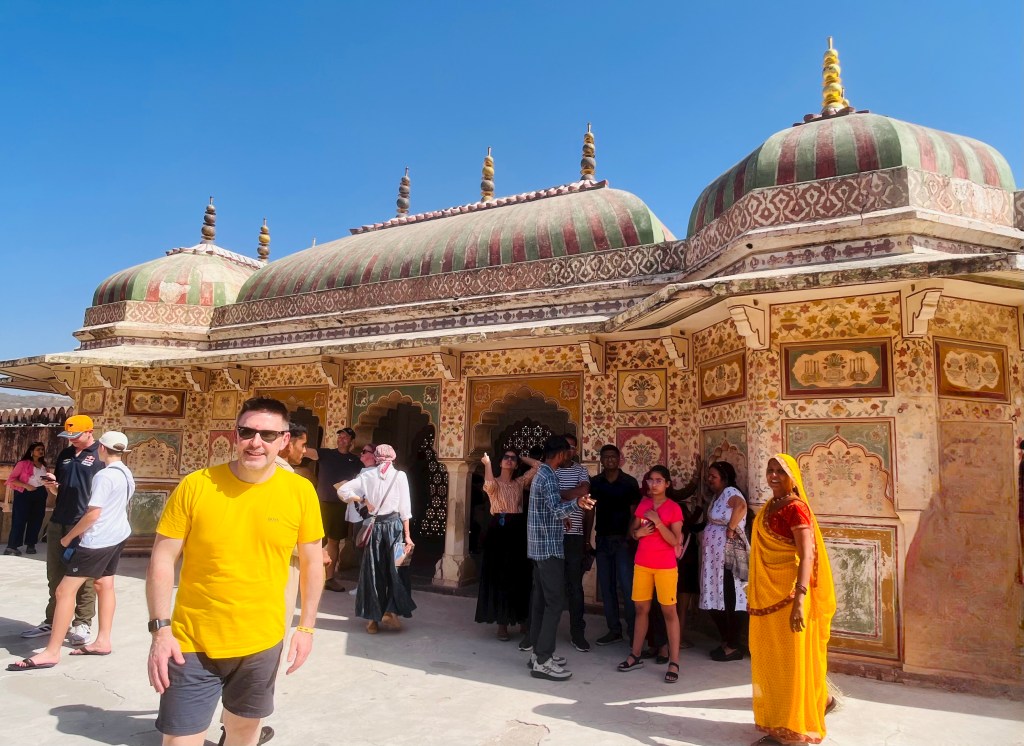
Amber Palace

Jaipur has not one but six world heritage forts. Amber Palace is one of the most well-known.

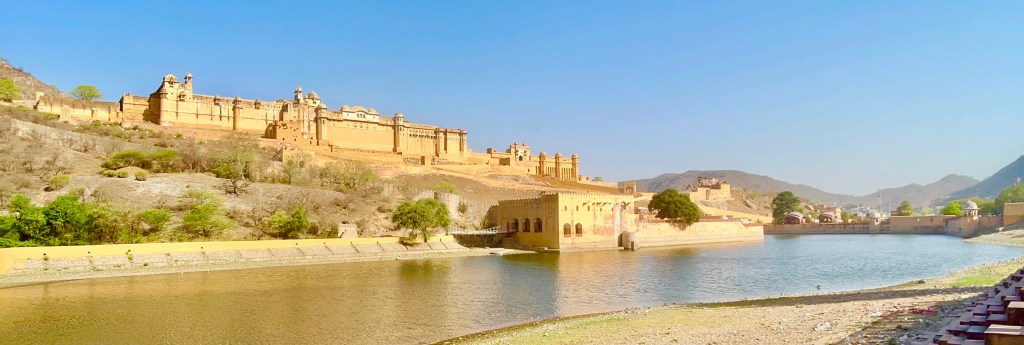
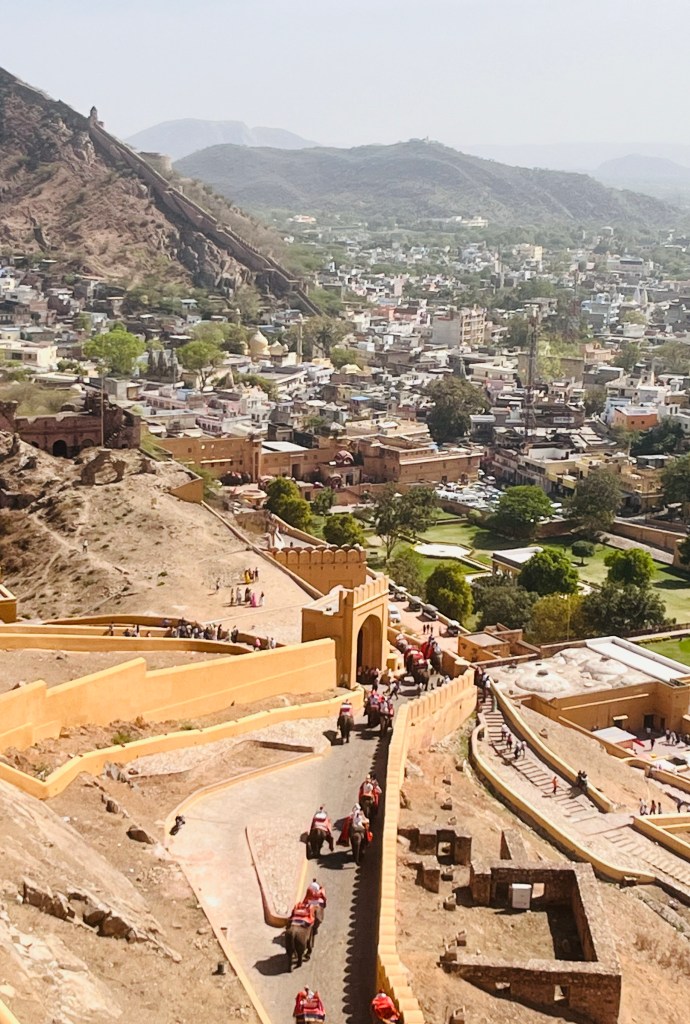
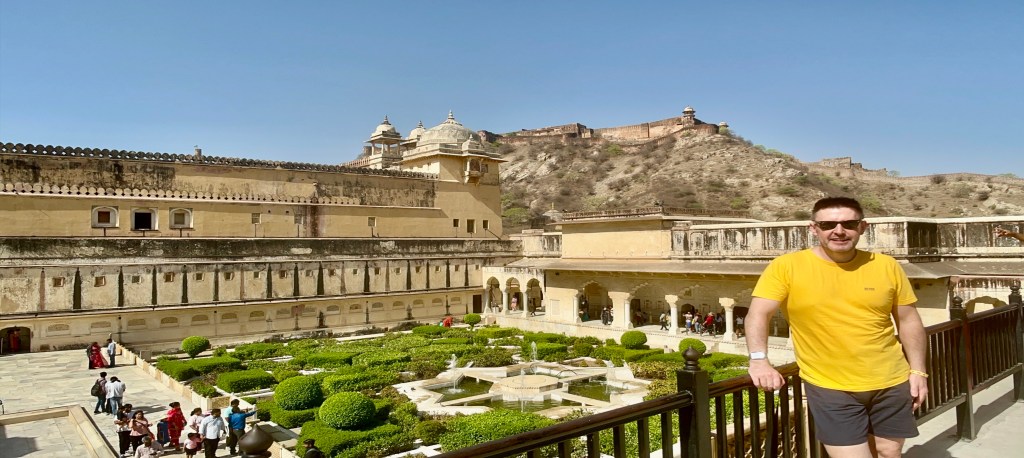
Towering majestically high on a hill above the village of Amber. This 16th-century fort blends perfectly with Muslim Mughal and Hindi Rajput elements.

To get to the top there are a few options available you can walk, go by golf cart or go by Jeep. We choose the Jeep option. However, the road can get very congested and hectic.

The fort was constructed in 1592 by Raja Man Singha, the Rajput commander of Akbar’s army. Improvements and additions were made by successive rulers over the next 150 years.

It is set amidst hills and overlooks Maota Lake. The lake was once the main water source for Amber Fort. In the centre of the lake is an island covered in a lush garden which was first planted in the 15th century.

The fort is a gorgeous piece of ancient architecture which is constructed from red sandstone and marble. It has been a UNESCO World Heritage Site since 2013.

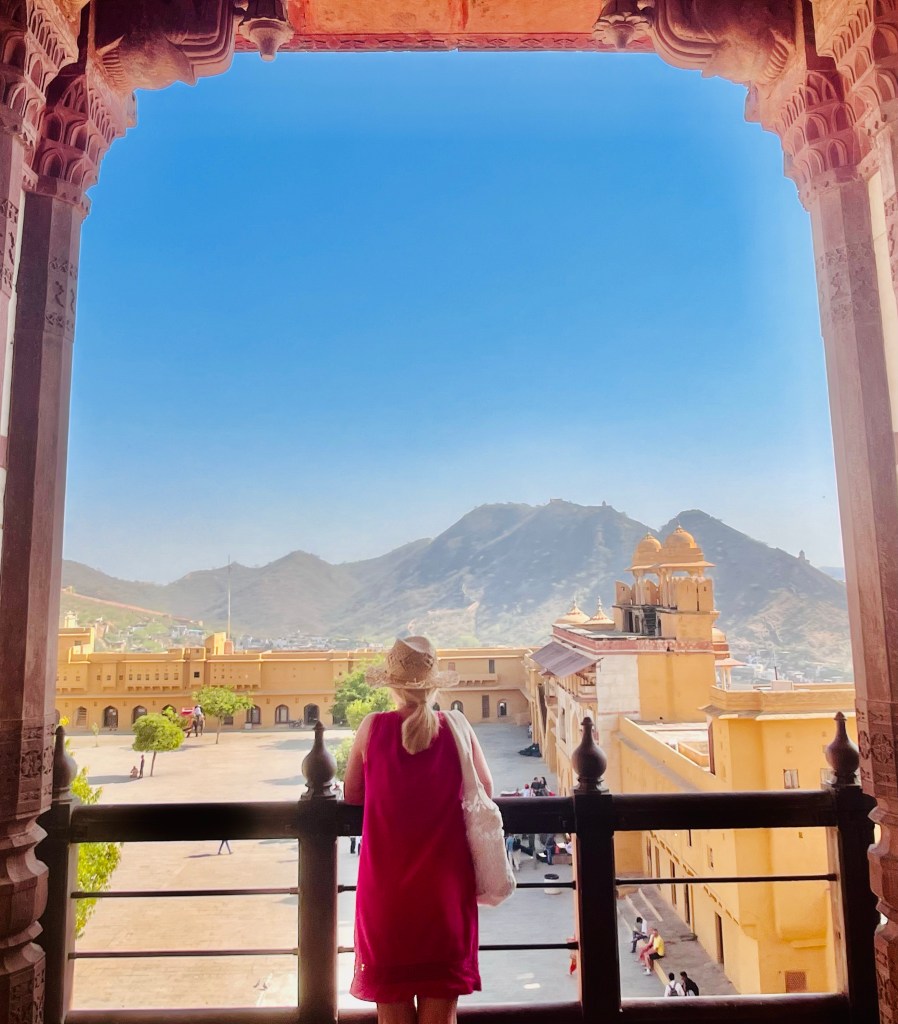
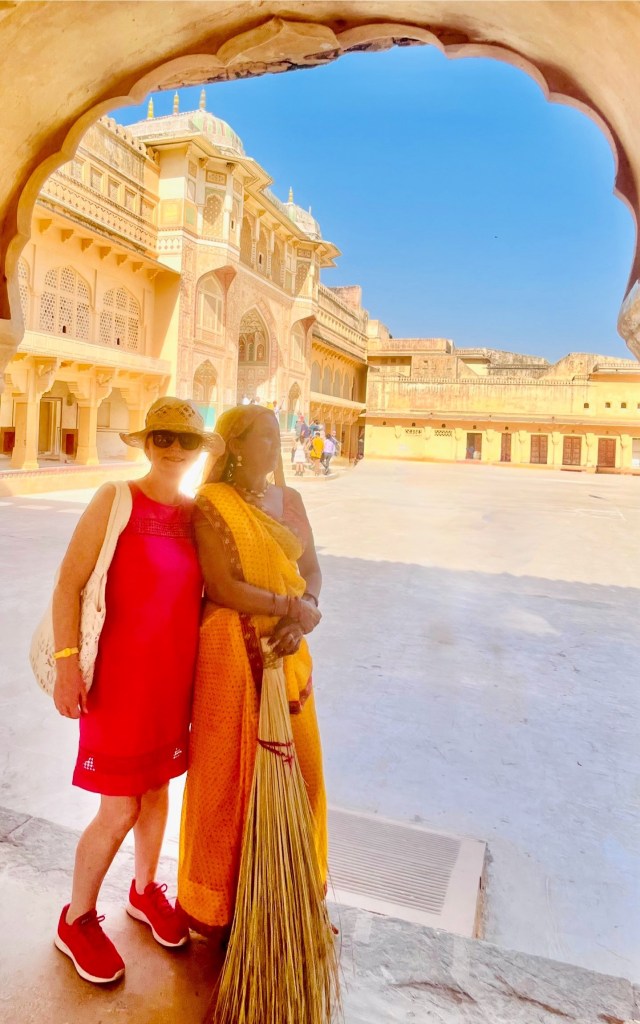
The complex is vast with four expansive sections to explore, we navigated through a maze of archways, cobbled paths, hallways and courtyards.

A guide is a must at one of Jaipur’s most incredible and popular attractions. There is just so much to see and our tour guide was very knowledgeable and had a great passion for the area. Which allowed us to get the most from our visit.

However with over 1.8 million visitors a year and over 215,000 during peak season. It requires careful management of the complex to best reserve Amber Fort for future generations.

Jantar Mantar

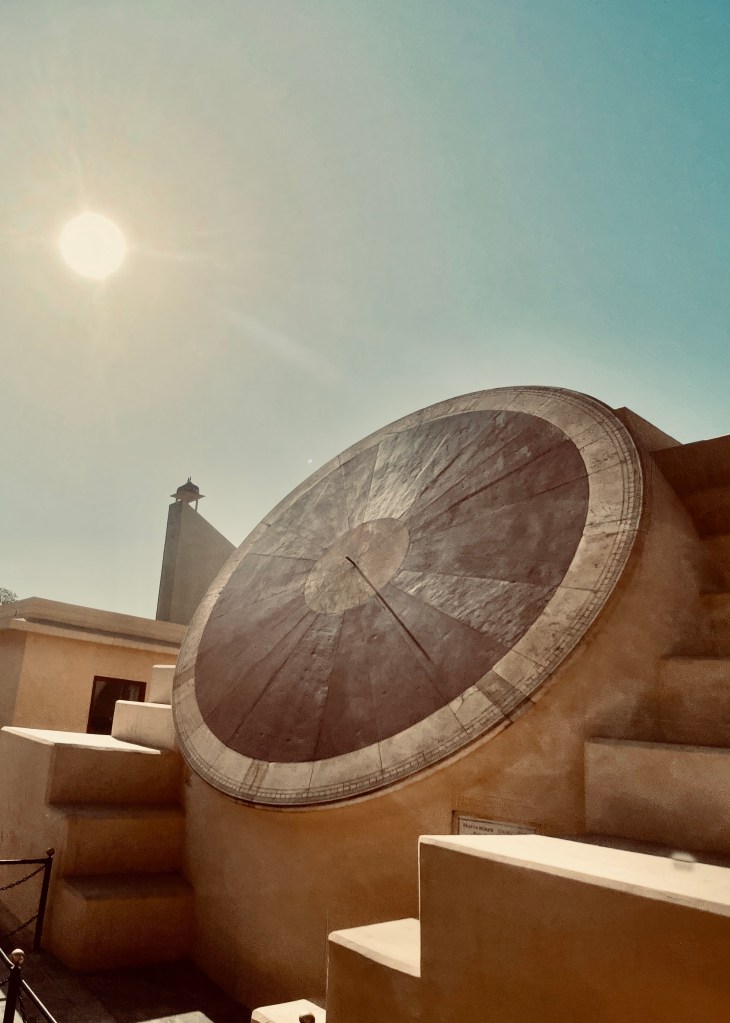
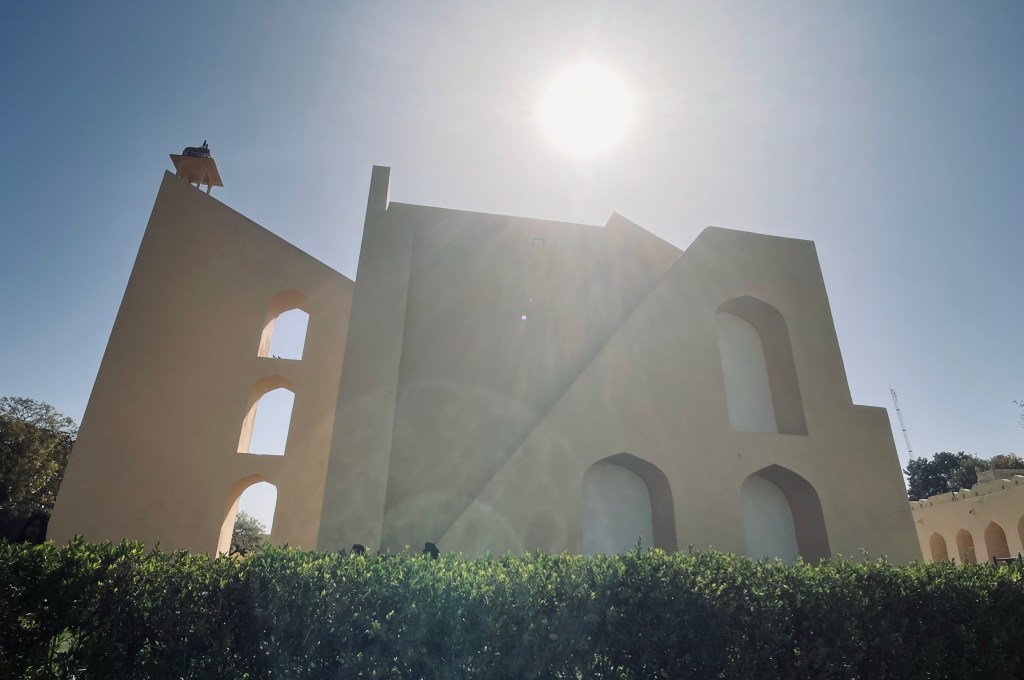
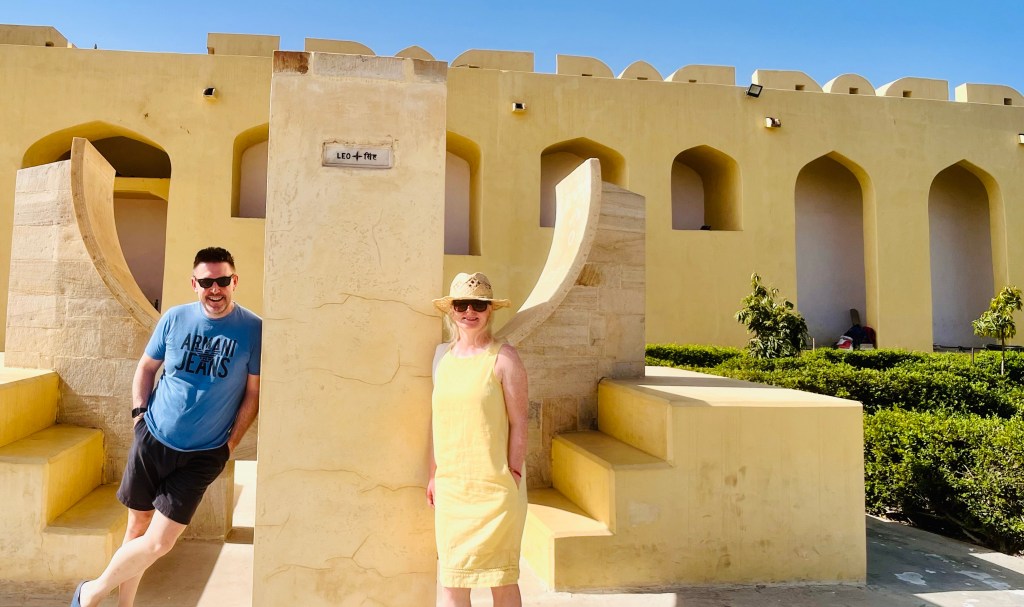
An astronomical observation site was built in the 19th century. It is a UNESCO World Heritage Site.

It features the world’s largest stone sundial (Samrat Yantra) a sundial which can tell the time within 2 seconds and is still used to this day.

Each of the buildings in this sprawling complex was once used for a singular and specific purpose. That’s what made my visit so interesting as each of the buildings had a unique and fascinating history.

This was one of the stops on an organised tour and wouldn’t necessarily be a place of interest for me. But it was a very intriguing visit where we were able to marvel at one of the largest collections of astronomical instruments in the world.

City Palace of Jaipur

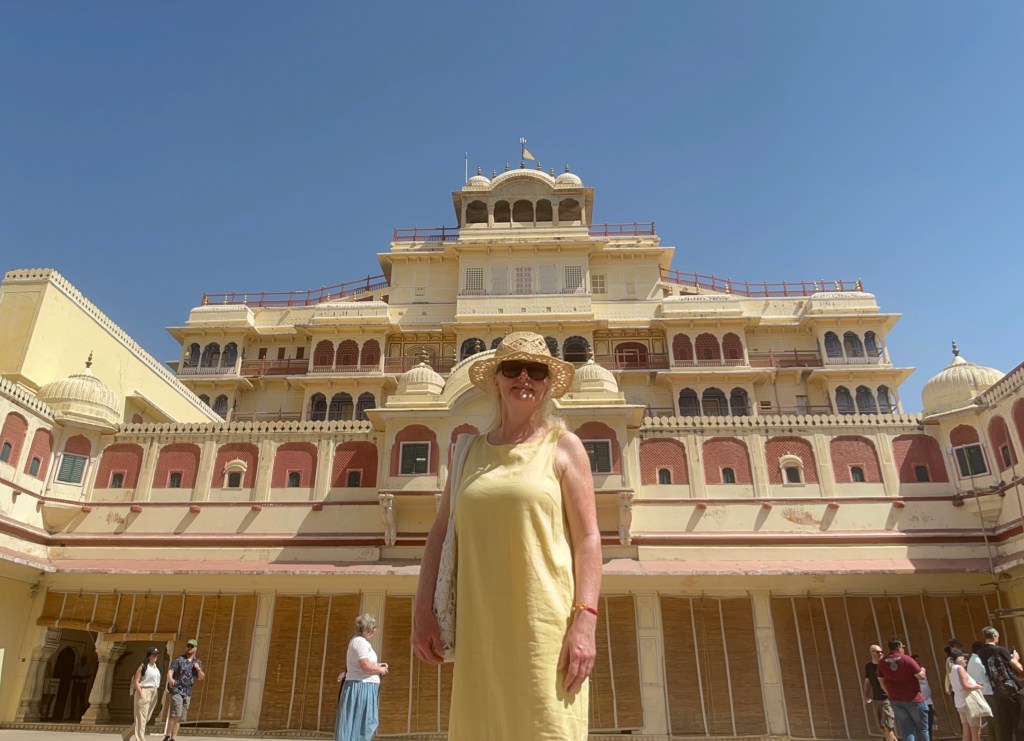
The City Palace Jaipur is a royal residence and former administrative headquarters of the rulers of Jaipur.

The palace was built by Maharaja Sawai Jai Singh II who moved his capital from Amber to Jaipur in 1727. Jaipur has remained the capital ever since and the palace was completed in 1732.

Today City Palace is one of Jaipur’s most famous buildings and is a very popular location with visitors. It conveys the regency of its past where countless Rajasthani royalty have been in residence.

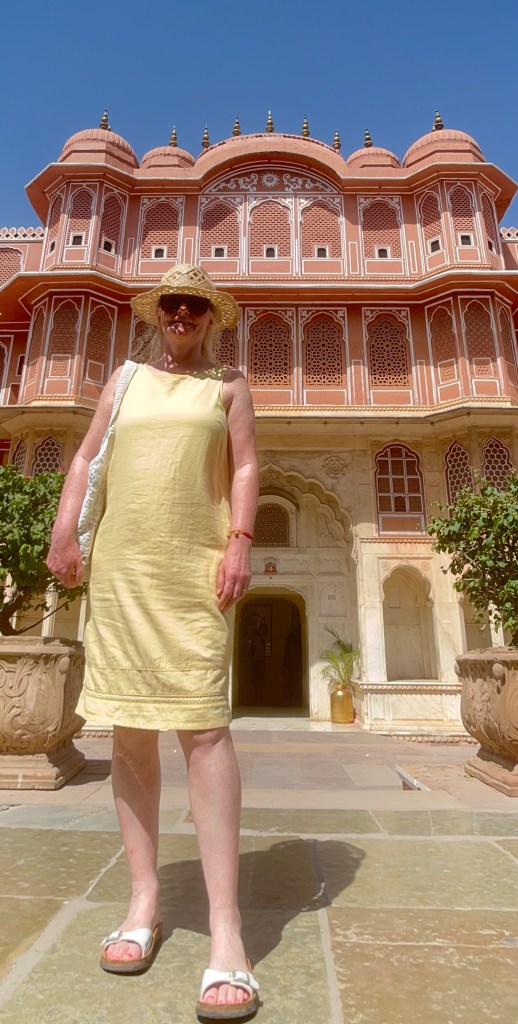
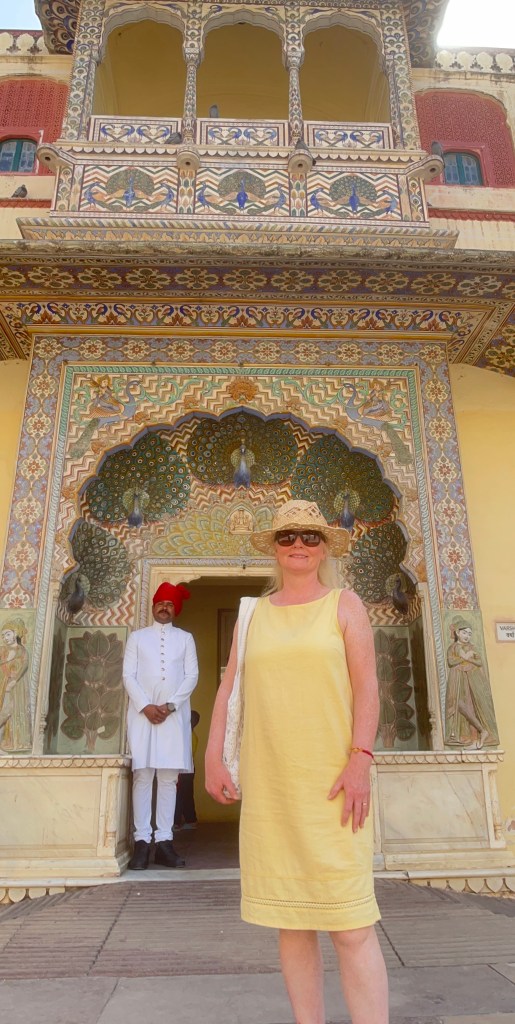
The palace is a combination of gardens, temples, palaces and pavilions. The unique architecture of the palace certainly makes for a fascinating visit.

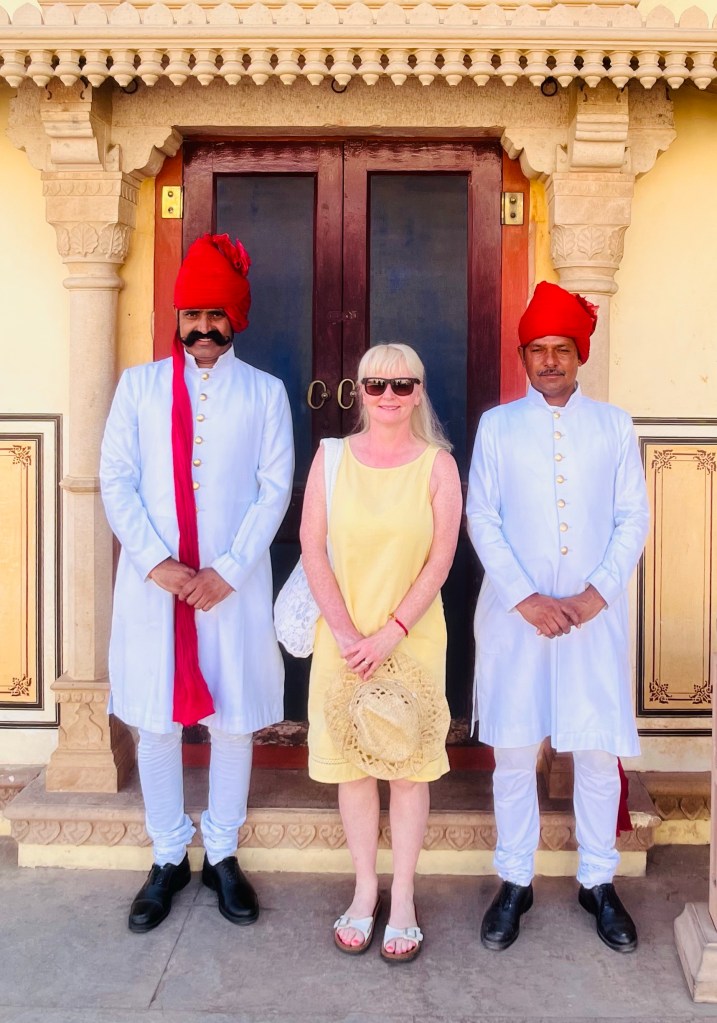
During our visit, we were propositioned by some very regal-looking guards. But it’s not because we have committed some cultural faux pas. They were open to giving us the perfect picture opportunity 😆

There are palace buildings from different eras some dating from the early 20th century. It is a striking blend of different architectural styles. Set in immaculately maintained gardens.

Pink City Gates

There are seven gates in total and they act as entry and exit points from the walled city. Today these gates are a great reminder of the great architectural legacy of yesteryear

New Gate

The wall encircling the city was an important part of the plan laid under the supervision of Maharaja Sawai Jai Singh II and this is how it became the walled city.

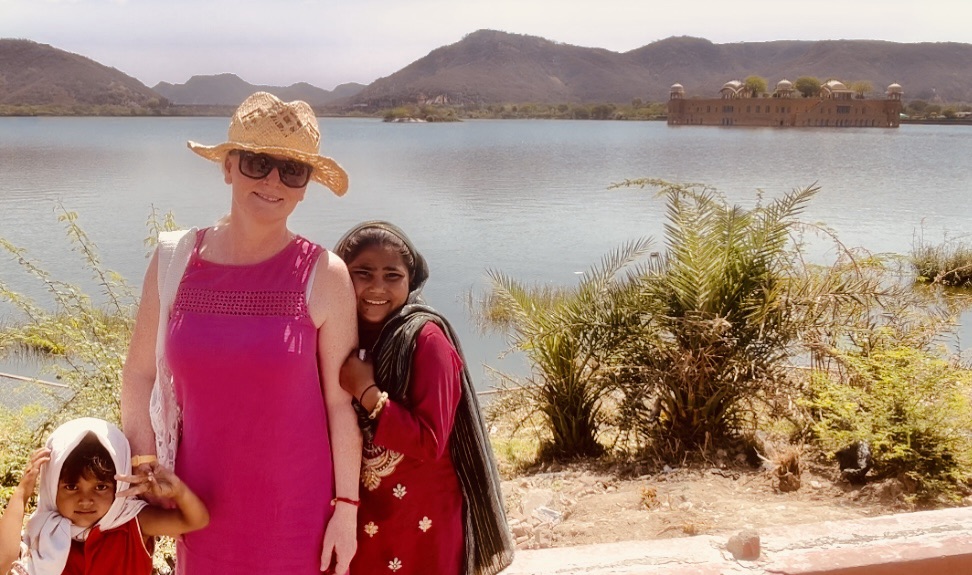
Jal Mahal (Water Palace)

A palace that floats majestically in the middle of Sagar Lake.

Constructed in 1799 as a summer retreat for Maharaja Jaib Singh II. It is not open to the public. It is now an upmarket hotel with plans to develop the palace and restore it to its former glory.

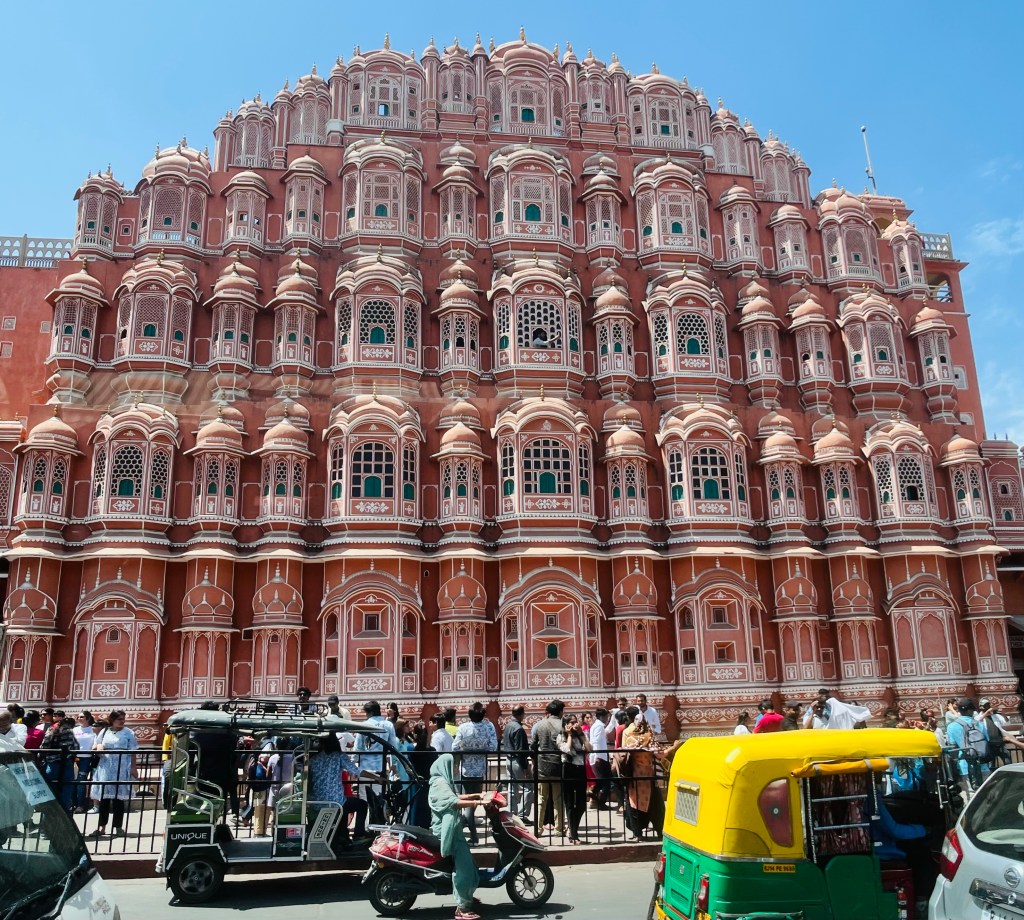
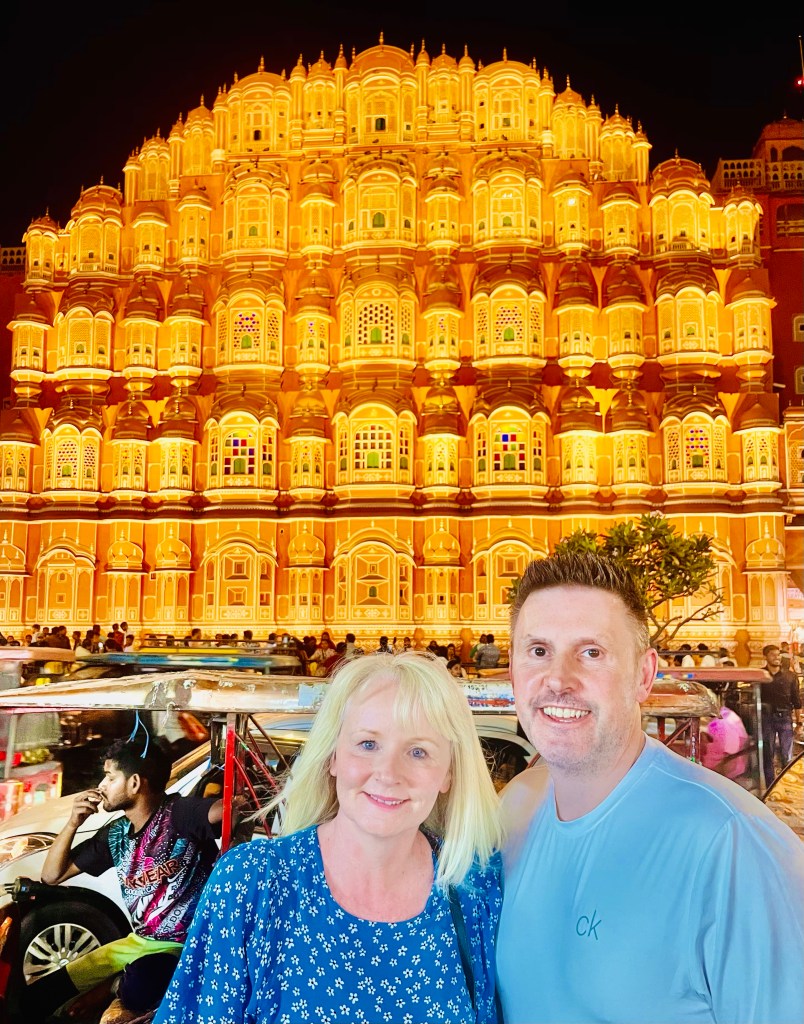
Hawa Mahal (Palace of Wind)

Completed in 1799 a World Heritage Site and one of Jaipur and indeed India’s most famous buildings.

The main purpose of the building was to allow ladies of the royal family to observe the busy streets below without being seen by the common people.

Made of pink and red sandstone, it is Jaipur’s signature palace’s, the unusual architecture is considered one the finest examples of Rajput architecture in India. The 933 windows undoubtedly make this building the world’s largest screened porch

Jaipur by night

A fantastic evening exploring Jaipur by night.

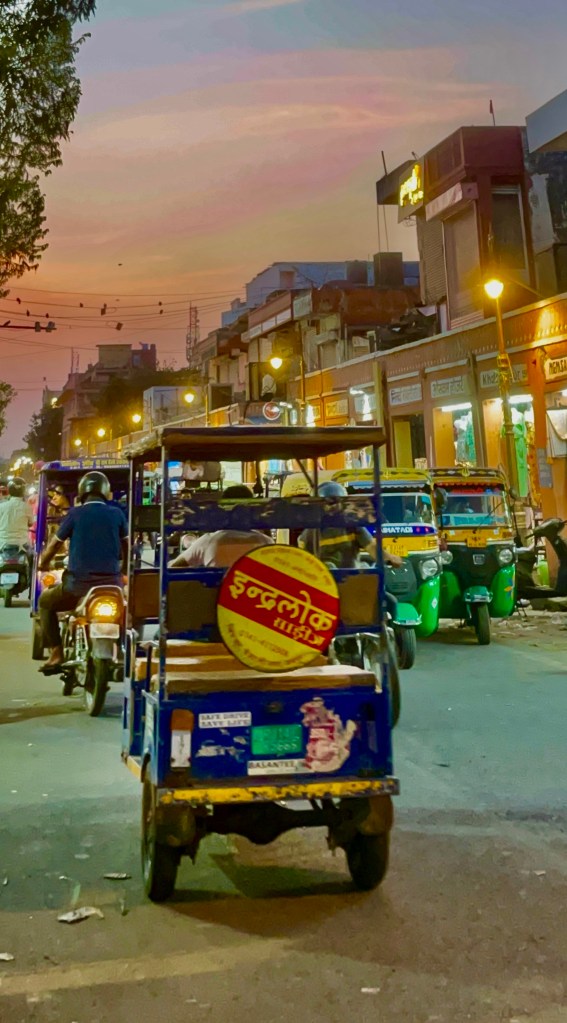
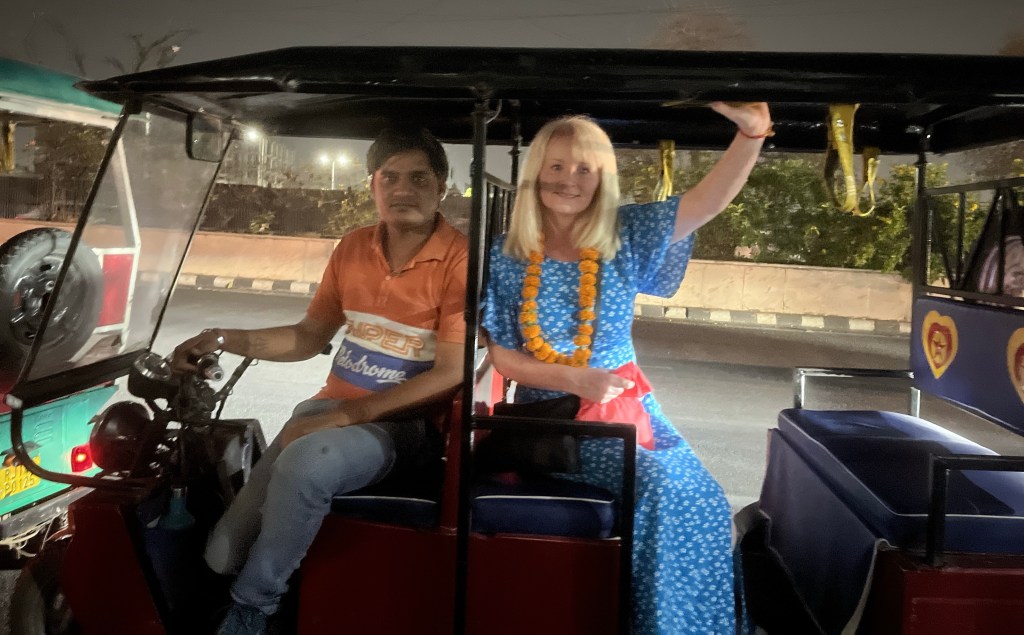
Our nighttime adventure included a battery rickshaw ride of Jaipur’s old city. They were surprisingly fast and are most commonly used as a form of public transportation.

With a gentle breeze caressing my hair or was that just the street hawkers trying to get my attention 😆 The frenetic energy of the city unfolding in front of us. It was a magical way to see the city unfolding in front of us.

A tour of some of Jaipur’s popular and off-the-beaten-track locations. Discovering the city from a different perspective and experiencing the incredible atmosphere of Jaipur at night.

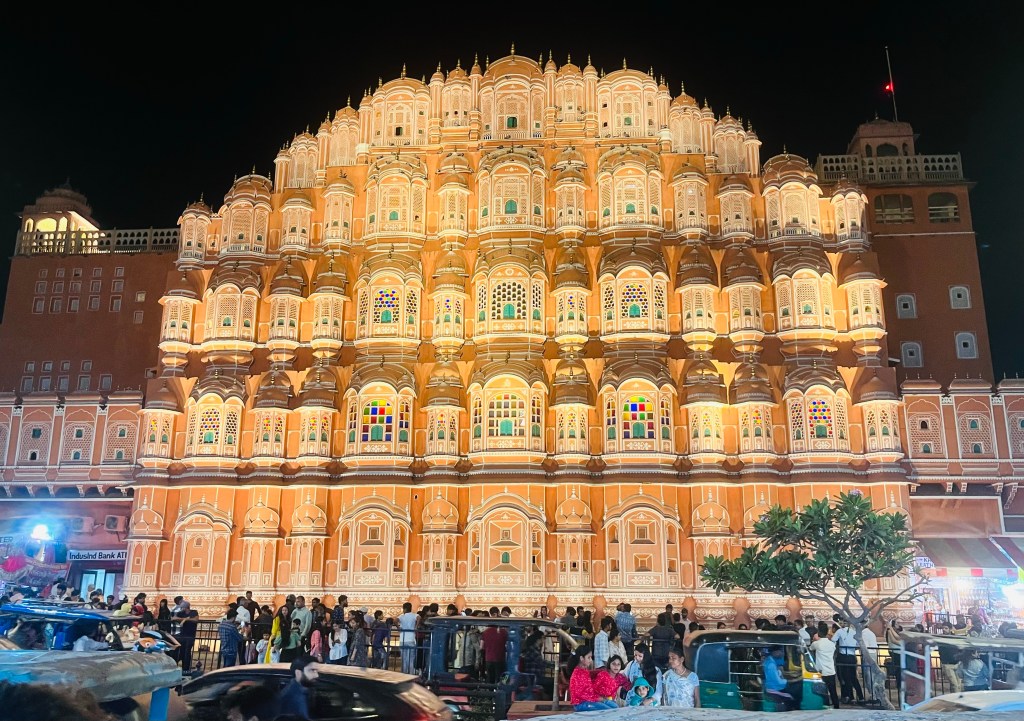
Although we saw the Hawa Mahal in the daytime it was equally memorising by night Experiencing it in the evening is a great way to enjoy its beauty from another perspective.

We visited a bustling local market where you can buy almost anything, although it’s probably not the best place to browse as vendors can be very wearing with their constant unsolicited approaches.

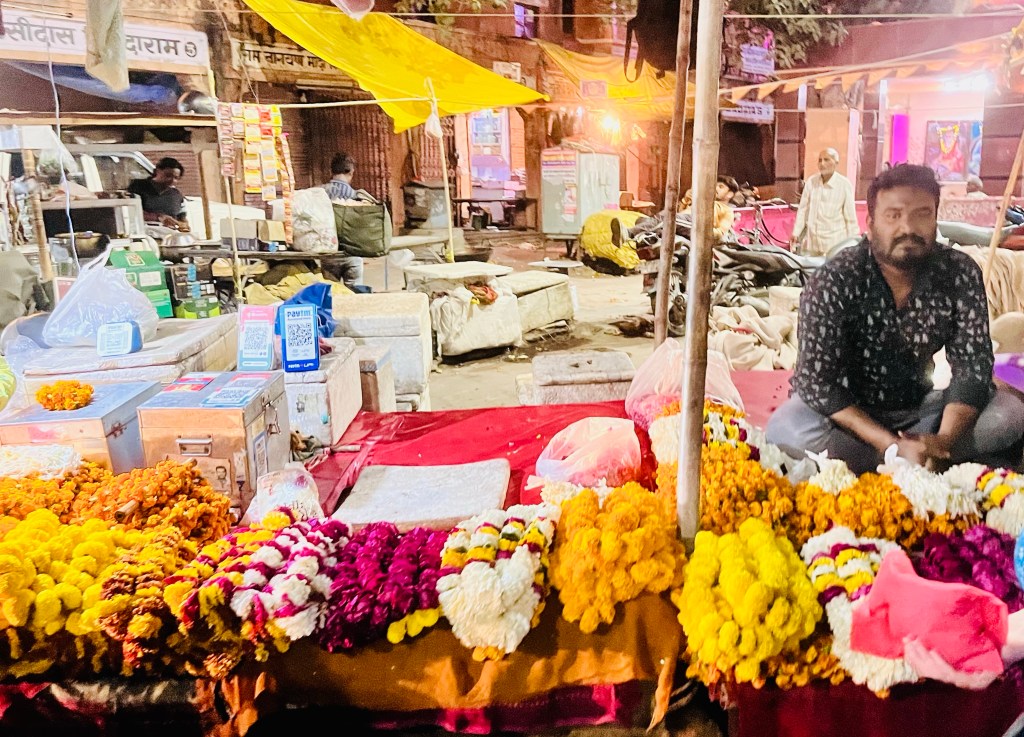
We then visited a flower market which was a much more relaxed affair. Flowers are a way of life in India as Hindus use them in offerings for daily prayers in temples, homes and offices.

We captured the beauty of illuminated palaces, monuments and bustling markets. Unveiling to us a different side of the city which we would not have been able to encounter during the day.

Udaipur The City of Lakes

Udaipur is known as the Venice of India. The city overlooks the tranquil Lake Pichola with a location unmatched in Rajasthan and arguably all of India.

For myself, this iconic and romantic city had very much gone under the radar. After visiting Udaipur it became one of my favourite places on my Indian tour. A very atmospheric location and unlike a lot of destinations, has a very relaxing vibe.

It is famous for its lakes, mountains, beautiful palaces and quaint upmarket old-world hotels. Where you can enjoy a serene boat ride, and walk along narrow crooked streets witnessing the bustle and colour of the bazaars.

During my short stay in the city, I was able to explore some of the sights and attractions it had to offer. My only regret is that I was not able to spend longer in this splendid city. Two days certainly didn’t do Udaipur justice.

Jagdish Temple

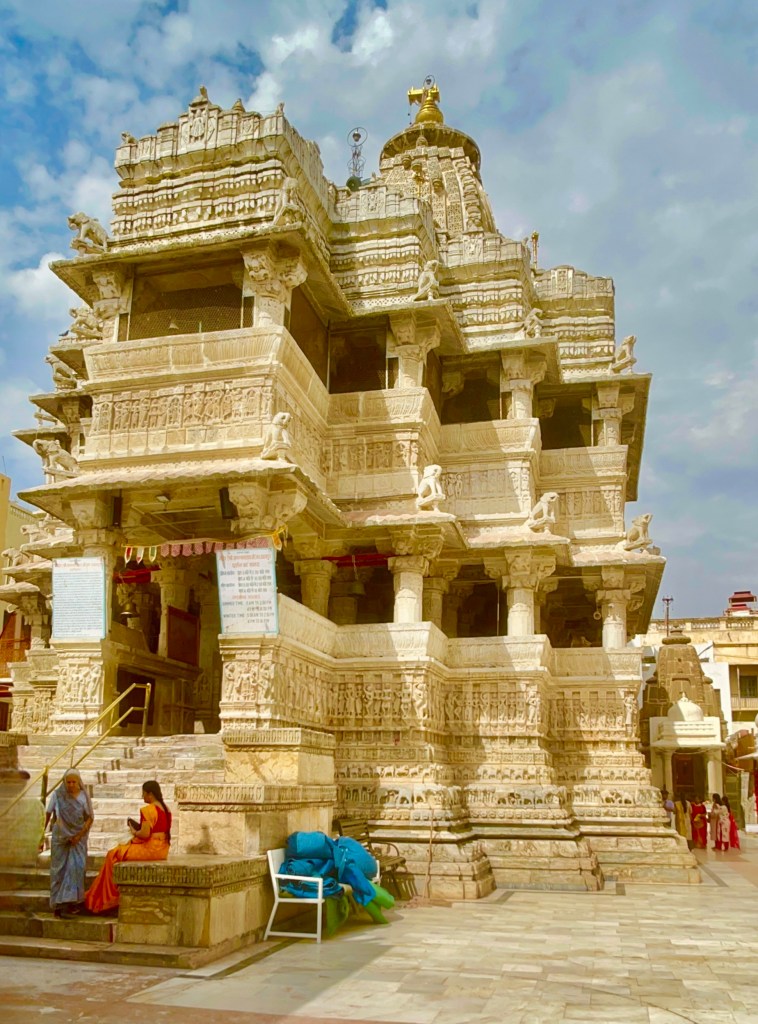
A large Hindu Temple situated in the middle of Udaipur along with the Royal Palace it is a major landmark of the city.

The temple is a popular destination with visitors and has been a continual place of worship since 1651. To reach the main shrine we first had to climb 32 marble steps

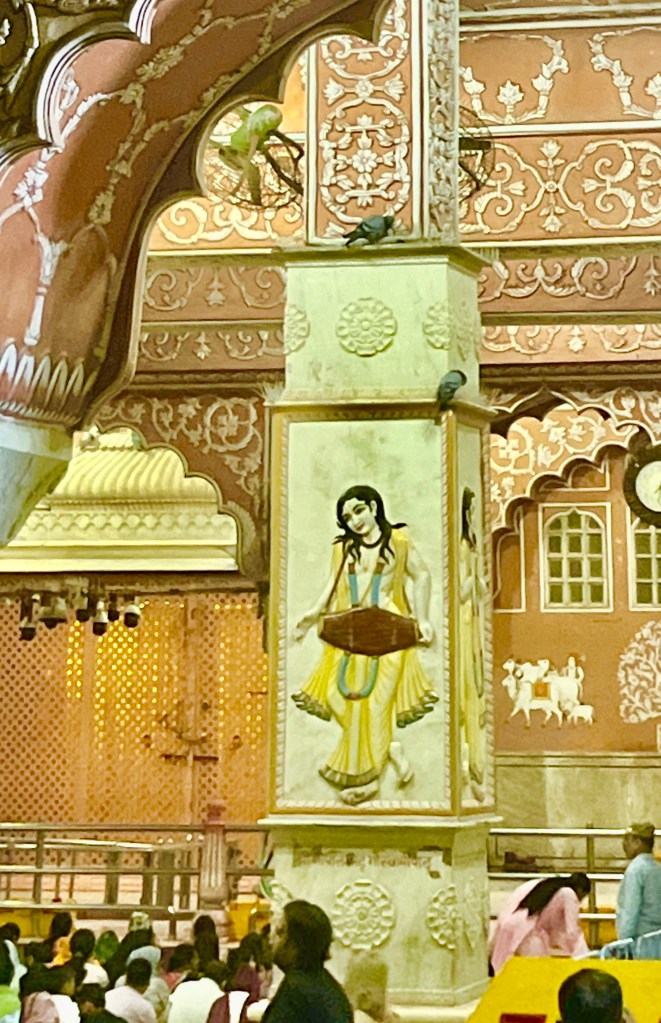
This is certainly a significant monument and is one of the largest temples of the Lord Vishnu. It is a three-story temple which was built on a raised platform with glorious sculptured pillars, huge halls glorious painted walls and intricately designed ceilings.

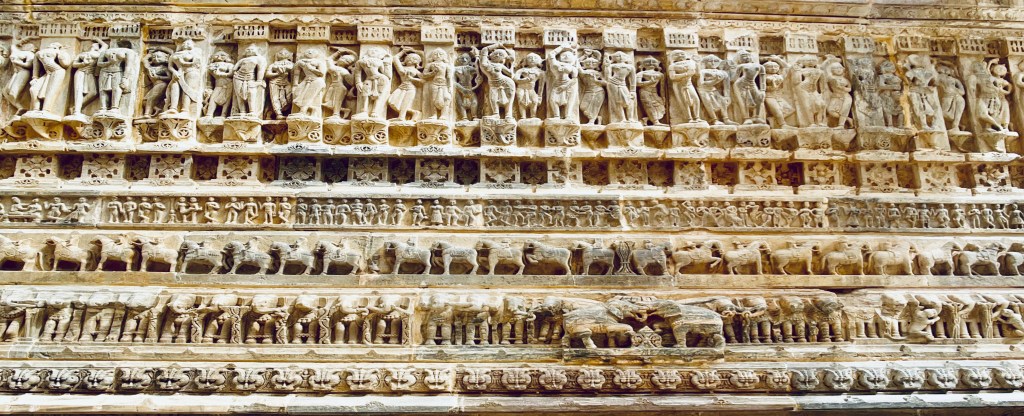
Its outer walls and towering Shikhara are heavily carved with figures of Vishnu, scenes from the life of Krishna and dancing apsaras (nymphs)

City Palace

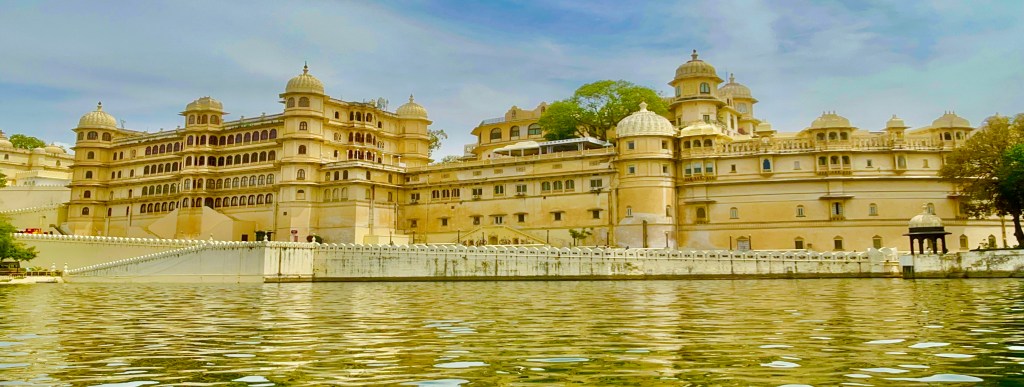
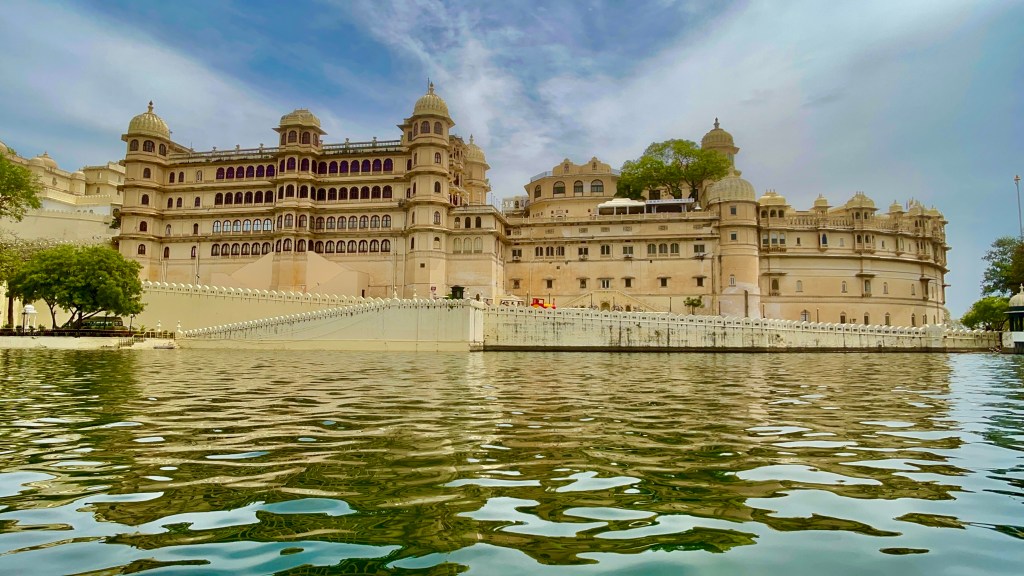
Rising from the bank of Lake Pichola the imposing City Palace is a grand icon of Udaipur’s and Rajasthan’s royal past.

With a facade that is 244 meters long and over 30 meters high. For me, it was certainly a must-see destination when I came to Udaipur. Construction began in 1599 by Maharana Udai Singh II.

The vast palace includes two luxurious palace hotels, a school and the popular City Palace Museum, it is still the official home to the present-day Maharana.

It has a maze of courtyards, pavilions, terraces, corridors, rooms and hanging gardens. Encircled by fortifications the stately palace is built in granite and marble.

The grand white City Palace is a heritage building and it showcases the best elements of Rajiput Culture and arts. The City Palace certainly didn’t disappoint with a mixture of architectural grandeur and rich heritage, the City Palace was an enjoyable visit.

Saheliyon-Ki-Bari

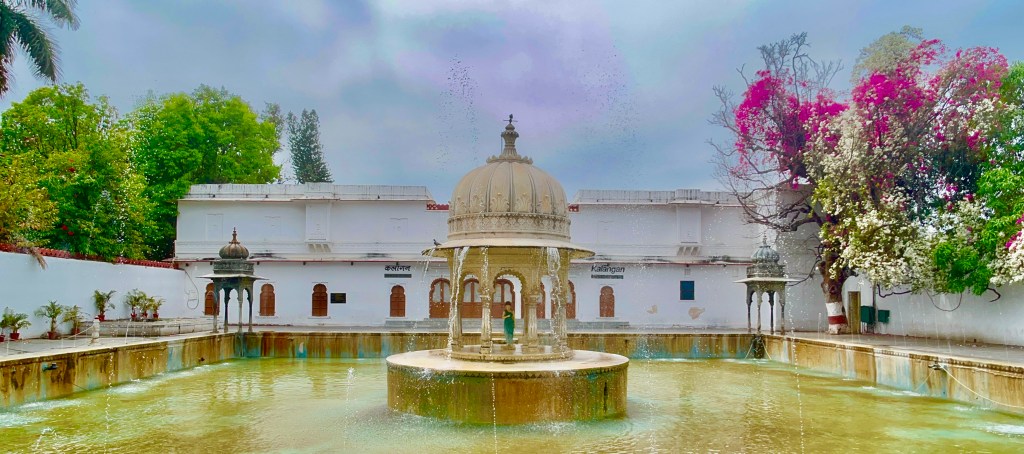
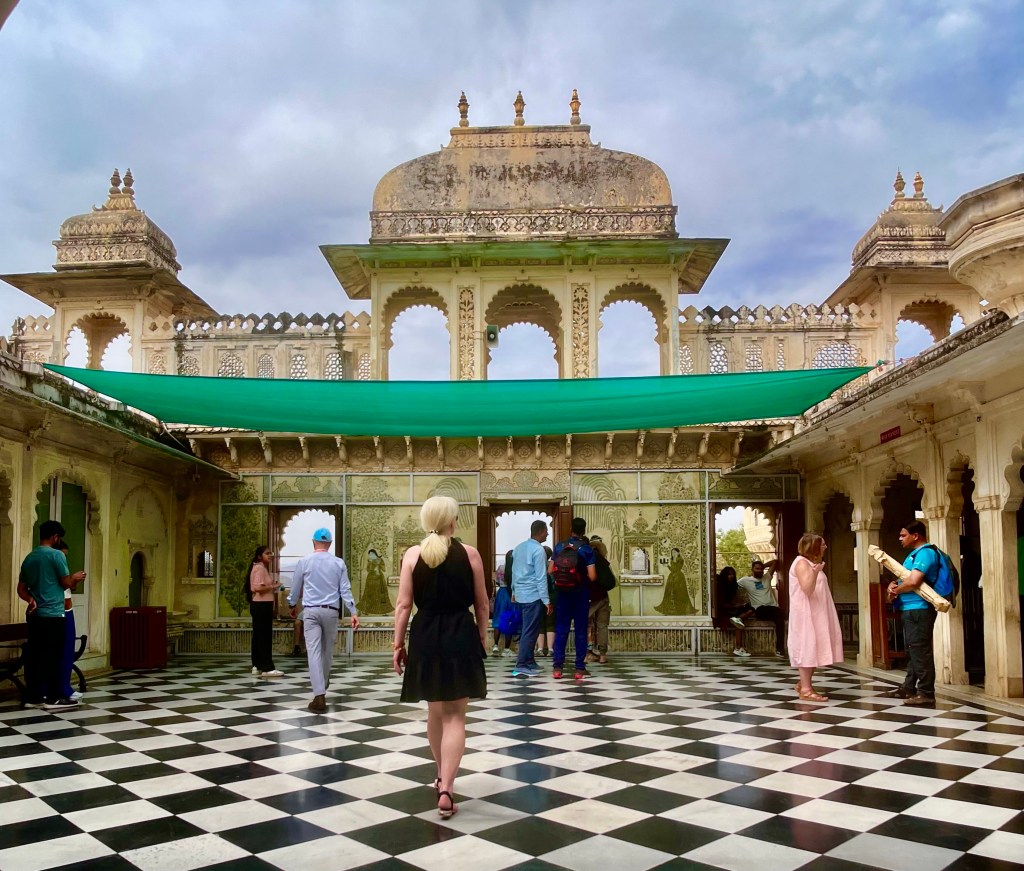
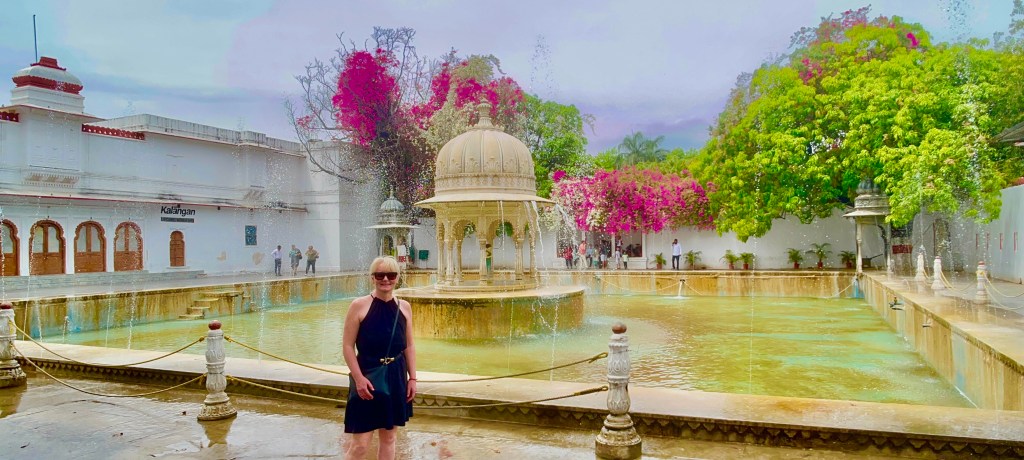
This elegant garden was made by Mewer ruler Maharana Sangram Singh in the 18th century as a recreational space for the royal ladies. Saheliyon-Ki-Bari translates into English as Courtyard of Maidens.

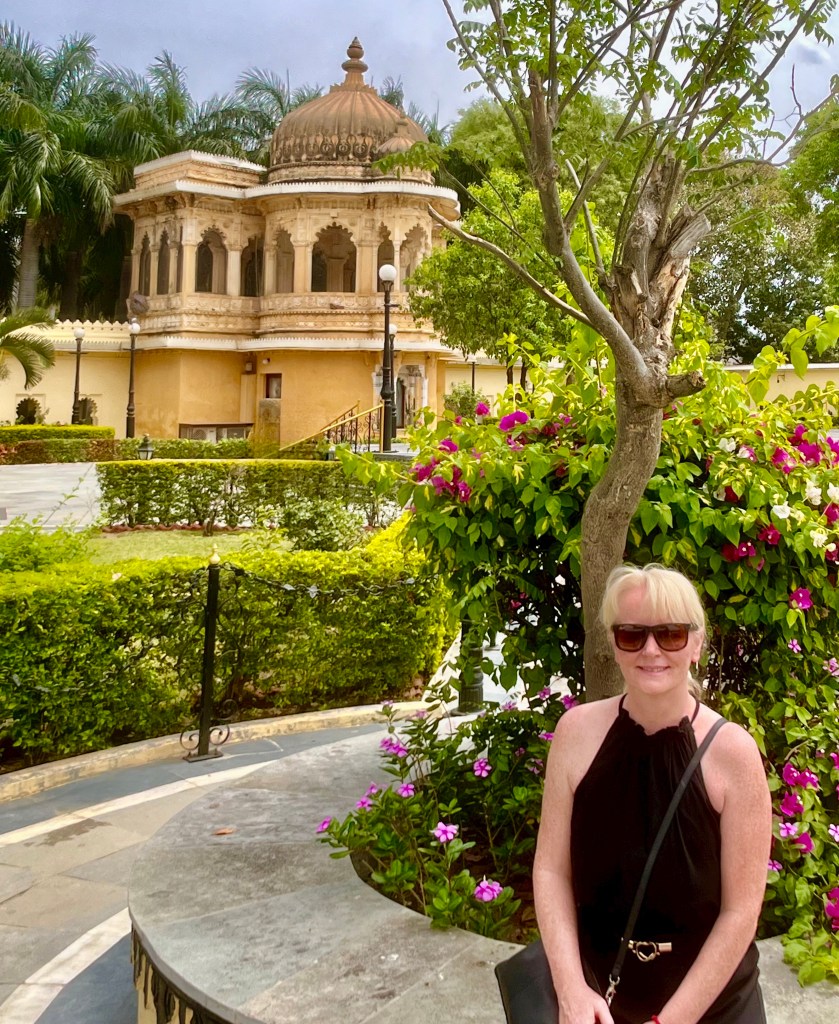
It has lots of beautiful and unique features which include fountains marvel pavilions, lotus ponds, sculptures and plants, flowers and trees.

Being a city of lakes it should come as no surprise that the park have been constructed with water being the centre of attention.

The park is a very popular location for locals to enjoy its peace and tranquillity. It’s not centrally located about 15 minutes from the city centre but well worth a visit and is open from 8 am till 8 pm.

Jag Island Palace

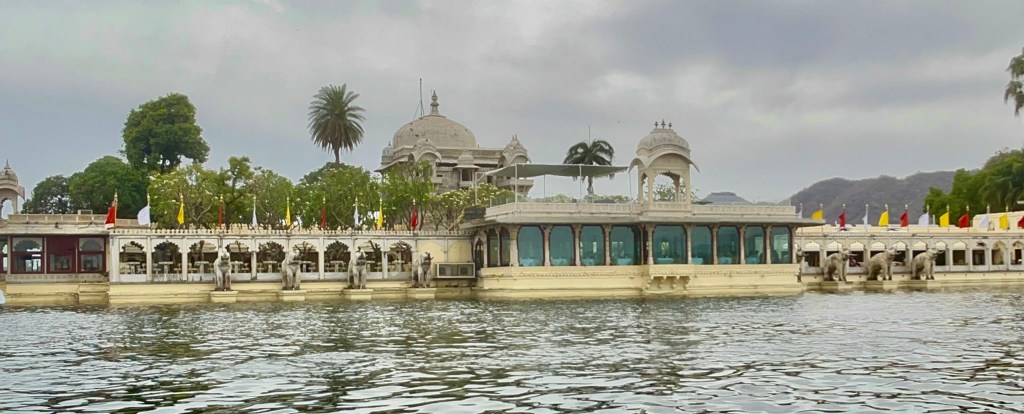
Another island with a royal history with not one but three Maharanas involved in its construction over 100 years, construction starting in 1551 and completed in 1652.

It can only be reached by boat from the jetty located by the Lake Palace. But shuttles run regularly throughout the day from 9 am to 6 pm and take about 15 minutes.

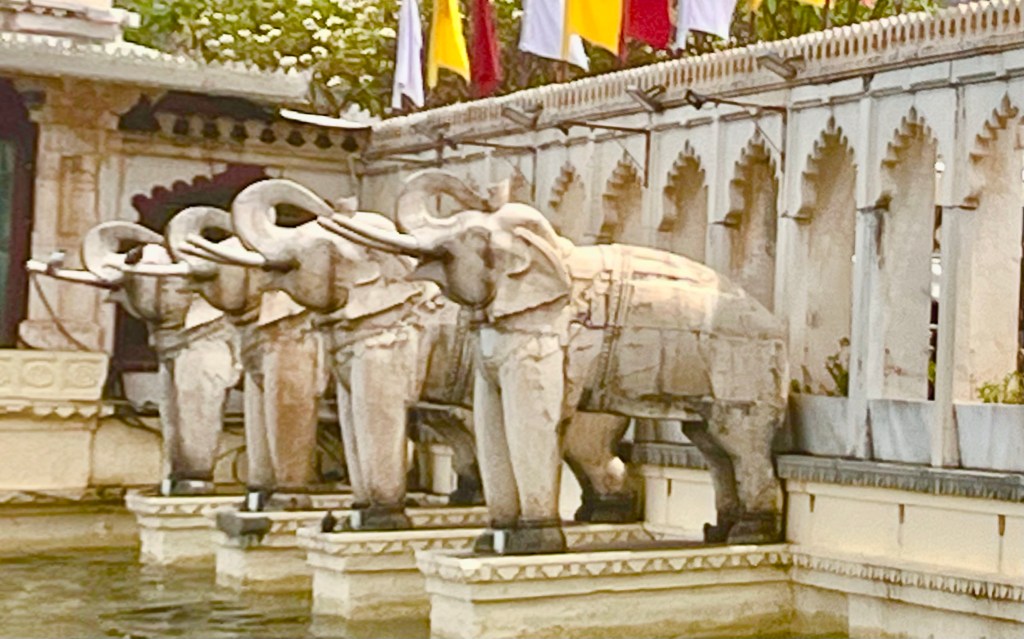
The entrance is flanked by some rather impressive carved elephants. These were added by Maharana Jagat Singh I in the 17th century to symbolize strength and royalty.

The palace has several pavilions, courtyards, gardens and fountains that symbolize the beauty and elegance of Rajput architecture.

Today it is an upmarket hotel with 7 rooms, a cafe, bar, restaurant and spa. It is hired out for lavish Indian weddings and celebrations and is a popular tourist destination. It is a great place to enjoy a drink with a bar and cafe located there, with some fantasy views of Udaipur from the island.

Lake Palace Hotel

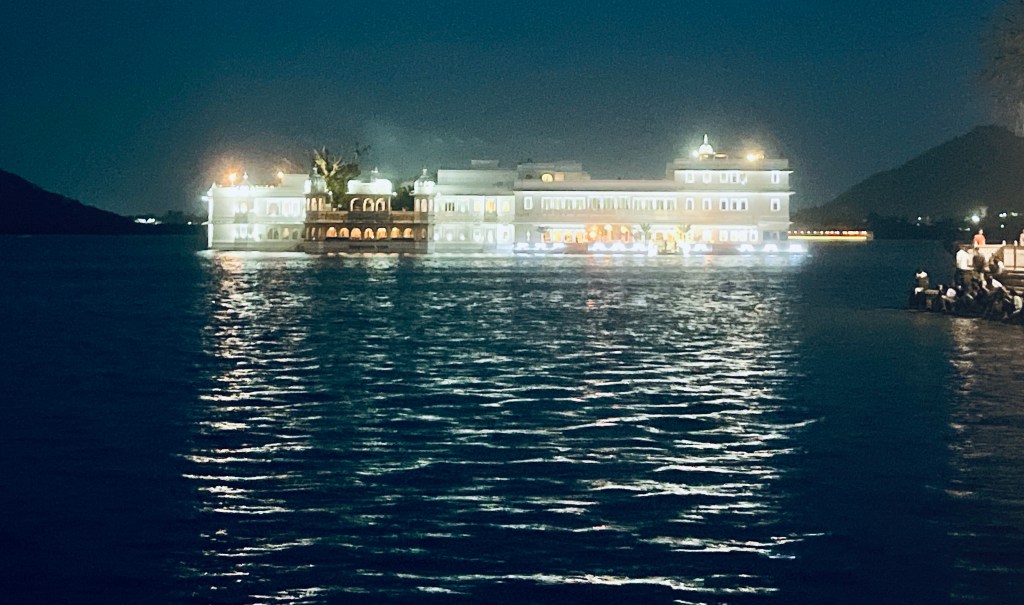
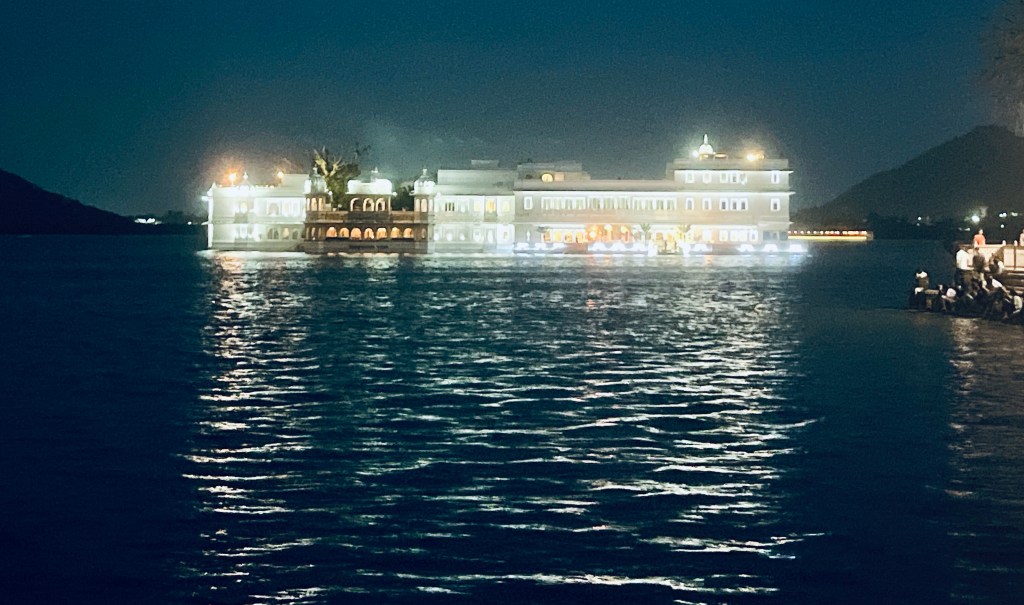
Udaipur is home to some fantastic hotels none grander than the Lake Palace Hotel, which seems to float like a beautiful white ship on the waters of Lake Pichola.

It was built in 1743 as a summer retreat for the royal dynasty of Mewar. It was converted into a hotel in the 1960s when the family started accepting paying guests. Upkeep on these buildings is phenomenal and it gives the royal families an income source to still live and maintain these fabulous buildings.

The Lake Palace may be recognisable as it has been used in several films, notably Octopussy, and to this day it certainly oozes glamour and decadence.

It is one of the world’s most photographed hotels due to its unique location on a small island on Lake Pichola, with its white marble glistening on the lake and particularly atmospheric at night. With several viewing points in Udaipur to view the hotel.

Lake Pichola day and night

The lake was first built in 1362 and is the oldest and largest of the city’s lakes.

A popular activity is to partake in a boat trip. The lake is 4 kilometres long and 3 kilometres wide and this man-made lake is relatively shallow and can dry up completely in times of severe drought.

Boat trips are roughly an hour in duration. Some trips are in combination with a City Palace tour which will obviously cost more. Most boat tours will stop at Jagmandir Island which I have mentioned previously and you can stop as long as you like here as boats regularly transfer back to Udaipur.

From the lake, I could see Gangori Ghat, it stood out beautifully as I was passing on the boat. It is associated with huge courtyards, fountains and archways. It is a popular spot for locals to hang out as there is Rajistanhifold dancing performances most nights.

Although the lake is mainly viewed during the daytime, the lake is particularly beautiful at night with the reflection from the Lake Palace Hotel and City Palace a captivating sight to behold indeed.

Lakeside dining

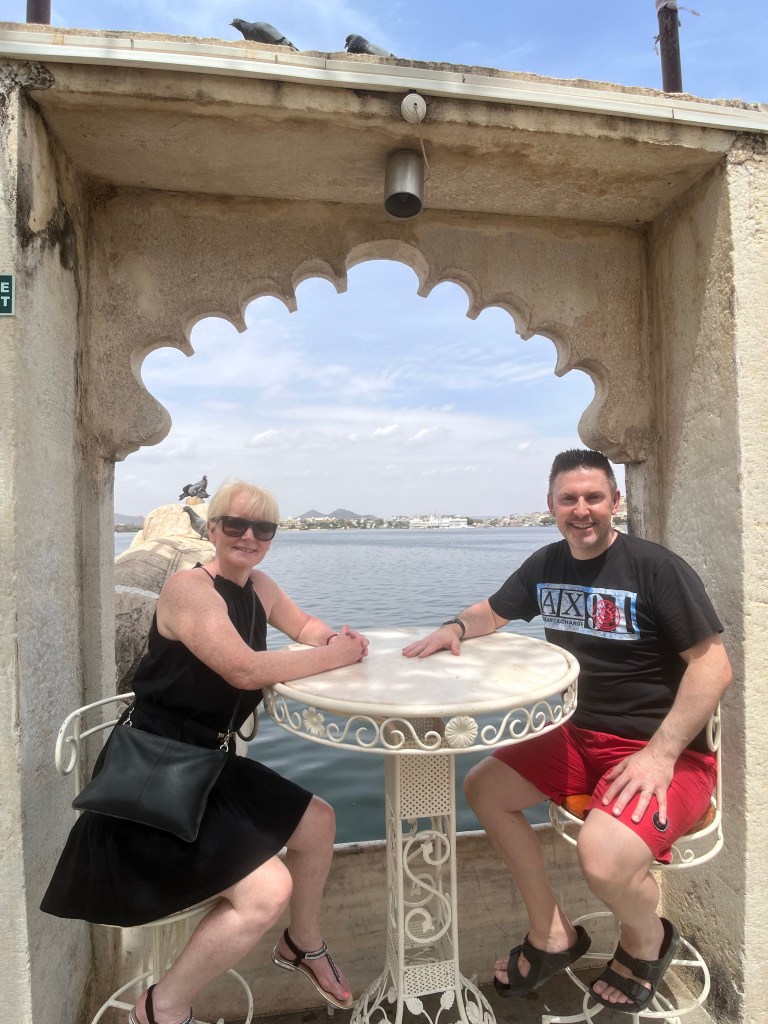
Udaipur is renowned as one of the most romantic cities in India. Its lakes and palaces provide an evocative location for a dining experience.

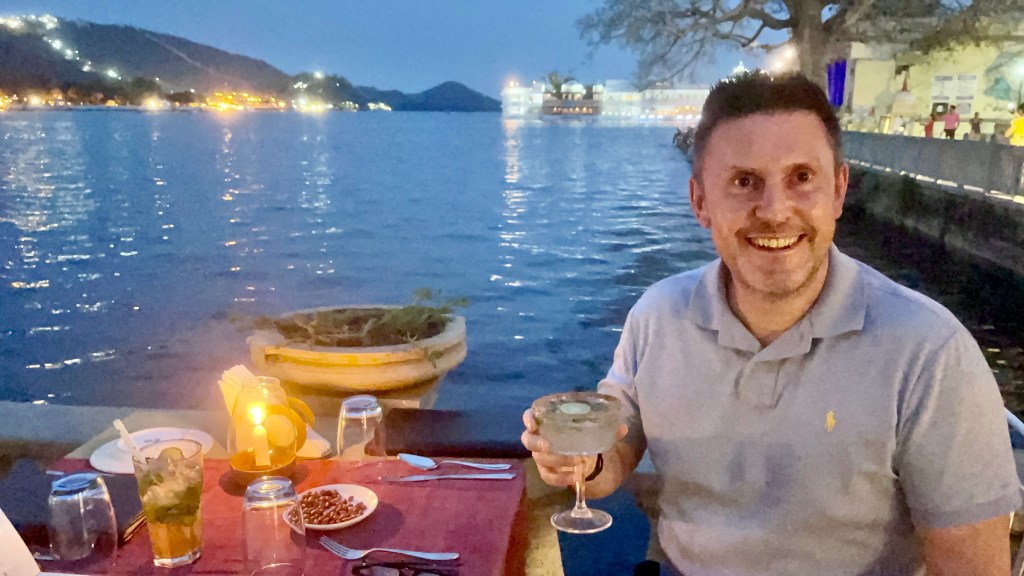
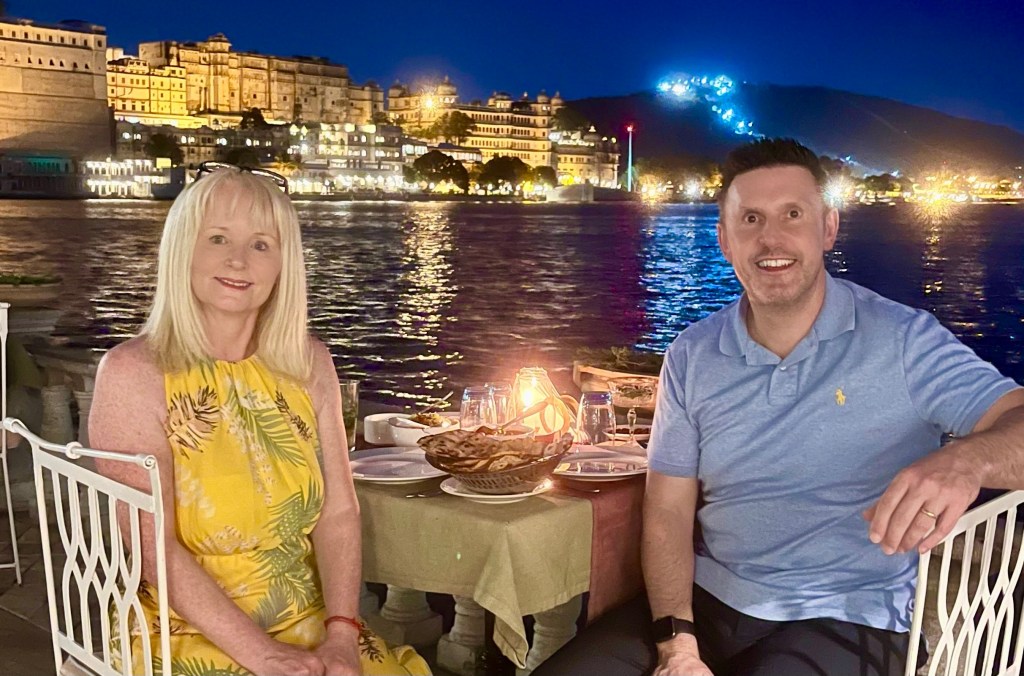
We were recommended a restaurant Ambrai at Amet Haveli and our guide kindly reserved a wonderful lakeside table where we were able to enjoy our food with a memorizing vista.

The main unique selling point of this restaurant is the spectacular panorama of Lake Pichola and the City Palace. It is the only lakeside restaurant in the area so booking is definitely recommended.

The food was nice but in all honesty, it’s the captivating view of the Udaipur waterfront and Lake Pichola which is obviously the main appeal here.

A candle-lit dinner for two in what is India’s most romantic city, this alfresco dining experience was a magical conclusion to our short stay in Udaipur.

Taj Mahal

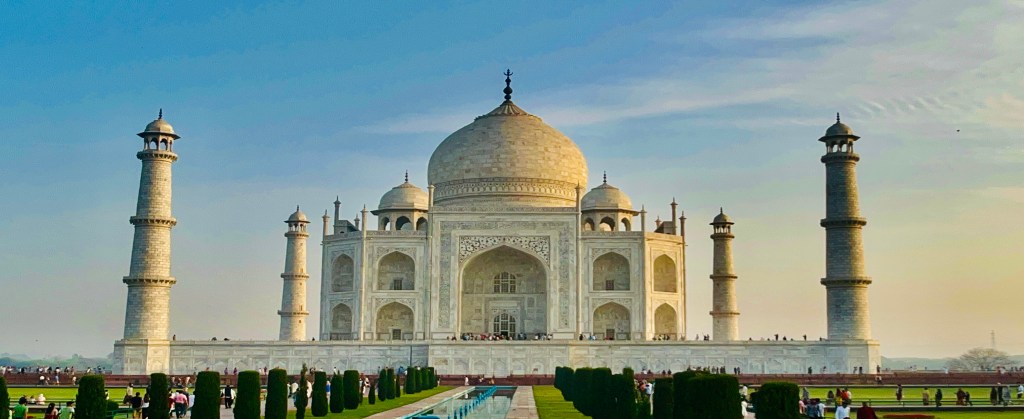
Grander and bigger in scale than all the pictures could ever convey. Absorbing as much as possible thinking how fortunate I was to experience this first-hand.

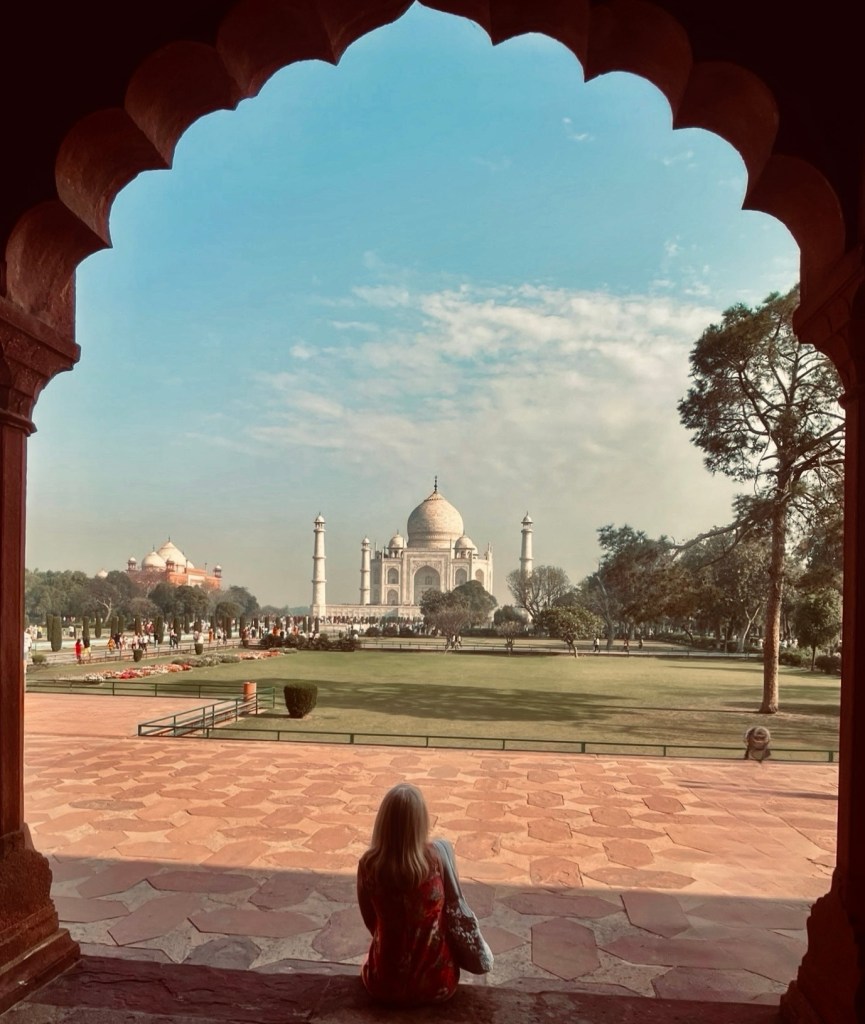
What can be said which hasn’t already been said before? An awe-inspiring masterpiece of true love. Even though I have seen pictures of the Taj Mahal a thousand times, to see it with my own eyes seems mythical.

Construction of The Taj Mahal began in 1632 after the death of the wife of Shah Jahan. The death of his wife left the Emporer heartbroken. The main building was completed within eight years, although the whole complex was not completed until 1653.

Yet, the Emporer did not have time to reflect upon his memorial to his beloved wife, as he was overthrown and imprisoned by his son in the nearby Agra Fort shortly after completion. The old saying that you can choose your friends but can’t choose your family certainly rings true on this occasion. Shah Jahal died in 1666 and was finally able to be laid to rest with his beloved wife

Today visitors numbering more than 7 million come to visit, and like me pass through the gates to catch a glimpse of this once-in-lifetime experience. What is rightfully considered one of the most captivating buildings in the world? I for one certainly did not come away let down.

We were on an organised tour and were lucky enough to experience its magnificence at sunset and sunrise. Staying at one of the many hotels which are located in the nearby city of Agra. They have evolved primarily to cater for the many visitors who come to experience the wonder of The Taj Mahl

Mehtab Bagh Garden

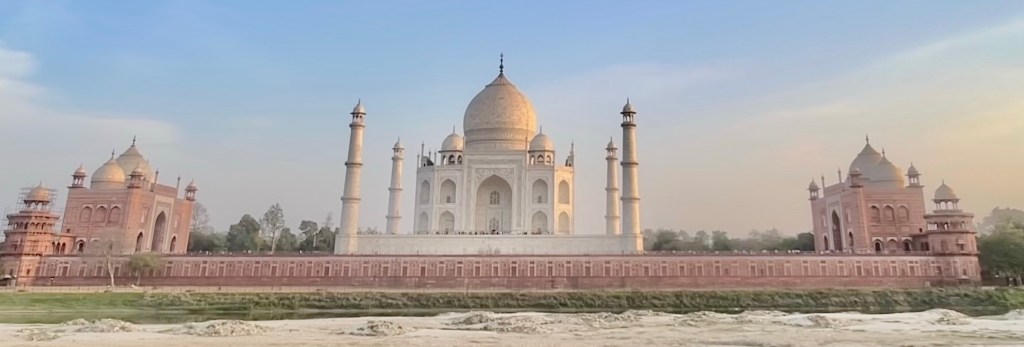
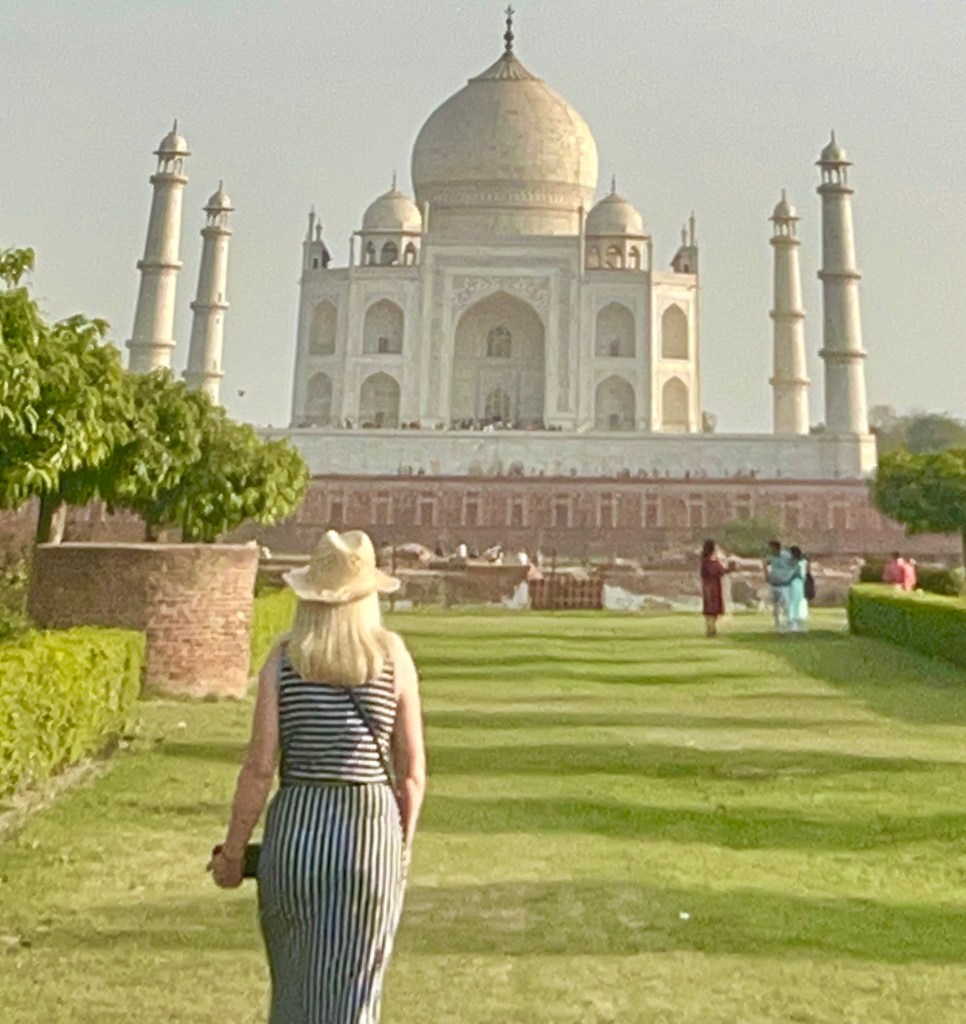
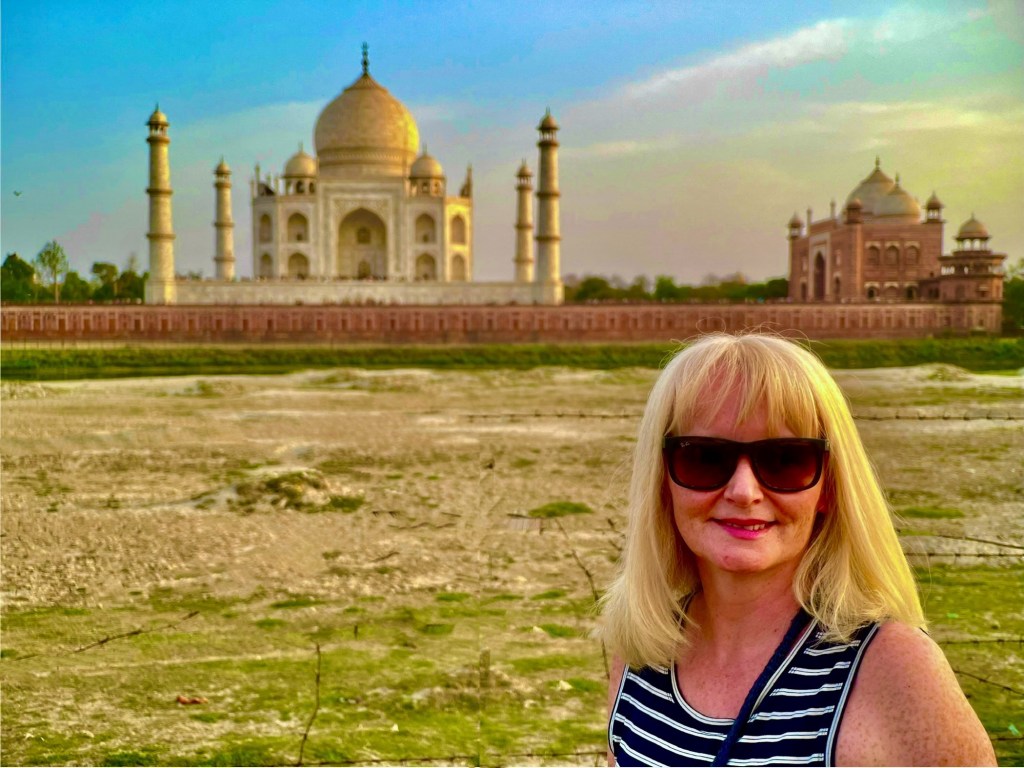
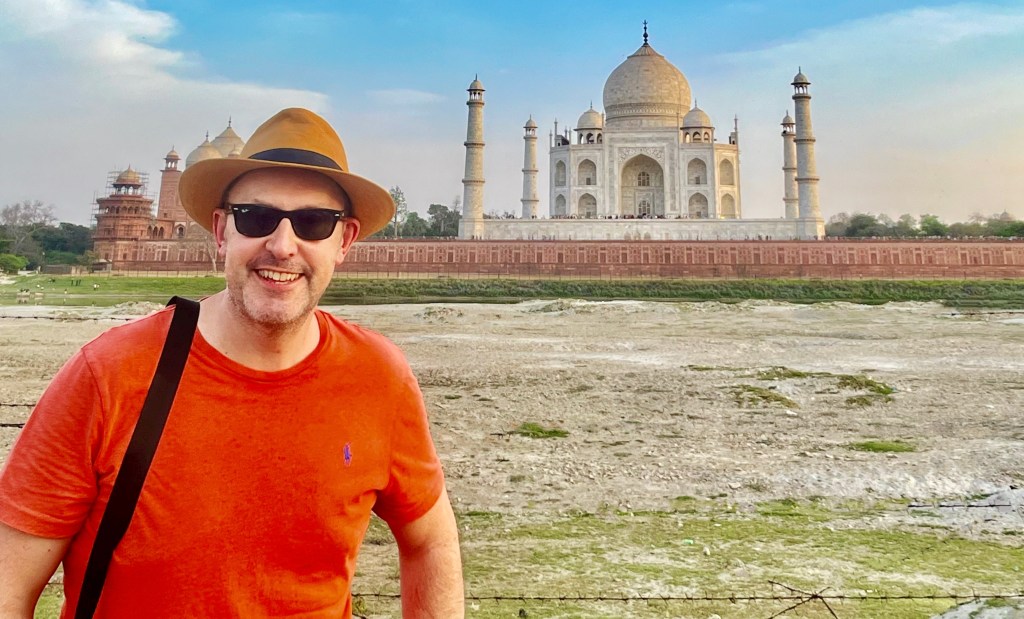
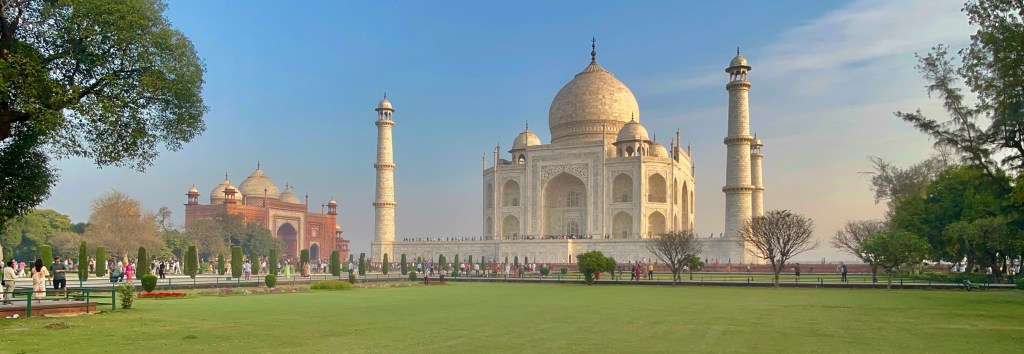
One of the most extraordinary views of The Taj Mahal is from the Mehtab Bagh Gardens. On the north bank on the other flank of the river.

A lush long green garden on the bank of the River Yamuna mirrors The Taj Mahal’s own lush gardens. It had fallen into neglect, little more than a huge mound of sand. The gardens were regentrified in the mid-1990s and today have been restored to its original form.

It is now one of the best places in which to view the Taj Mahal. The gardens were constructed in the early 1500s and they actually pre-date the Taj Mahal.

My first glimpse of the Taj Mahal was just before sunset. We arrived early at 18.00 at the centuries-old Mehtab Bagh Gardens. The ticket office to enter the gardens closes 30 minutes before sunset so don’t leave it too late.

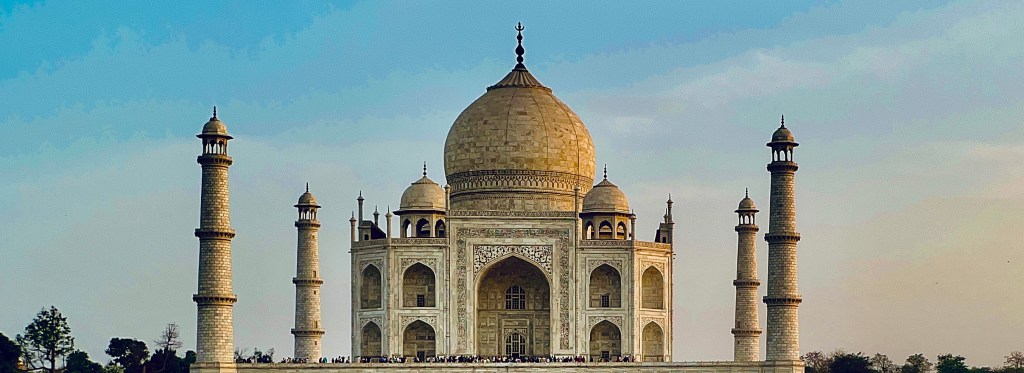
We were able to watch the sunset over the lavish old building from a distance. This was a perfect time to visit, we were able to witness the changing colours as the daylight faded casting an orange-pink glow on the magnificent marble dome.

We spent an exquisite evening with members of our tour group and a few other people, all gazing in awe at history’s greatest monument to love. We got unobstructed views of the Taj Mahal without all the crowds.

On a practical level, the visit at sunset was a lot better for pictures, it was very quiet and we were able to linger for a much longer period of time. Personally, I enjoyed the sunset visit more because of the peace and tranquillity which added to my experience of visiting.

Sunrise at The Taj Mahal

The Taj Mahal at sunrise doesn’t get much more beautiful than this! Although the bar had been set pretty high with the previous night’s sunset.

Every day 15,000 people visit the Taj Mahal. A dawn visit will cut those numbers down resulting in a more “relaxed” visit.

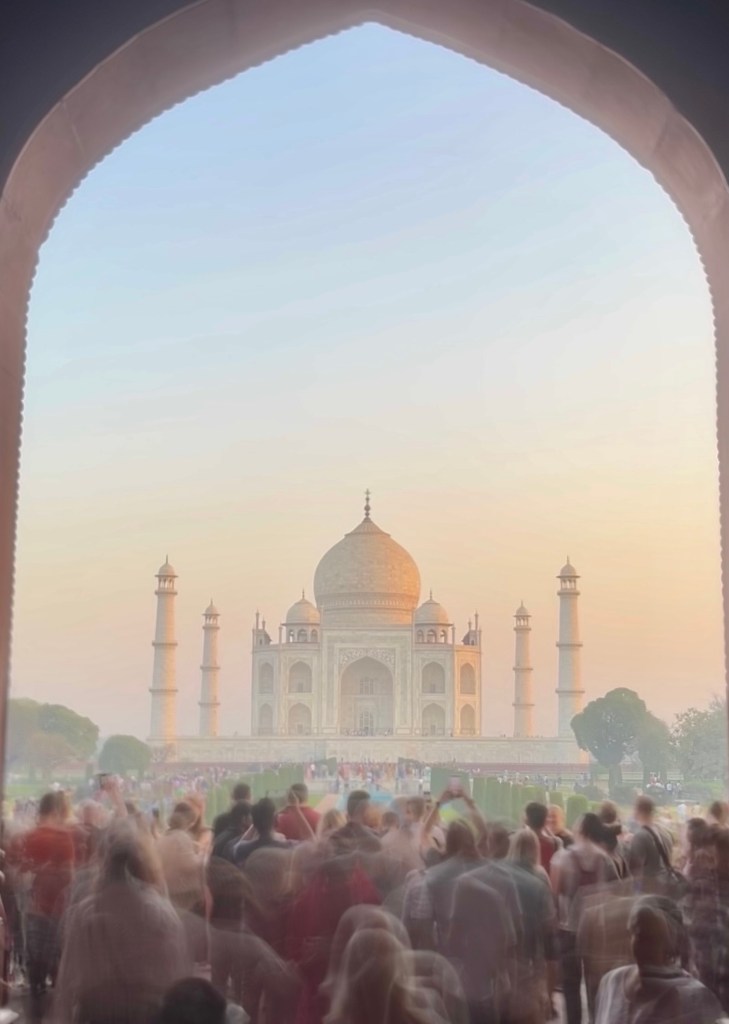
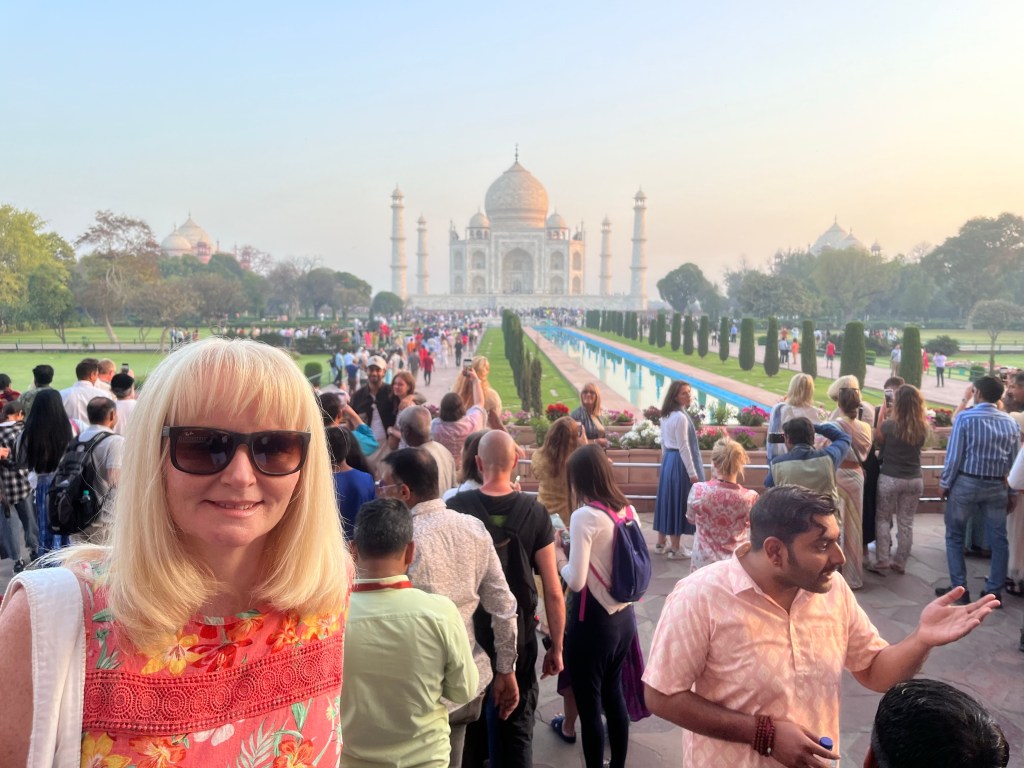
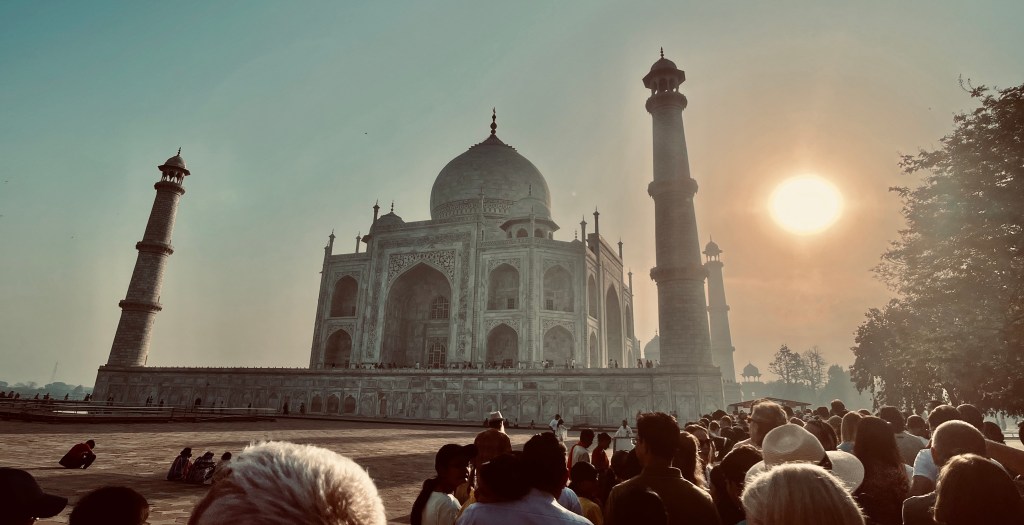
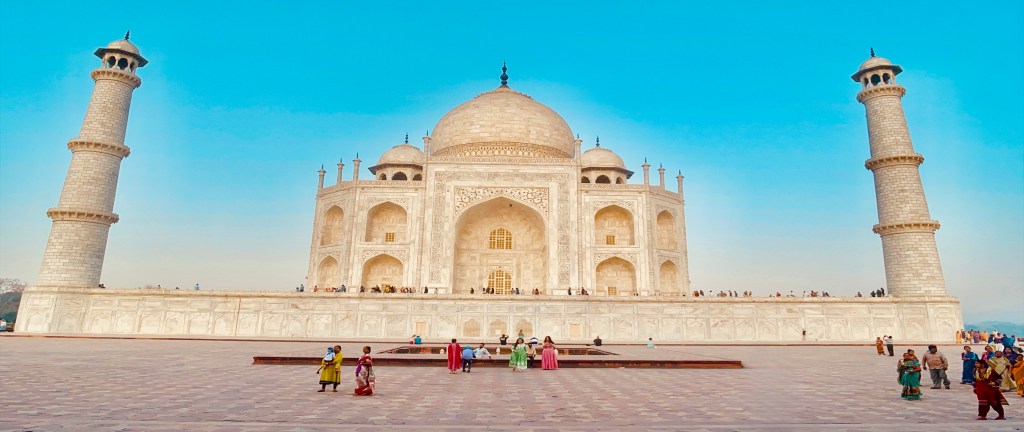
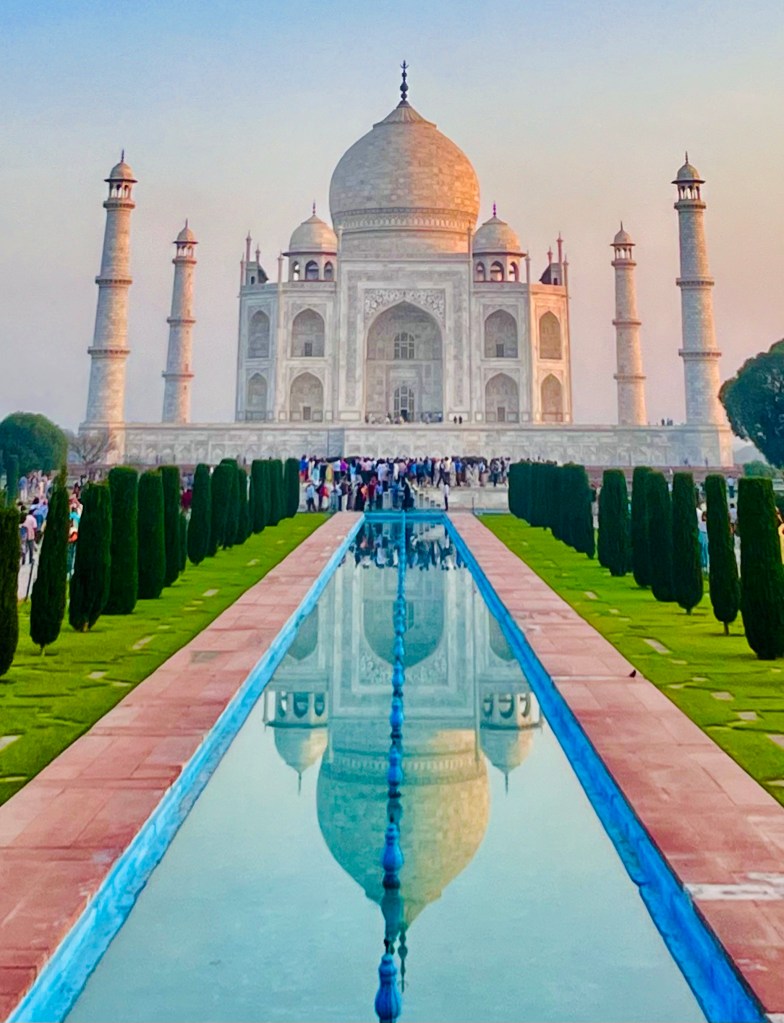
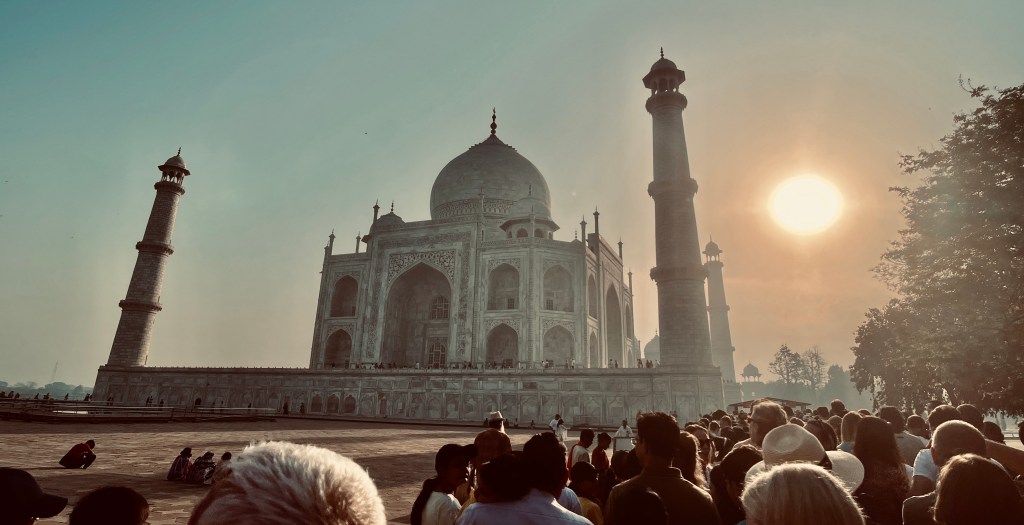
My first glimpse close-up of the Taj Mahal. It rises up majestically into the dawn sky. It’s practically impossible to get a picture of the Taj Mahal without people, although even the crowds can’t get in the way of its unbelievable enchantment. At first light, it looked truly extraordinary and had a very mystical ambience.

On a practical level, the Taj Mahal opens at 6.00 am. We arrived at about 5.45 and there was already a fair-sized queue there. I would estimate there were probably 150 people in front of us.

It is one of the busiest times to visit. Nevertheless, the complex is very large and except for the front views on the platform as you first enter and the benches further on down, you will find that the Taj Mahal can be relatively peaceful, despite being busy it never felt overwhelmed with people.

I quickly chose not to stress about this and just enjoy the experience. We were far from being the first ones there (even after booking tickets online in advance) and I still found the atmosphere breathtaking. Sometimes it’s more important to just concentrate on the moment.

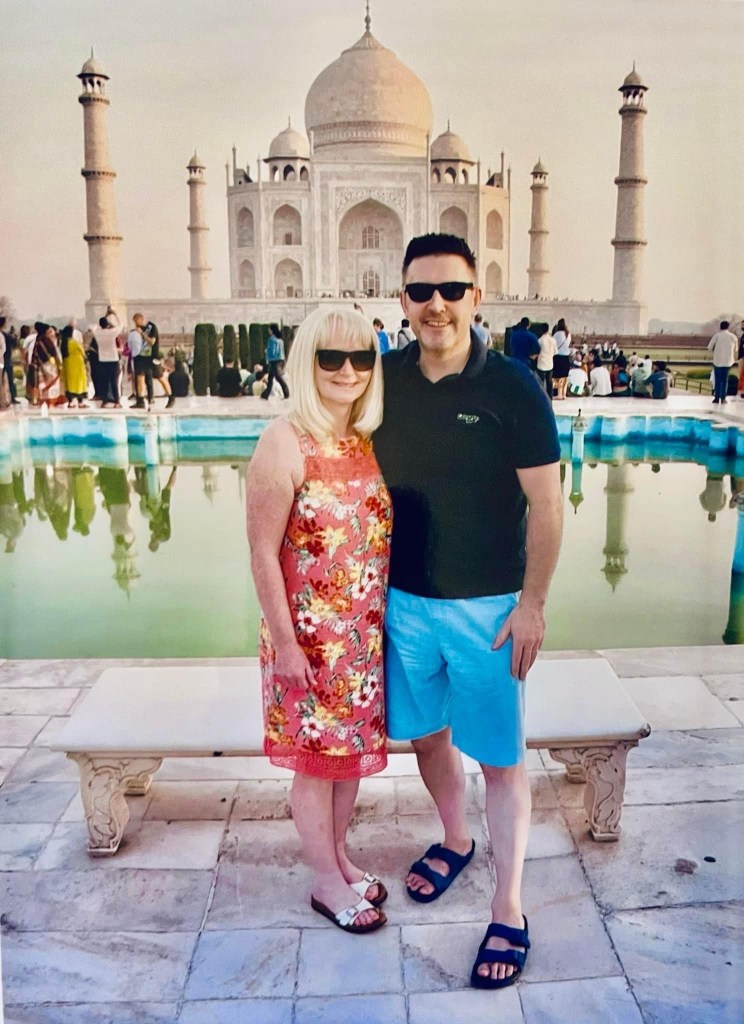
The bench near the front is another popular photo spot. There are a few licensed photographers there who will take a picture of you by the bench. I usually don’t bother, but I took full advantage to get a professional picture of us together, I paid 600 rupees for 6 pictures, which works out at about £5.75.

We then queued to enter the inside of the Taj Mahal and the wait was about 30 minutes. No photography is allowed inside. If I am being honest it was a bit of a disappointment compared to the grandeur of the outside but it’s included in your ticket price so may as well visit everything.

It was definitely a must-do for me but you don’t have to spend the day there. In fact, your ticket is valid for a three-hour stay. From 10 am the temperatures will get very warm with little shade.

We stayed two and a half hours which was more than enough time for us to see and experience the wonderment of the Taj Mahal. An experience that will live long in the memory.

Costa Smeralda

A 20-kilometre coastal area and tourist destination. Located roughly between the villages of Baja Sardinia and Porto Rotondo.

This northeastern part of Sardina translates into Emerald Coast in English. Famed for its luxurious resorts, giant yachts and beautiful beaches. A popular holiday destination which still retains a balance with its beautiful surroundings.

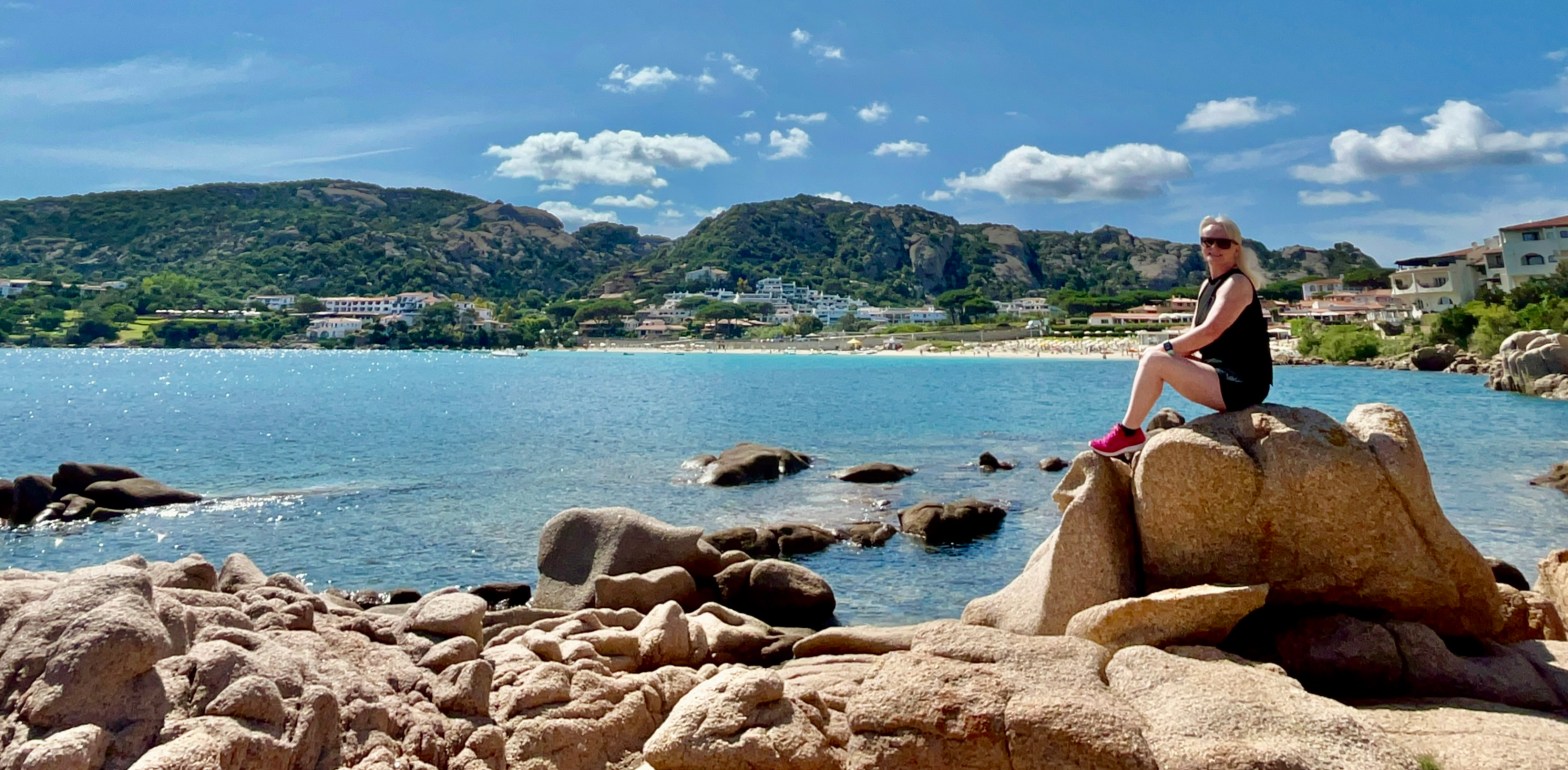
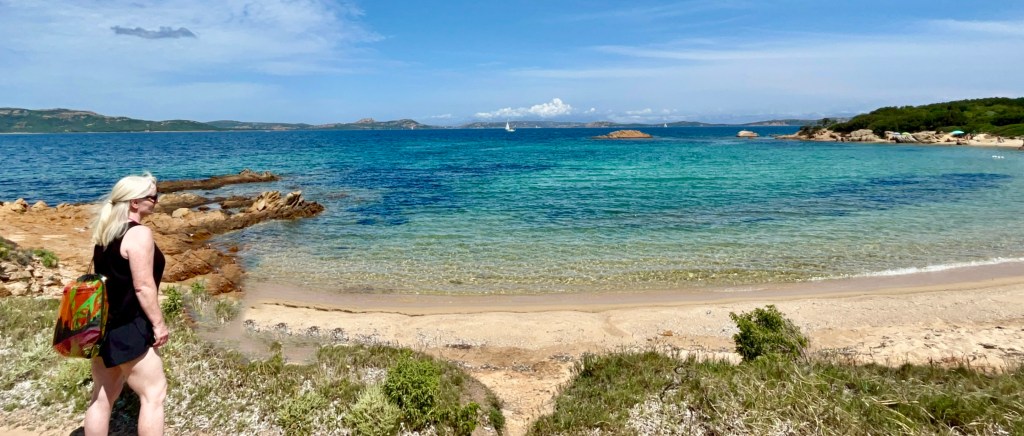
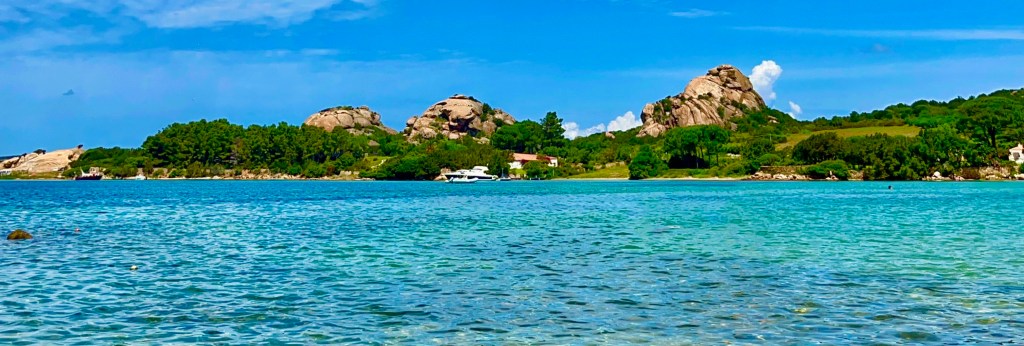
The Costa Smeralda is famous for its perfectly clear green turquoise waters and miles of picture perfect bays, coves and white sandy beaches. I thought I was in the Caribbean rather than the Mediterranean.

Costa Smeralda’s reputation as a paradise for the jet set is certainly true, especially around the resorts of Porto Cervo and Porto Rotondo. Complete with chic marinas, boutique hotels shopping malls and vibrant nightlife.

But it’s not all glitz and glam. You may think that Costa Smeralda is dedicated exclusively to luxury holidays, but that is not entirely the case. In addition to the upmarket resorts, there are places suitable for all budgets.

The main attraction of this part of Sardinia is entirely natural. The beauty of its beaches and coast, lovely traditional villages and history which goes back a 1000 years. It is a place where ancient traditions and natural beauty join luxurious resorts in effortless Italian style.

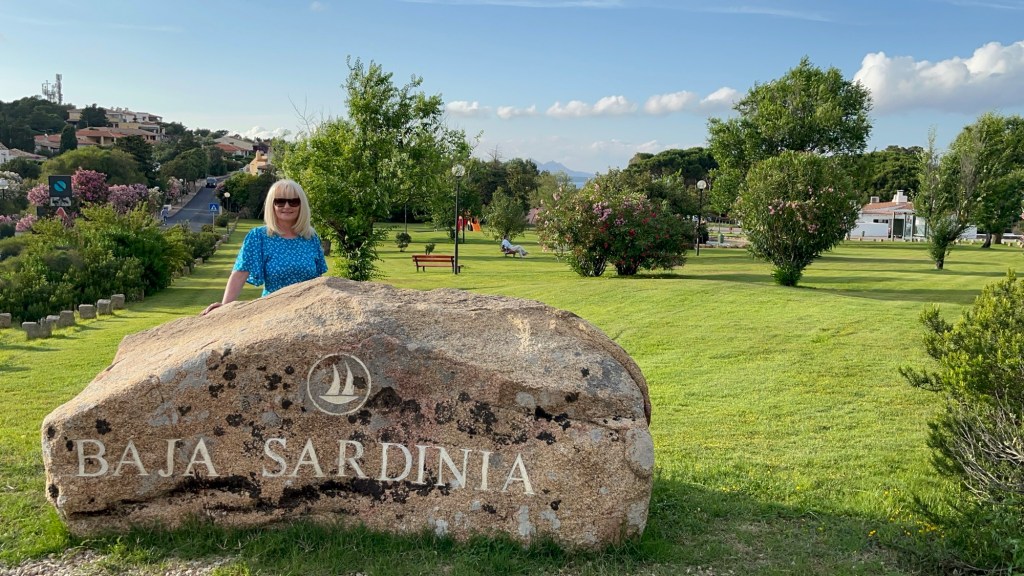
Baja Sardina

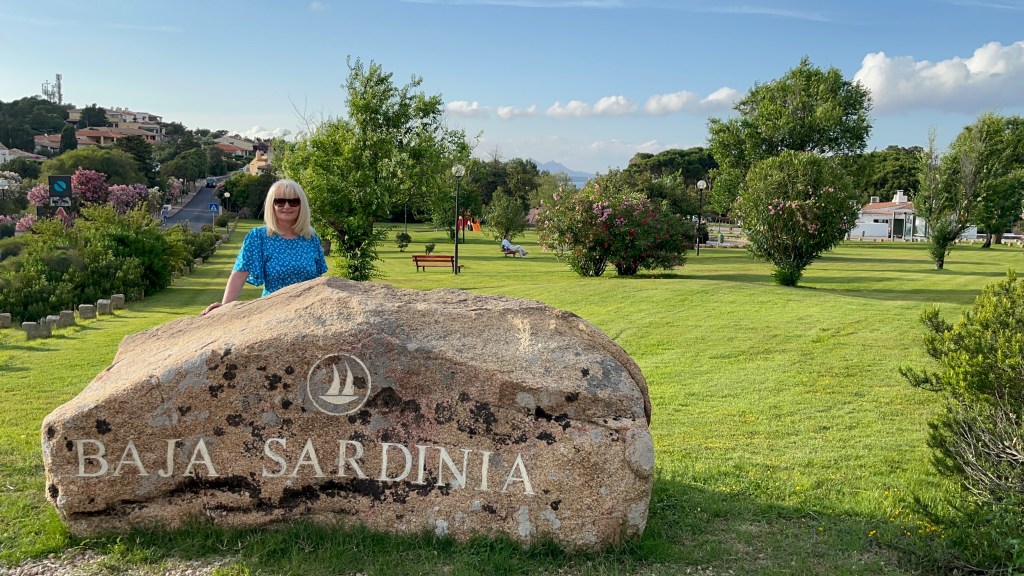
A beach resort on the Costa Smeralda. Which is a popular place to stay and our base while in Sardinia.

This was once a very small resort with less than 100 residents. The village has grown as the popularity of the Costa Smeralda has increased.

Baja Sardinia now has hotels and apartment complexes alongside shops, bars and restaurants, all centred along a small promenade close to the beach and bay.

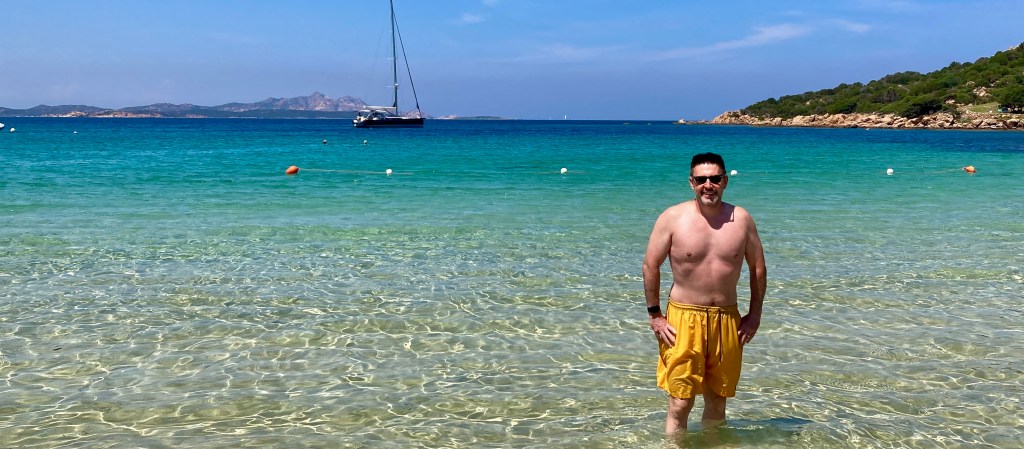
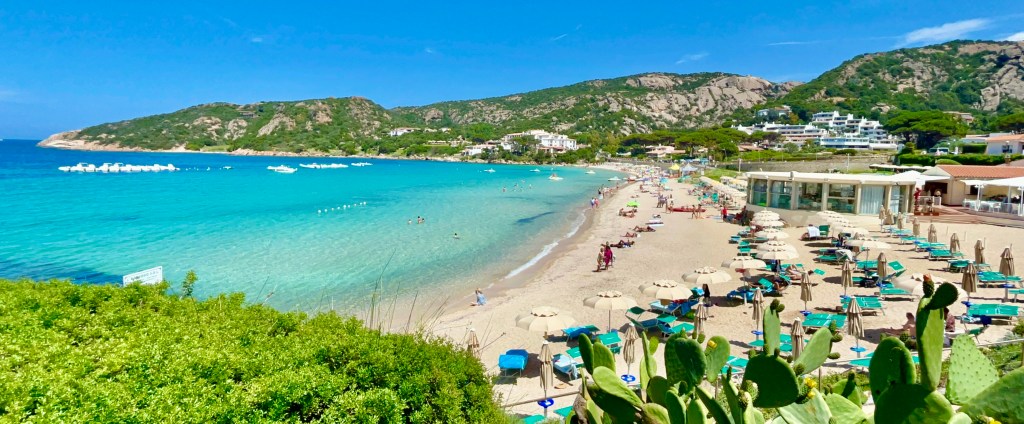
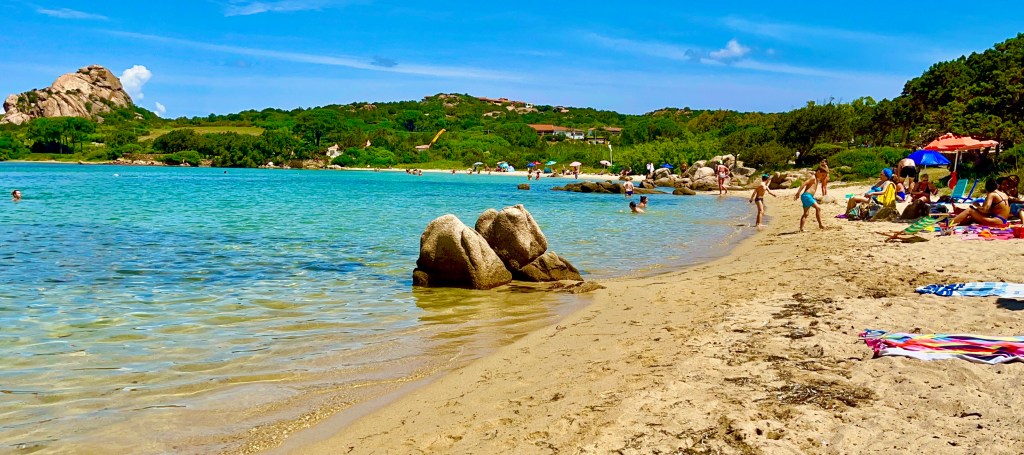
The bays beaches and coves here are home to crystal clear waters and clean white sand. Although only ten minutes from Porto Cervo the vibe here is unquestionably more understated.

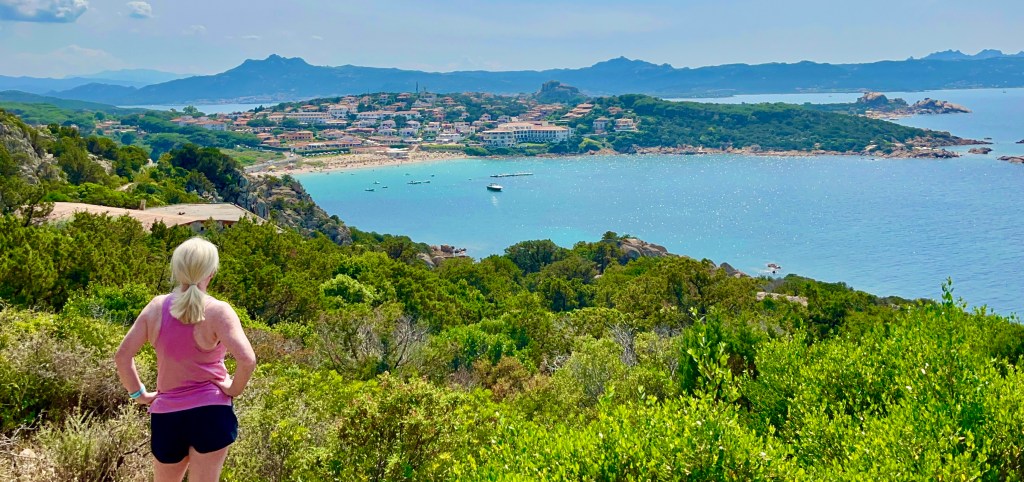
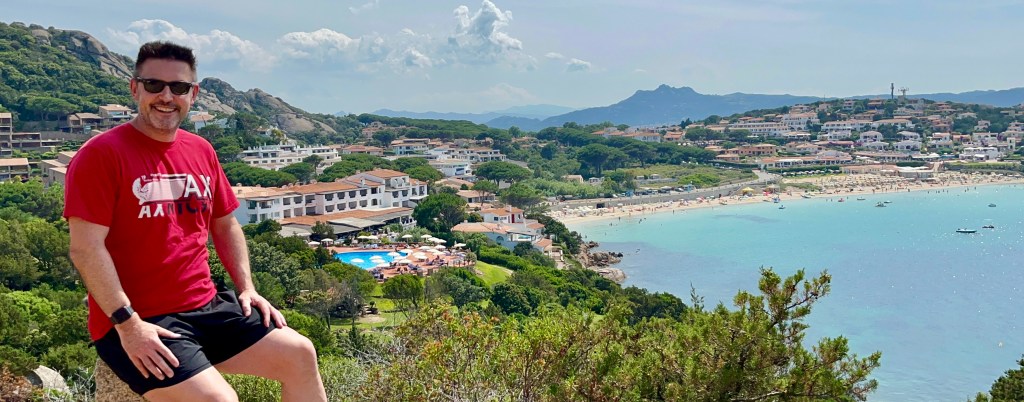
The whole town is based around the beautiful pristine beach. Sandwiched between green smothered cliffs on either side. We were able to walk up the mountain. It’s less than a mile from the beach so it’s close by and worth it for the panoramic vistas of Baja Sardinia.

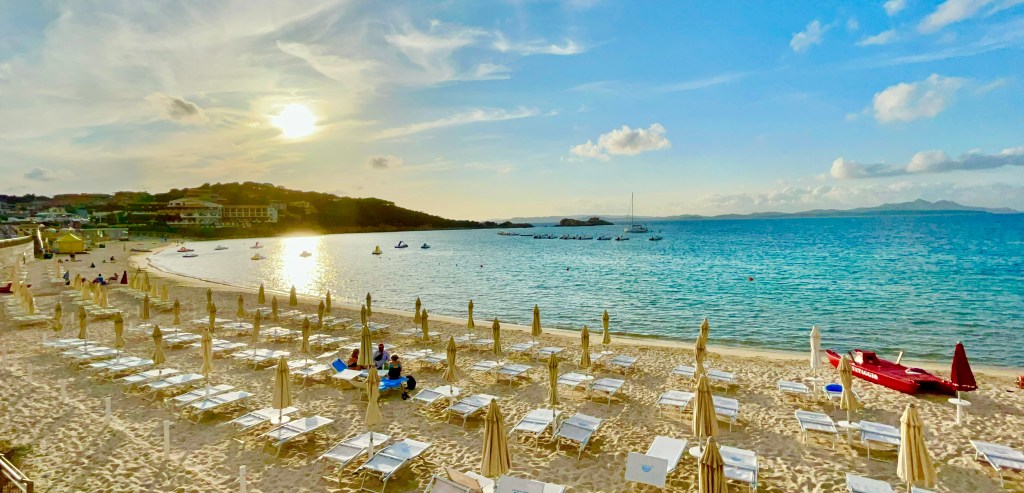
The beach there has an extremely calming vibe. The fan-shaped beach at Baja Sardinia is made up of smooth rocks and soft white sand that gently slopes into beautiful turquoise waters. A great location for a swim as you look out at The Maddalena Islands situated directly opposite.

Exploring Baja Sardinia

Baja Sardinia isn’t just a beach holiday there is plenty of opportunity to explore. But it gives us the perfect chance to do both with numerous beaches over 300 in northern Sardinia alone.

There are some excellent walking trails around Baja Sardinia. There is a circular walk which is under 10 kilometres and takes in a couple of quiet unspoilt beaches. The perfect location for a relaxing environment.

Our first stop less than a mile from Baja Sardinia is the exclusive resort of Phi Beach. Although there is very little to see as it’s a rather exclusive beach club.Famed for its sunsets and very expensive cocktails I will leave this location for the young hipsters 😆

Continuing on with our walk we come to the rather charming and unspoiled Spiaggia Tre Monti. It’s in a very natural setting and when we visited very popular with locals. It has a small bay with clear blue waters. Not the most beautiful beach we saw but a very relaxing beach to enjoy.

Further on we came to yet another beach, Spiaggia Mucchi Bianchi. This was more popular and had a beautiful setting loungers and umbrellas were available and a beach cafe.

The water here was very calm and an emerald colour. It wax the excellent location for a cooling dip while enjoying the beautiful scenery.

Dining in Costa Smeralda

From high end Michelin star restaurants to the humble cafe and everything in between. Many in beautiful settings dining was certainly a pleasure.

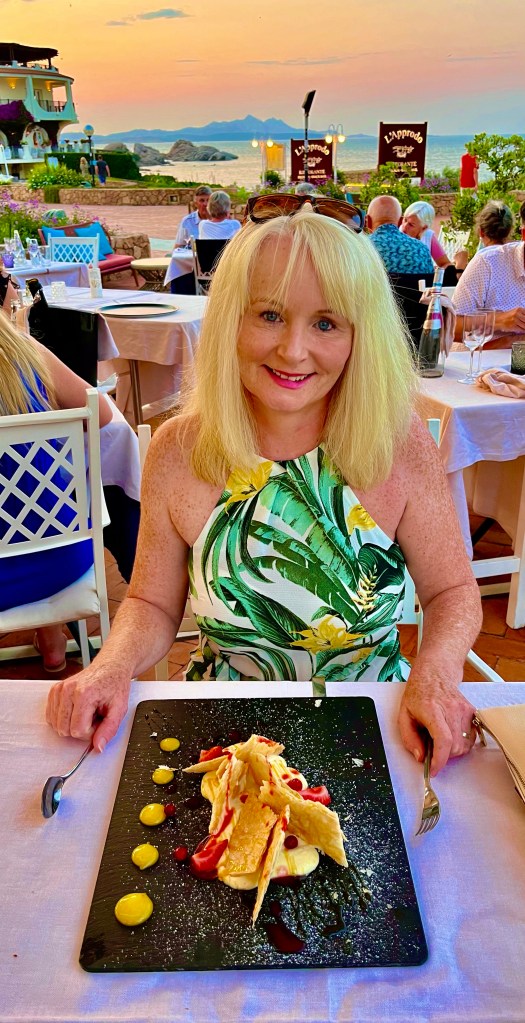
Delectable food in beautiful surroundings.

Sardinia being part of Italy there will be no shortage of culinary delights, dining in some fantastic restaurants. We were able to sample all the Italian favourites pasta, pizza and gelato, prices didn’t break the bank either, with restaurants to suit all budgets.

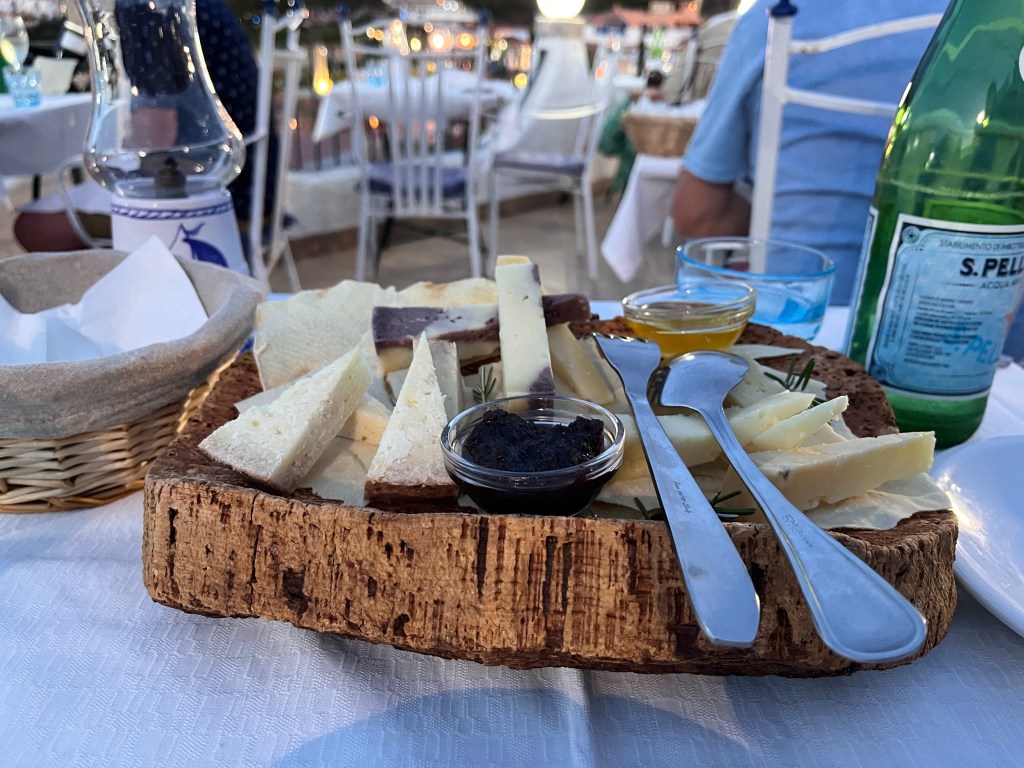
Sardinian cheeses are delicious. As a cheese aficionado, I was certainly spoilt for choice.

Sardinian cuisine however is very different to Italian. Pork and lamb feature very heavily on Sardinian menus with potatoes rather than pasta. We also found a fantastic array of bread and cheeses traditional to the island.

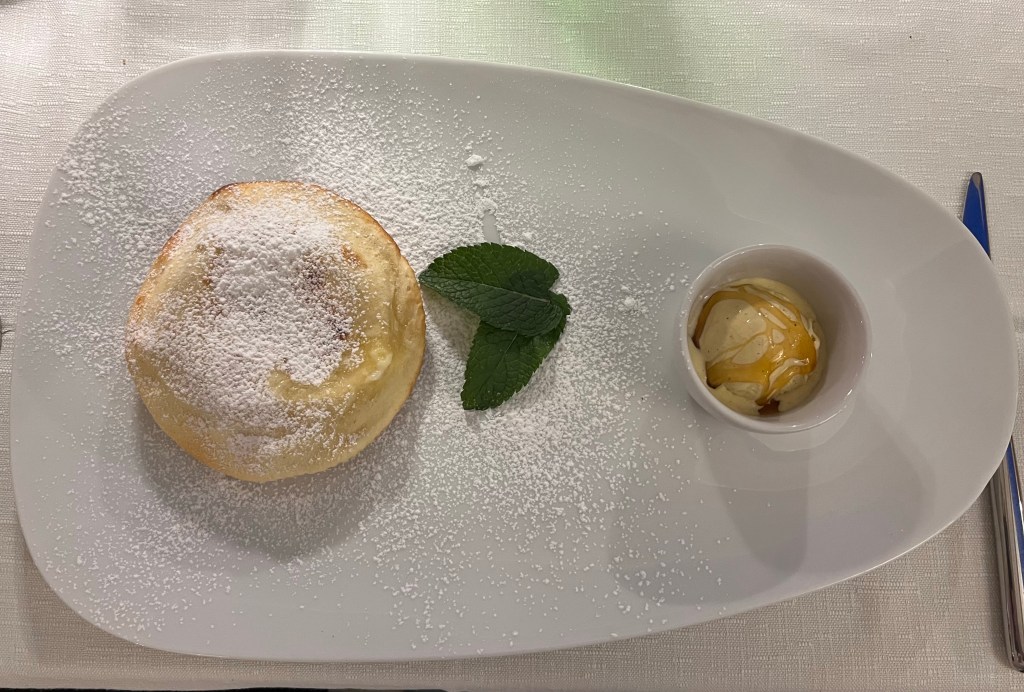
Seadas Sardinia’s traditional and most popular dessert. An aquired taste.

Their signature dessert is also very unique seadas which is a cheese pasty deep fried and served with honey, I tried it and it was a lot nicer than it sounds.

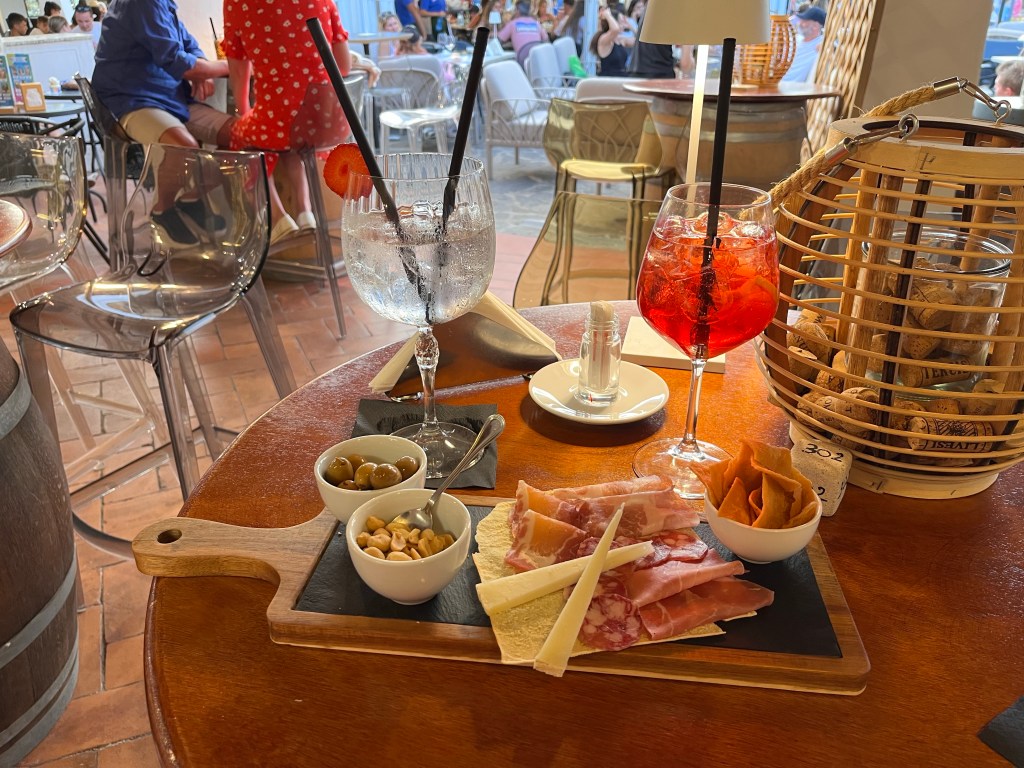
Apertivo that fantastic Italian cultural tradition, although not as popular as on the mainland we were able to sample it in a few establishments on Sardinia. A pre meal drink. Basically nibbles with drinks but with all that added Italian sophistication

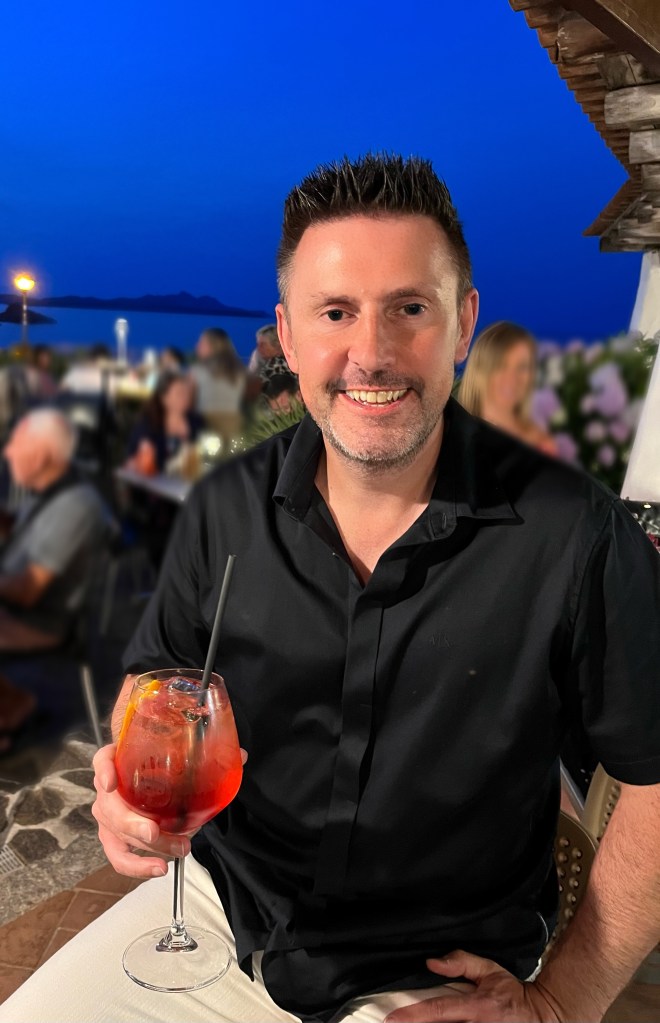
Derived from the Latin aperire the tradition is meant to open the stomach before dining. It’s one of the things I love about being in Italy 🇮🇹. A fantastic way to end the day? Or start the evening? Who cares cheers or as they say in Italy cin cin.

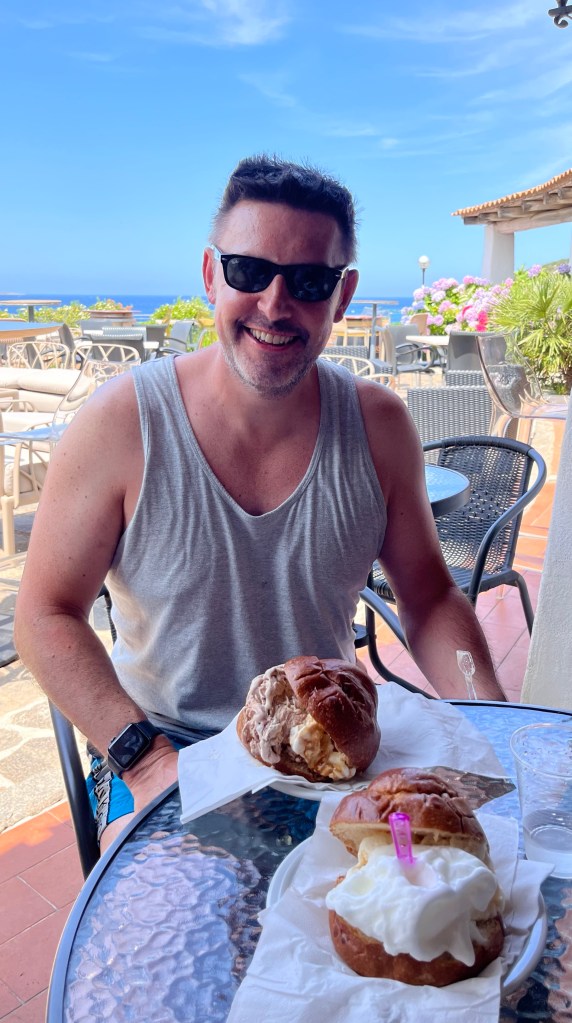
Italy is famous for its ice cream, Sardinia is famous for its breads. In Sardinia they have come up with an ingenious recipe to combine the two brioche ice cream. Delicious ice cream in freshly baked brioche bun which was scrumptious. Travel certainly broadens the mind and certainly the waistline 😆😆😆

Porto Cervo

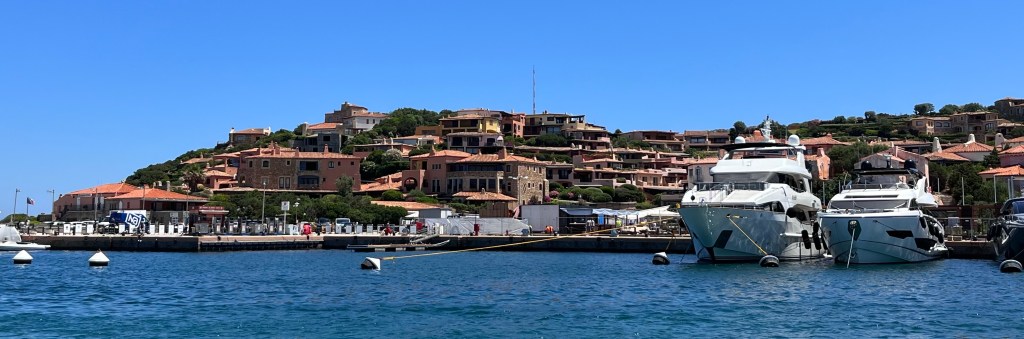
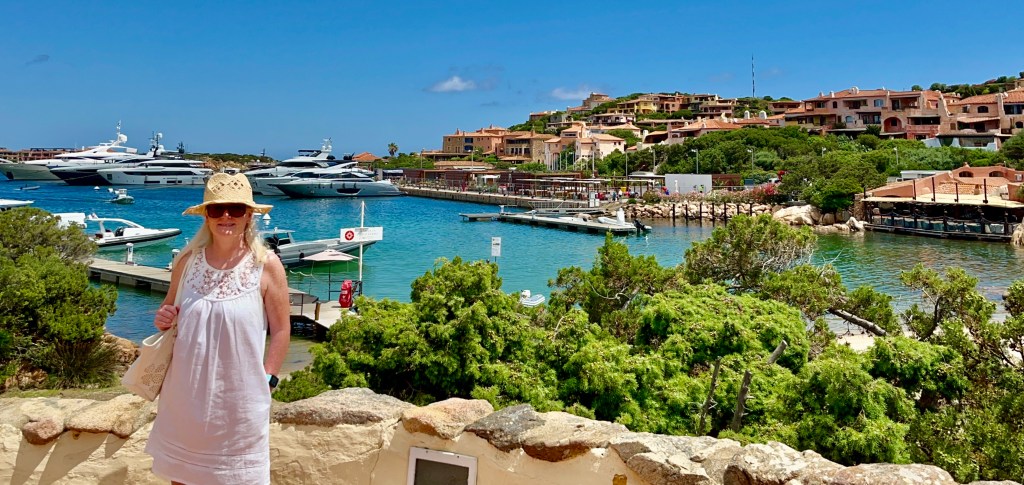
Purpose-built in the 1950s, Porto Cervo is an elite seaside resort and is synonymous with luxury.

Less than two miles from Baja Sardina however, where Baja Sardina is relaxed and had an understated charm, Porto Cervo is renowned for its sophisticated ambience and upmarket appeal. It’s one of the world’s most expensive resorts.

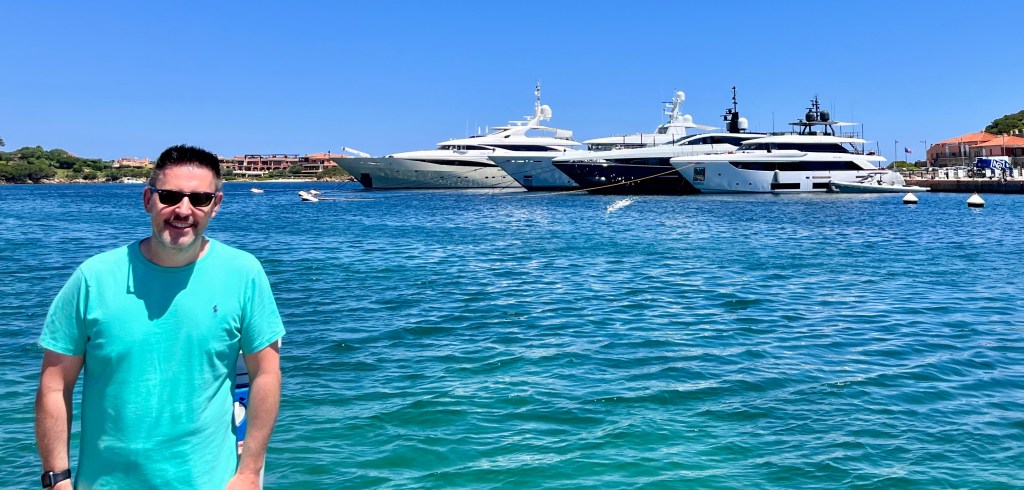
Some of the many large yachts that can be seen in this location

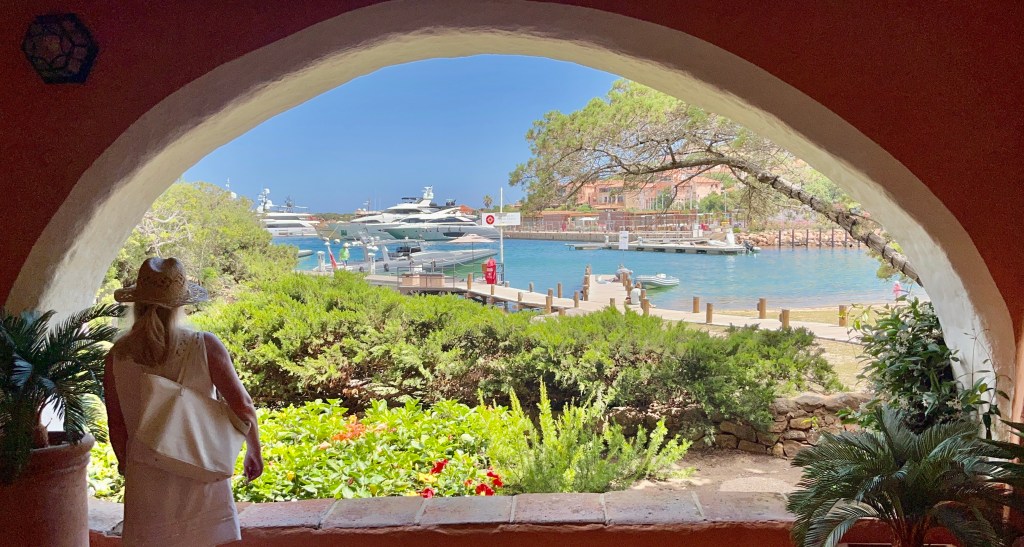
For a village with a population of less than 500 residents, it boasts not one but two harbours. Porto Cervo marina has 700 berths with 100 of those reserved for mega yachts. It’s renowned as being a luxury yacht magnet.

We found very high-end shops and boutiques a veritable who’s who of exclusive names Rolex, Cartier, Prada, Versace and a Bentley dealership, although bizarrely there was a Lidl and Boots chemist. There were a few bars and restaurants at Porto Cervo and prices were surprisingly reasonable lunch wouldn’t have broke the bank. Although hotels are some of the most expensive on the island.

With all this talk of unadulterated expense and luxury, it was time to leave unfortunately not on one of the many expensive mega yachts but back on the service bus that had brought us there from Baja Sardinia 😆😆😆

San Pantaleo

Sardinia is dotted with small little-known villages that contain all the charm and beauty of Italian life. San Pantaleo is certainly one of the most beautiful villages.

Come up the mountain road from Costa Smeralda to visit this town that is nestled between the mountains and the ocean. San Pantaleo is a place where you can experience the best of authentic Sardinia.

Wander around cobbled streets we found plenty of art galleries and antique shops. We felt like we had been transported to another time and place as some of the old-fashioned buildings take on a fairytale look.

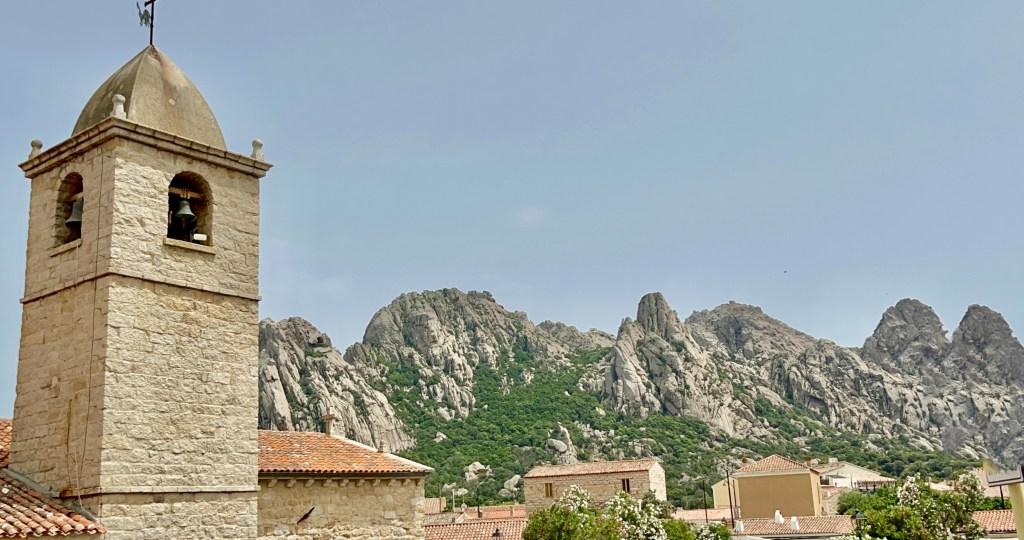
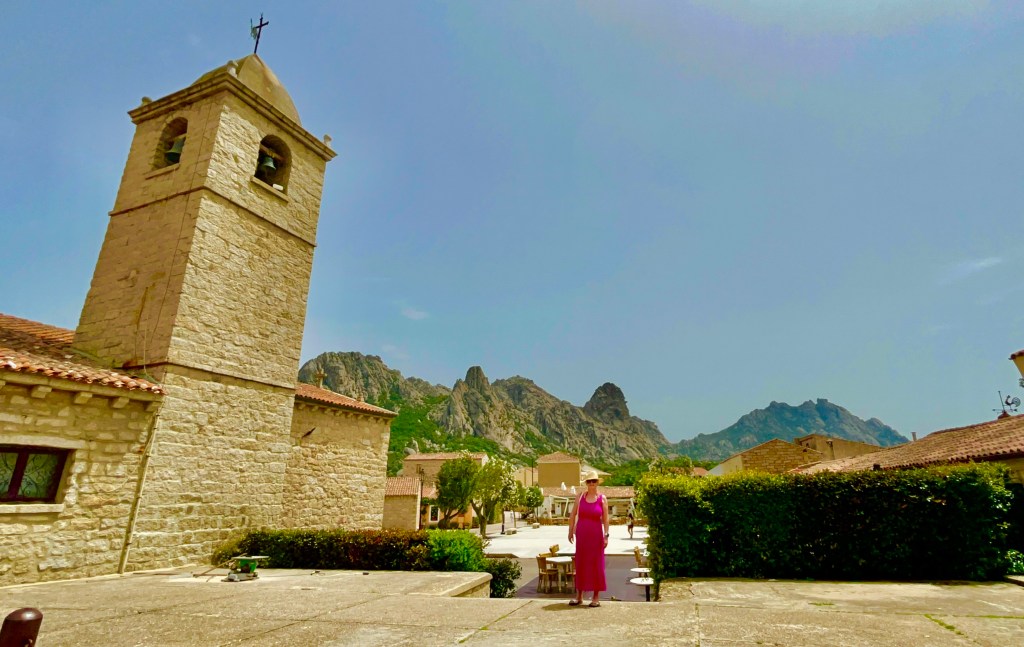
In the centre of San Pantaleo, there is a main square the Piazza della Chiesa. We found the Catholic Church situated here along with a smattering of shops and restaurants. The perfect spot to enjoy a coffee and relax.

This is the perfect location which gave us a wonderful view of the church surrounded by mountain peaks, the interesting outlines of the mountain and traditional stone buildings a quintessential sight of Sardinia which combines traditional life and historic architecture.

Poltu Quatu

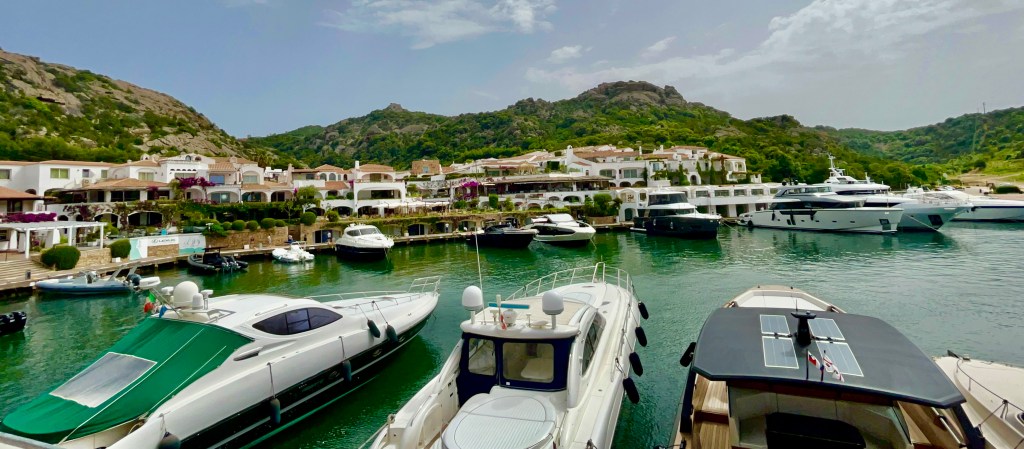
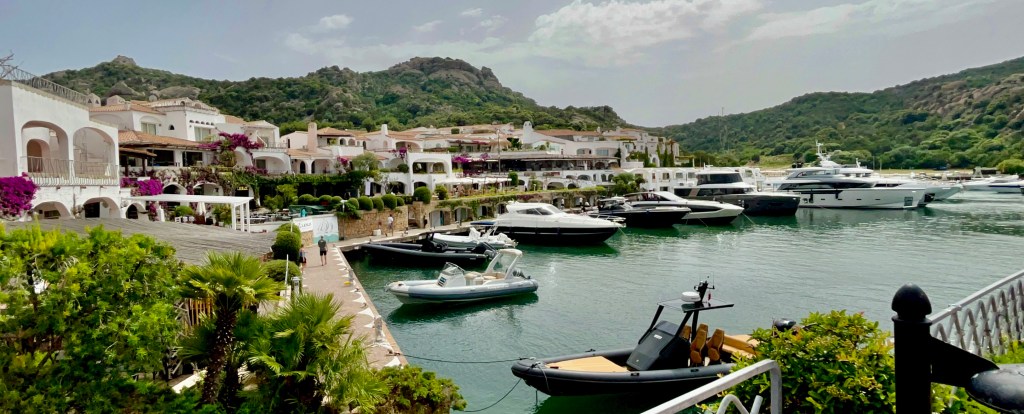
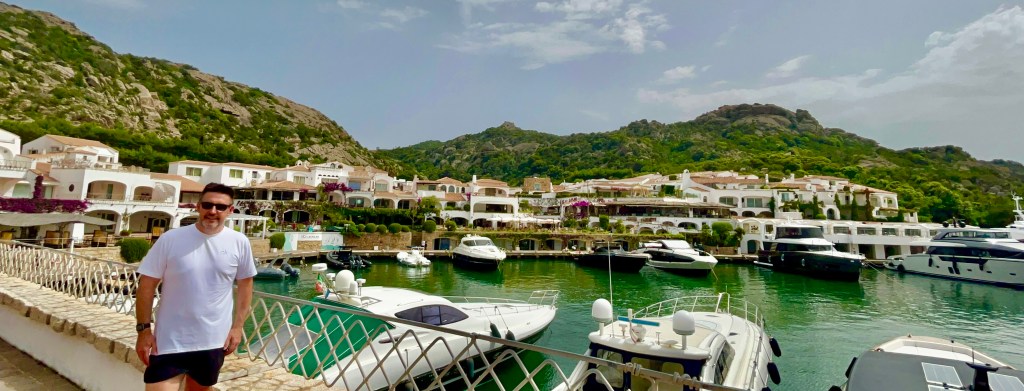
A pretty little port made up of all-white buildings which surround a natural fjord. It was created in the 1950s by Prince Karim Aga Khan one of the world’s richest men.

Poltu Quatu looks like a traditional fishing village albeit with luxury yachts docked in the harbour rather than fishing vessels.

Appearance can be deceptive as this is a relatively new development. Located between Baja Sardina and Porto Cervo. Although more like the latter in terms of design and feel. It’s very tastefully done as it does blend in perfectly with its natural surroundings.

The main harbour is an excellent starting point for boat trips and there are many to choose from including the nearby La Maddalena islands. It is also the diving centre with many schools using the port as it’s base.

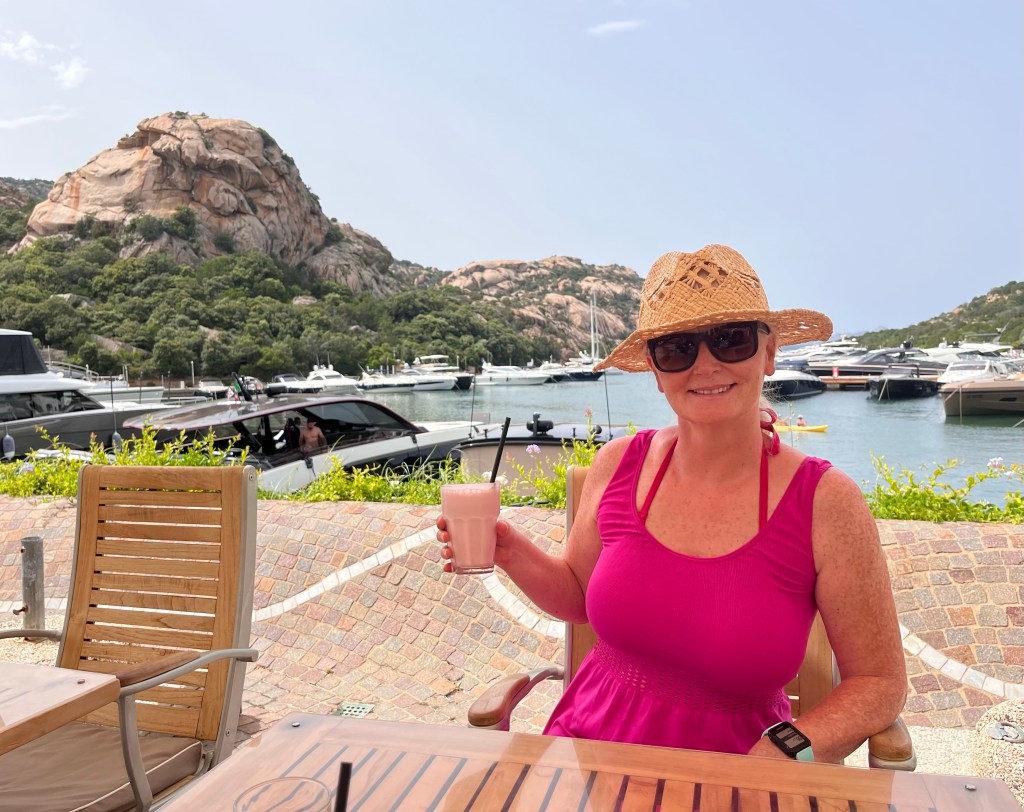
There are a few bars and restaurants in which to enjoy these beautiful natural surroundings. The vibe here is very relaxing and despite its very exclusive location prices were very reasonable it would be the ideal place to enjoy a romantic dinner. It’s a honeypot for A-list celebrities so you could be in good company 😆

Olbia

Most people arrive in Olbia as the port and airport are both situated there. Frequently bypassed as most people are staying at nearby Costa Smeralda.

We spent a few hours in the town. Definitely worth a visit as there are some interesting places. The shopping is excellent with high-end stores and budget shops. A great place to visit if the weather isn’t great or want a change from the beach.

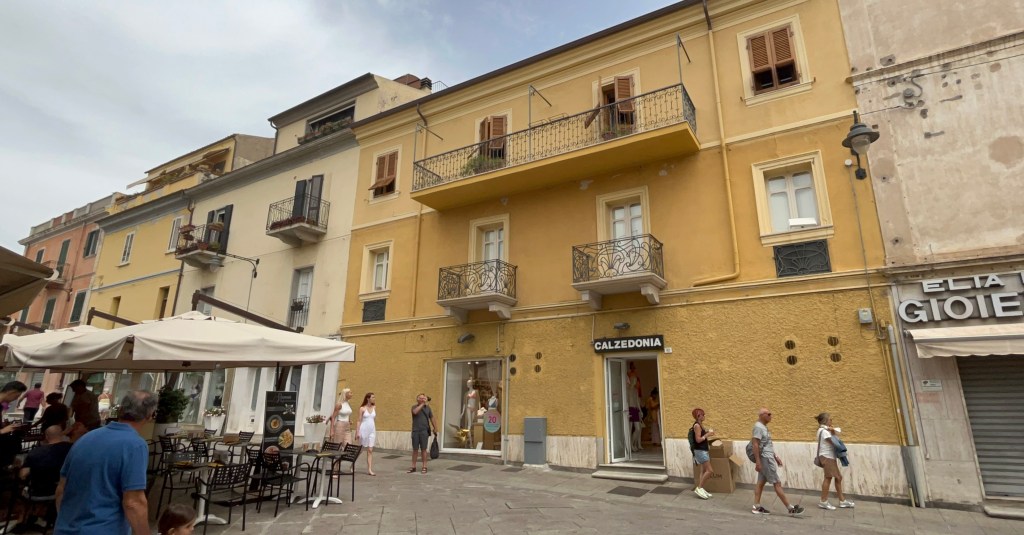
Olbia is probably not the prettiest place we visited, But it had a few charms to merit our attention a compact old town with some historic architecture and a pleasant waterfront and a large selection of inexpensive restaurants.

There is no better place to start than Olbia’s old town. Walking along the main street we saw many elegant buildings, with shops, bars and an open-air market selling many locally produced items. This small historic core is a pleasant place to amble and enjoy a leisurely alfresco lunch.

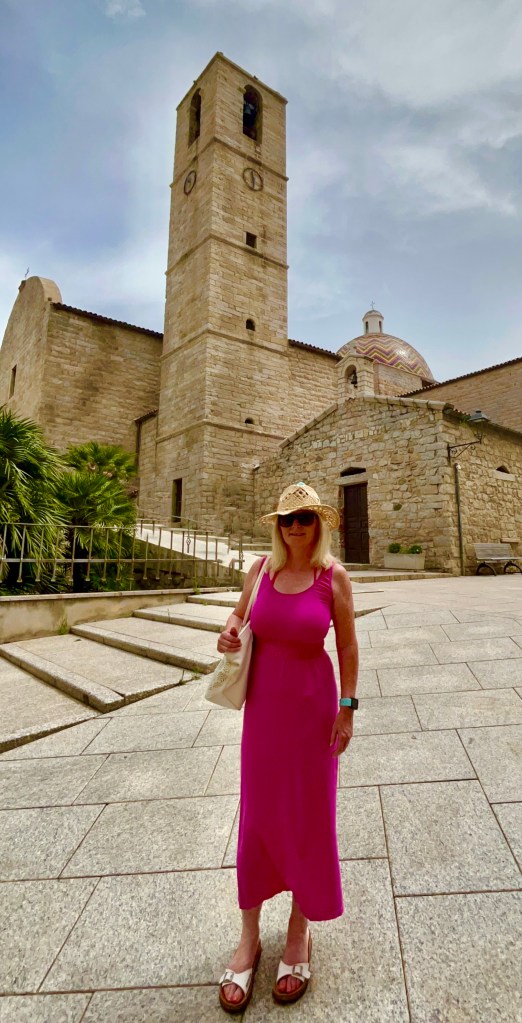
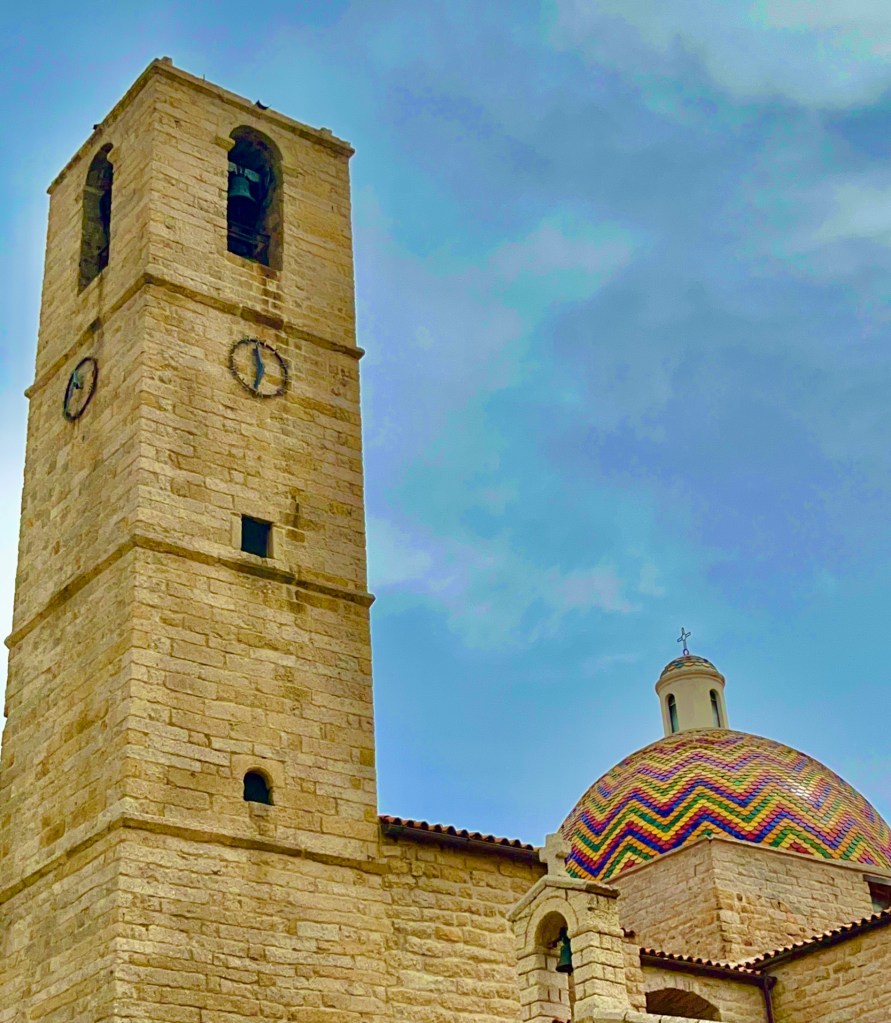
Olbia’s most important architectural building within the old town is the San Paolo Church. It is famous for its majolica dome which is a local landmark and can be seen from a fair distance.

Kos

Small size big experience

There are over 227 inhabited Greek islands spread over 4500 miles. That’s a lot of destinations to consider. Kos has long been a favoured destination for travellers looking for a Greek island getaway.

Kos is part of the Dodecanese islands and is the second most visited island after Rhodes. Due to its southerly location, it gets great temperatures throughout the year.

Although plenty of people will visit for its favourable climate and beaches. Kos offers much more for the visitor to discover. The island offers many historical landmarks that are a result of the various different cultures that have influenced it throughout its history.

Ancient Greeks, Romans, Venetians, Medieval Knights and Ottomans have all contributed to its 5000 years of civilisation. A journey of discovery is well in order when visiting this delightful island.

Although it’s not all ancient ruins. Kos boasts some fabulous beaches, the warm waters of the Aegean Sea surrounding the island and over 70 miles of coastline to discover. The mountains that make up the interior of the island are well worth visiting.

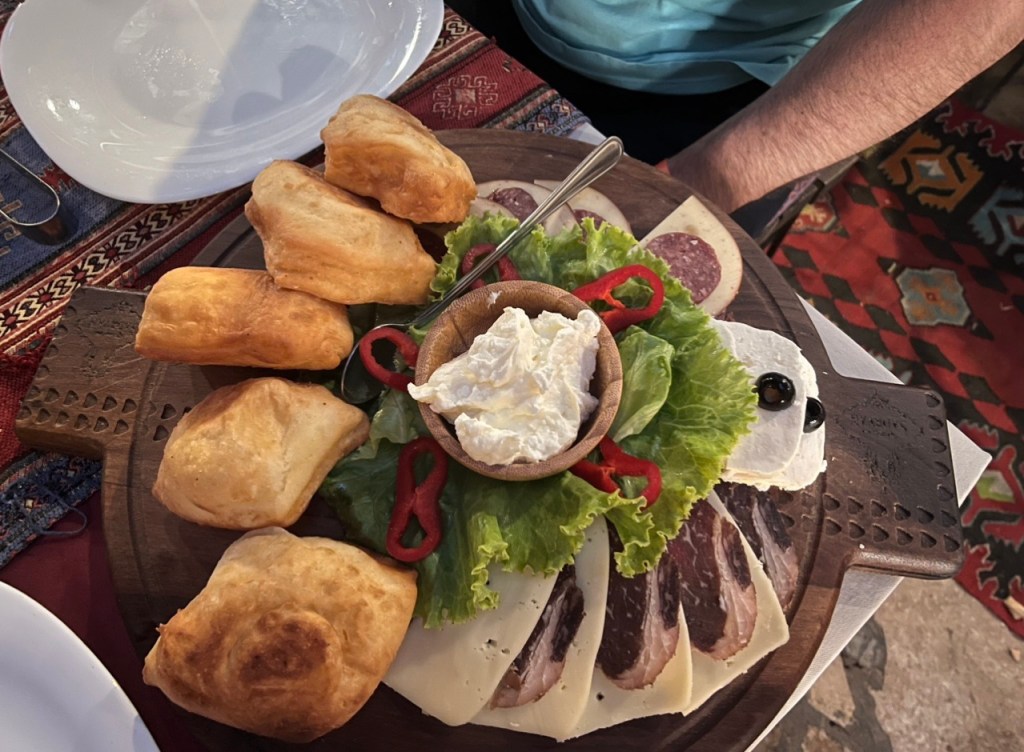
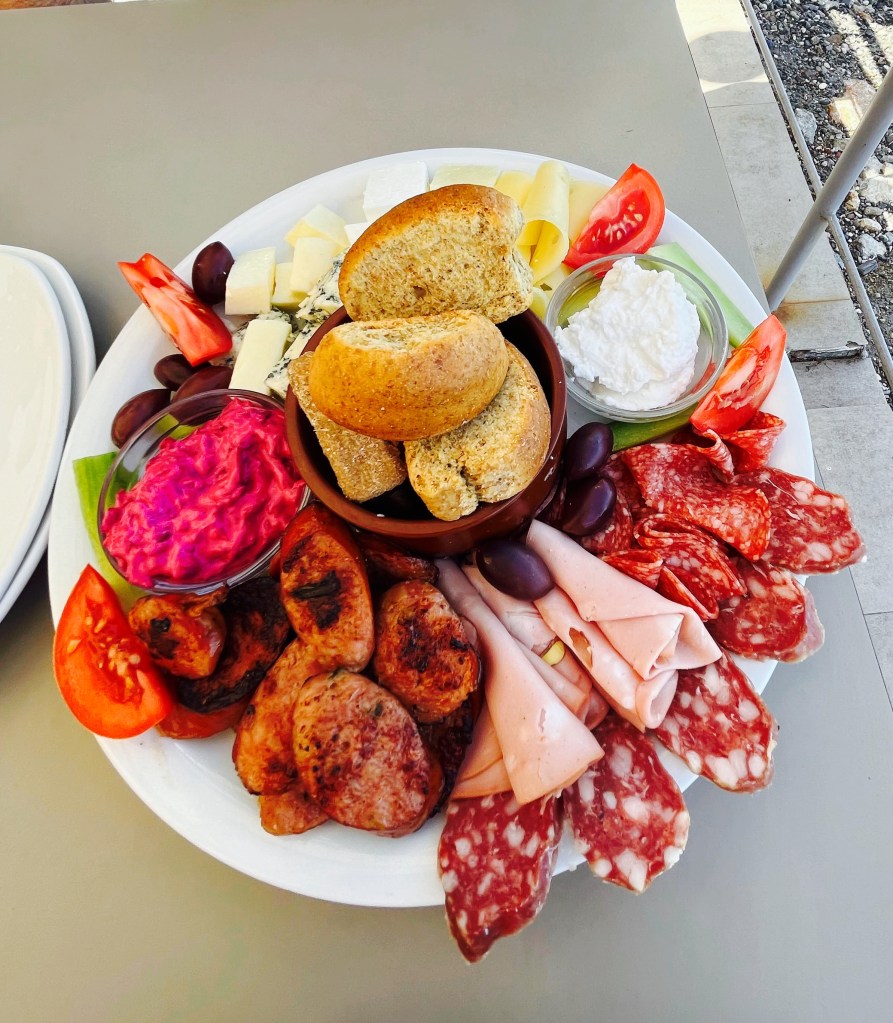
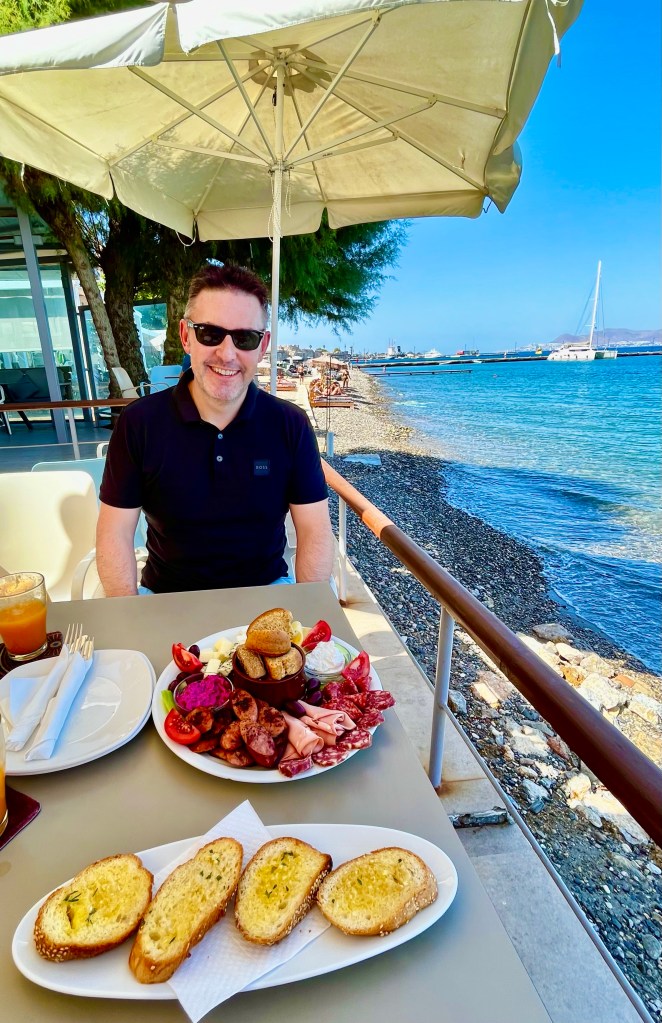
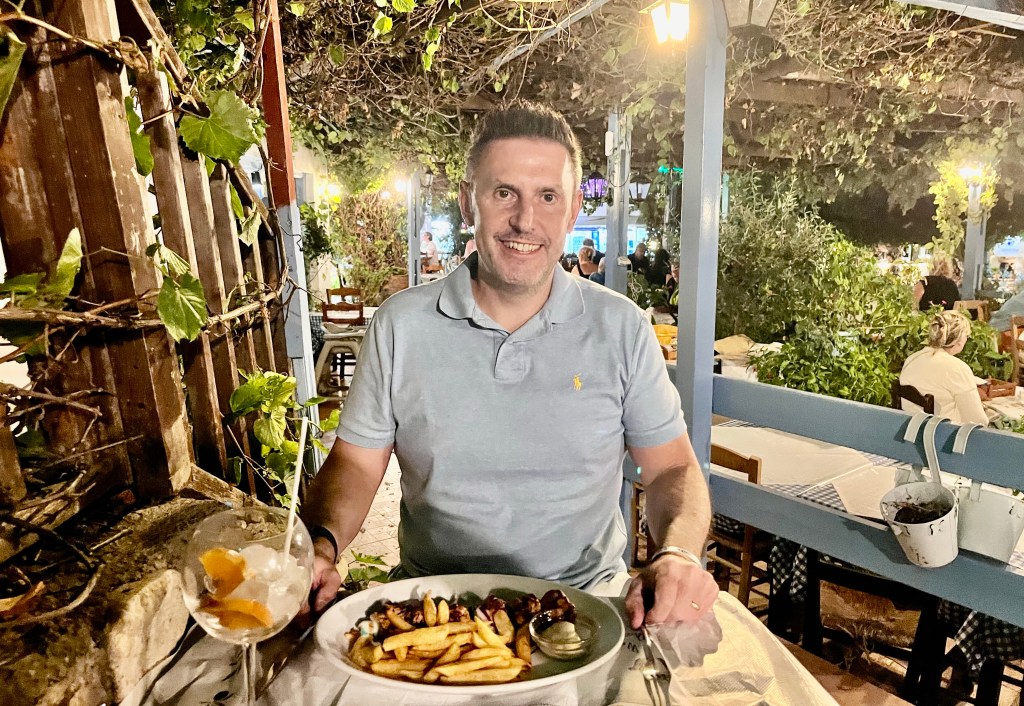
A traditional sharing platter

There is also a lot of farming on the island, expect some flavour-packed local produce from olives, lemons, honey, cheese, wine, breads and an abundance of seafood. Kos is certainly a place to enjoy the local cuisine from tavernas, street vendors and purchasing from farm shops or local markets there will be endless opportunities to enjoy good quality local produce.

Kos Town

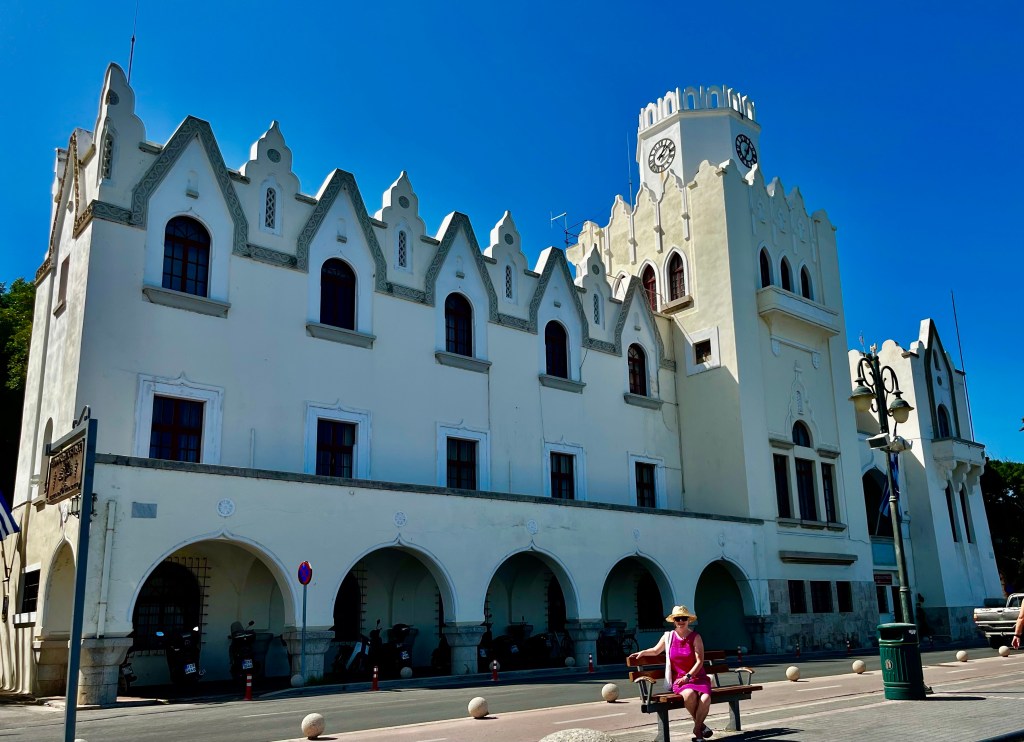
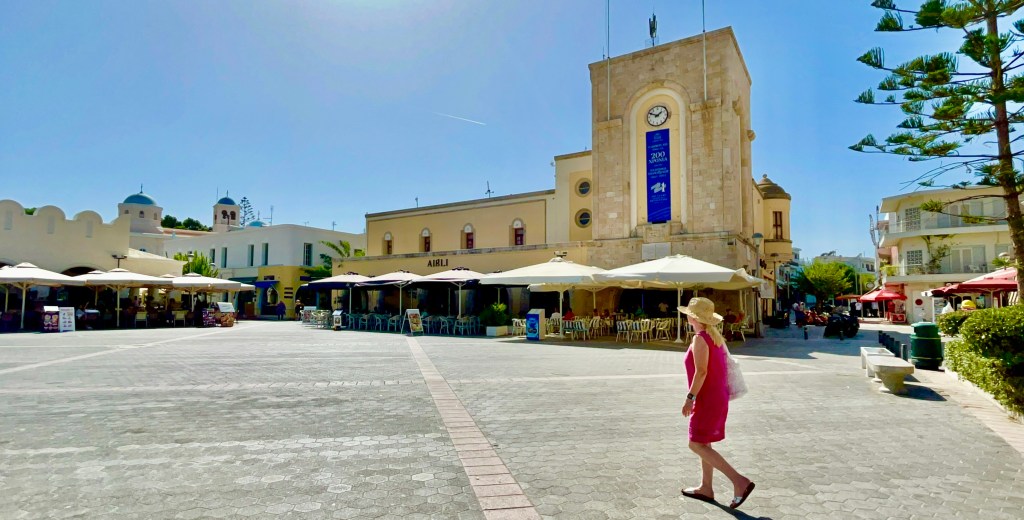
Built around its harbour in which the town fans out. Whether looking for history, sightseeing, nightlife or beaches Kos Town Kos Town won’t disappoint.

Kos Town is the capital of the island and along with Rhodes Town is one of the main hubs in the Dodecanese islands.

Kos Town is a popular tourist destination and is an enjoyable place to visit with plenty to see. The town is much more than just a functional administrative centre. There are a few intriguing sights including ancient ruins and a small old town.

Kos Town has been an important town since the time of the Ancient Greeks, so there are centuries of history here. Unfortunately, not all of it has survived due to numerous earthquakes and invasions so it’s not as impressively reserved as Rhodes Town.

However, there are still enough points of interest spanning all the invading empires Ancient Greeks, Romans, Byzantine, Venetian, Crusaders and Ottoman, which occupied our interest for a day or two.

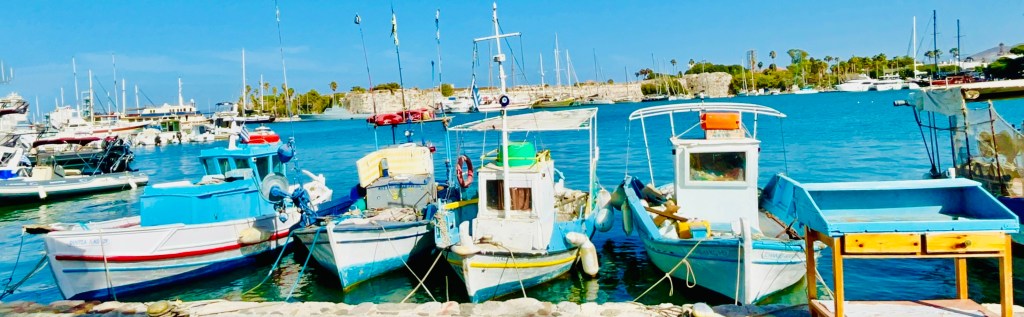
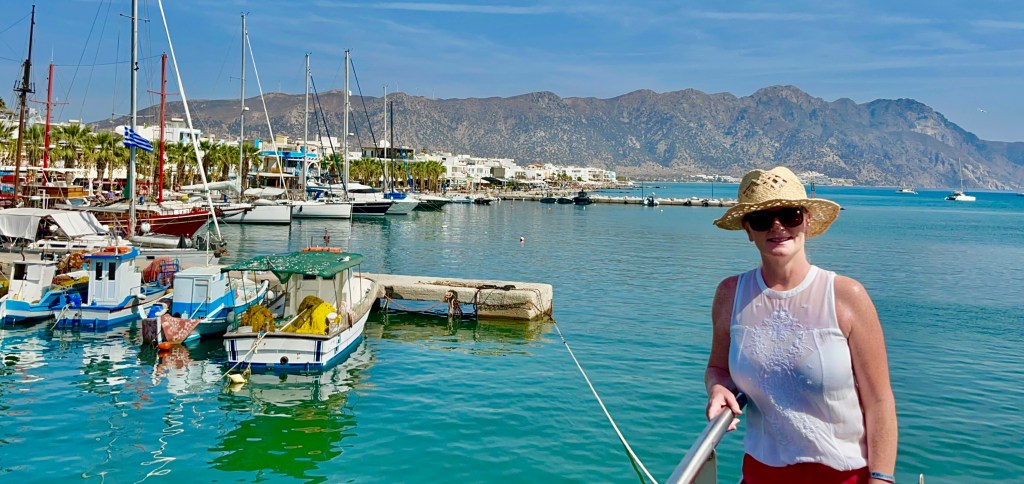
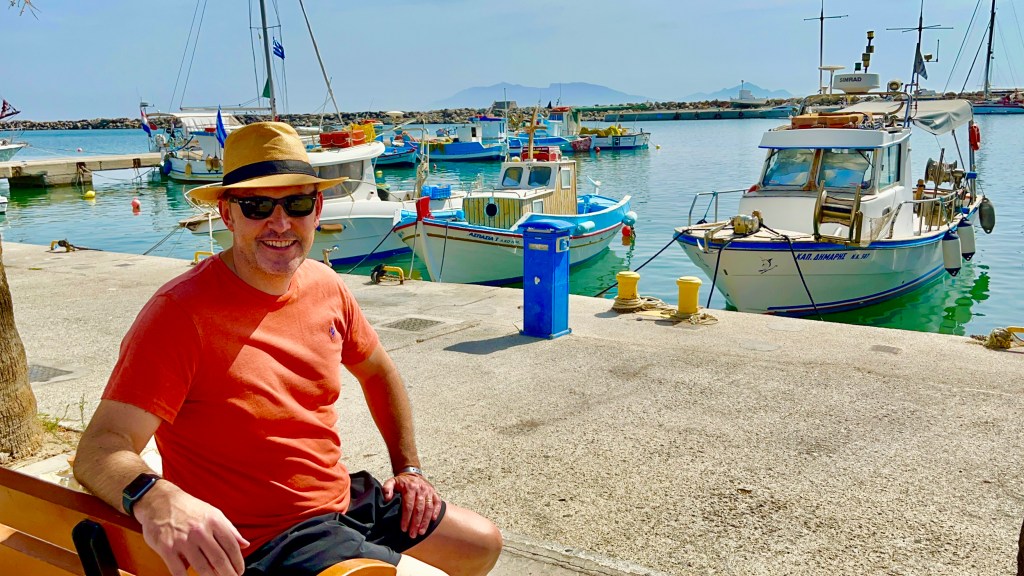
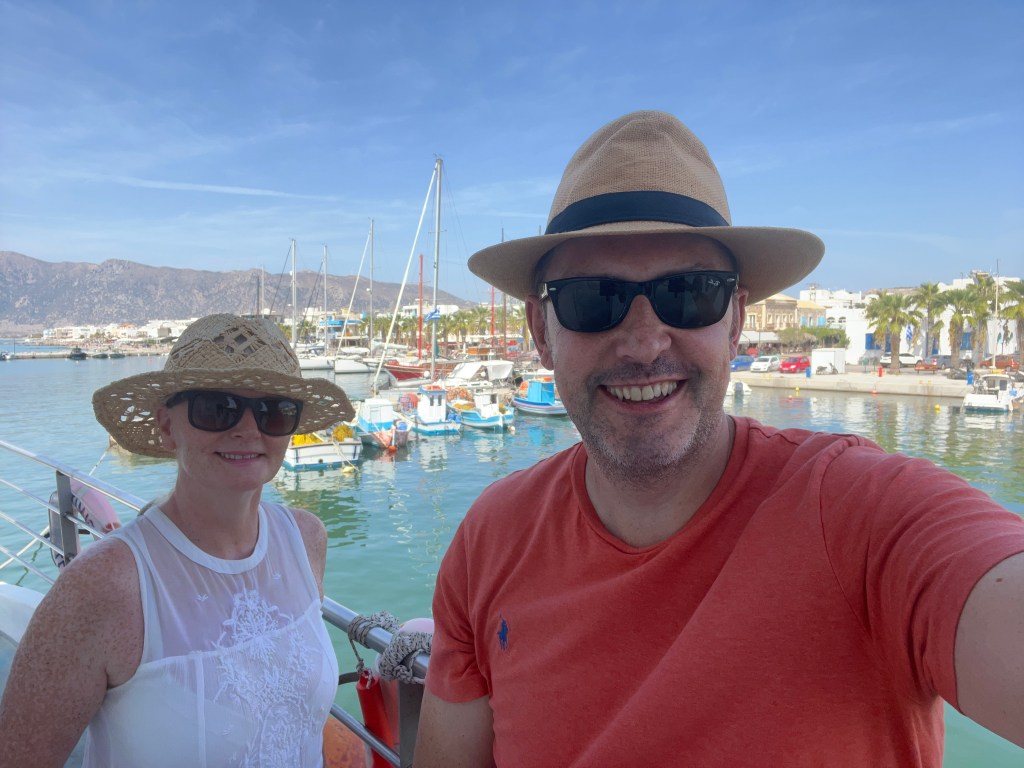
The harbour is one of Kos Town’s key attractions. It’s been a strategic asset for centuries. Today it is packed with tourist boats offering excursions and some fishing boats for hire for fishing expeditions and is a hub of activity.

Beautiful view and food what’s not to like?

As it was lunchtime the waterfront was the perfect location to enjoy an alfresco lunch. The great thing about Kos Town is there are plenty of opportunities to enjoy delicious Greek cuisine

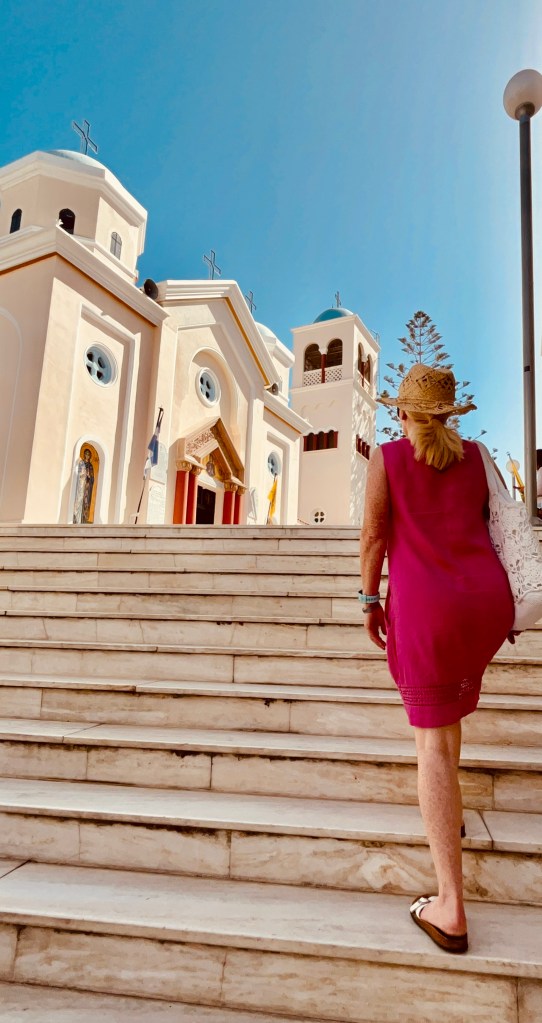
The main central streets especially running of the harbour can be a bit busy, however a short walk off these main streets we discover more genteel surroundings, lush green alleyways and a relaxing atmosphere, to view all the different architectural styles of the countless civilizations which have occupied Kos over the years.

Although small in size as a first-time visitor I was surprised by how much there was to see in such a compact town of 19,000 people. The significant sightseeing opportunities are a clear reflection of its long history.

Kos Town by night

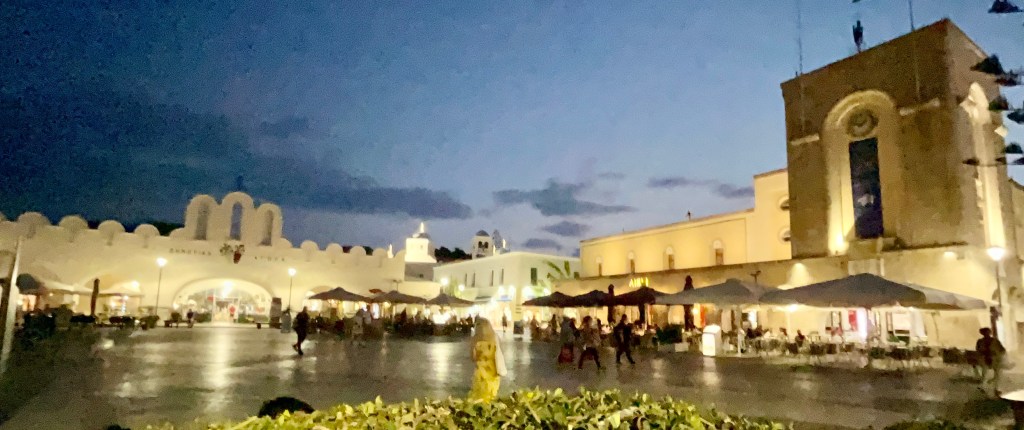
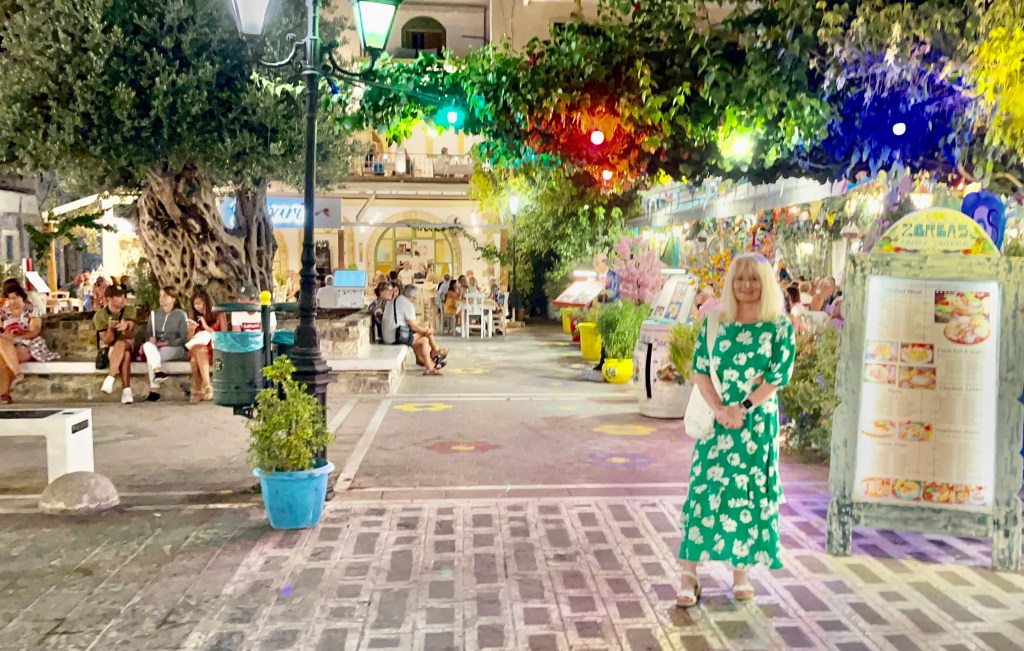
Kos Town can be quiet by day but certainly comes alive at night. Particularly on the harbourfront. Whether looking to get the drinks flowing and party till the early hours or like myself looking for a more relaxed evening enjoyment of a nice meal and a cocktail. Kos Town will have all the bases covered.

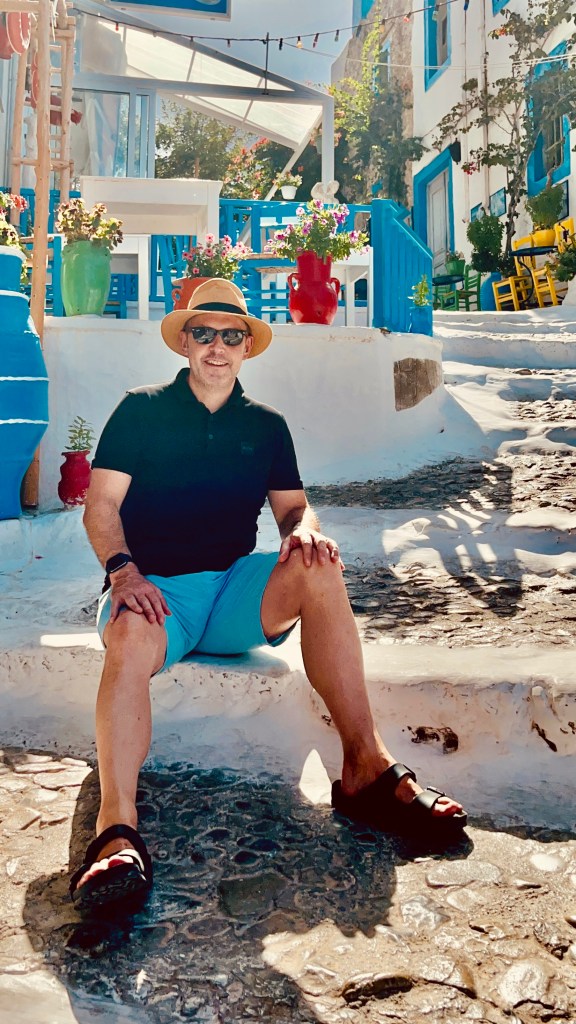
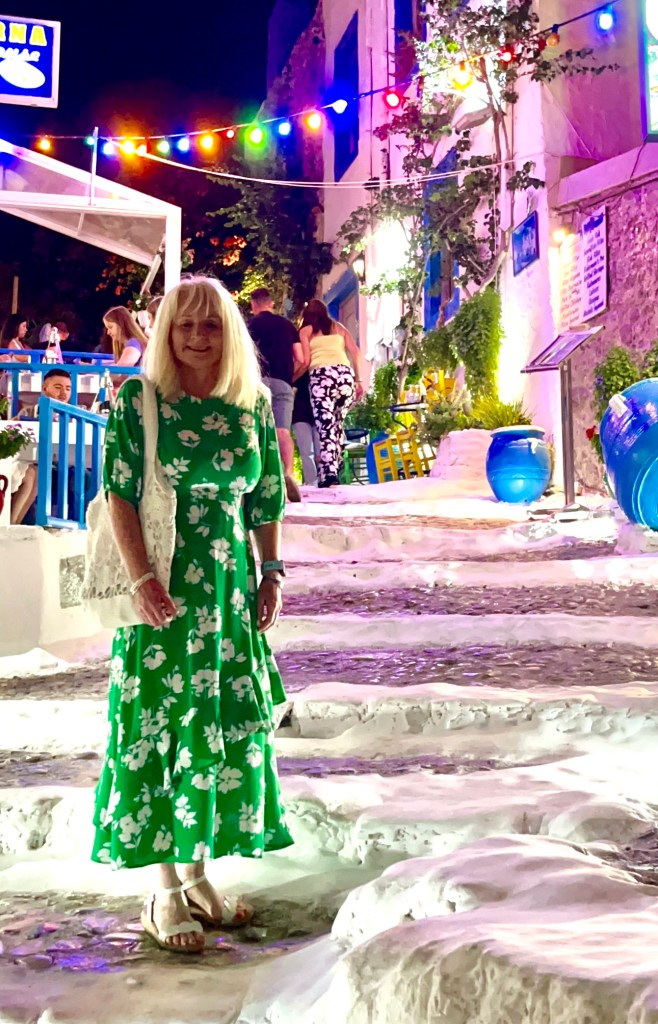
Just off the harbourfront, we came across the white steps unsurprisingly not hard to find as they are white. Nothing especially impressive about them but it’s a popular picture location and it does add some appeal to the area.

A particular favourite of mine was Kos Old Town. It’s not a large area a few streets running north to south. Starting at Freedom Square and ending at Diagores Square. The area is fully pedestrianised.

It’s a delightful location to enjoy an alfresco meal. An eclectic mix of Byzantine and Ottoman architecture blended with more modern architecture. Eating out here is a very pleasant experience in tasteful restaurants with prices that won’t break the bank.

After all that mouthwatering Greek cuisine time to take a stroll around the picturesque Old Town for a spot of retail therapy looking at the elegant shops with their stylish displays. It’s a perfect location for a low-key nighttime experience.

Persisting with the low-key theme, after an evening in Kos Town. Time to finish the evening with a drink back in the casual ambience of our hotel

Kos Town Beachside

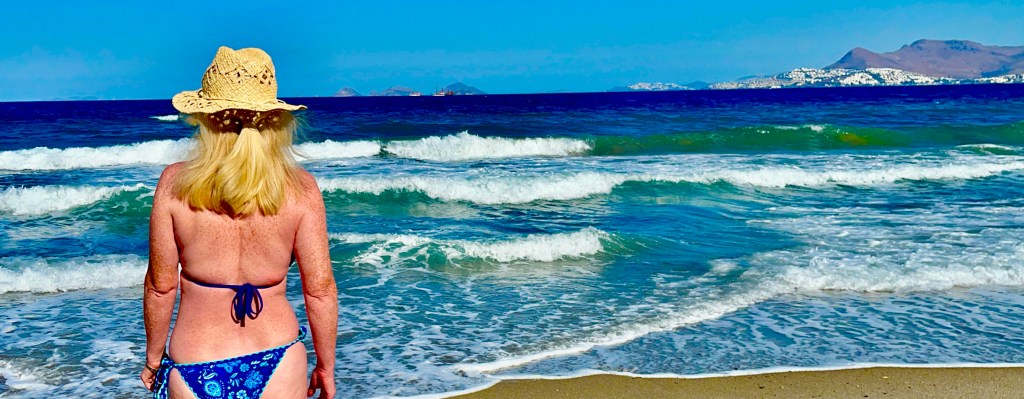
Although not my primary reason for visiting, Kos had a vast array of beaches to choose from. Kos has a reputation for being a premier beach destination, although I wouldn’t go as far as to call it a Mediterranean oasis the beaches were idyllic and relaxing places to visit.

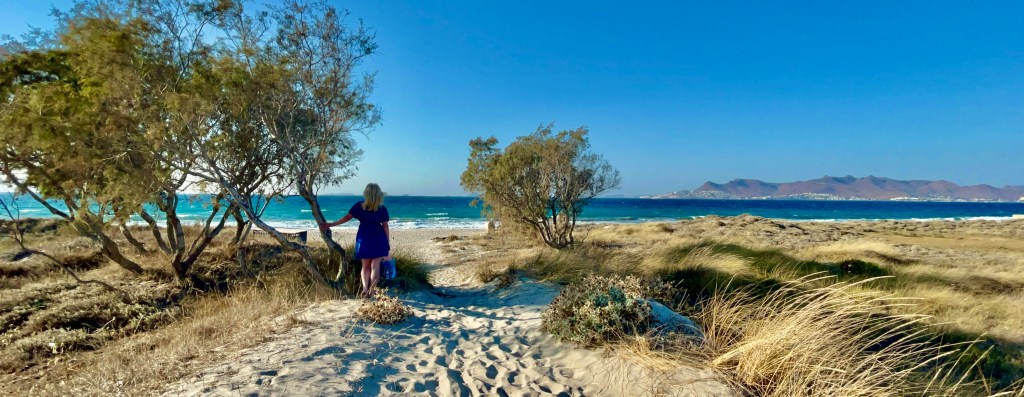
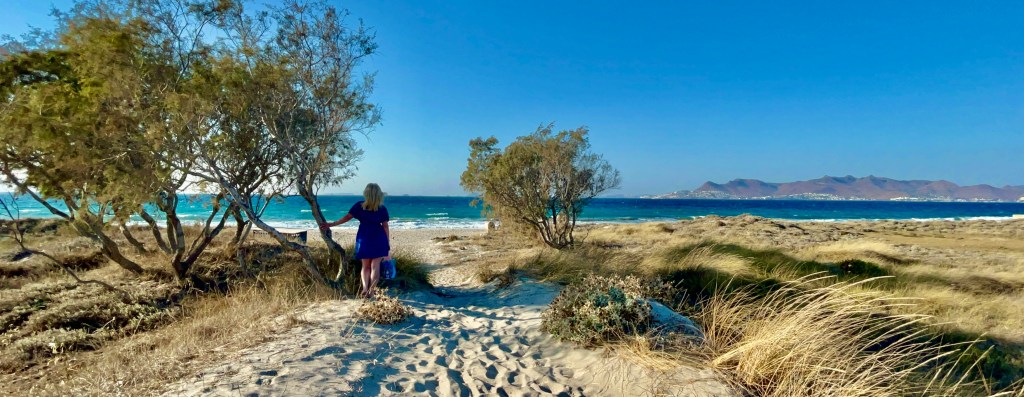
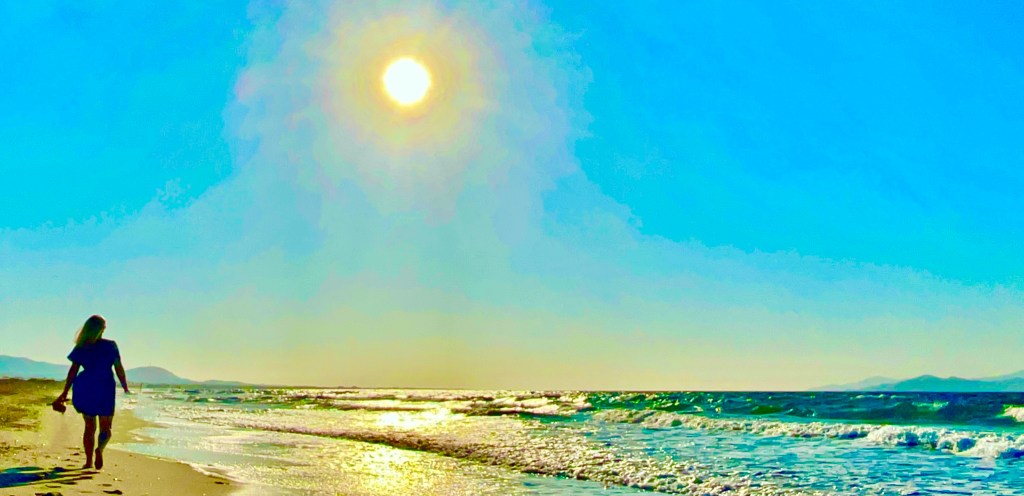
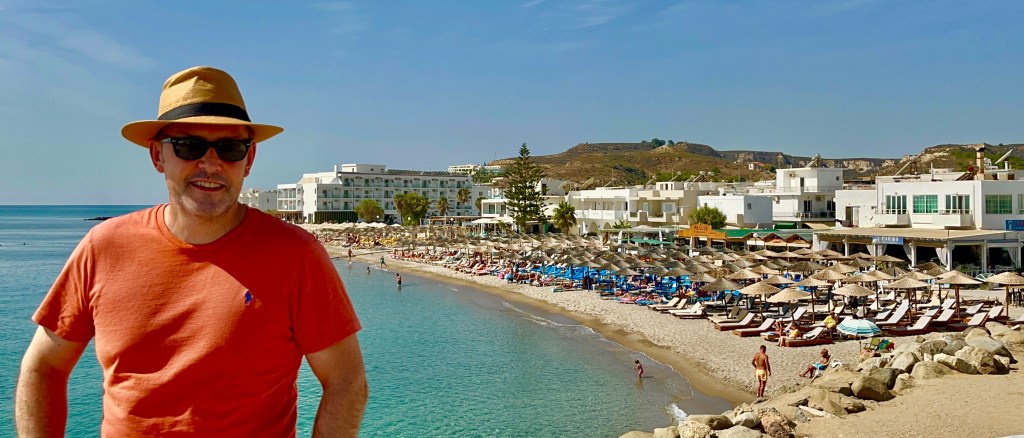
We were staying at a hotel 2.5 miles from Kos Town the beach there is called Lambi. The long beach stretches for 1 mile with plenty of sunbeds and umbrellas and a few tavernas and bars, especially at the northern end closer to Kos Town.

It’s a sand and shingle mix and despite only being 2.5 miles from the centre of Kos Town, where you get all the hustle and bustle, Lambi Beach was far enough away to be a very peaceful location giving us the best of both worlds.

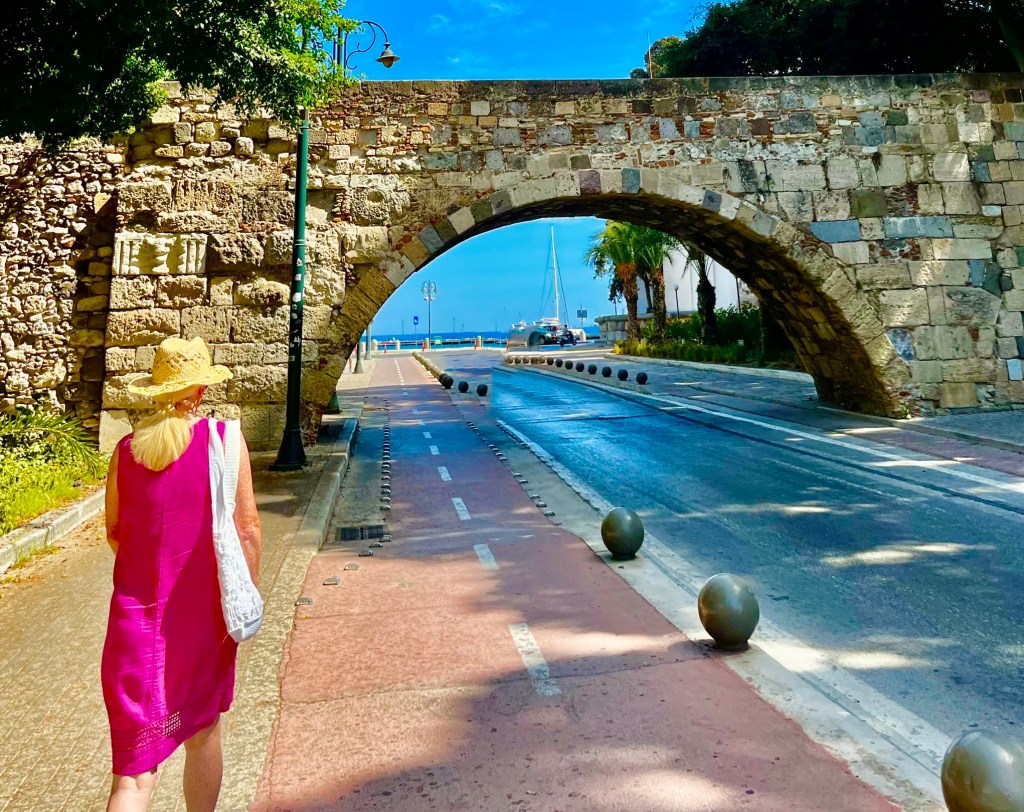
The further south you go the quieter the beach becomes. Many of the larger hotels are situated here and becoming more frequent as you get further away from Kos Town. There is a cycle path which runs adjacent to the beach which is also used by joggers and walkers and takes you into the centre of Kos Town.

Zia

A small village on the slopes of Mount Dikiaos, best known for its impressive sunsets. It doesn’t stop there, for nature lovers the well-kept National Park of Zia is a must.

The village is situated 16 kilometres from Kos Town so is in theory easily accessible. However public transport is very unreliable and taxis are not plentiful on the island.

Leaving two options to hire a car or book a transfer with a local company that runs trips daily and is a very low-cost alternative we choose the latter.

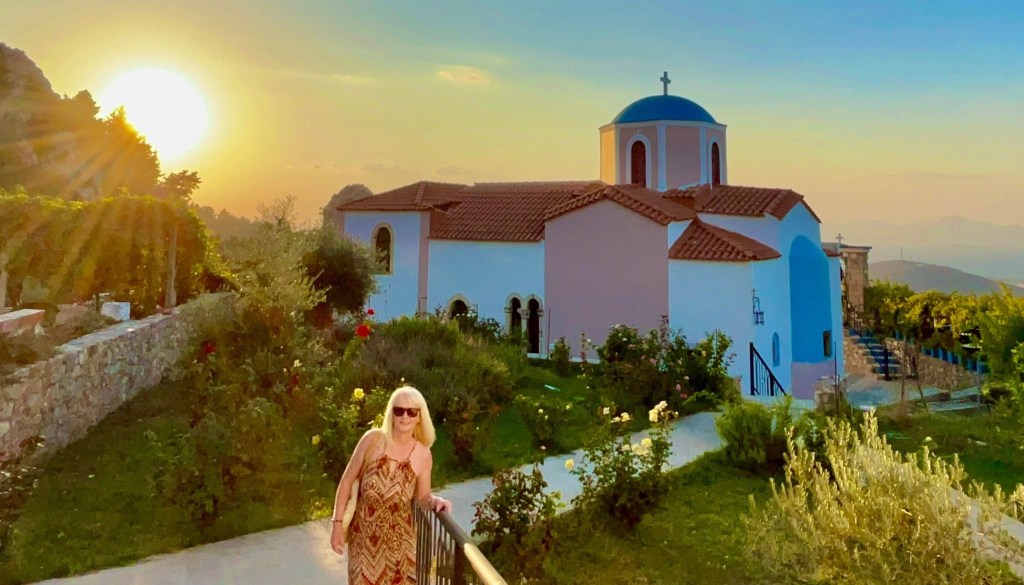
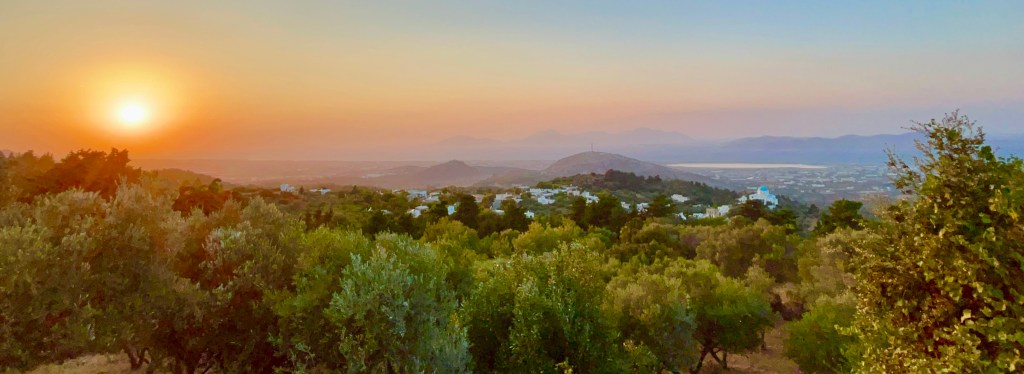
The village is very pretty with its cobbled streets, lined with charming shops and restaurants, nestled amongst lush green forests it’s an interesting visit in its own right. But what sets Zia apart from other mountain villages is its sensational views at sunset.

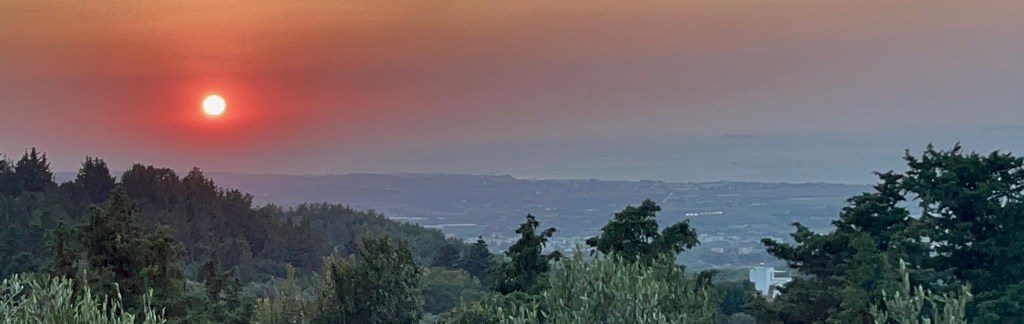
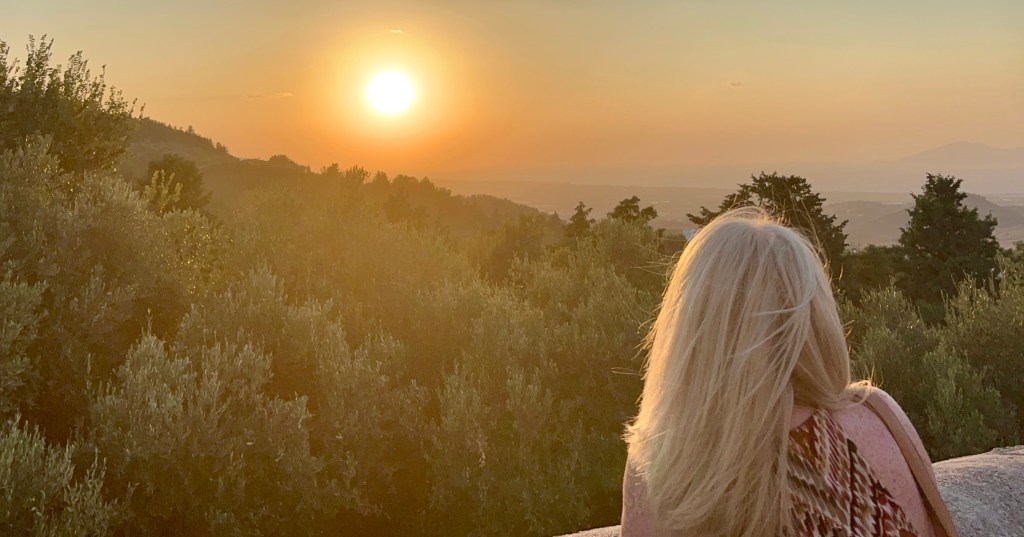
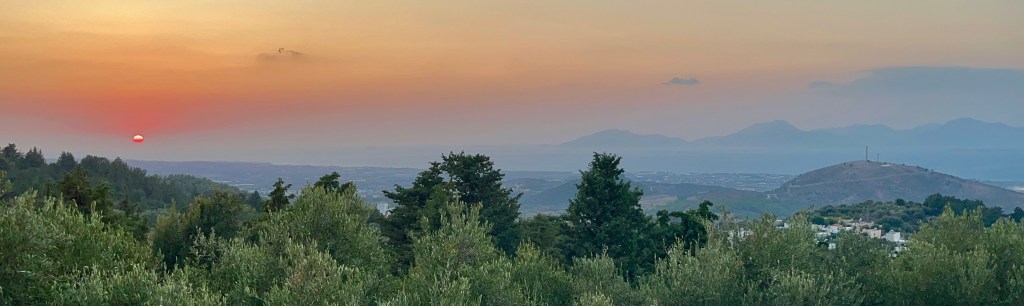
Although it’s a very busy location and can be somewhat of a tourist trap. This was soon forgotten as the sun dipped below the horizon, and the entire island of Kos appeared to bask in a warm golden glow. I might appear to sound a bit pretentious but this was a precious moment and the highlight of my visit to Zia.

Zia is a fantastic location with a mix of stunning viewpoints and friendly locals. An abundance of mouth-watering restaurants to choose from some with fantastic vistas for sunsets (although booking is advised). This is the perfect location to indulge in local flavours and authentic Greek cuisine.

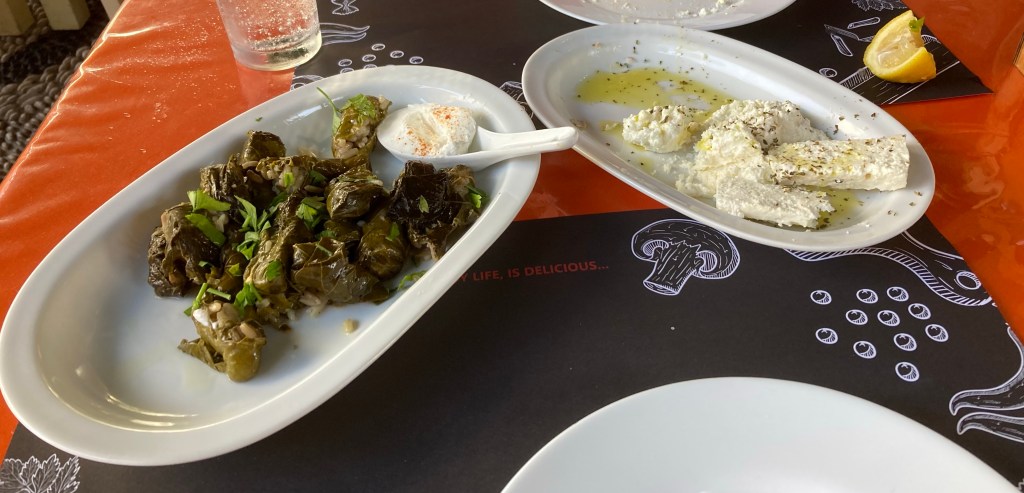
Stuffed vine leaves and wine cheese are two of my favourite Greek dishes.
Kardamina

A popular resort lying 30 kilometres southwest of Kos Town

Kardamina is well-developed in all aspects, with integrated infrastructure. Lots of accommodations and tourist amenities. Despite all this resort-like development, Kardamina just about retains its traditional charm.

However, without doubt, its greatest attraction is all-natural. A 2-mile stretch of soft golden sand. If you just want to visit Kos for the beach and nightlife experience then this resort is definitely you’re first choice,

There is a small Marina at Kardamina with regular ferries to Nisyros and other outlining islands. This was the reason for our short visit to Kardamina. Definitely worth a visit and totally different vibe to Kos Town.

My last-minute rearranged trip went in a blink of an eye. A very relaxing destination and for a relatively small island there is a large spectrum of activities and events to spend your time discovering from history, culture, architecture, beaches, mountainside villages and activities on land and water to keep you busy.

A very agreeable climate with an excellent dining scene, and friendly locals. This was my first visit to Kos but most certainly not my last.

Island hopping in the Dodecanese

Kos is a fascinating Island but while we were visiting, we couldn’t resist the opportunity of a brief getaway to some of the nearby islands.

Kos is part of the Dodecanese Islands. What I didn’t realize is that there are 12 large islands and over 150 smaller islands within the island group. Kos is an ideal place in which to enjoy a short visit to the numerous islands of the Dodecanese.

A little bit of planning is in order as the islands are dotted all around Kos where we were staying. Nonetheless, in actuality, most boat trips will either depart from Kos Town in the north of Kos or Kardamina located on the south-central coast. We had chosen three islands to stop by during our ten-day stay.

We booked organized trips as public transport although frequent, is not very reliable and taxis are in very short supply. Organised trips are not always the most personable way to visit but when taking into consideration time and cost they offer very good value.

Nisyros Island

Nisyros Island is a very pretty location with unique volcanic terrain. It is a relatively unknown Ageaon Island and is situated near Kos. With frequent ferries departing from Kos to Nisyros, it’s not difficult to reach and is worth a visit.

Mandrakion

This is where the port is located and is the main town on the island

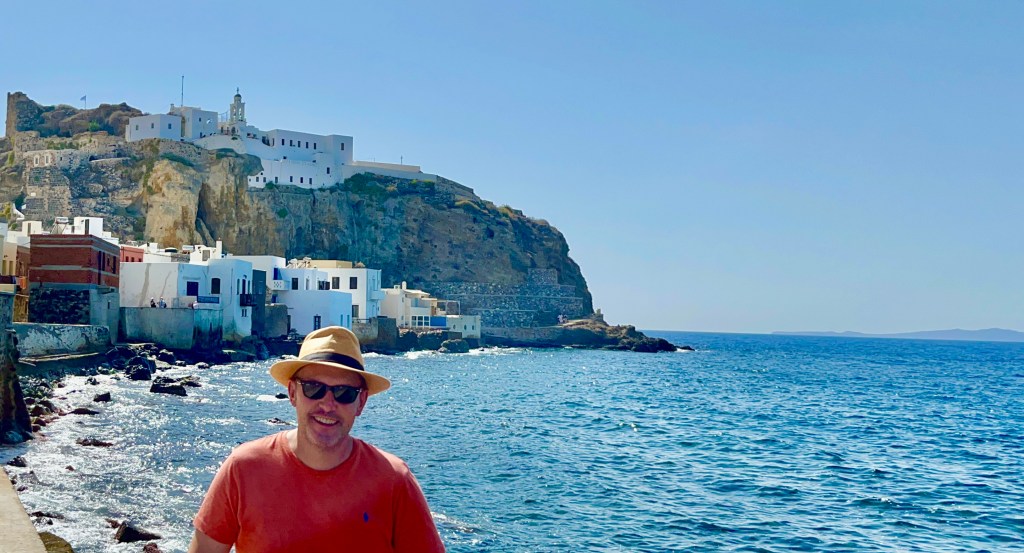
When we arrived at the port it was a short walk to the town, where the impressive Monastery of the Panagia Spilianas which itself is situated within the walls of a 14th-century castle impressively overlooks the town.

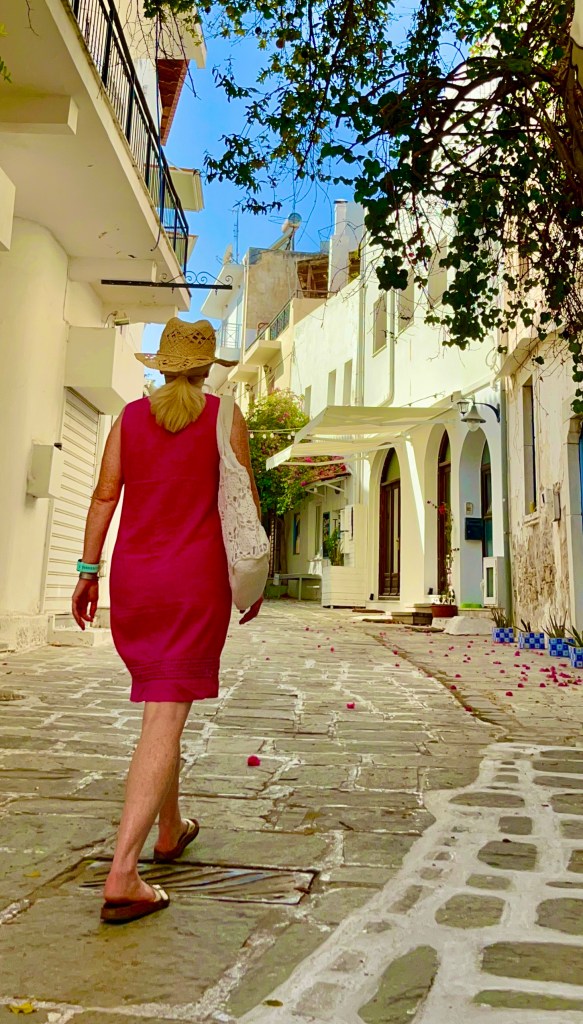
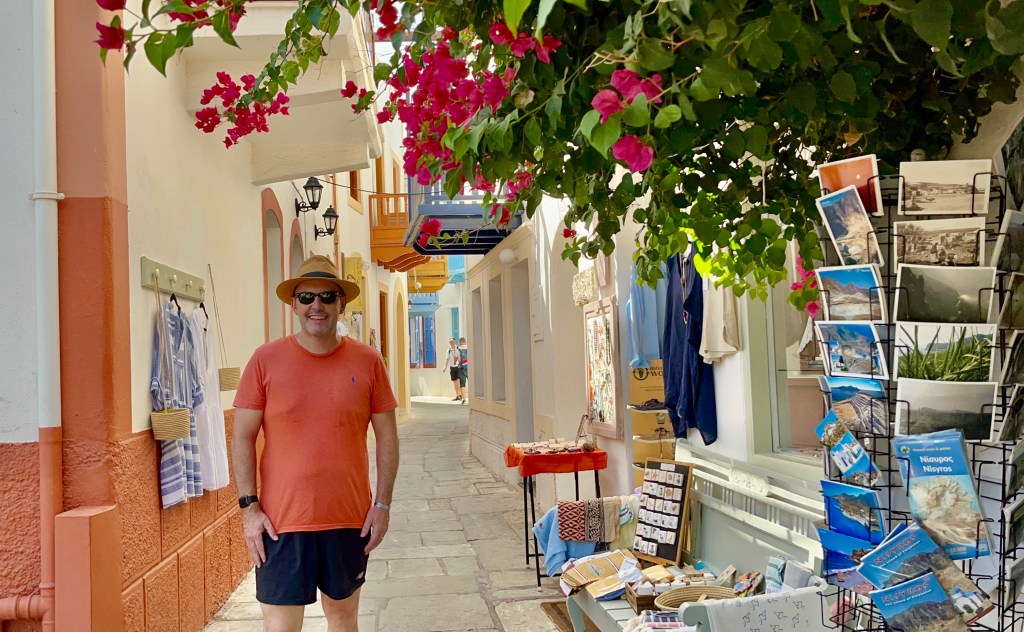
Once we got into the town away from the centre it was full of narrow alleys lined with flower pots and charming cobblestone squares.

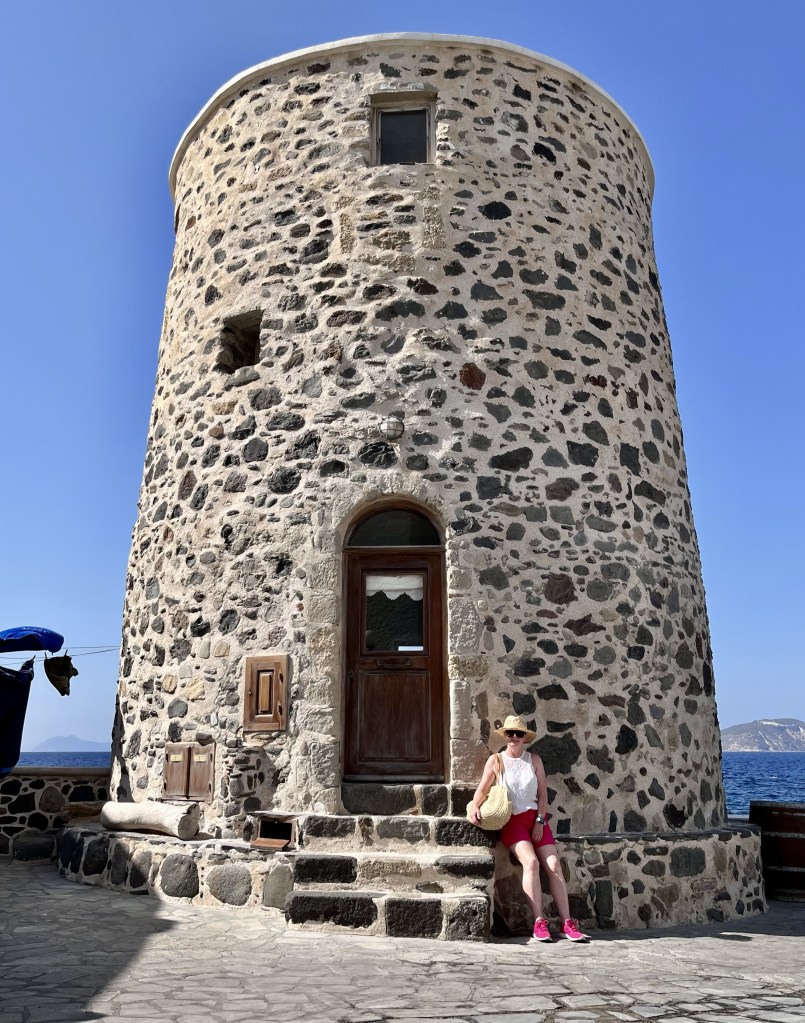
A lot of the buildings are made from volcanic rock and pumice stone. The island is well-known for pumice stone and many smaller islands located off Nisyros are quarried for pumice stone which is widely used in the beauty industry. The island gets substantial payments for the rights to quarry the pumice stone.

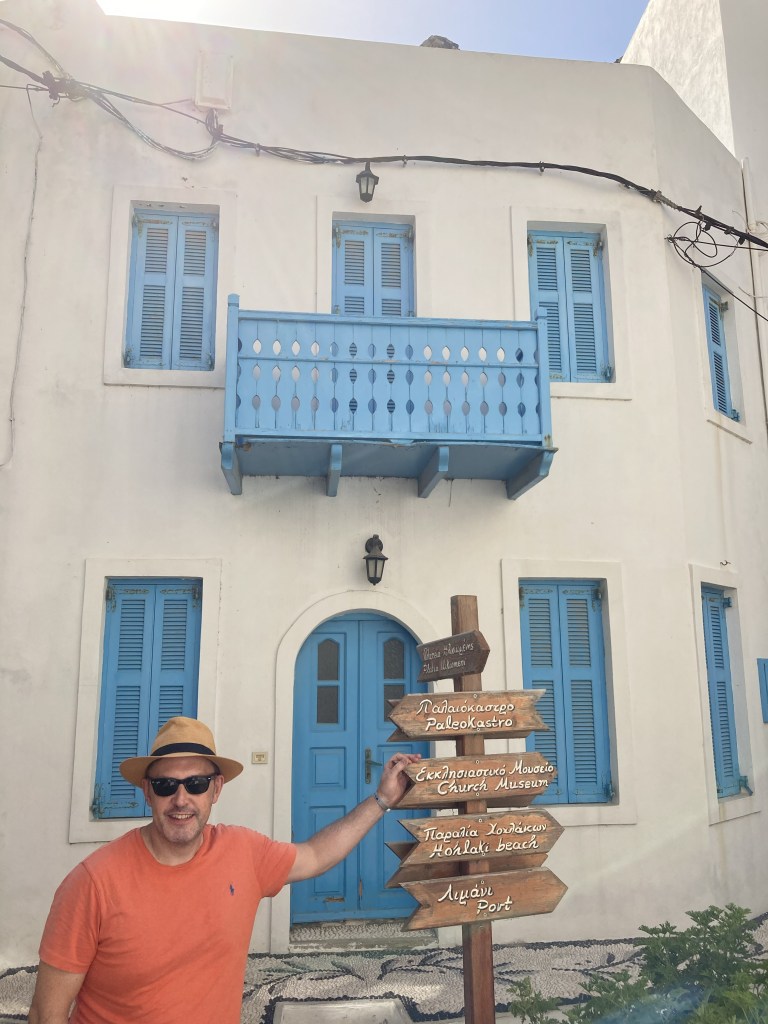
The houses in the town are very traditional. Mainly white or multi-coloured they are two storied with wooden balconies and wooden shutters.

Away from the beachfront the pace of life here is very slow. Although Mandrakion is the capital of the island it only has a population of 600 people and probably 1000 cats. Unlike a lot of other Greek islands, tourism is very low-key and the island still feels very traditional and relatively untouched by over-commercialism.

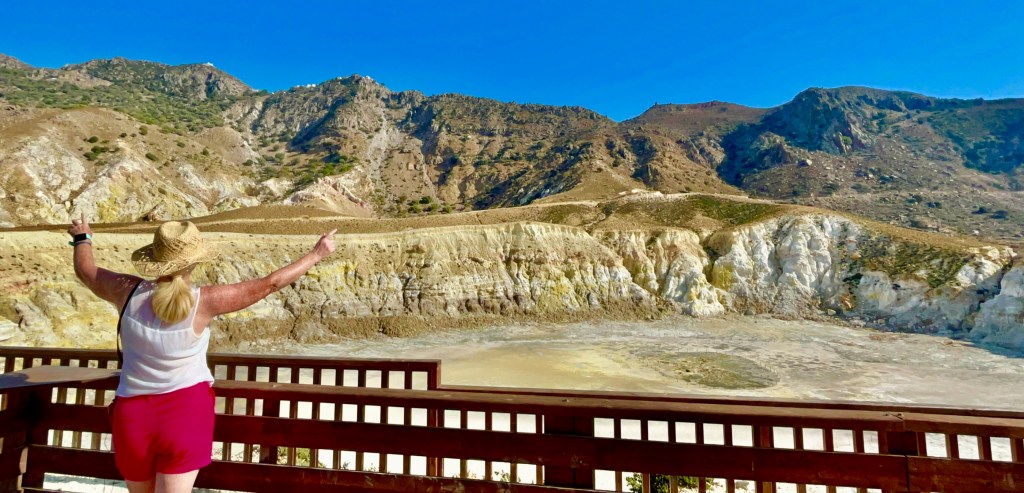
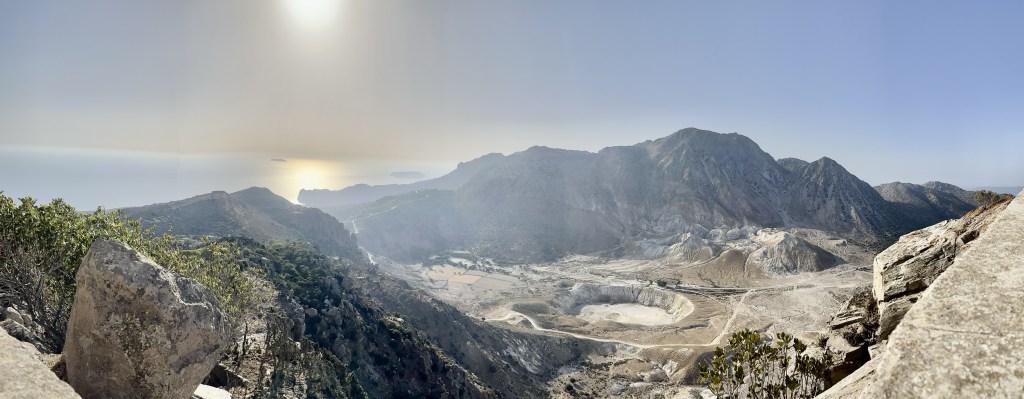
Nisyros Volcano

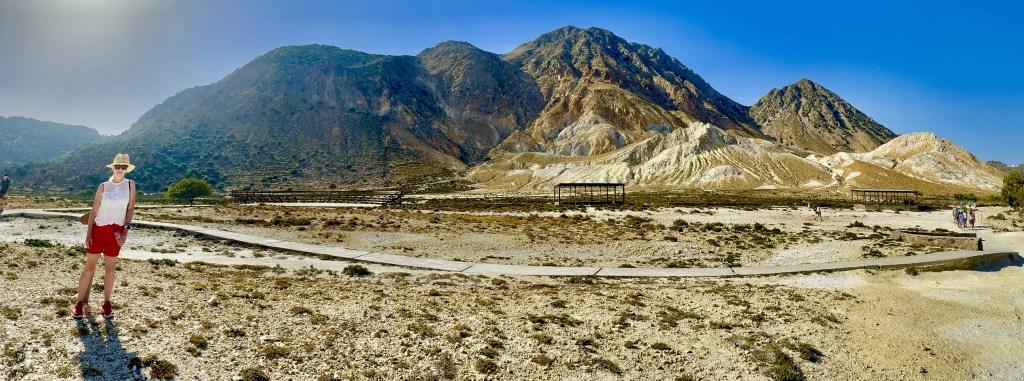
Unknown to me, there is an active volcano on Nisyros, but not erupting, fortunately.

It’s a very unique volcano 🌋 to visit, as it is the only active volcano in which you can walk anywhere in the world.

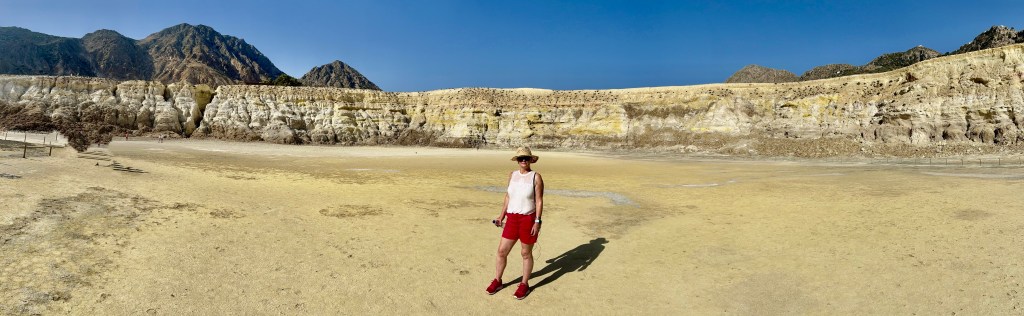
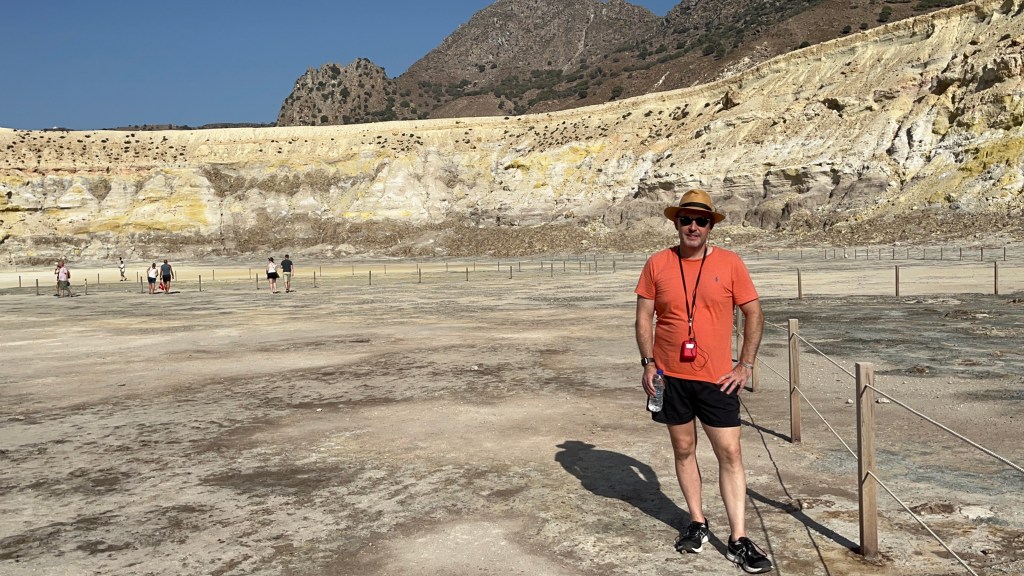
After scrambling down a rocky slope we soon found ourselves in an unnatural landscape. Holes of steaming bubbling mud dot the crater floor.

The sulphuric whiff will be immediately evident and another thing to be aware of is the heat that will seep through the soles of your shoes, so appropriate footwear is essential, best not to wear any flip-flops.

The centre of the crater is fenced off and there are some small fumaroles, rough openings with steam coming out of them.

Beneath the volcanic surface runs a hydrothermal system which results in hot springs gushing at some places around the Nisyros coast.

The visit was very enjoyable, having seen a few volcanoes previously around the world my visit here certainly didn’t disappoint. If you only had one place to visit while visiting Kos I would certainly suggest this one. There is a very nice cafe there and the prices were very reasonable.

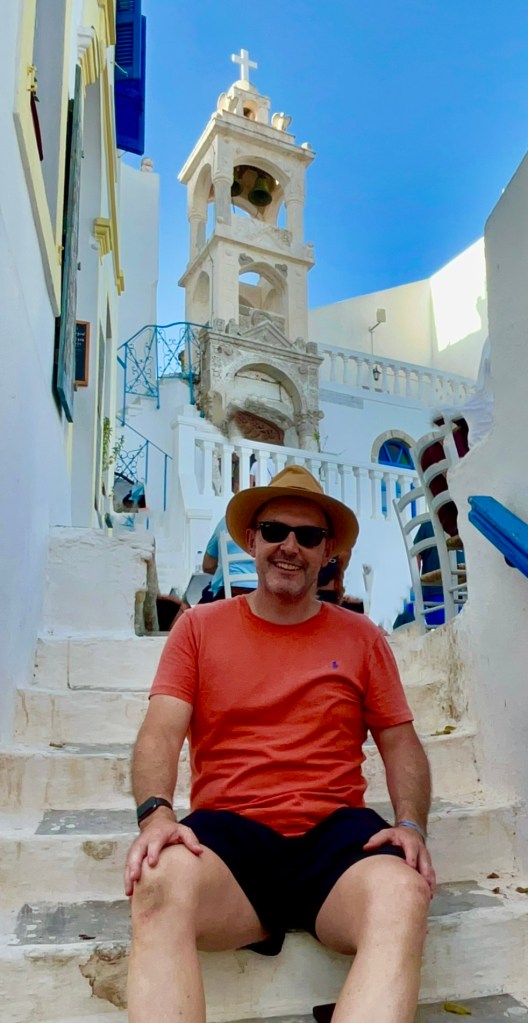
Nikia

A traditional mountain village. Built on the edge of a crater, gazing at the Aegean Sea on one side and the craters of a volcano on the other side.

Because of the panoramic views of the crater from the village it has become something of a tourist hotspot. This once-sleepy mountain village is now a hub of activity.

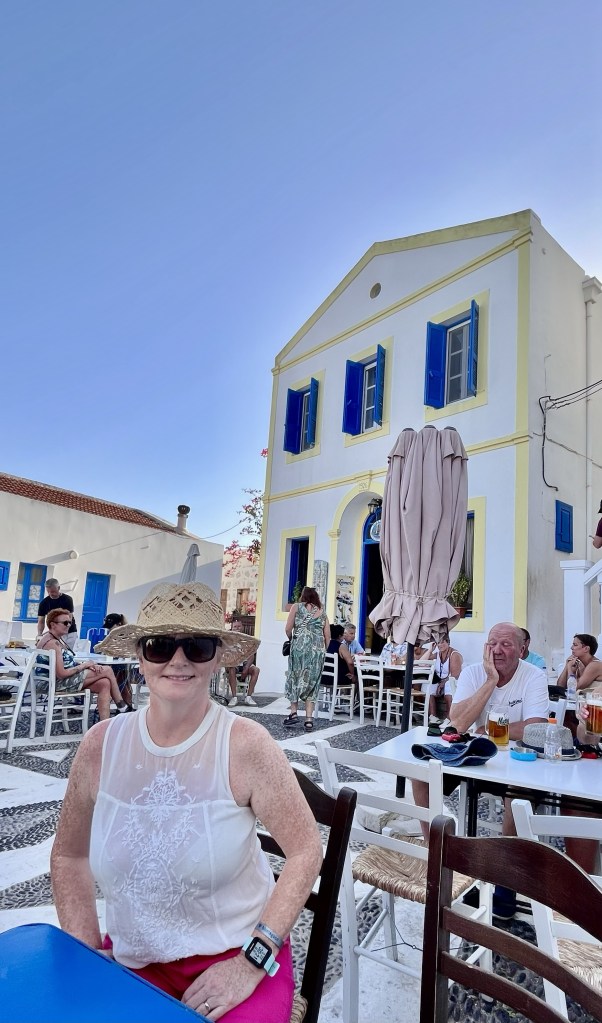
The main square in Nikia is one of the most photographed spots on Niyros and is regarded as one of the most picturesque squares in the Aegean.

You will discover two tavernas in the square where you can sit down and have a drink and marvel at the wonderful location. It’s very traditional and is somewhat more secluded than the coast. Although it can get very busy.

At the square, you will find a beautiful church, The Church of the Assumption of The Virgin Mary, the church is unusual, as the majority of Greeks are Orthodox, not Catholic, however, some outlying islands were settled by the Venetians. This made sense to me now as Nikia did have the feel of an Italian rural village.

Walking around the village we found some interesting architecture. Whitewashed houses with single-tiled roofs brightly coloured doors and pebbled courtyards. Then in the blink of an eye, it was time to leave this remarkable village and get back to the port at Mandrikon.

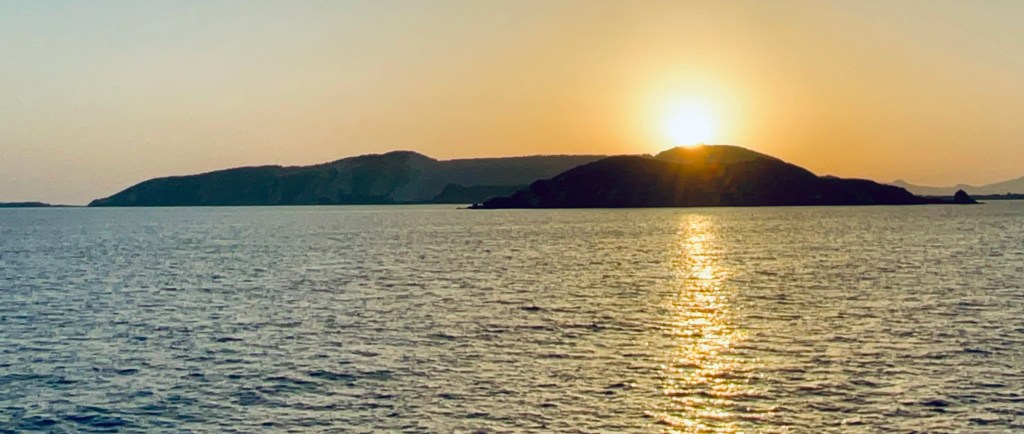
On the way back to Kos a majestic sunset, topped off what had already been a remarkable day.

I had never heard of Nisyros before my visit to Kos. It will not be an island I will forget in a hurry. I would have liked to have stayed longer but couldn’t miss the last ferry back to Kos.

Kalymnos Island

Kalymnos sits very close to the Turkish mainland and is known for its rocky natural landscape.

The island is part of the Dodecanese islands and boasts a long tradition of sponge diving in addition to its laid-back vibe and stunning natural scenery.

The island is rather remote and we arrived by boat, surprisingly there is an airport on the island. Kalymnos is a popular place for Greeks from the mainland who appreciate its tranquillity and its classy but simplistic vibe.

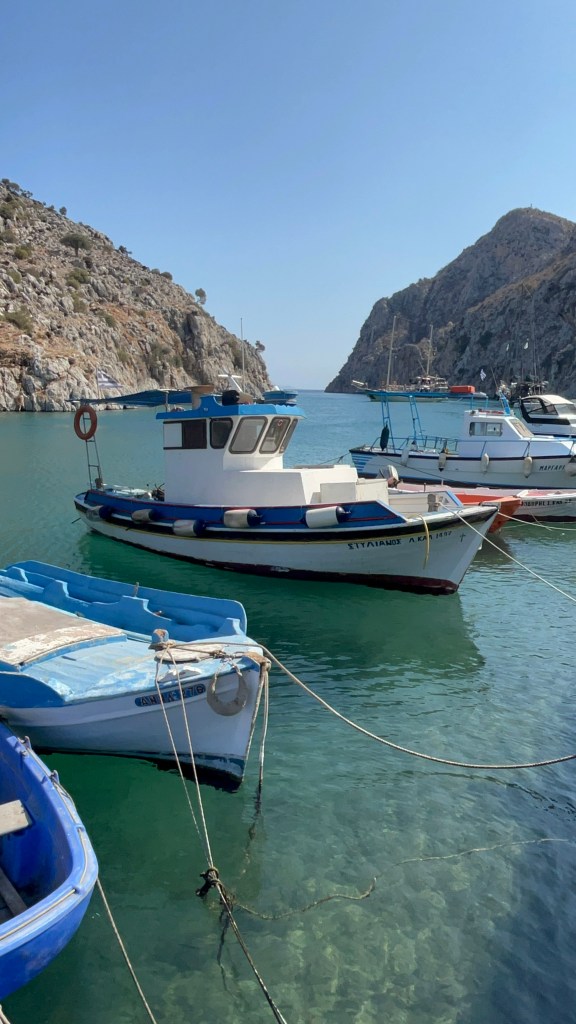
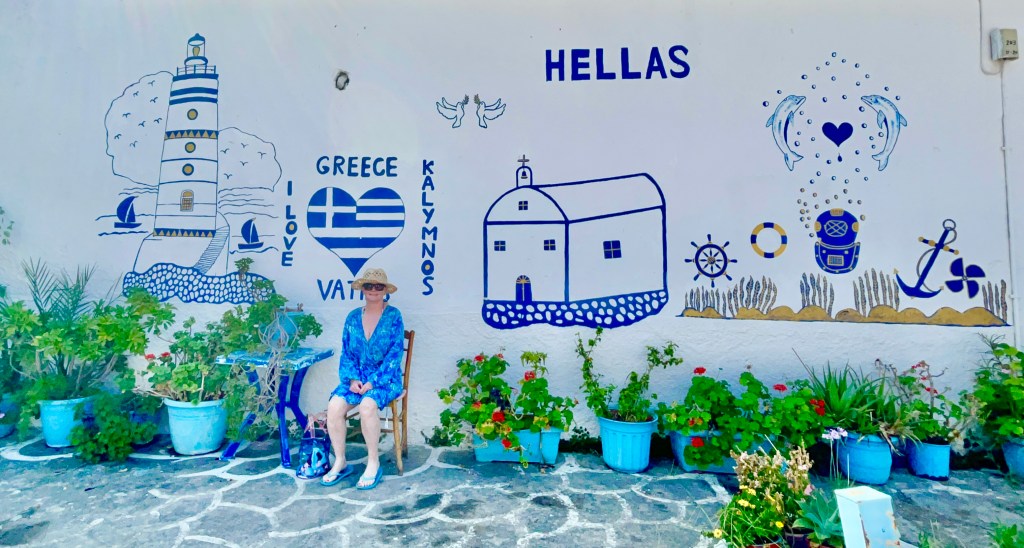
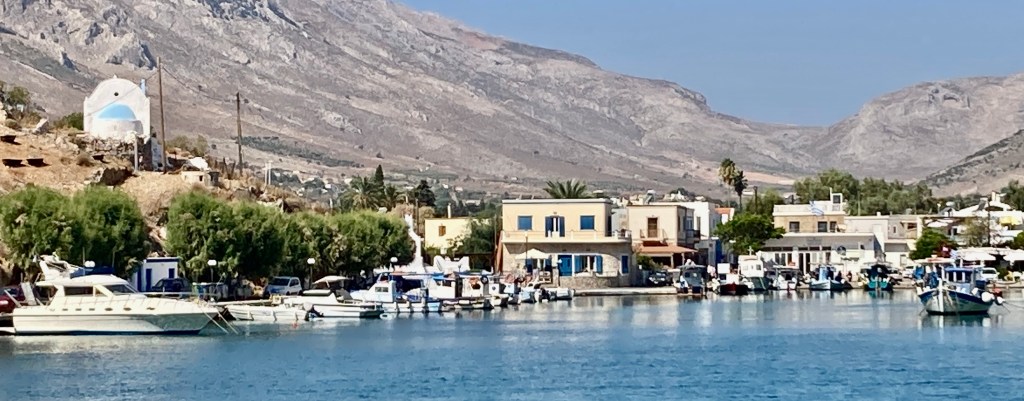
We arrived at the lovely little village of Vathy. It’s situated in the most fertile part of the island where you will find unsurprisingly the land has been cultivated and many cash crops grown particularly lemons.

In the village, we found a few restaurants all overlooking the village square with views of the harbour. It’s a great location to relax and enjoy a drink. You will not be rushed by the pace of life here it’s very relaxed.

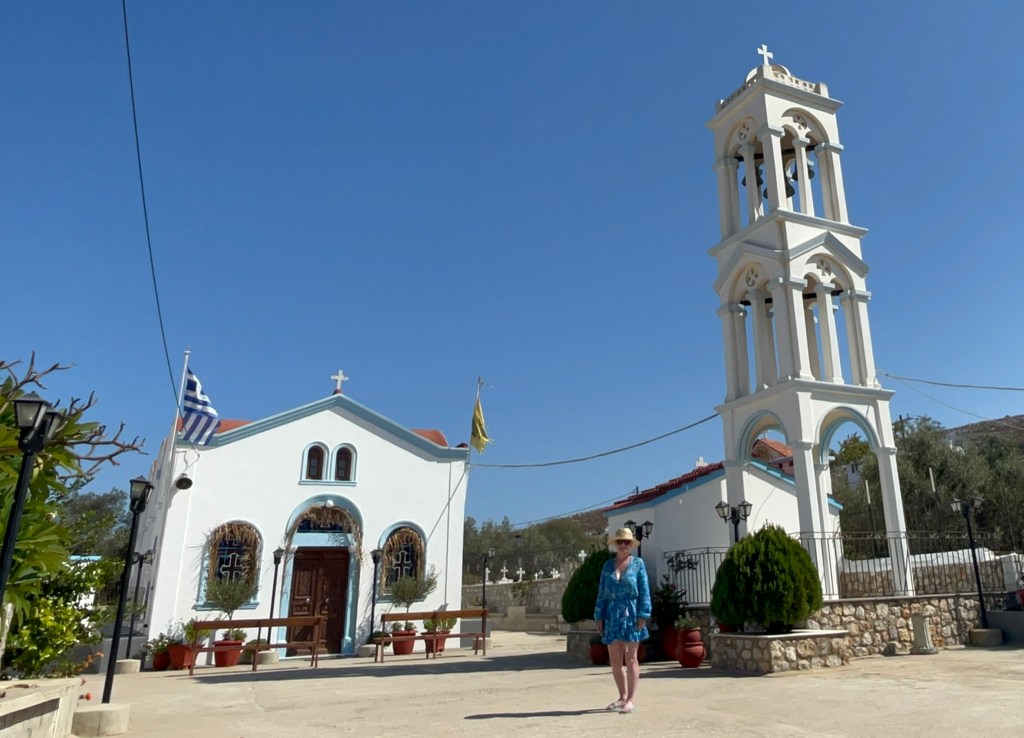
It’s well worth a walk around the village we were able to see several sites close by including the Monastery of the Virgin, Castle ruins and early Byzantine churches.

The island is known for its herd of wild goats 🐐, we didn’t see any goats on the island however like lots of the Dodecanese islands there were lots of cats. Being cat lovers ourselves they seemed to have a sense of this and in fairness to the local people the cats are generally well-looked after.

Pserimos

Another Dodecanese Island Pserimos is situated between Kos and Kalymnos so an excellent stop for a spot of island hoppinging.

Don’t expect to find a bustling resort at the last census the island had a population of 81. Not surprisingly there is only one village on the island where you will find a couple of shops, tavernas and a few rooms to rent.

Although, you wouldn’t get much tranquillity in the summer months as it’s a popular excursion from nearby Kos. We visited in the beginning of October and it was more akin to a secluded island.

At the village of Avlaki, we found a fetching long stretch of golden sand and crystal-clear water. Undoubtedly worth a swim here and there are trees offering shade from the sun.

Looking for sun, sea and tranquillity? then we certainly came to the right place. Getting away from the crowds and busier resorts this is an excellent location for a calming time.

Looking for a place to eat and drink is very straightforward as the only establishments are all found at Avlaki on the beachfront. A terrific place for lunch or to enjoy a refreshing drink.

The island is very diminutive only 15 kilometres so don’t come expecting a lavish resort-style island. What you will find is a very relaxing authentic destination where the best thing to do is swim, relax and have a pleasurable lunch in a pleasant place. Just remember to get your ferry back to Civilization.

Castlesardo

Castlesardo is one of Sardinia’s and indeed Italy’s most picturesque villages. The town sits on a large rocky promontory that juts out into the Mediterranean Sea.

Having decided to hire a car for a few days, our first destination is Castlesardo. A very picturesque historic town on the northwest coast of Sardinia about 60 miles from our base Costa Smeralda.

It took us about 90 minutes to get there through the Sardinian hinterland. The roads are not great, very twisty with some bad bends 🫣 but we arrived safely at Castlesardo. Parking was free as we were outside of the town.

It was about 15 minutes walk into Castlesardo. The walk is definitely worth it as the view of the castle and old town are amazing. This is definitely the location if you want some iconic pictures of Castlesardo.

We had a casual stroll through the town making our way up the steep incline to the castle. The new town is a drab affair if I am being honest however as we made our way up to the old town and castle things started to become decidedly more interesting.

We visited midweek in June so the town wasn’t packed with visitors giving us a real feel for what life is like in a town that had stood for nearly a millennium. It is an amazing place to discover on foot however a level of fitness is needed as you negotiate the steep inclines. There are Tuk Tuk tours available if you prefer an alternative option.

Doria Castle

At the top, we visited the castle which cost €5 admission. The castle was built by the Doria family and has now been converted into a museum with some exhibits about basket weaving which the area is renowned for. It was pretty uneventful, to be honest unless you like basket weaving then it will be one of the best museums you have visited.

Once outside we got to the best bit of the castle, the terrace situated amongst the battlements which gives fantastic views over the town, along the coast and along the Gulf of Asenira. The views from the castle are fabulous and worth the cost of admission just for this.

After visiting the castle it was time to discover the old town. It was worth it, exploring a labyrinth of lanes and alleyways walking up and down the slopes of this Medieval citadel. With endless steps we found tall narrow houses and stoned paved streets.

A typical scene within Italy and Sardinia is no different in this respect. We found restaurants and cafes with tables set up among the stairways and alleys in fact anywhere with an open space you will see the opportunity to engage in some alfresco dining.

Castlesardo cathedral is in the heart of the old town. The present structure dates back to its reconstruction in 1597 and is a mixture of Catalan, Gothic and Renaissance elements and overlooks the sea.

The citadel walls were also very impressive with the nearby citadel now covered with blocks of colourful houses. The old town offers a very enchanting vision, everywhere we looked from any prospective gave us a picture-perfect setting.

This very charming town offers up its hidden treasures as we continue to explore the historic lanes that offer an ancient and authentic insight into the medieval side of the island

It’s very difficult not to be impressed by the magnificent ancient architecture which we viewed throughout the town, castles and fortresses. They were all built around the same time as the origin of the town

Another highlight of visiting this charming town is the local food. Castlesardo has a reputation of being one of the best places to sample Sardinian gastronomy.

The choices are endless at the top and you will find many fancy restaurants with panoramic views. For a more authentic experience dine in one of the many restaurants situated in the heart of the old town. The food was delicious and prices were very reasonable less than we paid in Costa Smeralda.

Another chance of a majestic view of Castlesardo as we go back to the car park on the outskirts of town on what has been a very captivating visit.

La Maddalena islands

It doesn’t feel like the Mediterranean here. It feels like the Caribbean

The Maddalena Archipelago to give its official title. A group of sixty islands situated in the Strait of Bonifacio between Corsica and Sardinia. It became a National Park in 1994 and has been shortlisted to become a UNESCO World Heritage Site.

The view of Maddalena Island from Costa Smeralda. It was unmissable.

Before I visited Sardinia, I had never heard of the Maddalena Islands. There is a good reason for this as they have only recently started to become a popular location. They have some of the most beautiful beaches in Italy 🇮🇹 and some of the cleanest clear water.

The La Maddelena islands are commonly publicised, as a quiet place of turquoise lagoons, deserted islands and some of the most beautiful beaches in Sardinia. If the reality matched the online portrayal of this location it was worth a visit.

With plenty of ferries operating to the islands and regular boat trips available, it’s not a difficult location to get to and explore. On the main inhabited island La Maddalena, you can even take your car on the ferry.

We decided on a day’s boat trip from Baja Sardina on the Costa Smeralda, as this was the most convenient and cost-effective option for us, rather than having to get to a ferry terminal as public transportation is not really a viable option.

Isola di La Maddalena

Our first stop was Maddalena Island. Which is the largest and the only island which has a permanent population. It will be the only island with proper infrastructure, with shops, cafes, and hotels.

After a short 20 minutes boat ride from Baja Sardina, we arrived at Maddalena Island. It wasn’t what I had initially envisaged. There we docked at the small port of Cala Gavetta. The deep blue waters and colourful buildings were certainly pleasing to the eye.

Piazza Garabaldi the main square in the town.

Once off the boat, we were able to explore the town after first navigating the surprisingly busy port. There are lots to see and do but unfortunately for us time was limited and we decided to explore the town. Perhaps an overnight stay wouldn’t have been such a bad option after all.

Once past the main square, we entered the old town. Here we discovered narrow streets and traditional alleys. There are lots of cafes and shops within the old town where you can enjoy a coffee, ice cream or a delicious pastry, luckily for my waistline, I was still full from breakfast.

For such a small place there is lots to do. There is a Baroque church of Santa Marina of Maddelena, Sant Andrea Fort and there is even a small museum to visit.

We had an interesting visit on this island. I just wished we had more time and booked a hotel stay, as there was plenty to see and do and that’s without factoring in the beautiful beaches. All on an island of 20 Square kilometres, but it was time to get back on the boat and visit another island.

Islola di Spargi

An uninhibited round island, full of granite rock with little shade. Doesn’t sound that great but appearances can be very deceptive, this is certainly a very captivating location.

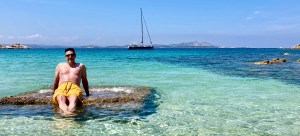
Our next stop was the beautiful island of Spargi. I couldn’t believe the colour of the sea. Different shades of turquoise blue and emerald with crystalline waters, white sand, rocks and vegetation surrounding it.

It lies west of Maddelena Island. It is necklaced by sandy coves and inlets. With 11 kilometres of coastline, it’s the third largest island in the archipelago and is uninhabited.

It was very different to Maddalena Island. Spargi is very often described as the jewel within the Maddelena Islands and I would not disagree with that. The white beaches seemed to have stood still intact and uncontaminated by the modern world

It’s the perfect location to have a swim and satisfy the senses by caressing pristine white sand as you enter the crystal-clear water

On Spargi there is a wild beauty of granite rocks with high and jagged coast, intertwined with perfectly formed beaches which put a lot of Caribbean beaches to shame.

There was certainly a lot of natural wonderment to see at Spargi. A short stay really didn’t do it justice. However, it was still an unforgettable experience relaxing in one of the beautiful bays on this island, with views I will find very difficult to forget.

Isola di Santa Maria

Our final stop for the day was Santa Maria Island. It differs completely from Spargi island as it’s not made of granite. It has a lush green appearance. It can only be reached by boat.

Small and green Santa Maria is not strictly uninhabited as a few houses were built before it had strict planning restrictions imposed by the local government due to its ecological importance and its UNESCO status.

It was first settled by Benedictine monks who were escaping from Corsica and seeking refuge on the island. Being a UNESCO-protected area with lush vegetation it is an important location for wildlife and it’s renowned for having mesmerizing seascapes.

The most popular beach is Grande Cala di Santa Maria, which is also the nearest to where the boats dock. It doesn’t have the dramatic impact of the beaches on Spargi island but is still a very pretty beach, its only downside is that it’s very busy.

Nonetheless, the water is still very clear. The warm sea is unbelievably transparent due to the slowly sloping seabed creating a large natural pool. The vibrancy of colours which can range from light blue to turquoise we’re certainly an extraordinarily beautiful sight. A unique natural spectacle.

All too soon our island-hopping adventure come to an end. It was time to get back on the boat and back to Costa Smeralda which is only 20 minutes away.

On the way back there was still one more treat in store for us. The Porto Della Madonna is a natural lagoon enclosed by the islands. The name Porto Della Madonna derives from the intensity of the blue sea and the incredible transparency of the waters.

Discoveries beyond Medellin. Lakes, mountains, flowers, colourful towns and one giant rock.

Medellin may well be Colombia’s capital of cool with its cultural experiences, vibrancy and nightlife. However it is also a great base to discover all this region has to offer. There are lots of beautiful locations within a short distance from Medellin showcasing Colombia’s one-of-a-kind culture and natural beauty.

Our next adventure takes us to the area of Eastern Antioquia, situated to the southwest of Medellin. The picturesque Anitoquian countryside has no shortage of attractions in which to engross us. Starting with the colourful town of Guatape where I found many colourful houses and the nearby El Penon de Guatape a large rock which dominates the area.

The region is also famous for its flower cultivation with many flower farms in the area. Colombia is the second biggest exporter of flowers, only the Netherlands exports more. We visited Saint Elena which is the birthplace of the Colombian flower industry and is just outside of Medellin.

The area is naturally captivating being situated within the Andean Mountain range. We discovered lush national parks, natural wonders, colonial towns and beautiful lakes, where we enjoyed some time on the water.

A different landscape and pace of life await. There is so much to discover in so little time. Some locations were familiar to me, others were unbeknown to me. All great locations to visit and explore. Colombia was certainly a land of contrasting landscapes, peoples and cultures.

El Penol de Guatape

Not too far from Medellin (80 kilometres in fact) is the pretty town of Guatape and the famous granite rock which overlooks the town.

The rock itself is quite a contentious issue. Due to its cultural-historical significance and its value as an iconic tourist location in Colombia, there has been long-disputed ownership of the rock between the towns of Guatape and Penol. This can be seen in the name as it is known as The Rock of Gutatape and The Stone of En Penol.

A few facts about the rock itself. It is known as an inselberg, which is a lone prominent rock in a mostly flat landscape. It is ten million tonnes in weight, is over 65 million years old, stands 200 meters in height and has great cultural significance to the local indigenous community.

We arrived early as this is one of the most popular things to do in the area. At the bottom of the rock, we found lots of souvenir shops, cafes and food vendors. It was certainly a hive of activity. At the top of the rock, there will be fantastic vistas of the valley and Lake Guatape, as well as more souvenir shops, cafes and food vendors. To do this however we had to negotiate the 675 steps (740 steps if you include the tower) which gets you to the summit of the rock.

Climbing the rock is like scaling 45 flights of stairs so I am told. It took us about 15 minutes although others in our group of 8 took about 25 minutes. Regardless of the time it’s achievable for most people with some level of fitness. The stairs are one way up and another way down, so this helps with the flow of people and eases bottlenecks. The new stairs were constructed by the Colombian government in 2006, prior to this there was only one staircase up and down the rock.

At the top of the rock, we were rewarded with stunning 360-degree panoramic views of the entire countryside. To get to this you will have to walk up a small spiral staircase which takes you to the tower which is on top of the rock. This is the only time when people had to walk up and down the stairs at the same time and was very congested.

Luckily for us, the day was clear and we were able to see for miles and miles in every direction. To the south we had a beautiful green landscape with rolling hills and picturesque villages dotting the landscape

To the north, the topography was different, we had views of Lake Guatape. Surprisingly to me this is an artificial lake which has been created to harness the natural environment to produce cleaner electricity.

It’s well worth spending some time at the top to enjoy the stunning views and location. We spent about 45 minutes there. Then we started our descent back down the other stairs to the bottom.

Guatape

A typical street in Guatape.

Guatape is one of the most colourful towns in Colombia. It is 49 miles from Medellin and is a great combo with the nearby rock which dominates the surroundings.

These colourful towns seem to be something of a phenomenon in Colombia. I visited a couple during my visit, and without a doubt my favourite one was Guatape. Although it is a very busy tourist attraction, it wasn’t too crowded to view the many vibrant street art, cobbled streets and interesting squares it had to offer.

The town is very compact and is easily accessible on foot. It was a fantastic place to wander around with my camera in hand looking at the brightly coloured buildings and trying to decipher the meanings of what has been drawn and displayed on the buildings.

One of the more unique creations which we viewed
It doesn’t stop with the buildings these steps were brightly coloured

Traditionally it told the story of the heritage of the family or the business which owns the building. Donkeys, sheep and chickens were quite common, although I did see a few dragons and coming from Wales 🏴󠁧󠁢󠁷󠁬󠁳󠁿, I thought there may have been a Welsh connection. 😆

Around every corner, we saw brightly coloured Zocaloas which is what the locals call them. Rumour has it families painted them on their houses for fun, and the trend caught on and the once quiet town has now become something of a tourist wonder.

One building that seemed to have not been painted in a myriad of colours is the town’s impressive Catholic Church. Although this is Guatape so it’s not totally painted white.

A kaleidoscope of colour awaits at the main square

In the centre of town, we found the Plaza de Zocolas a pretty little square surrounded by cafes and shops, the perfect place for a coffee or buy a souvenir, or if you like people-watching this is the place to be.

Guatape is a fantastic place to visit. It’s free and you don’t need a guide. An hour or two gave us ample time to discover what has been dubbed Colombia’s most colourful town.

Penol Guatape Reservoir

A fetching waterside location is actually a man-made reservoir with a connection to one of Colombia’s most infamous countrymen Pablo Escobar.

The reservoir was formed when the Guatape River was dammed in 1972 to facilitate a hydroelectric power plant. Some houses had to be demolished as they would have been on the flooded Plains, and some were moved to Medellin as a cultural visitor attraction. Today the reservoir is lined with forested shores and spectacular villas. The area is a popular weekend retreat from Medellin.

Although by far the most famous or should I say infamous place on the lake is one of Pablo Escobar’s lavish holiday homes, La Manuela, which now stands derelict beside the waterside. The site covered over 20 acres, with every amenity imaginable including a helipad and seaplane dock which was kept secure by 120 “guards”

Its derelict appearance is no accident. It was bombed in 1993 by a vigilante group called People Persecuted by Pablo Escobar. Allegedly funded by the rival Cali cartel and other enemies of Escobar. Escobar himself was killed eight months after the bombing by the Colombian authorities.

The area has now been reclaimed by nature. You can visit although probably not recommended as there is widespread disapproval within Colombia. It is seen by many as glorifying the head of one of the world’s most violent drug cartels, fueling “narco tourism”. Best viewed from the water.

Santa Elena

The small town of Santa Elena is renowned in the area for it’s sprawling flower farms.

While in the area we were taken to one of the flower farms as part of our tour. If I am being completely honest I wasn’t particularly looking forward to the visit and just viewed it as a bit of a “time filler” while we were going to the airport in Medellin later that afternoon.

However, I couldn’t have been more wrong. We were given a very interesting tour of a flower farm by the owner, in complete traditional dress, whose enthusiasm for his flowers was very infectious

Somehow I don’t think Interflora will be delivering this impressive display.

He told us that the area was rich in horticultural history. Medellin is famous throughout Colombia for its flower festivals and farmers like himself would spend the whole year growing and maintaining flowers to be displayed at the annual festivals, winning brings prestige and a big cash prize. The farm we visited had won the top prize on more than one occasion

The Colombians certainly know how to say it with flowers

He explained the whole cultivation process from seed to the intricate arrangements that had brought him top prizes in competitions. After all his hard work arranging his flowers in perfect order, he wanted someone to carry his display. Who was I to let him down when he asked me to carry his flowers 😆

The flowers arranged into place probably weighed about 10 kilograms, which isn’t tremendously heavy. When carrying them throughout the day for displaying and judging purposes you soon start to realise you are carrying a weight on your back.

After lunch at the flower farm, it was off to the town itself for a quick visit. Santa Elena was noticeably cooler than Medellin due to its mountain location combined with rainfall, sunshine and nutrient-rich soil, this area has perfect growing conditions for flowers.

A mural in the town dedicated to it’s floral heritage.

The town truly comes to life in the summer with the annual flower festivals. Starting in the town over 500 farmers participate in parades, they will walk down the mountainside to Medellin which is 10 kilometres away. Entrants come far and wide and the festival is world-renowned within the horticultural community. Medellin and the surrounding area were certainly very intriguing places to explore.