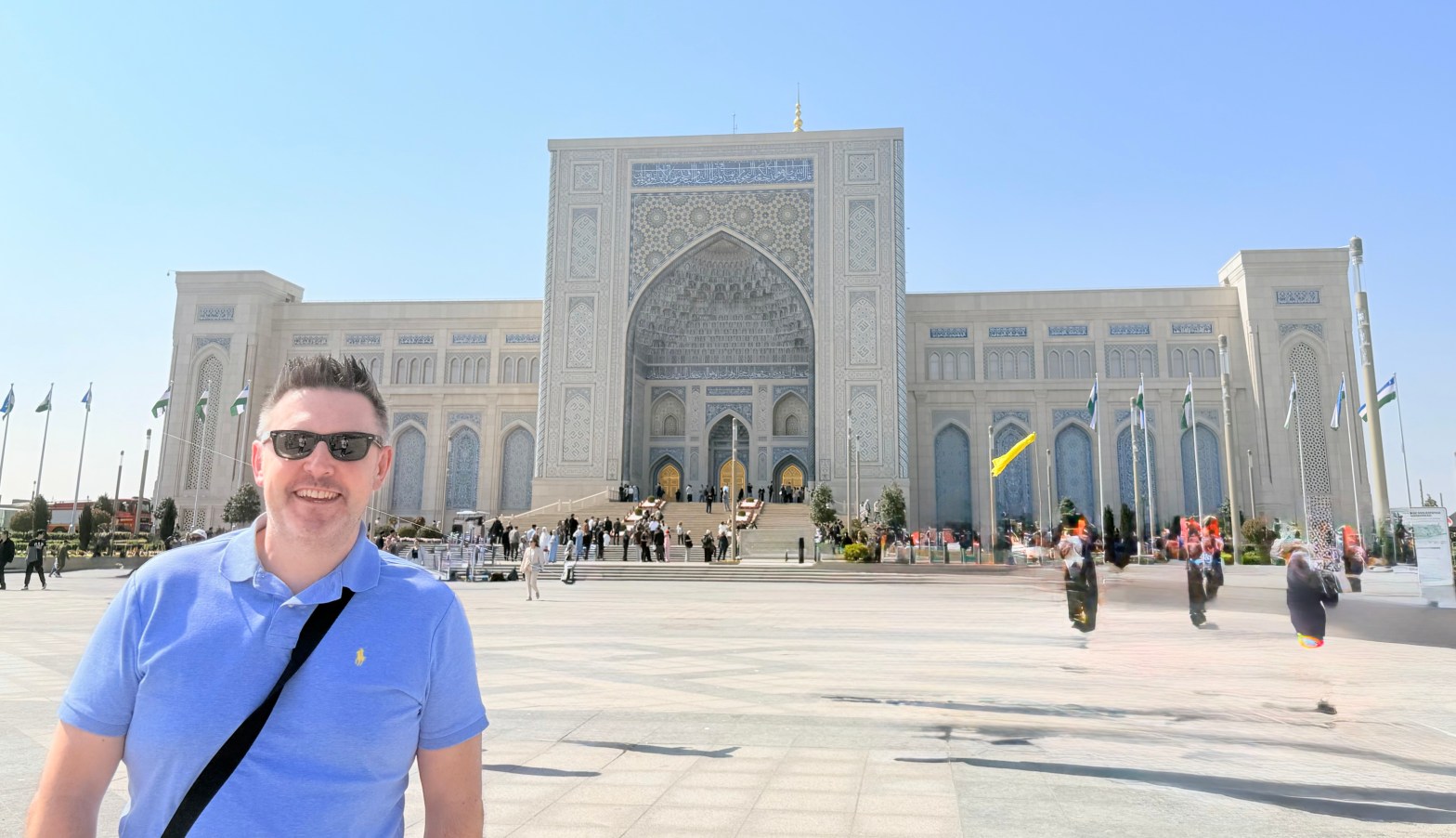
Tashkent, nestled between Silk Road cities and modern skylines, surprises travellers. As Uzbekistan’s capital, it uniquely and authentically blends history, culture, and modern life.
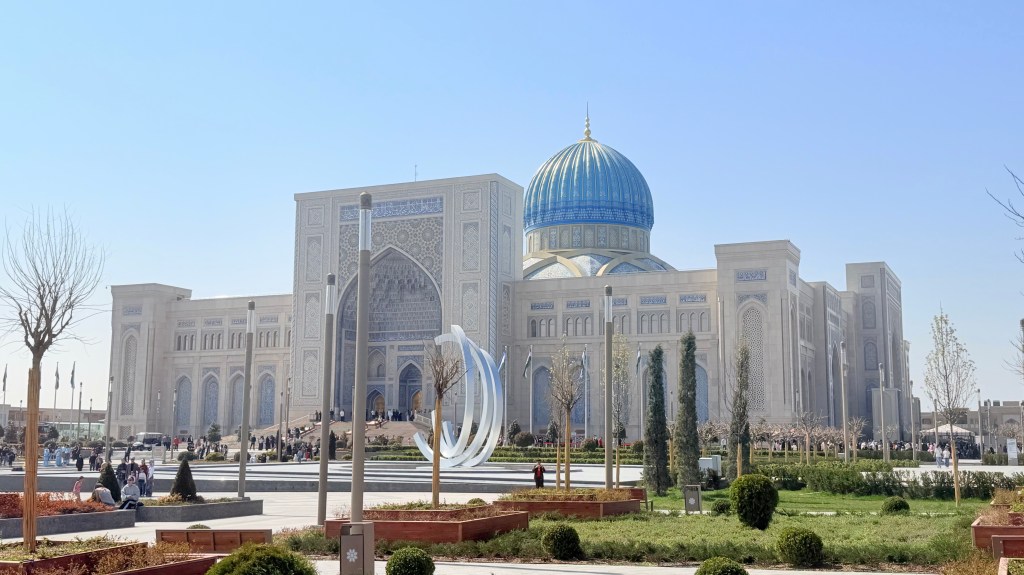
Our journey through Uzbekistan kicked off in Tashkent, the bustling capital. With just a day and a half to soak in the city’s vibrant atmosphere, we made the most of our time by visiting the iconic landmarks.
Tashkent left me pleasantly surprised with its contemporary atmosphere. In contrast to the medieval allure of Samarkand or Bukhara, Tashkent stands out with its expansive layout, featuring broad, tree-lined boulevards.
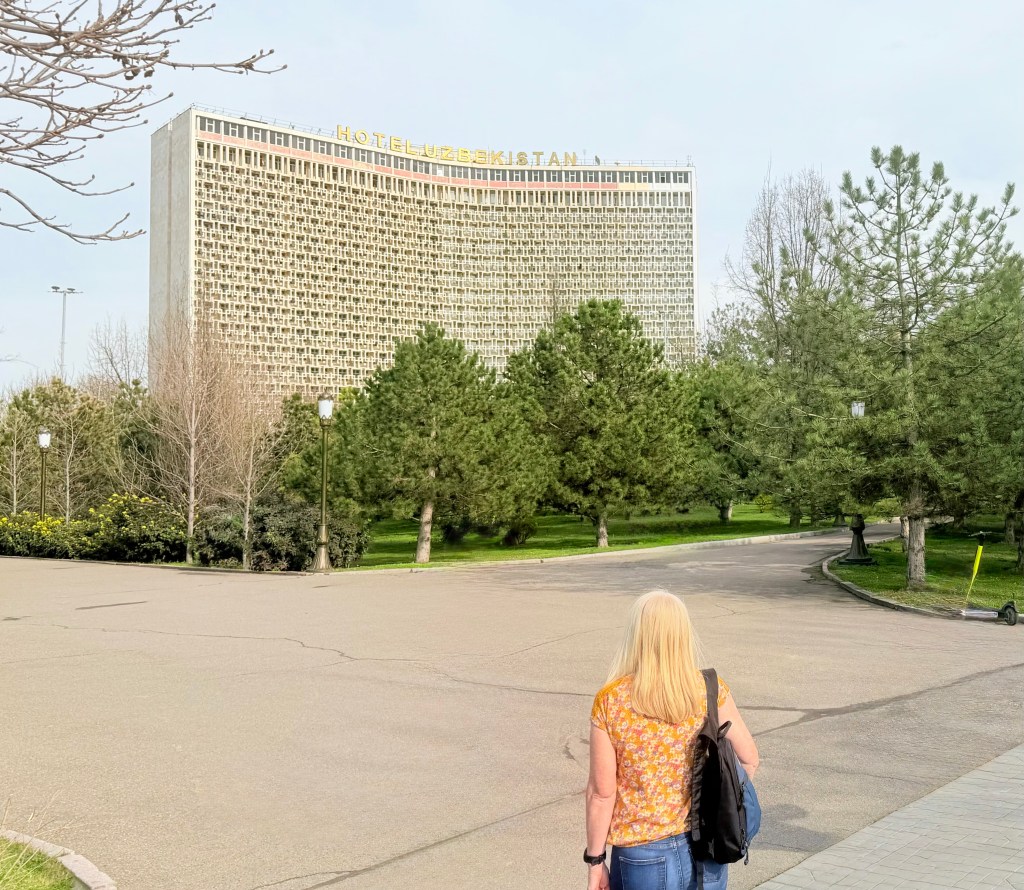
After the 1966 earthquake, Tashkent was rebuilt under Soviet planning, introducing bold examples of Brutalist architecture with large-scale concrete structures and wide urban layouts. Today, the city reflects this period, blending Soviet modernism with local influences.
Tashkent, Uzbekistan’s capital, may not top many travellers’ lists, but it’s a fascinating place to explore. As travel to Uzbekistan becomes easier and the country opens up to tourists,
Tashkent: A City of Hidden Treasures
Tashkent Underground
The unremarkable subway entrance gave no hint of the visual feast that lay beneath the city’s pavement. I almost overlooked the plain grey entrance on the bustling street. As they say, appearances can be deceiving.
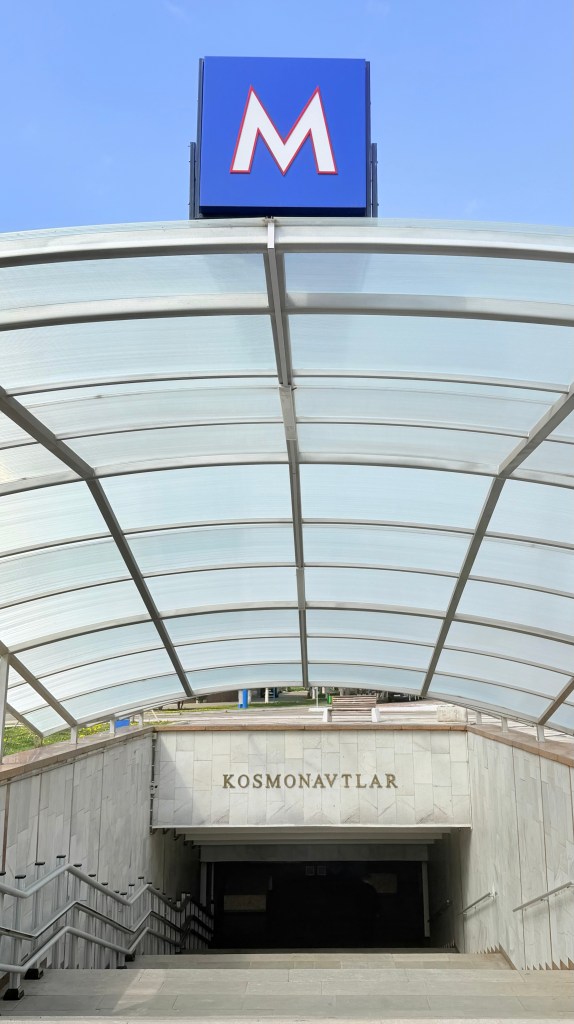
The Tashkent Metro, built in 1977, is a unique underground museum that combines functionality and artistry. As Central Asia’s first subway system, it also served as a high-security nuclear shelter during the era’s geopolitical climate.
Art in Transit: Must-See Stations
For years, photography was prohibited in the metro as it was a military base. However, it is now a photographer’s dream and a history lover’s paradise.
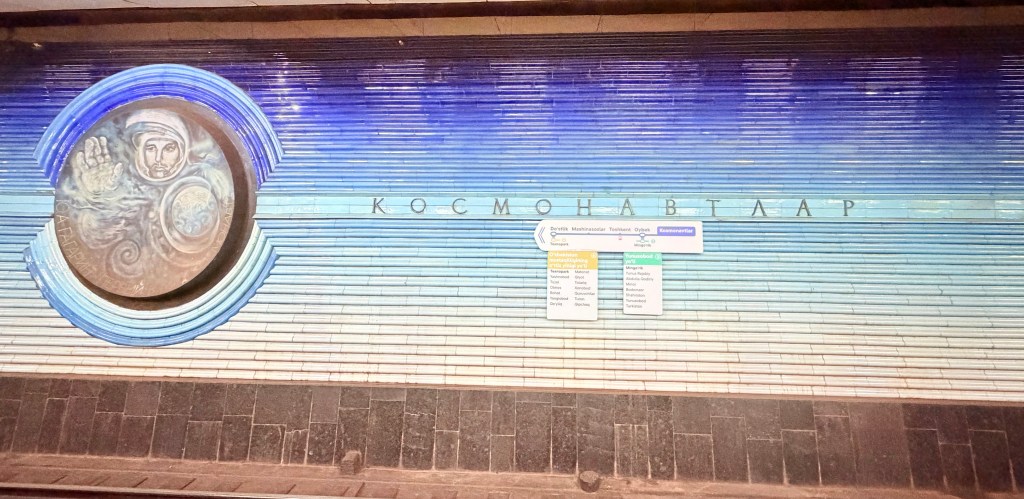
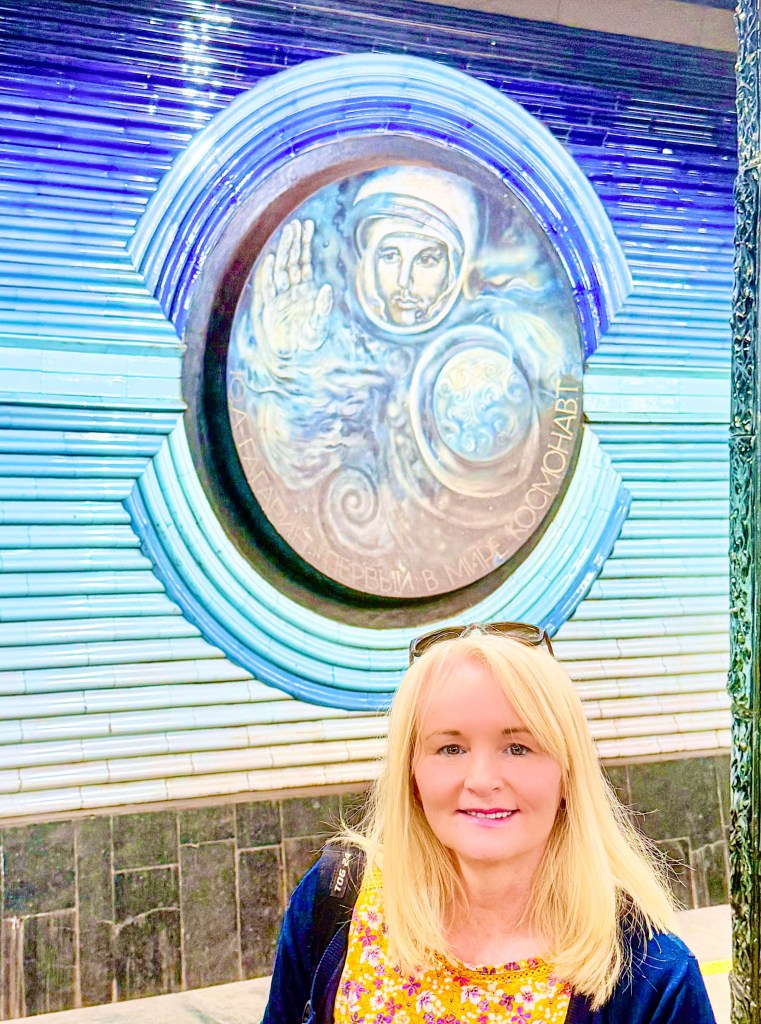
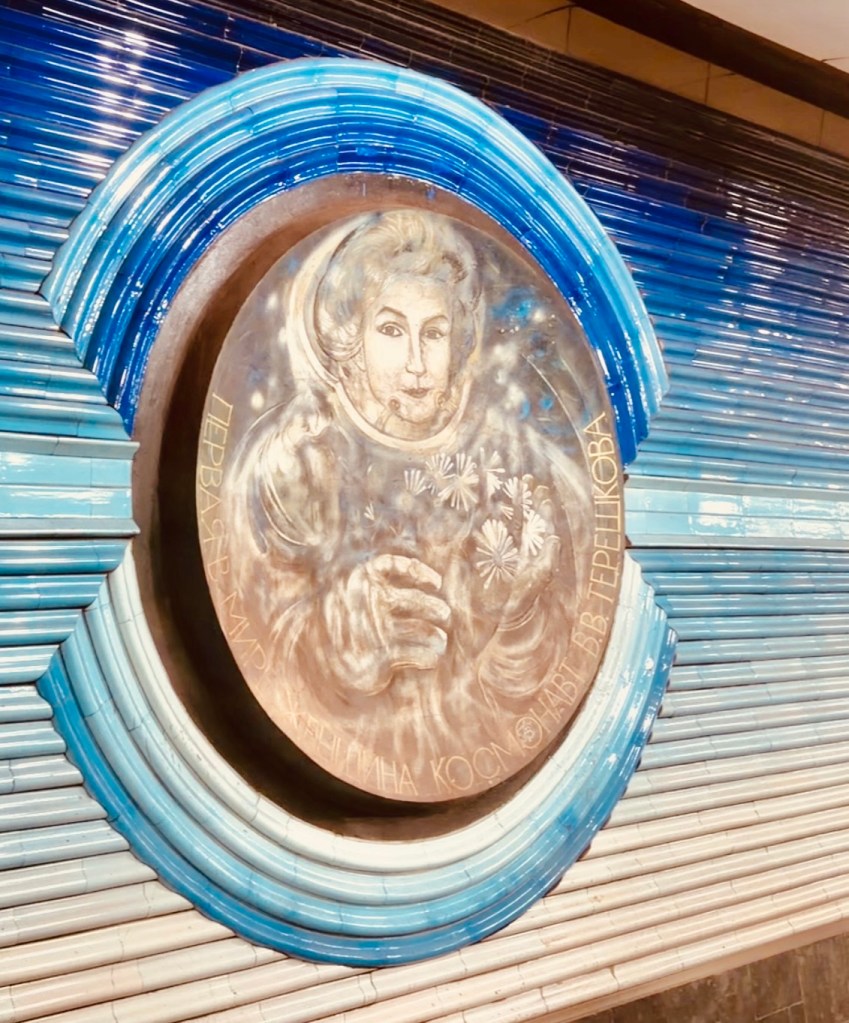
Kosmonavtlar (Cosmonauts):
The most famous station, with its deep blue to black walls, resembles the Earth’s atmosphere. Ceramic medallions of cosmonauts like Yuri Gagarin and Valentina Tereshkova enhance the sense of standing in a tribute to space exploration.
Tashkent Metro’s most beautiful station, opened in 1984 as part of the Uzbekistan Line, is dedicated to space exploration and Soviet cosmonauts.
Alisher Navoi
I found it to be one of the most spectacular stations in the entire Tashkent Metro system. Named after the legendary 15th-century poet and statesman, its design feels like a tribute to traditional Uzbek architecture and literature—more like stepping into a palace or a mosque than a transit hub.
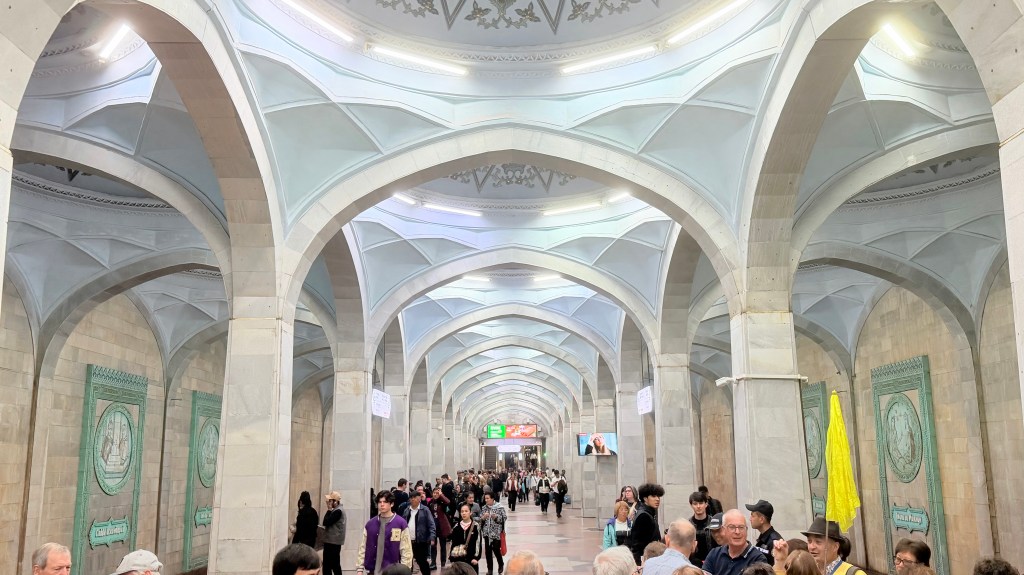
What struck me most was the architectural grandeur of the platform, with its high, vaulted ceilings adorned in intricate blue and gold geometric patterns and delicate floral motifs typical of Islamic art.
Travel Tips
• Cost: It remains incredibly affordable (around 2,000 UZS per ride), making it the cheapest “art gallery” tour you’ll ever take.
• Safety: Built to withstand an earthquake of 9.0 magnitude, it is arguably the safest place in the city during a tremor.
• Navigation: While signs are increasingly bilingual (Uzbek and English), keep a map handy as some older locals may still refer to stations by their Soviet-era names.
Chorsu Bazar
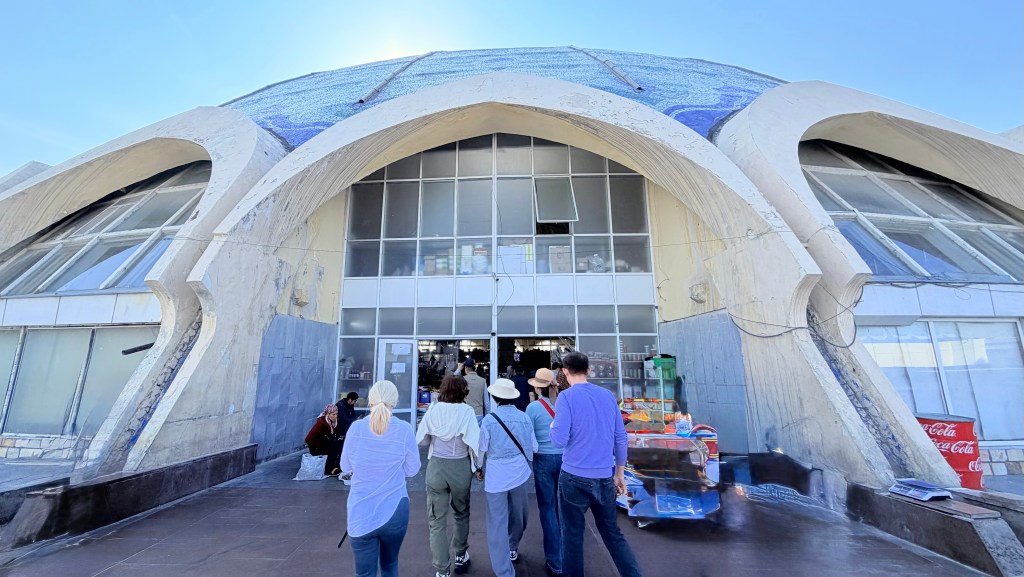
Chorsu Bazar, famously known for its iconic blue dome in the historic heart of Tashkent, is a bustling marketplace that hosts a farmers’ market.
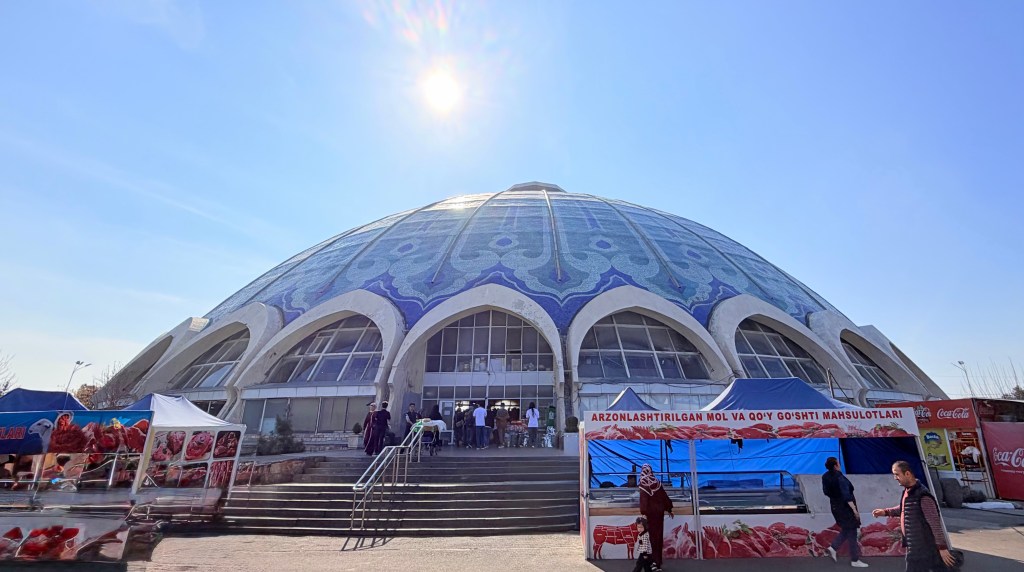
The main dome, conceived by Vladimir Azimov in 1980, is an architectural marvel with a diameter of approximately 300–350 metres. This structure comprises three floors, each offering a unique perspective and experience.
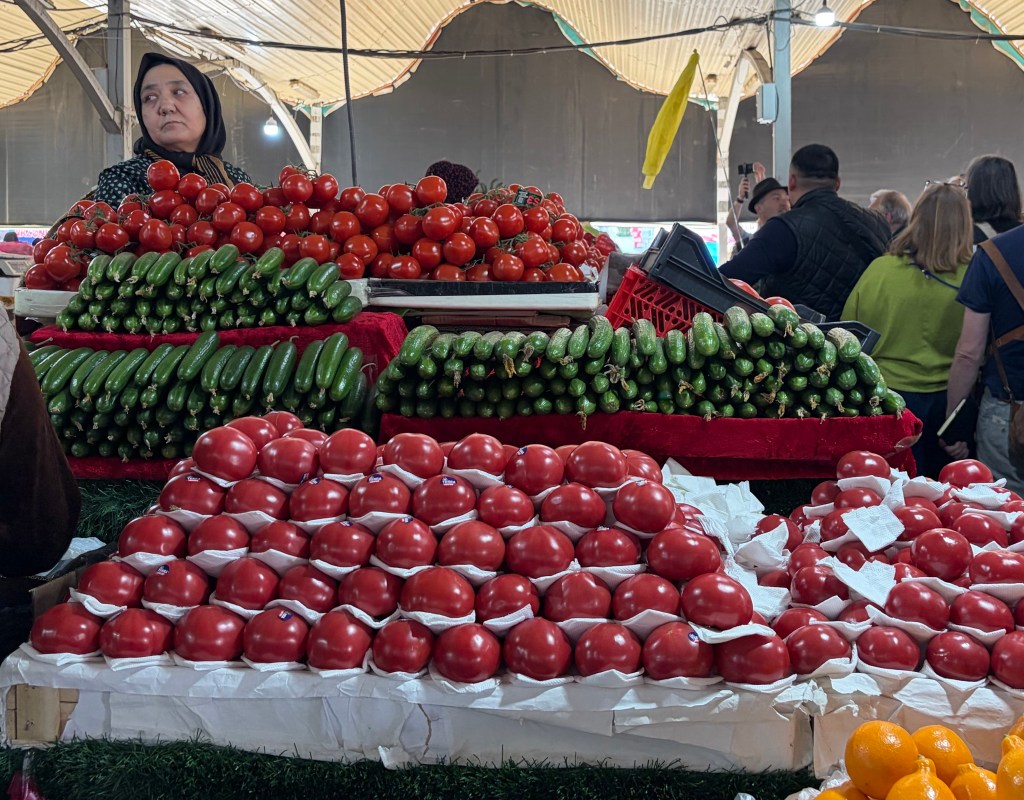
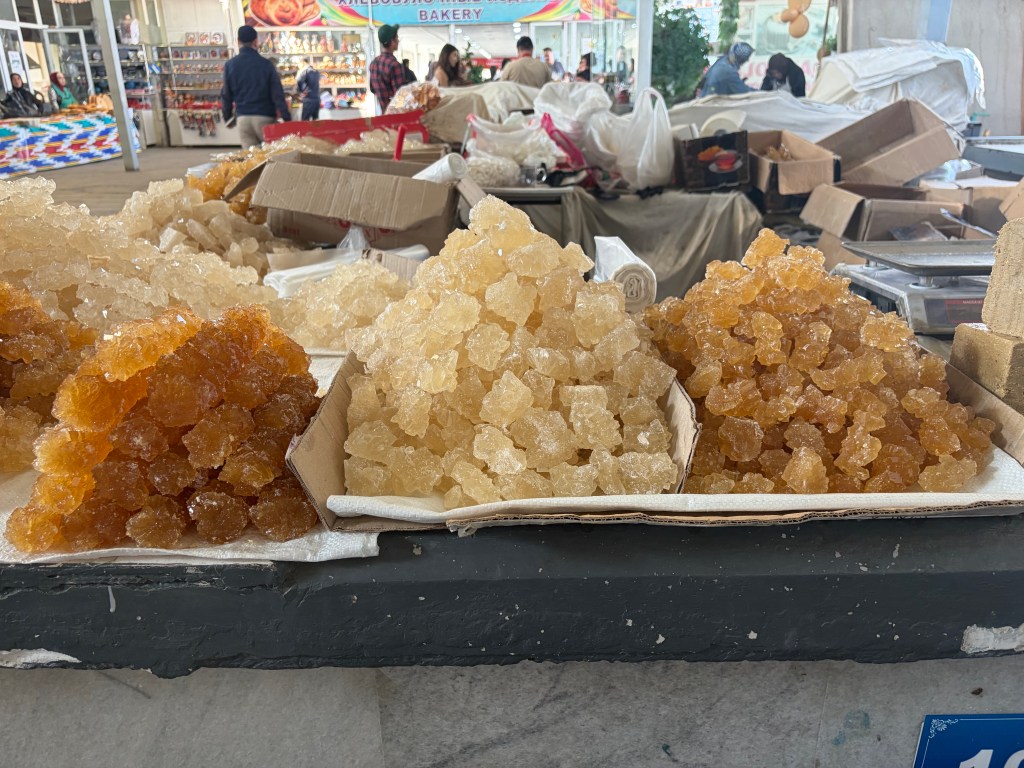
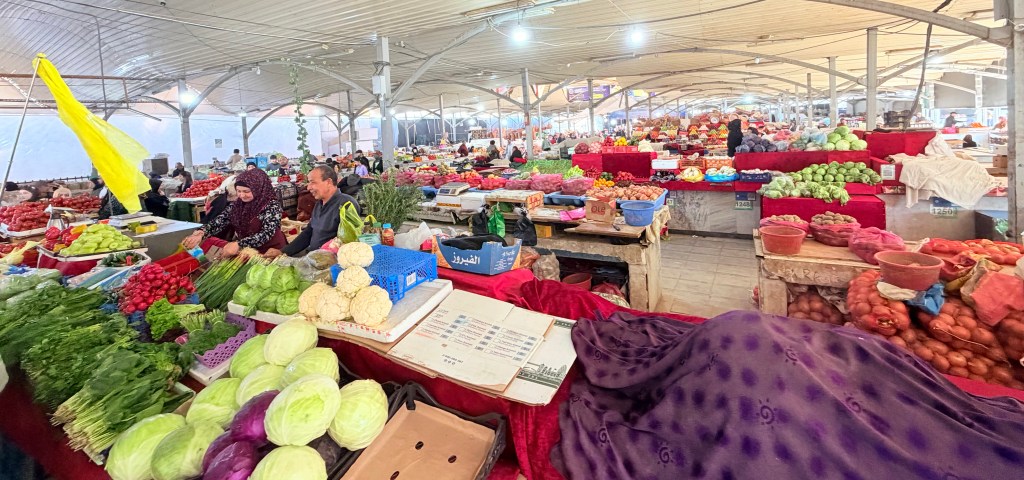
As I walked down the ground floor, I was greeted by a mountain of fresh produce, juicy meat, and creamy dairy.
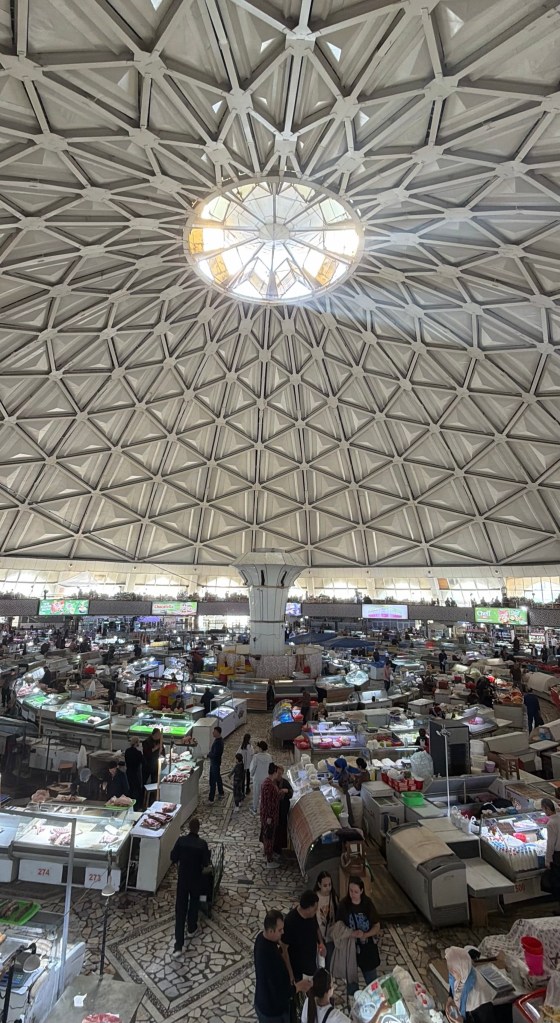
From the upper levels, the market unfolded like a vibrant cinematic scene, colourful stalls brimming with life and animated chatter.
Bread is a vital part of daily life in Tashkent and Uzbek culture. It symbolises hospitality and tradition. Baked in a tandoor oven and often decorated, it’s widely available in markets and treated with respect as a sign of welcome and generosity.
Timur Square
Tashkent’s grand heart symbolises Uzbekistan’s national identity.
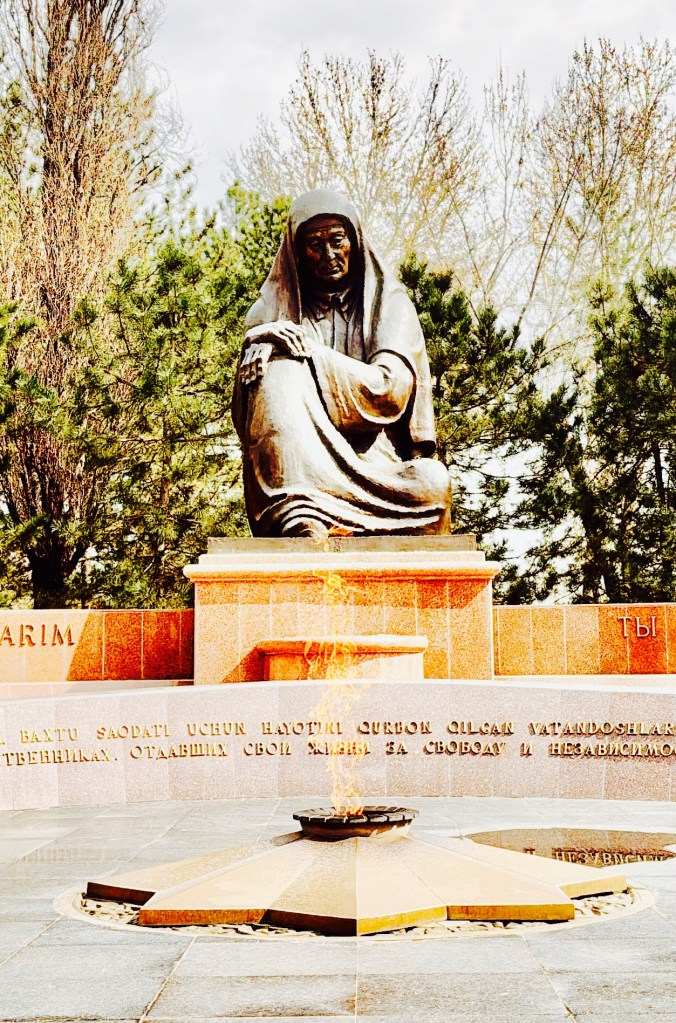
Amir Timur Square, a lush green space brimming with flowers and fountains, is central to modern Tashkent. The square and its immediate surroundings house the city’s most important political and cultural buildings.
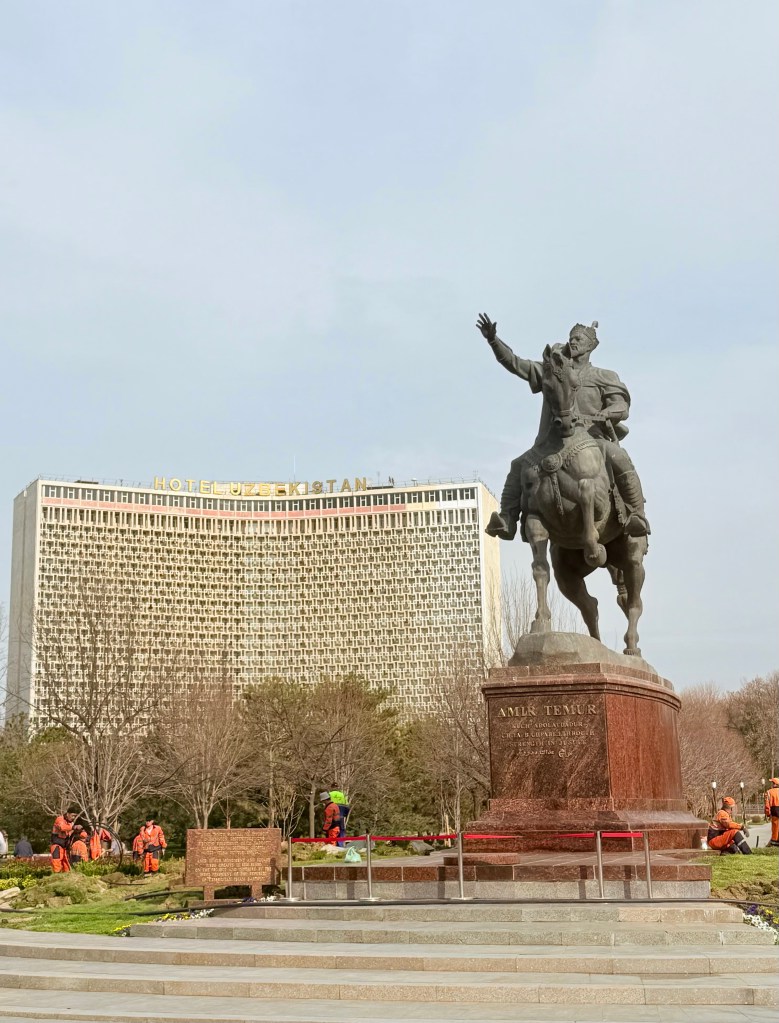
The Monument: In the centre stands a grand bronze statue of Amir Timur, the 14th-century conqueror and statesman, seated on horseback.
Hotel Uzbekistan
Hotel Uzbekistan, a prominent example of Soviet Modernist and Brutalist architecture, stands as an iconic landmark in Tashkent. Its design perfectly fulfils the brief, showcasing its brutal aesthetic.
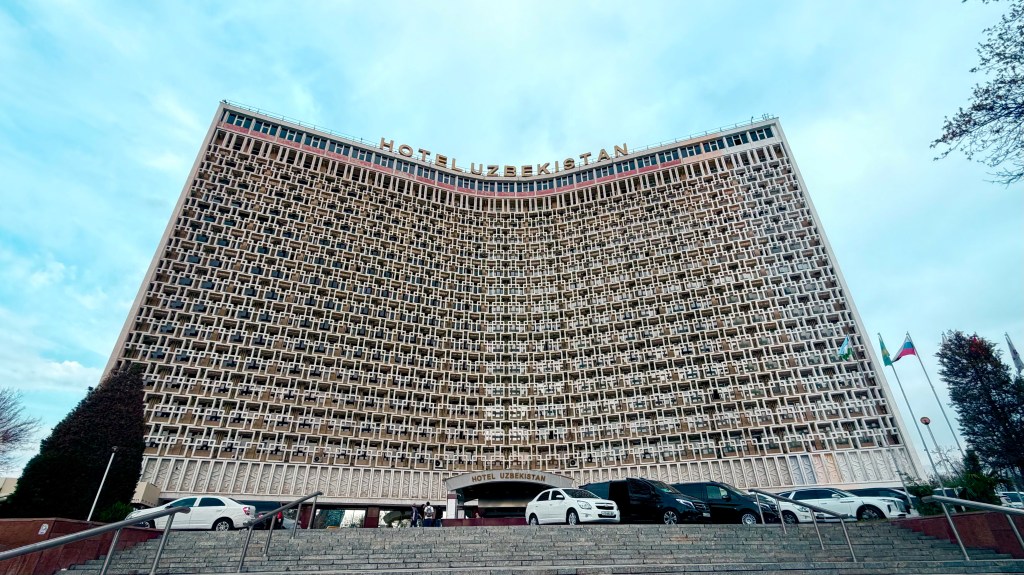
It is designed with a massive, sweeping curve that makes the entire structure look like an enormous, open book standing on its end, with a metal frame to ensure earthquake resistance.
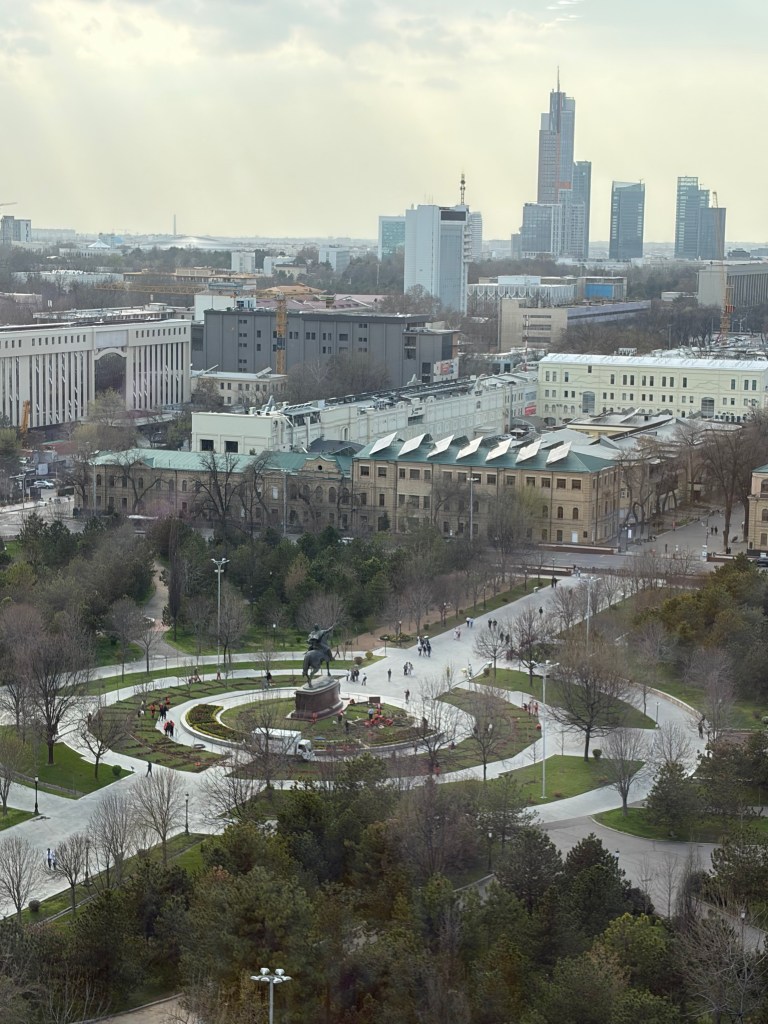
Central Location: Situated in the heart of the city, the hotel offers views of the Amir Timur Park and is within walking distance of the Amir Temur metro station, making it a convenient base for exploring Tashkent’s landmarks.
Hazrati Imam Complex
This grand architectural complex is famous for its historical importance and its collection of rare religious artefacts.
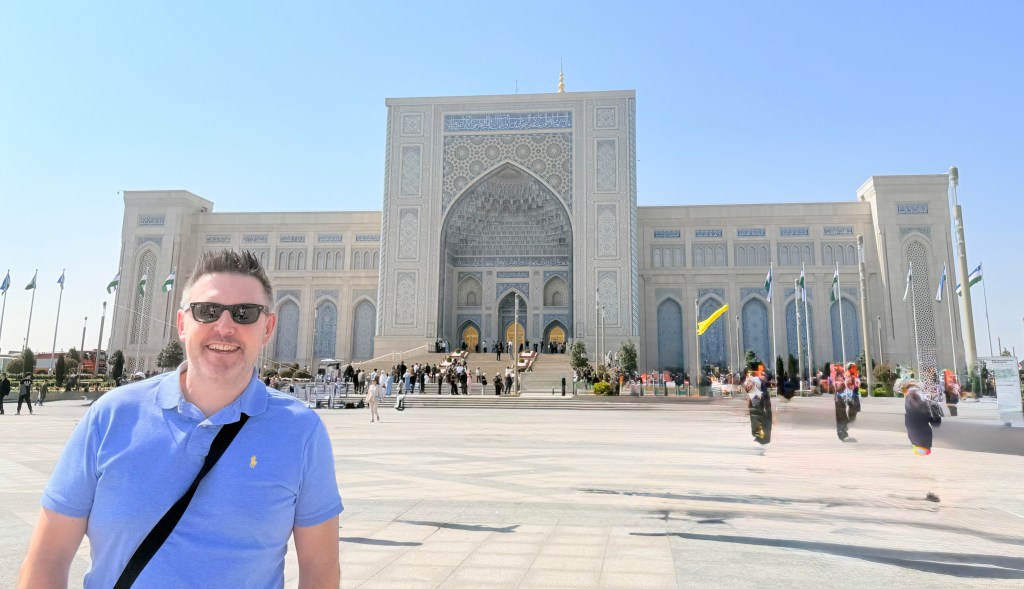
The Hazrati Imam complex, located in the historic city of Tashkent, is the spiritual centre of the city. It is a renowned centre for Islamic scholarship and a cherished hub for the faithful in Uzbekistan.
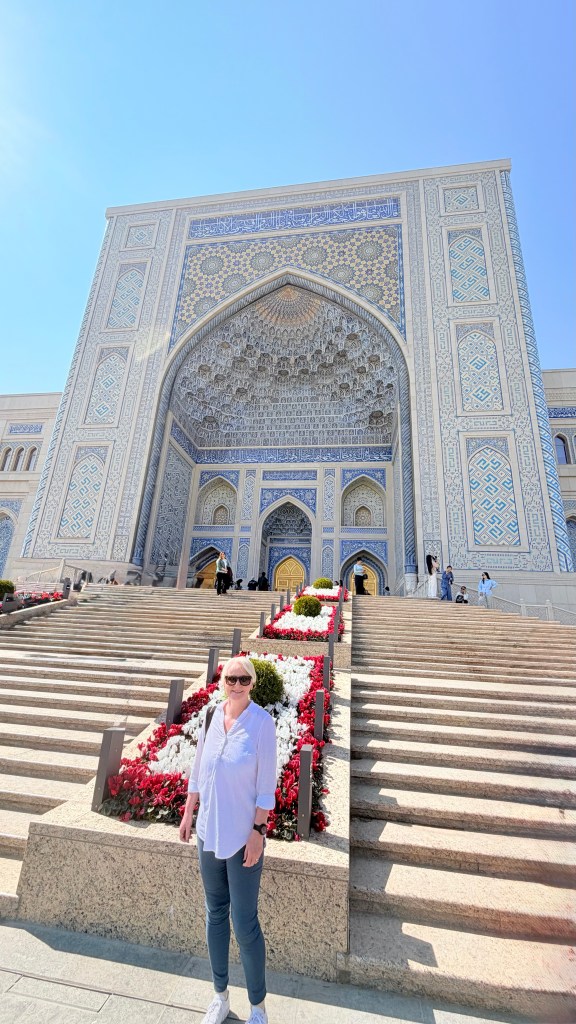
Architectural Landmarks: The site features several key structures, including the Barak-Khan Madrasah, the Tilla Sheikh Mosque, and the mausoleum of Abu Bakr Kaffal Shashi, a prominent 10th-century scholar.
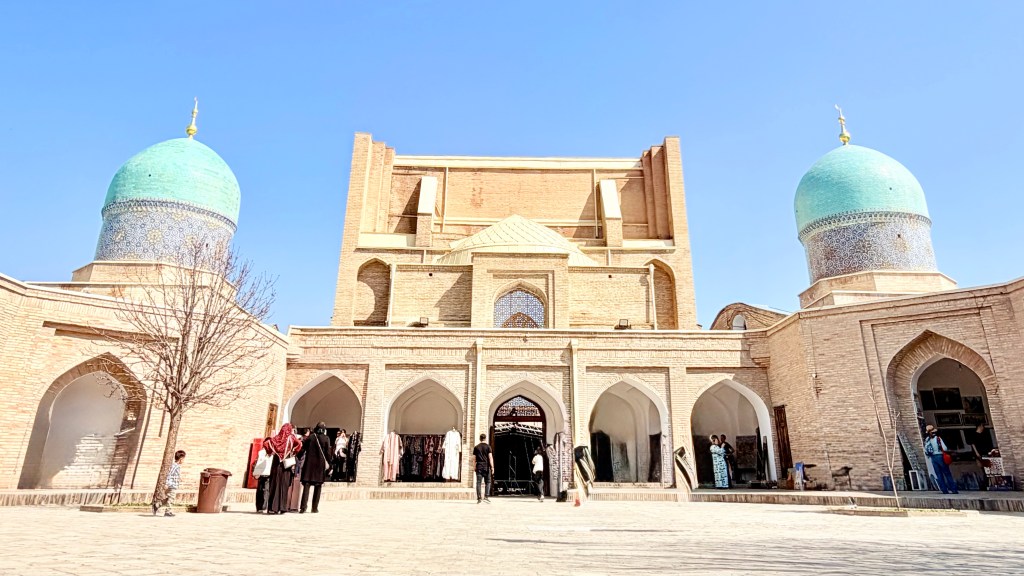
Spiritual Atmosphere: The complex remains an active place of worship and education, offering a peaceful environment characterised by its turquoise domes and intricate brickwork.
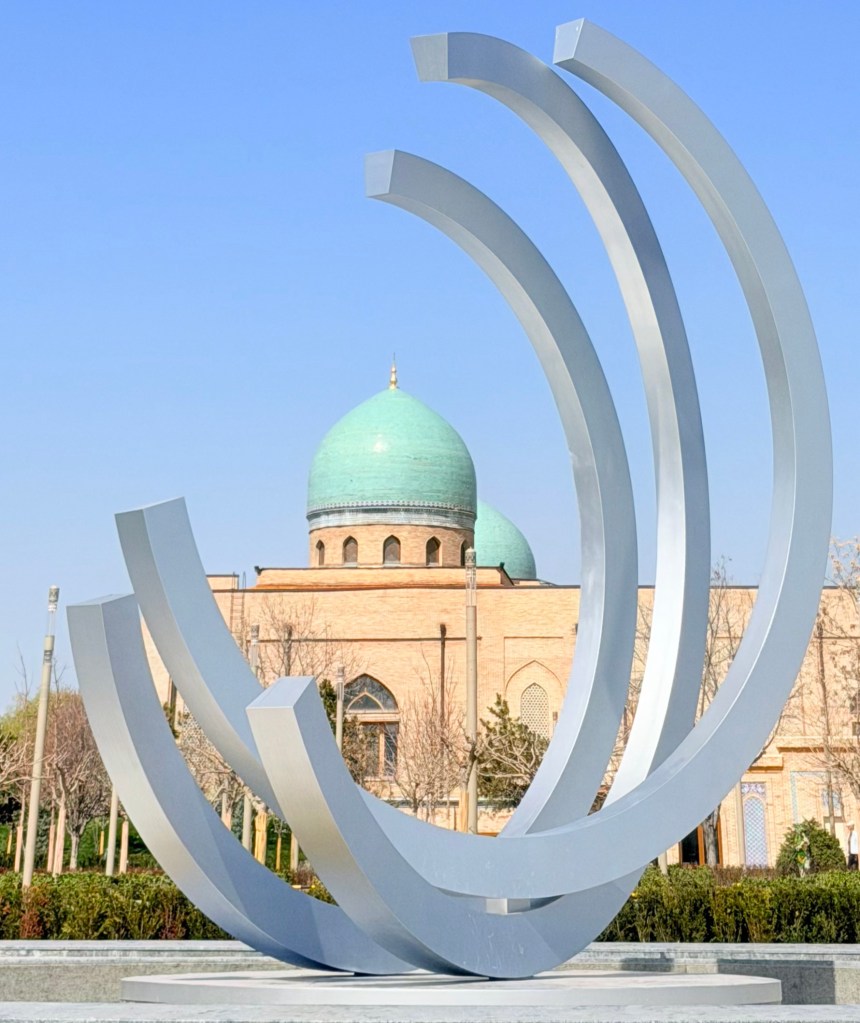
The complex houses the world-famous Muyi Muborak Library, which holds one of the oldest surviving copies of the Quran, believed to date back to the 7th century.
Museum of Applied Arts
Museums aren’t typically my go-to destinations, but the Museum of Applied Arts in Tashkent has earned a spot on my list of must-visit places. It’s genuinely fascinating and offers a unique experience that stands out.
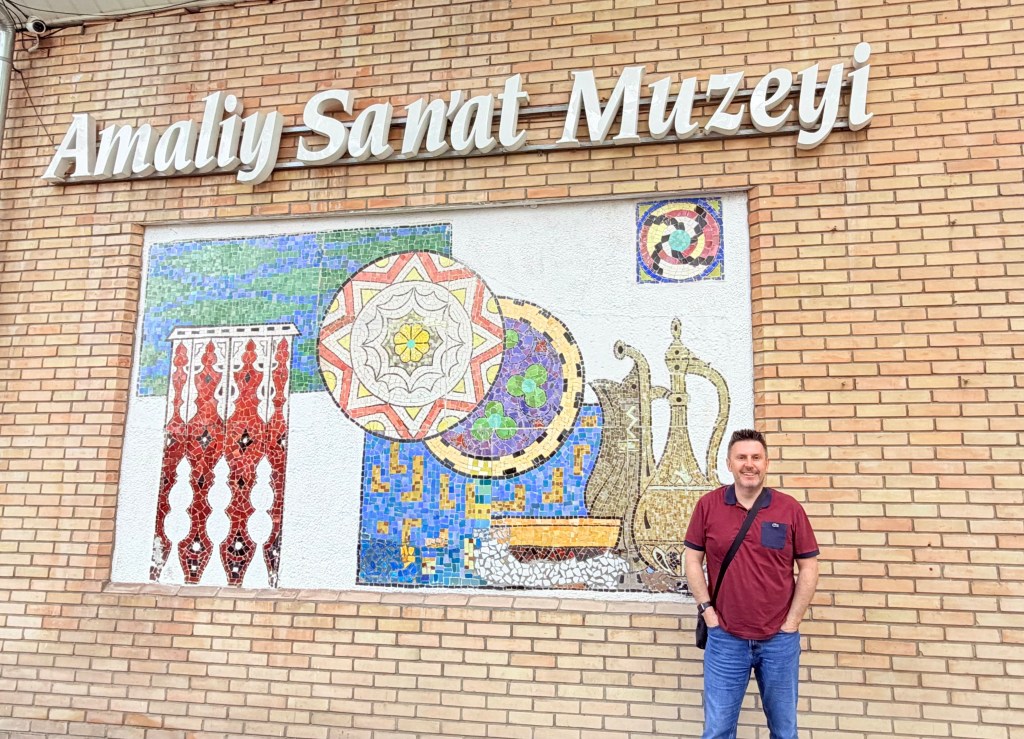
It’s housed in a grand mansion that was once the home of wealthy Russian diplomat and businessman Alexander Polovtsev, who lived in Tashkent before the 1917 Revolution.
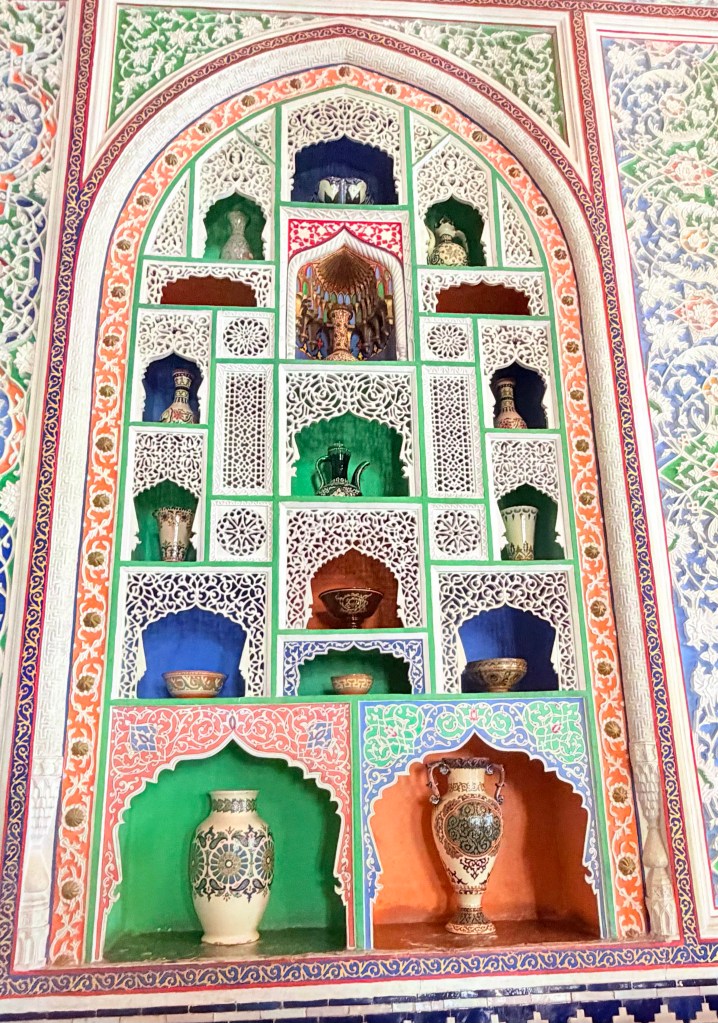
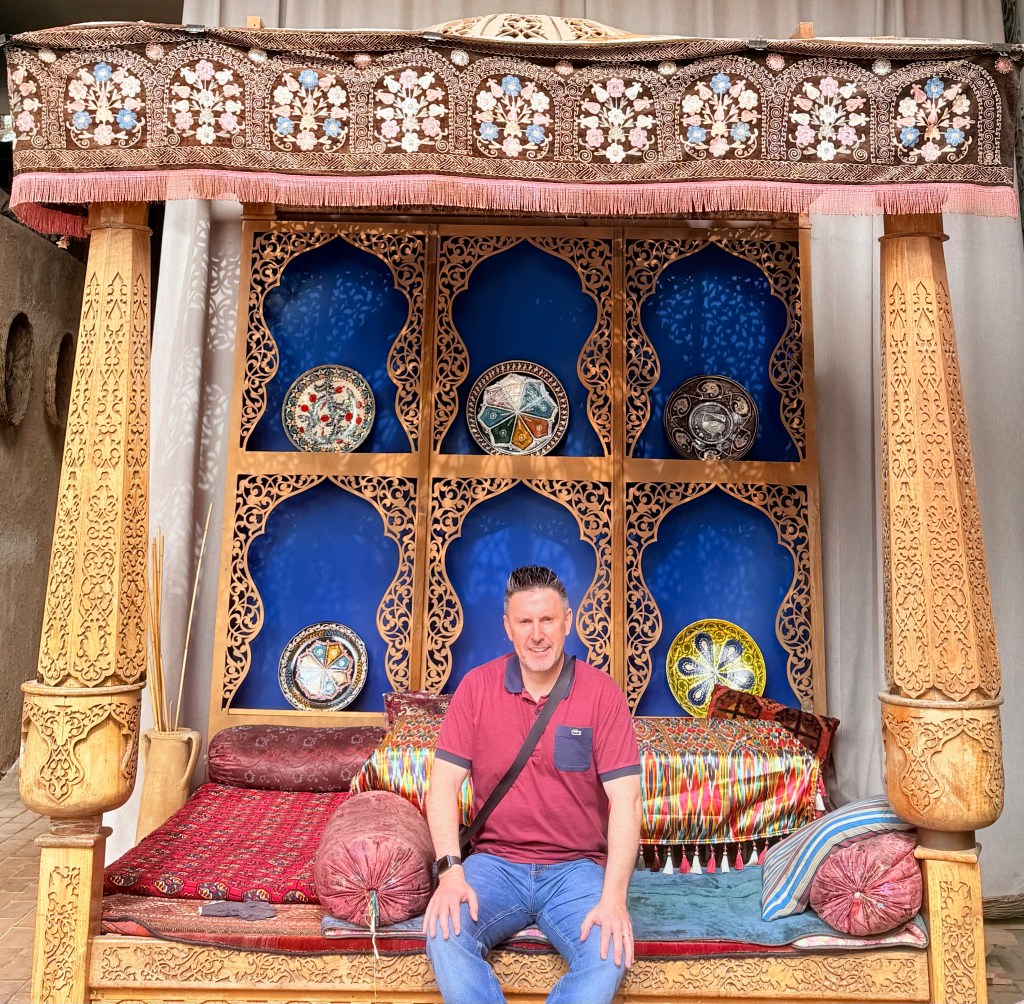
Today, the museum stands as a tribute to Uzbekistan’s renowned art and craft traditions. It showcases a rich tapestry of painting, weaving, ceramics, wood-carving, and the sounds of traditional instruments, each reflecting the unique cultural heritage of the region.
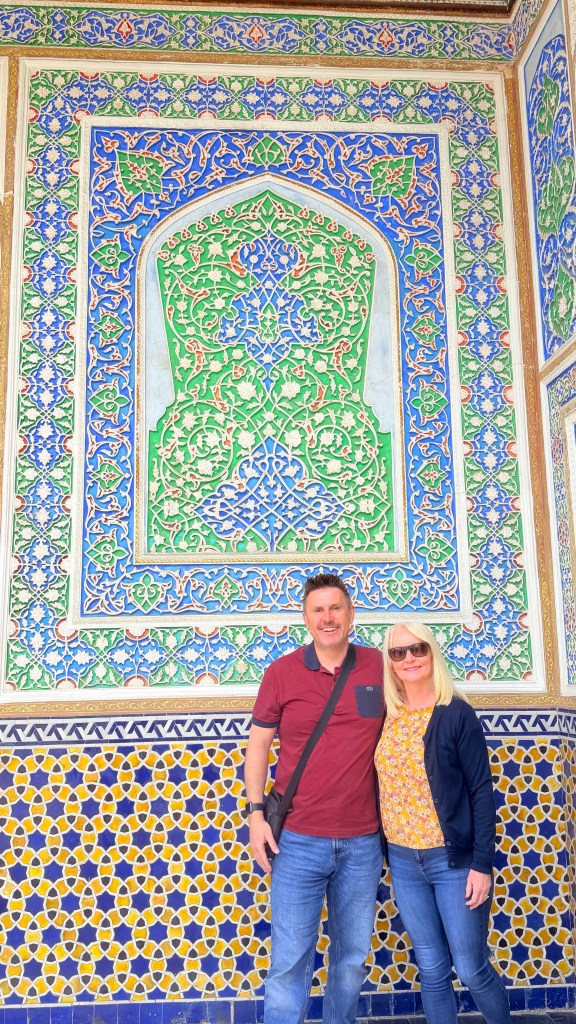
I was particularly drawn to the vibrant colours that beautifully represented Uzbek culture. The central room, decorated with ceramic tiles, stood out as a stunning example of traditional Uzbek design, making the visit worthwhile in itself.


