If you’re planning a trip along the Silk Road you’ll likely want to visit the ‘Big Three’: Samarkand Bukhara and Khiva. These cities share similar Islamic architecture and history but each offers a unique experience in terms of size and atmosphere.
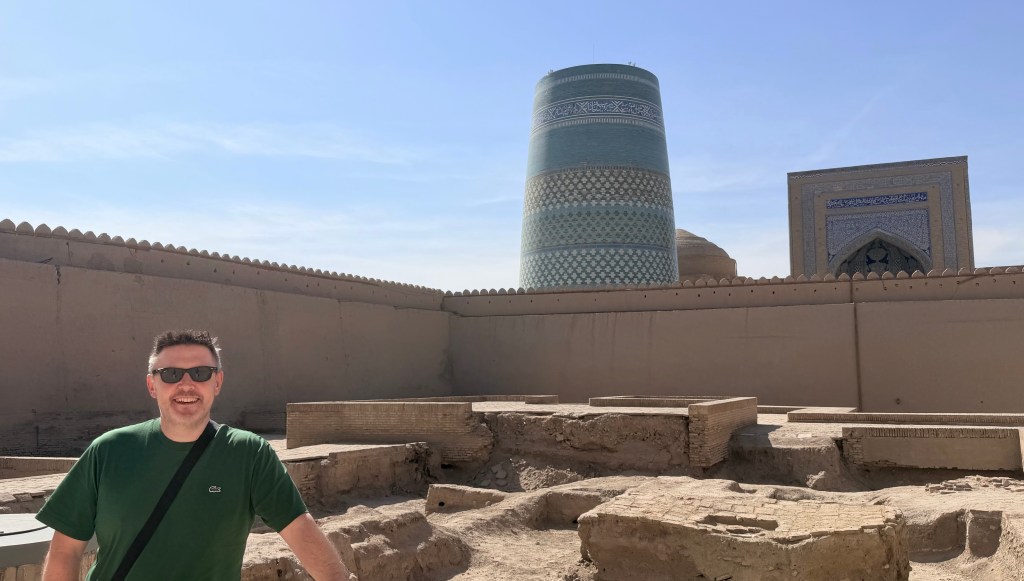
Khiva, the smallest and most remote of the trio, boasts an ancient city called Itchan Kala. Surrounded by formidable mud walls reaching a height of 10 metres, this historic area is truly impressive.
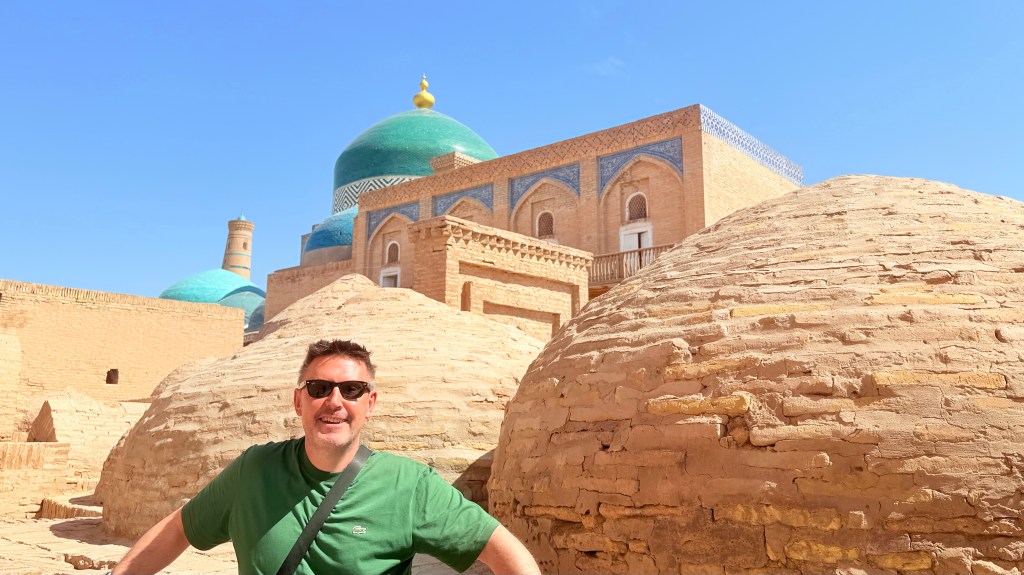
Visiting Khiva felt like stepping back in time. The historic centre, Itchan Kala, was a captivating blend of sun-drenched mud bricks and vibrant turquoise tiles, all framed by its ancient walls. Wandering through the maze of narrow alleyways enveloped me in a profound sense of history and culture making the city feel like a living museum.
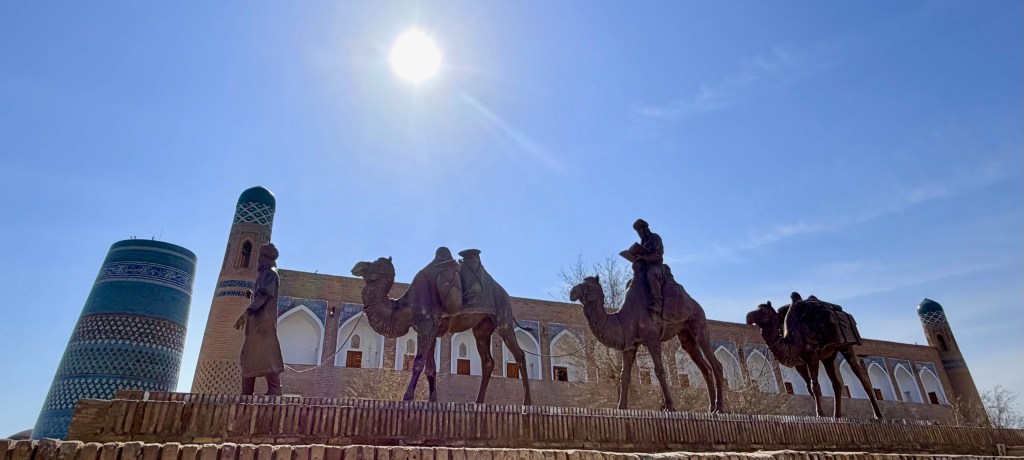
My visit to the city was truly unforgettable. The stunning visuals, combined with its compact and pedestrianised layout, made exploration effortless. Wandering through the narrow streets transported me back in time. Despite its isolation, largely untouched by the Russian Empire and Soviet Union, the city maintained its medieval charm, offering a unique window into the past.
Visiting Khiva on your own will require a bit of planning, but it is definitely worth it! Khiva is a bit of a hidden gem, located way out in the Kyzylkum Desert to the west. To get there, you can take a long train journey (about 6–7 hours from Bukhara) or fly to Urgench.
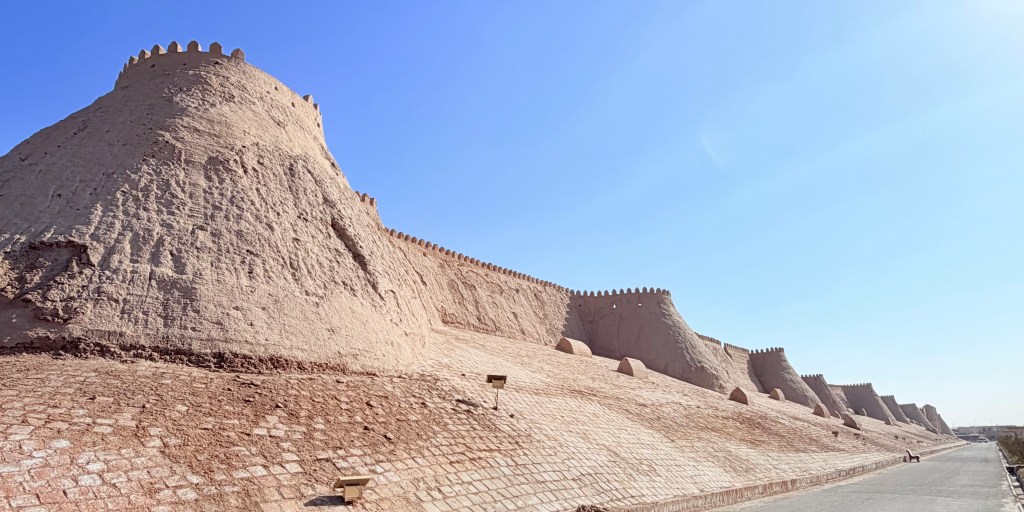
From my point of view, two days is ideal for immersing yourself in the city’s architectural wonders and fully experiencing the desert vibe. Staying within the city walls offers a traditional feel while a slightly outside stay provides modern comforts. Either option makes exploring the city a breeze.
Some Khiva highlights
The West Gate of Khiva
Welcome to the city’s heart! This is your perfect starting point for your adventure. At the main entrance, you’ll receive a warm welcome and find the ticket office where your journey into the city’s historical and cultural wonders begins.
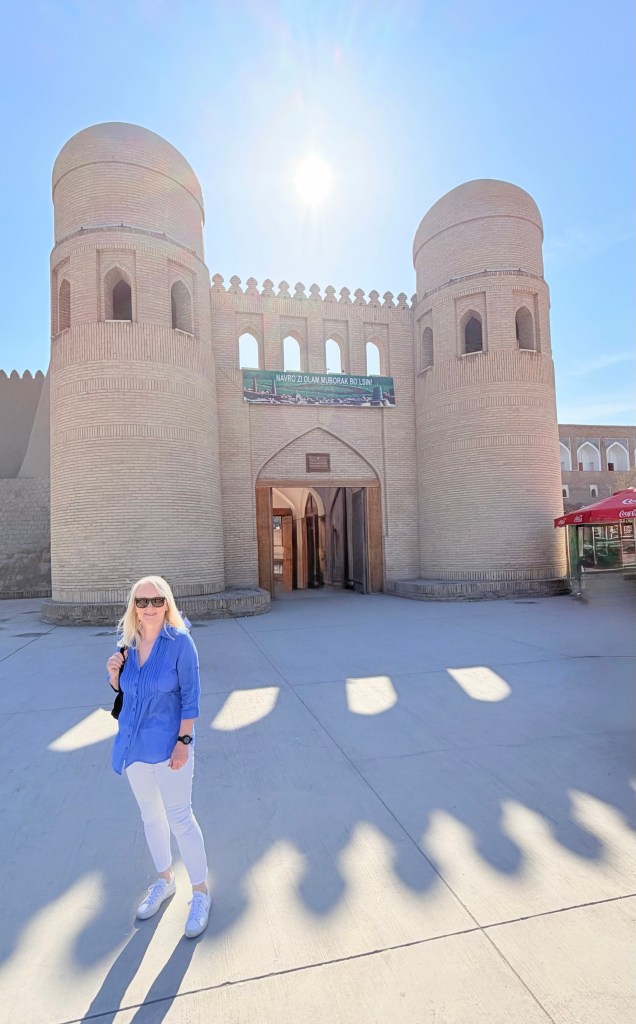
The West Gate, with its two imposing turrets, stands as the main entrance to Ichon-Qala. This contemporary reconstruction from the 1970s replaces the original destroyed in 1920.
Islam Kohja Minaret 🕌
Built in the early 1900s, its design pays homage to the “classical” Central Asian style of the 14th century.
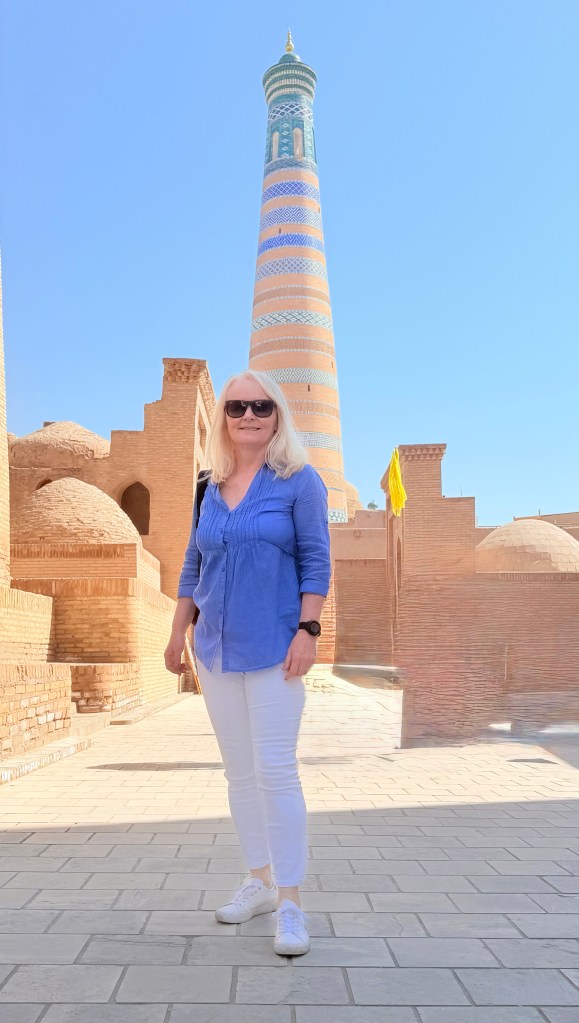
Completed in 1910, the Islam Kohja Minaret stands as Khiva’s tallest structure and a key landmark of Itchan Kala. While younger than other city monuments, its design draws inspiration from the grand 14th-century architectural styles.
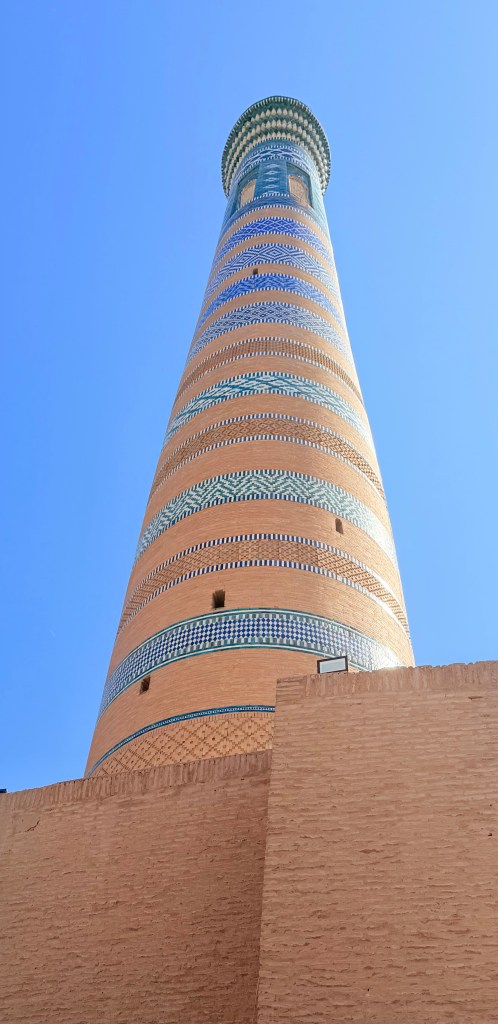
As the tower ascends, it narrows considerably creating an optical illusion that makes it seem even taller. Historically, this minaret was visible from miles away acting as a beacon for caravans traversing the Kyzylkum Desert.
Kalta Minor Minaret 🕌
The city’s most iconic landmark is a delightful sight to behold!
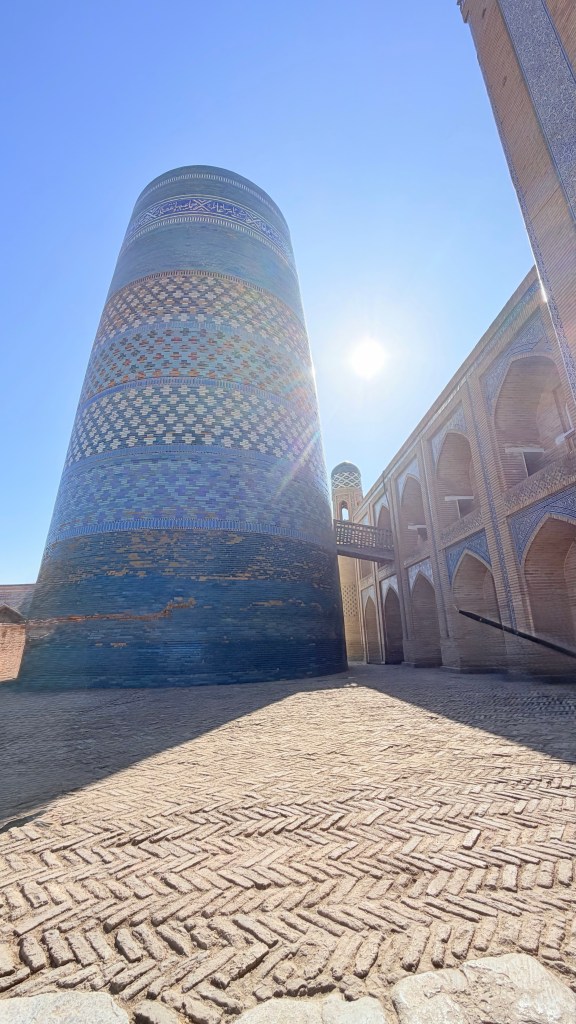
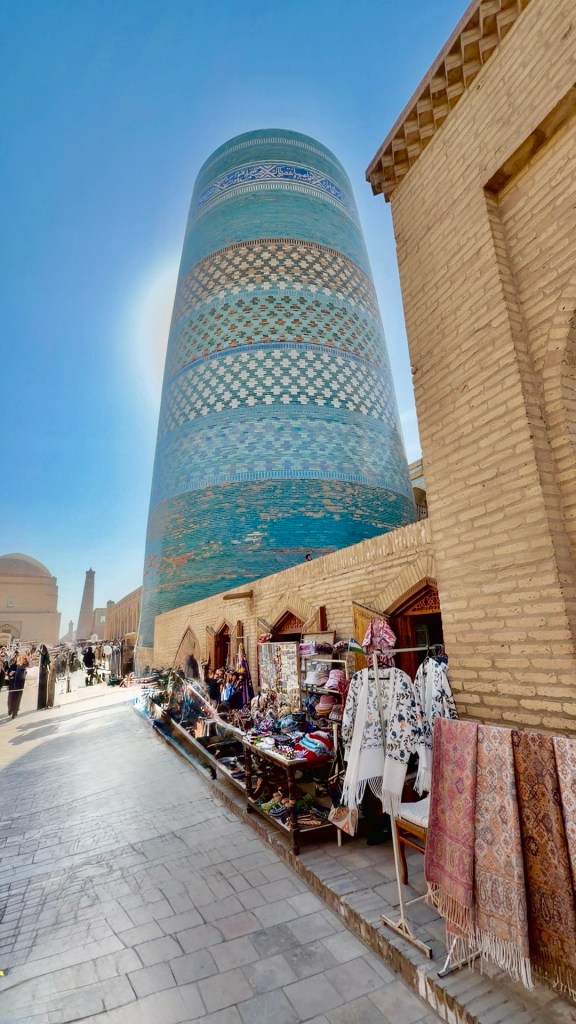
At the heart of Khiva, the unfinished Kalta Minor Minaret stands as a striking symbol of the city’s rich history and architectural ambition. Its massive girth and vibrant turquoise tilework make it the most recognisable landmark. Unlike the slender Islam Khoja Minaret, Kalta Minor’s incomplete state adds a unique charm.
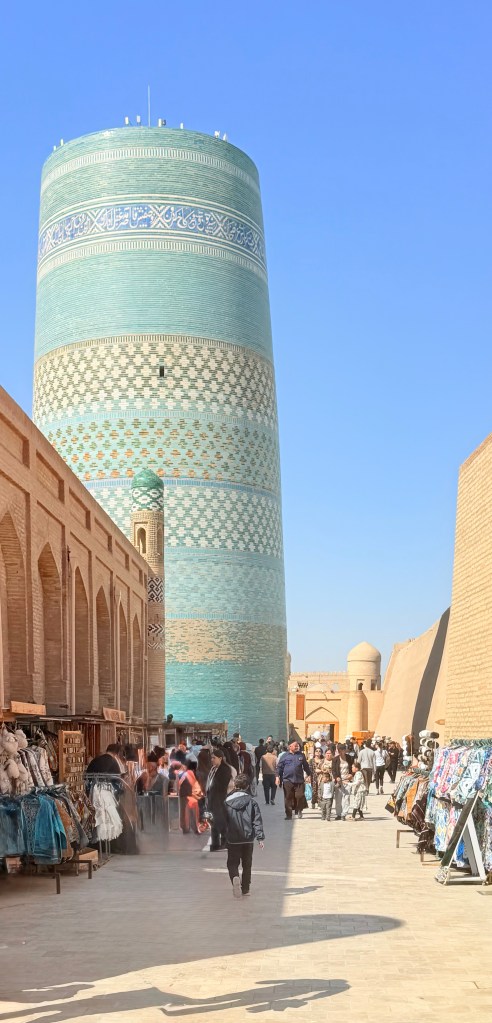
Upon first seeing the minaret, I was captivated by its unexpected beauty. Originally designed to be the tallest in the Islamic world, its construction was abruptly halted. This unexpected pause left behind a stunning turquoise-tiled “stump” that now elegantly graces the skyline. Though unfinished, this architectural marvel stands as a testament to the grandeur and ambition of its creators. It offers a unique and captivating view that continues to inspire awe.
AllaKuki Khan Madrasa and Bazaar
The Allakuli Khan Madrasa stands as a striking architectural landmark in Khiva, Uzbekistan’s historic city.
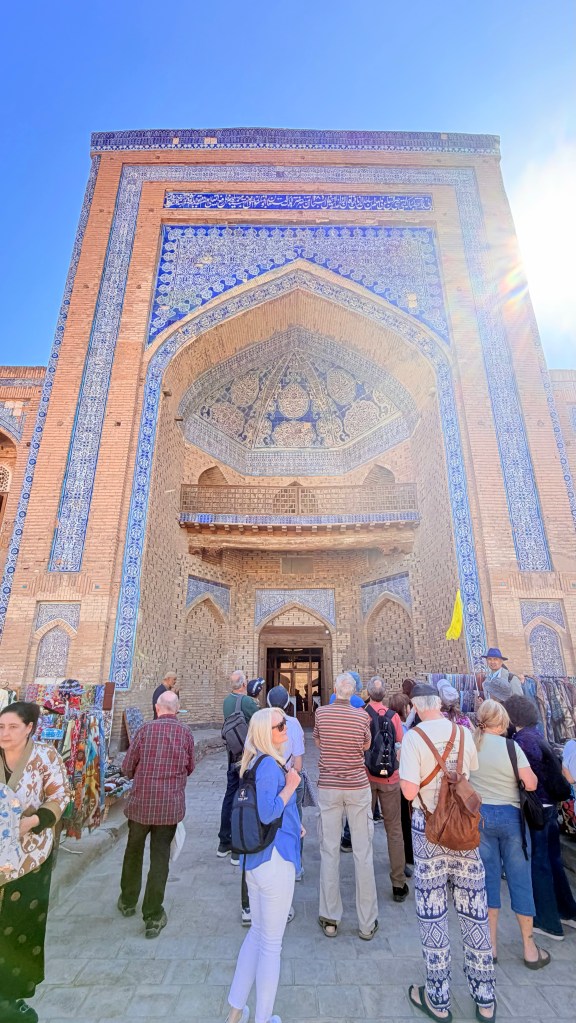
Built between 1834 and 1835, this remarkable structure stands as a testament to the Khanate of Khiva’s power and cultural ambition in the 19th century. Today it proudly holds UNESCO World Heritage status.
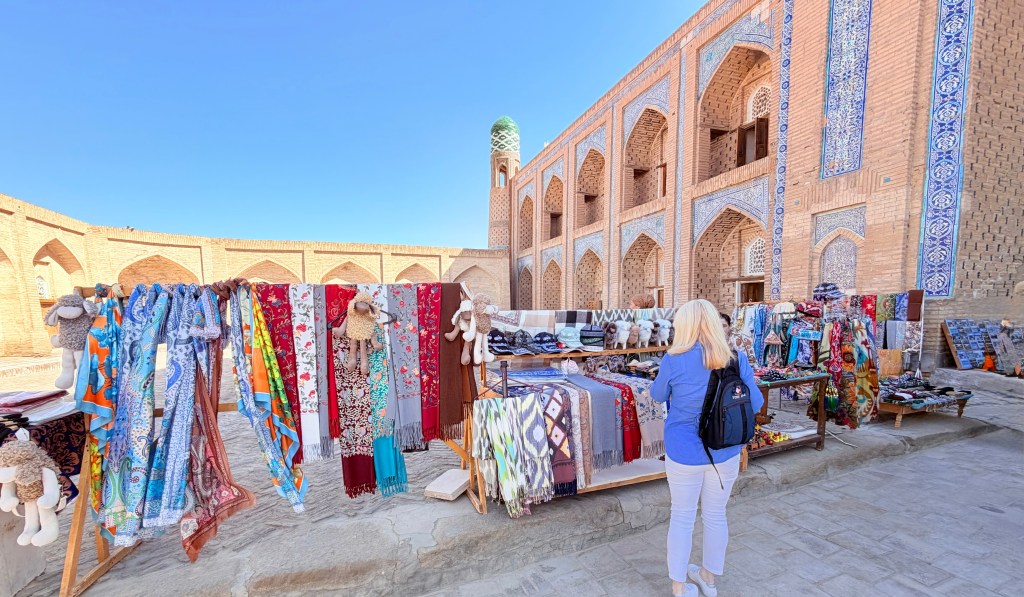
This former religious school now houses a museum dedicated to medicine’s history and honours Abu Ali ibn Sina.

Stroll through the charming souvenir shops nestled within the historic former student cells of Allakuki Khan. You can also visit craft workshops to witness skilled artisans at work, crafting beautiful traditional wood carvings and silk weaves.
Toshhovli Palace
Constructed between 1832 and 1841 by Allakuli Khan, this palace offered a more magnificent alternative to the Kuhna Ark. It boasted over 150 rooms and nine courtyards.
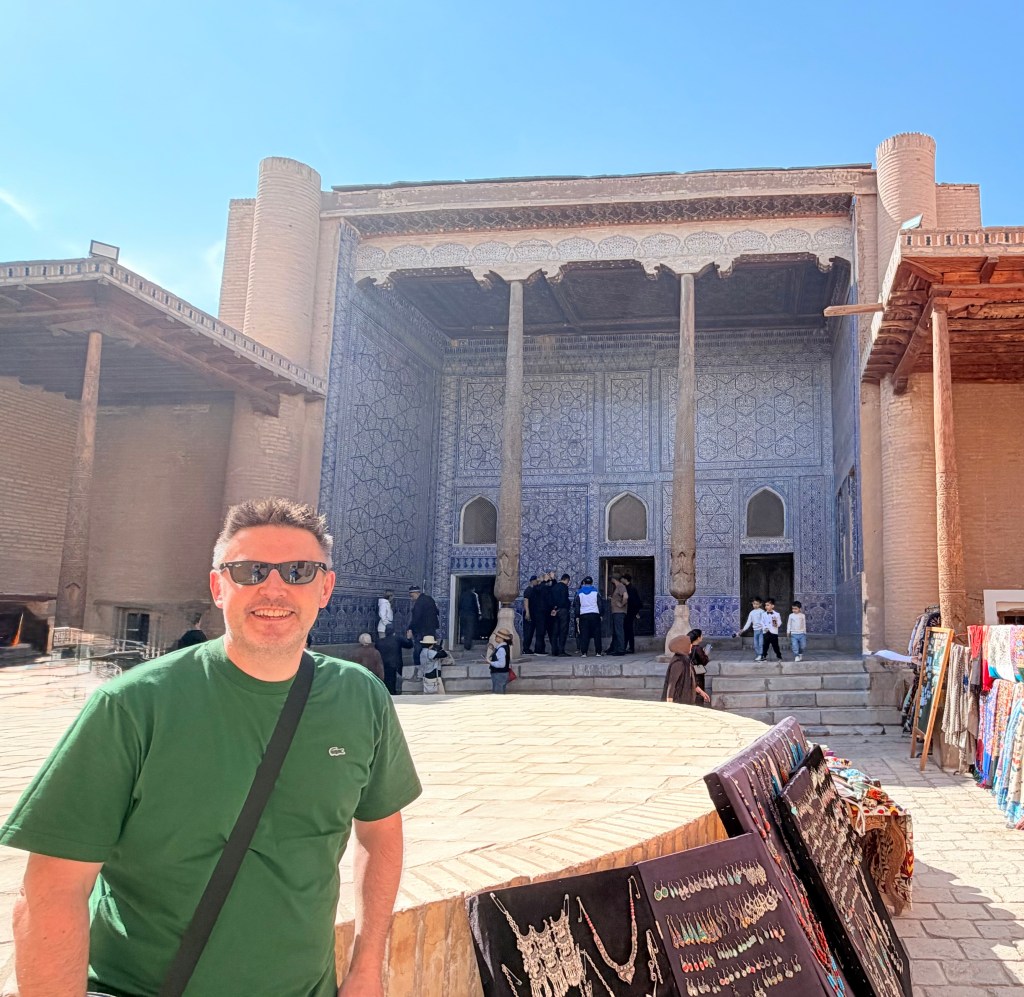
Originally built as a residence for the Khans of Khiva, this palace is truly a marvel. Its impressive array of rooms includes a grand reception hall and intimate private chambers all adorned with distinctive Islamic architecture.
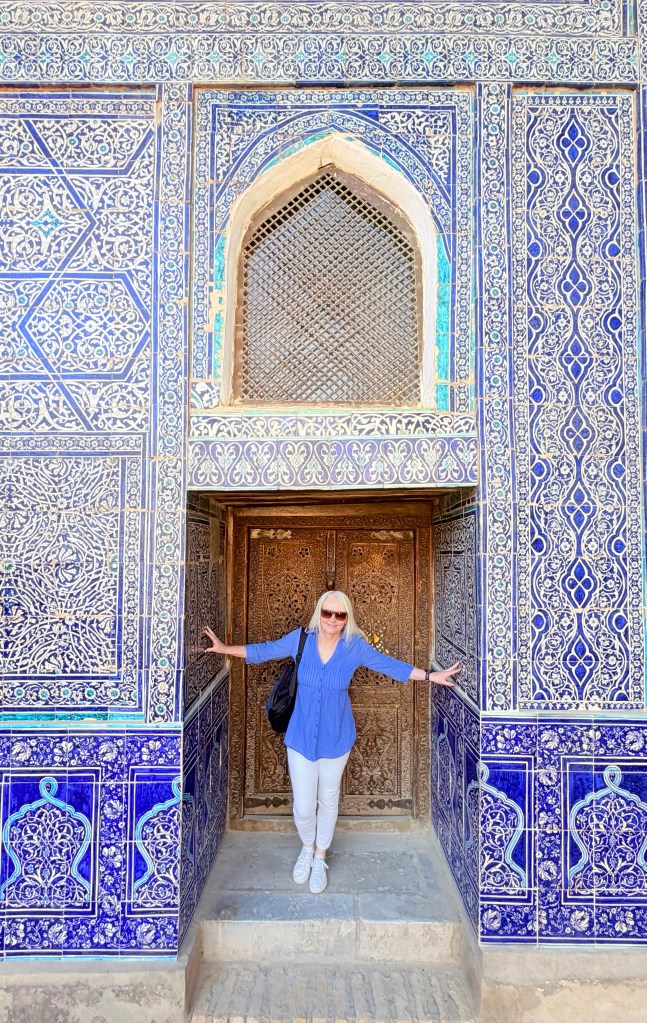
This palace, known as the ‘Stone House’, is a breathtaking gem in the heart of Khiva. Step through its doors and you’re immediately surrounded by walls that shimmer with intricate blue ceramic tiles, each one telling a fragment of history.
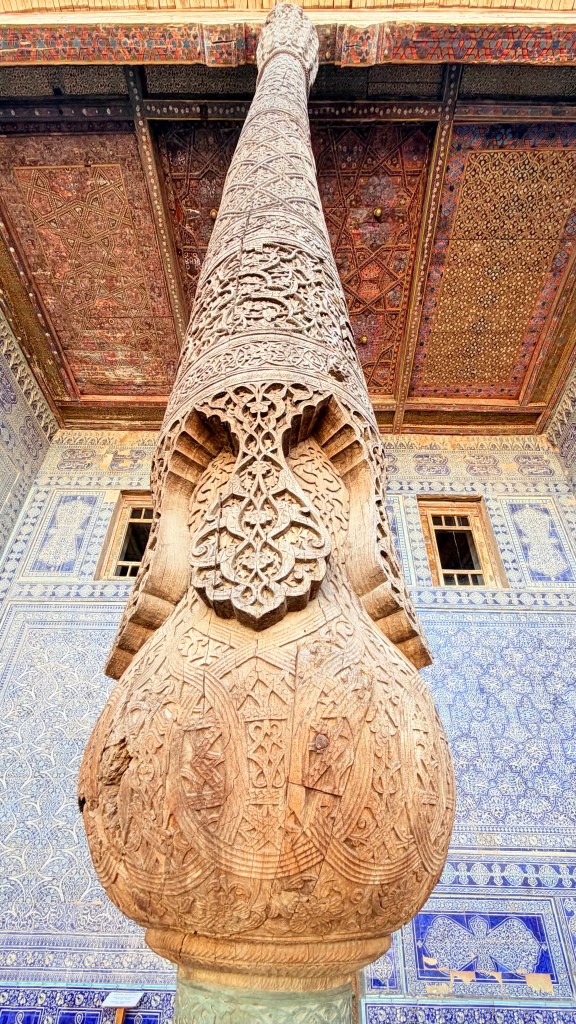
Elaborate wood carvings demonstrate skilled craftsmanship and artistry, while painted ceilings introduce vibrant colour and visual interest.
Discovering Khiva
From my personal experience, the city’s extensive restoration has transformed it into a completely detached place. Walking through its pristine streets feels like stepping into a preserved moment frozen in time, rendering the outside world utterly irrelevant.
Nestled within a few square kilometres, this densely packed area offers a leisurely pace of exploration. Each turn reveals a new courtyard or intricately carved wooden gate, enhancing the charm and allure of the surroundings.
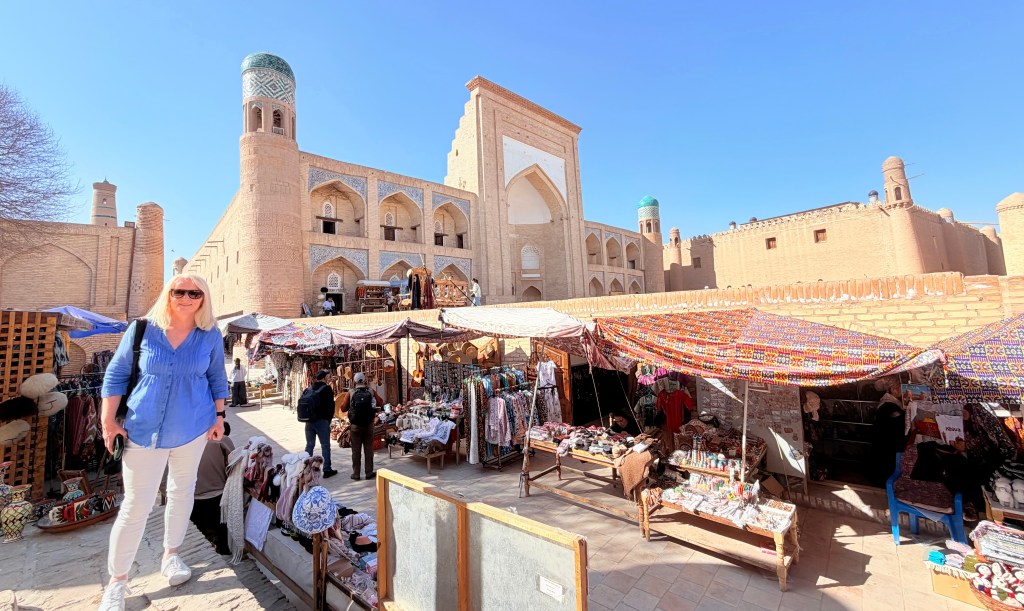
During peak hours, the inner city feels quite tourist-centric. However, despite the influx of visitors, it retains a unique charm reminiscent of the Silk Road era. This is largely due to the thriving artisan community, which showcases traditional crafts and skills passed down through generations.
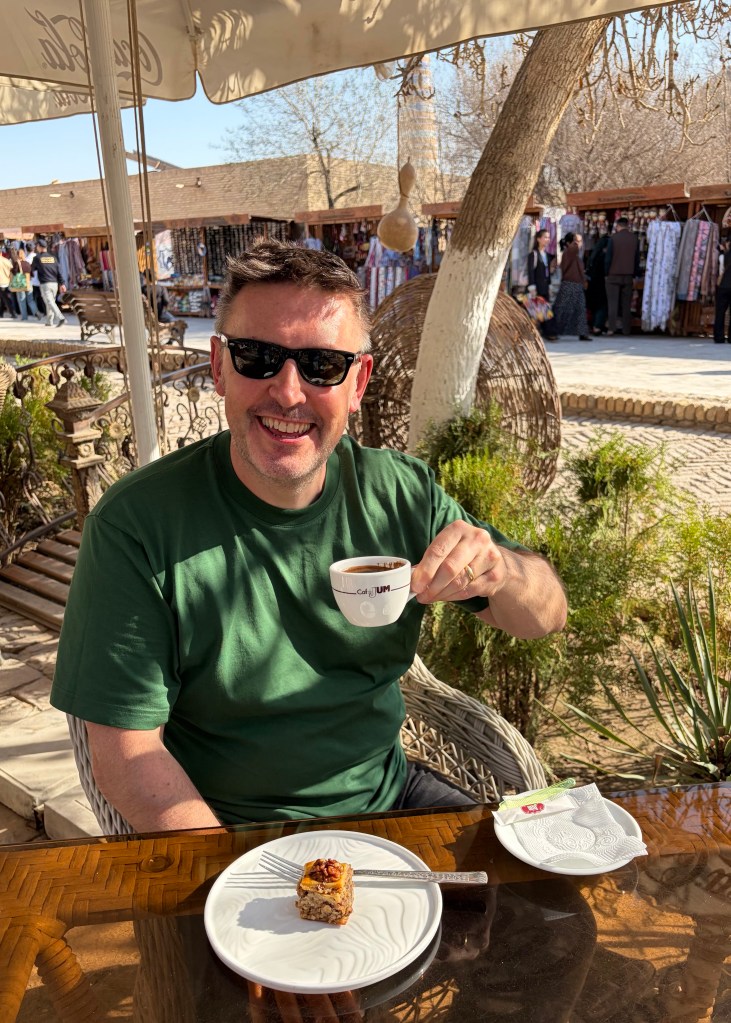
Khiva’s cafe culture is a captivating blend of Silk Road tradition and modern style. At the heart of social life are the chaikhanas, or tea houses, where locals and visitors alike gather to savour a cup of tea and engage in animated conversation. However, in recent years a more contemporary cafe scene has blossomed offering a refreshing twist on the traditional experience.
Khiva by night
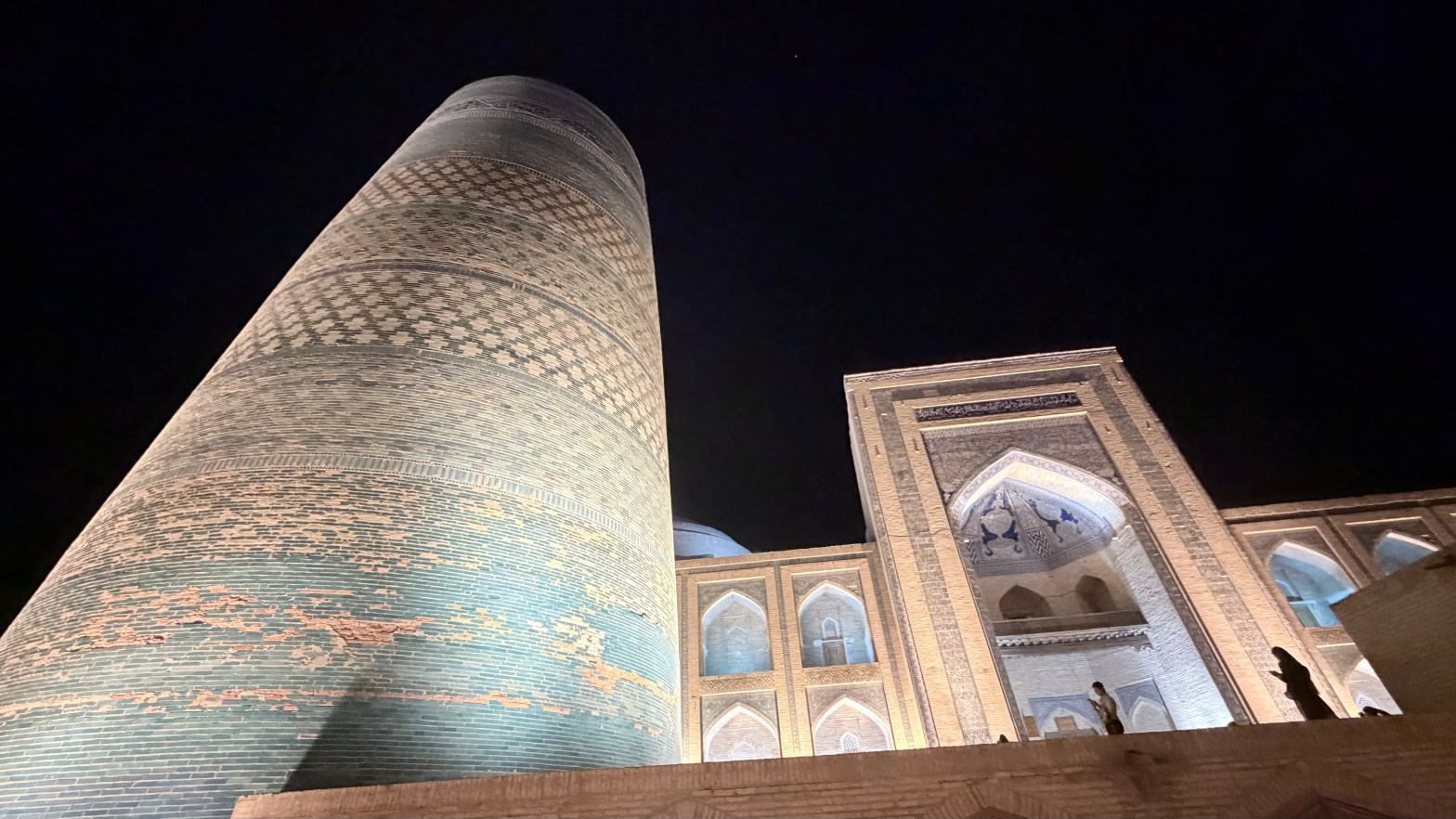
Khiva transforms dramatically at night, becoming an atmospheric “living museum” bathed in soft golden light. Exploring Itchan Kala after the daytime tour groups have departed offers one of the best ways to truly experience the city’s ancient spirit.
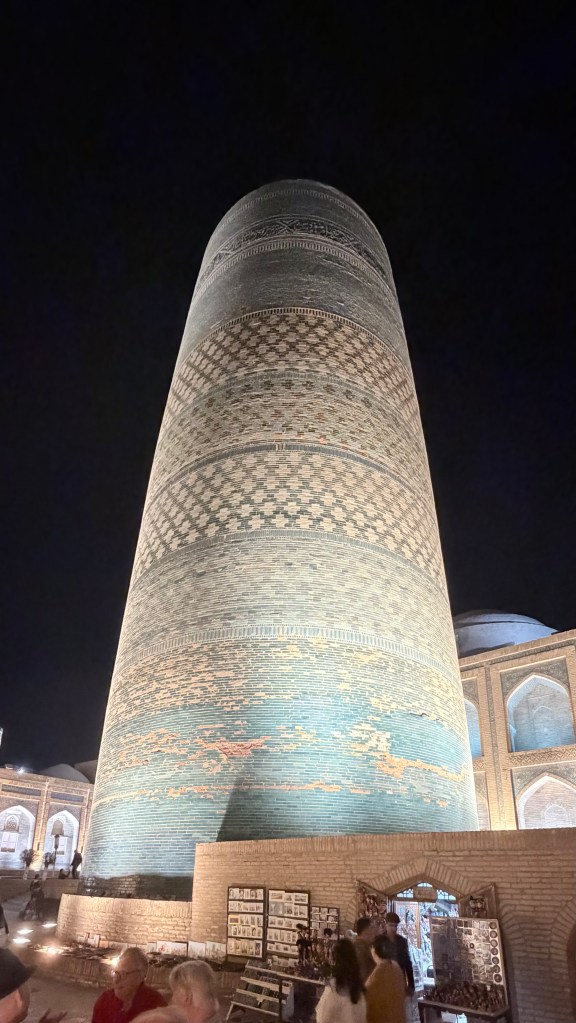
The beautifully lit Kalta Minor Minaret displays its deep turquoise tiles against the darkening sky. Although climbing it is not possible, it stands as the city’s radiant centrepiece.
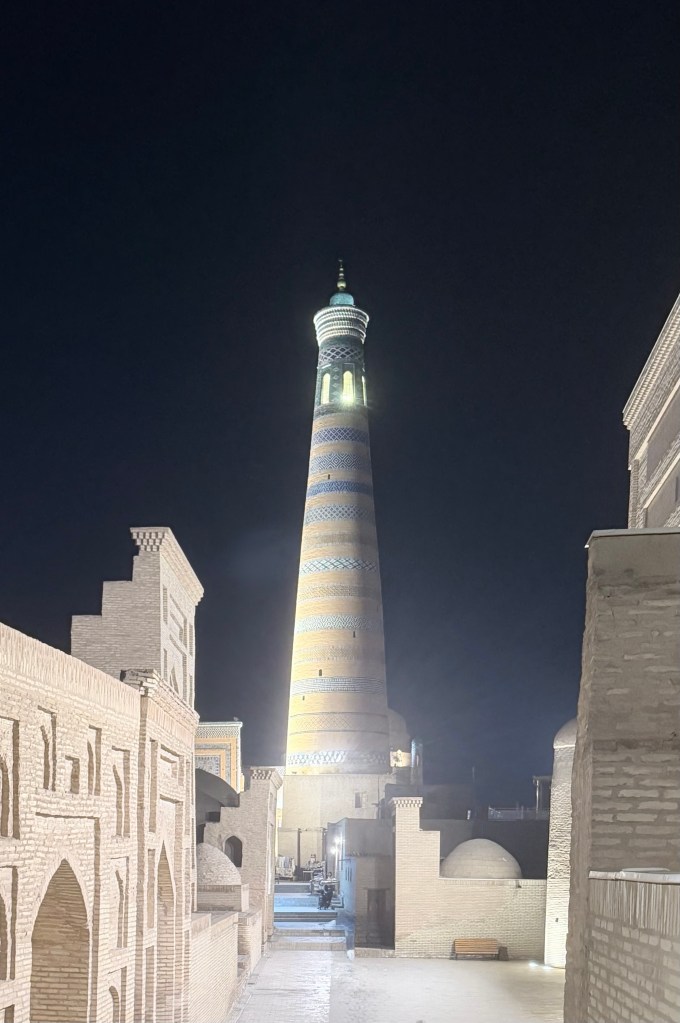
After 8:00 pm, the lively main thoroughfares quieten down, creating a peaceful atmosphere. This serene time is ideal for exploring the charming side streets around the Juma Mosque and the Islam Khoja Minaret. Photographers can then capture stunning images without the crowds.
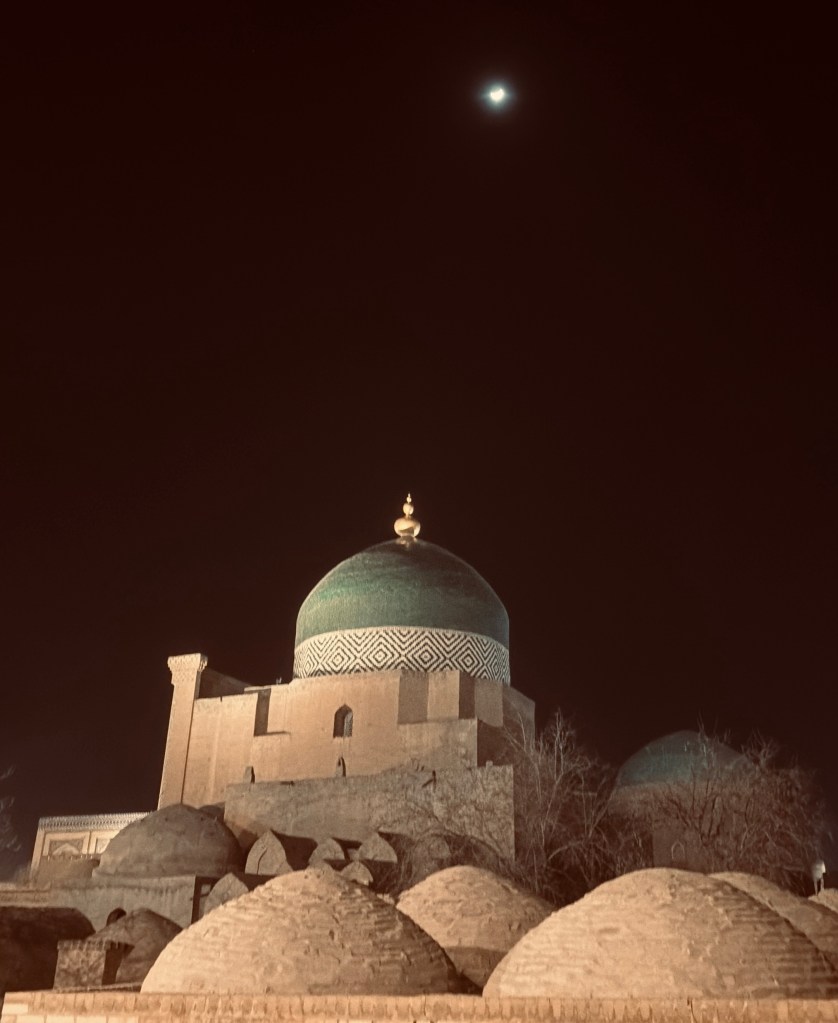
Visiting Khiva at night offers a truly unique experience, transcending typical nightlife. The serene atmosphere captivates me, allowing the city’s rich history to shine under the starlit sky. It’s an unforgettable encounter with Khiva’s timeless charm.
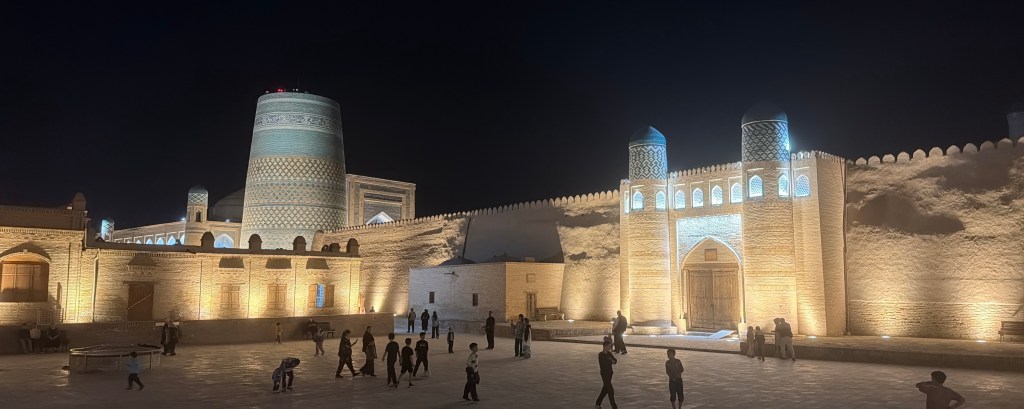
Khiva is a perfect spot for nighttime photography. The striking contrast between the deep blue sky and illuminated architecture creates a captivating scene. This makes it one of the most photogenic locations in Central Asia after sunset.
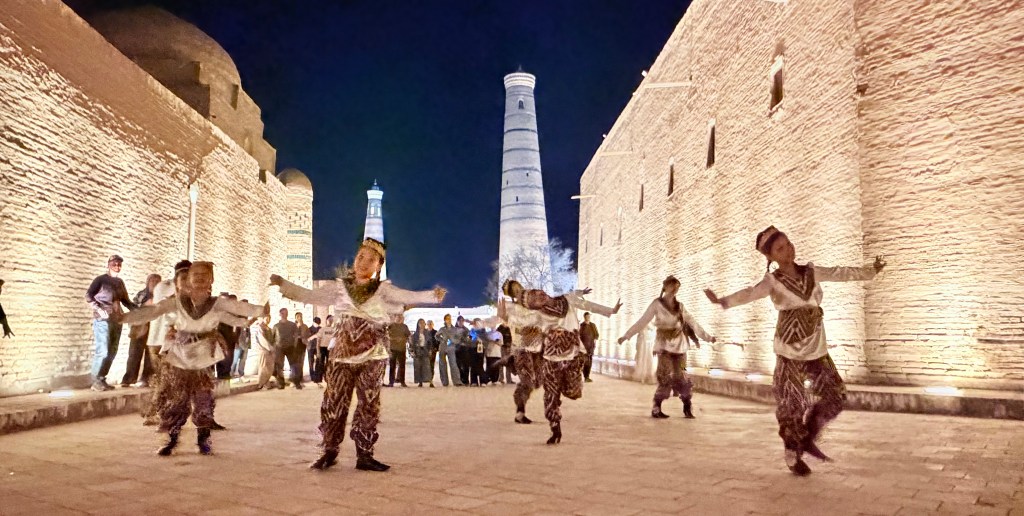
Occasionally, the air vibrates with the lively sounds of music and the rhythmic movements of traditional dance shows. I was fortunate enough to witness an impromptu dance performance by a group of students preparing for a competition in Khiva the next day. They kindly offered us a dress rehearsal of their captivating routine.

 We were born to do more than go to work, pay bills and die. See the world while you are alive and kicking