Samarkand is one of the oldest continuously inhabited cities in Central Asia and a majestic testament to the heights of Islamic architecture. Located in modern-day Uzbekistan, it has served for millennia as a crucial crossroads on the Silk Road, linking China, India, and the West.
If cities had summaries, Samarkand would be the overachiever, overshadowing everyone else. With over 2,500 years of history, it’s been conquered by Alexander the Great, levelled by Genghis Khan and rebuilt into a dazzling sapphire by Tamerlane (Amir Timur).
Today, Samarkand shines as Uzbekistan’s crown jewel—a place where the sky-blue mosaics are so vibrant, they seem to glow from within. Whether you’re a history enthusiast or simply someone who loves a delicious bowl of plov, here’s why Samarkand should be at the top of your travel bucket list for 2026.
You can’t throw a stone in Samarkand without hitting a UNESCO World Heritage site. Here are a few you absolutely cannot miss:
Registan
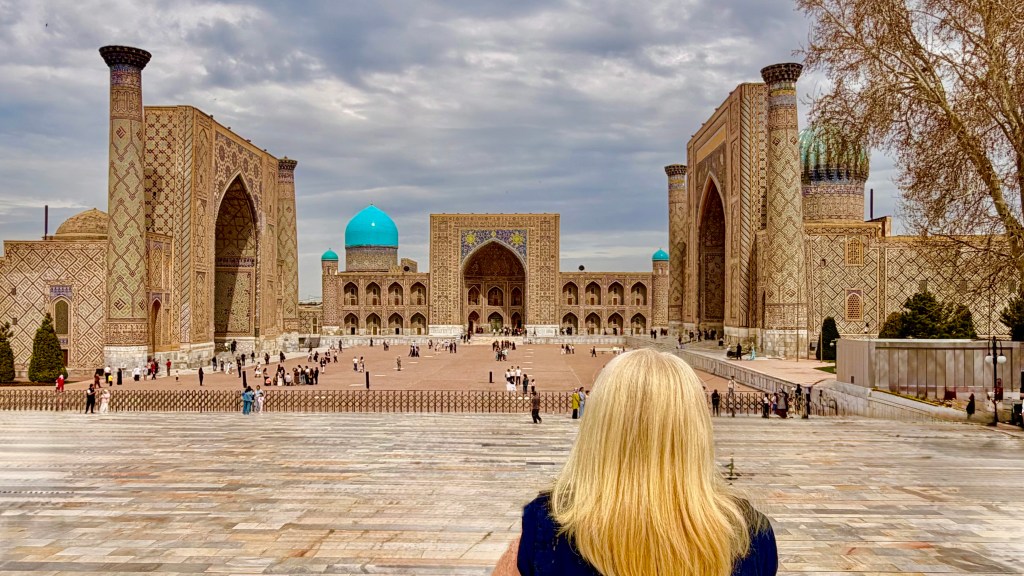
Registan, nestled in the heart of the city, stands as one of Uzbekistan’s most iconic landmarks. This breathtaking square, framed by grand madrasahs, is a must-see for any traveller seeking to immerse themselves in the nation’s rich history and architectural splendour.
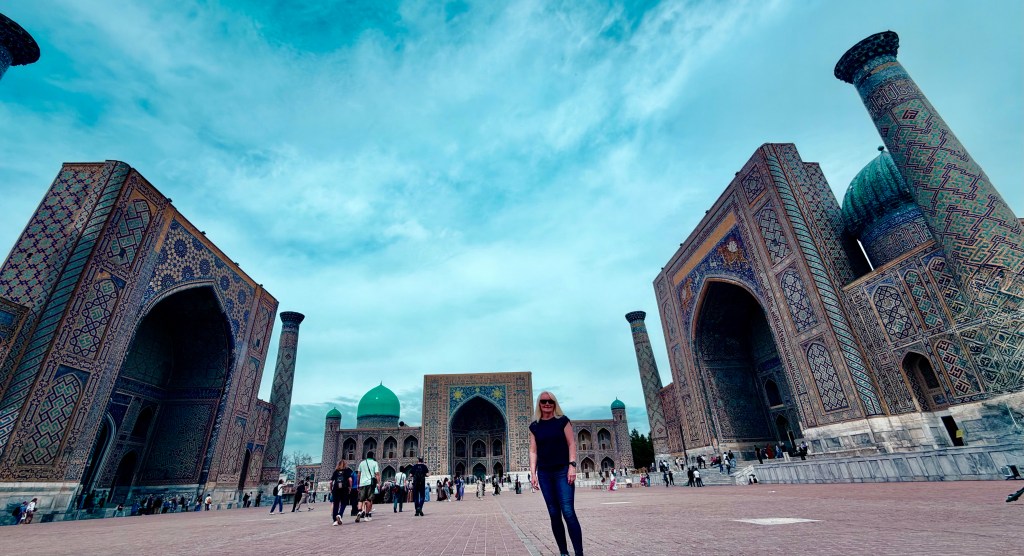
Samarkand’s Registan Square, at the heart of Samarkand, is truly a sight to behold. Once the bustling centre of the Timurid dynasty, it was where merchants, scholars, and citizens all crossed paths along the Silk Road.
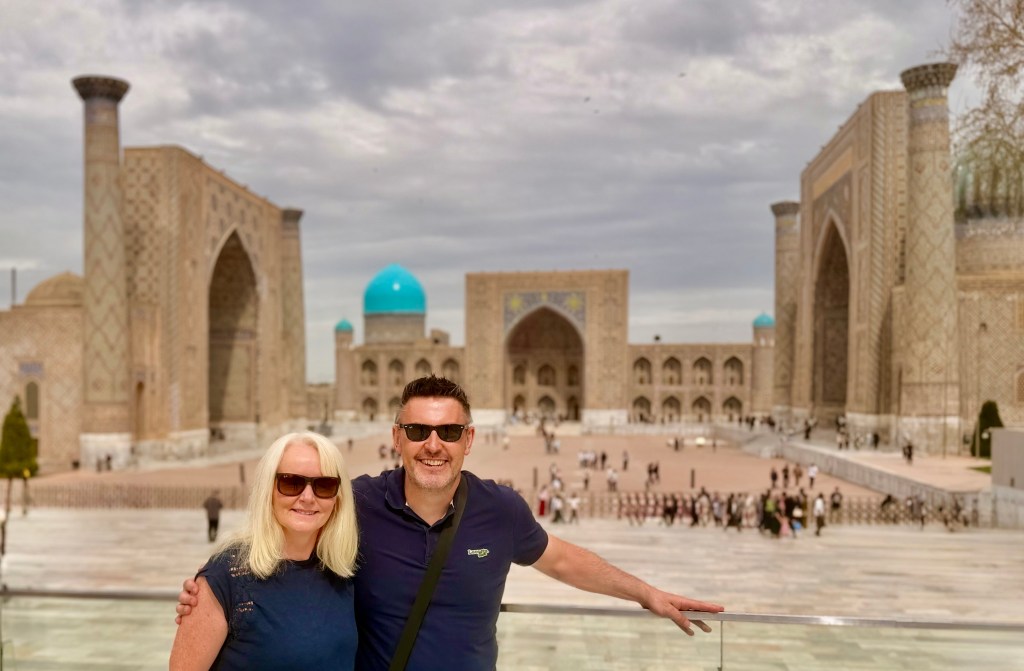
It is widely considered one of the most magnificent public squares in the world. It was a centre for royal proclamations, executions, and public gatherings, framed by three massive Madrasas (Islamic schools) that showcase the height of Islamic architecture.
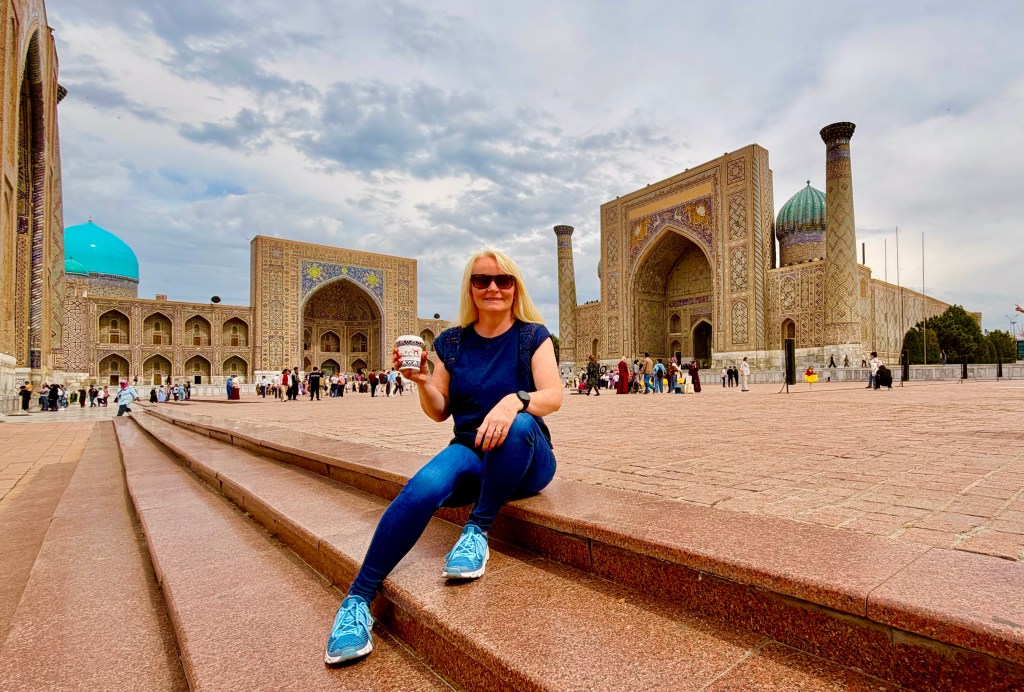
You might have seen pictures of it on Instagram, but nothing quite gets you ready for how huge the Registan is! This central square is surrounded by three huge madrasas (Islamic schools) covered in beautiful, sand-coloured brickwork and sparkling blue mosaics.
Three Madrases
The Ulugh Beg Madrasa, constructed between 1417 and 1420 by Timur’s grandson, stands as a remarkable example of Timurid architecture. Renowned for its focus on astronomy and mathematics, the madrasa became a celebrated centre of learning, attracting scholars from across the region. Its intricate designs, grand portal, and elegant tilework reflect both the scientific vision and artistic sophistication of its era.
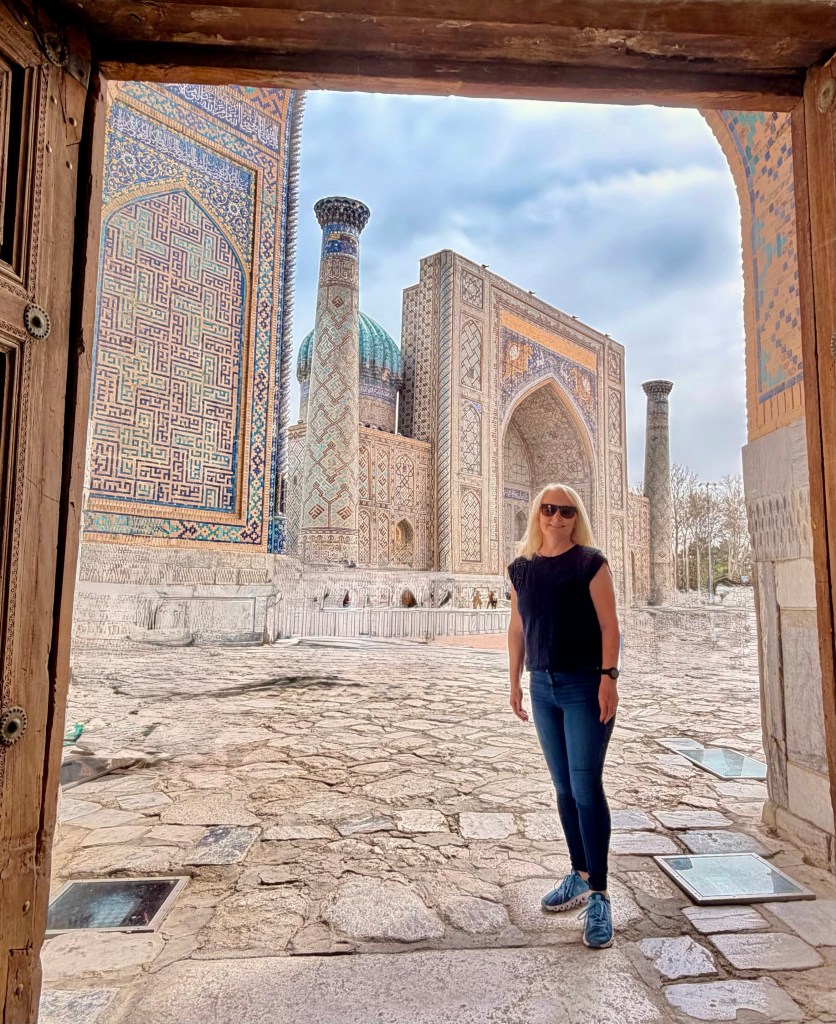
The She-Dor-Madrasa, constructed between 1619 and 1636, is renowned for its striking facade adorned with intricate mosaics depicting lions and tigers.
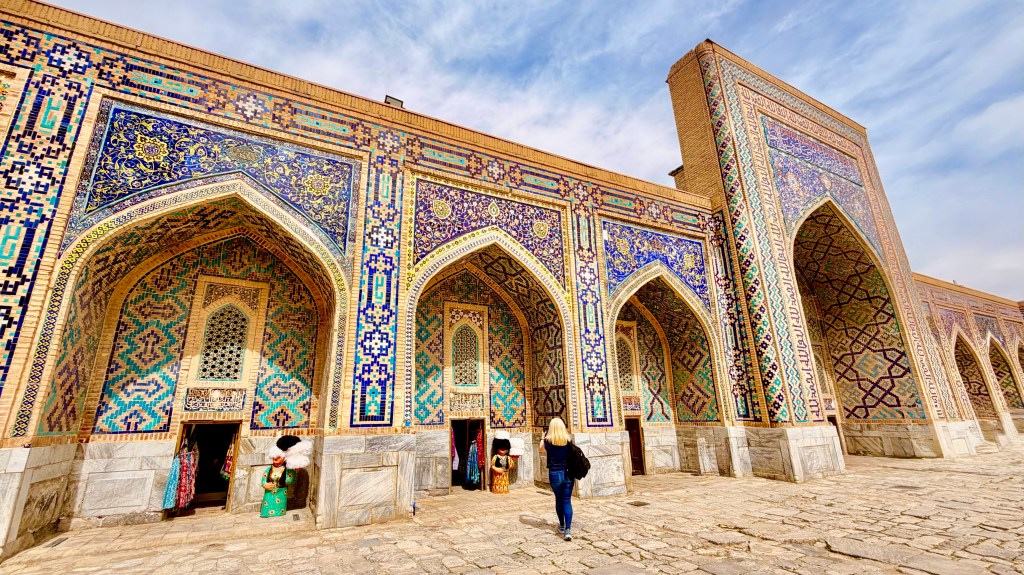
The Tilya-Kori Madrasa, constructed between 1646 and 1660, is renowned for its opulent gold-adorned interior. This architectural marvel functions as both an educational institution and a place of worship.
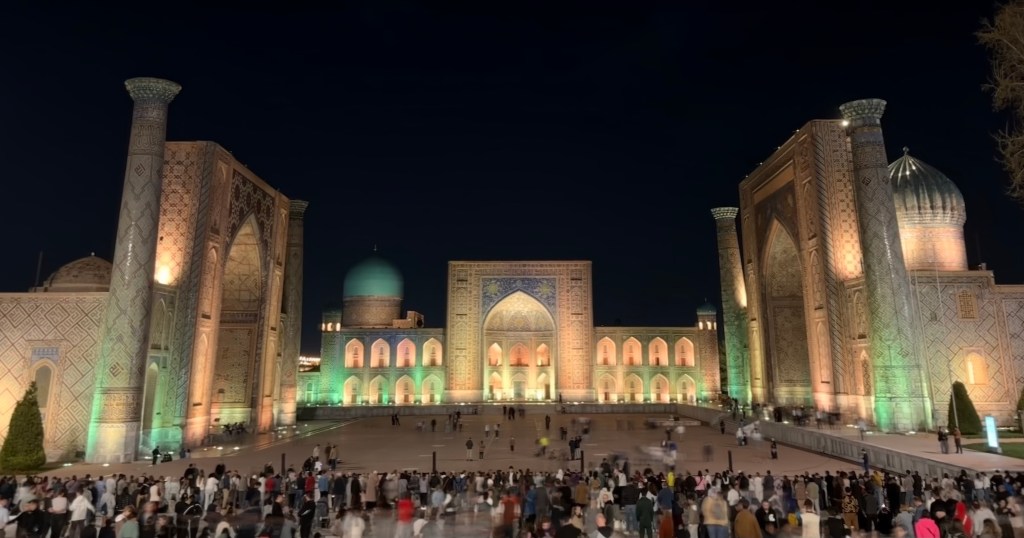
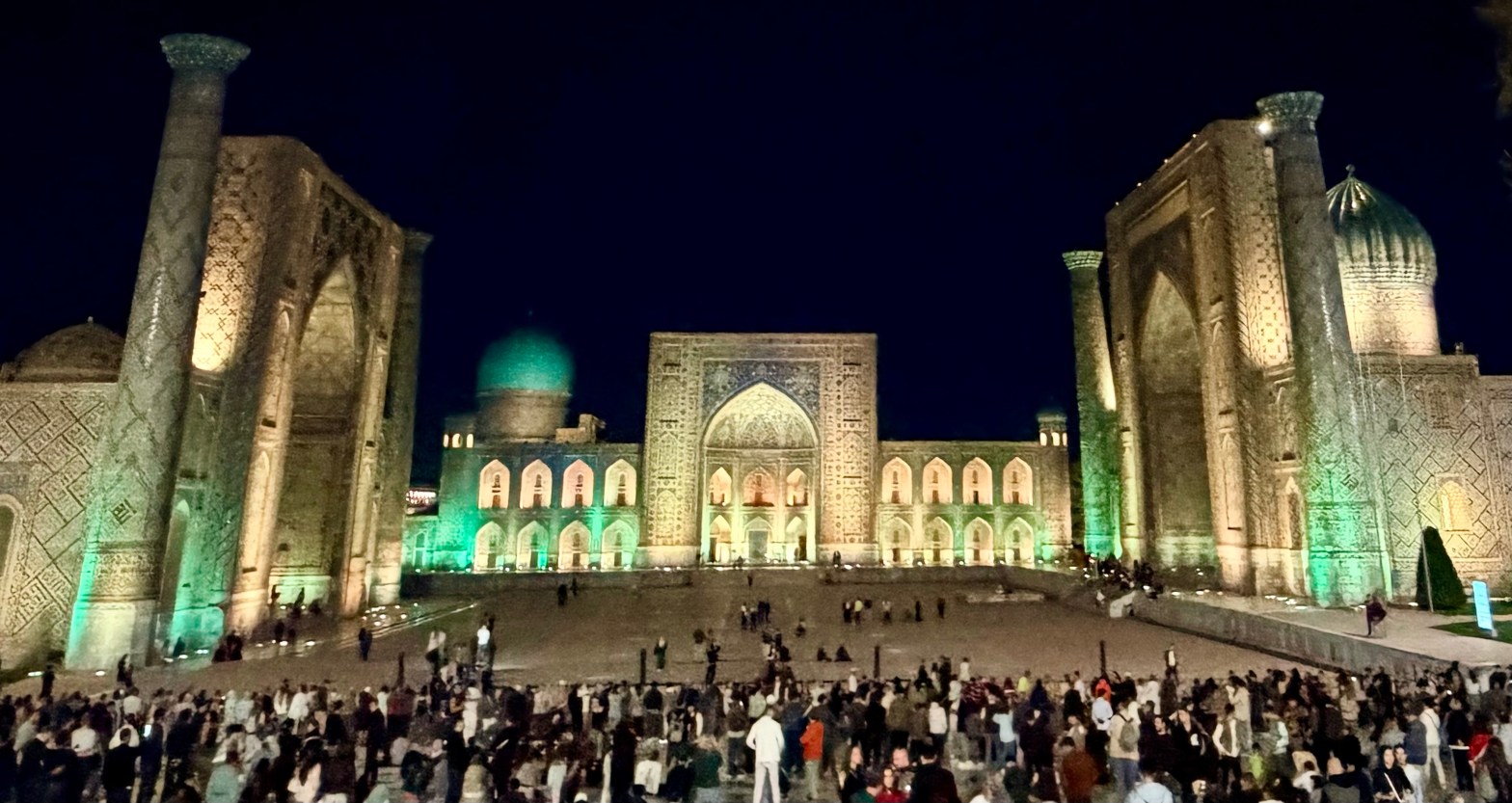
I love the Evening Light Show at the square. It’s such a magical experience to see the area illuminated with lights and accompanied by sound around 8:00 PM or 9:00 PM, depending on the season. Make sure to check the schedule at the ticket office beforehand, just in case a full laser show needs a certain number of spectators or a sponsor.
Shah-I-Zinda
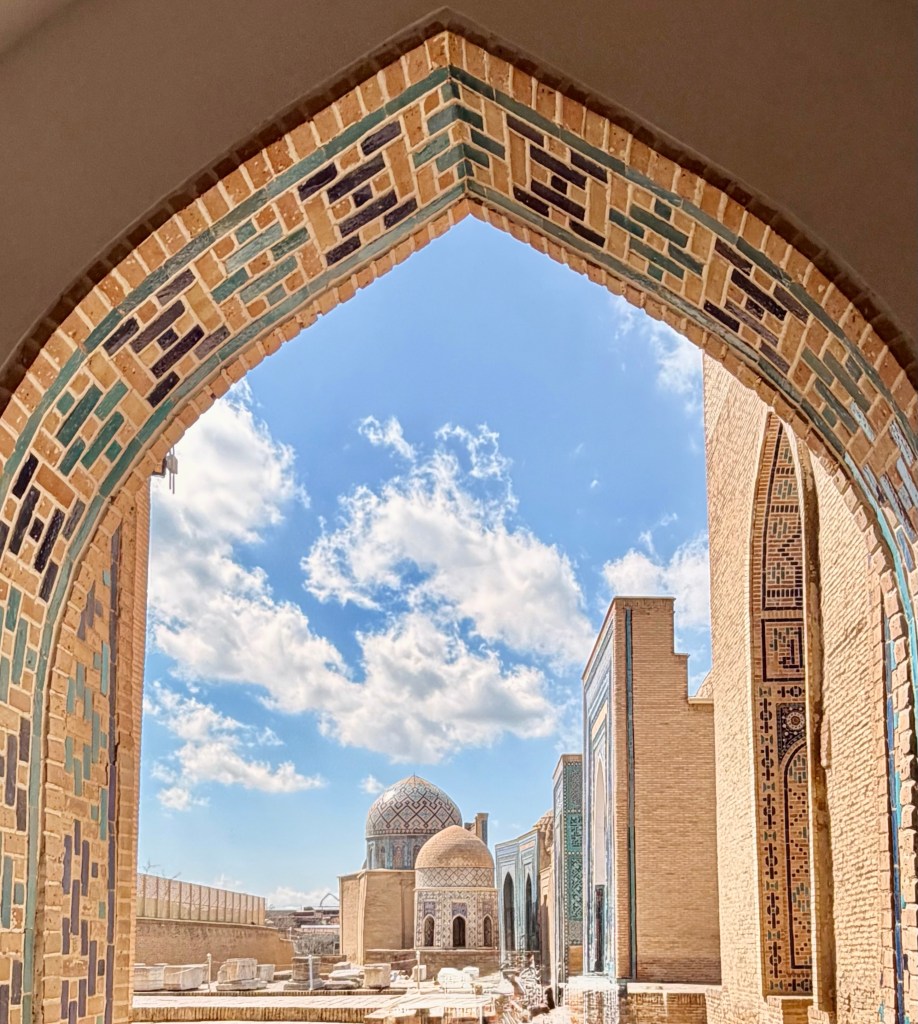
The Shah-i-Zinda (Persian for “The Living King”) is arguably one of the most breathtaking architectural ensembles in the world.
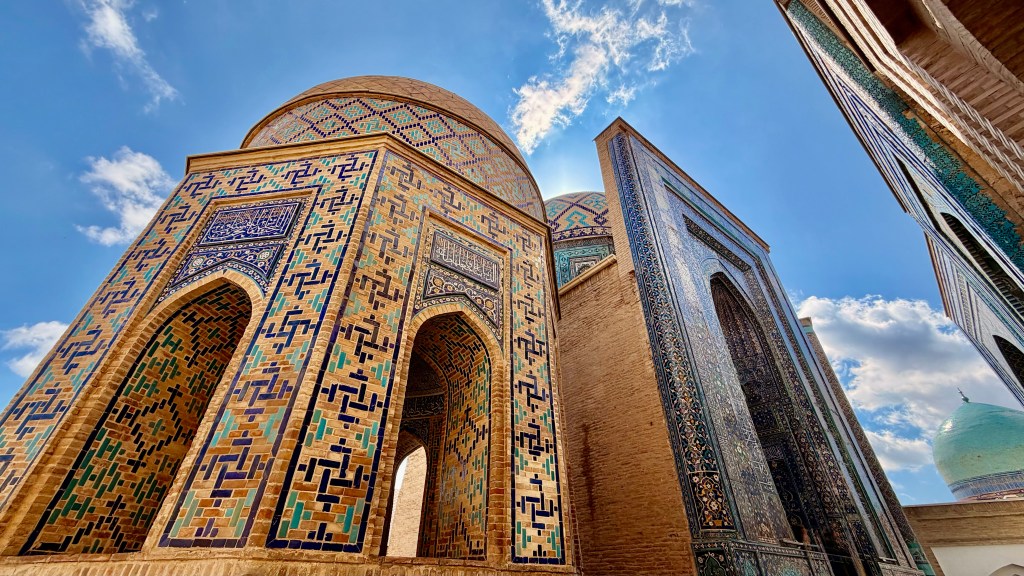
Located on the southeastern slope of the Afrasiyab hill in Samarkand, Uzbekistan, it is a necropolis that serves as a masterclass in Islamic tilework and Timurid architecture.
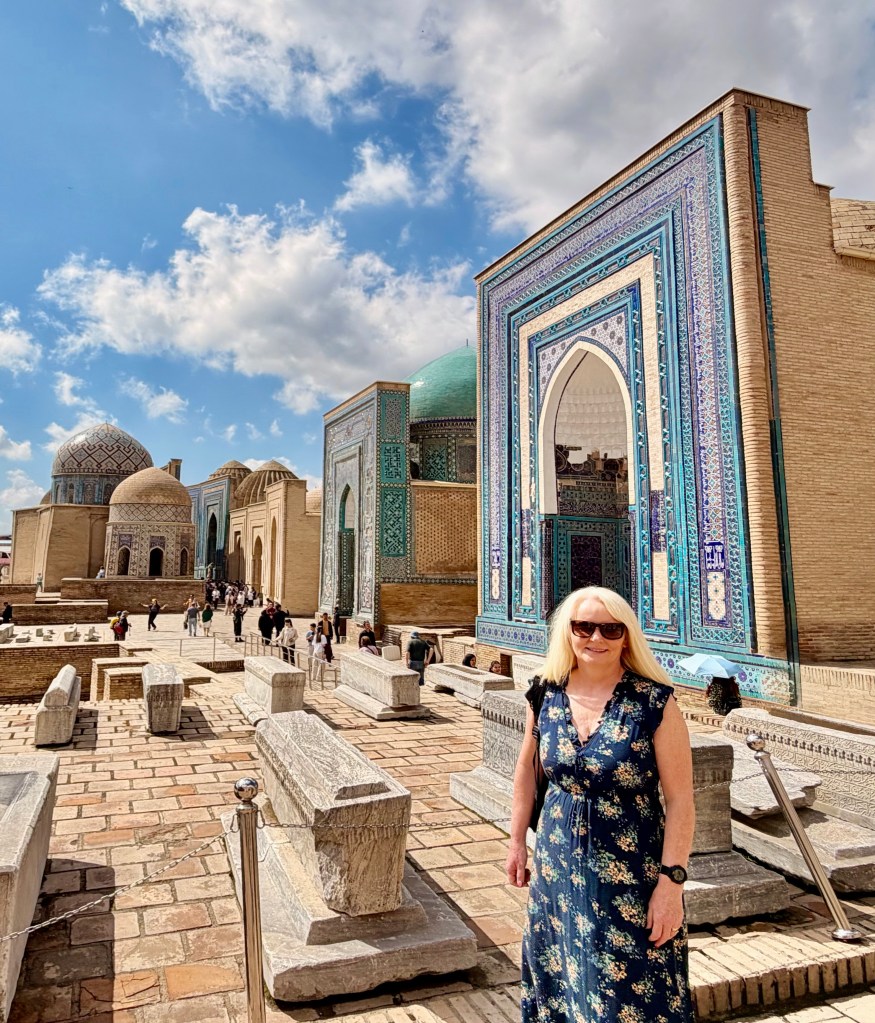
The necropolis consists of a long, narrow street of mausoleums built between the 9th and 19th centuries. However, the most iconic structures date back to the Timurid era (14th–15th centuries).
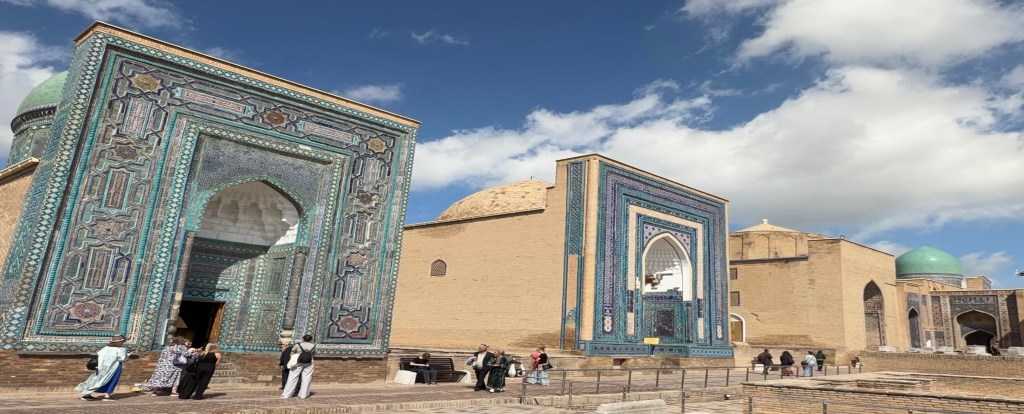
Imagine a vibrant ‘street’ lined with stunning mausoleums, each adorned with breathtaking ceramic tiles that captivate the eye.
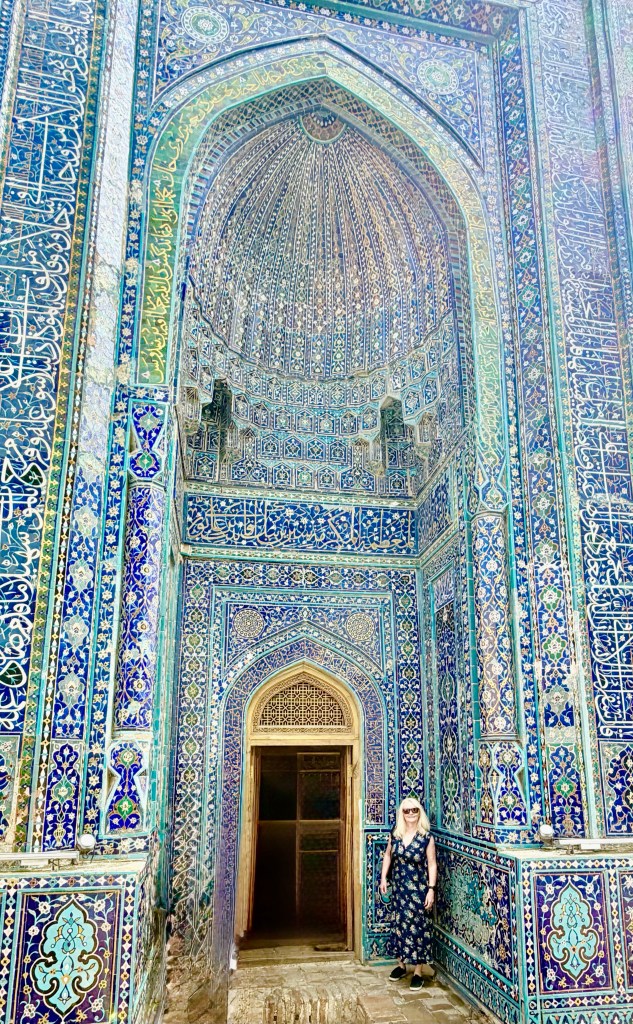
The Blue Aesthetic: Buildings that are adorned with intricate majolica, mosaic, and terracotta. The dominant colours are vibrant shades of turquoise, ultramarine, and royal blue.
Visitor Etiquette: Requires modest dress and an atmosphere of quiet reverence as an active religious site. For centuries, it has been a major pilgrimage site. It is a UNESCO World Heritage Site, a core part of the Samarkand crossroad of cultures.
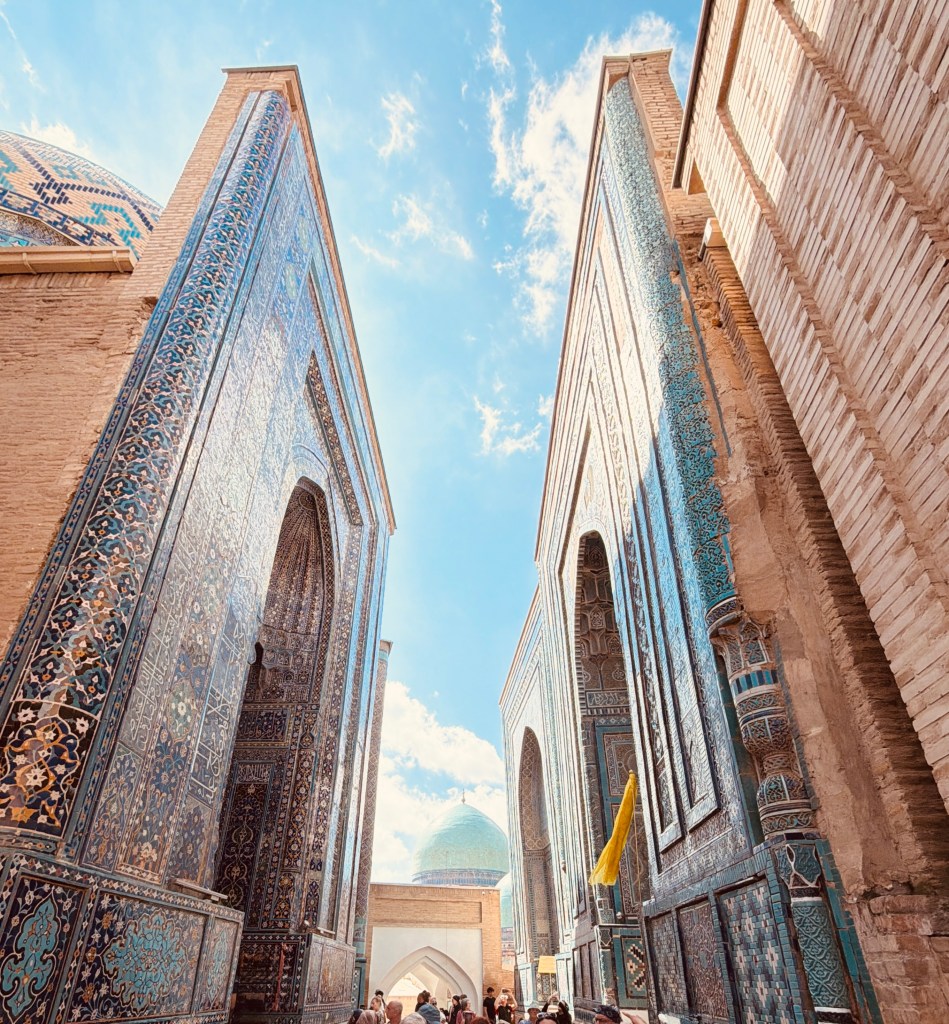
Bibi Kanhym Mosque
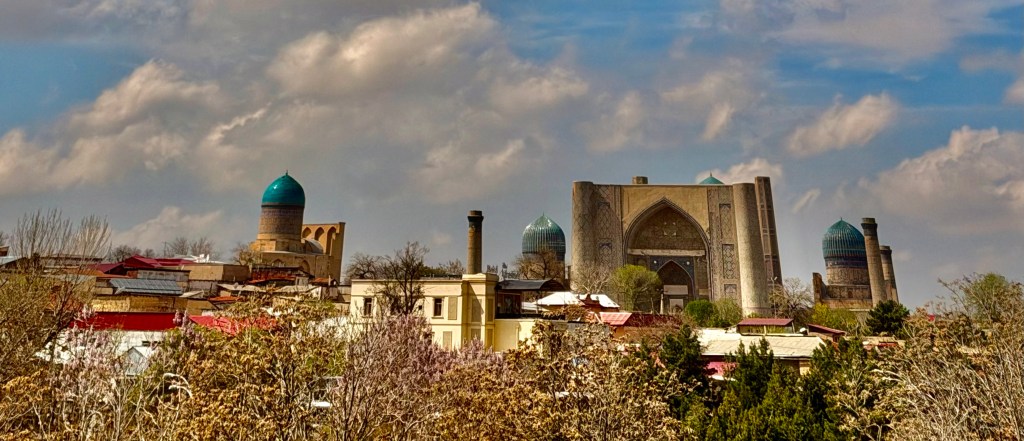
One of the most magnificent mosques in the Islamic world is adorned with a stunning blue dome that captivates all who gaze upon it.
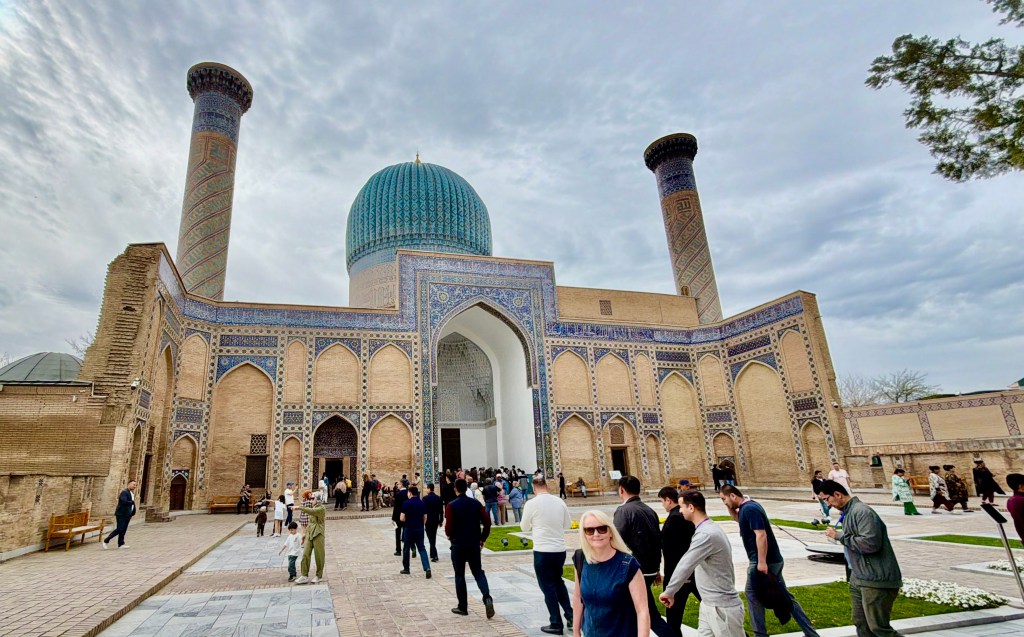
The Bibi Khanym Mosque in Samarkand, Uzbekistan, is one of the most ambitious and monumental architectural feats of the medieval Islamic world. Built between 1399 and 1404, it was designed to be the crown jewel of Tamerlane’s (Timur’s) empire.
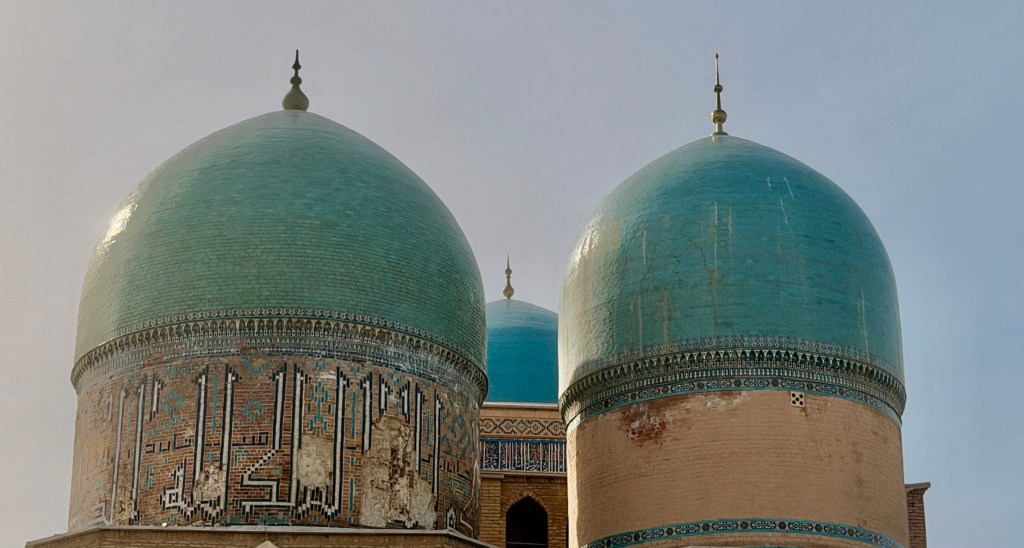
The Name: It is named after Tamerlane’s favourite wife, Saray Mulk Khanym (nicknamed Bibi Khanym). While legend says she built it as a surprise for him, historical records suggest Timur himself oversaw the project with intense—and sometimes aggressive—scrutiny.
Timur intended for this mosque to surpass everything he had seen during his conquests. However, his ambition famously outpaced the engineering of the time, leading to problems with construction due to the building techniques and the rushed timeline.
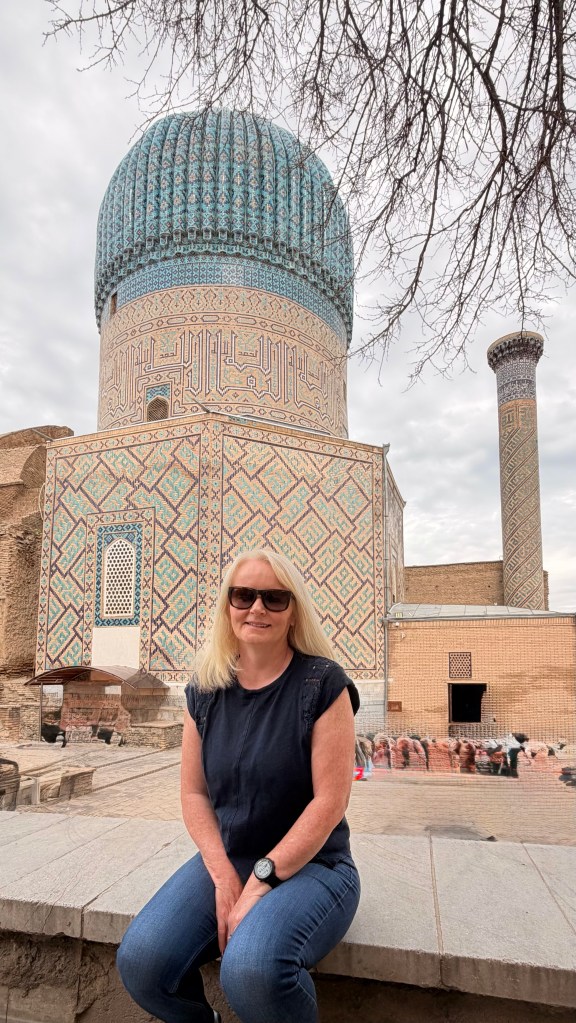
Challenges and restoration
The building’s rapid construction and immense scale led to structural failure, causing bricks to fall from the main dome onto worshippers during Timur’s lifetime.
The Ruins, a massive and majestic ruin, was left to decay after centuries of neglect and earthquakes. A major restoration project began in the 1970s (Soviet era) and continues to stabilise the blue domes and towering portal into the 21st century.
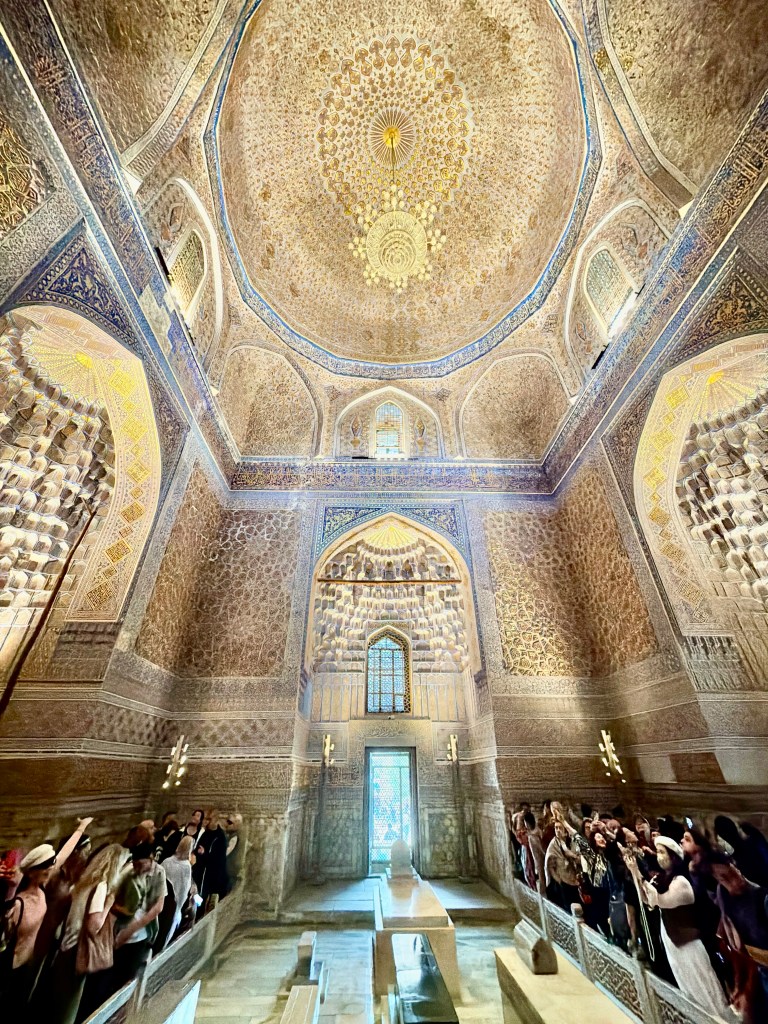
Today, the mosque is a UNESCO World Heritage site and remains a symbol of the “Timurid Renaissance,” blending Persian, Indian, and Central Asian artistic styles.
Wine tasting in Samarkand 🍇
Samarkand boasts a rich and enduring wine-making heritage spanning two millennia, reflecting the region’s deep-rooted cultural tradition.
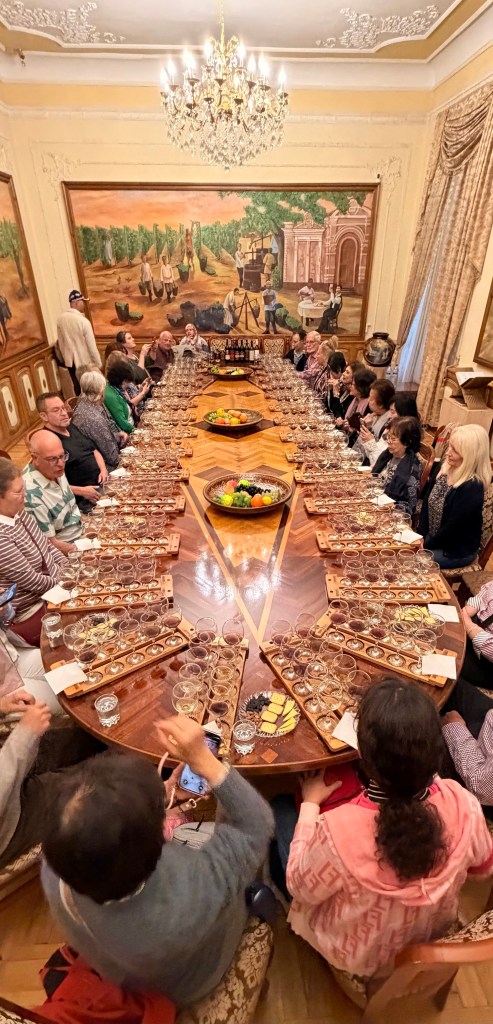
Uzbekistan’s sunny climate, with around 300 days of sunshine each year, means the grapes there are packed with sugar—often reaching 25–27% compared to the global average of 16–18%. Giving the wines a naturally sweet and strong flavour.
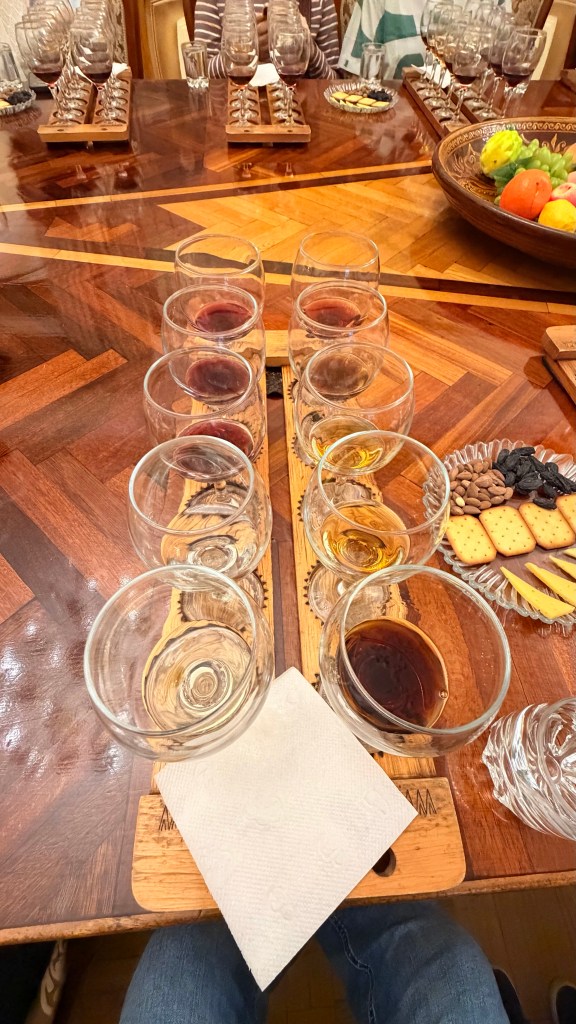
I was surprised to find that many wineries offer experiences and tastings. One of these was the Khoverenko Winery, where we tasted 12 beverages ranging from dry whites to aged Cognacs and the Samarkand balm, a herbal liquor.
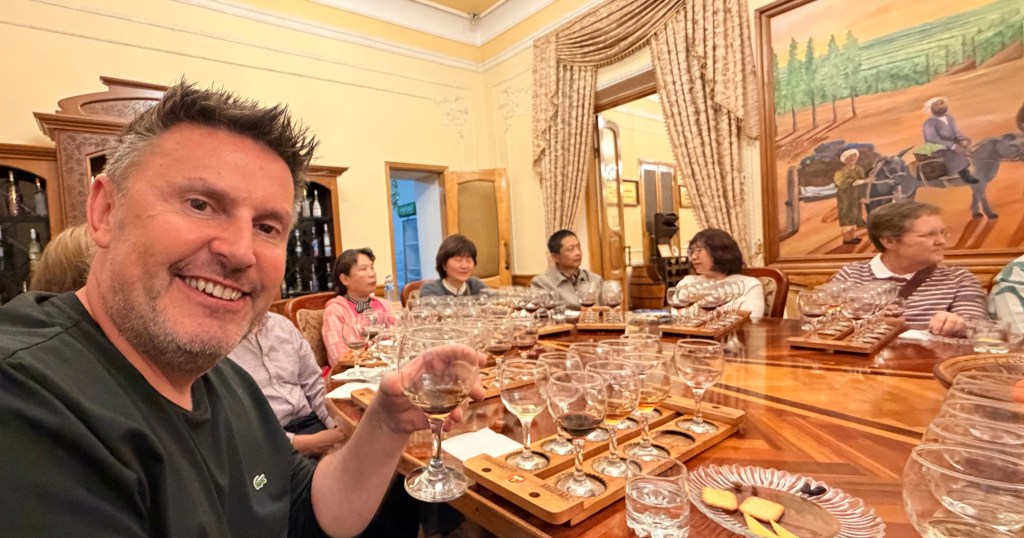
Tastings usually conclude with robust, fortified dessert wines, which are considered the true local speciality.
In Plov We Trust 🍽️
Uzbek Plov (or Osh) is more than just a meal; it’s a cultural institution. In Uzbekistan, it is a symbol of hospitality, traditionally cooked by men (known as oshpaz) in massive cast-iron cauldrons called kazans.
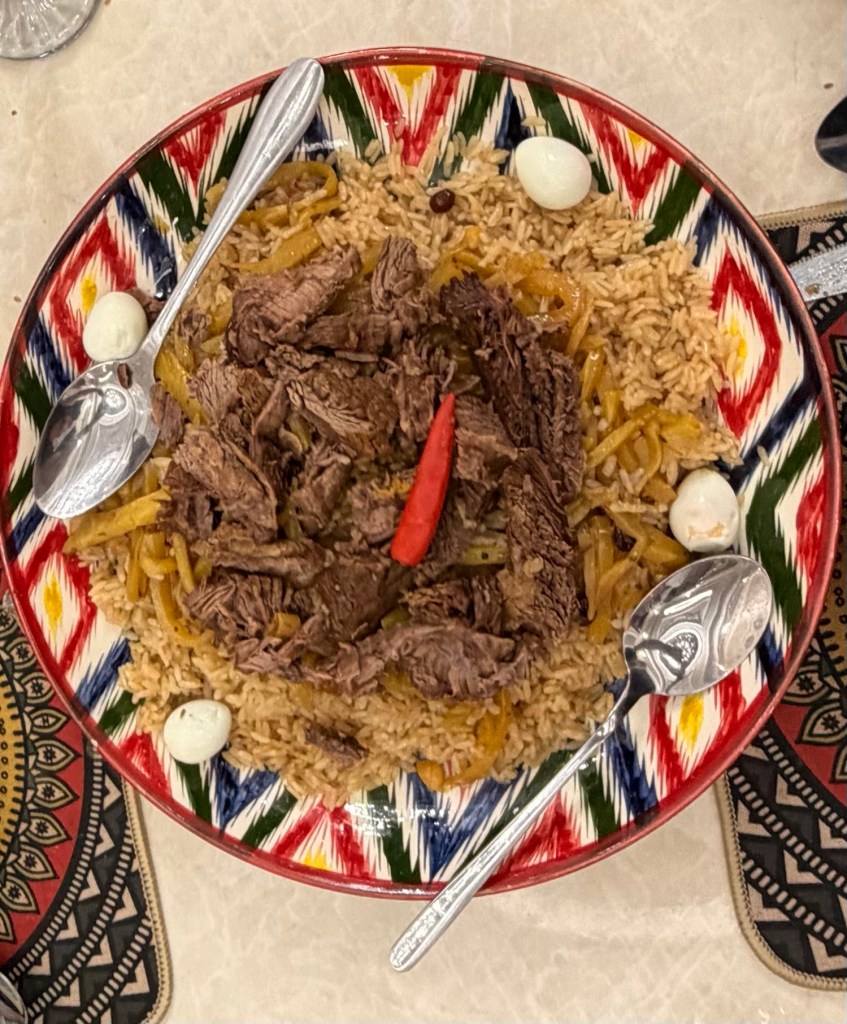
A culinary cult has emerged, centred on one sacred dish: plov. Imagine a heaping mound of rice, carrots, and tender meat, steaming like a beacon of flavour and friendship.
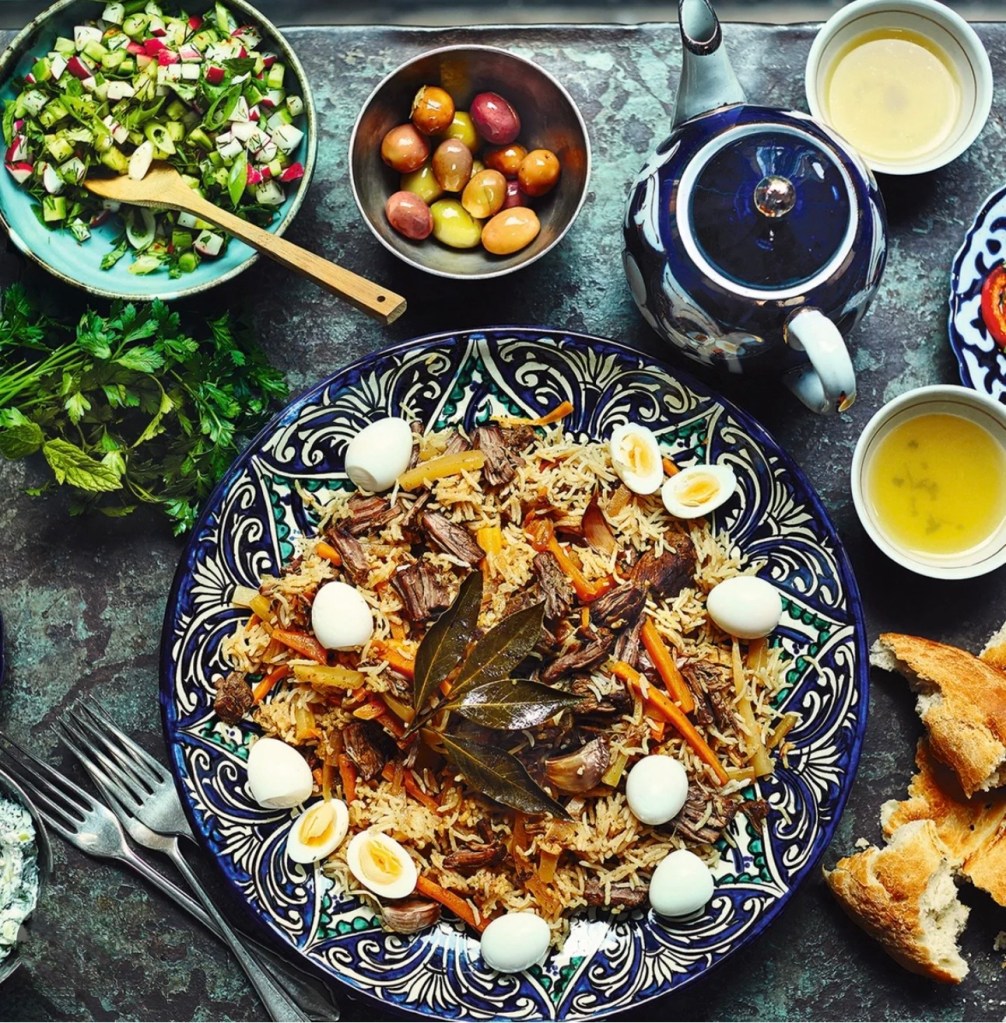
If it’s not plov, it’s just rice with an identity crisis. 😀


