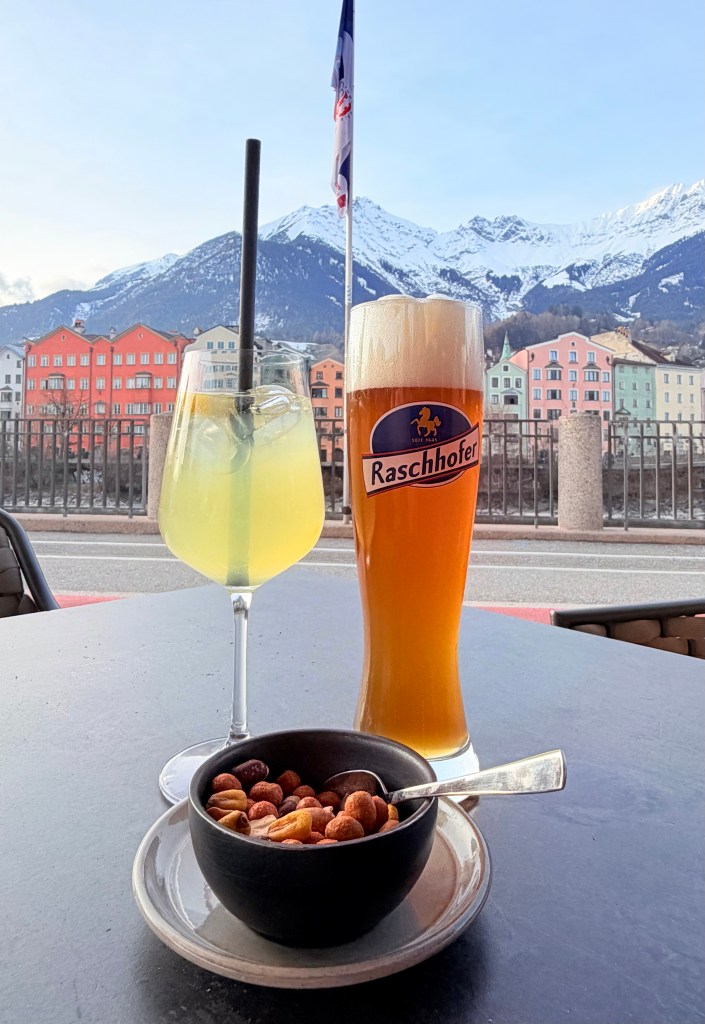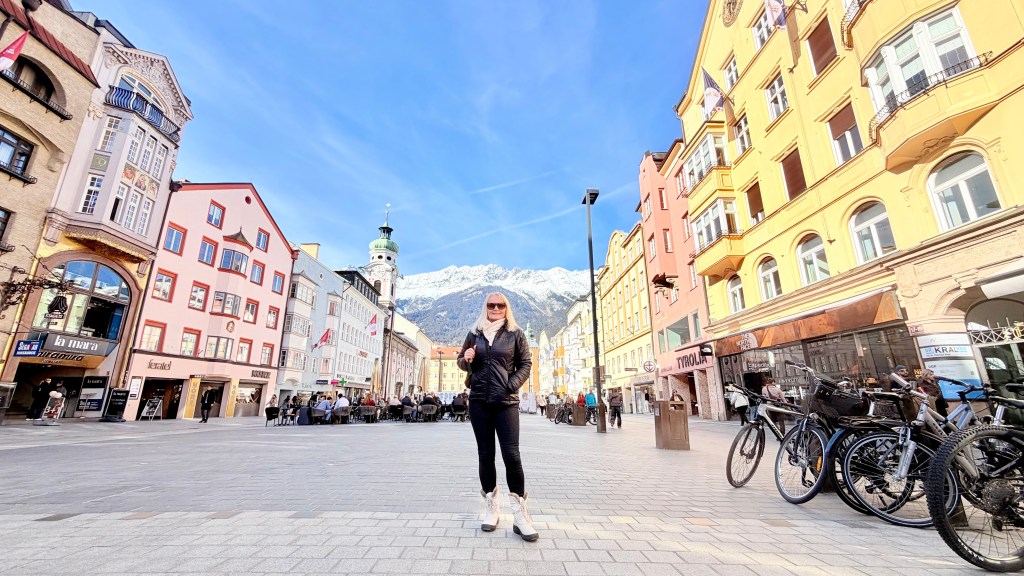
A picturesque city nestled in the embrace of snow-capped mountains, which harmoniously blends Imperial history with contemporary alpine life.
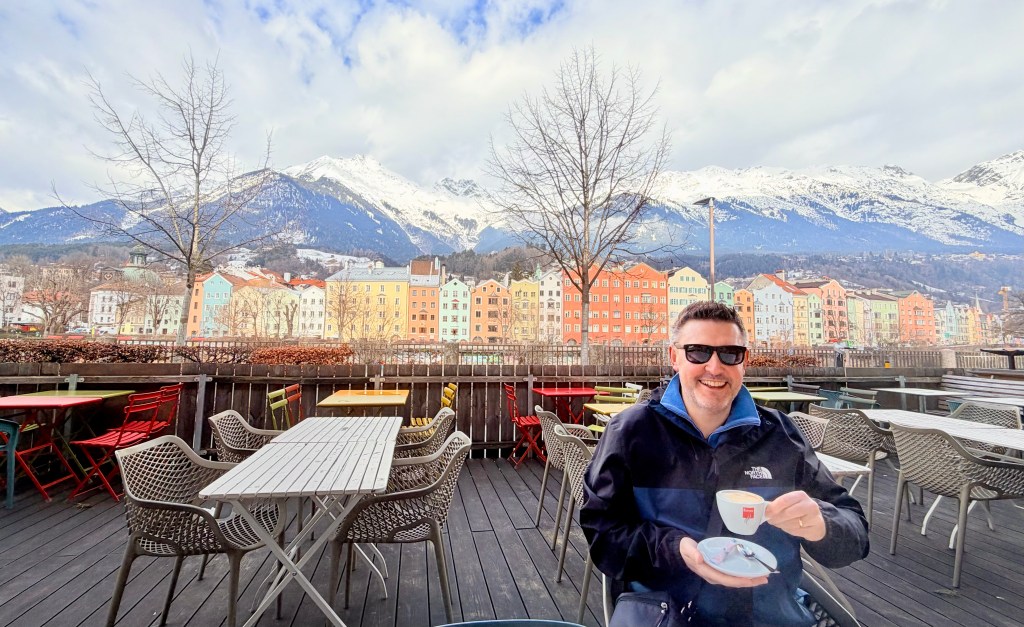
The city is delightfully divided by the River Inn, lending its name to this enchanting place. This scenic spot is a cherished retreat for runners, cyclists, and photographers, providing stunning views of vibrant historic architecture set against the majestic backdrop of the Alps.
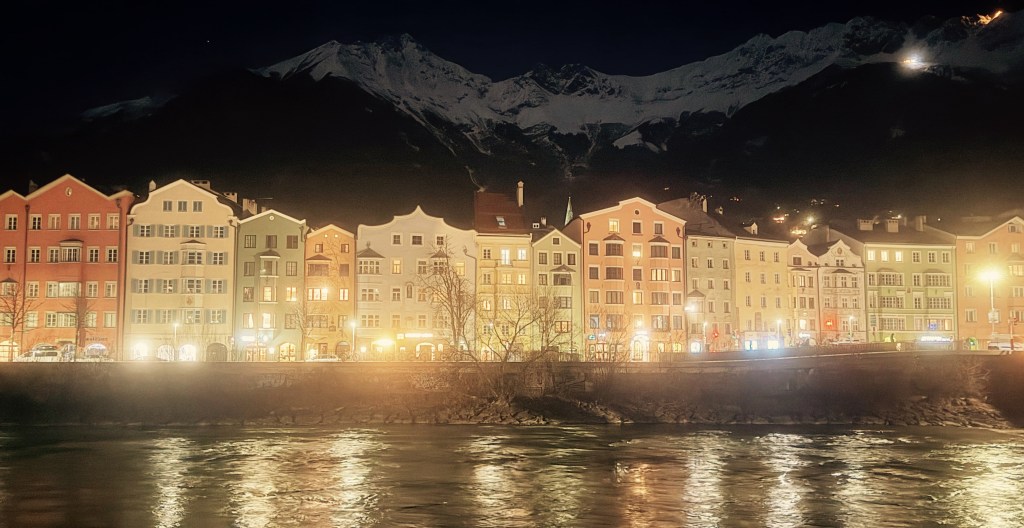
Nestled in the heart of Austria, this charming city, with a population of just over 130,000, ranks as the country’s 5th largest. Despite its size, it exudes a delightful village atmosphere.
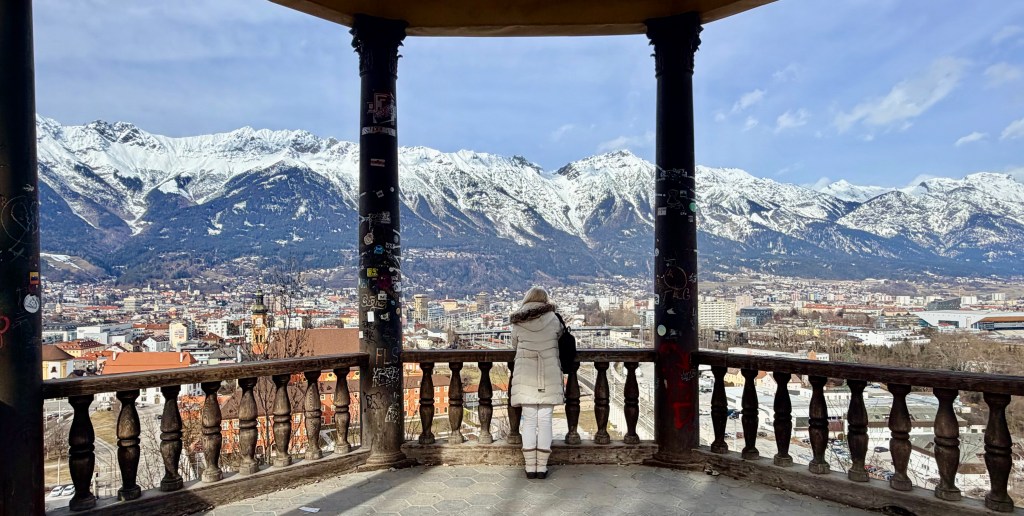
Breathtaking views from majestic mountains surround the city centre, just a 10-minute journey away. Its exceptional geographical position has earned it the affectionate title of the Capital of the Alps.
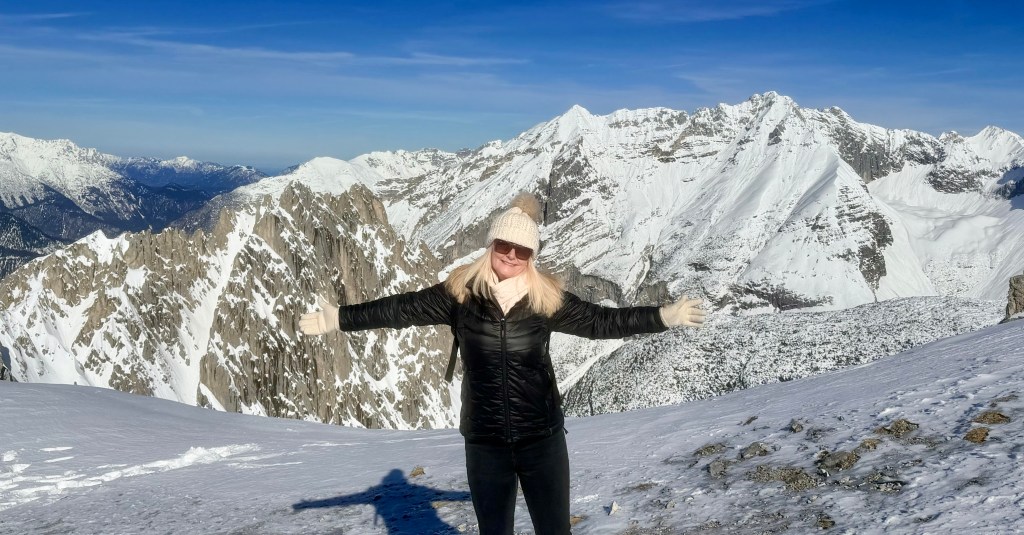
Innsbruck offers a perfect blend of stunning outdoor activities for all interests. Whether you’re an adrenaline junkie, a casual walker, or simply seeking a photo opportunity, Innsbruck has something for everyone.
Old Town (Altsadt)
A captivating historical site, this charming location offers a picturesque fusion of Baroque and Medieval architecture, inviting visitors to step back in time and immerse themselves in its timeless beauty.
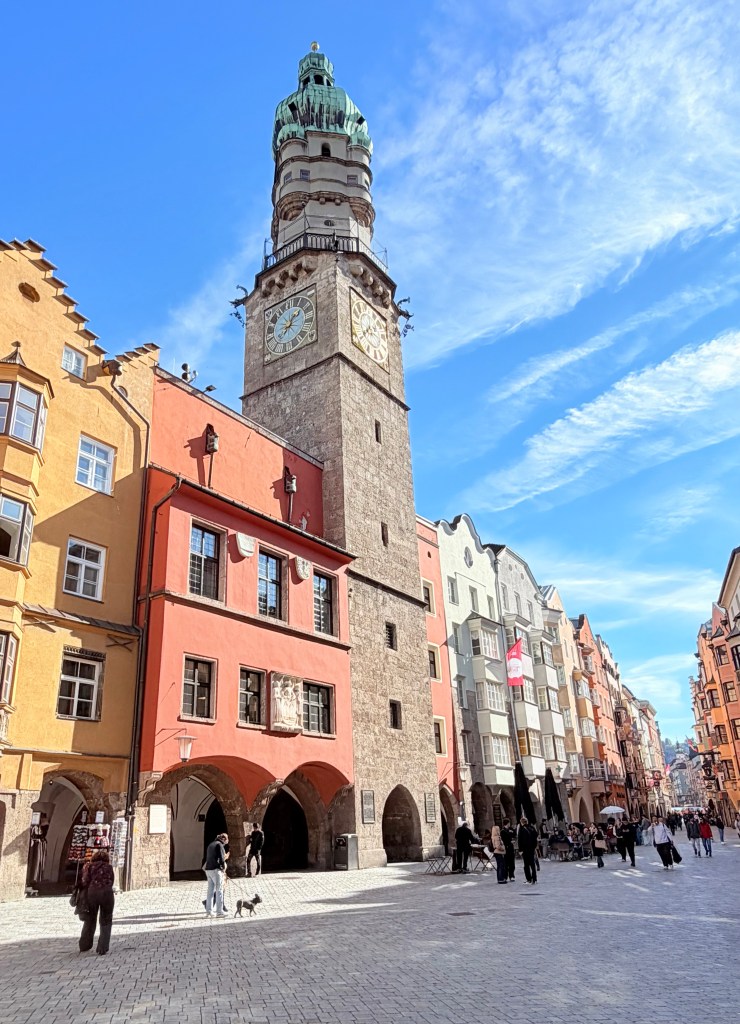
Innsbruck’s old town is a captivating area, steeped in history and exuding charm. Its historic buildings stand proudly along picturesque cobbled streets, inviting visitors to wander and explore its timeless beauty.
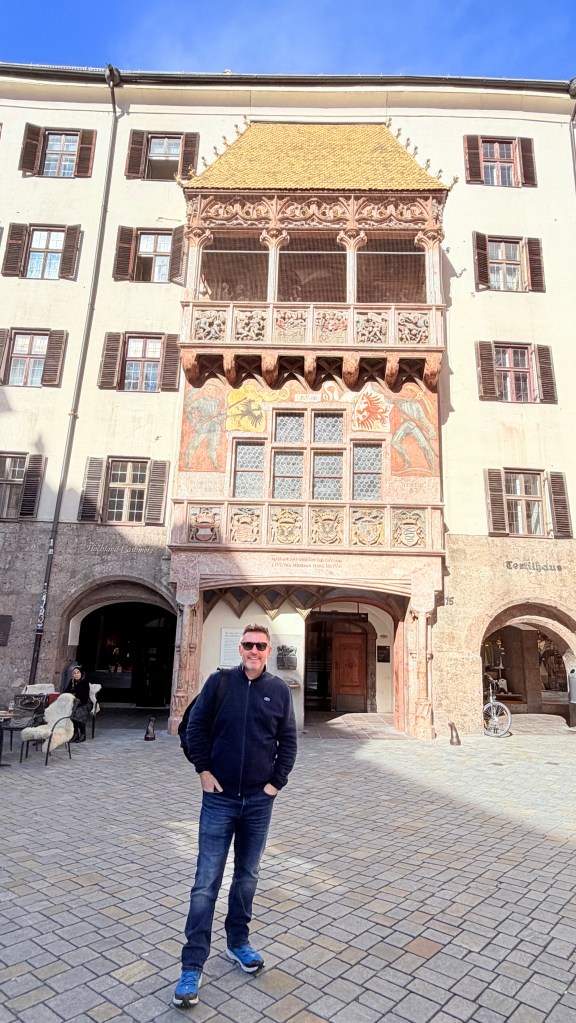
The Golden Roof is a lovely historic gem with a shiny, gilded balcony that catches your eye straight away. Built back in the 15th century for Emperor Maximilian, it’s full of charm and fascinating details. Visitors are always enchanted by its beautiful design and rich history!
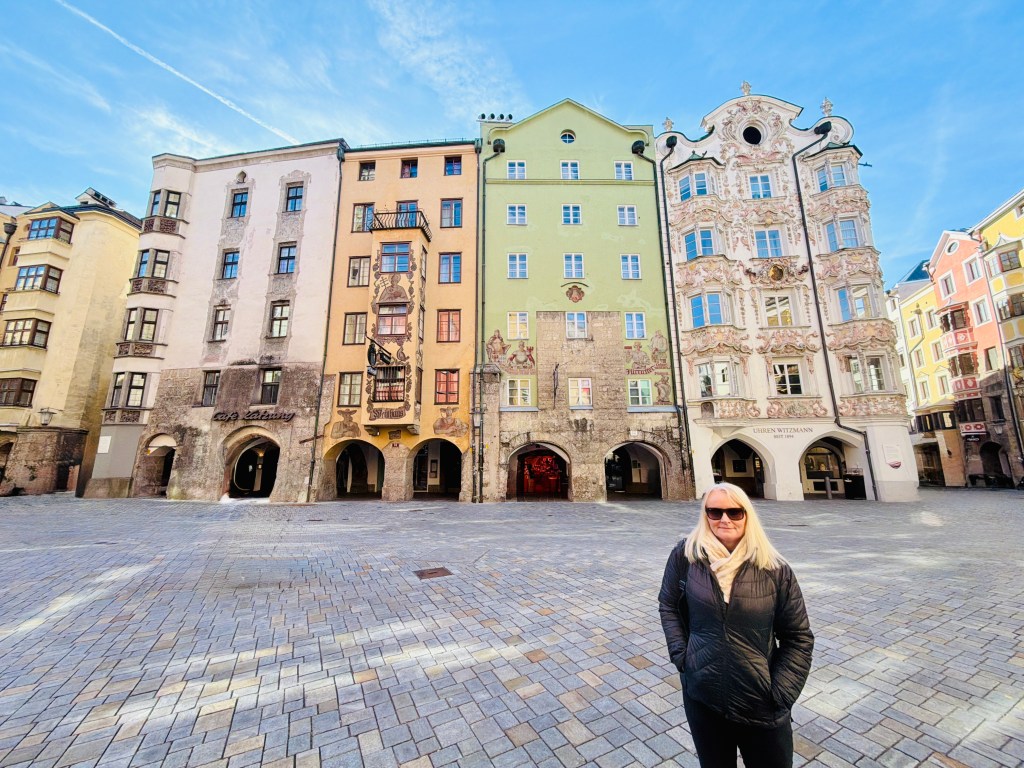
Stroll at your own pace through the delightful and scenic streets of the old town, where we can explore Tyrol’s fascinating cultural heritage. As we wander down the quaint, cobblestone paths, we’ll uncover a treasure trove of historical gems, each with its own tale to share, giving us a peek into the past that has shaped this magical region.
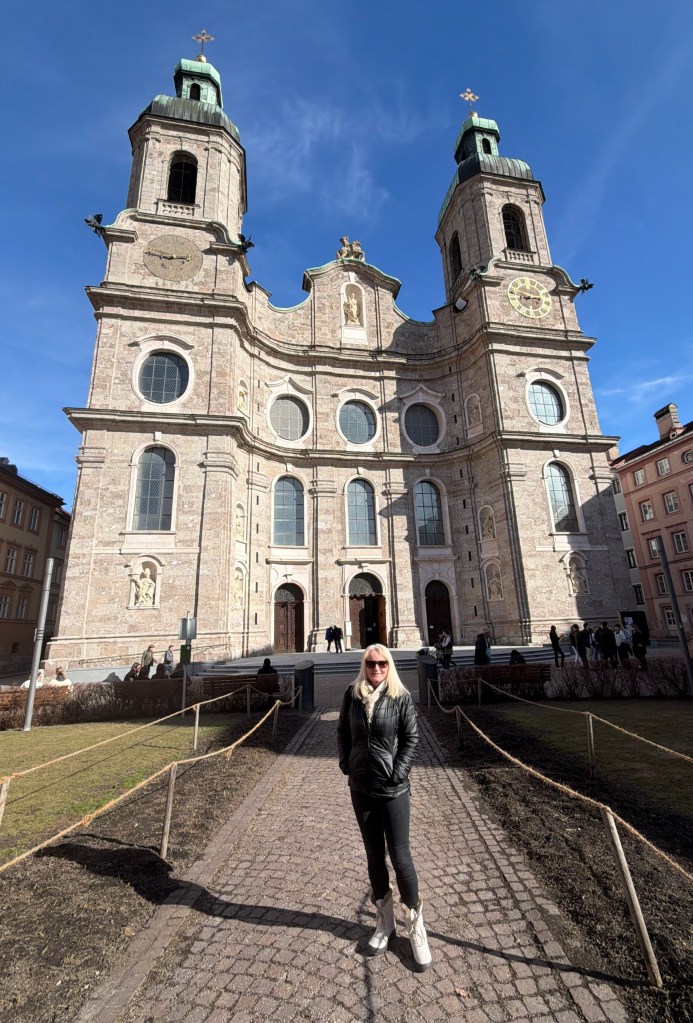
The old town is full of amazing churches, each with its own unique style. You can see everything from the detailed and sturdy designs of the Middle Ages to the fancy and elaborate looks of the Baroque period. It’s like a whole story of architecture, and it’s a treat for your senses to see how churches have changed and grown over the years.
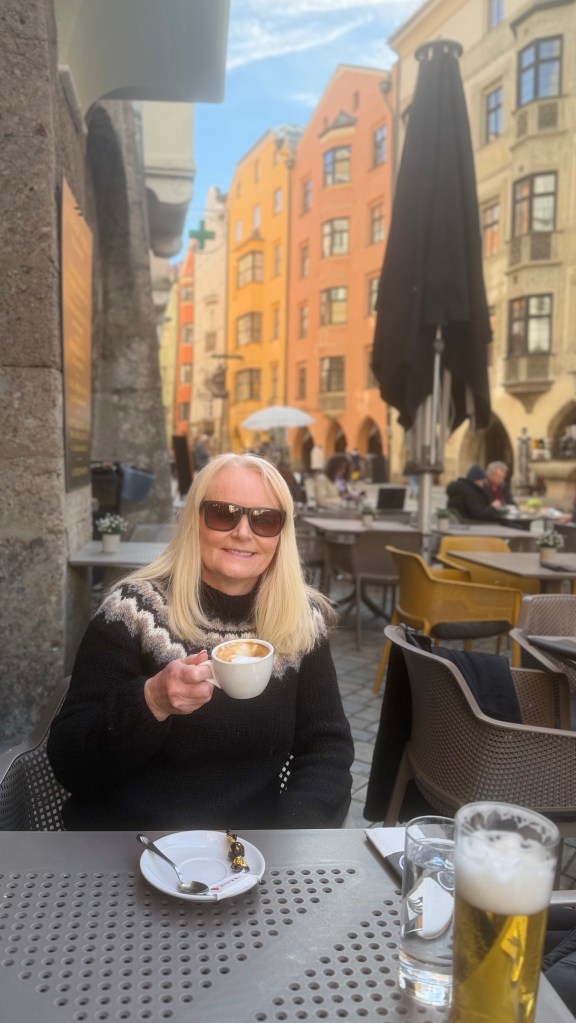
After a day of exploration, it was the perfect time to unwind. The charming old town boasts a delightful array of cafes, bars, and restaurants, each offering a unique opportunity to savour a drink or a meal. Here, you can soak in the lively atmosphere and delve into the fascinating history that surrounds you.
NORDKETTE – Top of Innsbruck
Innsbruck’s highest viewpoint is situated at 2,300 meters and is easily accessible via a direct route from the city.
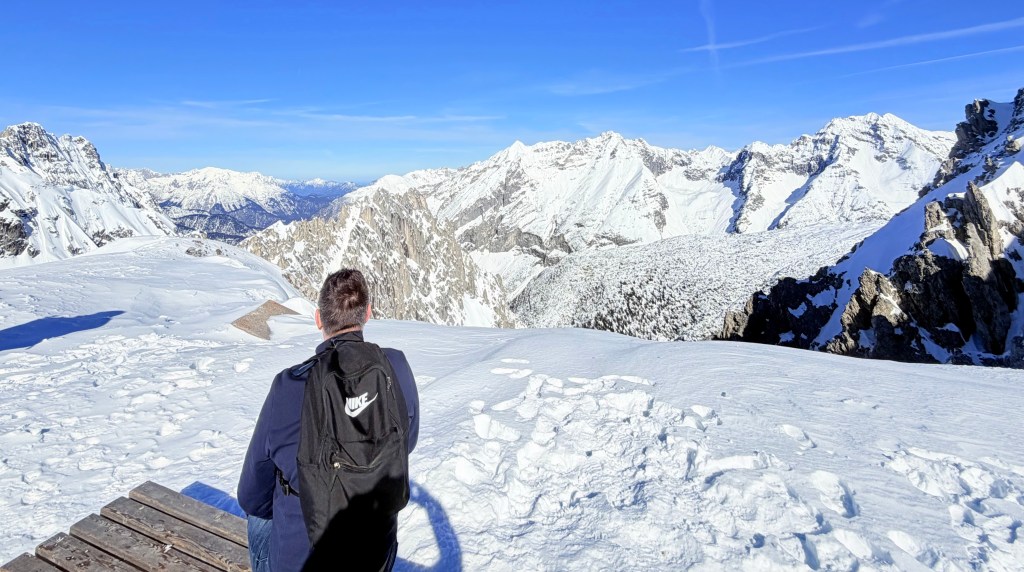
No visit to Innsbruck would be complete without a trip that totally immerses you in breathtaking views of the towering Nordkette mountain range, the lush, verdant valleys, and the enchanting alpine scenery that embodies the magic of the Alps.
The three stages to reach the top are:
Taking a funicular railway to Hungerburg.
Getting into a cable car from Hungerburg to Seegrube.
Staying on the cable car to reach the summit at Hafelekar.
Most winter sport enthusiasts will alight at Seegrube.
We stayed on the cable car to reach the summit and stopped at Seegrube on our descent.
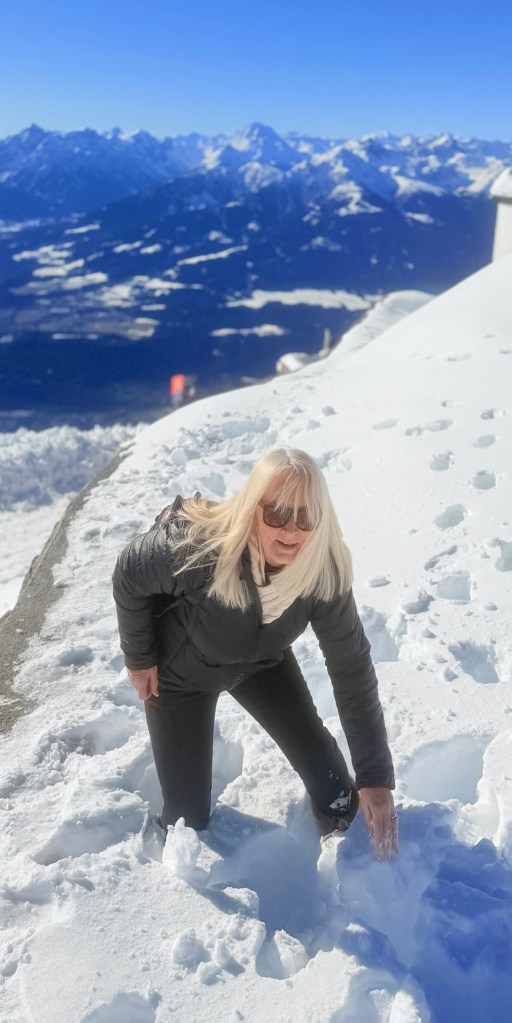
Upon reaching the summit, a short walk from the Hafeleker cable car stop, the surrounding area was accessible. However, unlike in summer, the snow required additional effort to explore without appropriate winter sports equipment.
The views were truly breathtaking, offering a panoramic vista of Innsbruck, the meandering River Inn, and the majestic alpine valley below. To fully appreciate this stunning scenery, it’s essential to monitor the weather forecasts.
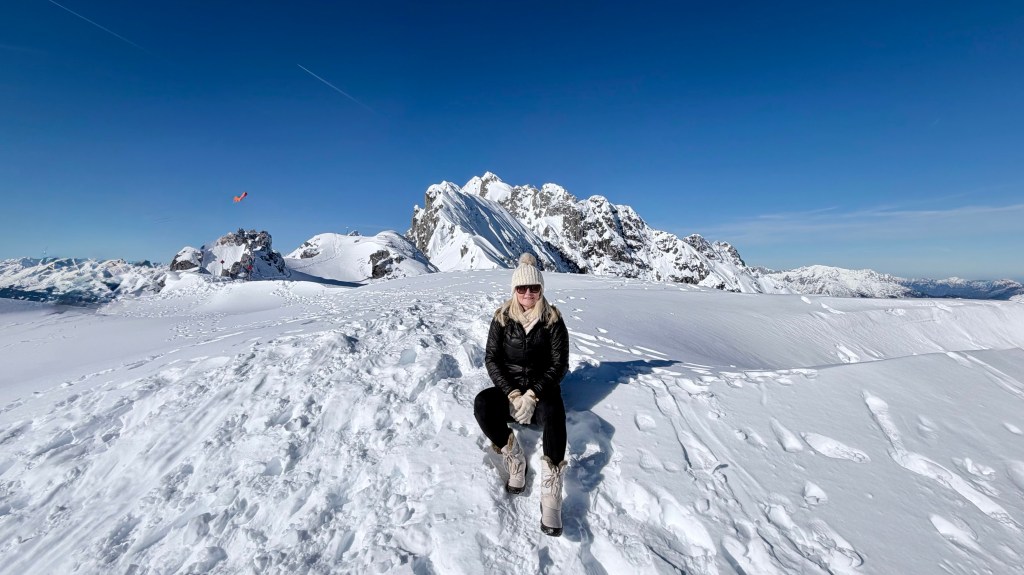
The experience is most rewarding under clear skies, when the landscape’s beauty is fully revealed. However, be mindful that the location may be closed if an avalanche is predicted, ensuring safety for all visitors.
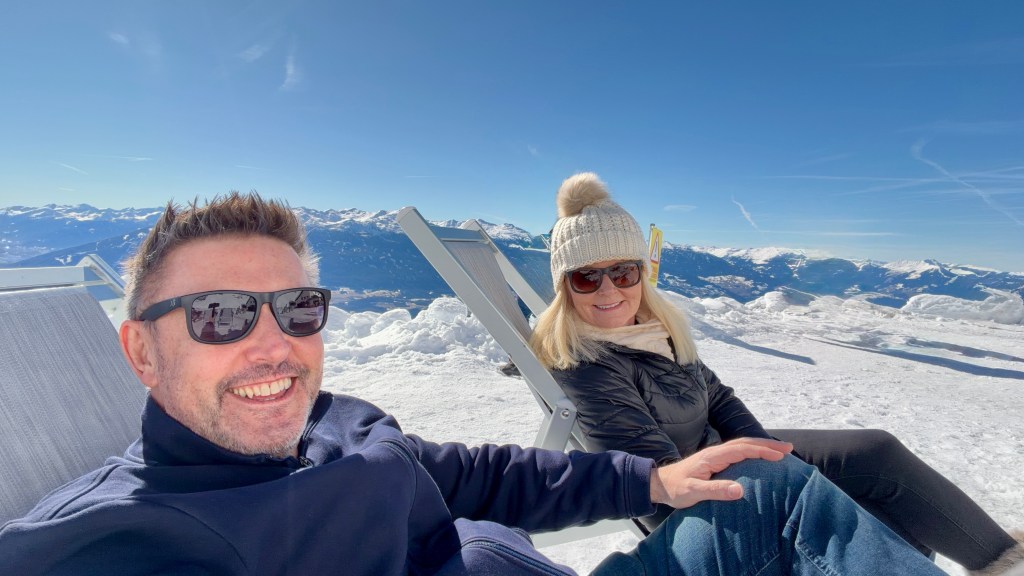
We embarked on our descent, pausing at Seegrube, a delightful spot where skiers and snowboarders showcased their skills with flair. It’s an ideal place to unwind in a deckchair, observe the lively crowd, soak in the breathtaking vistas, or savour a delightful alfresco lunch at the on-site restaurant.
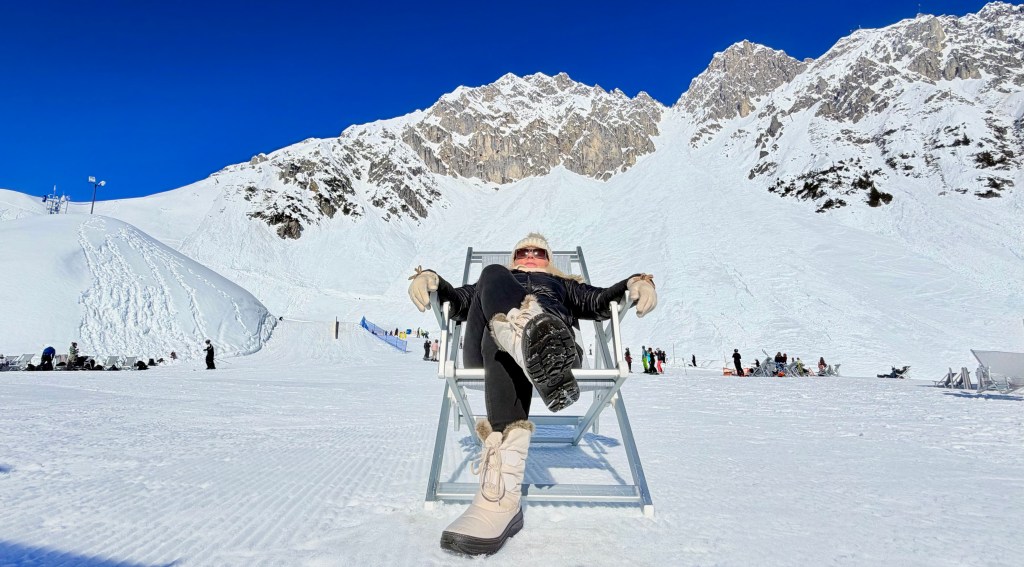
The deckchairs were a delightful addition, providing a serene escape as you bask in the breathtaking alpine vistas of Innsbruck, though staying awake might be a challenge.
Bergisel Ski Jump
The Bergisel ski jump is a truly iconic spot in the world of ski jumping, known for hosting major events and even serving as the venue for ski jumping at two Olympic Games—1964 and 1976!
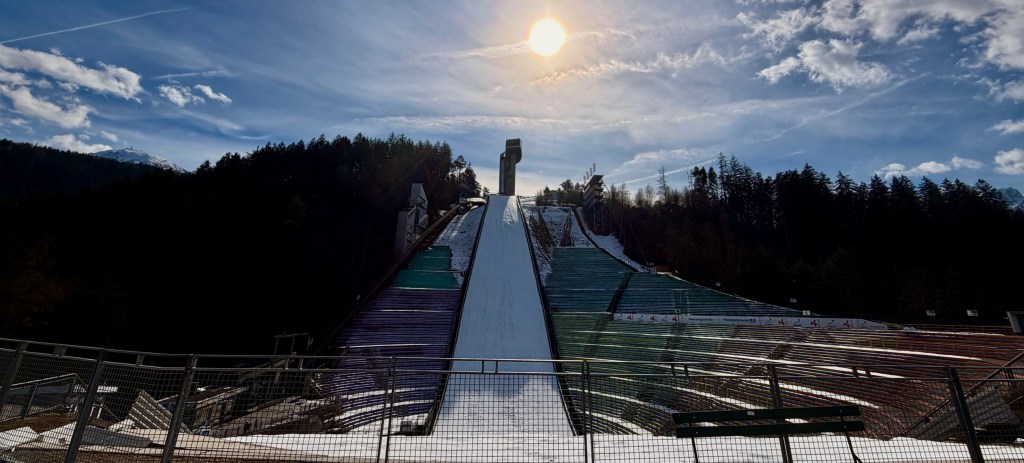
The hill, in its current form, was rebuilt in 2003 by the British architect Zaha Hadid. It sits high up on Bergisel Hill and is one of Innsbruck’s most recognisable landmarks.
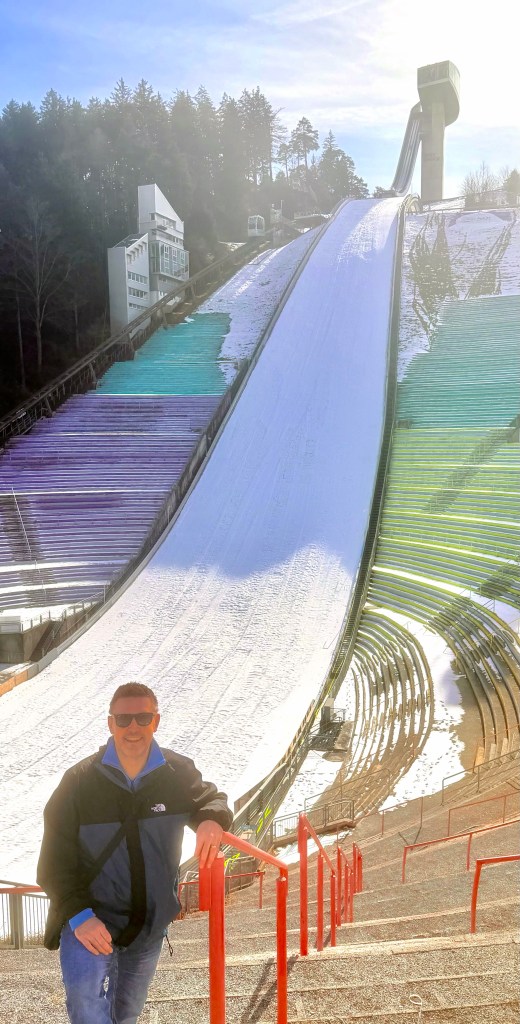
It’s reserved for ski jumping, but Innsbruck’s modern landmark has become a bit of an attraction for visitors like myself. It’s a great location for lots of different reasons: the views, stunning architecture, and the stunning panoramic cafe.
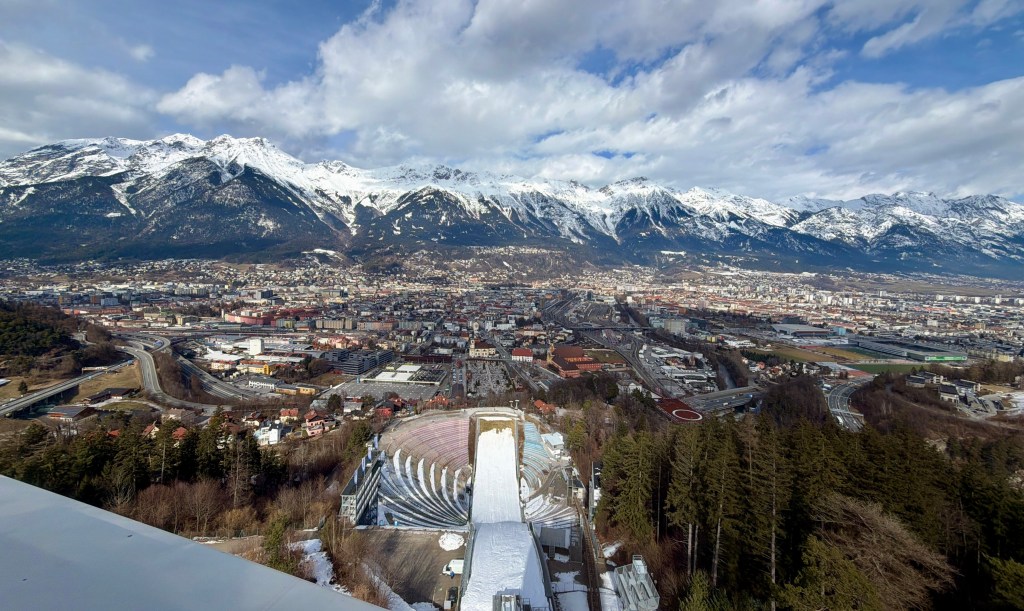
The entire facility, including the funicular, the tower lift, the panoramic cafe and the viewing terrace on the jump Tower, is open to the public daily from 10am to 5pm (winter) and 9am to 6pm (summer)
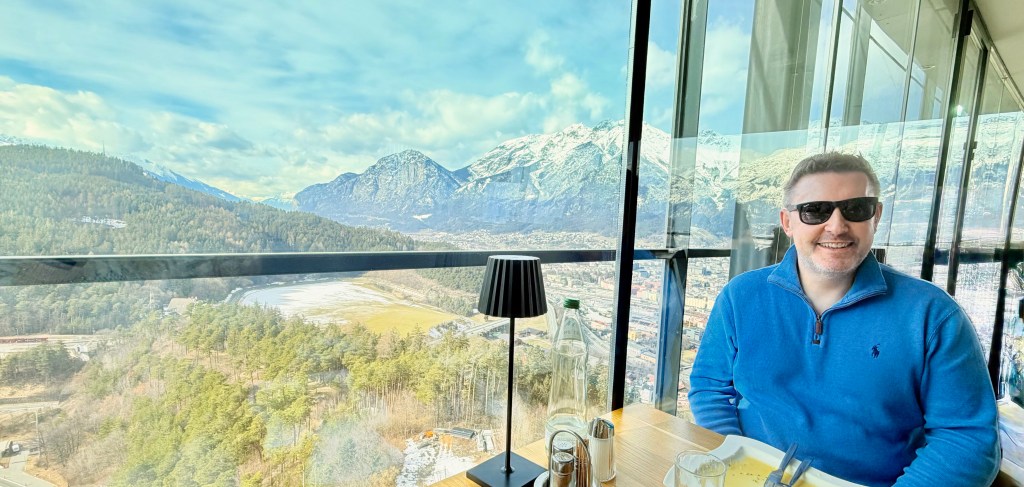
It’s a perfect place to take in panoramic views of Innsbruck. A dining experience that is very much about the view, just as much as the cuisine: it certainly was an unforgettable location for a spot of lunch.
Schloss Ambras Castle
A Renaissance castle and Palace located in the hills above Innsbruck, built in the 16th Century on the site of an earlier castle built in the 10th century.
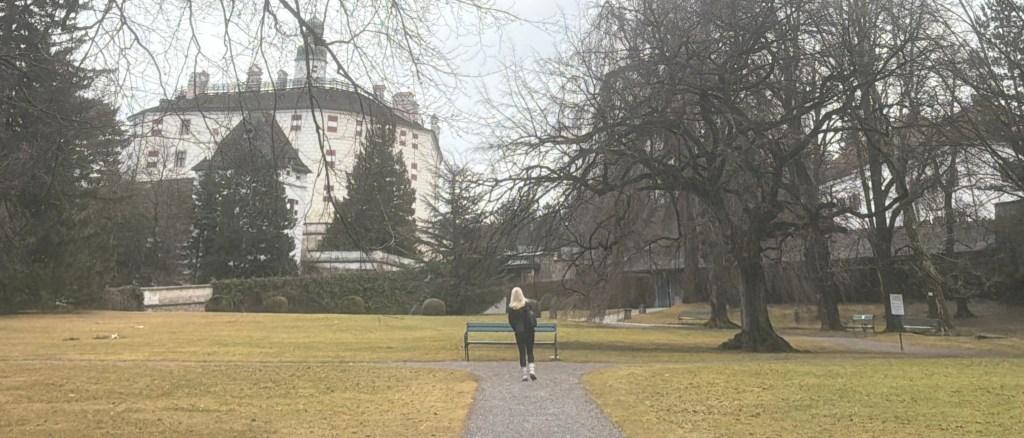
A sprawling park surrounds the castle and is a popular location with locals. The castle itself is now a federal museum of the Republic of Austria and has been extensively renovated since the early 1970s.
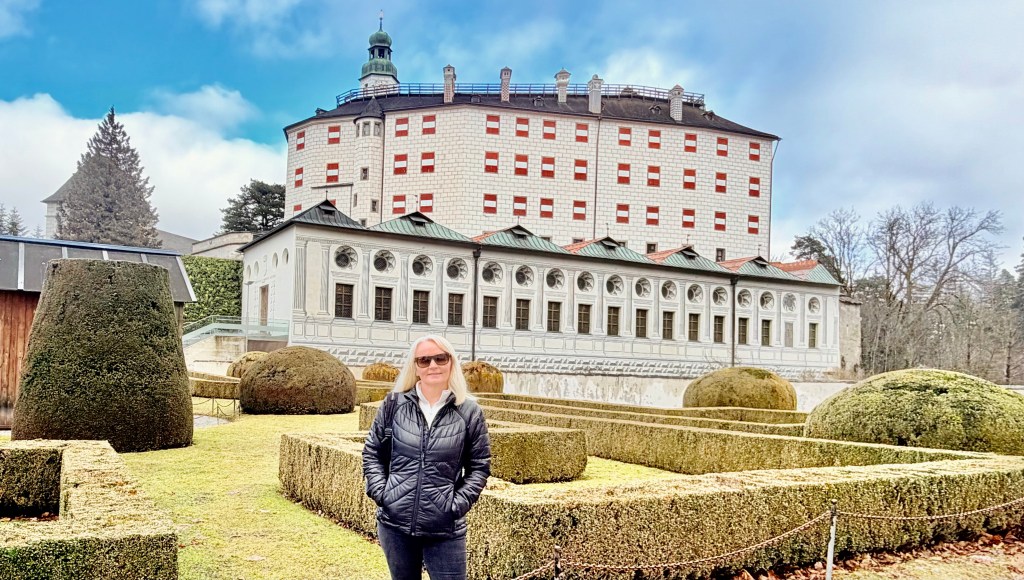
The castle itself is the site of the oldest established museum still in its original location. Today, it houses several exhibits charting the history of the Habsburg reign and the Austro-Hungarian Empire.
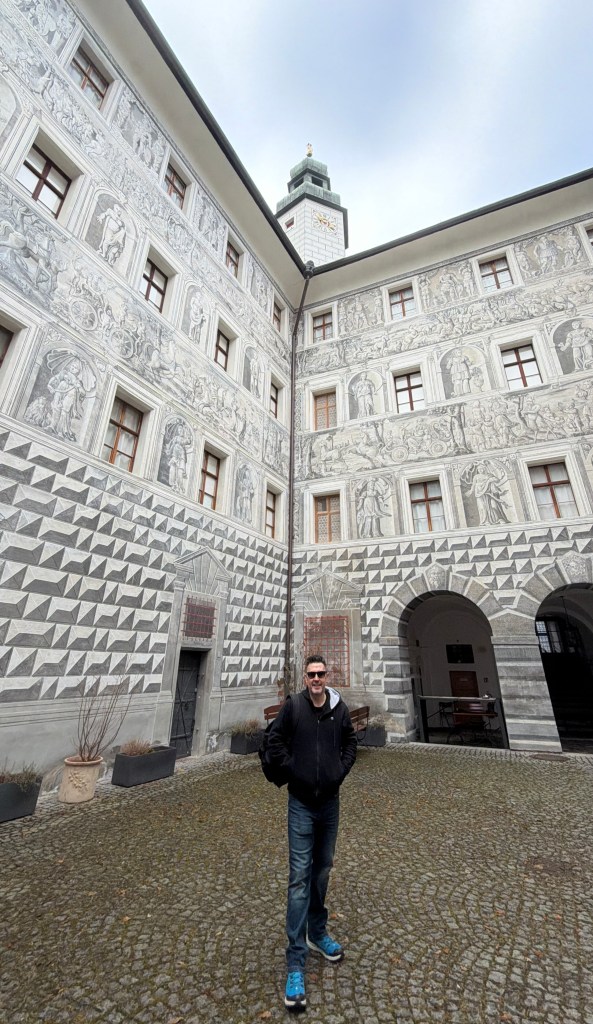
Nestled within the heart of the historic building, the inner courtyard stands as a testament to the artistry of the 16th century. Adorned between 1564 and 1567, its walls are graced with a stunning grey fresco applied to still-wet plaster. This remarkable technique has ensured the preservation of the intricate designs, making it one of the finest examples of its kind from that era.
Tram line 6 to Igls (Forest tram)
Embark on a delightful journey by boarding Tram Line 6, which takes you through a series of charming villages located just south of the city.
The tram, known as the ‘forest tram’ by locals, offers a captivating scenic route through the snow-blanketed alpine meadows of Innsbruck, all within the city limits. I wish that if only all public transport could provide such an experience.
As the tram gracefully climbs the Patscherkofel, it offers a captivating journey through picturesque rural landscapes. Quaint villages, with their warm and inviting charm, greet you at every turn, making the experience truly enchanting.
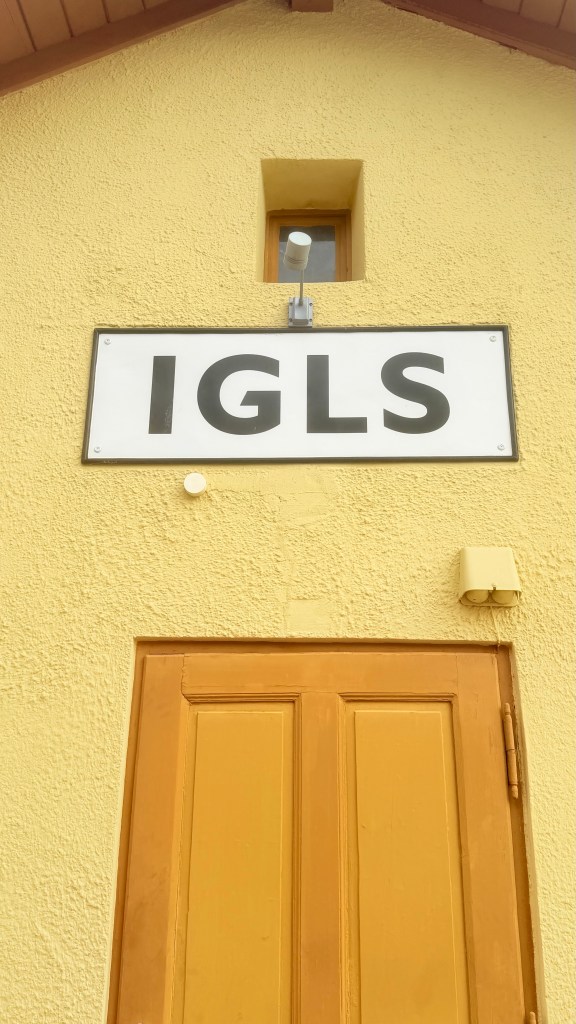
Nestled at the terminus of tram line 6 lies the enchanting village of Igls, a place steeped in Olympic glory. This charming village was the epicentre of thrilling downhill skiing events during the 1964 and 1976 Winter Olympics. Just a stone’s throw away, the Olympia Eiskanal echoes with the exhilarating speed of bobsleighs and toboggans, making Igls a must-visit for sports enthusiasts and history buffs alike.
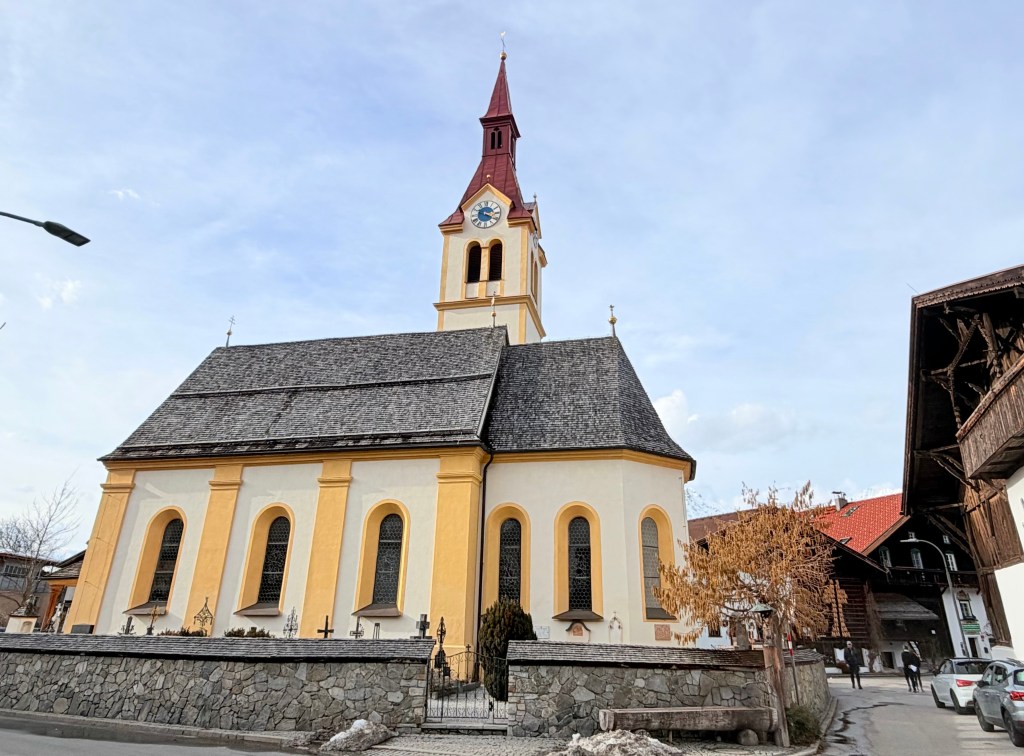
Set amid stunning winter landscapes, the ski resort has become a special haven for families and novices alike. It offers an ideal blend of gentle slopes for beginners and serene trails for those seeking leisurely winter walks amid breathtaking scenery.