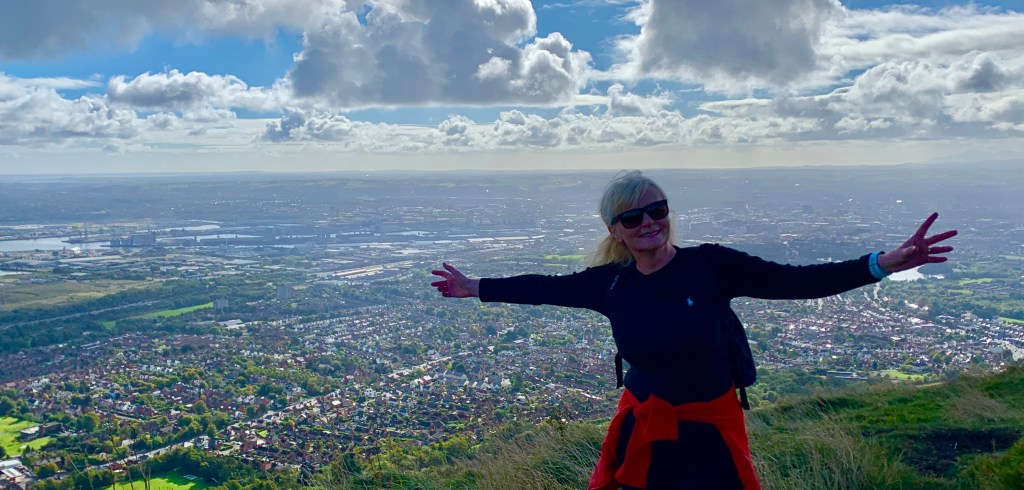
A historic yet modern city which has moved on. It’s a measure of what can be achieved by a community working together.
A first-time visit to Northern Ireland’s capital Belfast. Born in 1970 the Belfast I grew up with was a city which was seen in the media, as a city defined by violence, anger, danger and a deep social divide.
The Belfast I visited today was a remarkably different city, a vibrant place which welcomes visitors warmly. Numerous great old landmarks have been refurbished. This has come about partly through tourism and hospitality, which the city has developed and grown over the past 20 years.
The city has placed its problems to one side trying to rebuild itself. It hasn’t always been an easy journey, but by being patient, progressive and showing faith in its people the process has evolved.
Occasionally the troubles and tensions are seemingly not far away, which one can see from the current political landscape. Nevertheless, the people and communities, are looking towards a brighter future. The Belfast of today is incomprehensible to the one of just 30 years ago.
Belfast City Hall
This a rather unique opportunity for us to take a guided tour of Belfast City Hall, one of Belfast’s most iconic buildings, to see first-hand where the democratic process takes place.
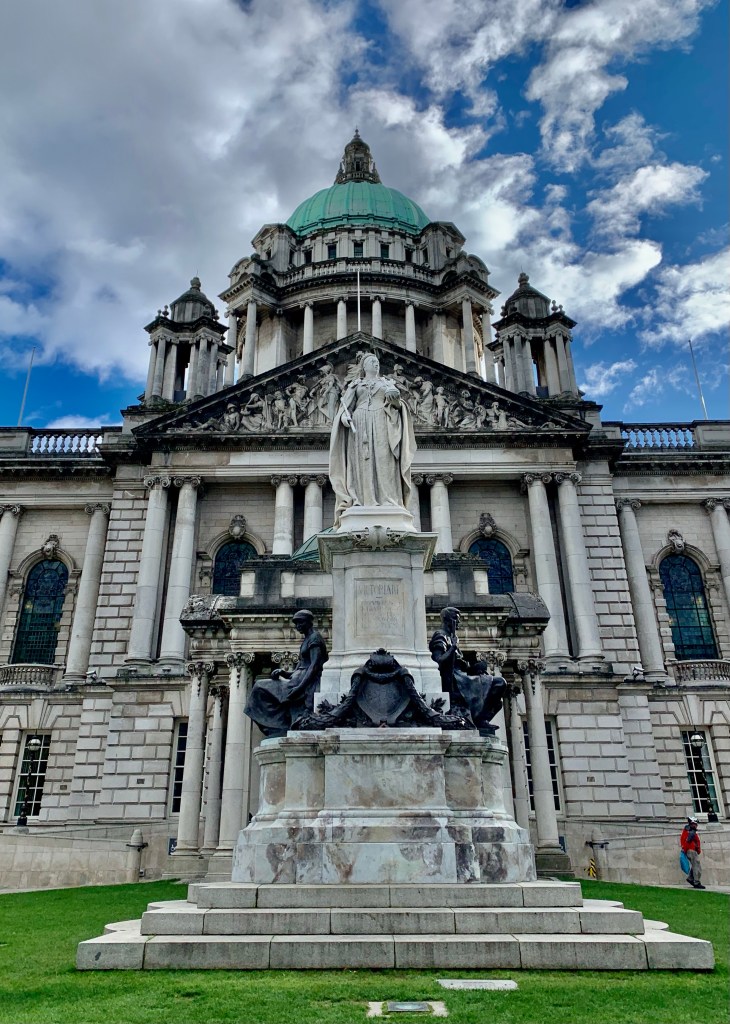
Belfast City Hall is a classic Renaissance-style city hall. It is situated in Donegal Square in the heart of Belfast city centre. It has beautiful architecture and incredible history to discover.
The industrial revolution greatly transformed Belfast in the 19th century. The city’s rapid rise to prosperity is reflected in this Grade I listed building. It was designed by Arthur Brumwell Thomas, in a Baroque Revival style. It officially opened in 1906.
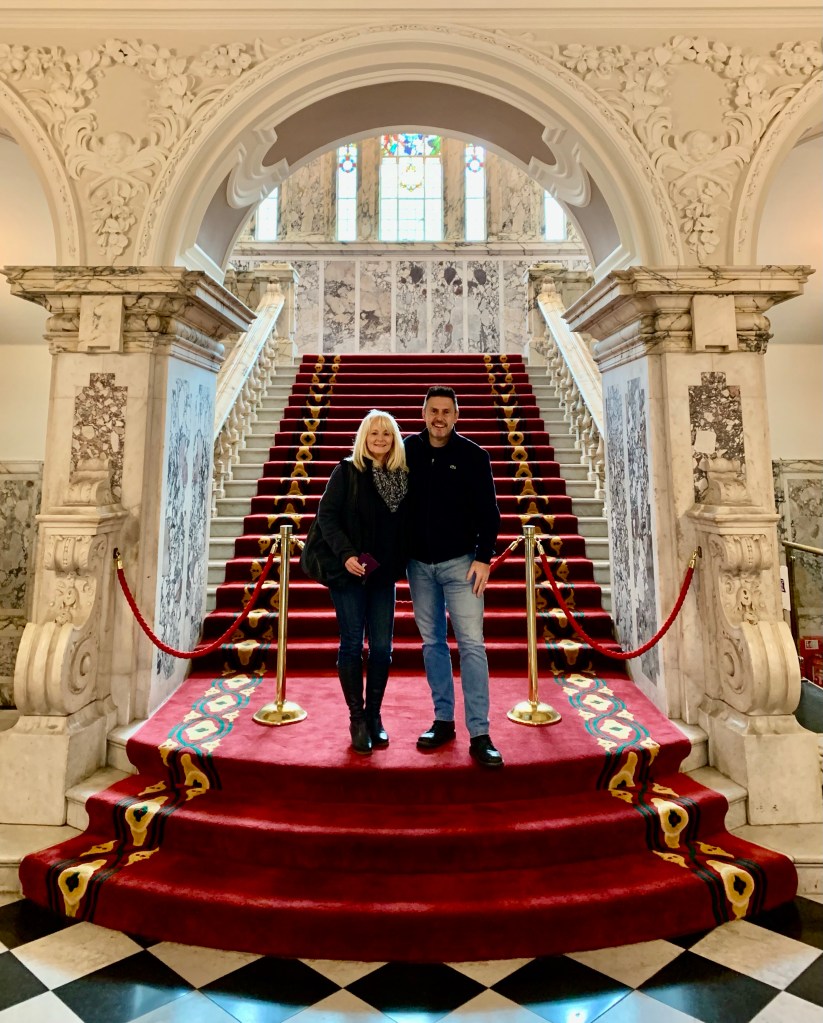
Tours can be taken at 11 pm, 2 pm and 3 pm Monday to Friday and 2 pm and 3 pm Saturday and Sunday. These tours are free of charge and pre-booking is not required, there are 25 places per tour which are on a first come first served basis.
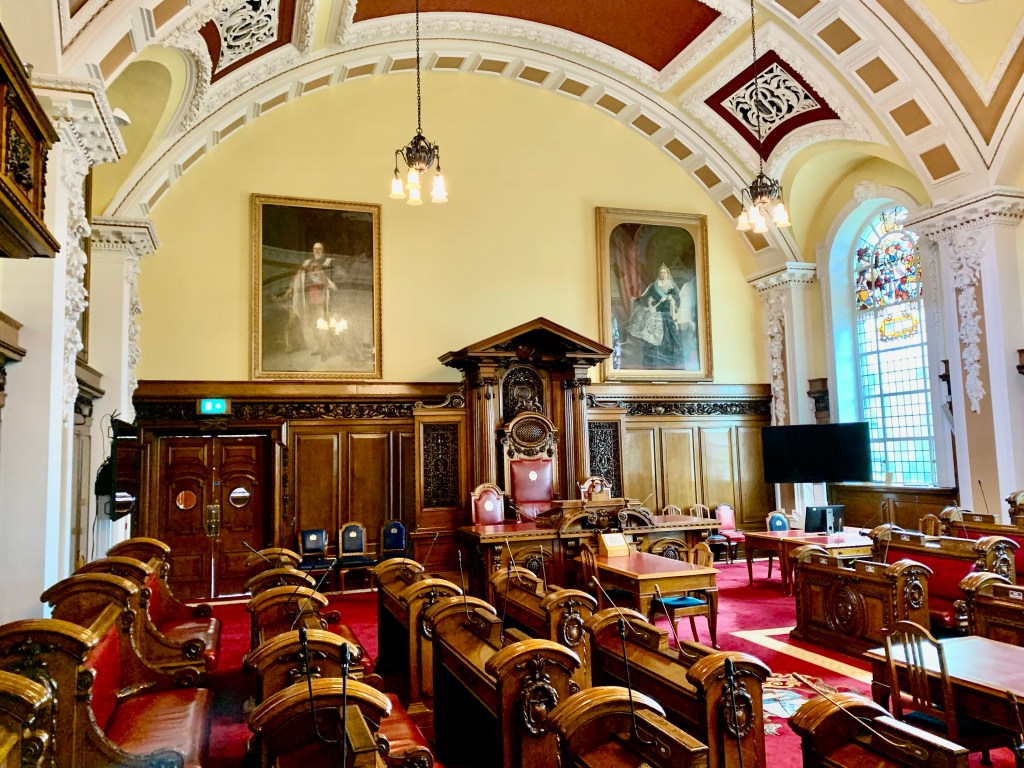
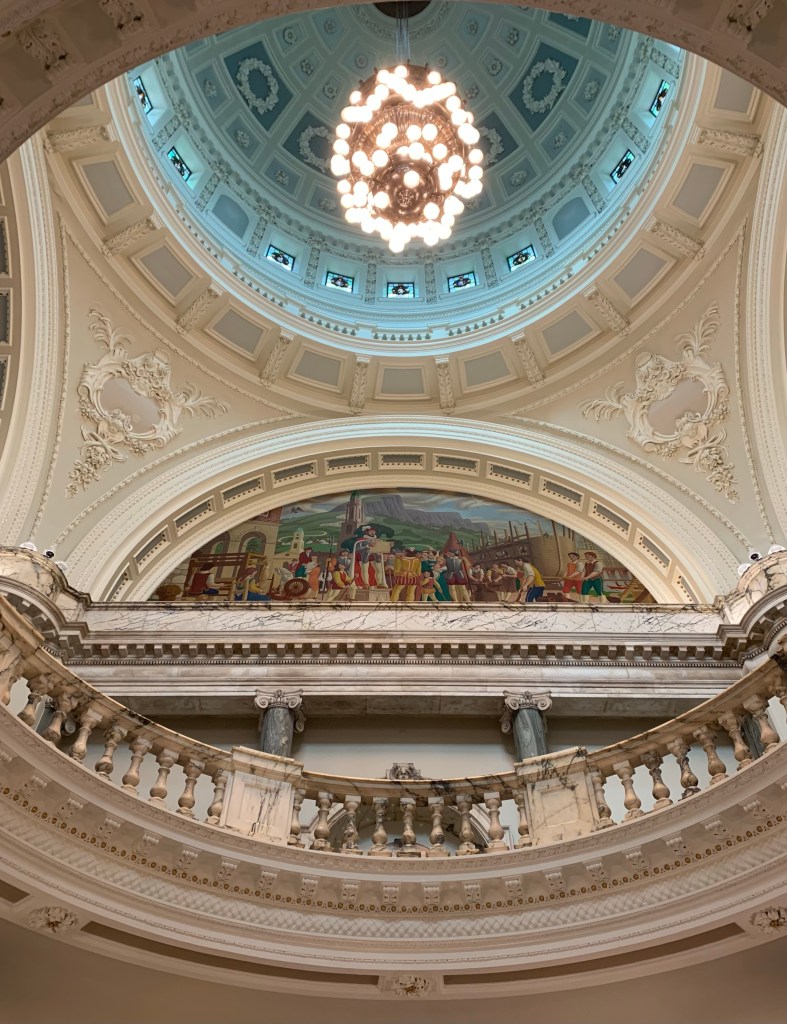
It gave us a special opportunity to look at how local government works. We were given a tour around this grand old building. Taking in the many artefacts on display and viewing the grand rotunda and many of the official rooms including the City Rooms, Council Chambers and the main hall.
Sixty councillors represent the city of 342,000. Belfast is Northern Ireland’s smallest council in land area but the largest in population.
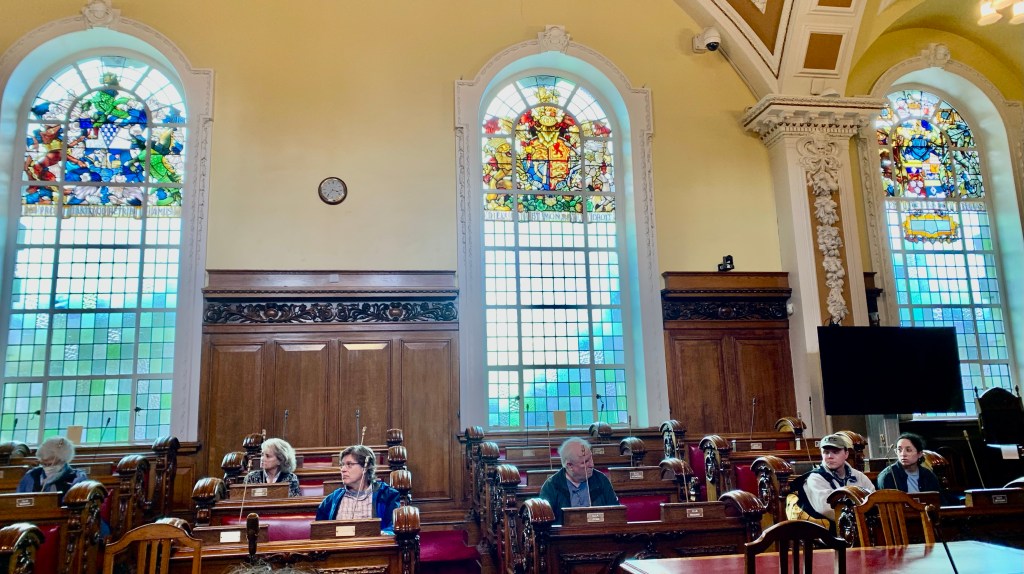
On the tour of Belfast City Hall, we were able to sit in the council’s chamber. Historically Belfast council used to be divided along religious lines, in more recent times non-religious political parties have gained in popularity, one of these the Alliance Party is the third largest party after traditional political parties, Sinn Fein which represents the national side and Democratic Unionist representing unionists.
Crumlin Goal (HMP Belfast)
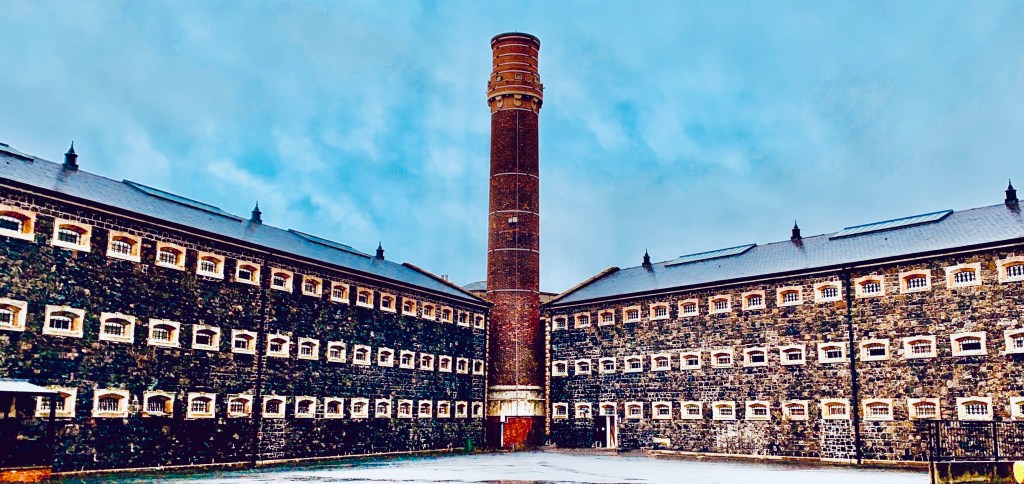
HMP Belfast or the Crum as it was colloquially known is a prison that closed in 1996 and is now a popular visitor attraction.

It remained empty, many thought it would remain closed for good. However, plans were put forward to convert the jail into a major visitor attraction and conference centre. The chains finally came off and it opened in 2012.
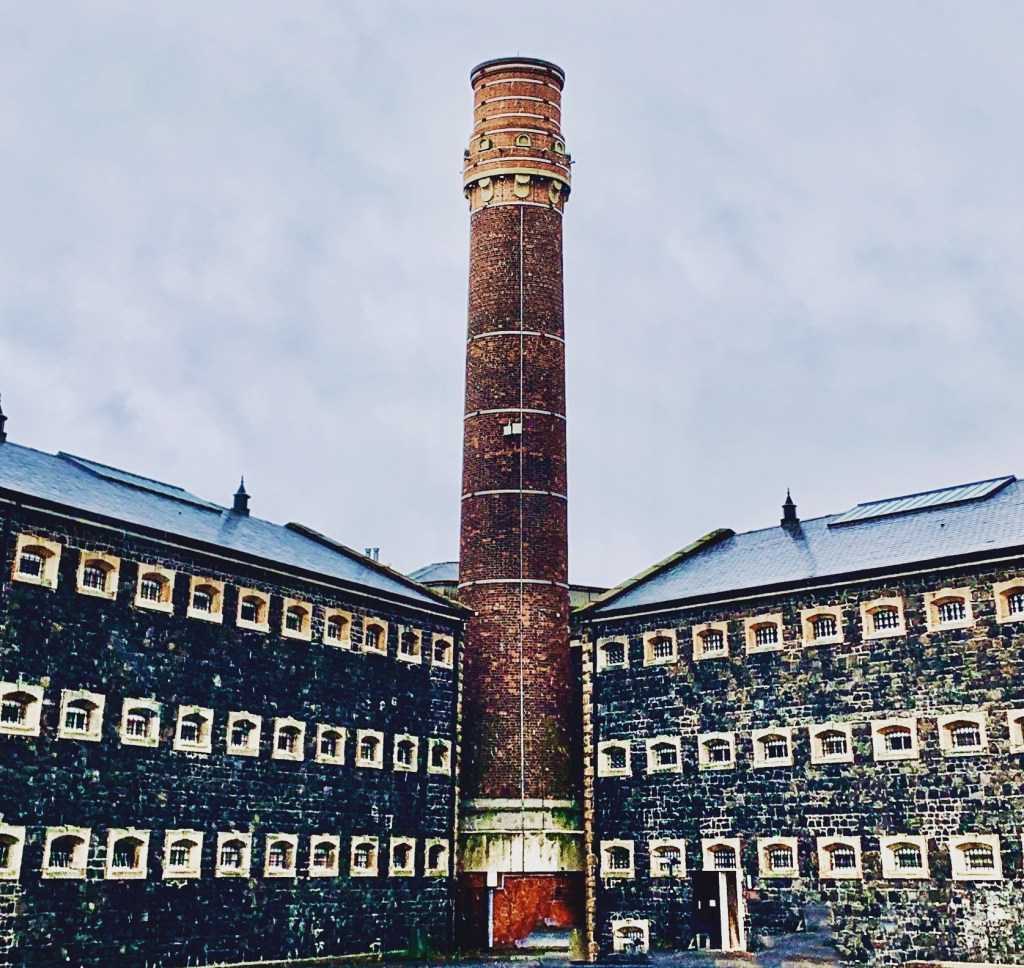
This Grade A listed 19th century is the only remaining Victorian-era prison in Northern Ireland. The first inmates arrived in 1846. During its 150 years as a prison, it has housed murderers, suffragettes, loyalists and republican prisoners.
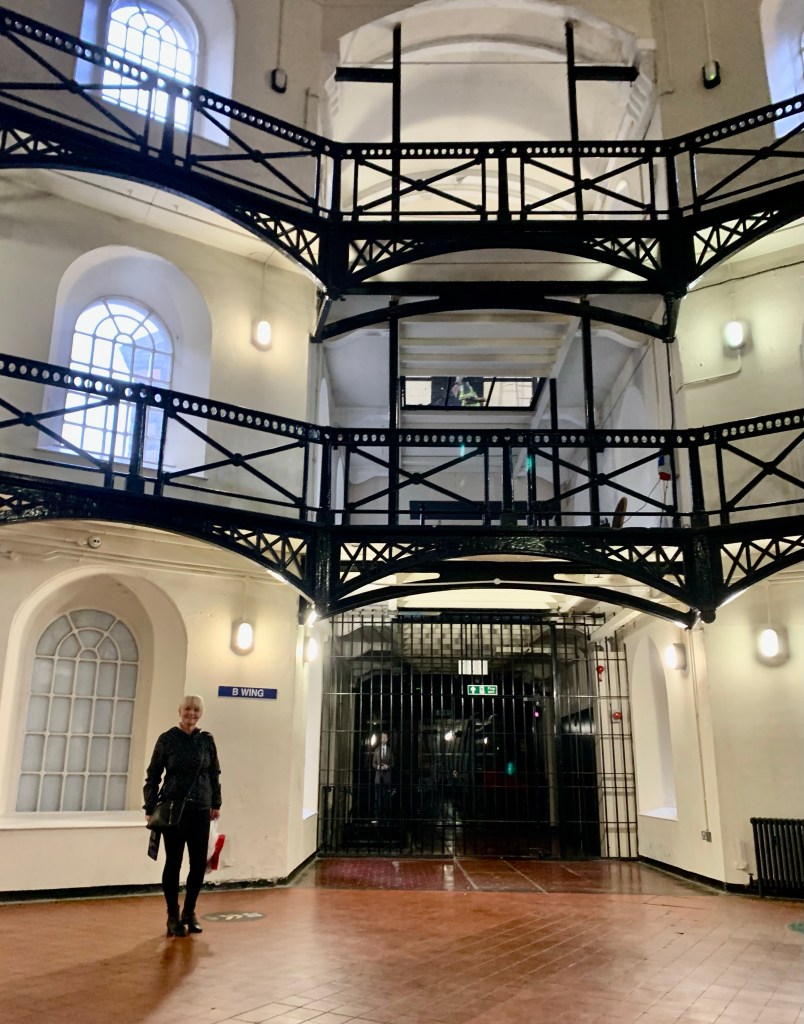
In later years it became greatly associated with The Troubles due to it holding many prisoners with terrorist convictions and at times the jail could become three prisons, one section holding general prisoners and a section each for Republican prisoners and Loyalist prisoners.
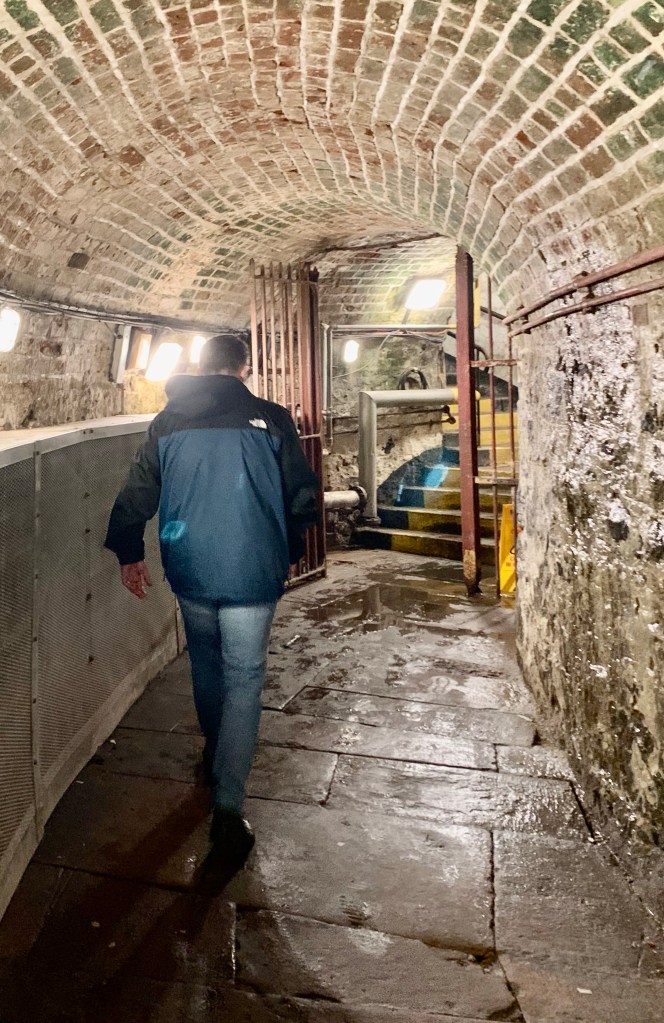
There is a tunnel which goes underneath the road and links the prison with the former courthouse opposite, which was used to transfer prisoners between the two locations.
Today it’s a popular visitor attraction. We took a tour around the jail and experienced for ourselves what life was like there. Through the testimony of former prisoners, multimedia displays and historical records and artefacts. The jail is much more than a museum more a part of Belfast’s political, social, religious and paramilitary history.
Black cab tours
Northern Ireland has a complicated past. This can be seen in Belfast. We had a black cab tour of West Belfast, a flashpoint area where many atrocities occurred during The Troubles.
Although I could have easily spent a day looking at the numerous murals throughout the city, many of them are non-political.
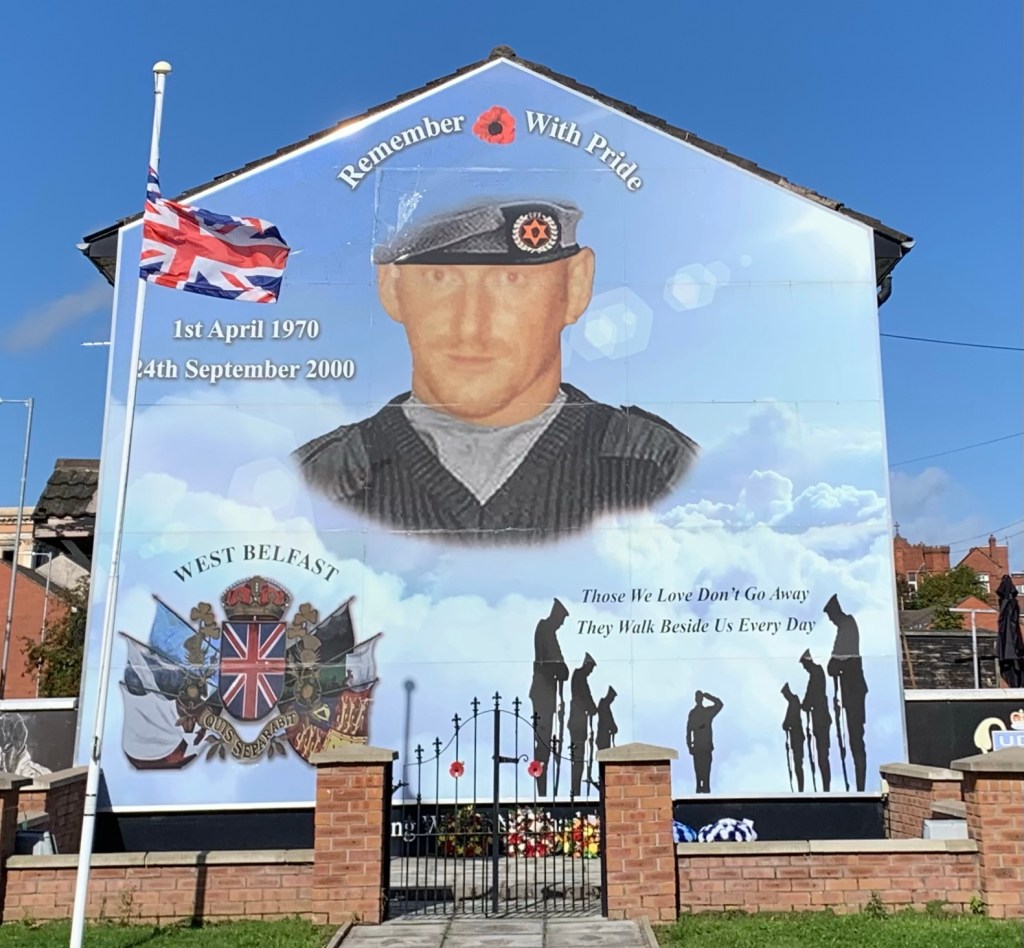
Whether you think that this is sectarian voyeurism? or gives an insight into the political, religious, economic and social schisms that have blighted Belfast in the past. One certainty their significance, past, present or future can not be ignored.
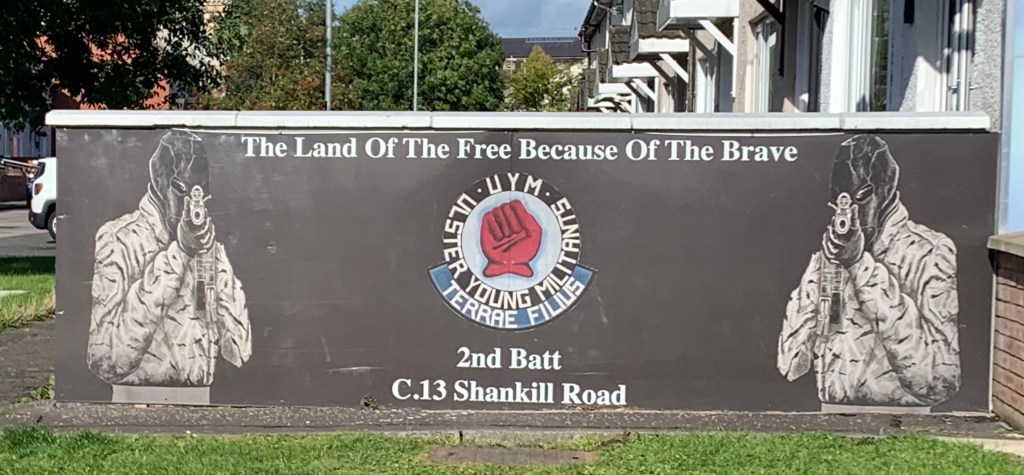
Political murals are deeply entrenched into the psyche of Belfast, particularly in West Belfast, where working-class communities of Catholics and Protestants live cheek-by-jowl. A lot of the more overtly political murals have been replaced but some can still be found within the Shankhill (Protestant) Falls (catholic) communities.
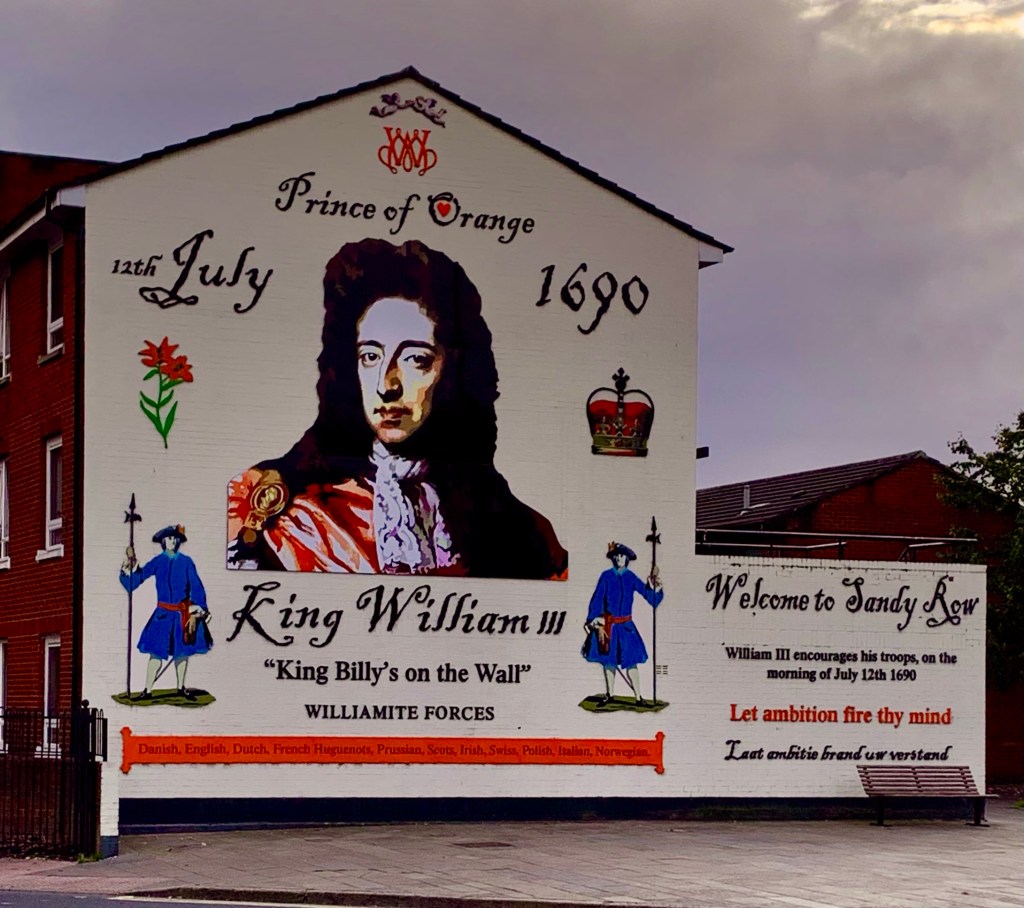
Another prevalent mural (on the loyalist side) is of King William III, who was a Protestant king who won decisive wars against the catholic forces including the Battle of the Boyne 1690, it is still celebrated annually to this day on the 12th of July by Unionist communities. Which can lead to acrimony on both sides of the divide.
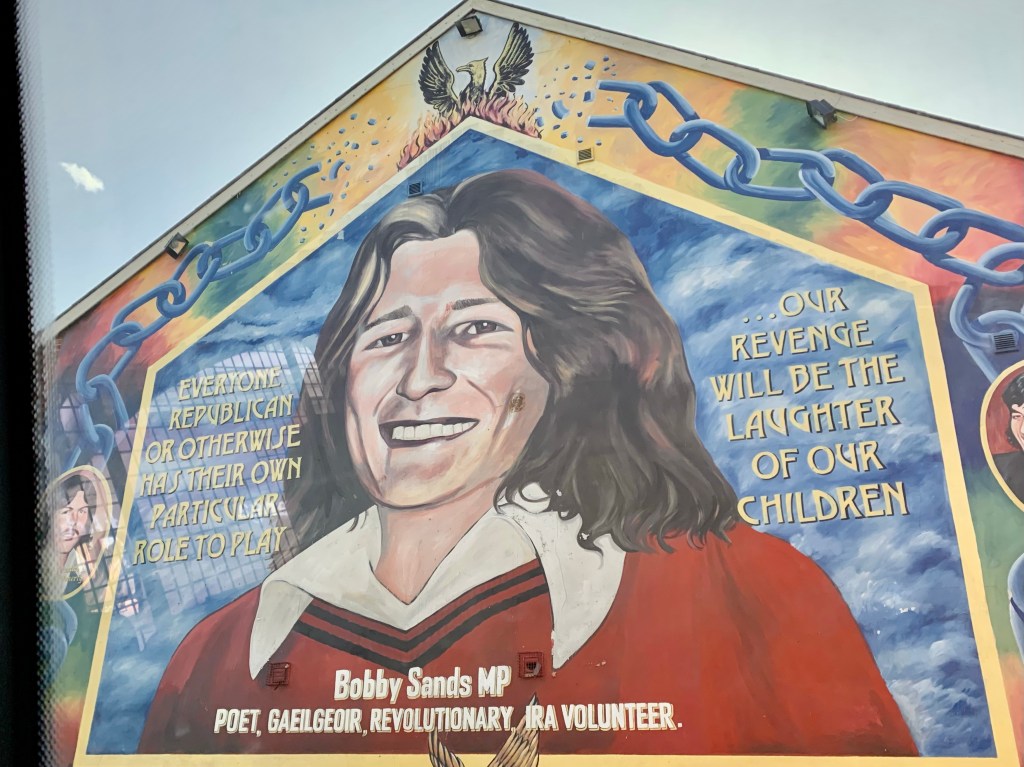
One of Belfast’s most famous murals (certainly on the republican side) is the smiling figure of Bobby Sands an IRA volunteer and prisoner who died during the hunger strike of 1982. Bobby Sands was also elected as the MP for the area during this time, sending a powerful message to the British government at the time.
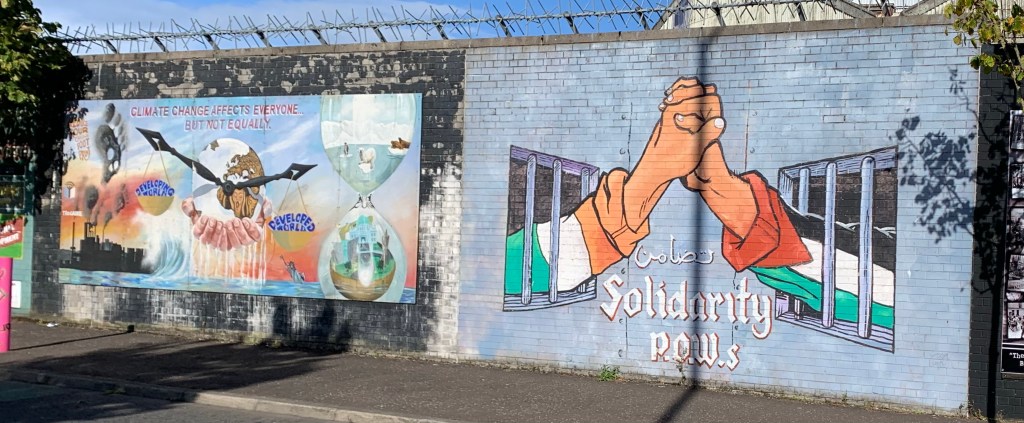
Solidarity Wall on the Falls Road features a collection of murals expressing support for global causes such as Palestinian liberation and Basque independence.
Peace Walls
They are still visible to this day and many can be found in Belfast. They have now become somewhat of a tourist attraction with tours around them, especially in West Belfast where they are adorned with political murals. They are designed to separate Catholics from Protestants where the two communities converge on each other.
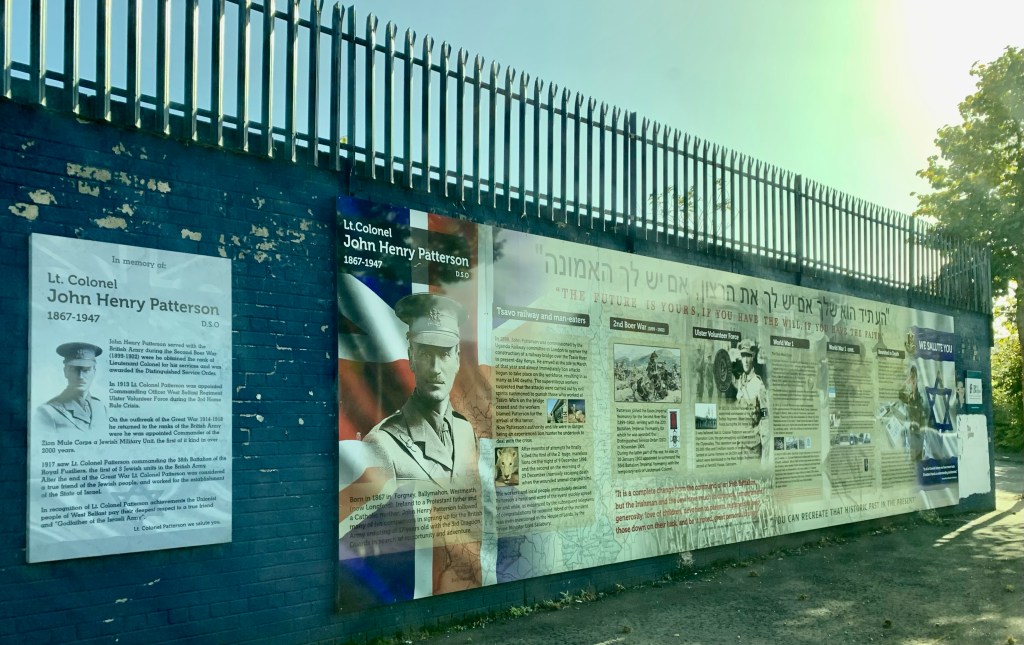
These peace walls are particularly significant as they separate Falls Road from Shankhill Road. What is somewhat depressing 25 years after The Good Friday Agreement, these are still locked and both communities are reluctant for them to be demolished.
Some short videos of two of the many peace walls. The peace walls are located in the Falls Road and Shankhill Road. These were constructed during The Troubles to separate Catholic and Protestant communities.
The Titanic Quarter
What once was a neglected desolated industrial wasteland, has now become one of Belfast’s most exciting, attractive and economically viable areas in just under 10 years. It’s one of Europe’s largest waterfront regeneration schemes
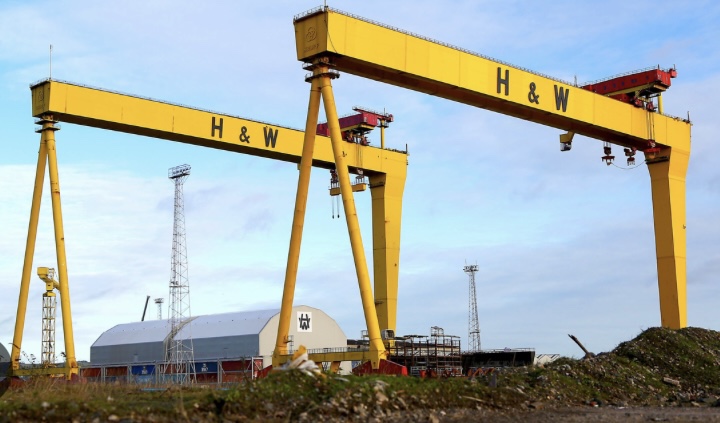
One of Belfast’s most instantly recognizable landmarks, the Harland and Wolff cranes Samson and Goliath, can be seen in The Titanic Quarter. Samson was built-in 1974 and stands 348 feet, Goliath is older built-in 1969 and stands 315 feet. The cranes are protected under The Historic Monuments Act of Northern Ireland.
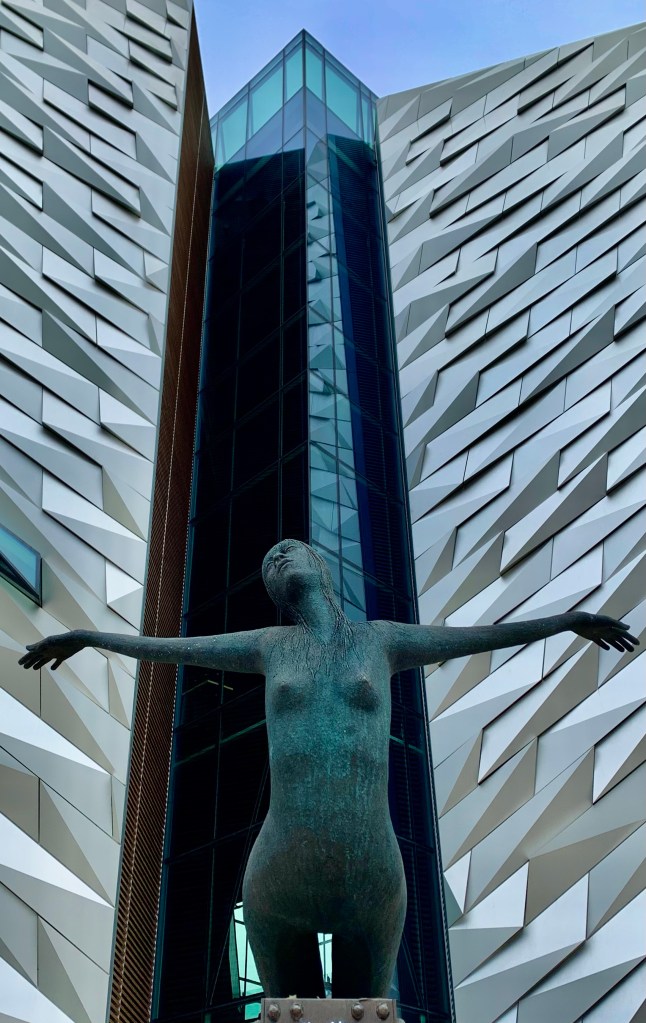
It is home to the Titanic Belfast a £90 million investment on the site of the former Harland and Wolff shipyard. In a short space of time, it has become Northern Ireland’s second most popular visitor attraction with over 800,000 visitors in 2019 the last pre covid figures.

Since opening in 2012 it has been credited with helping transform tourism in Belfast and Northern Ireland.
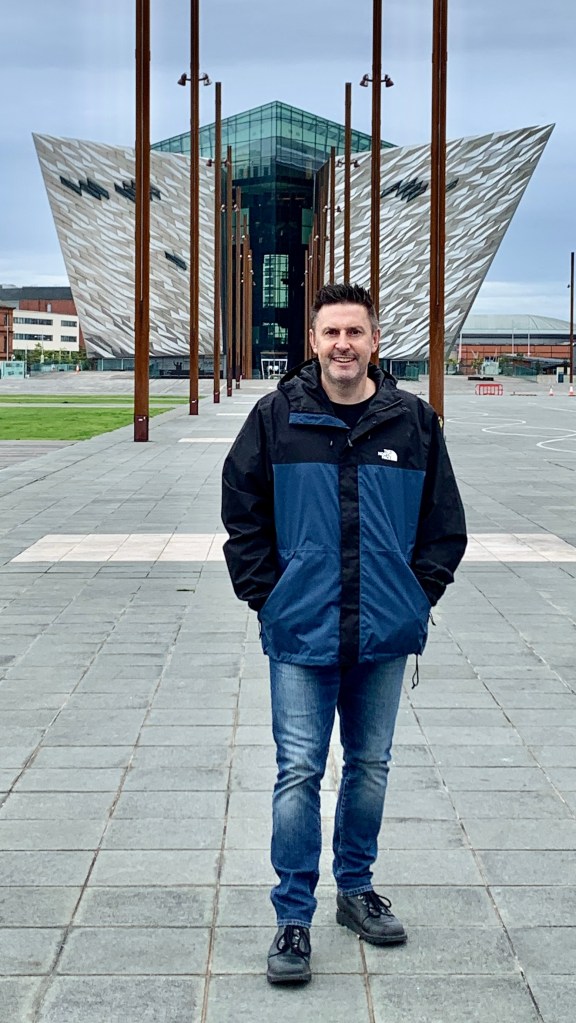
The Titanic Belfast was voted Europe’s best visitor attraction in 2016, it is a collection of artefacts, special effects and galleries on 9 floors. The site is huge and covers a floor space of 12,000 square meters (130,000 square feet)

We visited on our last day before flying home. So time was limited to what I could discover. The Titanic Belfast was an interesting visit although very busy and not the cheapest attraction in Belfast, compared to others we visited many which were free.

You can visit the SS Nomadic with your Titanic Belfast entry ticket. It was a tender ship for the Titanic. A very miniature version of the Titanic and the only one in existence.
Stormont Park Run
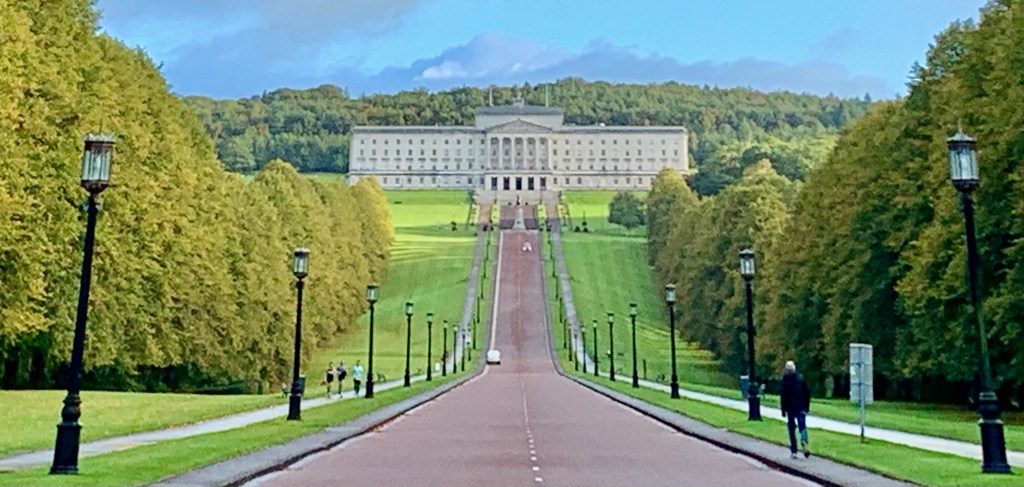
Our destination this morning was the Stormont Estate in east Belfast. Home to the Stormont Park and Stormont Parliament Building, built in 1932 after the partition of Ireland. It became Northern Ireland’s Parliament Building.
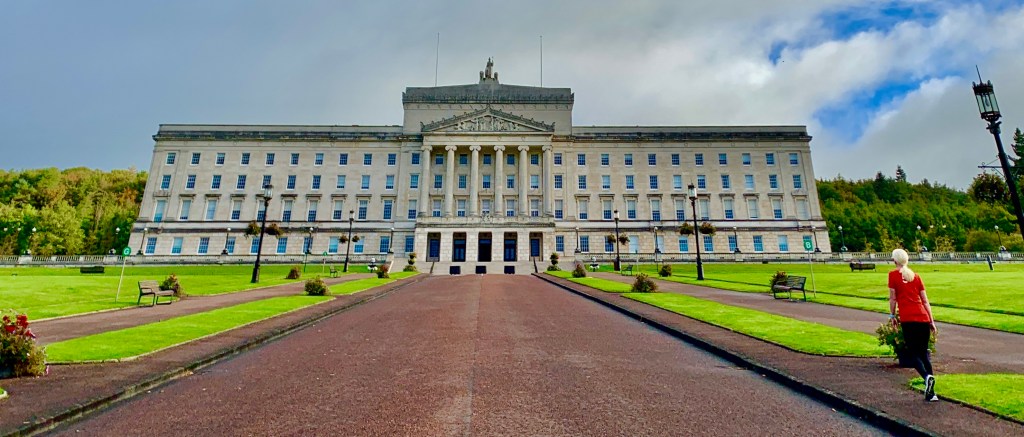
The Stormont Estate grounds are open to the public. Facilities include a boardwalk, fitness trail, outside gym and various outdoor activities. There is a playground and cafe situated there.
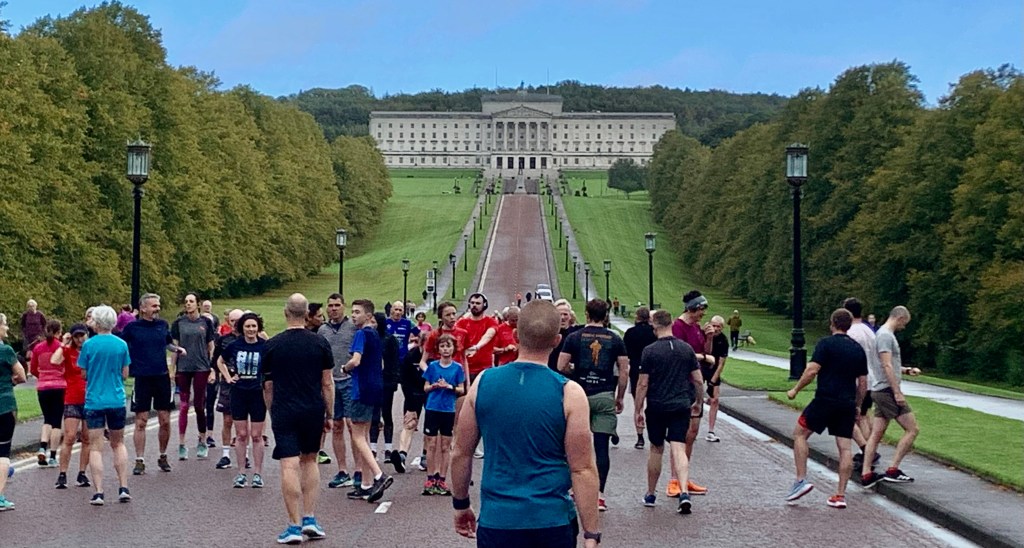
Although our primary reason for visiting was to participate in the 5-kilometre Parkrun, which is held in this rather splendid setting.
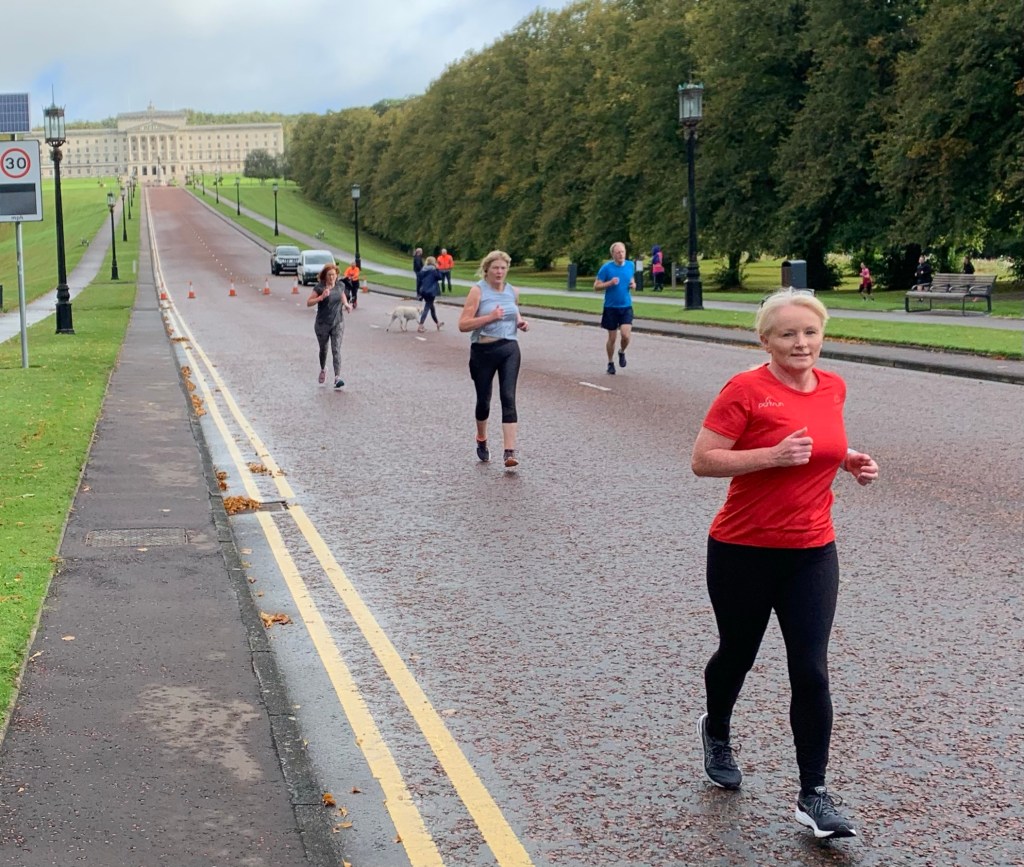
As a rather sporadic member of a running club, I try and participate in Parkrun, it’s even better to visit a new venue I haven’t run before, often in conjunction with a place of interest. This certainly was the case at the Stormont Parkrun, Home to Northern Ireland’s Parliament Building. It allows me to visit one of Belfast’s most impressive buildings and take part in a new Parkrun a win-win for me.
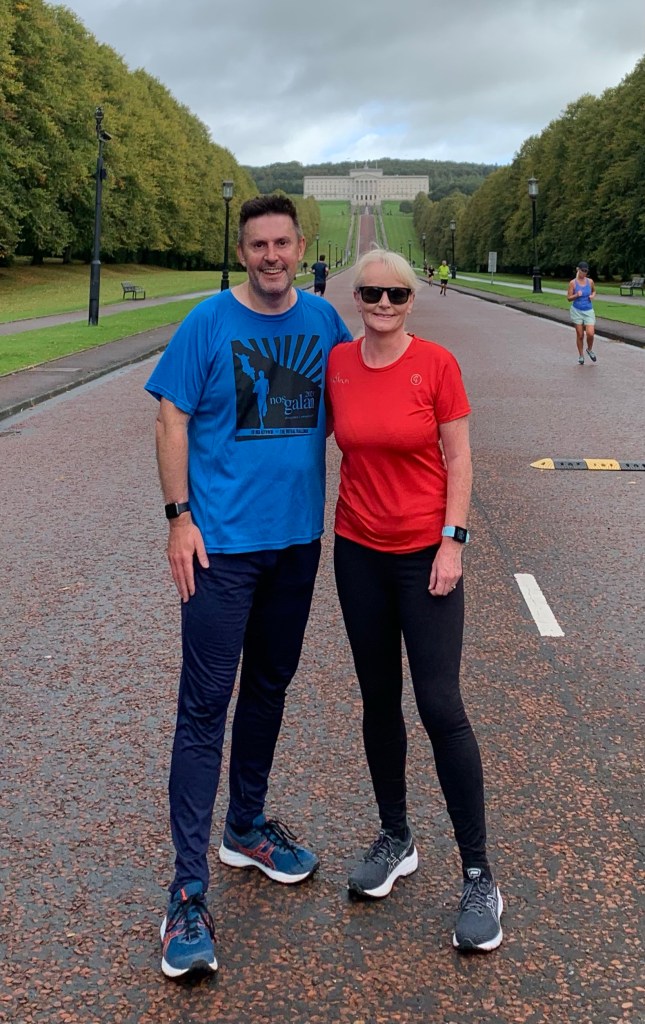
A beautiful course around The Stormont Estate grounds was a perfect setting for a Parkrun, as always a big thank you to the organisers and volunteers who give up their time for free and without them, these runs go ahead. A further thank you for the very warm welcome we received there 😄
Europa Hotel

Our base for our stay was the rather grand Europa Hotel. It wasn’t always able to stay so grand. During The Troubles, it was bombed on 36 occasions giving it the unenviable title of Europe’s most bombed hotel.
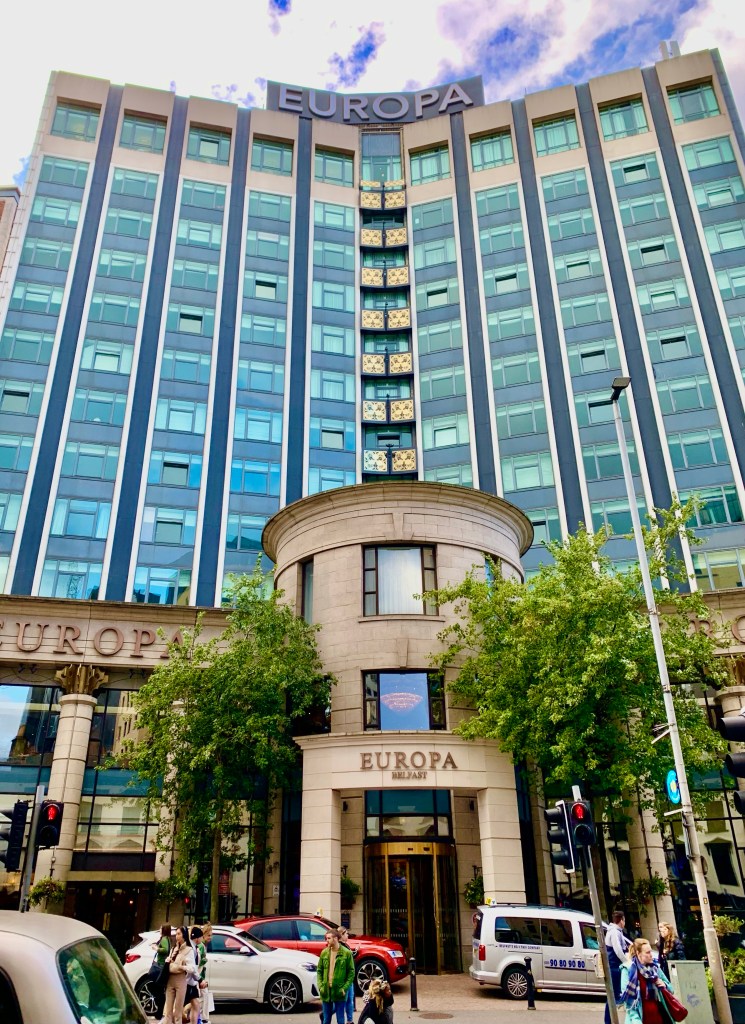
Today in more peaceful times the hotel has been beautifully refurbished, located near the city centre and most central attractions within walking distance.
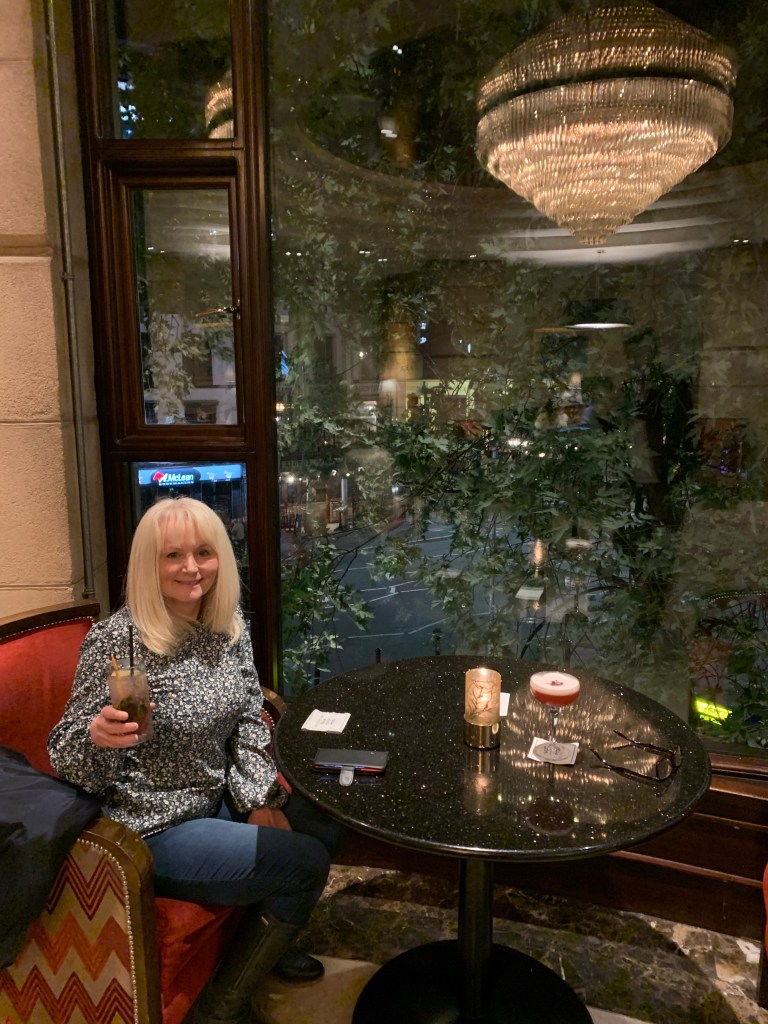
It’s home to the iconic first-floor piano bar where you can gaze down on the bustling crowds that pass by. The legendary Crown Bar sits directly opposite the hotel one of the most famous pubs in Belfast.

In the rather grand lobby of the Europa hotel, there is a poignant display of the history of the hotel during The Troubles.
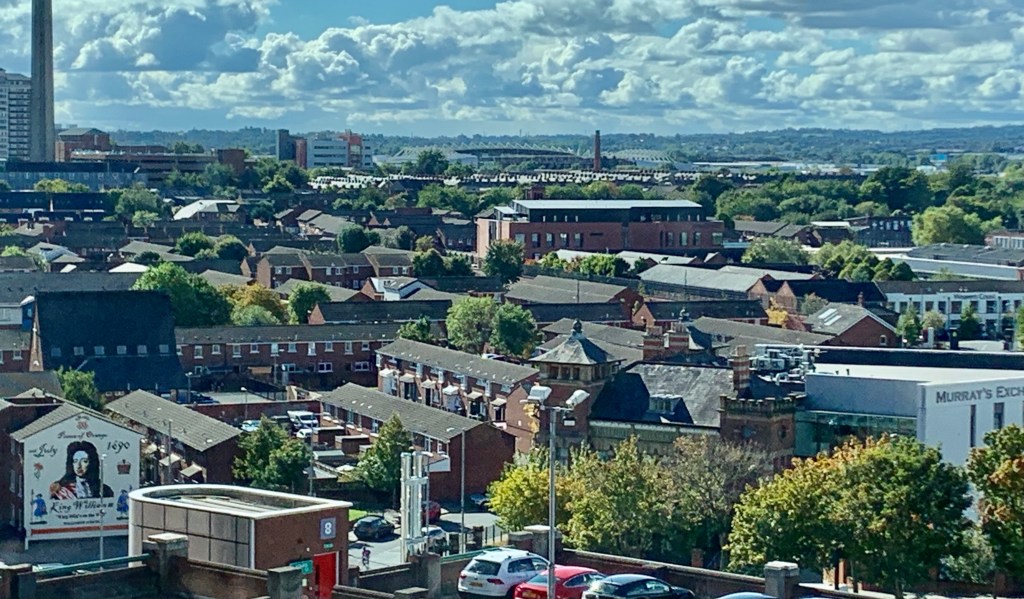
The high-rise design of the hotel gives excellent views of the city, from our room on the 8th floor we could see Sandy Row and its mural of King William III, Belfast City Hospital with its distinctive orange tower block and Windsor Park home of the Northern Ireland football team.
St George’s Market
The last covered Victorian market in Belfast.

There has been a market on this site since 1604. The present St George’s Market was built between 1890 and 1896 and is one of Belfast’s oldest attractions.
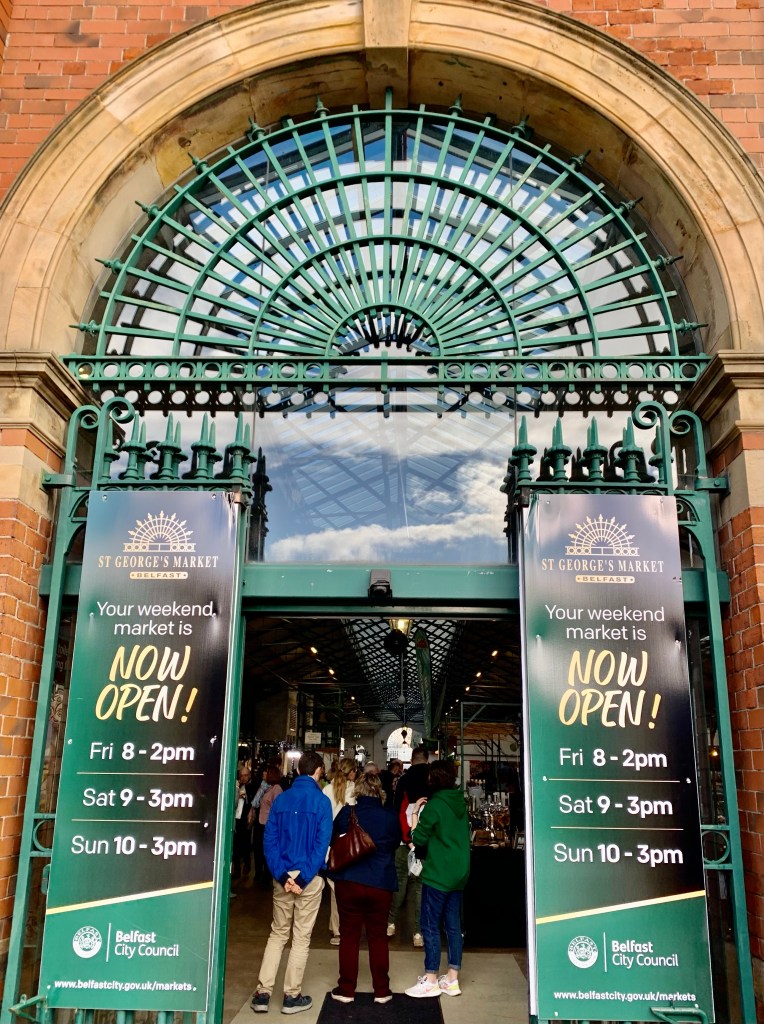
Completely refurbished in 1997 for £4.5 million it rejuvenated this Victorian building to its former glory. Making it one of Belfast’s most vibrant and colourful destinations.
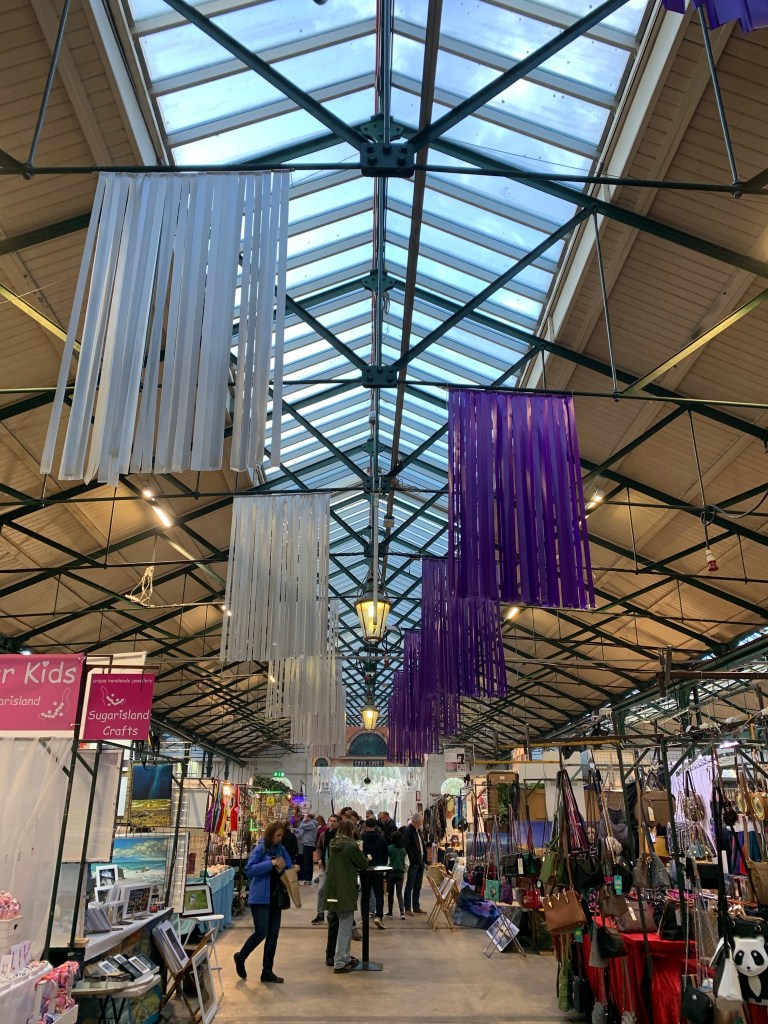
However, like a lot of traditional markets, St George’s had to reinvent itself to secure a meaningful future for the market. It has now become a weekend market open on Friday, Saturday and Sunday. As well as being home to some fine local produce it has become something of a gastronomic centre.
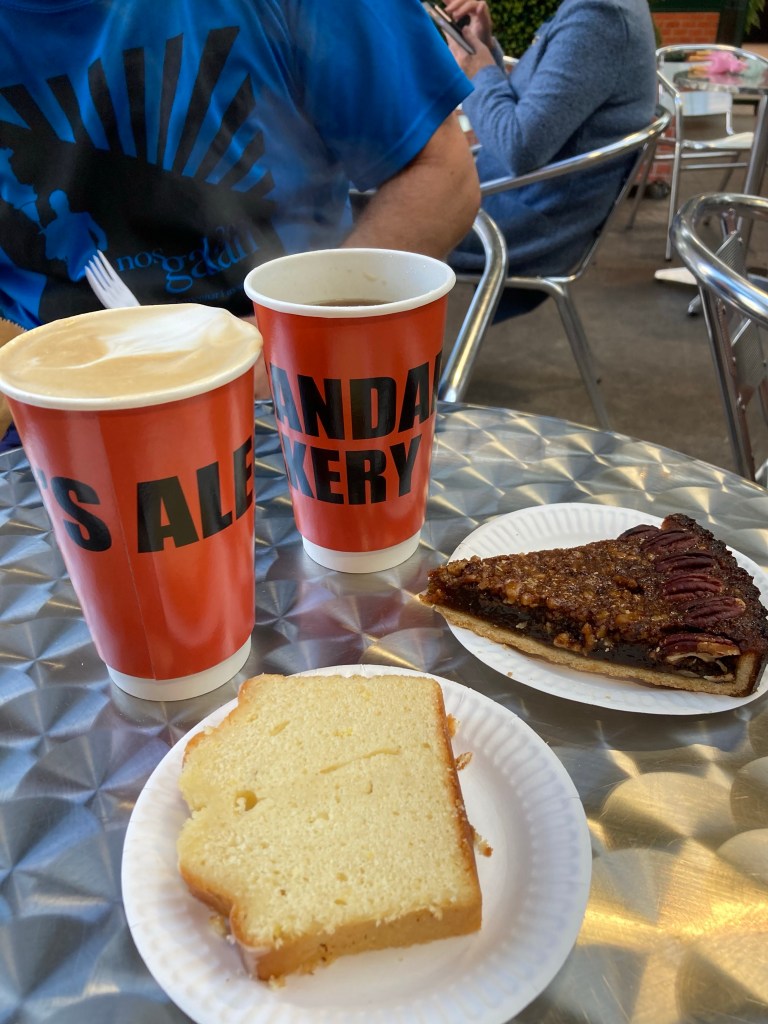
It is the perfect place to sample some home-cooked and artisan food from the various food stalls located within the market, with plenty of seating to enjoy your selected indulgence with a delicious coffee to perfectly complement your choice. A perfect location to sit and relax.
Cathedral Quarter
Is the nightlife and cultural hub of Belfast. Centred around St Anne’s Cathedral.
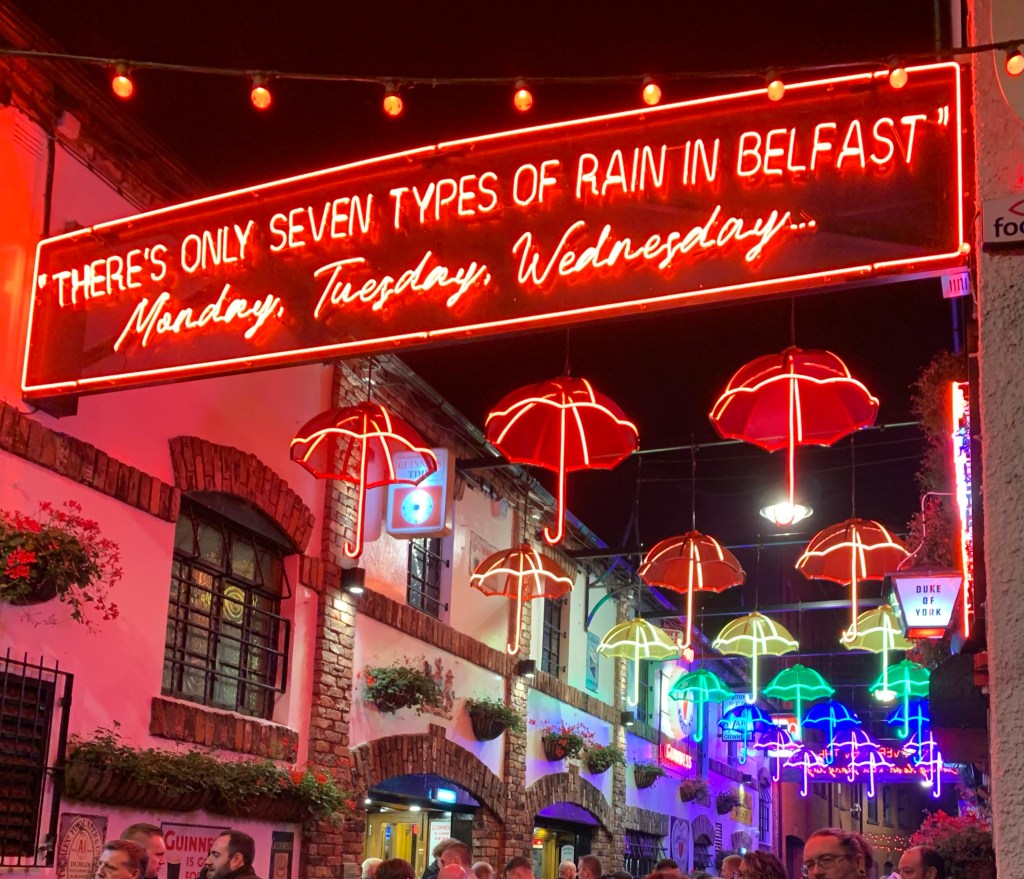
When considering a night out in Belfast The Cathedral, Quater has a wide selection of bars, clubs and restaurants that imbue the story of the city.
The Dark Horse
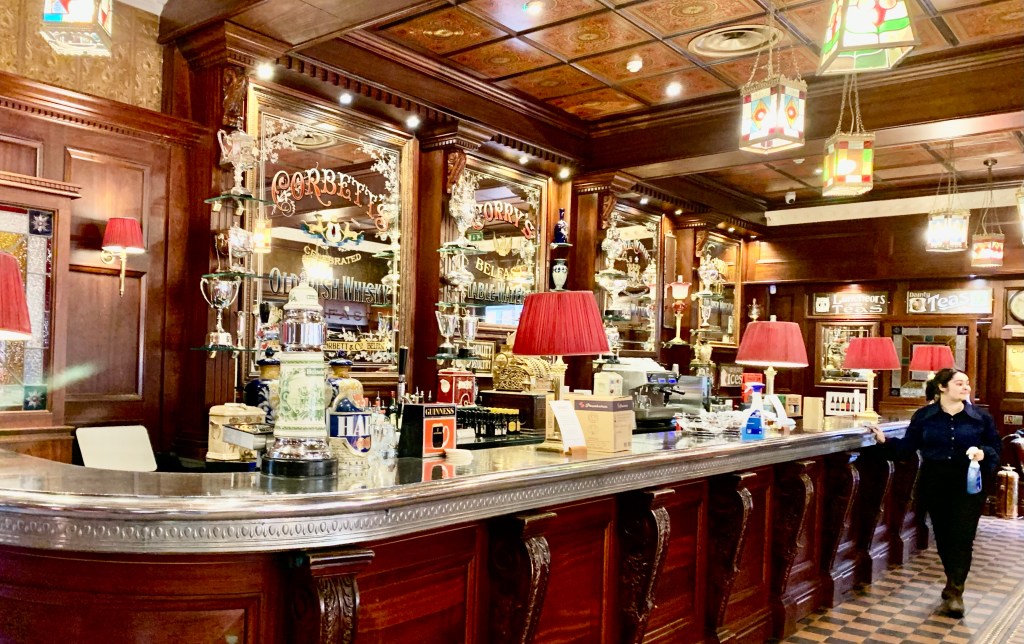
This is situated opposite The Duke of York and is part of the same company that owns The Duke of York and the Harp Bar in the same location. This is well-known for its courtyard and open-air artwork.
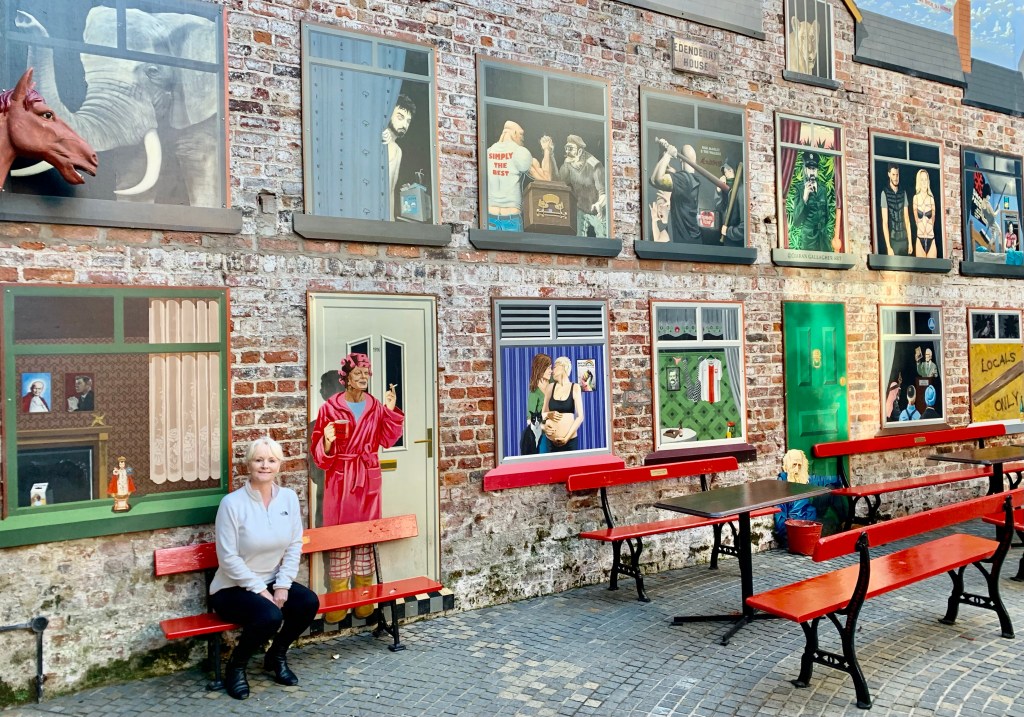
It can be viewed as long as buy a drink at The Dark Horse and is well worth a visit to see the many murals and artwork that can be seen in the adjoining courtyard. We visited in the afternoon and were able to view the artwork in peace.

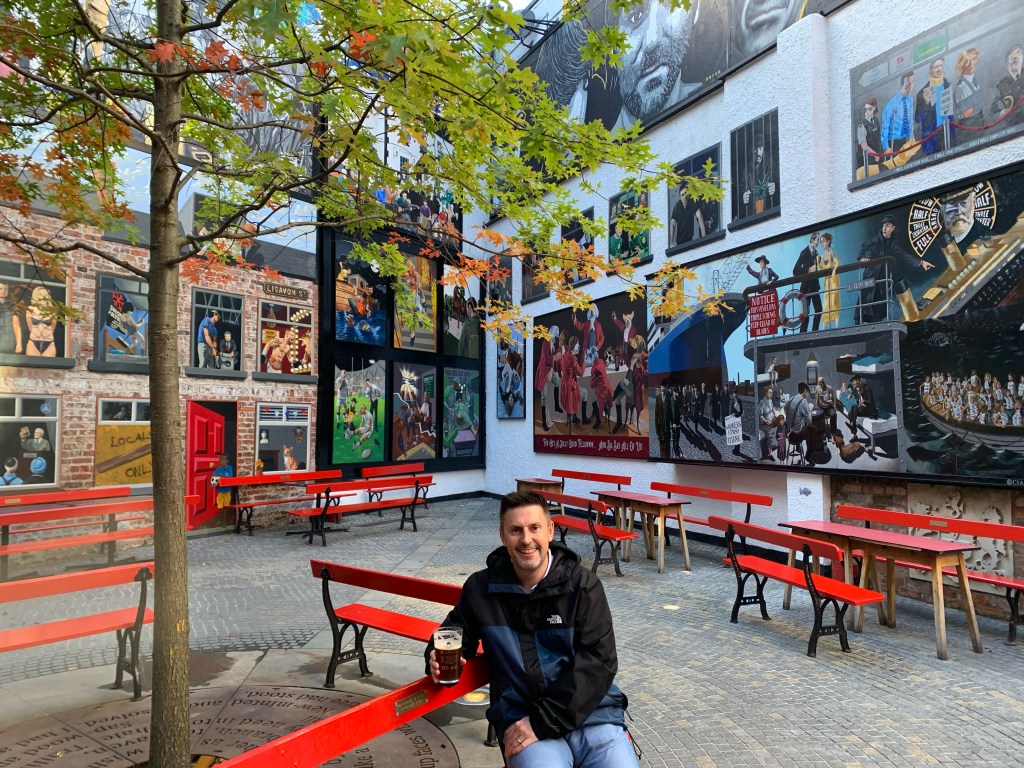
The courtyard at the Dark Horse is brimming with street art depicting scenes of Northern Irish history and culture. A popular spot due to its mural-covered courtyard and its sumptuous traditional lounge.
The Merchant Hotel
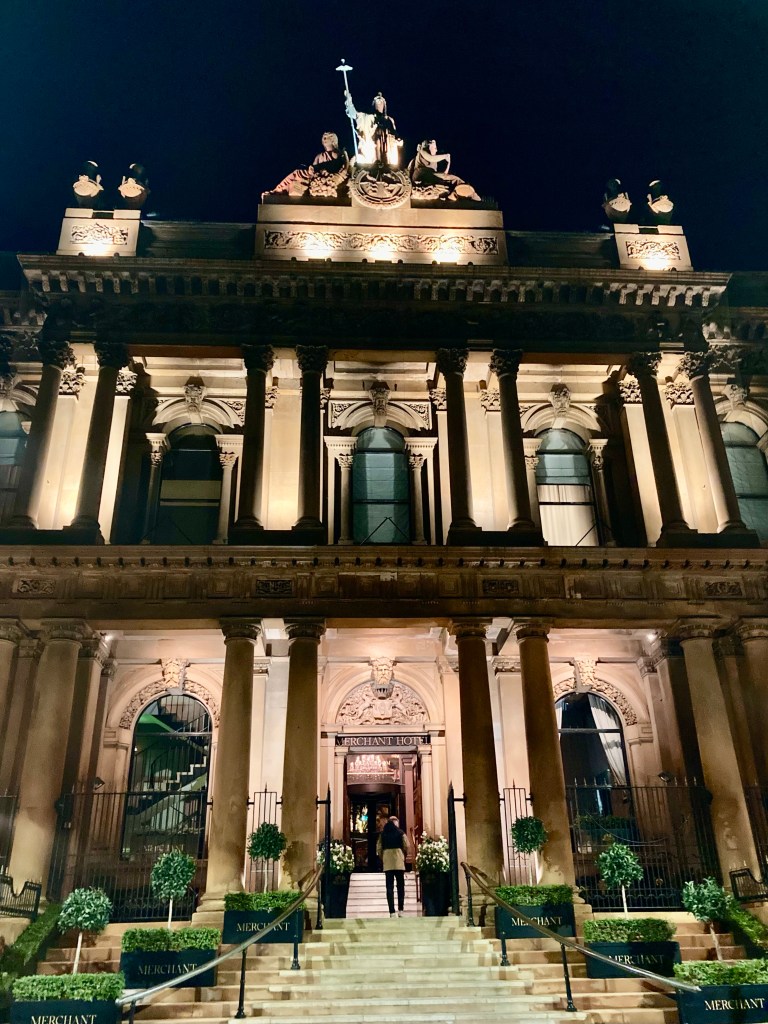
One of Belfast’s five-star hotels The Merchant is situated in the heart of the Cathedral Quarter. Its distinctive architectural style comes from its former life as the headquarters of the Ulster Bank.
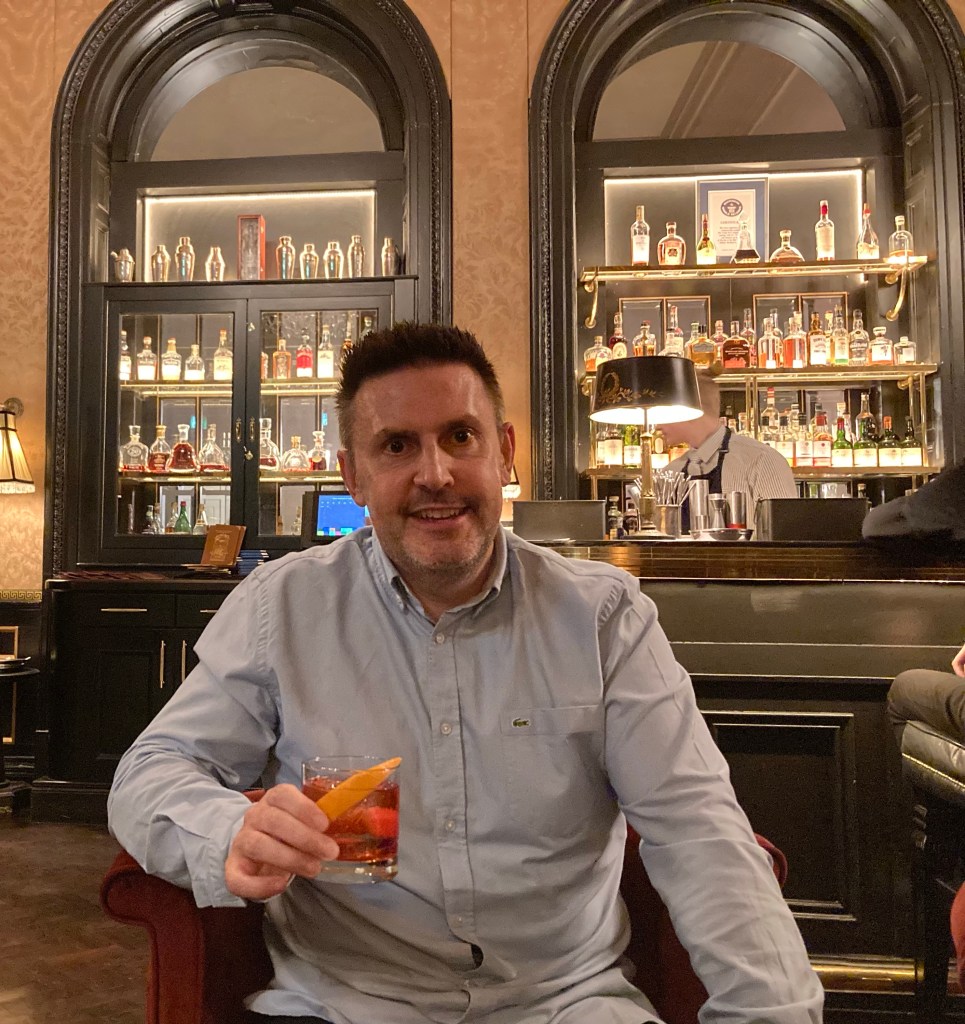
My pockets are not deep enough to afford a stay at The Merchant. An evening’s visit to the cocktail bar won’t break the bank while visiting this former bank. I certainly had an impeccable list of cocktails to choose from. Don’t fancy a cocktail there is also a pub at the hotel The Cloth Ear a quintessential Irish pub, with more reasonable prices
Public art in The Cathedral Quarter
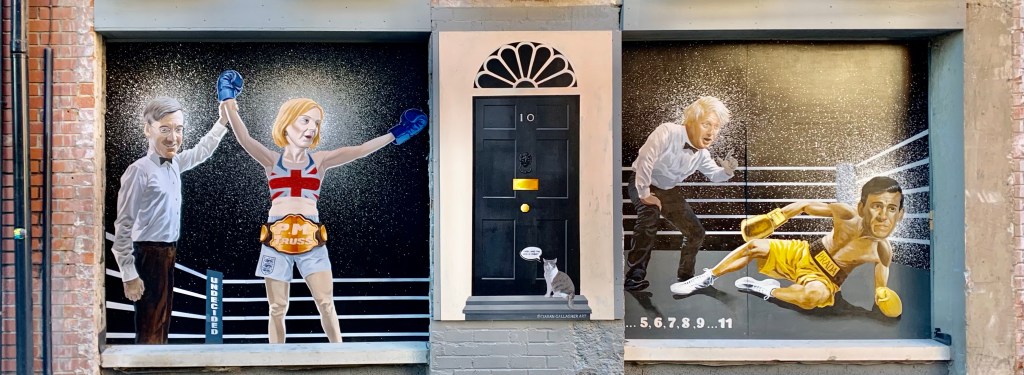
You will find public works of art all over Belfast and I viewed plenty in The Cathedral Quarter. This mural in particular made me chuckle, a rather contemporary view of political satire.
The Albert Memorial Clock

At the edge of the Cathedral Quarter, we came across this rather unusual clock. I thought my eyes were deceiving me as the clock was sloping to one side. However, this famous Belfast landmark The Albert Memorial Clock is sloping and built on wooden piles on marshy reclaimed land the clock tower does lean 4 feet off the perpendicular.
Belfasts Traditional Pubs
Last but certainly not least, if you have come for a drink there is no shortage of beautiful, ornate traditional pubs to choose from. Just a few from a large number to choose from.
Crown Bar
A pub that is owned by the National Trust, is certainly a first for me. It’s a Grade I listed building a beautiful example of a traditional Victorian gin palace.
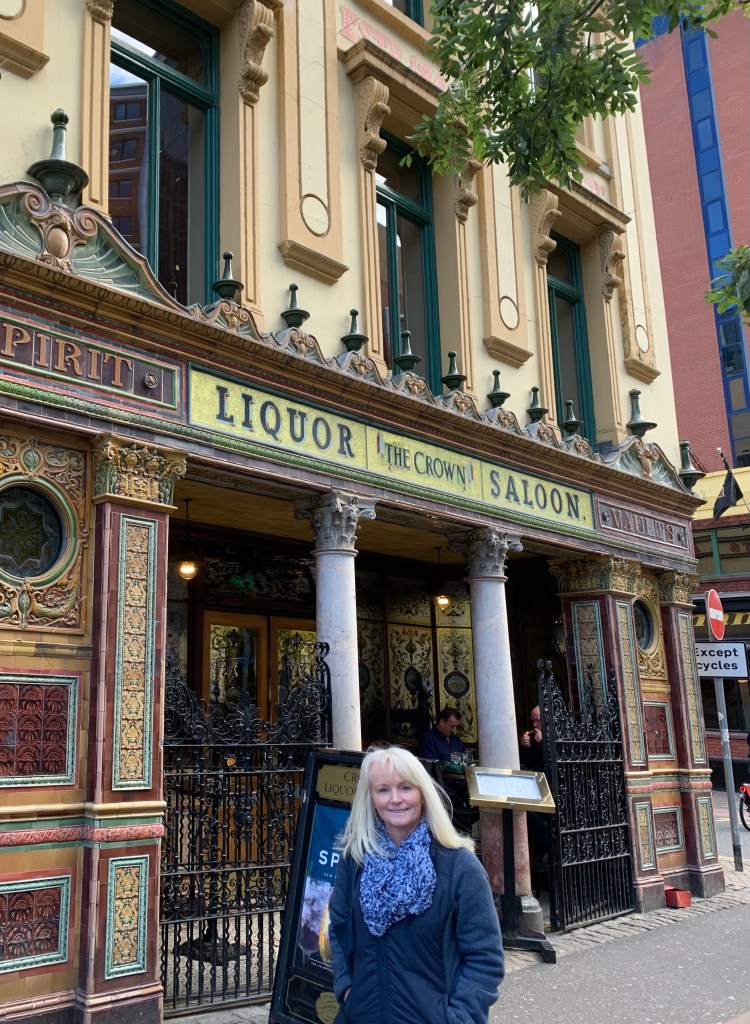
Possibly one of if not the most famous pubs in Belfast, The Crown Liquor Bar. It was originally a Victorian gin palace and has been loving restored at a great cost to its former glory.
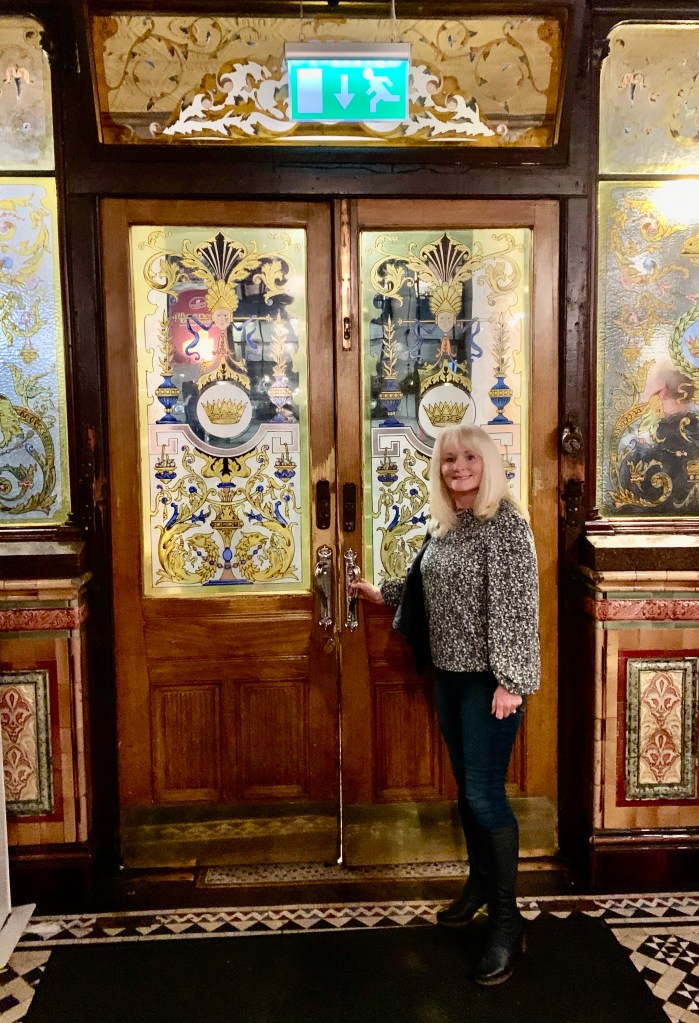
Initially designed to protect Victorian drinkers from the prying eyes of The Great Victorian Street. The stained glass windows are etched with fairies, pineapples, fleur-de-lys and clowns.
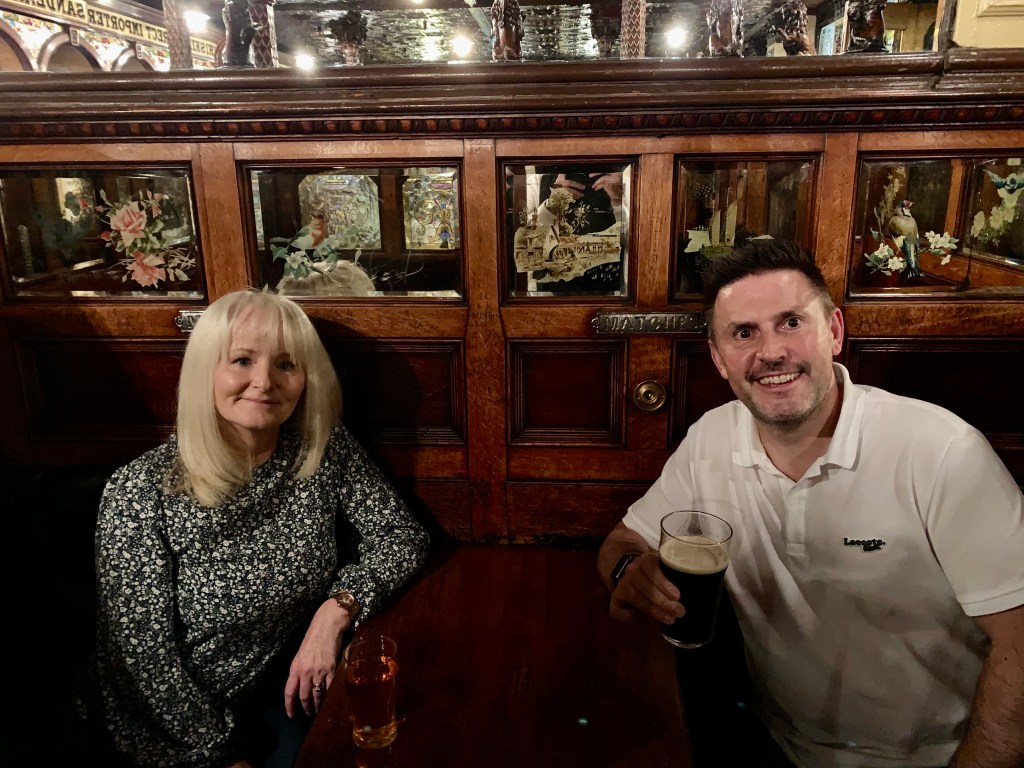
We visited on a few occasions as we were staying at the Europa located opposite and were fortunate enough to get one of the famous snugs. This is one of the most evocative features of the Crown Bar and there are 10 in total. The doors can be closed for the customer’s privacy, very important in the more puritan Victorian times.
Bittles Bar
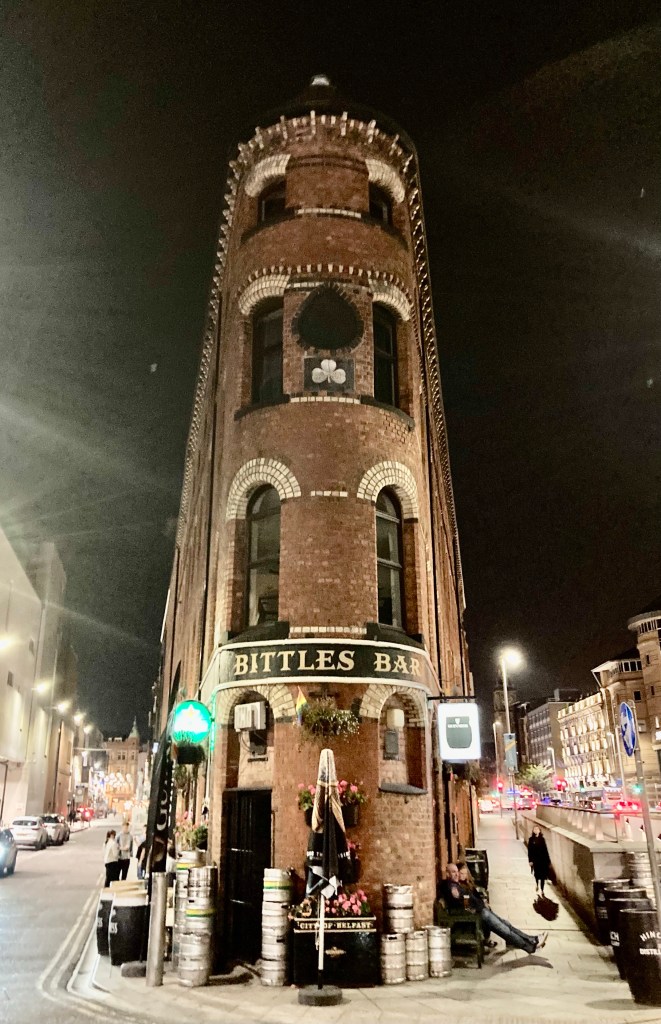
This pub is situated in one of Belfast’s most iconic buildings, known as the Flat Iron Building. I can marvel at this unique beautiful architecture while enjoying a traditional pint, what’s not to like.
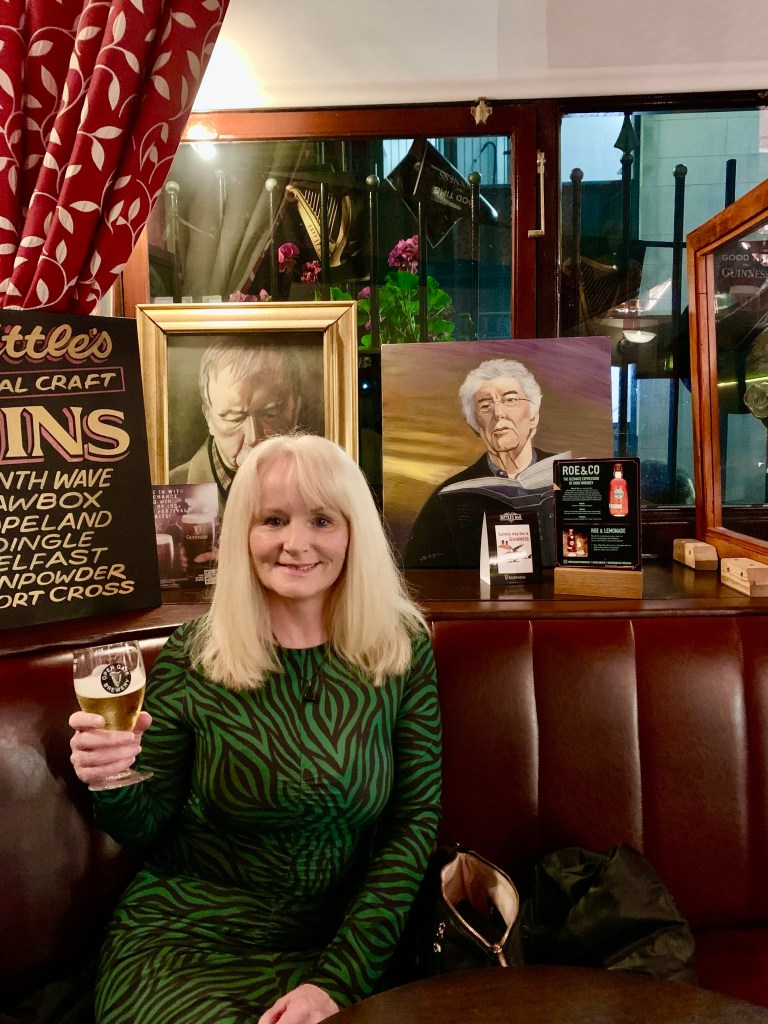
If the impressive architecture wasn’t enough inside there were many murals and paintings chronicling Northern Ireland’s political, sporting, literary and social history.
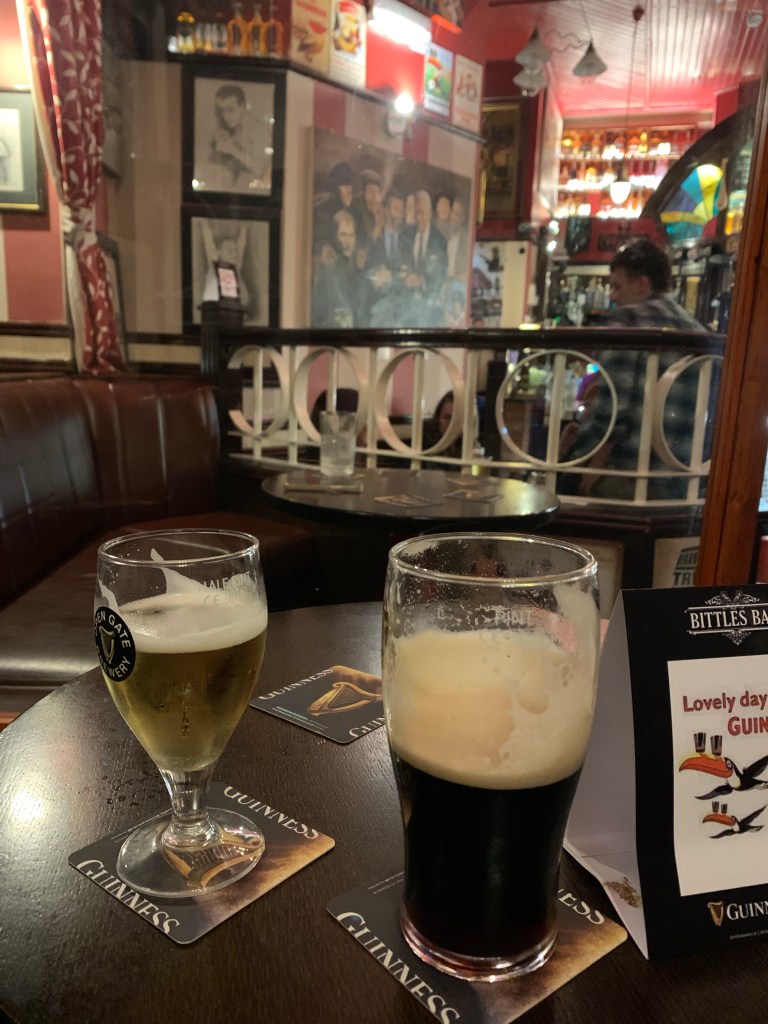
Did I mention that they also serve a beautiful pint of Guinness at Bittles, the Irish cider isn’t half bad either. Beautiful architecture, and fantastic artwork I almost forgot I was sitting in a pub.
The Duke of York
This is one of several bars owned by the same people in the historic Half Bap area of Belfast.
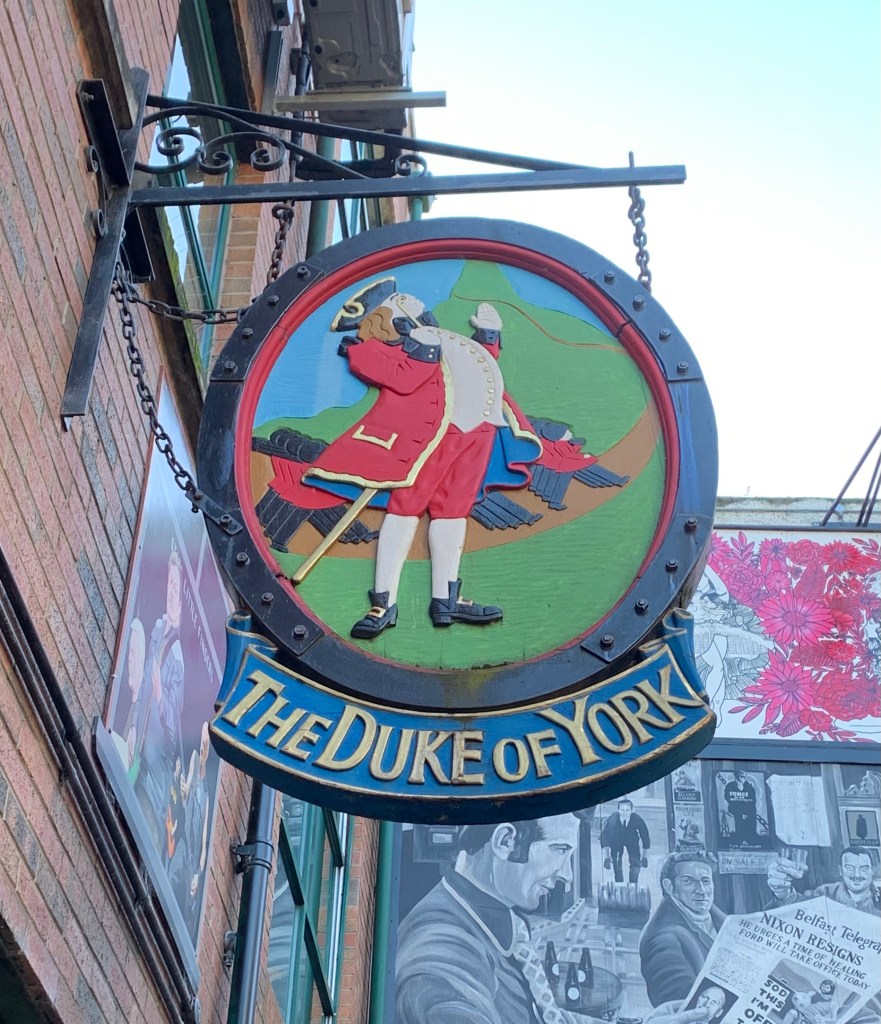
The Duke of York is somewhat of a Belfast institution. Popular with both locals and visitors alike. Blown up by a bomb in 1972 and totally rebuilt it still has the charm of a traditional Irish pub.
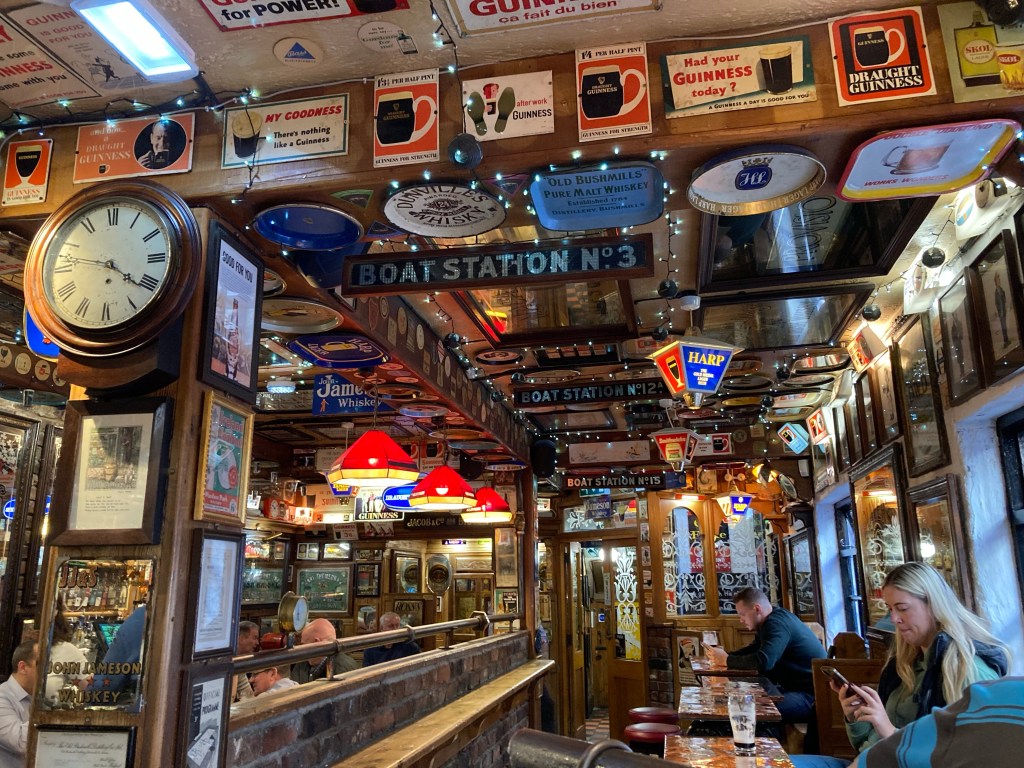
We visited in the evening and afternoon, I took photos in the afternoon where you can enjoy an atmospheric pint and enjoy the traditional surroundings. By night it’s a very different place packed to the rafters with everyone enjoying the craic.

The bar is well known for its brewing memorabilia on display which has been collected from all over the country. They are original artefacts from the Irish brewing industry and add a certain character to the pub.
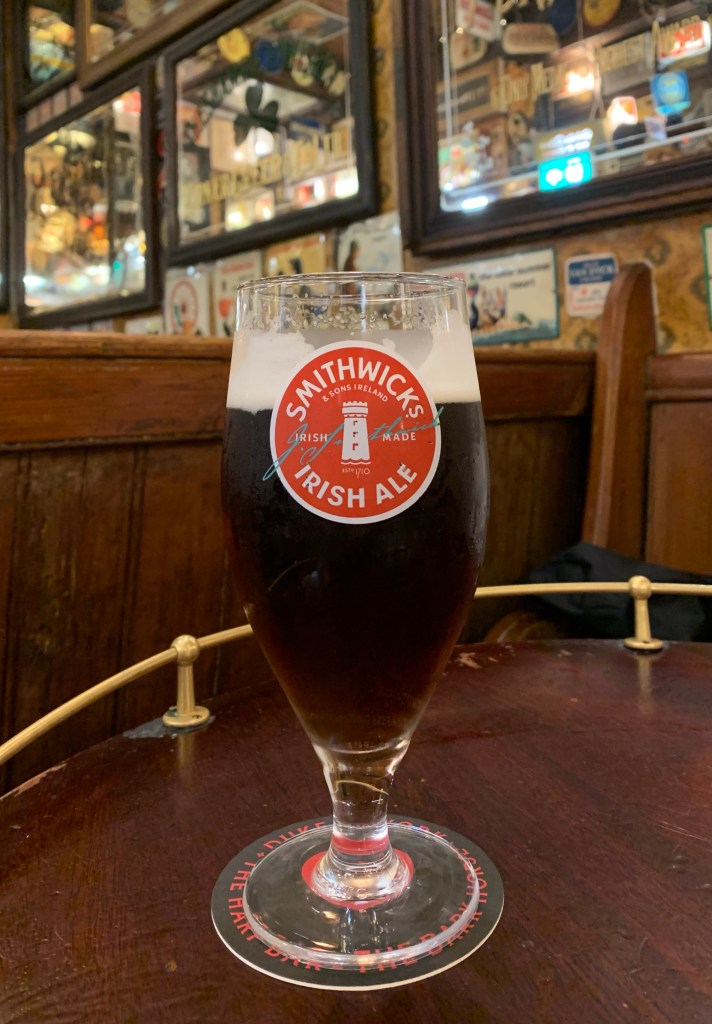
We also visited Robinsons next to the Crown Bar, The Cloth Ear, The Dirty Onion and The John Harding in The Cathedral Quarter and a few others 🥴. Not experiencing these traditional pubs you will be missing out on a part of the local culture and it will allow you to enjoy the craic.
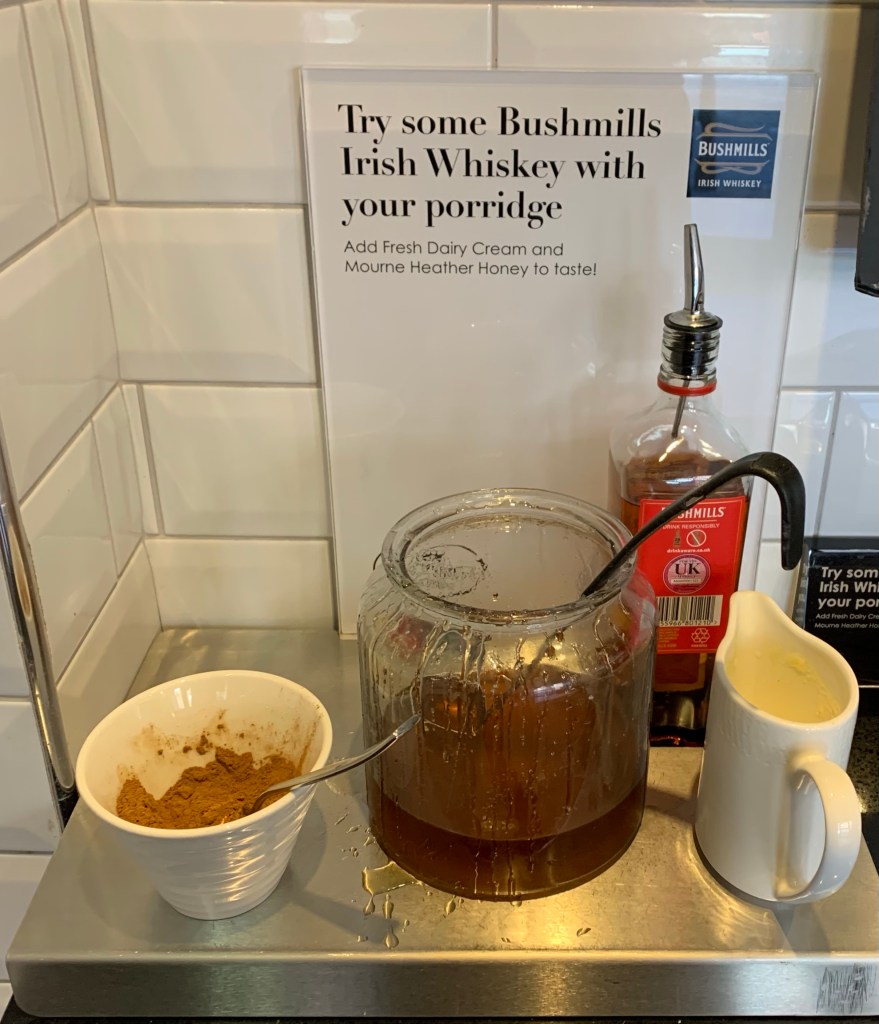
And finally when in Northern Ireland who was I to turn down this breakfast delight at the hotel, a shot of locally produced Bushmills whiskey 🥃 on my porridge? The breakfast of champions? or the start of a slippery slope for the day? Delicious nonetheless with honey and fresh cream😋

 We were born to do more than go to work, pay bills and die. See the world while you are alive and kicking
An excellent, enjoyable history and geography lesson; reading this convinces you to fly there ASAP. Can’t wait.
LikeLike
Thanks greatly appreciated, yes I thought it was a fantastic place and being of a certain age it was always in the news
LikeLike