Panarea and Stromboli are renowned as two of the most remarkable and captivating islands within the Aeolian archipelago.
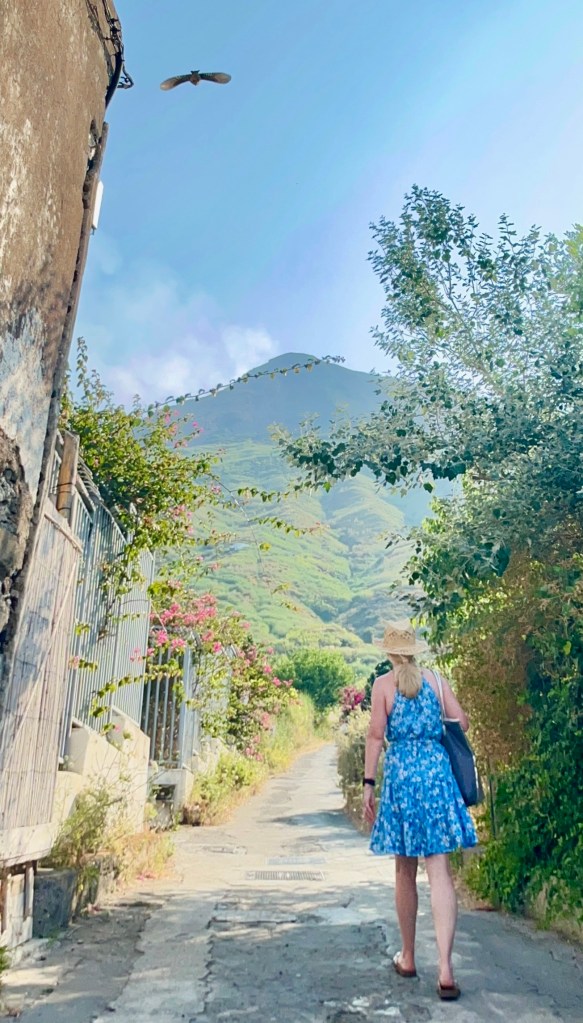
I recently had the pleasure of discovering the Aeolian Islands, a remarkable archipelago located off the coast of Sicily. Designated as a UNESCO World Heritage Site, these islands represent significant natural and cultural treasures, contributing to the rich heritage of Sicily and southern Italy.

The group of islands we visited was formed over many years by volcanic activity. It consists of seven islands, each offering something special. Although we couldn’t explore all of them, we were lucky enough to visit two islands: Panarea and Stromboli.

Our trip from Letajanni was long. First, we took a bus to the port of Milazzo, which took about one hour. After we arrived at Milazzo, we got on a ferry for a two-hour ride to our first island, Panarea.
Panarea
This destination offers a unique blend of exclusivity and rich ancient history. While it may be the smallest island, it is the oldest in geological formation.
In the 1960s, this place became popular with a lively group of artists and thinkers, and it was chosen as the location for several famous movies. Over the years, it has become a favourite spot for wealthy and famous people.
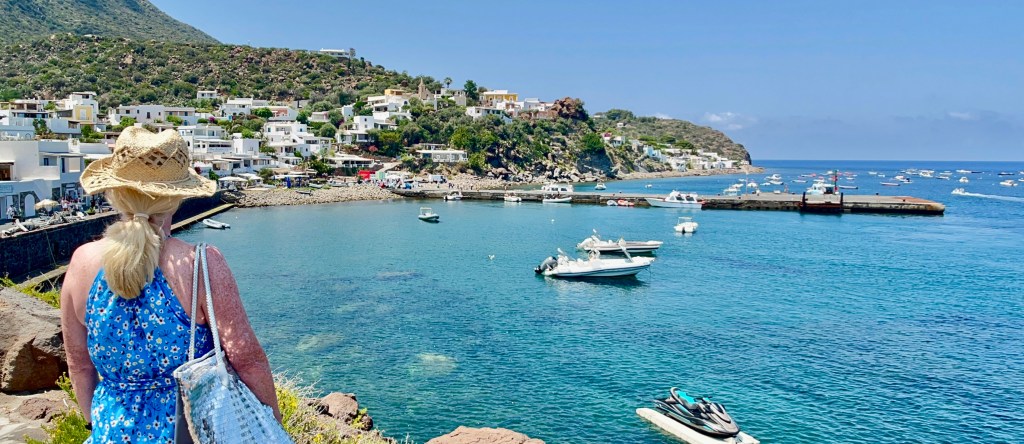
Upon our arrival on the island via boat, we disembarked at the bustling port of San Pietro. This port is the central hub for various events and is the vibrant heart of the island’s social life, making it an ideal starting point for exploring the local culture and community.
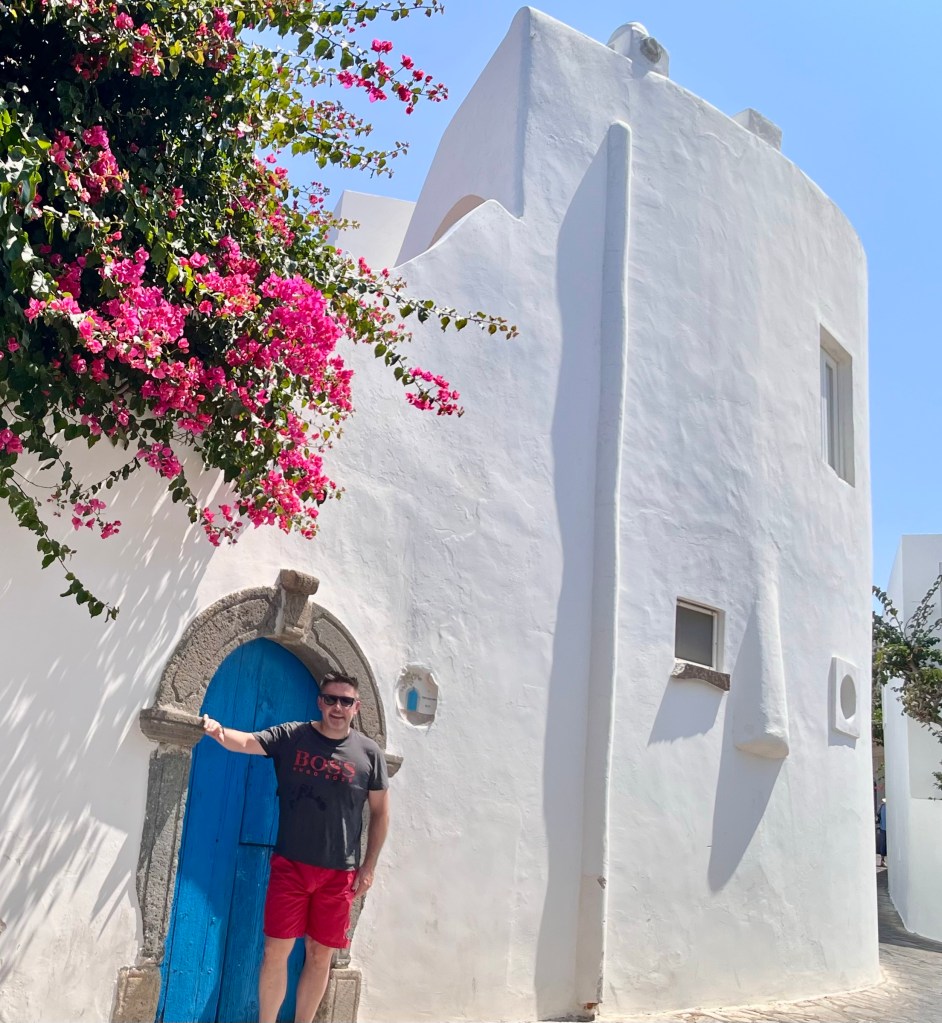
This district presents a unique and inviting ambience, highlighted by an array of buildings featuring white facades complemented by blue doors. This picturesque aesthetic recalls the charm of a Greek village, which is fitting given its historical roots as an ancient Greek colony.
The island features a charming array of narrow streets that create a delightful labyrinth in its heart. Beautiful gardens, terraces, bougainvillaea, and palm groves contribute significantly to its charm and appeal.
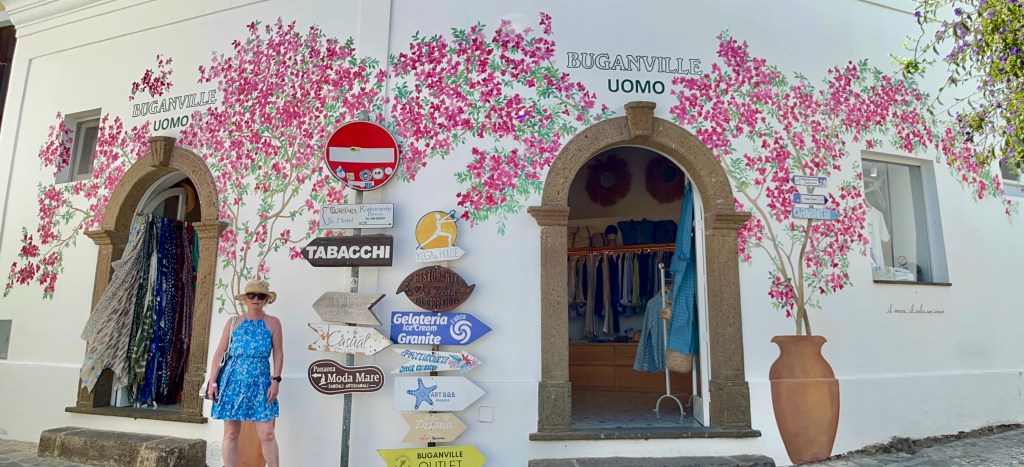
The town boasts a variety of upscale shops and fine dining restaurants, making it a vibrant destination for shopping and culinary experiences. Additionally, it hosts numerous sporting and cultural events each year, contributing to its lively community atmosphere.
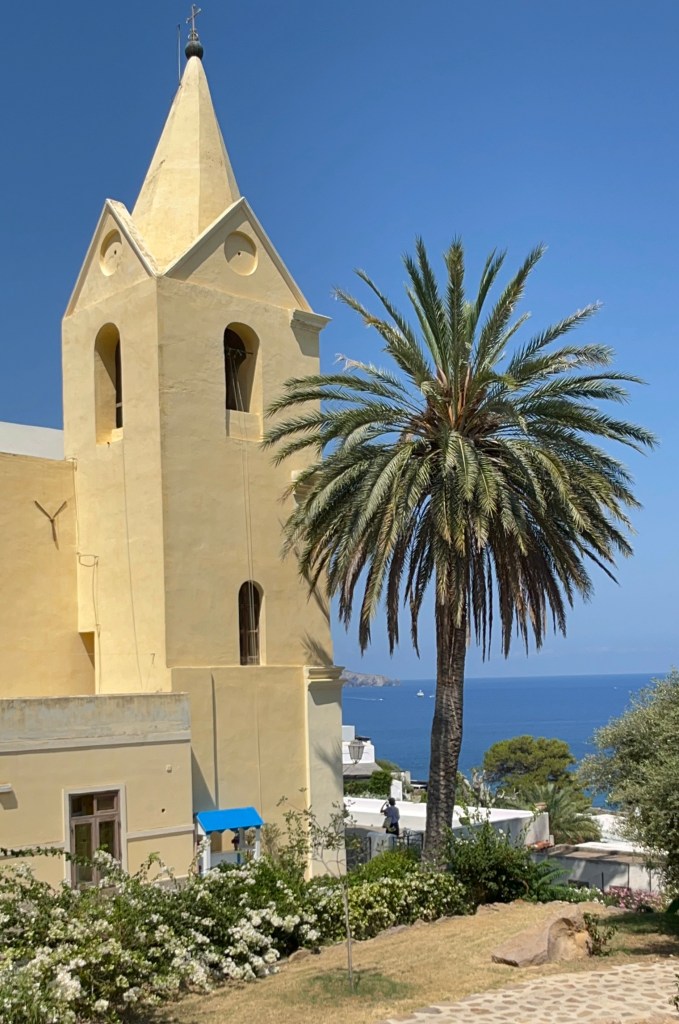
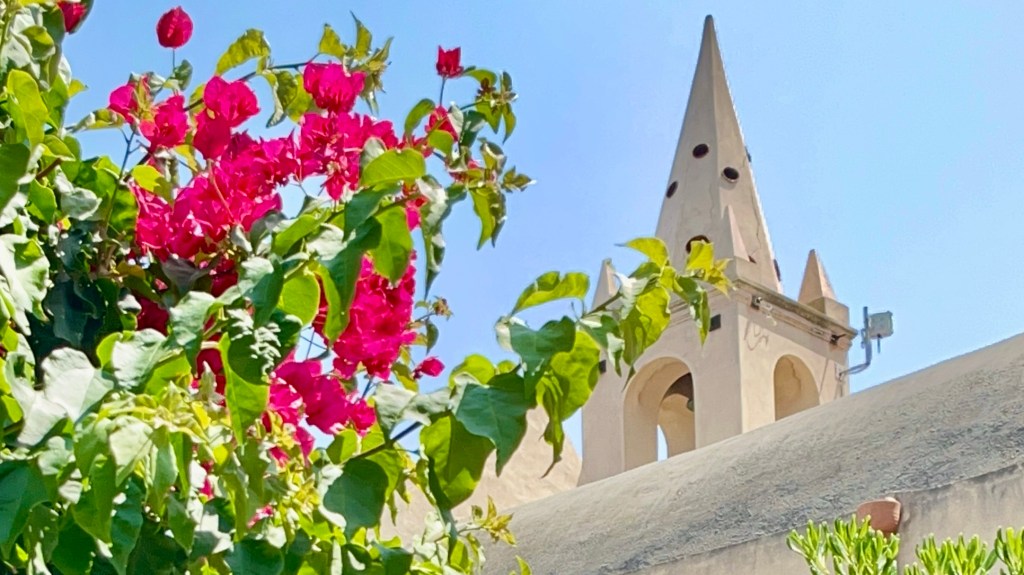
In the town, there is the Church of San Pietro, built in the 19th century. This church is dedicated to the patron saint of the island and fishermen. In days gone by, it symbolised the community’s hopes for abundant fishing and the safe return of local fishermen.
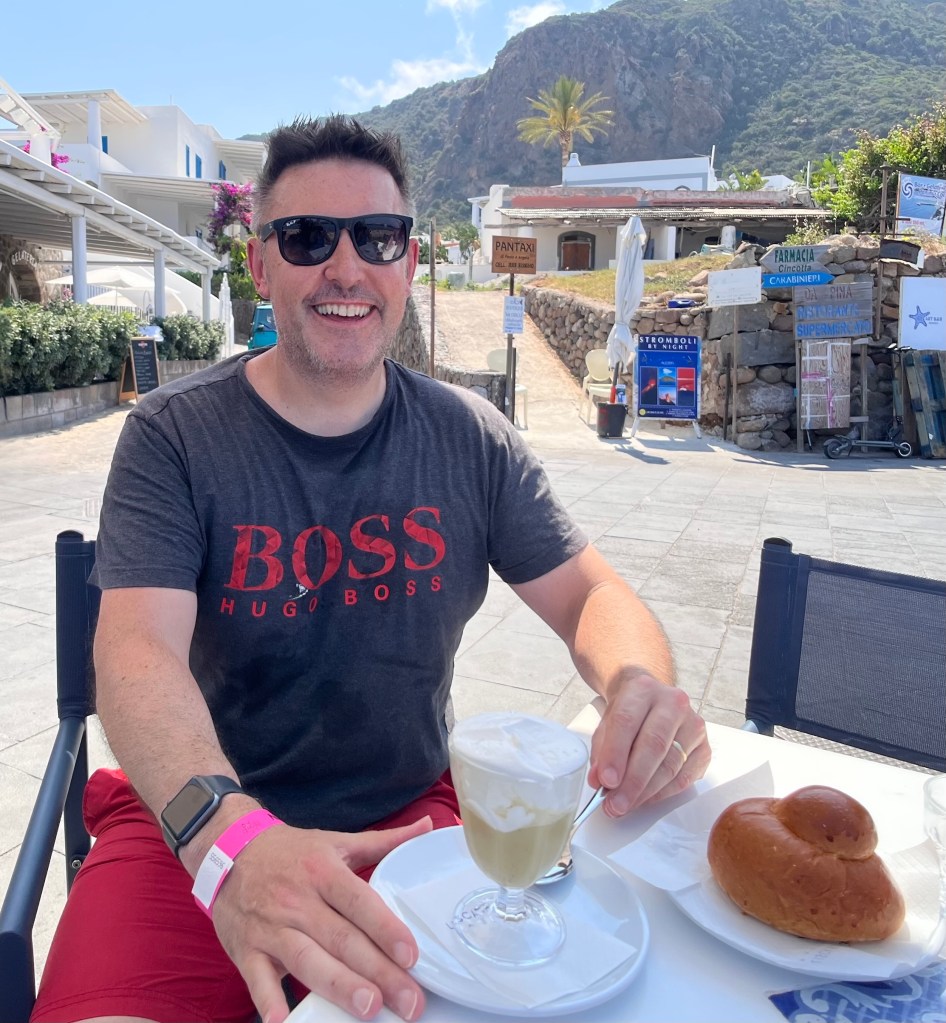
Panarea is known for its delicious bakeries. Traditional Sicilian foods like cannoli and arancino are available here. A favourite local dessert is granita, which is refreshing. I especially liked the pistachio flavour. It comes with whipped cream and a soft bun called brioche.
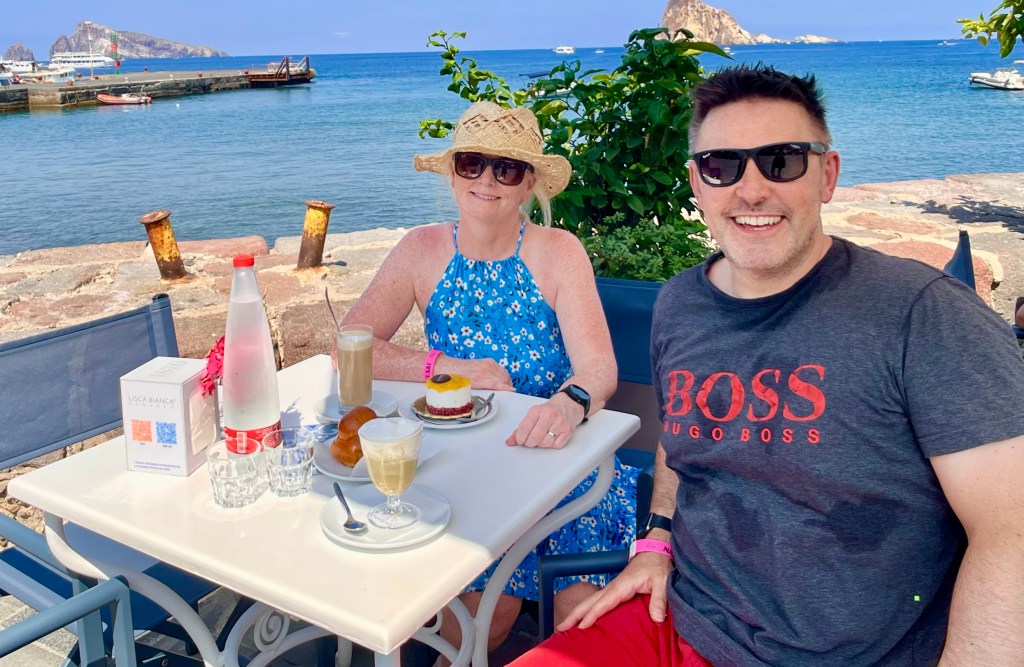
I am looking forward to enjoying alfresco dining at this waterfront café. It will be the perfect way to relax before the ferry arrives to take us to our next exciting island destination, Stromboli!
Stromboli
Stromboli is the northernmost island and contains Mount Stromboli, one of four active volcanoes in Italy. Important to vulcanology, Stromboli was named a UNESCO World Heritage Site in 2000
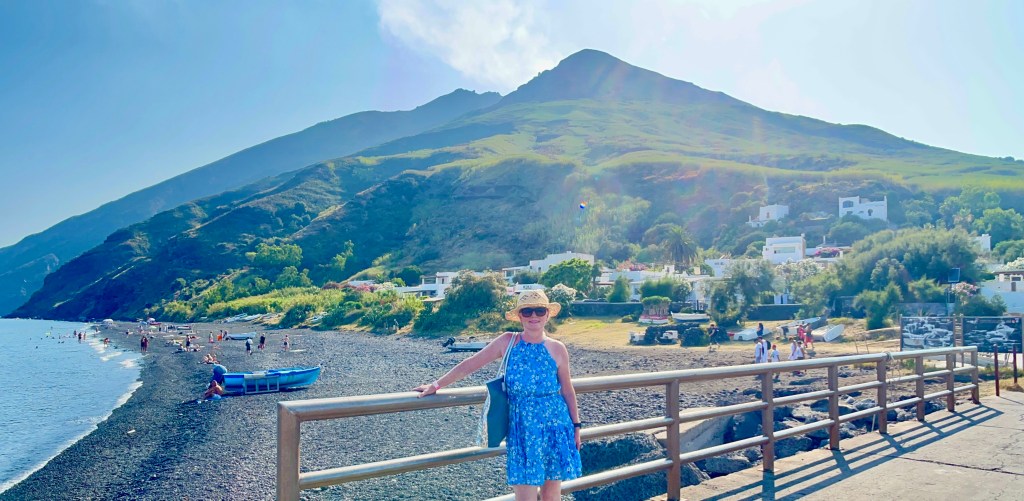
The island, covering an area of 4.9 square miles, represents the upper third of a volcano with a permanent population of around 500 residents. The volcano is highly active, exhibiting multiple eruptions over the years. Minor eruptions can often be seen from various island locations and the surrounding sea.
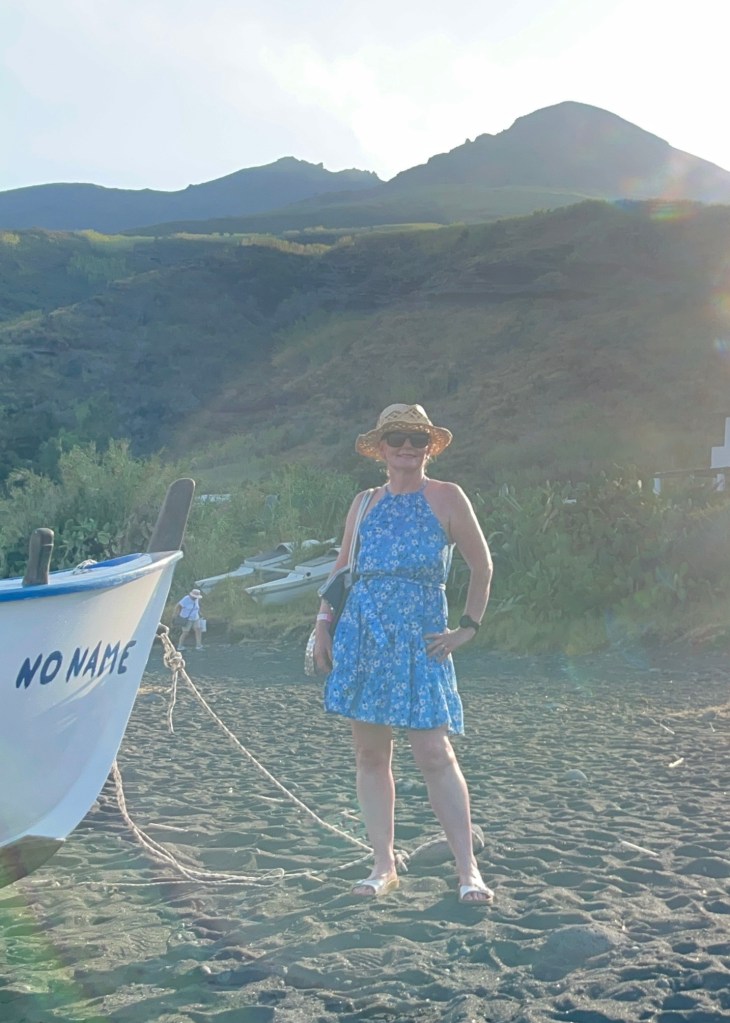
As we disembarked from the boat, the first thing that caught our attention was the towering volcano that overshadows the island. The volcano essentially constitutes the island, towering at 926 meters (3028 ft) as it rises dramatically from the Mediterranean Sea.
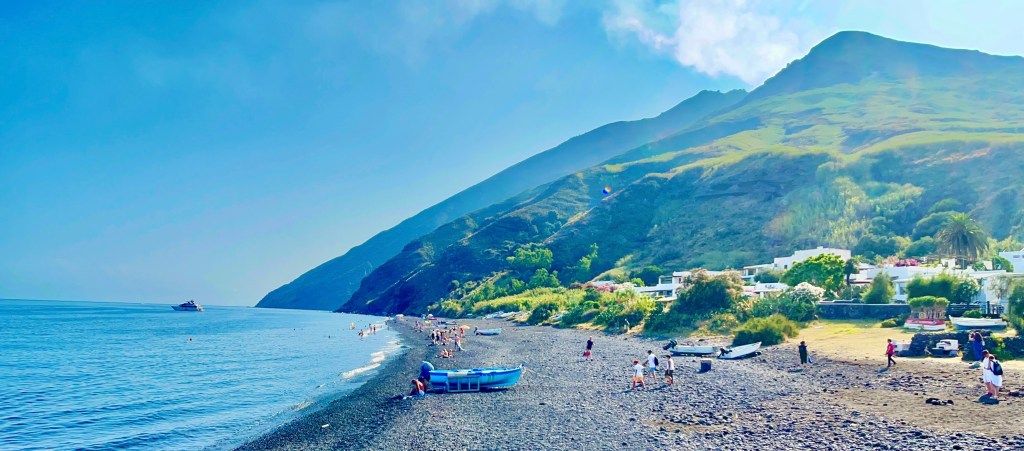
The beaches are popular because of their beautiful and unusual black sand, which is created by volcanic activity in the region. Visitors are often captivated by this unique feature.
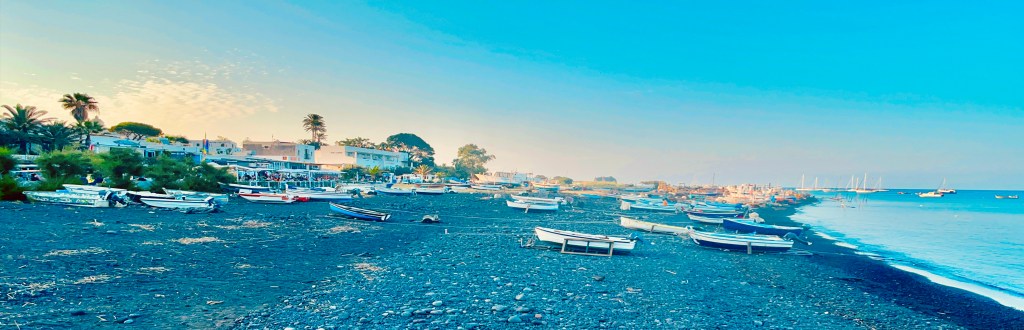
This distinctive feature sets them apart from traditional white sand beaches and creates a stunning contrast against the vibrant turquoise waters. Many of these beaches are surrounded by lush greenery, enhancing their natural beauty and offering picturesque views.
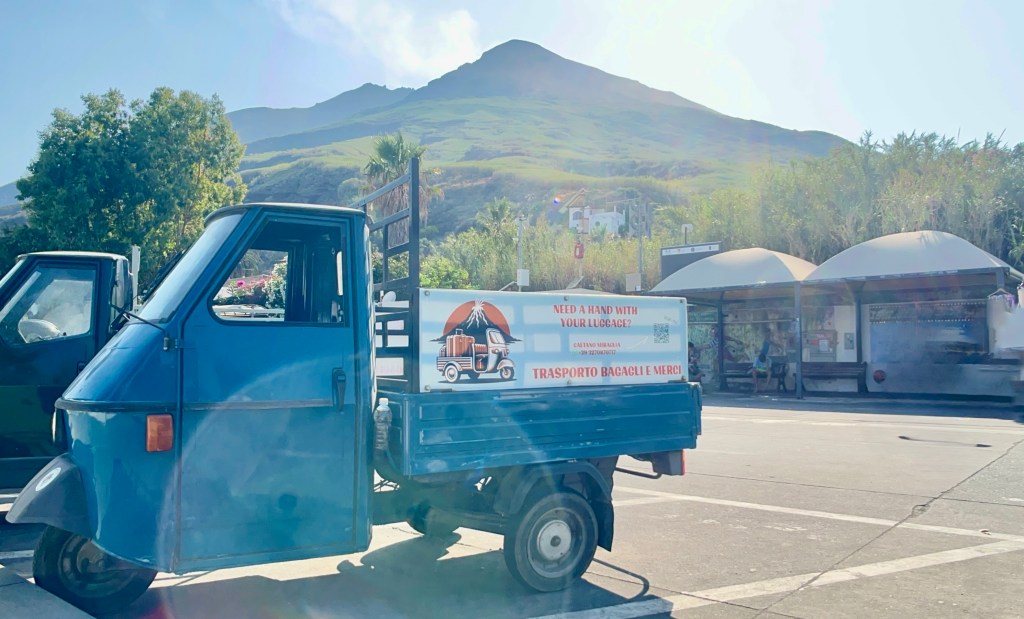
The small main road connecting the port to the town offers a tranquil atmosphere, reflecting the peaceful nature of the area. Its remote location contributes to a sense of calm and a slower pace of life, making it an ideal environment for those seeking a respite from the hustle and bustle of more crowded places.
In Stromboli, the narrow streets explain the absence of cars. Only motorcycles and the iconic Piaggio Ape move on the island.
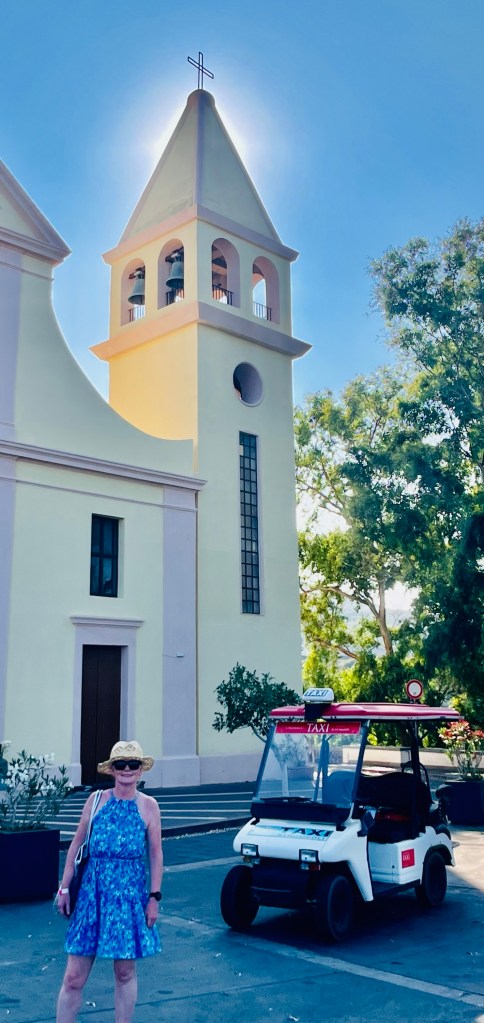
Stromboli is the main settlement on the island, characterised by its gleaming white buildings surrounding the Parrocchia Di San Vincenzo Ferrari church in the central square. We enjoyed excellent views of the volcano and the sea from this location, with the imposing church tower dominating the square.
As the sun dipped below the horizon, casting a warm glow over the landscape, we prepared to uncover Stromboli’s secrets from the water. After a day wandering its rugged paths, the promise of witnessing the island’s fiery eruptions at dusk filled us with excitement.
Stromboli is one of the most active volcanoes on the planet. Its explosive activity is so distinctive that it has been designated a particular type of eruption, known as “Strombolian,” which is used to describe similar phenomena observed in other volcanic systems.
Stromboli is characterised by its continuous activity, with eruptions occurring regularly at approximately 10 to 20-minute intervals. While these minor explosions are frequent, significant eruptions are relatively rare.
Little Stromboli
A prominent sea stack of volcanic rock is located just 2 miles from the island of Stromboli.
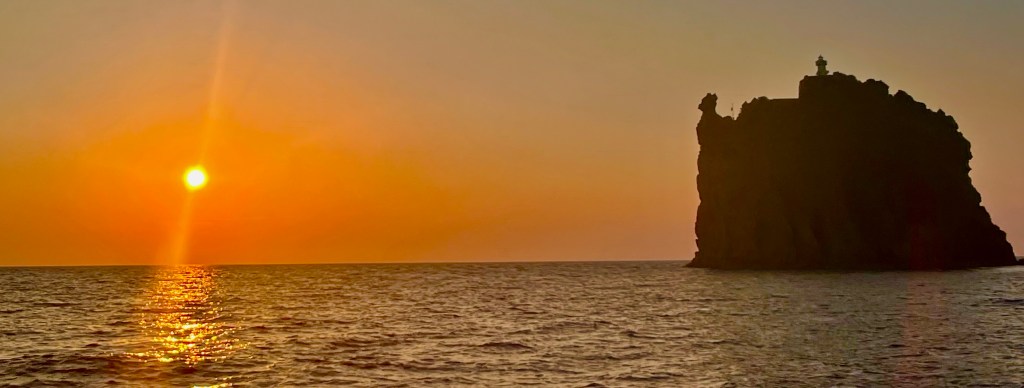
Towering like a castle above the waves, the rocky sea stack is all that’s left of an ancient volcano. Atop this natural formation stands a charming white lighthouse, watching over the waters. As we returned to the port, this stunning sight was our final glimpse of the area.
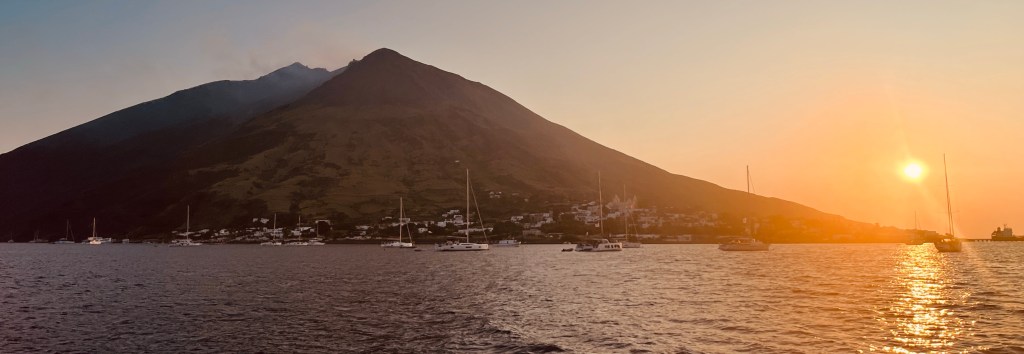
It had been a long yet fulfilling day, marked by the numerous experiences and sights we encountered. Life truly offers valuable opportunities for living and meaningful travel, and I feel fortunate to have embraced both on this wonderful day.

 We were born to do more than go to work, pay bills and die. See the world while you are alive and kicking