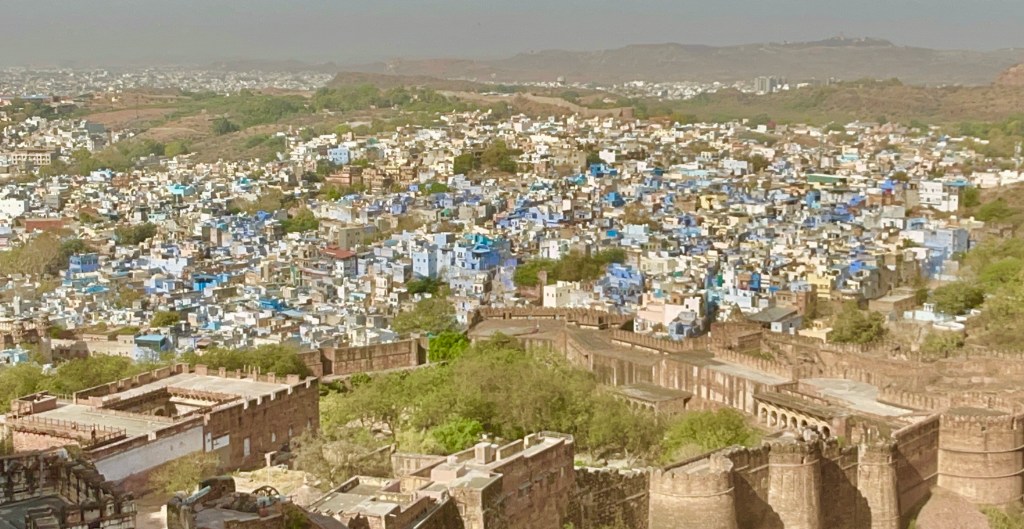
In the shadow of Mehrangarth Fort, Jodhpur unfolds in a cluster of medieval streets lined with boxy blue houses.
Most people will visit the city due to its impressive fort, though there is plenty to justify a longer visit. We stayed for two nights most of the first day taken up by driving from Jaipur. Not nearly enough time to explore this vibrant city.
The second-largest city in Rajasthan. It was historically one of the most significant towns in the region as it was the biggest princely seat in Rajasthan. Today it has a population of 1.3 million.
It is called the Blue City after the colour wash of its old townhouses, which are huddled below the imposing Mehrangarth Fort. Also called the Gateway to Thar as it is on the periphery of the Thar desert.
On one of the trips, we were privileged to be part of a community-based travel initiative. Visting and supporting local people and participating in traditional Rajasthani hospitality.
Our visit was not nearly long enough to see all that Jodhpur had to offer. We managed to experience some of the main sights of this vibrant city.
Mehrangath Fort
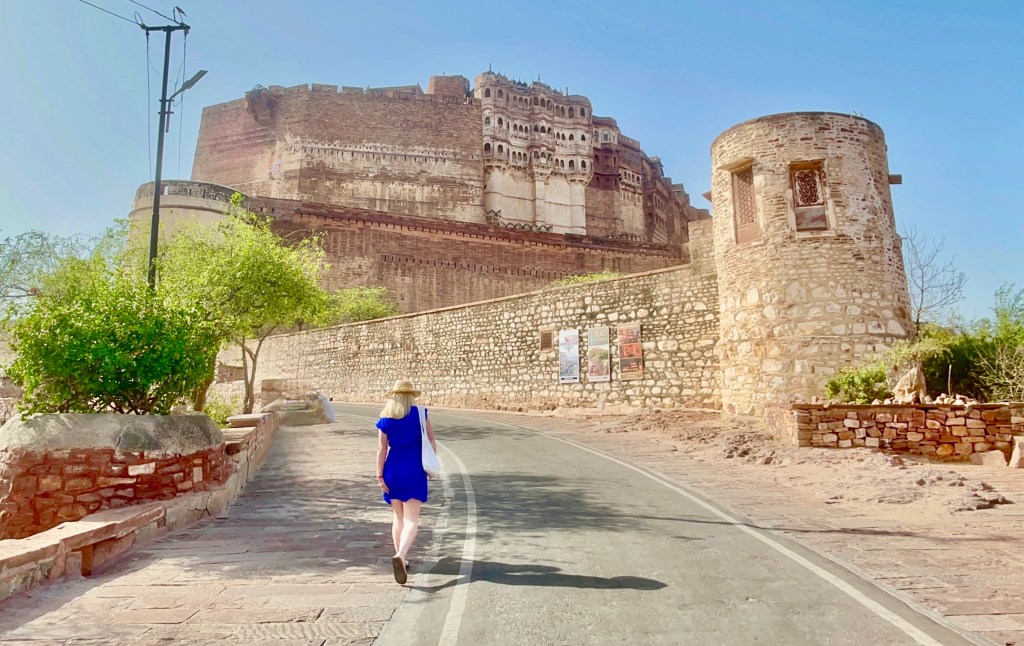
One of the largest and most impressive forts of India it stands on a hill overlooking Jodhpur. This is unlike a lot of India’s heritage buildings is still privately owned.

It was built in 1459 and has been home to the Rathore rulers for centuries. It has many palaces, temples, galleries and museums which display the royal heritage and culture of Jodphur.
Standing 400 feet (122 meters) above the city, the complex is huge spanning 1200 acres (486 hectares) providing us from its citidal unrestricted panoramic views of the city below.
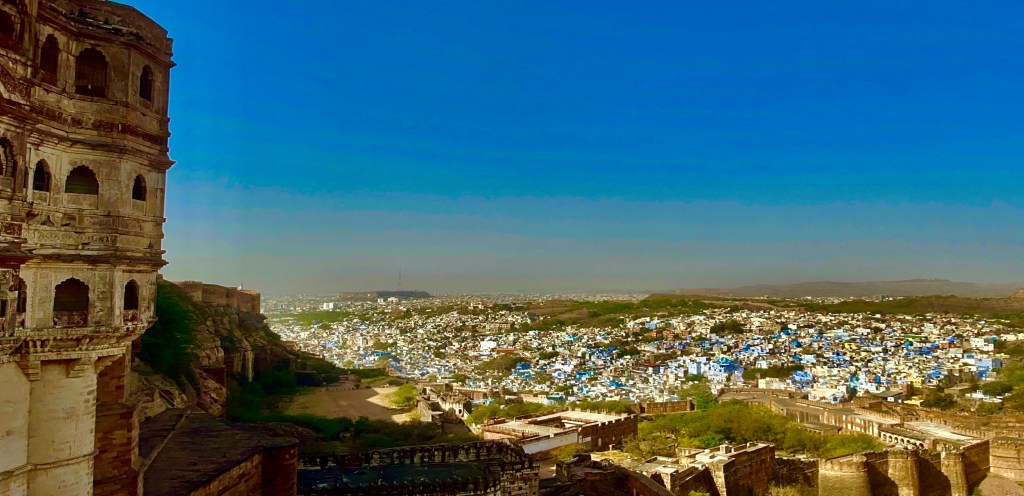
A cluster of blue-tinted houses and an intricate labyrinth of alleys, some of these houses as old as the fort itself and one that earned Jodohur its famous sobriquet- the blue city.
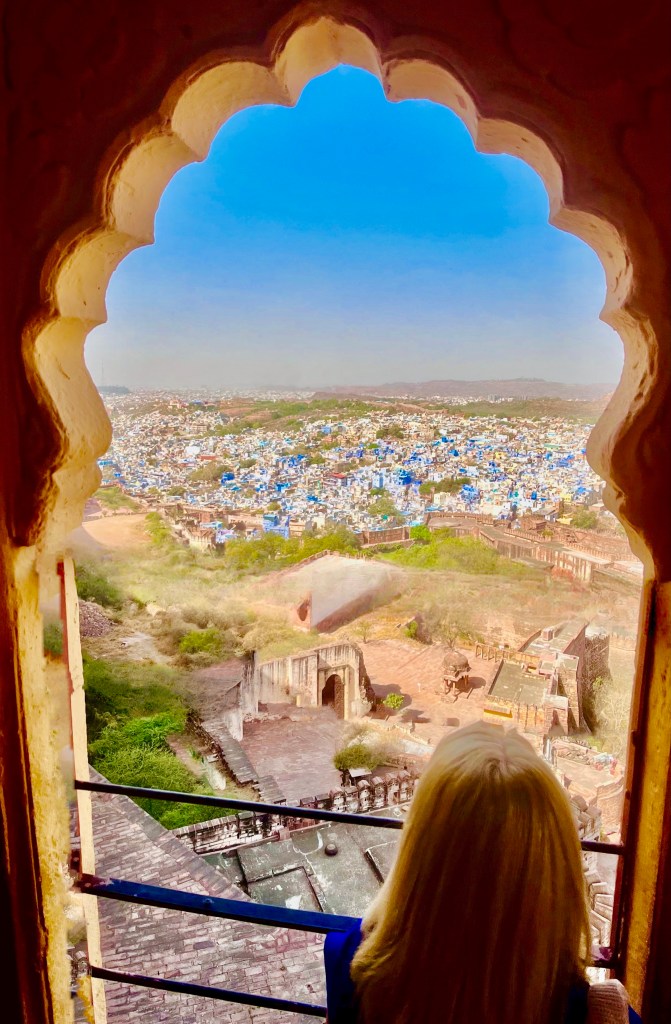
The building’s ownership is rather unique, it is run by a trust led by a managing trustee Maharaja Gajsingh who owns the building. It is now an award-winning and internationally acclaimed centre of scholarship and museology.

It provides employment for over 300 local people directly and indirectly to musicians, artisans, craftspeople and tradespeople. Supporting the local community and keeping culture and history relevant through its ongoing guardianship of the property.
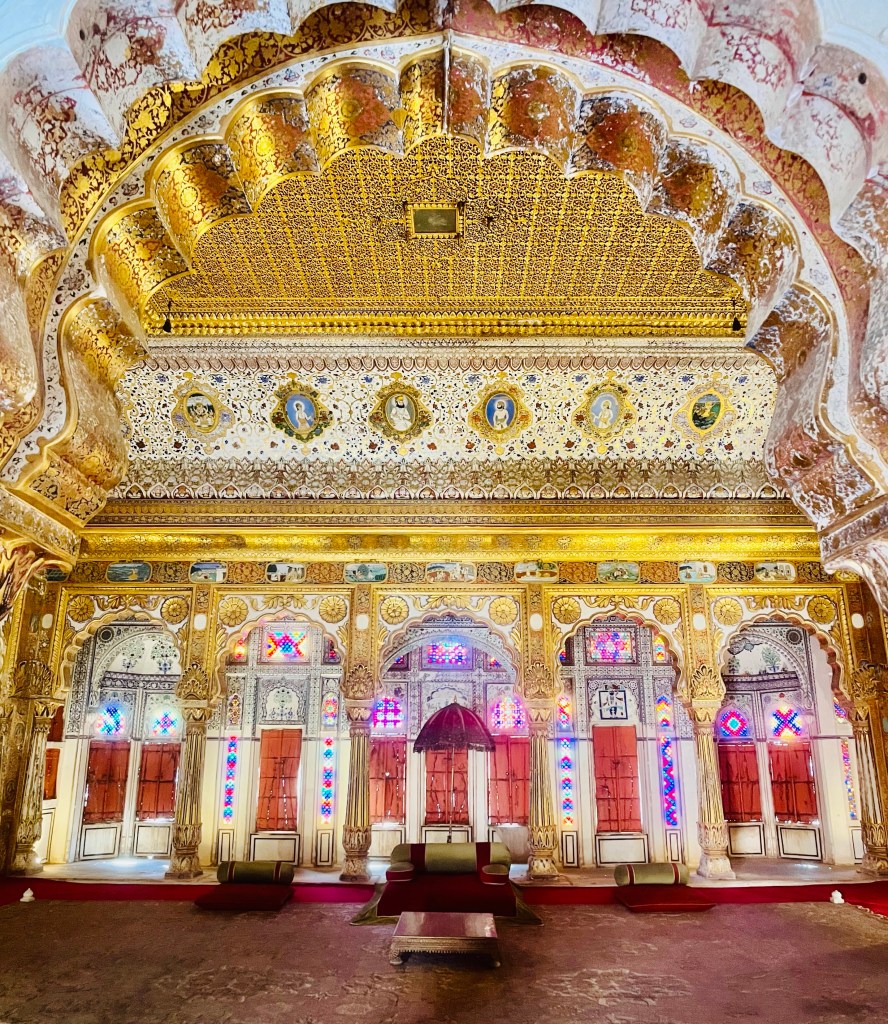
There is a plenitude of things to see and do while visiting the fort. You could quite easily spend they day there and still not do it justice.
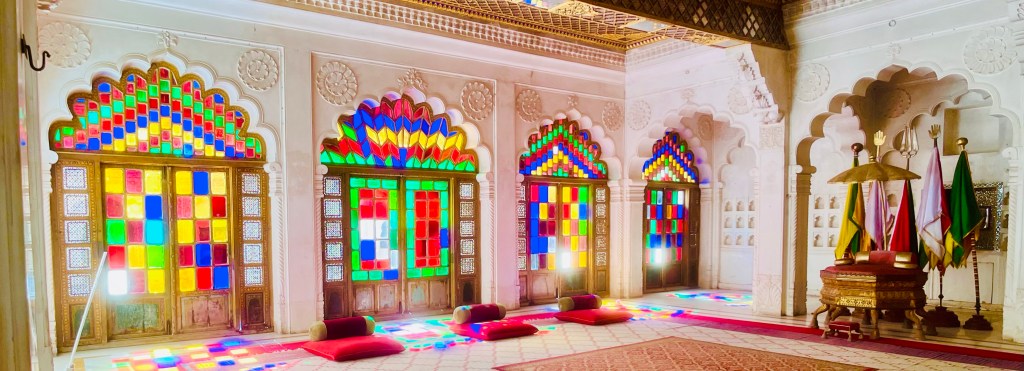
Mehrangarth Fort can be best summarised as a living monument of half a millennium of history and artistry entangled with valour sacrifice and secrets.
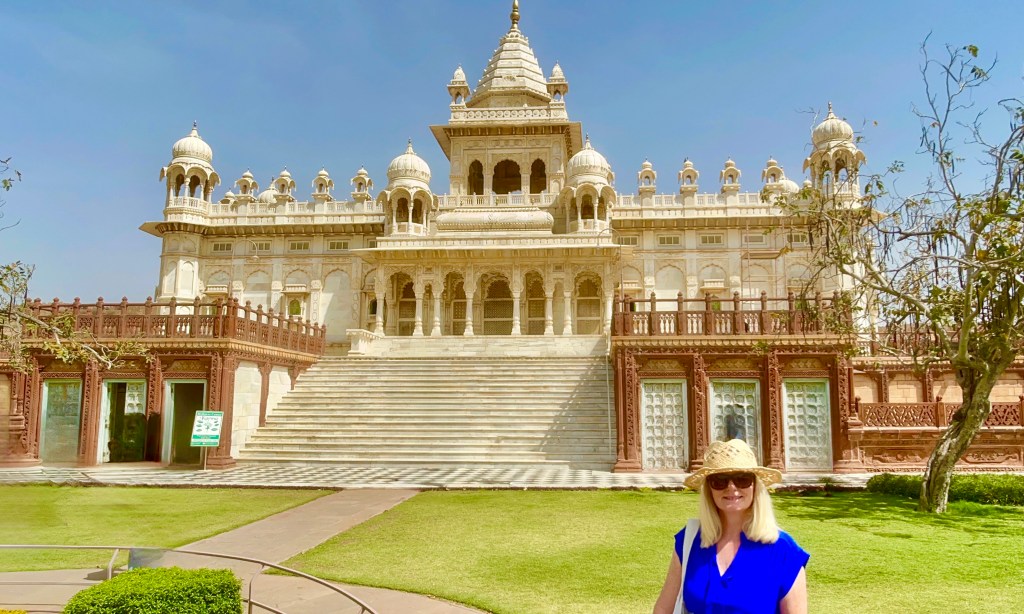
Jaswant Thada
A milky white marble memorial to Maharaja Jaswant Singh II.
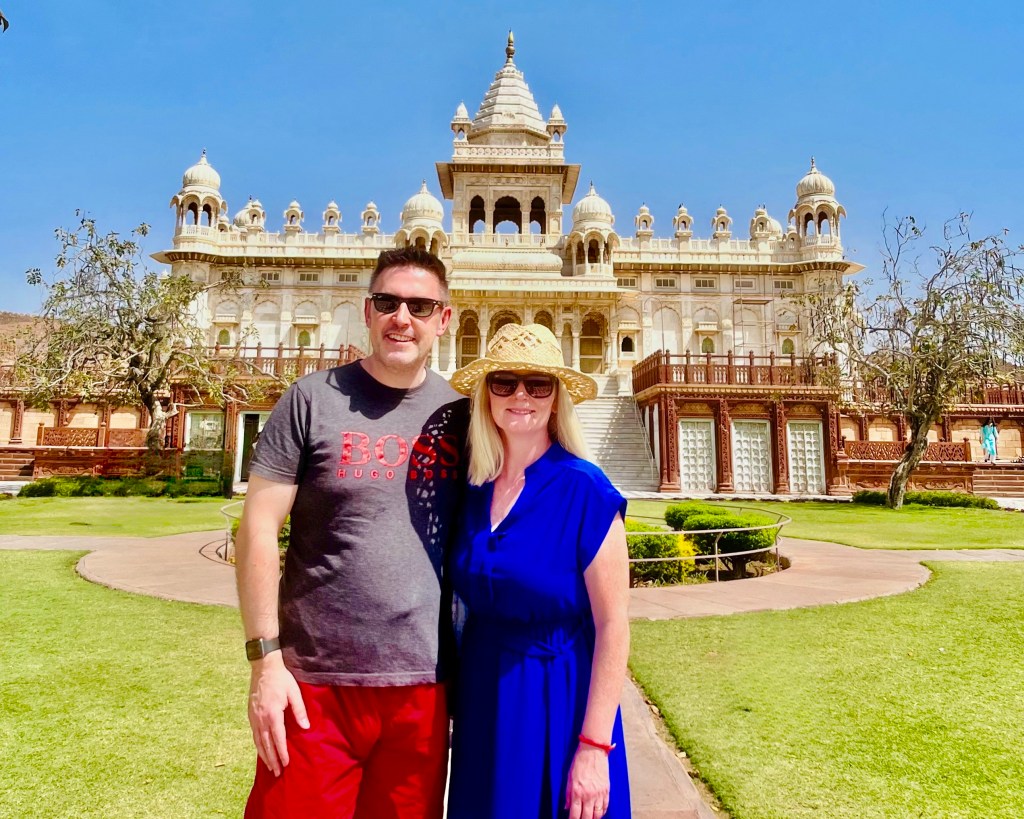
A very distinctive and serene destination far removed from the frenzied pace of the nearby city. This majestic white marble mausoleum enchants with its beauty and elegance.
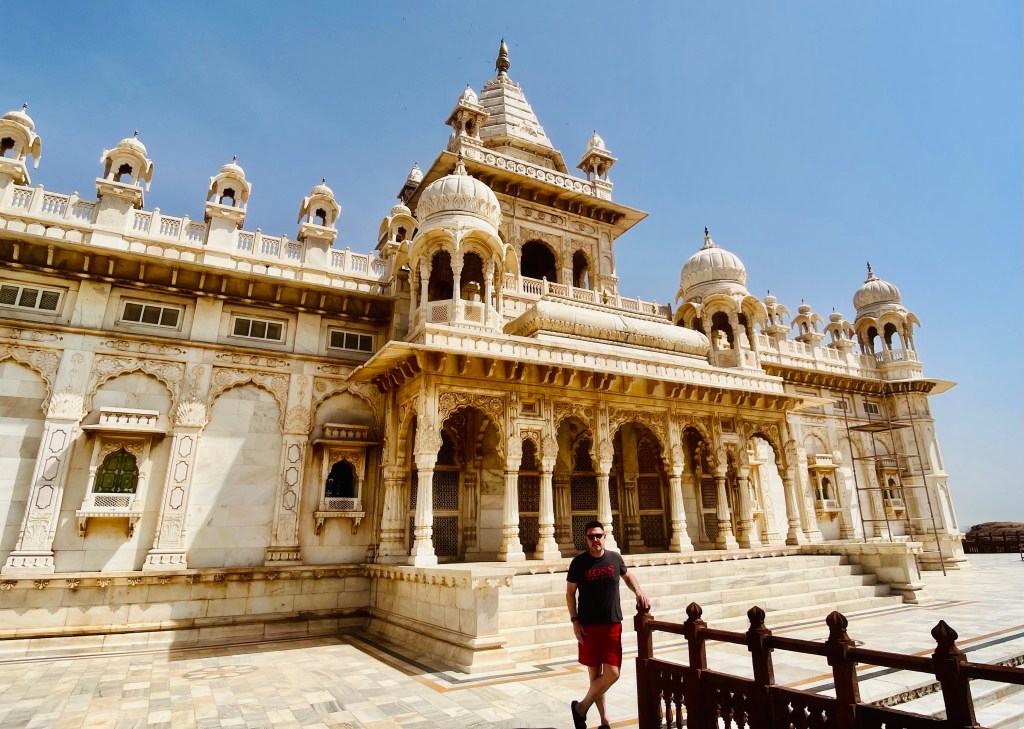
known locally as the Taj Mahal of Mawar due to a passing resemblance to the original in Agra. It is a masterpiece of architecture and showcases the skill and craftsmanship of local artisans.
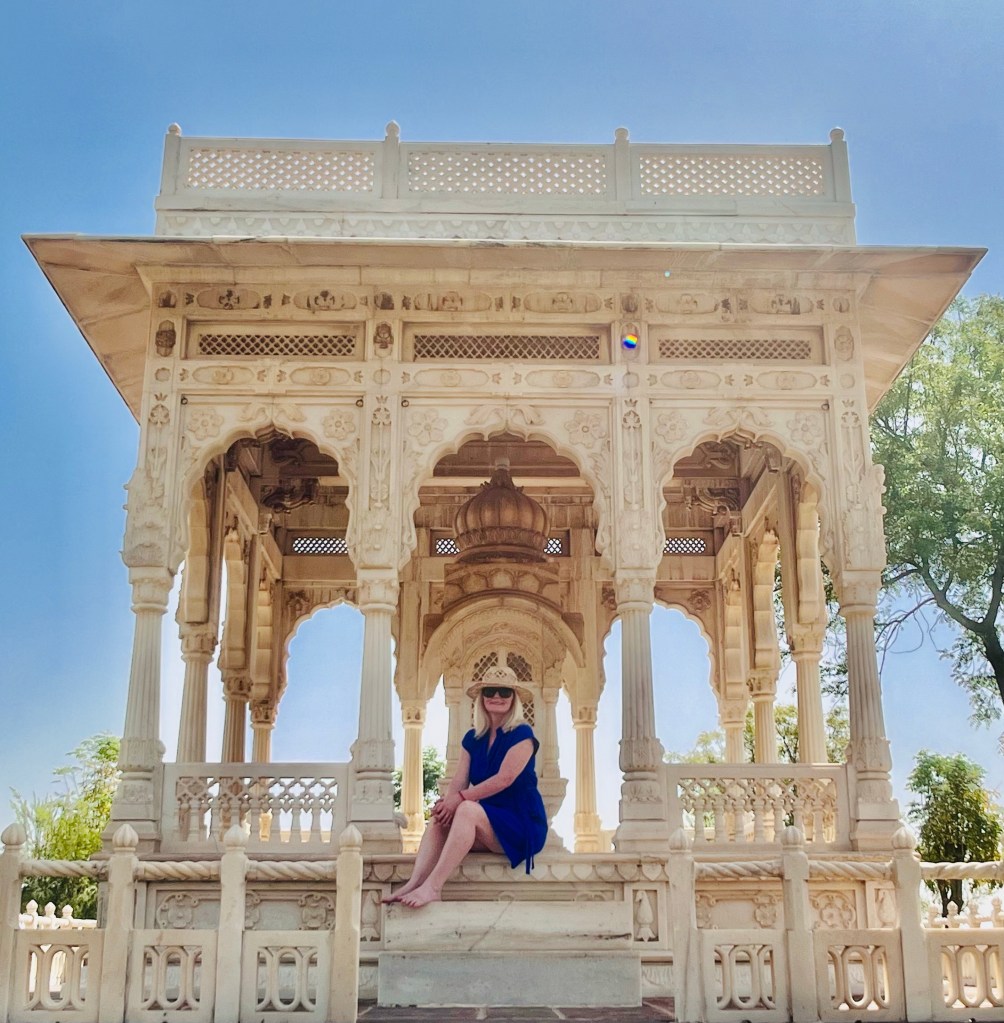
Jaswant Thada has spacious and well-maintained grounds. We found three cenotaphs there which are topped by carved gazebos. This has been built in a style similar to a Hindu Temple
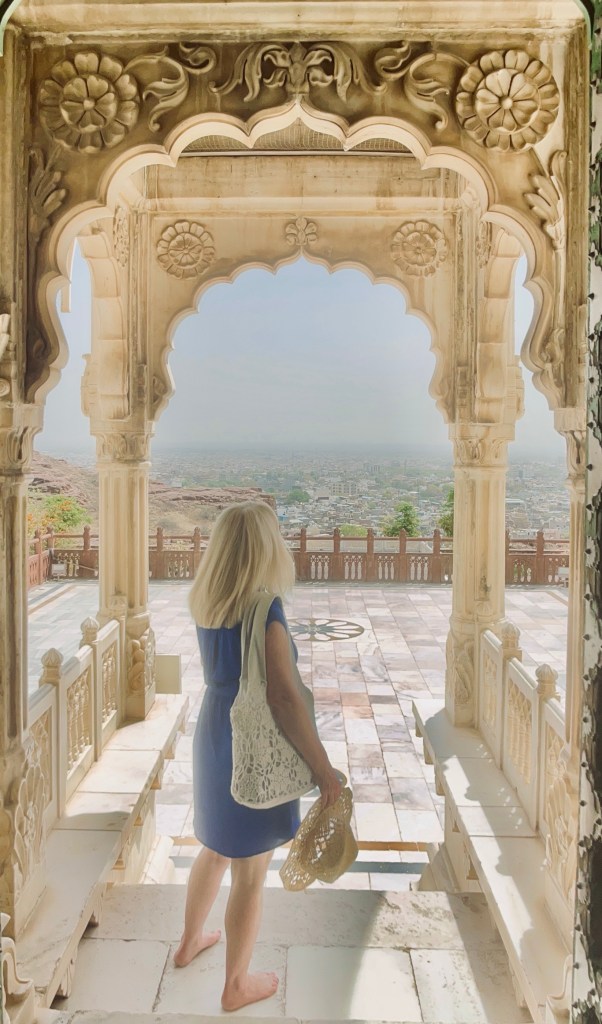
Jaswant Thada was certainly one of the most photogenic locations in Jodphur. I am not sheepish when it comes to taking a photograph, but photograph opportunities were endless, pictures of the architecture, its glow during sunset, panoramic shots and pictures of people with Jaswant Thada as a backdrop.
Jaswant Thada has a tradition of hosting local musicians who perform as you enter the complex. They performed with traditional instruments, creating a lively and festive atmosphere to our visit.

Mehrangarth Fort can be found close by rising perpendicular from a rocky hill. I got a fantastic panoramic view of it from Jaswant Thada gardens. An outstanding visit in conjunction with Jaswant Thada.
Ghanta Ghar (clock tower)
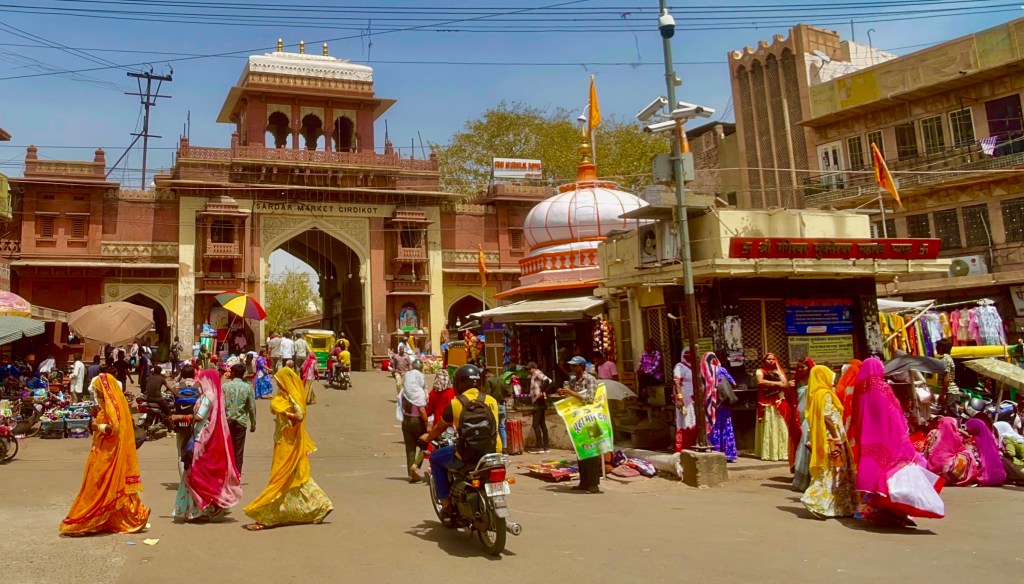
A century-old clock tower. This familiar city landmark is surrounded by the sights and sounds of the Sadar market.
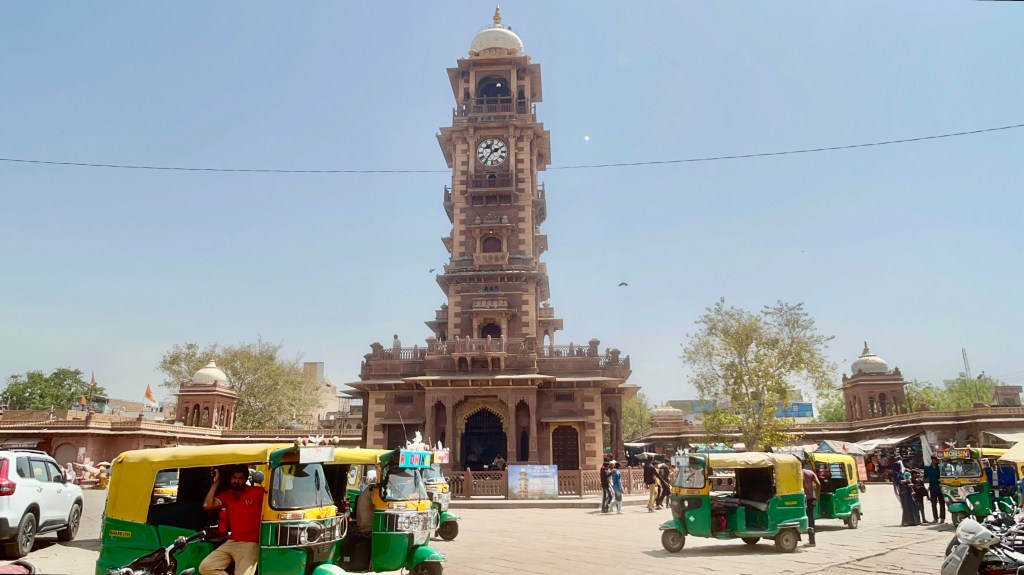
I have a great affinity for clocks. Coming from a town famous for its town clock. This very impressive clock is believed to be the sole source of tracking time in earlier times.

Today the Clock Tower stands as a living testament to the city’s rich history and culture. Built by Maharaja Sadar Singh in the 19th century. The structure is adorned with exquisite architectural details and exudes a majestic charm and certainly captiviated my gaze.
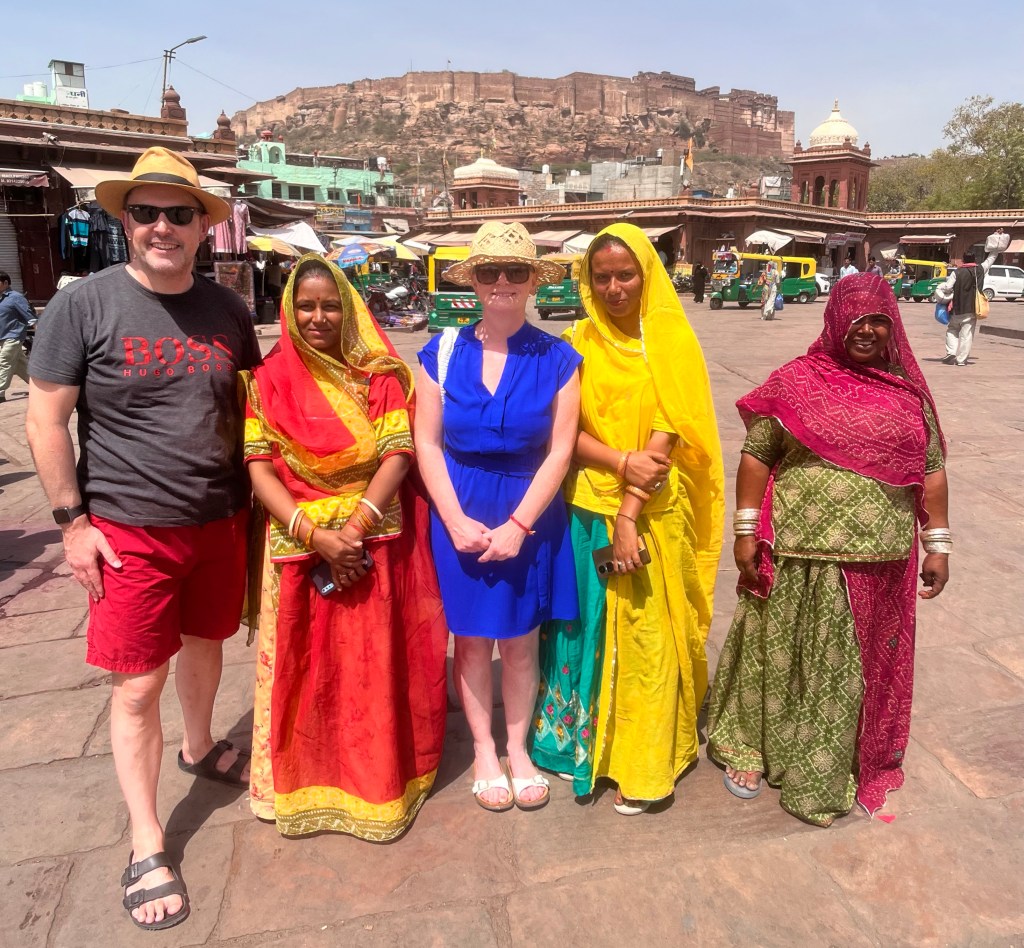
To this day it is still the bustling commercial hub of Jodhpur’s old town and a gathering place for locals and visitors alike. Surrounded by crowded alleyways and the bustling Sadar market.
Jodhpur Old town
Full of history, narrow alleyways and tightly packed homes.

The old town is located at the base of Mehrangarh Fort. This area is known for its many historical buildings and landmarks. Including the Clock Tower and Sardar.
Exploring the old town on a walking tour with a local guide was certainly an experience, mingling with local residents going about their everyday routines, and persistent vendors hawking traditional crafts spilling out from the shop fronts.
As well as discovering the colourful and bustling markets it was a chance to view the heritage of one of the oldest neighbourhoods of Jodhpur admiring the charming architecture, intricate frescoes and classic houses.
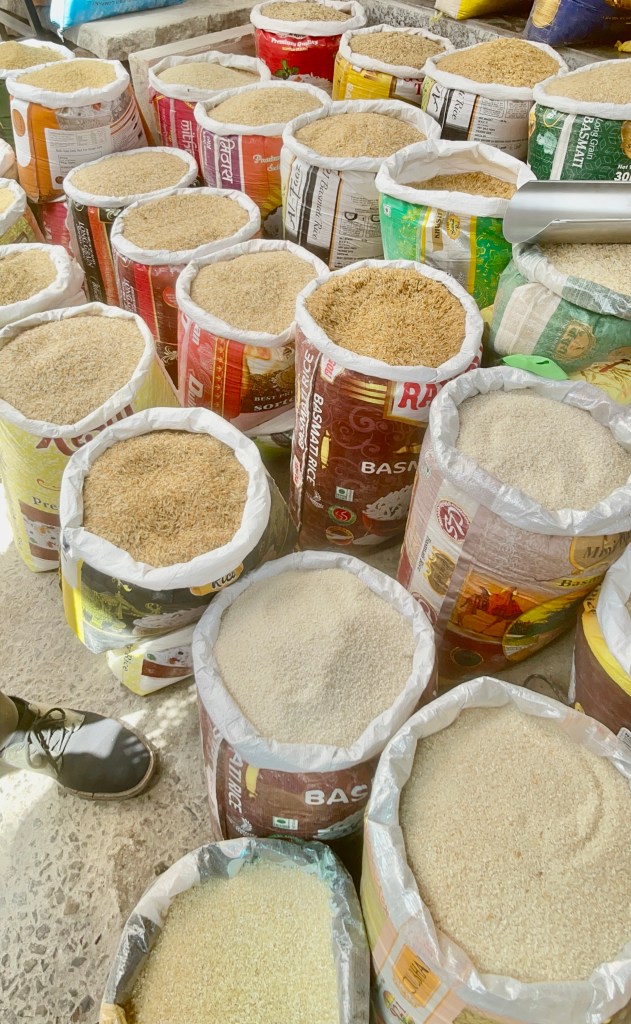
It is said within the old town that there are over 6000 shops selling all manner of goods. It’s certainly a good place to search for souvenirs if you wish. Just be equipped to barter and run the gauntlet of all the hawkers selling you comparable items all at their best possible price 😆😆😆
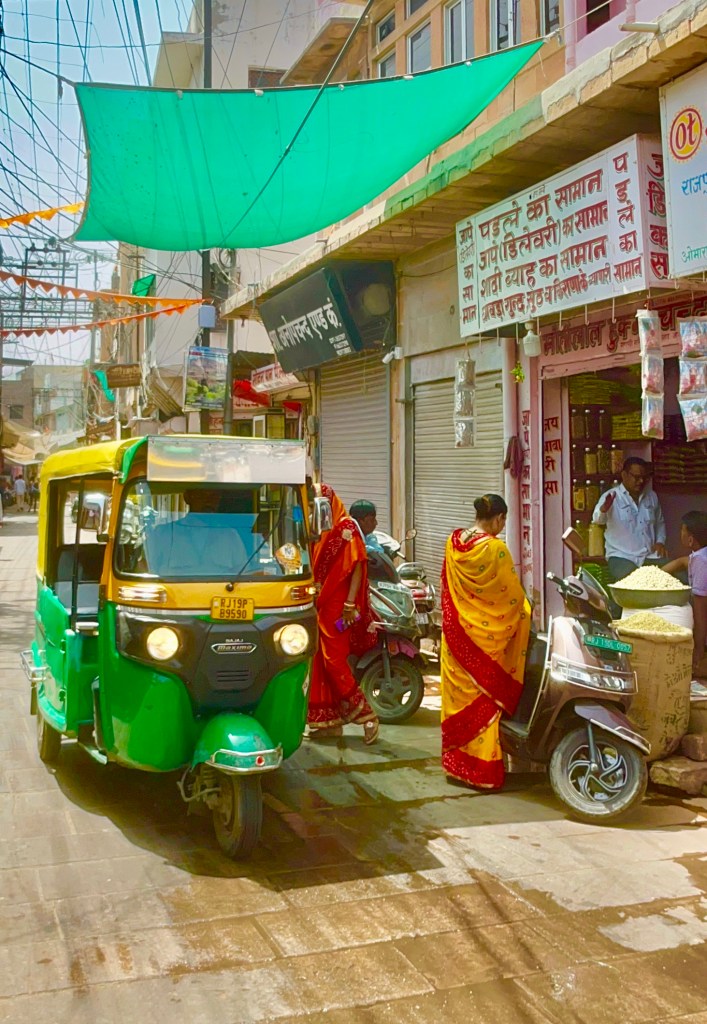
Don’t be put off as this is all part of the culture, negotiate with humour and good grace. It can be a valuable travel experience, as you immerse yourself in the market’s lively atmosphere, filled with the aroma of spices and my wife’s melodic haggling, engaging in one of Jodhpur’s authentic experiences.
Jodhpur rural district

The secret to any destination is its vibrant and diversified culture which strikes a chord with every travel-loving soul. Venturing into the unknown can be a big learning curve, but it is a part of discovering a destination and makes exploring a place a completely valuable travel experience.
Jodhpur’s many neighbouring villages certainly inspire some of the culture and character of the area. An intriguing visual journey which offers a unique insight into the rural village’s rich culture and natural beauty.
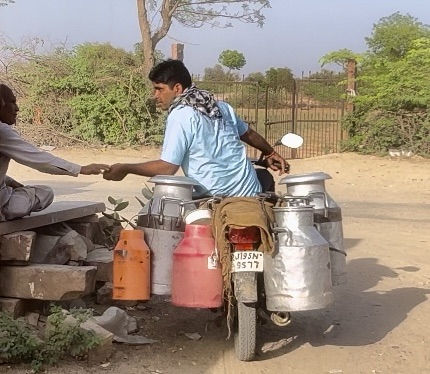
We were lucky enough to participate in a Jodhpur village safari, a tour that helped us fully understand and appreciate the ethos and took us away from the usual tourist trail and deep into the heartland of rural Rajasthan.
Village safari
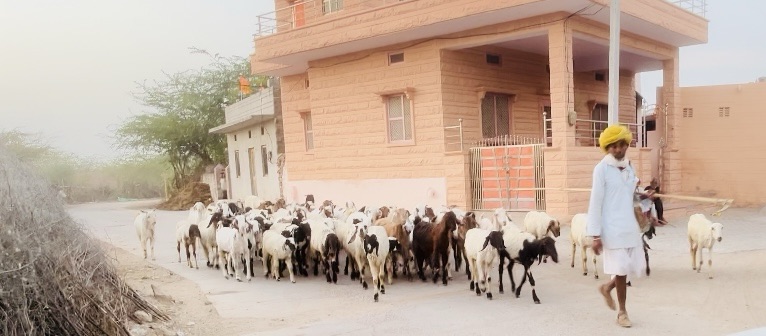
Along with seeing some wildlife in its natural habitat we seen sheep, goat and even camal herders in the rural community
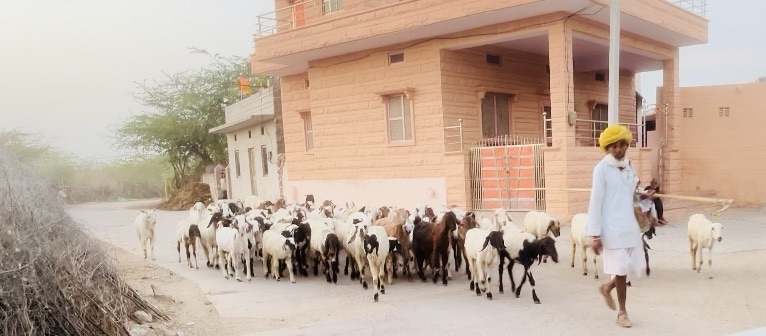
We certainly didn’t know what we would see next. Camel herders and goat herders in traditional attire go about their daily routines with their animals, still leading a very nomadic lifestyle.
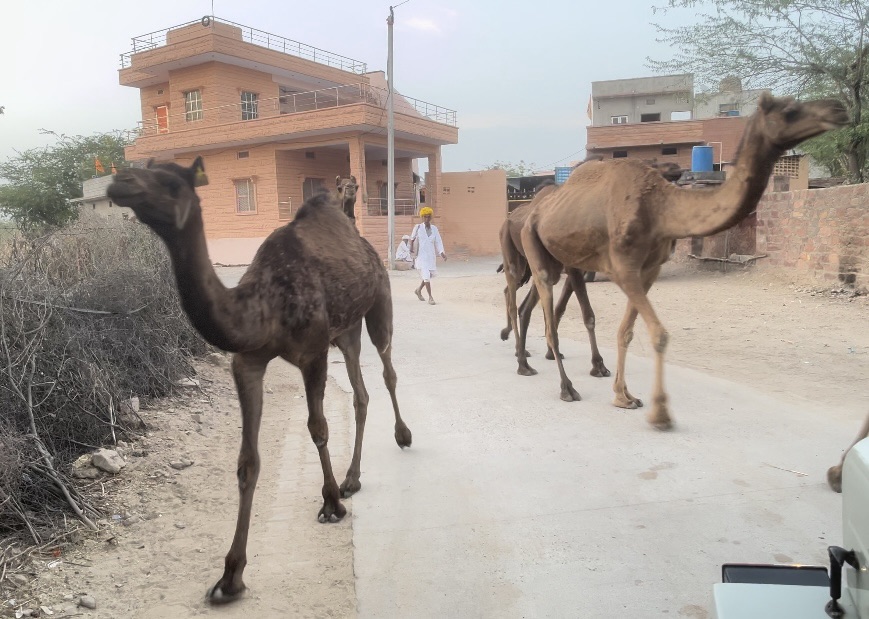
Although India is becoming an economic powerhouse having the 6th-largest economy in the world, it still has a very strong rural feel with 3/4 of the population living in rural areas. Farming and shepherding are still a large part of the economy in Jodhpur along with handicrafts and tourism.
Potters village
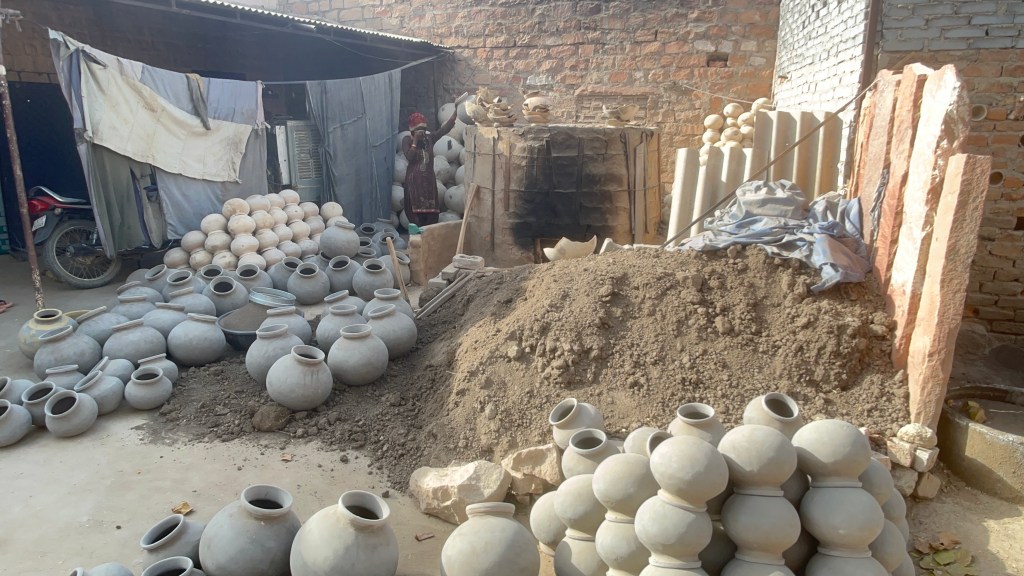
During our time in the area, we noticed swarms of freshly made pots. We were better able to understand Jodhpur more intimately by learning more about its arts and crafts.
The area is well-known for pottery and we saw many different examples of this during our time in the villages. We were able to participate in pottery making first-hand
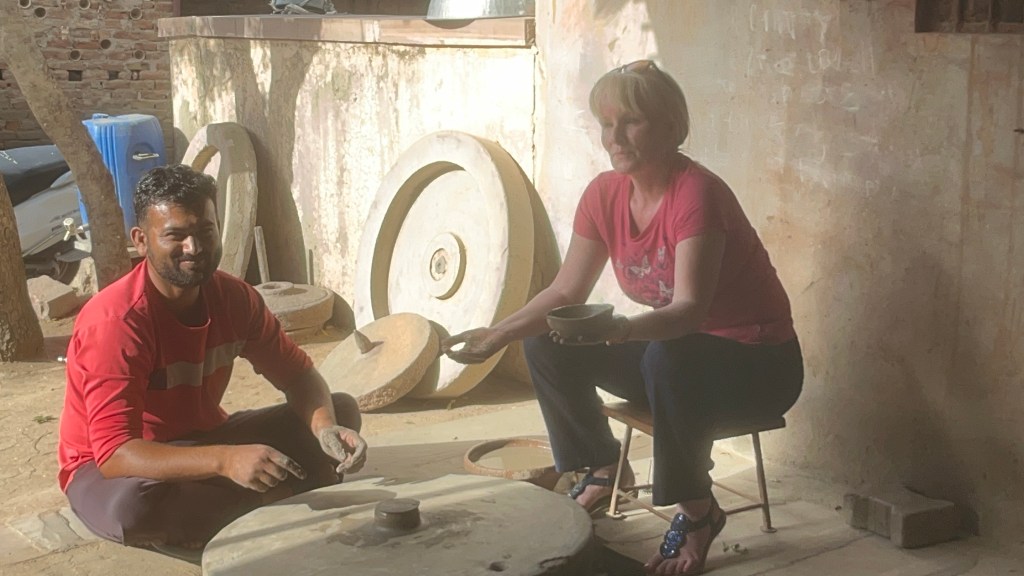
After witnessing the resident potter plying his trade my wife was invited to participate in making a cup. Let’s just say I don’t think she has the full skill set for this vocation.
Bishnoi Village
Bishnoi is a Hindu religion that follows 29 rules to become appreciative and worthy confidants of nature. The people live off nature and protect nature.
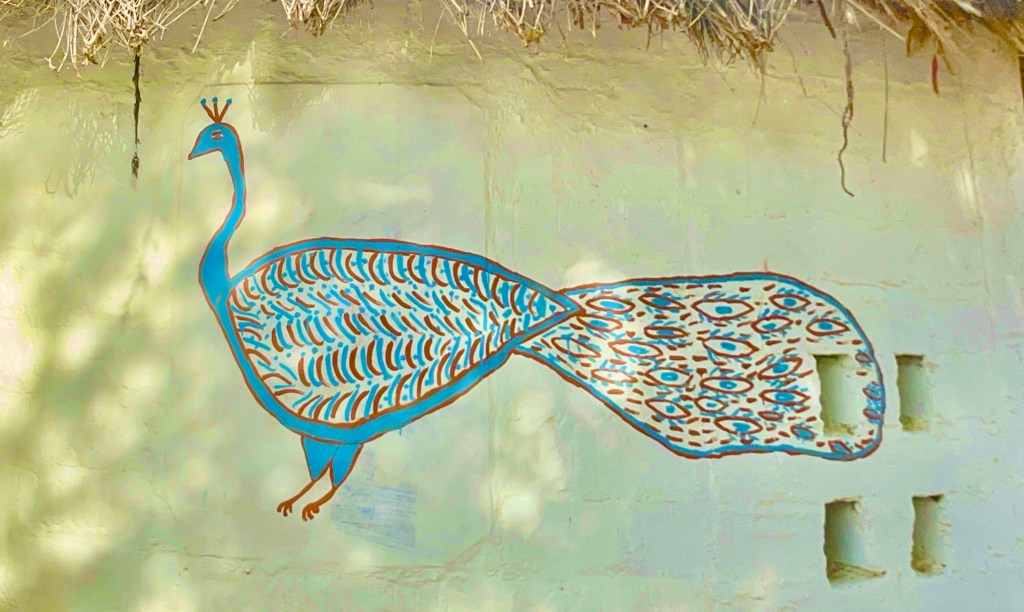
They are the guardians of nature and are very passionate about the environment. They have created a symbiotic environment in their locale where animals roam freely. They have a special affinity for deer and Bishnoi women have been known to suckle orphaned foals.
In fact, people are so committed to the environment that back in 1730 over 360 people women and children included, gave their lives to save a sacred Khejri tree from falling, many years before environmental activism was even thought of.
The Bishnoi people share their crops with animals and work with wood only after a tree has fallen. The things we would class as necessities would be classed as luxuries. However, things are changing with electricity, and mobile phones evident on our visit, although the basic way of life has remained largely the same.
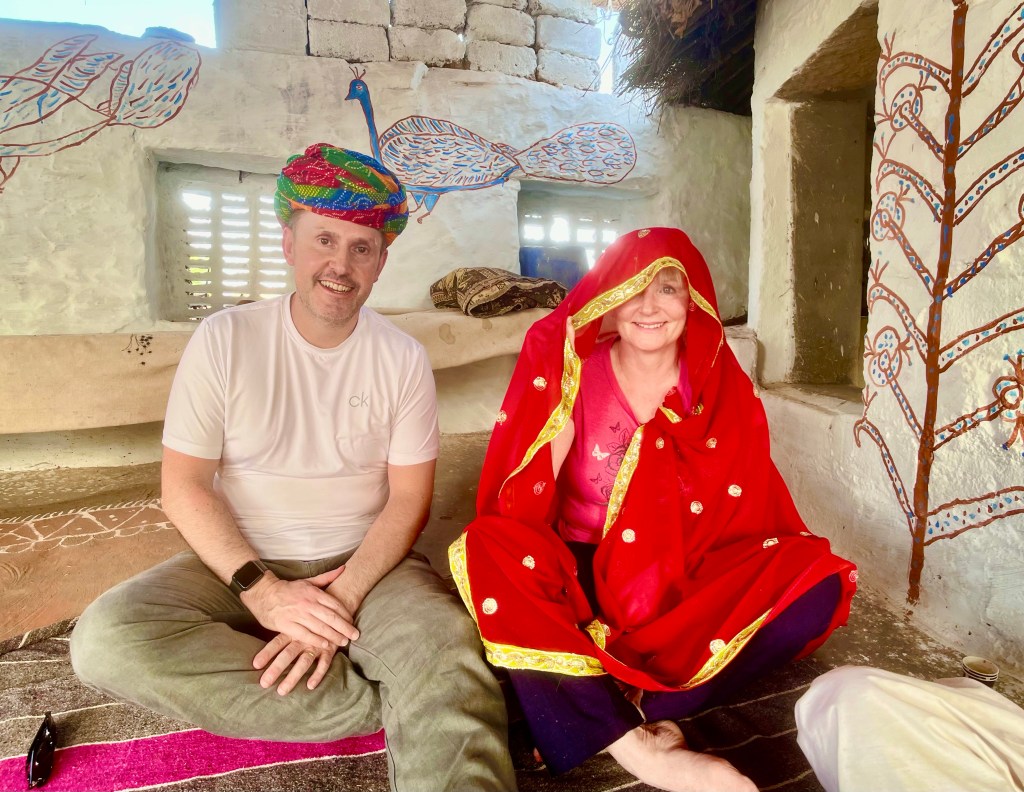
We were kindly invited into the homes of the Bishnoi people and were invited to wear traditional clothing, offering us a unique opportunity to interact and to better understand their way of life.
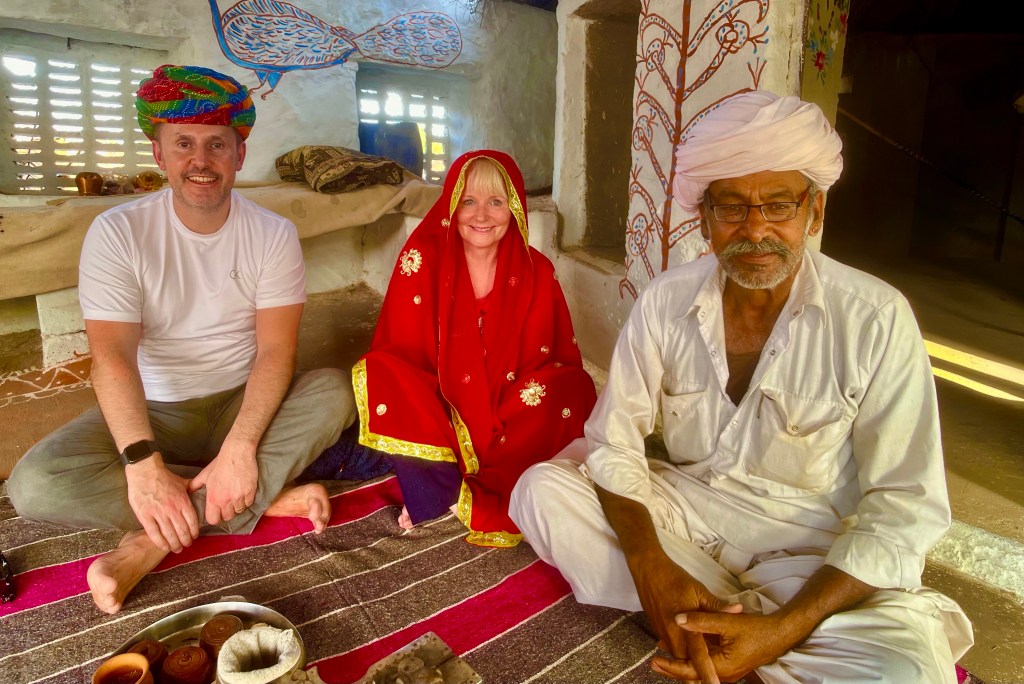
We sat down with one of the elders of the village who explained their customs and beliefs and we saw an opium tea ceremony. Although opium use is prohibited in India the Bishnoi have special consent from the Indian government it is traditionally used for medicinal purposes and religious ceremonies.
We saw traditional food being prepared on a fire, fuelled by dry cow manure and straw, which are shaped into large patties, something similar to burning peat I would imagine. The people definitely live a sustainable life where nothing is wasted and resources are used appropriately.

The elder of the village gave me a demonstration on how to put the local headgear on a Rajasthani turban.
This was a lot easier said than done when I had to wrap a material 9 meters in length and 1 meter wide around my very small head 😆
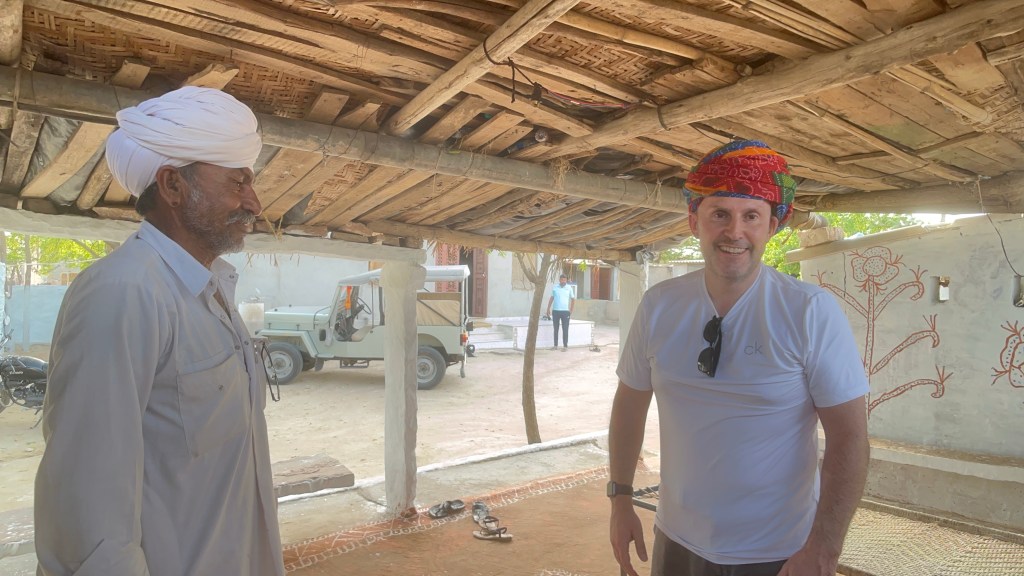
Despite a lot of patience and detailed instructions from the village elder, I failed miserably with the task at hand and let the village elder fit my turban correctly for me.
A land of magic carpets
The area Is famous of carpet weaving. They make a Durry which is a rug made with jute, cotton and sometimes wool.
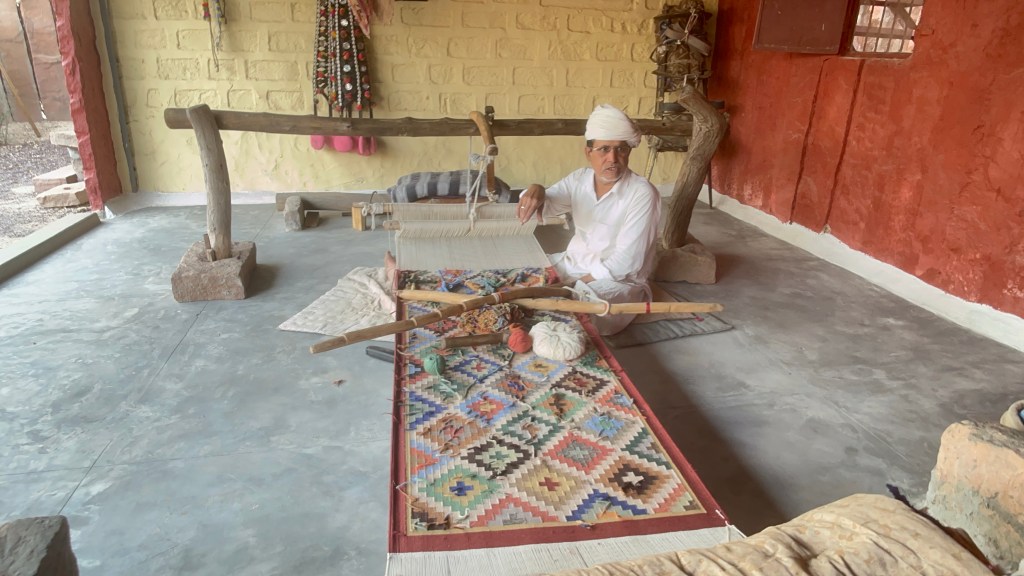
Used as a carpet and bedding it’s a versatile textile that is produced in the villages around Jodhpur. It can take two months to complete a durry which are weaved on looms in vibrant colours with vibrant motifs.

 We were born to do more than go to work, pay bills and die. See the world while you are alive and kicking
wow!! 46Delhi chaotic and colourful
LikeLiked by 1 person