
The capital of India and one of the oldest existing cities in the world with great historical importance. From the Mughal empires, the British Raj era through to the contemporary cosmopolitan city it has become today.
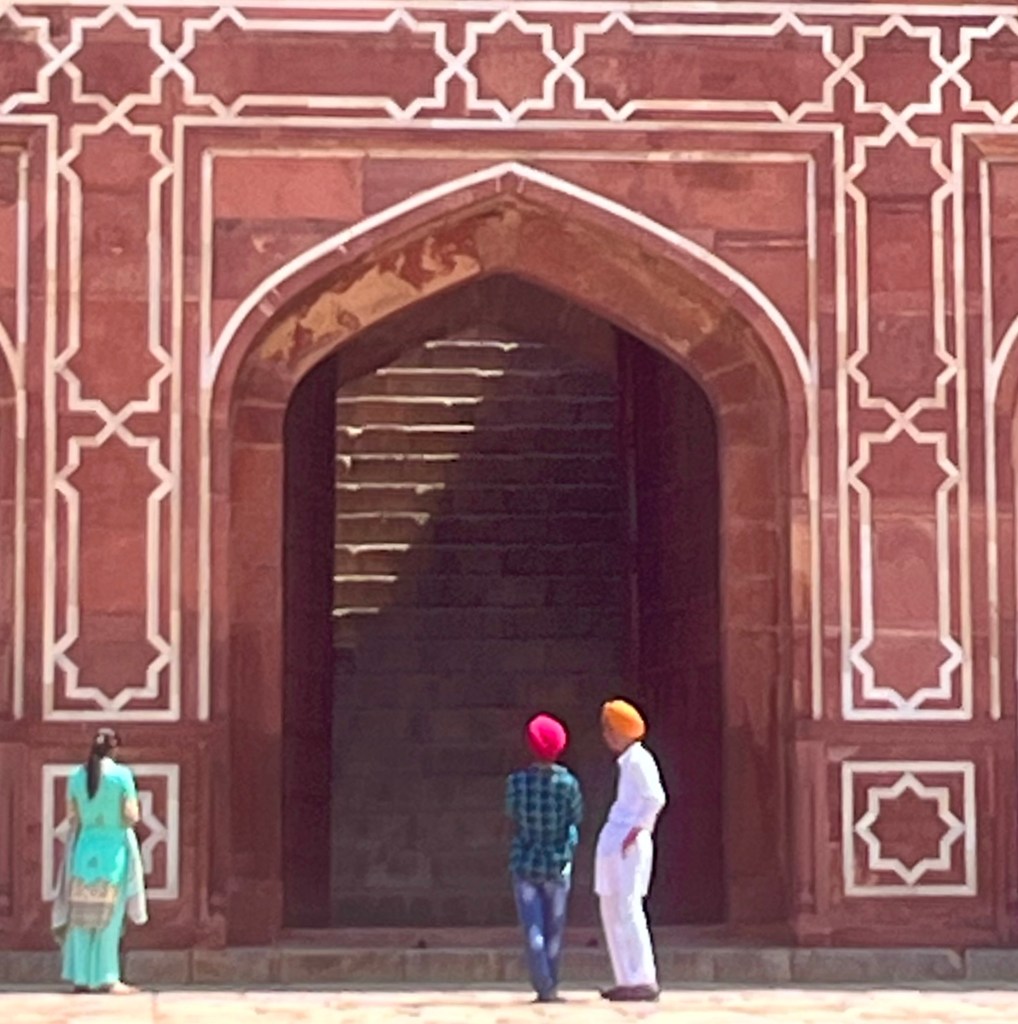
Delhi is a city that can undoubtedly shock the system with its relentless honking of horns, and heaving throng of humanity the sights, sounds and smells took my breath away.
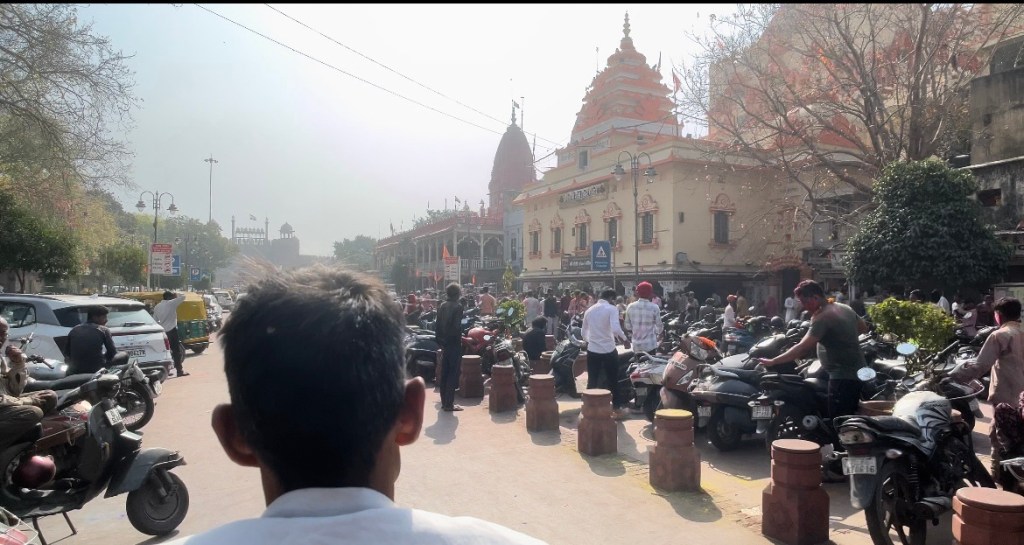
Today it is a large metropolis, with 17 million within city limits and 28 million in the metro area, making it one of the largest urban areas in the world. The political and legislative centre of India. An essential commercial and transport hub for the country.
Most foreign travellers fly in and out of Delhi as it is the major gateway to India. Many go on tours such as the Golden Triangle. To overlook Delhi would do the city a great disservice, it is certainly one of the most diverse and historically significant cities in the world.
Happy I was able to spend a few days exploring the city before I commenced my tour. I did not have nearly enough time to explore the city sufficiently but did manage to visit some of its prominent sights.
Delhi and New Delhi what’s the difference?
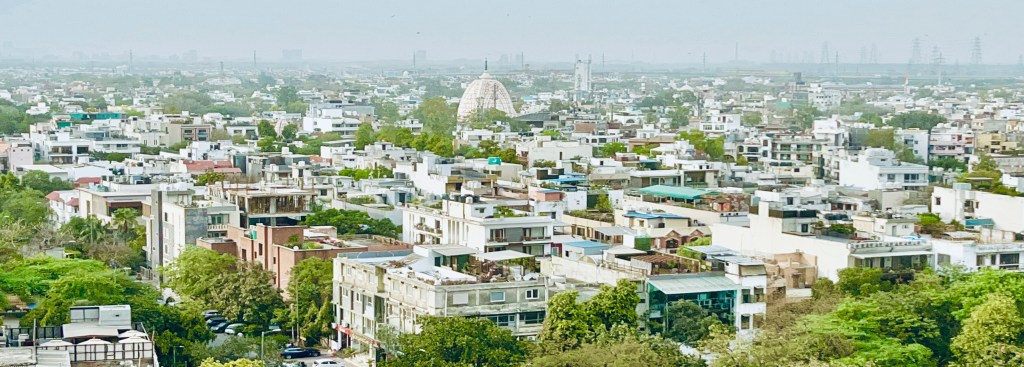
Confusingly there is Delhi and New Delhi. Delhi is the official name of the Republic of Delhi and officially New Delhi is part of the National Capital Territory which is situated within Delhi and was built specifically by the British to serve as the nation’s capital. New Delhi is not officially a city it is the capital of India.
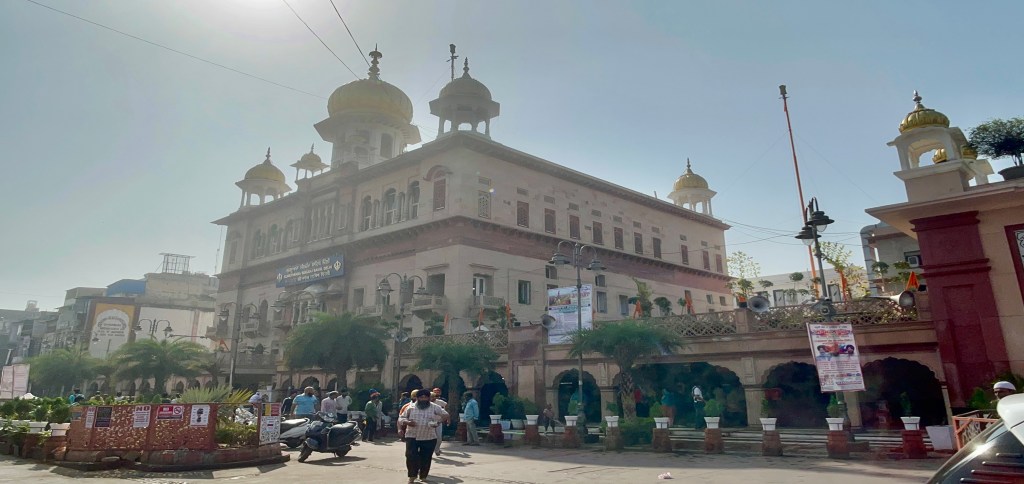
Although both are part of the larger city which has been called Delhi for over 800 years. I am glad that has been explained 😆 It was confusing to me but many Indians are not fully aware of the basic differences between the two.
India Gate
A 42-metre high gate commemorates 700,000 Indian soldiers who lost their lives fighting for the British during the First World War.
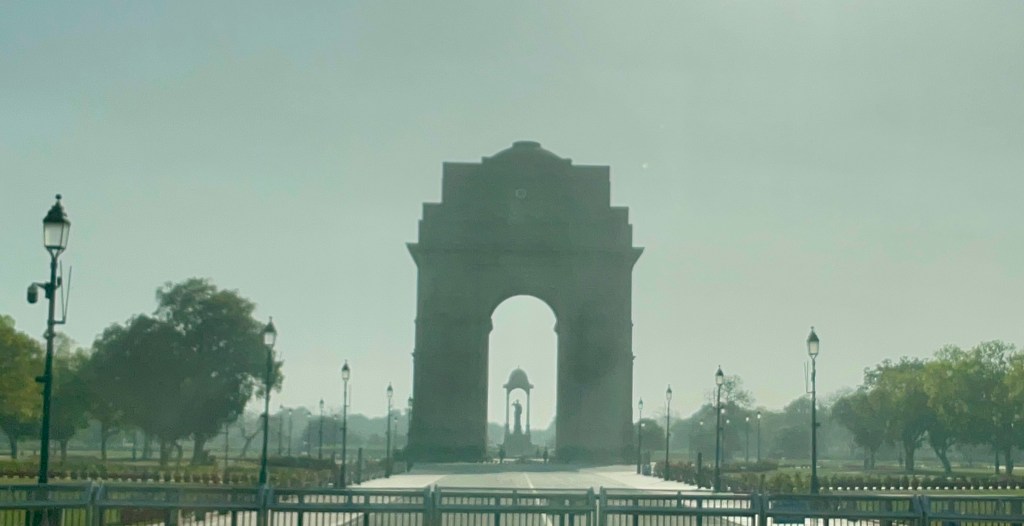
It is situated in the middle of a crossroad. The gate is very much like the Arc-de-Triomphe. Unfortunately, it was closed during our visit as it was an official bank holiday and the area was being prepared for an official function that evening. So I was only able to take a photo from a distance.
Jama Masjid
The largest mosque in India. Commissioned by Shah Jahan in 1644 who also built the Taj Mahal.
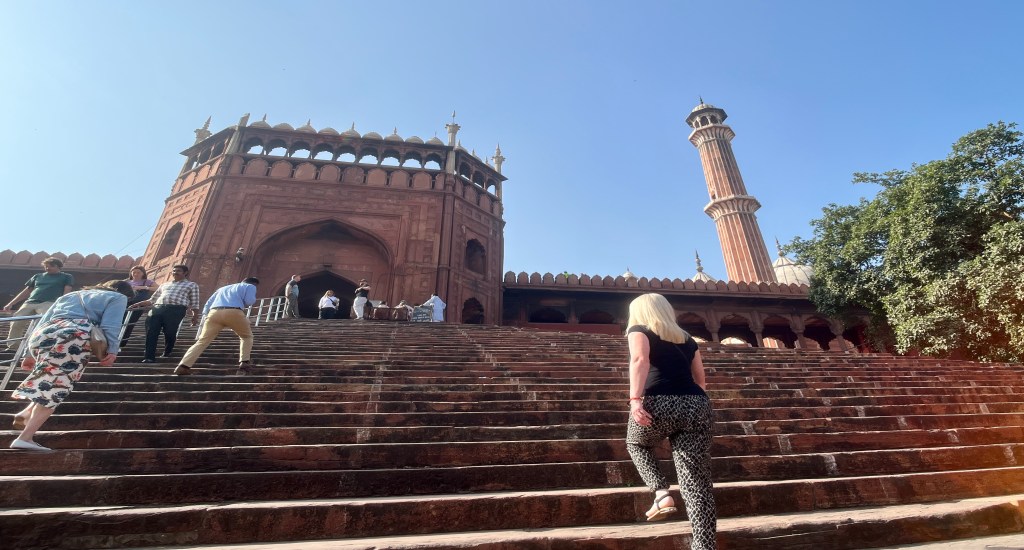
The mosque is an oasis of peace, situated in the heart of Chandni Chowk in Old Dehli it rises 10 meters above street level and we had to ascend 30 steps to reach the entrance.
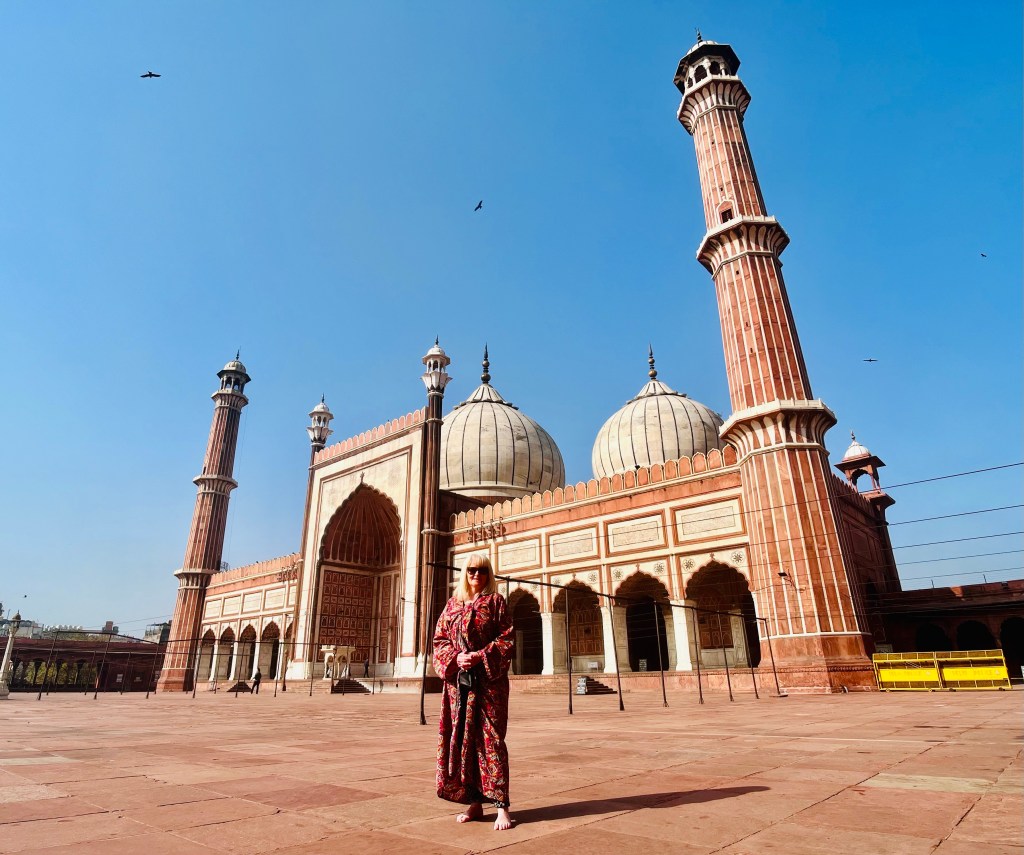
The complex is massive and can hold 25,000 people. It is the city’s principal mosque where Dehli’s Muslims come to Friday prayers, Jama Masjid is Arabic for Friday Mosque.
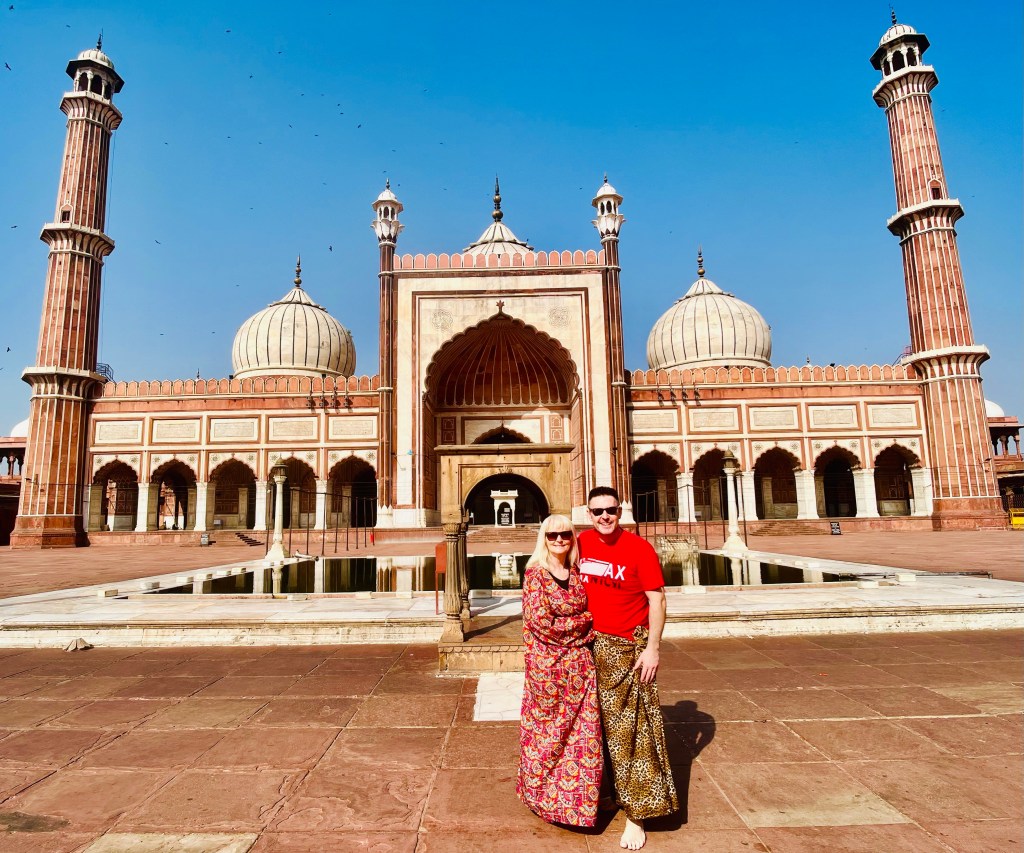
The mosque was constructed between 1650-1656 and took over 5000 workers to complete. The mosque is made from predominately red sandstone with some white marble.
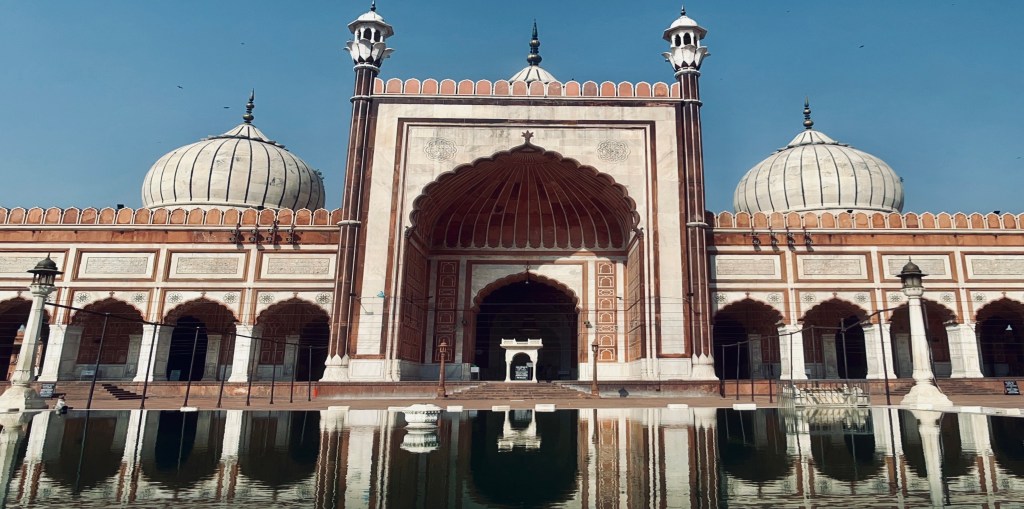
The mosque is built in a Mughal architectural style which was well-known in northern India under the patronage of Mughal Emporers from the mid-16th to the late 17th century.
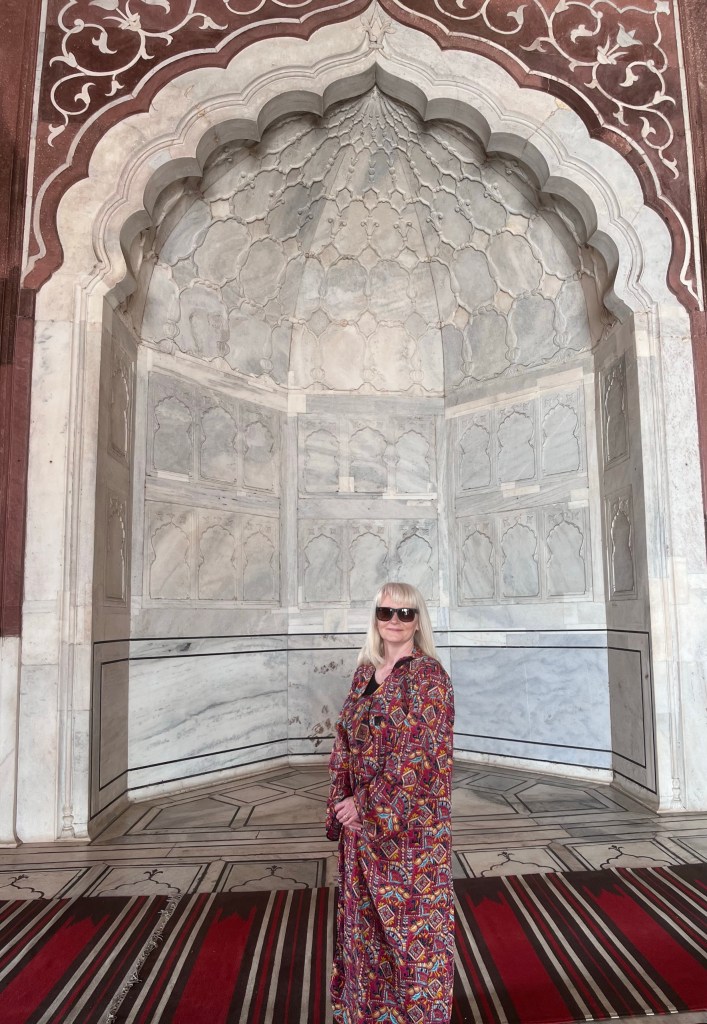
This being a mosque visitors must dress conservatively and shoes must be removed before entering. Just remember the entrance you came in as there are multiple entrance gates, in order to pick your shoes up at the entrance you came in.
Rickshaw ride in Chandni Chowk
One of the oldest and busiest markets in old Delhi.
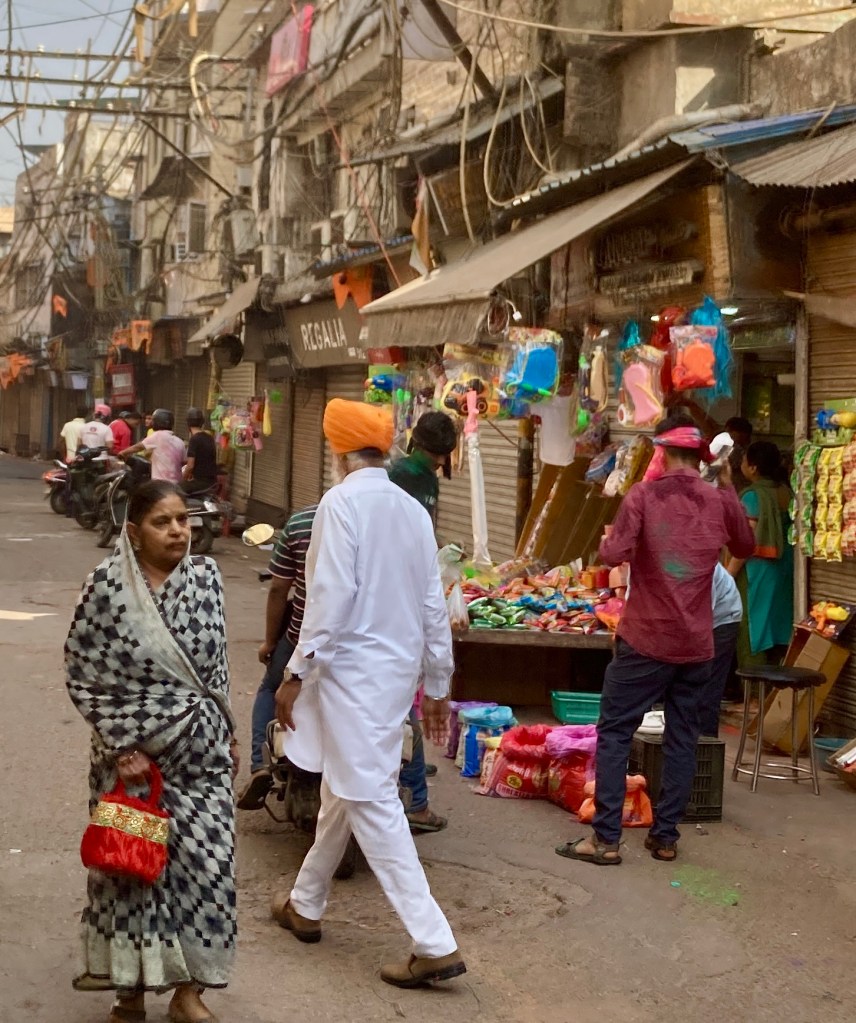
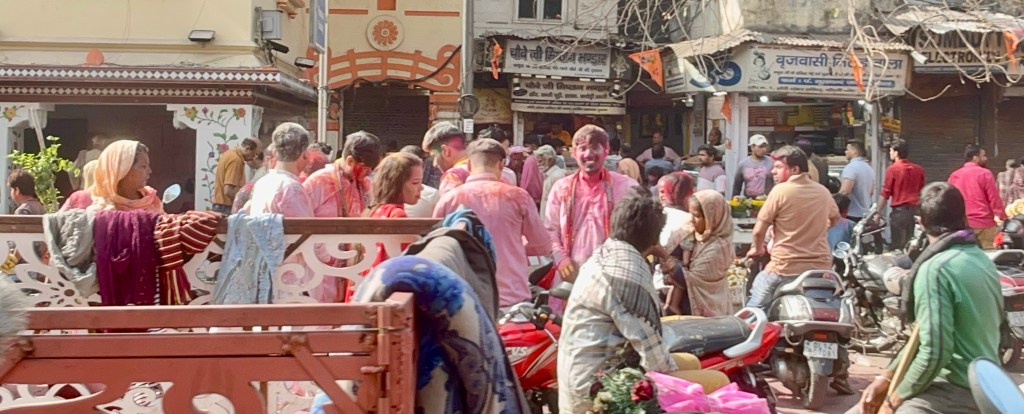
The market is a perpetual hub of activity with narrow cramped lanes, each specializing in a specific product such as spices, jewellery, fresh produce and clothing. Although the day we visited things were a little subdued as it was Holi Day an important religious festival for Hindus with many businesses shut for the day.
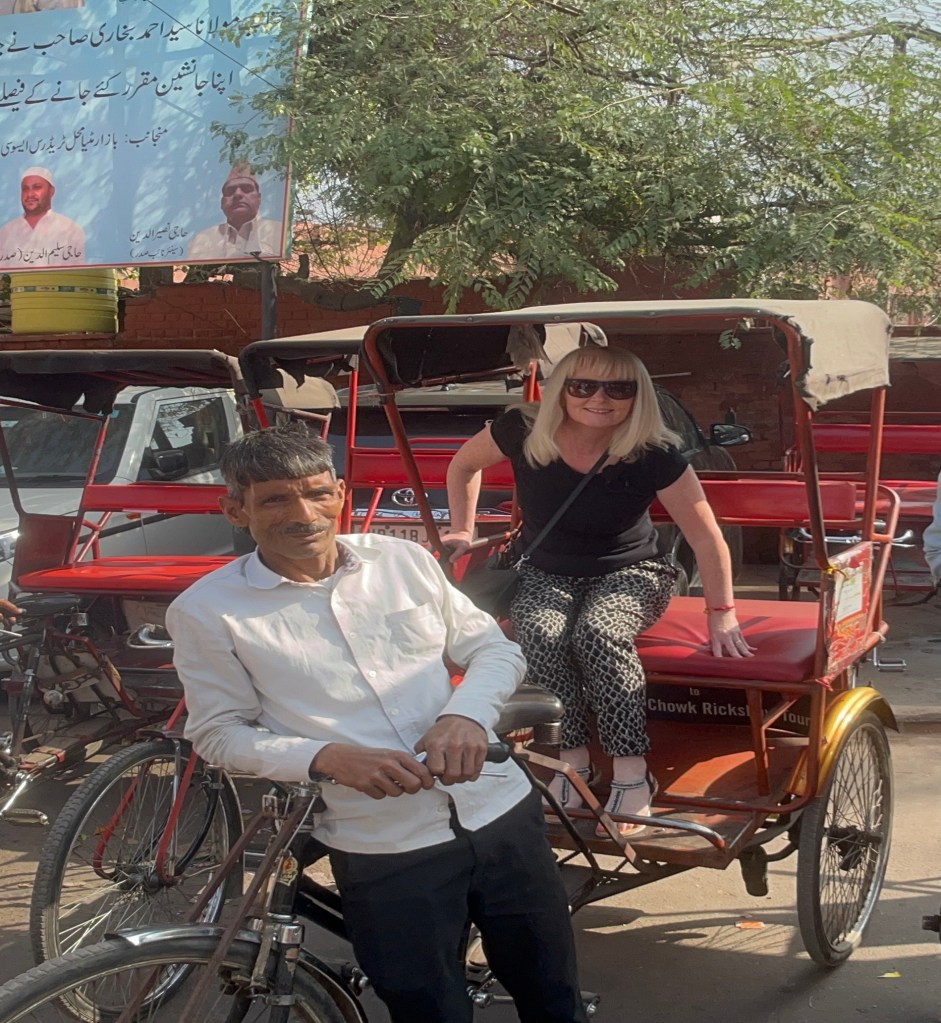
We had booked a rickshaw ride around the Old City. A comfortable “for us anyway not cycling” eco-friendly and adevetourus way to explore the Mughal-built walled city.
This rather unique mode of transportation allowed us to dive straight into the diverse and multicultural area. The sights of old Dehli were loaded with colour and revilement due to the Holi celebrations going on.
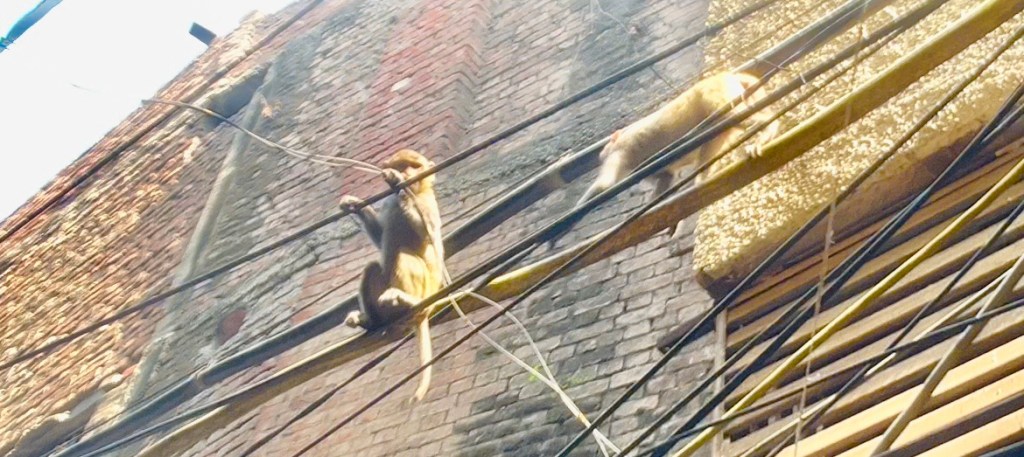
Our experience wasn’t just consigned to people and street level as the area is home to many troops of monkeys which have also made the market their home. Although cute looking to us they can wreak havoc running across busy roads and attacking residents especially if there is food involved.
What enthralled me the most was the prospect of seeing people going about their daily lives. Travel isn’t always about grand monuments and palaces but experiencing a culture and way of life different to my own. But seeing that some things are very similar despite language, culture and religion. We are all different but at the same time, we are all the same.
Humayun’s Tomb
The first garden tomb on the Indian subcontinent. Inspiring several architectural innovations culminating with the Taj Mahal no less.
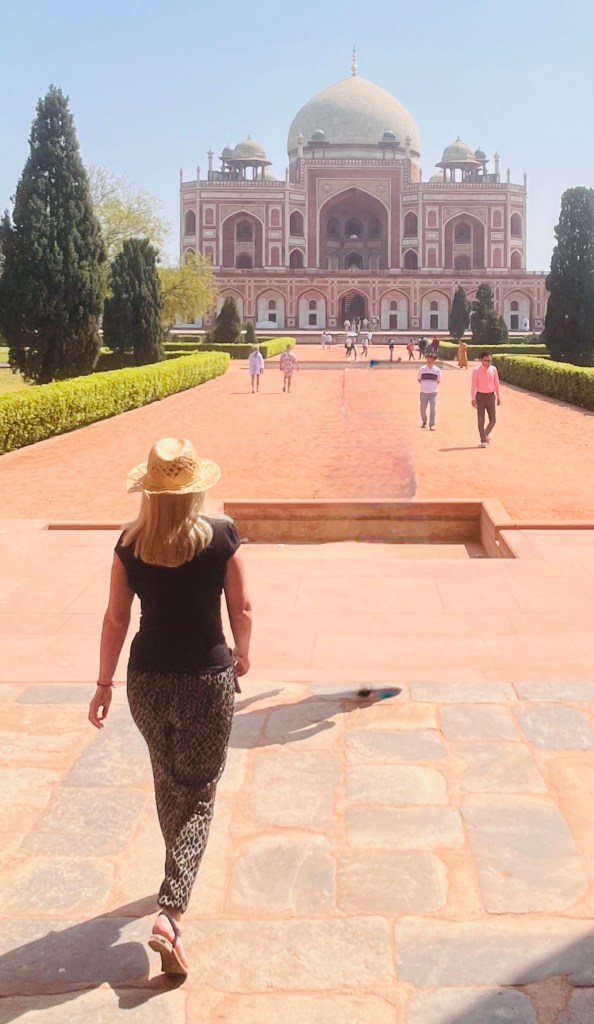
Constructed in 1570 it predates the Taj Mahal by 60 years. The tomb was constructed for a Mughal Emporer by Haji Begun, Emporer Humayun’s Persian-born wife.
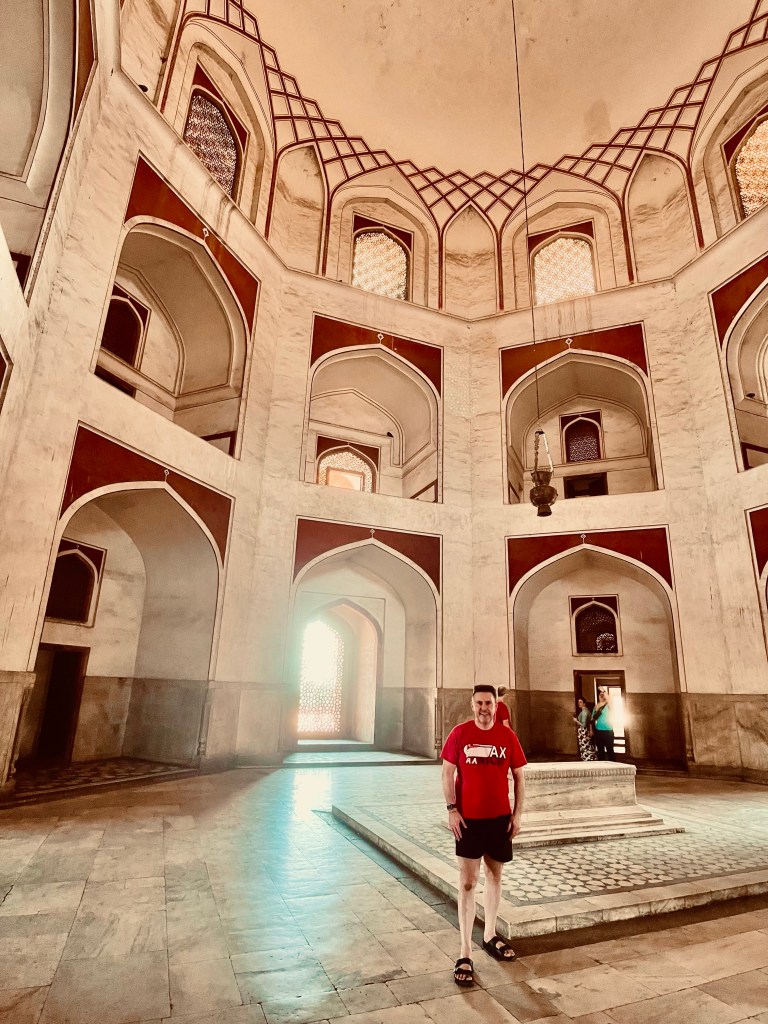
The tomb marries together the Persian and Mughal elements in its design. It is constructed with red sandstone and marble and follows strict Islamic rules regarding geometry with an emphasis on the number 8.
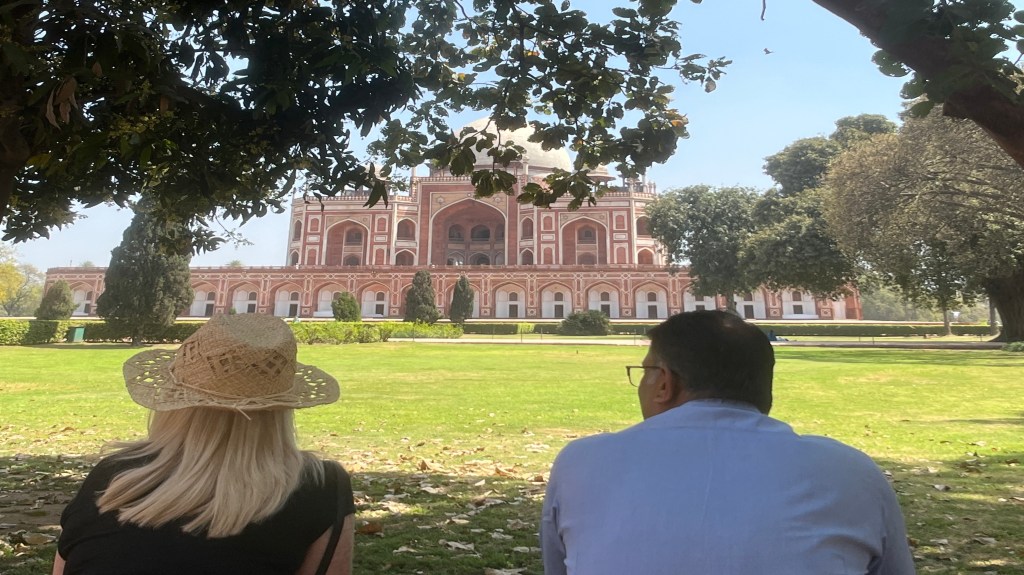
The tomb is sublimely well-proportioned seemingly floating above its symmetrical gardens. The lovely gardens also contain the tomb of his wife and barber. An entrusted position given the nearness of a cut-throat razor to the Emporer’s throat.
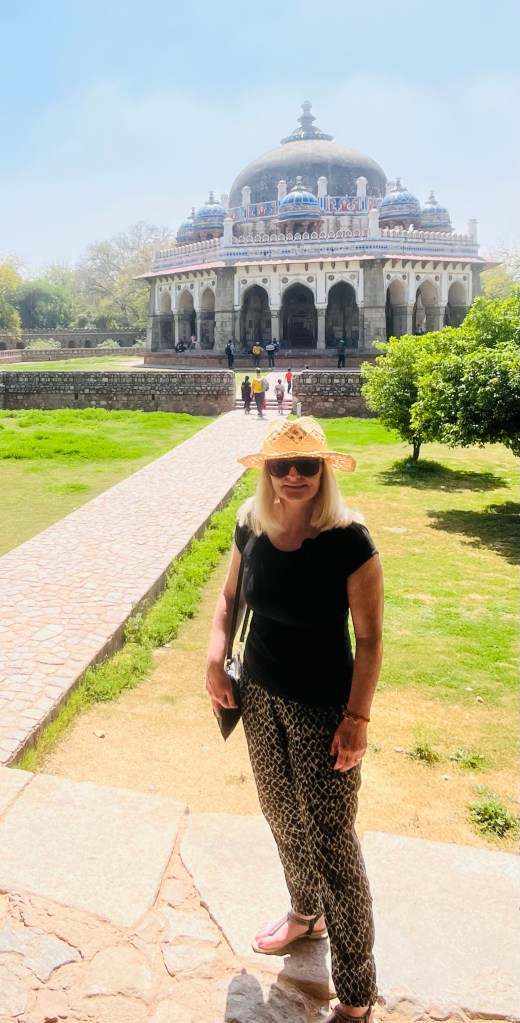
Another beautiful building was Isa Khan’s octagonal tomb. A beautiful blue dome adorned with beautiful carvings set amongst green lawns.
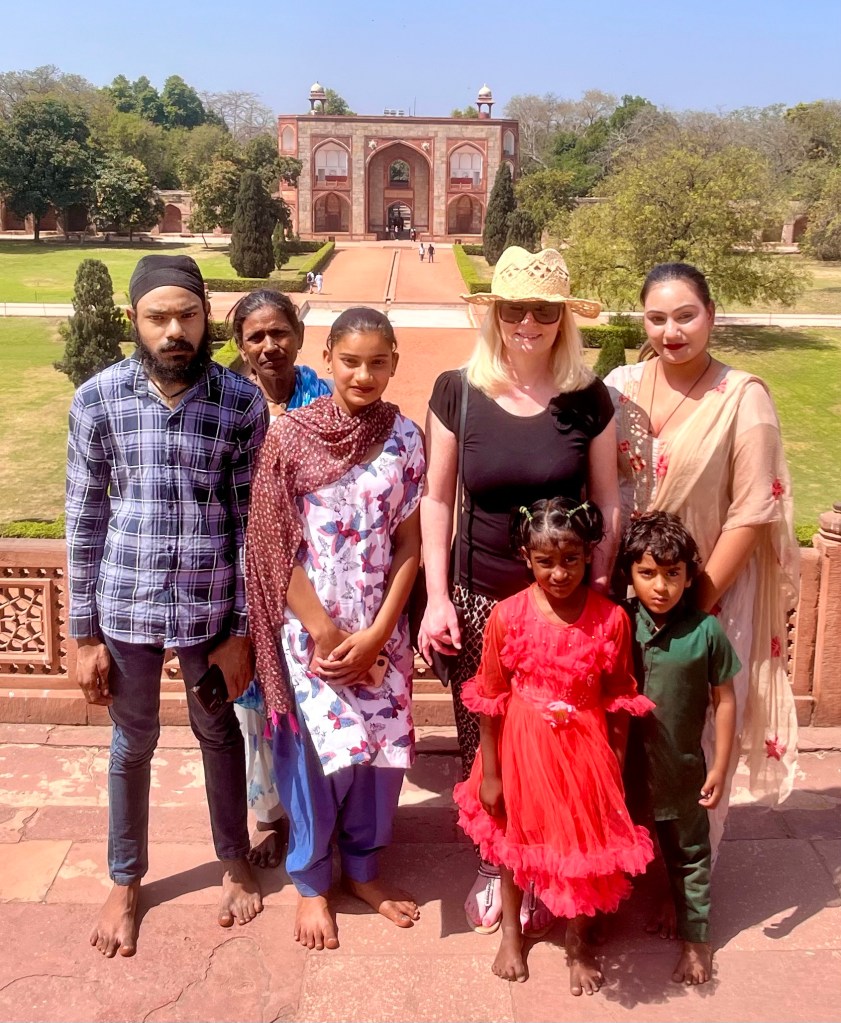
There is no shortage of historical sites in Dehli but this UNESCO-listed site was certainly worthy of my time. A calm tranquil atmosphere and amazing historic buildings made for a very enjoyable visit.
Qutab Minar
At 240 feet it is one of Delhi’s most iconic and stunning monuments. It is also a UNESCO World Heritage Site.
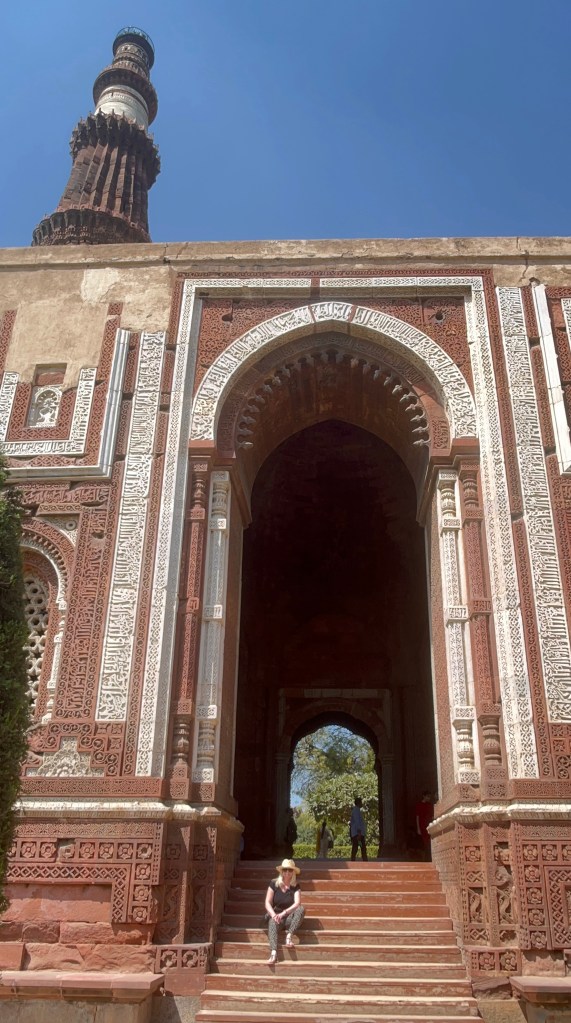
Construction started in the 12th century and was built in three stages by three different rulers of Dehli finally completed in the 14th century.
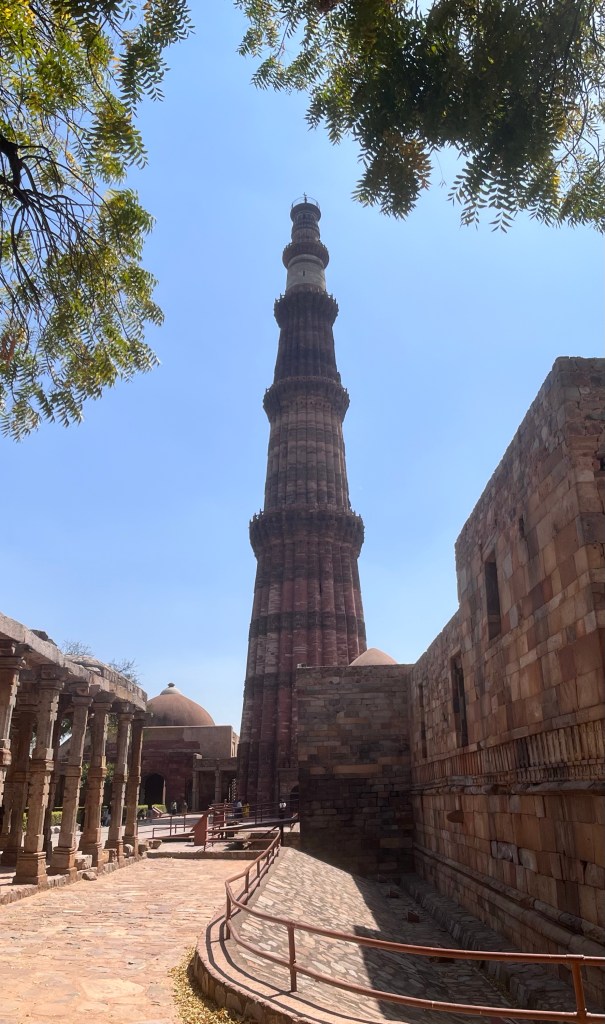
It is the tallest brick minaret in the world. It has five distinct storeys each marked by a protracting balcony and tapers. It has a diameter of 14.32 meters at the base and 2.75 meters at the top.
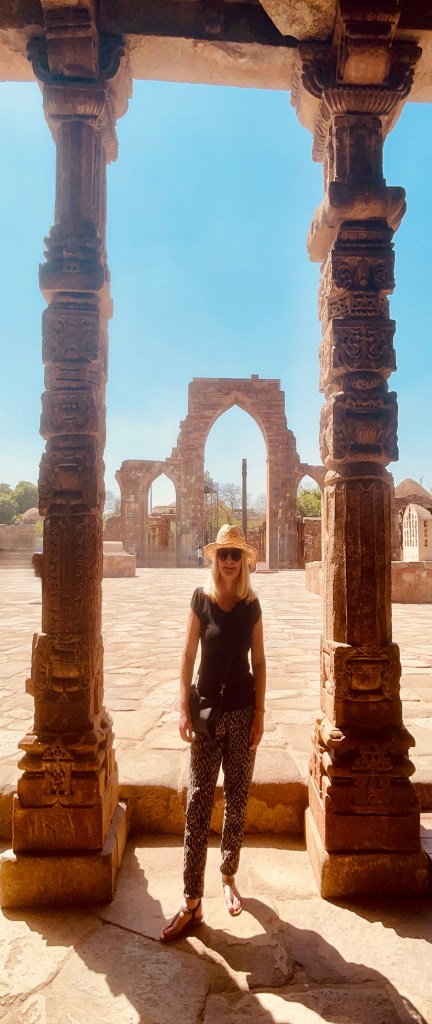
It is home to Quwwat-UI-Islam the first mosque ever built in India. The mosque was built using materials from demolished Hindu and Jain temples and I was able to see some reused architectural elements in the structure.

Qutab Minar is certainly very impressive and has survived the ravage of time impressively. Today it is one of India’s most visited monuments with 4 million visitors annually.
Holi Festival (festival of colour)
It is a popular and significant festival for Hindus. Typically spanning two days. Celebrated as the festival of colours. Which was ongoing during our visit to Dehli.
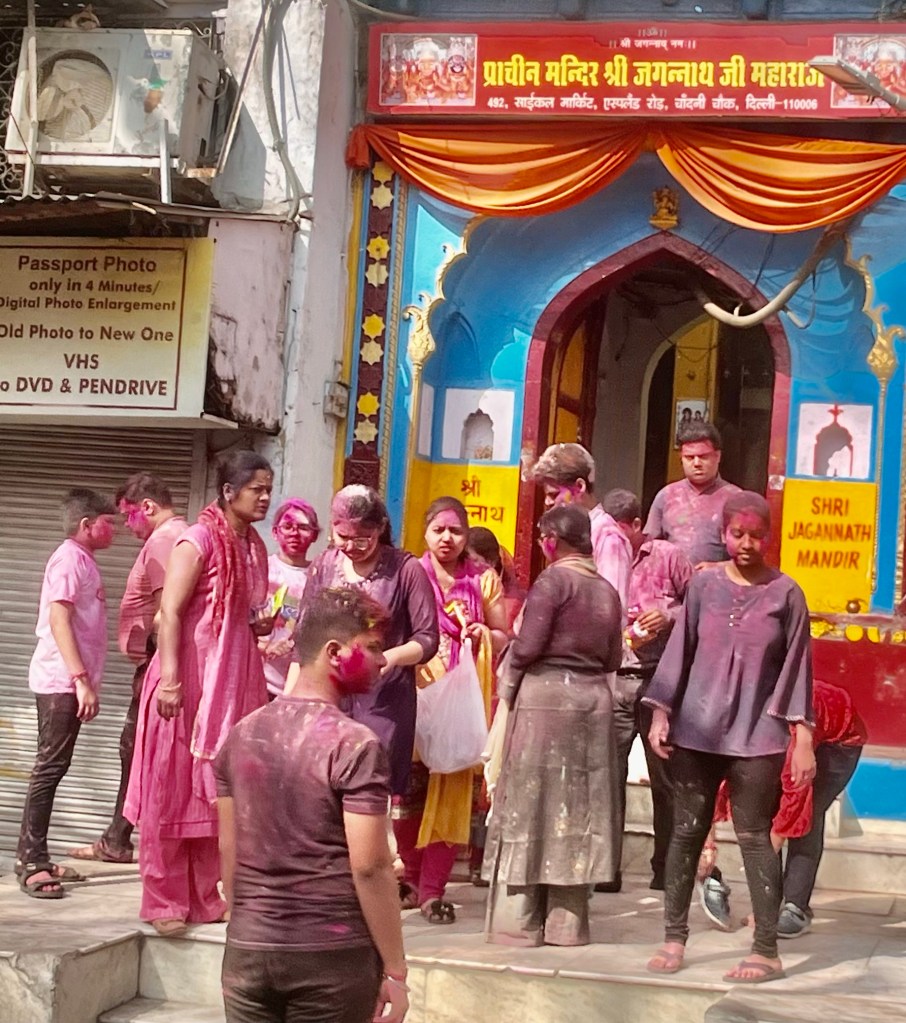
On the first night of Holi people light bonfires and throw roasting grains, popcorn and coconut on them. The next day people of all ages take to the streets for fun and paint-throwing oh yes so much paint-throwing.
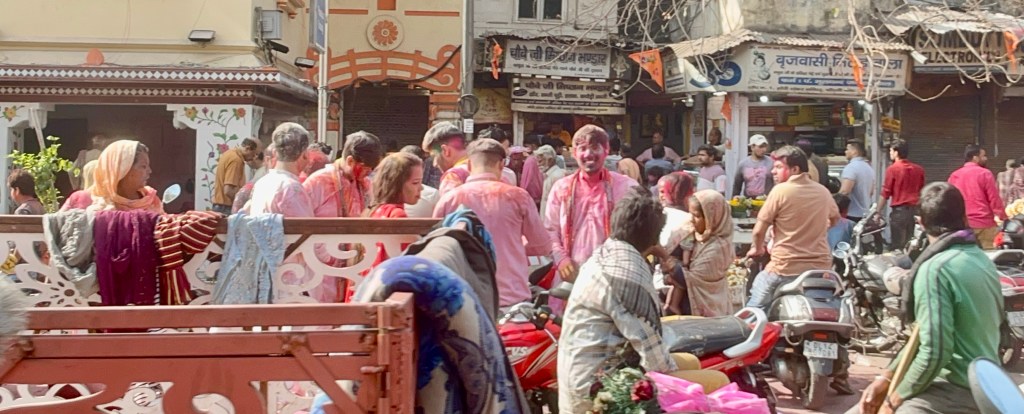
The festival is a way to welcome spring, this is seen as a new beginning where people can release their inhibitions and start fresh again. This is done through much revilement including throwing the colours in the form of paint.
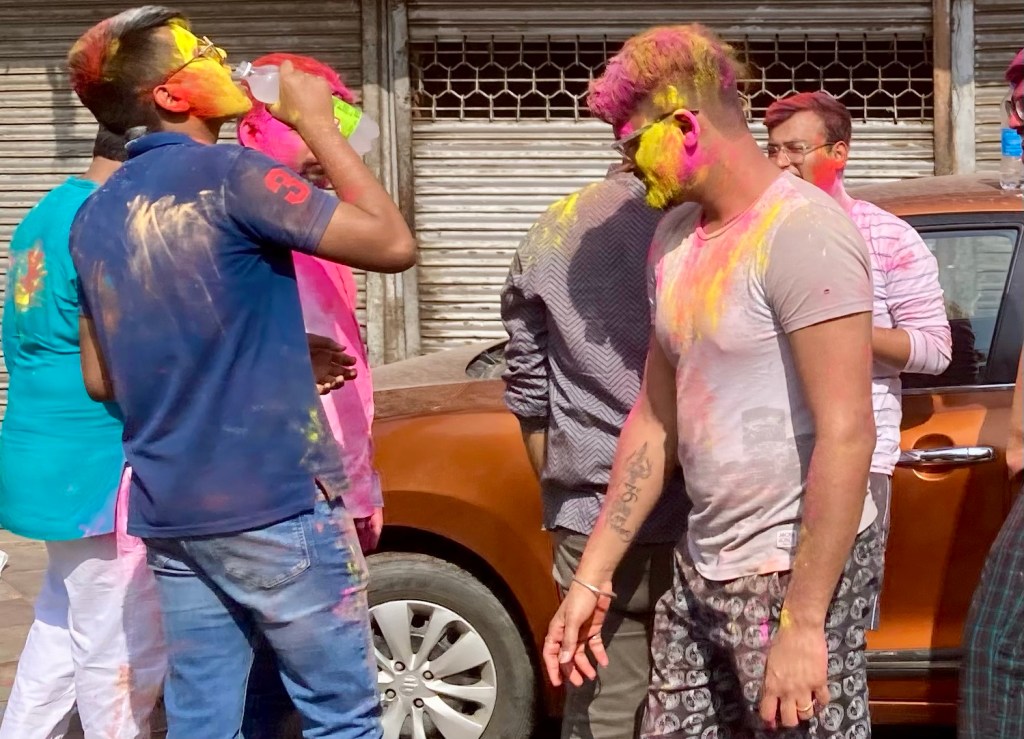
It is said during the festival Hindu gods turn a blind eye and is one of the few occasions extremely devout Hindus allow themselves to let loose.
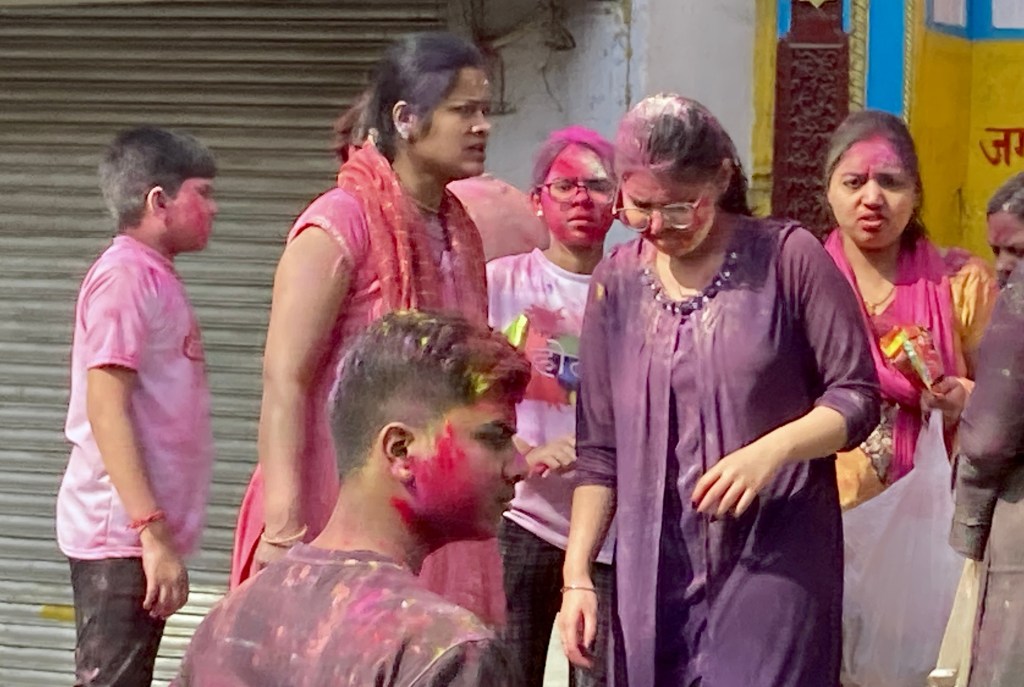
With the relaxation of Hindu social codes, Holi is the most joyous and vivid occasion, it is greatly anticipated due to the fun and mayhem that ensues and it was wonderful to experience this first-hand albeit trying to avoid being paint paint-bombed by the exuberant locals 😄😄😁

 We were born to do more than go to work, pay bills and die. See the world while you are alive and kicking