
The beautiful unknown. The country’s painful past has allowed it to turn its cultural diversity into a national strength.

A naturally beautiful country with an east-meets-west atmosphere, which has been born of blended Austro-Hungarian and Ottoman influences. Unfortunately, even though it was nearly thirty years ago, many still associate Bosnia and Herzegovina with the heartbreaking civil war and some scars of this are still visible today.
I am not going to dwell on the past, I prefer to highlight the country for its natural wonders impressive waterfalls, vibrant rivers, craggy mountains, numerous medieval castles and last but certainly not least its people who have an unassuming warmth and generosity.
We booked a two-day adventure with Funky Tours, an operator based in Sarajevo who are Balkan Specialists. They offer tailor-made packages with local guides and drivers. This allowed us to explore part of the more undiscovered Herzegovina at a more relaxed pace than a day tour to the major travel hotspots.

Our tour was to Herzegovina, which covers the southern part of the country. It is the smaller part of the two main geographical regions that make up the country. This takes in Mostar and Kravica Waterfalls and some undiscovered places along the way.
Kravica Waterfalls
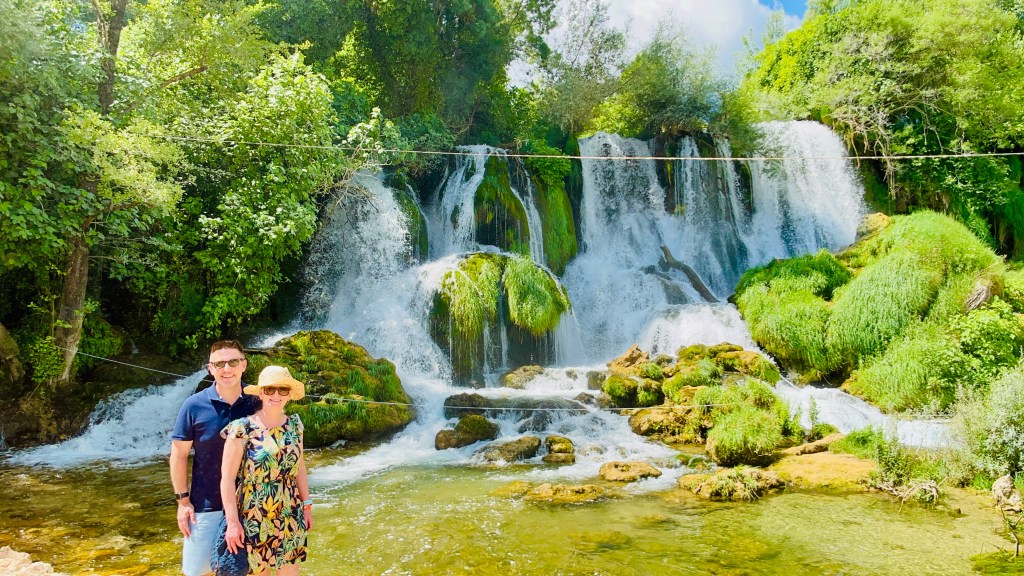
The first stop on our first day was at the majestic Kravica Waterfalls. It is roughly about two hours from our base in Cavtat.

We got there early so the waterfalls were relatively quiet. After Mostar, this is one of the most popular places to visit in Herzegovina. Late morning, or early afternoon it can be full of people on day tours from Mostar and the nearby Croatian coastal cities of Dubrovnik and Split, as well as locals picnicking and going for a refreshing dip.
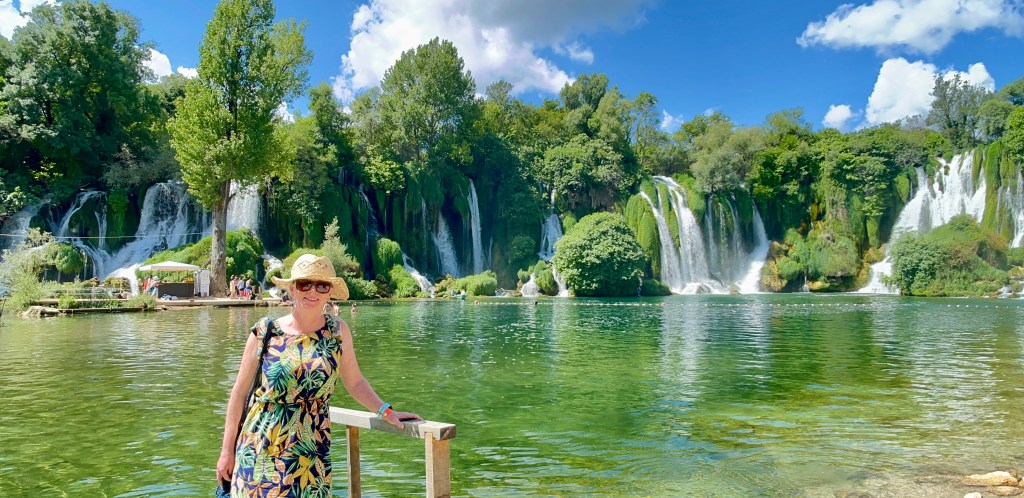
The waterfalls are formed from limestone rock that is on the watercourse of the Trebizat River in the heartland of Herzegovina. It has a height of 25 metres (80 feet) and the radius of the lake is the base of the waterfall is 120 metres (390 feet)
The lake is protected by the Bosnia and Herzegovina government, but has a relaxed attitude to governance. The park is open to the public for visits, picnics, camping and swimming. There is a cafe situated there if you want to sit and enjoy the scenery.
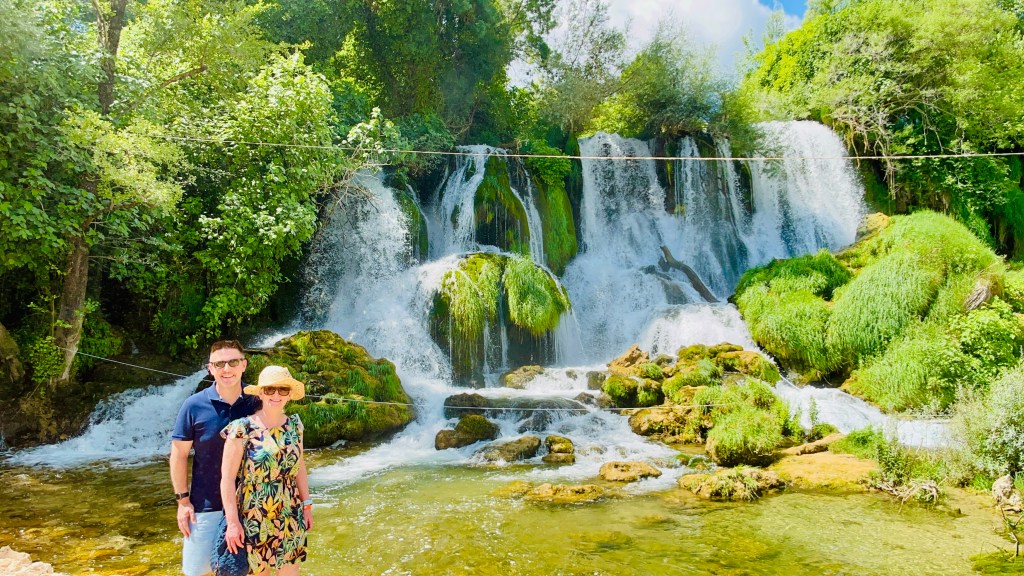
First and foremost Kravica Waterfalls is a serene natural location. The landscape is full of trees and even the rocks around the waterfalls are green with thick lichen, moss and grass all over them. There are hardly any manmade formations near the falls to intrude with the location’s complete natural environment.
Pocitelj
Our next stop is Pocitelj a small walled town. It was the mainstay of the defence against the Ottomans.
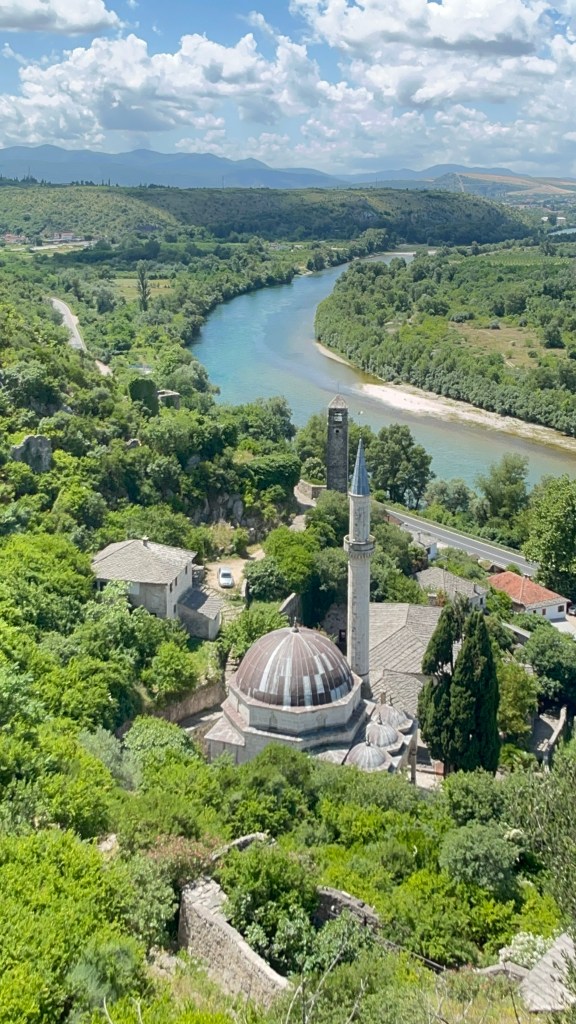
The walled town of Pocitelj evolved in the period from the 16th to the 18th centuries. Its strategic role from the 13th to 17th century gave its inhabitants the power to build one of the best-preserved buildings ensembles within the city walls in the country.
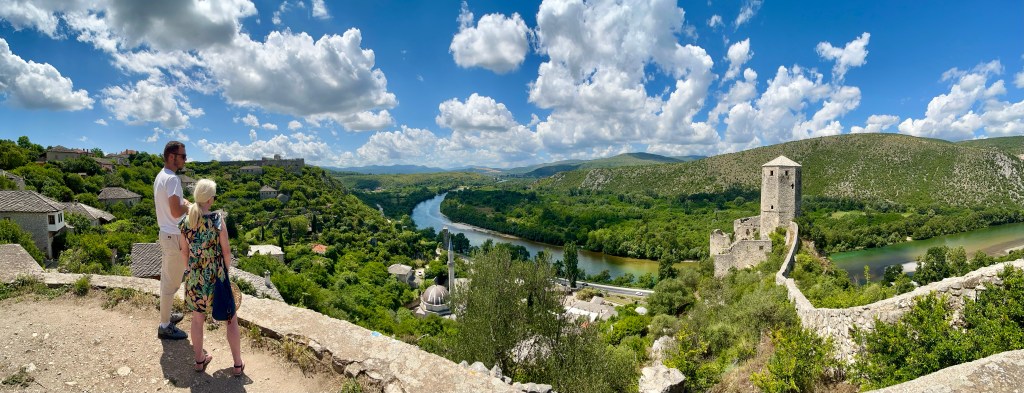
Recent reconstruction of the town has returned it to its original form. The historic urban site of Pocitelj is now on a UNESCO Tentative List for Bosnia and Herzegovina.
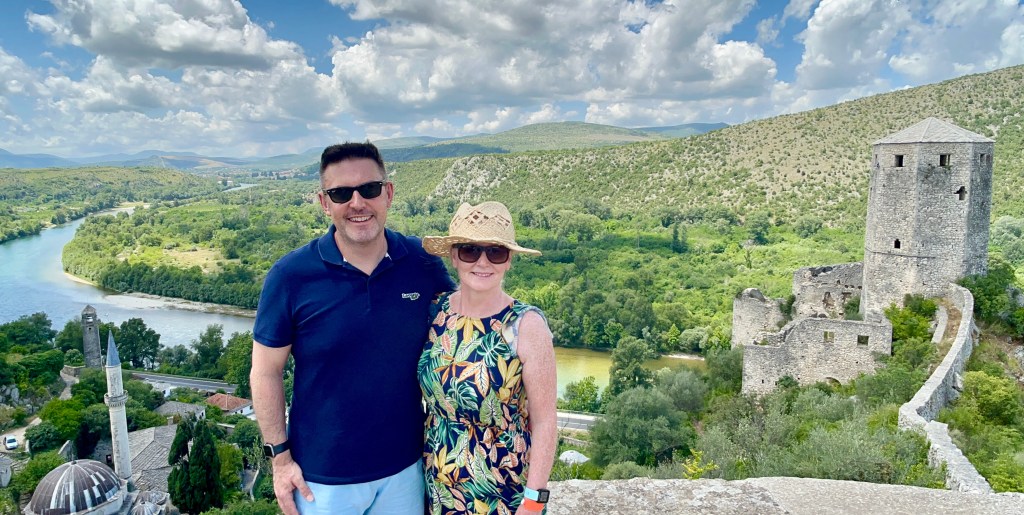
The fortress was first built in 1383 and had a strategic role in controlling the passage to the sea through the Nereveta Valley, as the main stronghold against the Turkish conquest of Nereveta River Valley.

Today it has become a prevalent stop for lots of tour operators covering the Balkans. The hinterland of the Balkans despite some well-known locations such as Mostar, represents a relatively unbeknownst and unexplored region for foreign visitors to experience. This was not a place that I expected to see, but delighted I had the opportunity to do so.
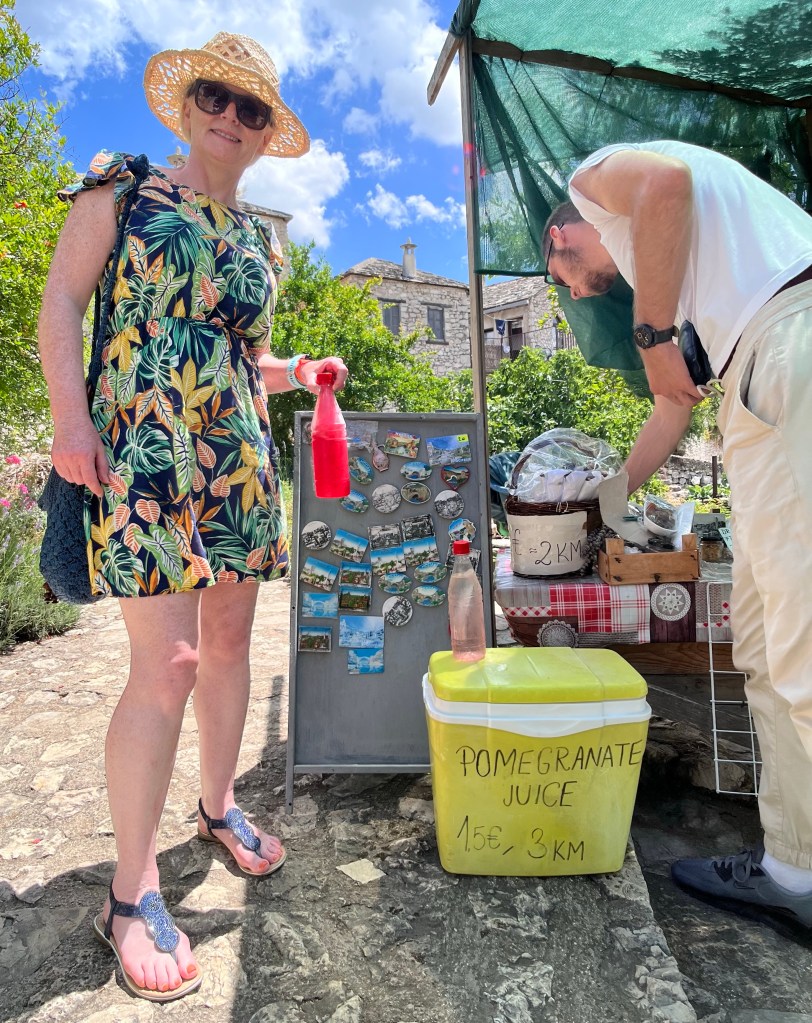
There are still people living within Pocitelj walls, 40 permanent residents still residing there. Many have an alternative income by selling local produce to visitors. Our guide Stefan was keen for us to support some of the local community. We purchased some pomegranate juice which was delicious and fresh.

Pocitelj lays claim to being one of the oldest cities in Bosnia and Herzegovina, as well as one of the oldest continually inhabited cities in the world.
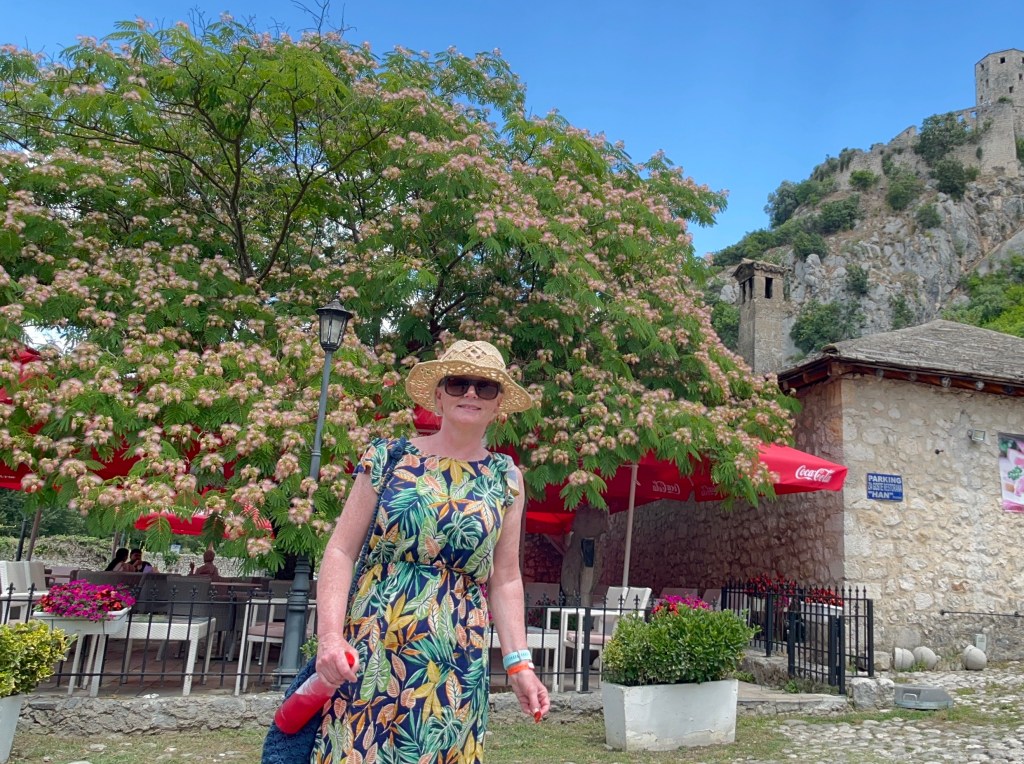
The population increases during the summer period and weekends. Previous vacant properties now being rented out to visitors wanting to experience this undiscovered location.
Blagaj Tekija
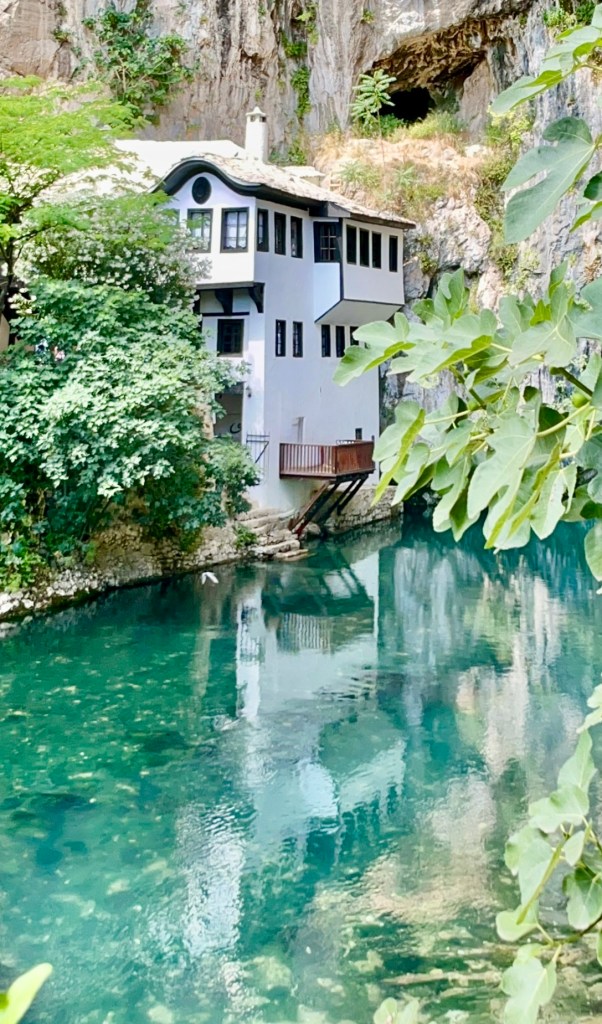
Blagaj is a town situated at the spring of the Buna River, Europe’s largest underground river, about 30 minutes from Mostar.
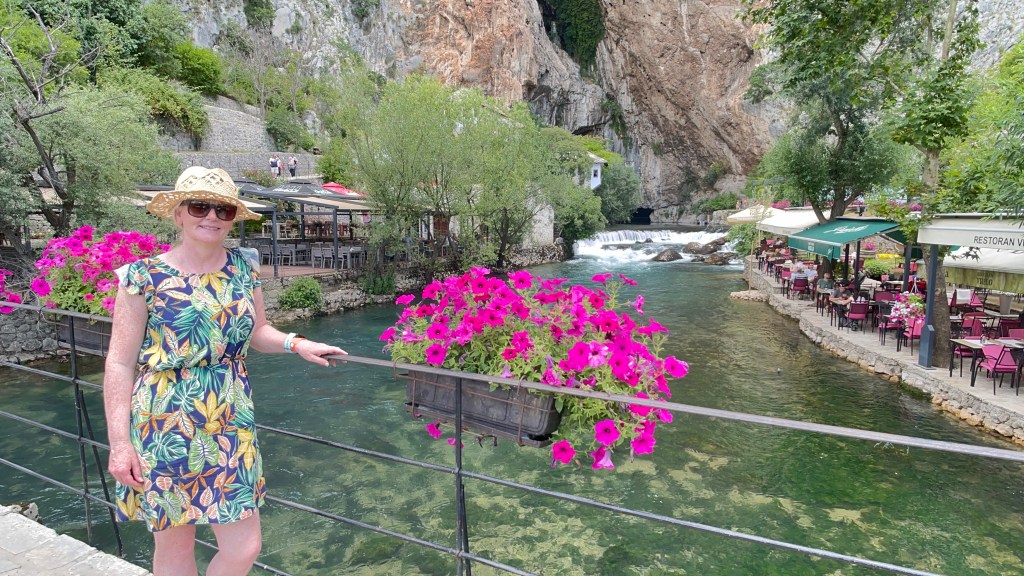
This is a very spiritual place, a natural and cultural oasis with human settlements in the town that date back more than 12000 years.
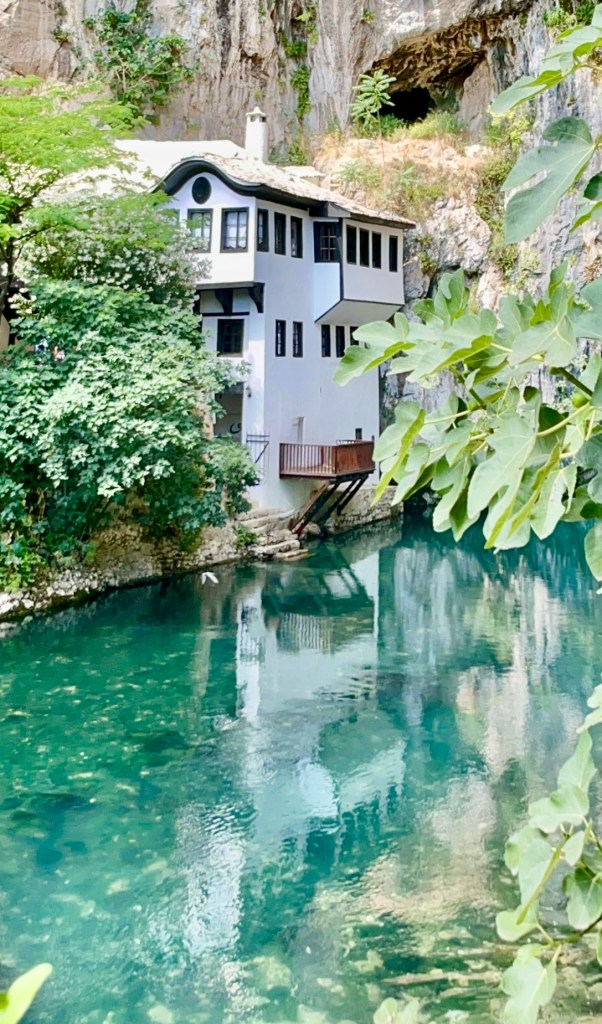
The town’s main attraction is undoubtedly the Blagaj Tekija monastery, nearly 600 years old and situated at the base of a cliff next to the source of the Buna River. It was a unique and picturesque building. It was founded during the height of the Ottoman Empire and has great religious and spiritual significance to Muslims in the area.
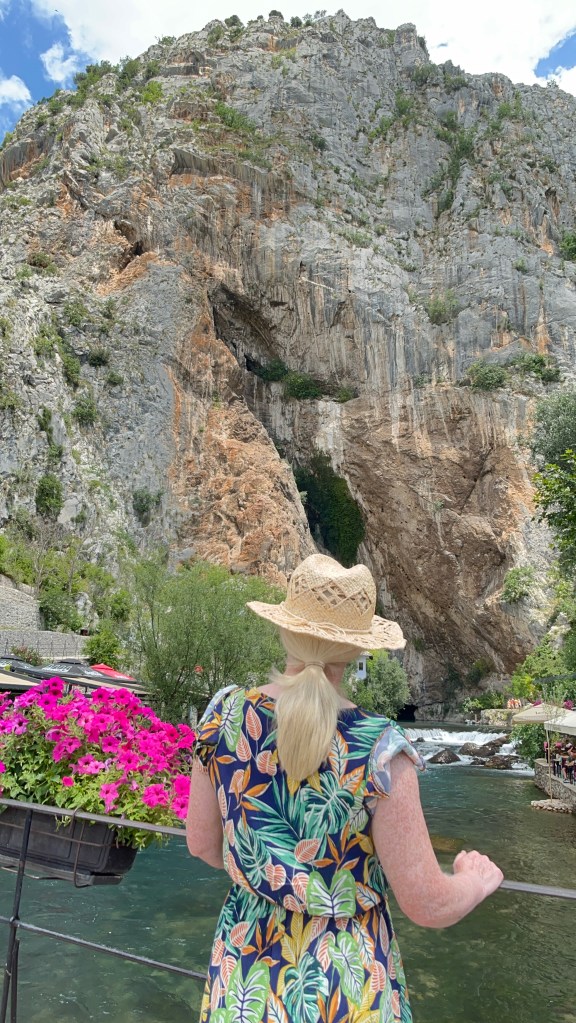
The river flows surprisingly fast and the sound of the water rolling over the rocks, then dropping into the riverbed has a deeply soothing effect on us, who would have thought something as simple as flowing water would have such an impact, perhaps the spiritual history of the location had an effect on me.
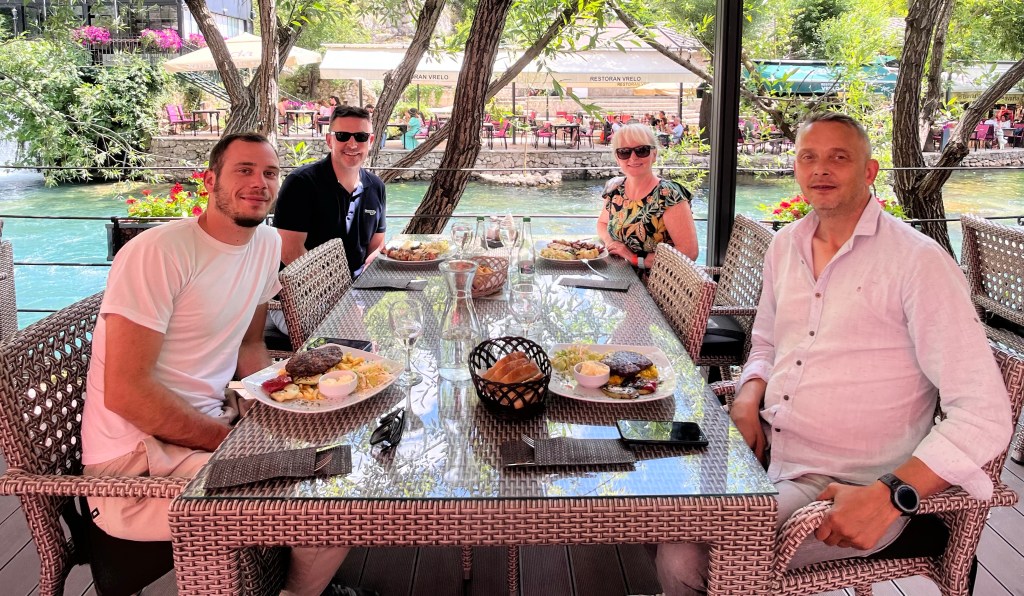
This was our lunch stop at one of the waterside restaurants. The only sound to be heard was water rushing past us, together with the cooling air coming from the river made for a relaxing lunch.
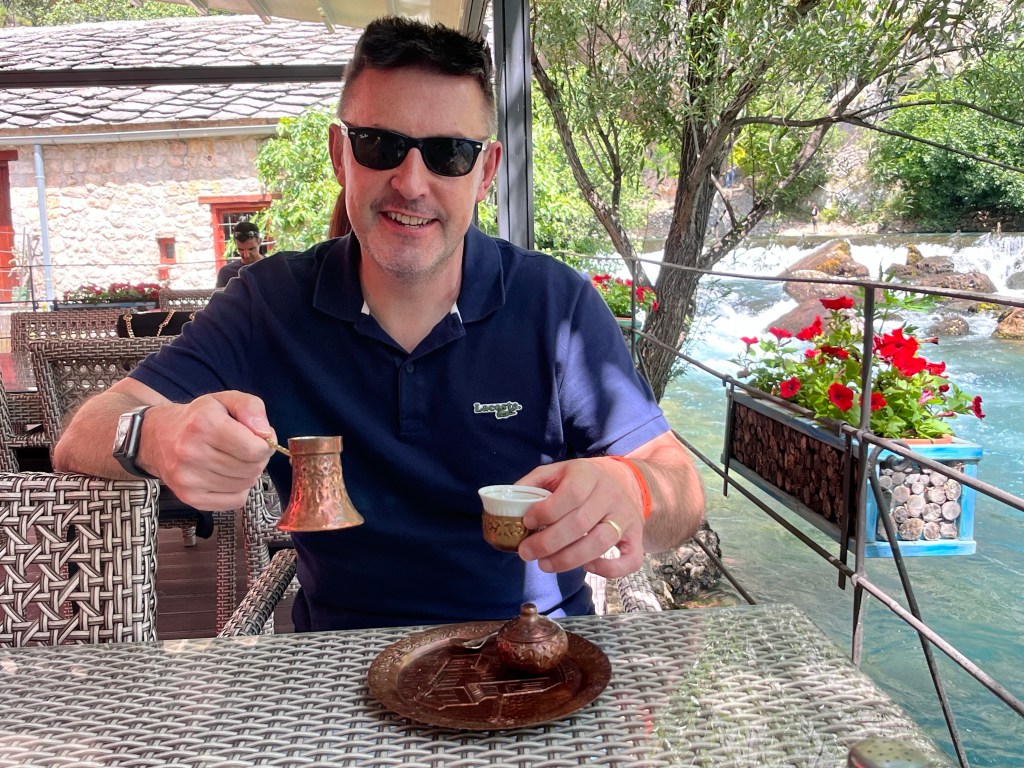
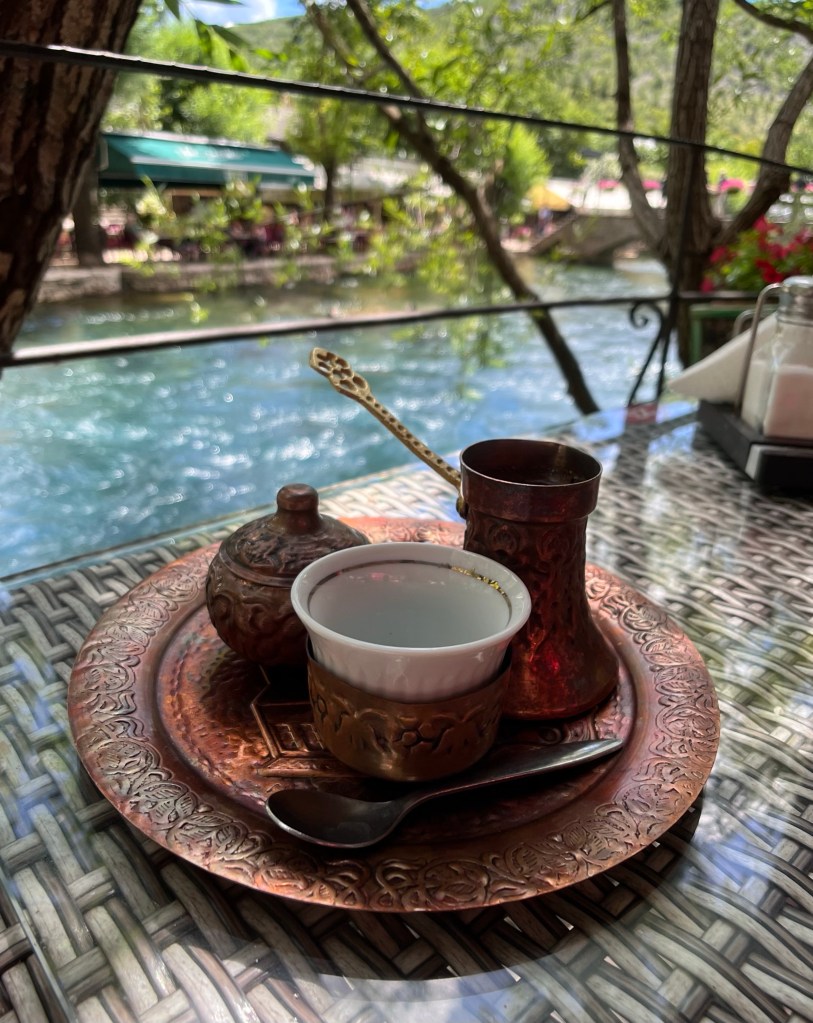
We were recommended the trout which was locally sourced and delicious. I then had my first experience with the national tipple of Bosnian coffee, deeply ingrained in the local psyche with a traditional way of serving and drinking. I love strong coffee and quickly acquired a taste for this Bosnian nectar.
Mostar
An underrated culture-rich city
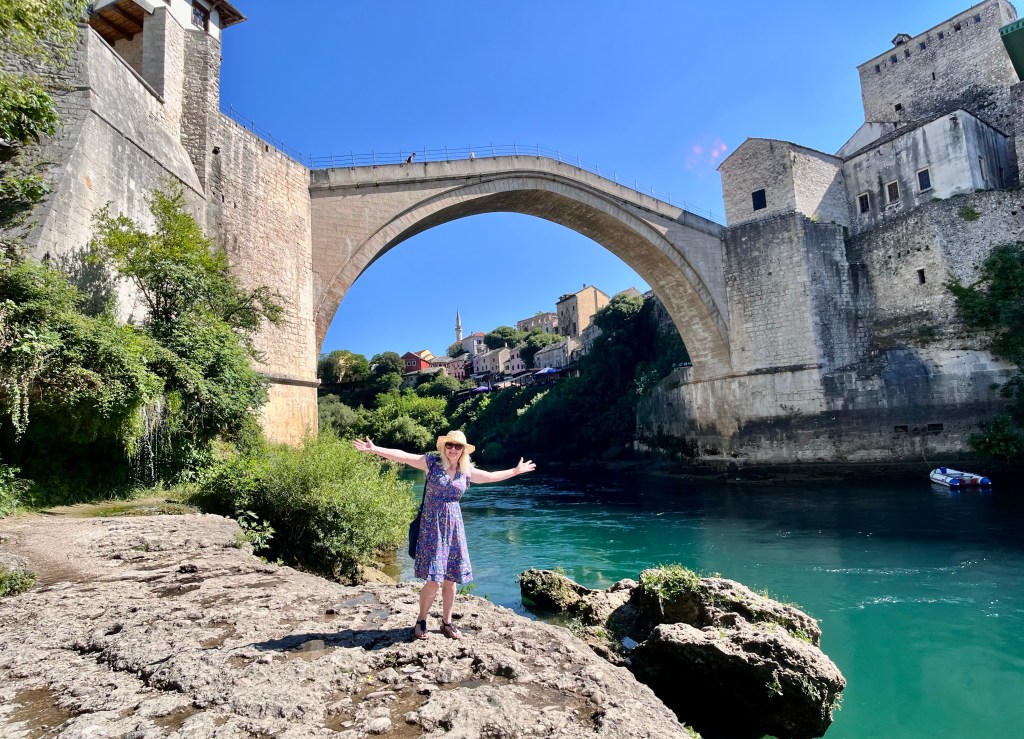
Mostar is one of Bosnia and Herzgavonia’s most enchanting cities. Mostar may be less frequented than cities like Dubrovnik and Kotor, yet offered me diversity and charm.
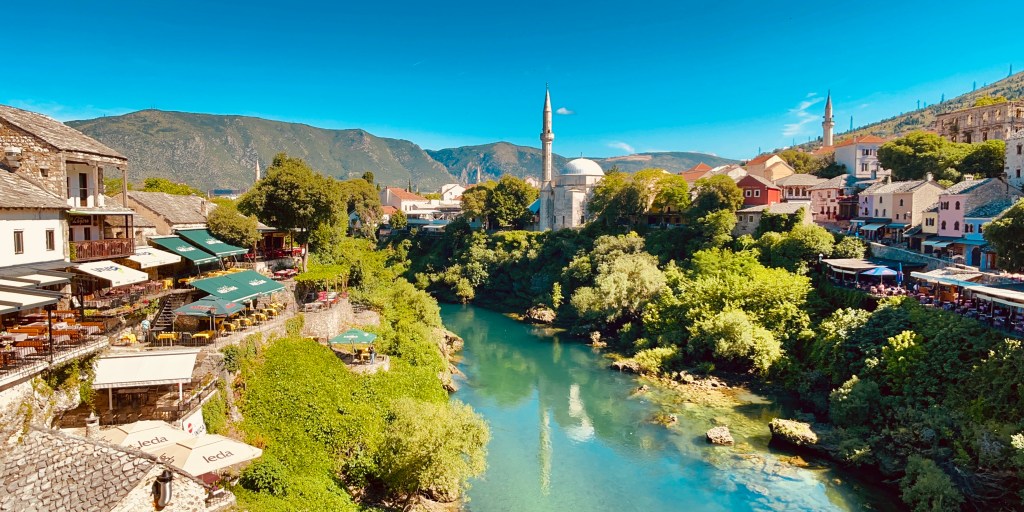
It is an ideal day trip from Croatia, however, I wanted an overnight stay. Avoiding the mid-day rush of day trippers to the old town, we got to experience its quieter more peaceful side in the morning and evening.

The city certainly had a different vibe once the visitors left, it was relaxed and allowed us to explore beyond the usual spots like the old town and bridge.
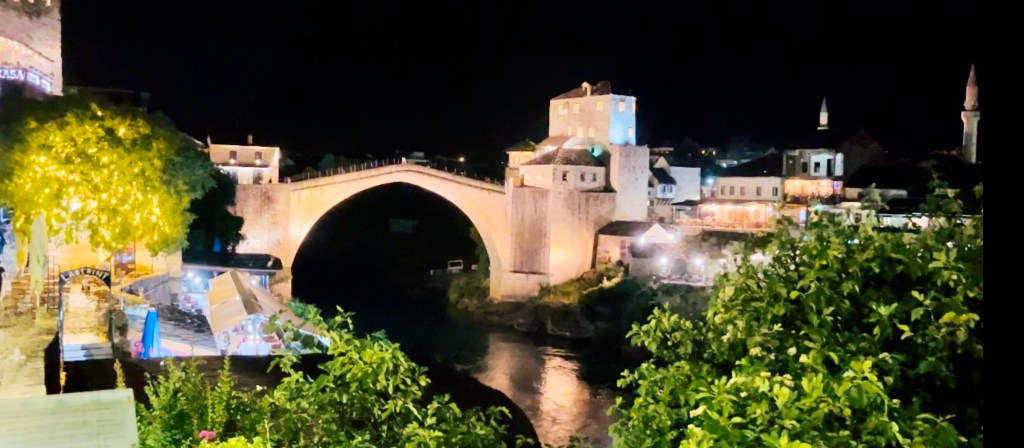
Also, staying overnight in Mostar let us see the city lit up at night which was pretty special, even with less-than-perfect weather it was great to see for myself its beauty and to soak up the atmosphere.

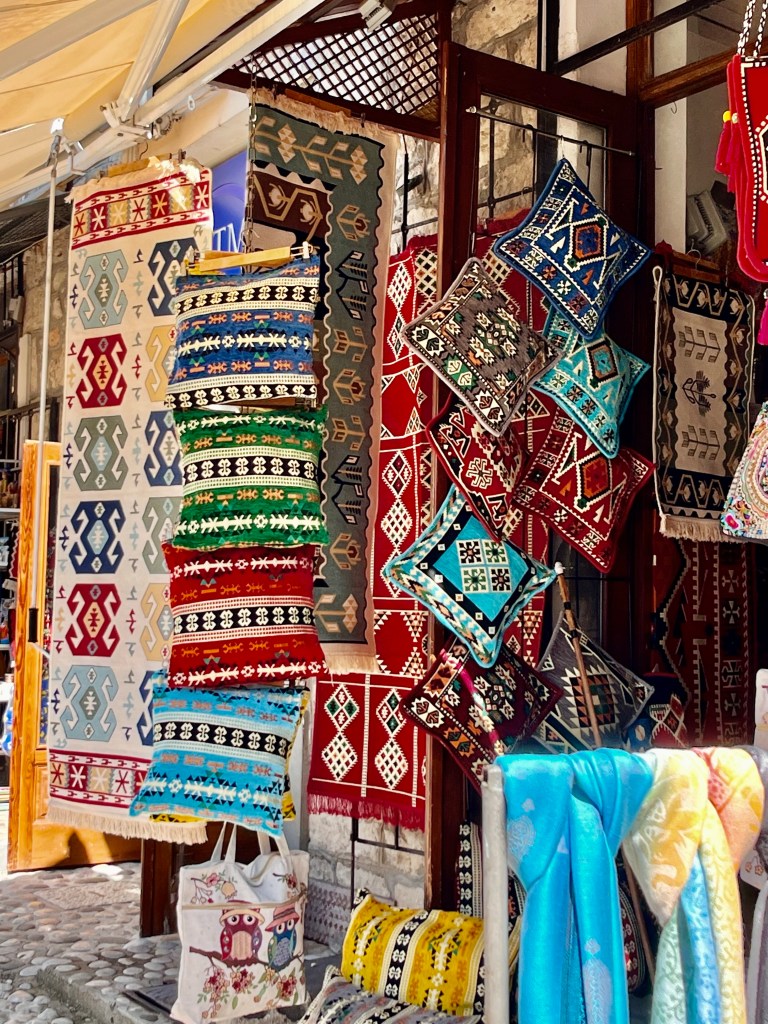
We got the opportunity to soak up the atmosphere of a bazaar. The cobbled stone streets burst into life with colour and life. Offering a shopping experience reminiscent of a Turkish market but without the constant aggravation.
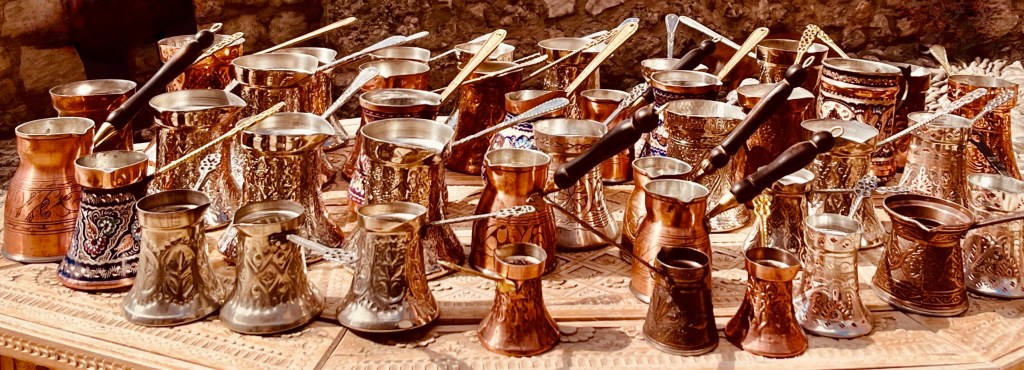
We found oriental rugs, handcrafted jewellery, and intricate copper crafts. war memorabilia as well as many souvenir shops.
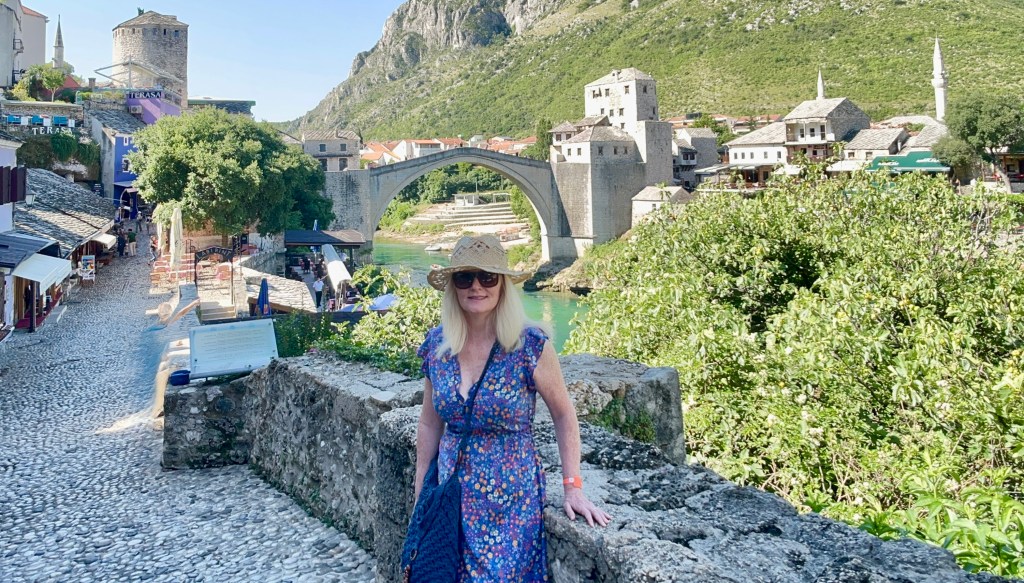
Strolling down the street was more than just shopping it was a cultural experience. As we wandered down we caught a glimpse of the Mostar Bridge, beautifully framing our journey through this vibrant marketplace.
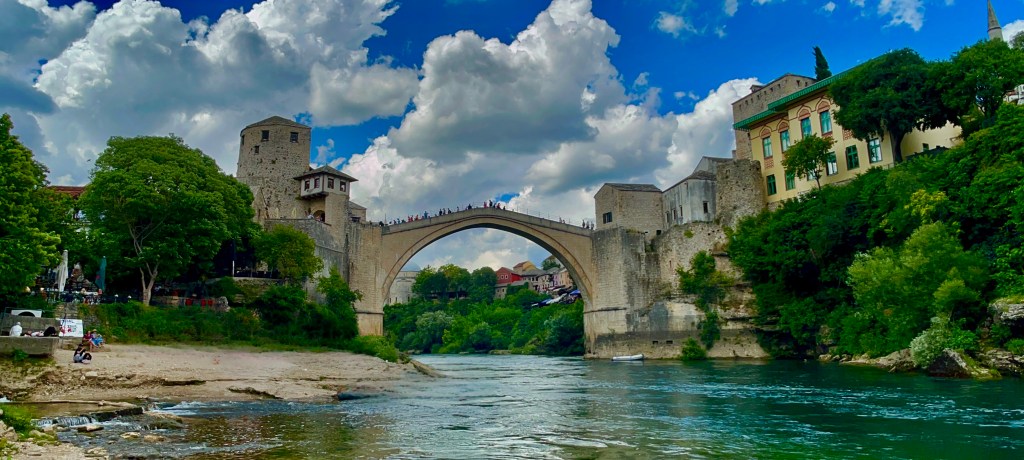
Of course, the city’s most famous attraction is the Stari Most Old Bridge. A masterpiece of Ottoman engineering showcasing an elegant single-pointed arch design. Testament to the ingenuity of the 16th-century builders
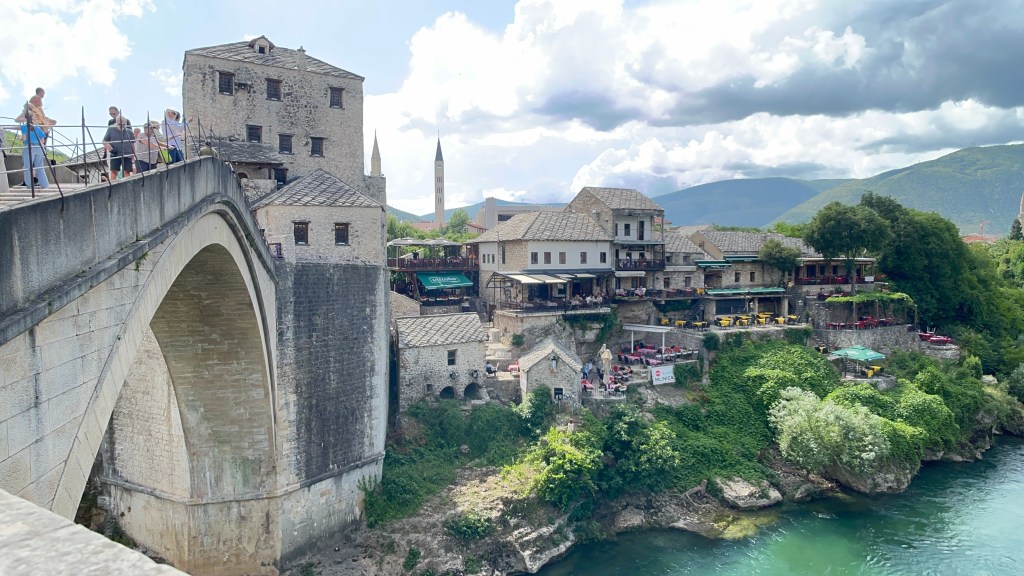
The bridge connects two vibrant parts of the city, exemplifying the meeting of cultures and history. The original was destroyed during the Croat-Bosnik War on the 9th of November 1993. Reconstruction commenced on 7th June 2001 and was officially inaugurated on 23rd July 2004.
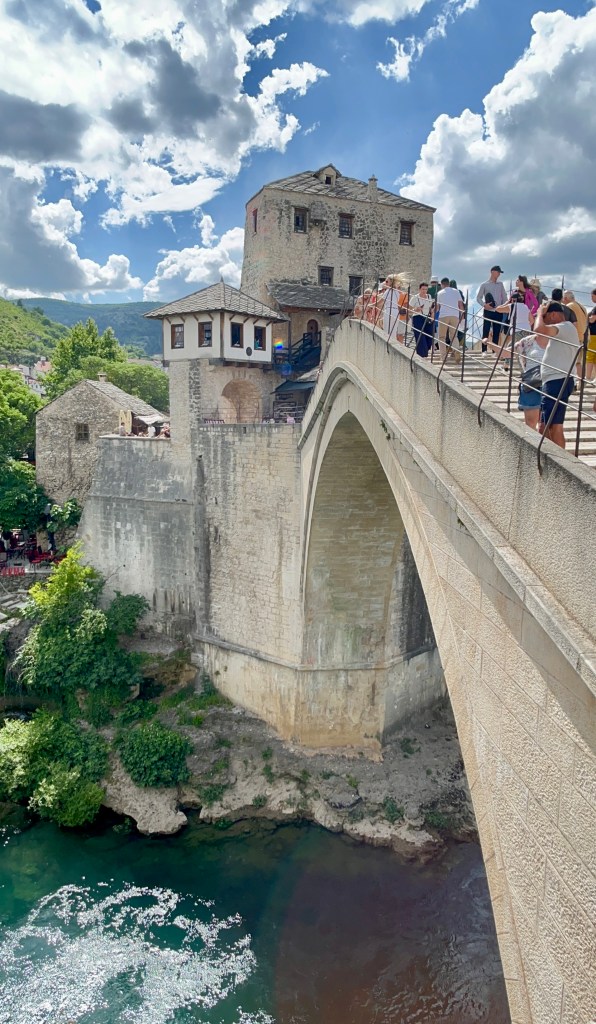
The bridge is a UNESCO World Heritage Site and undoubtedly the main sight in Mostar, if not Bosnia and Herzegovina. The 21-meter-high bridge is regularly frequented by the Mostar Diving Club whose members dive off the bridge. Unfortunately, there were no divers when we were there in the evening and early morning, the divers preferred to perform for larger crowds in the early afternoon.
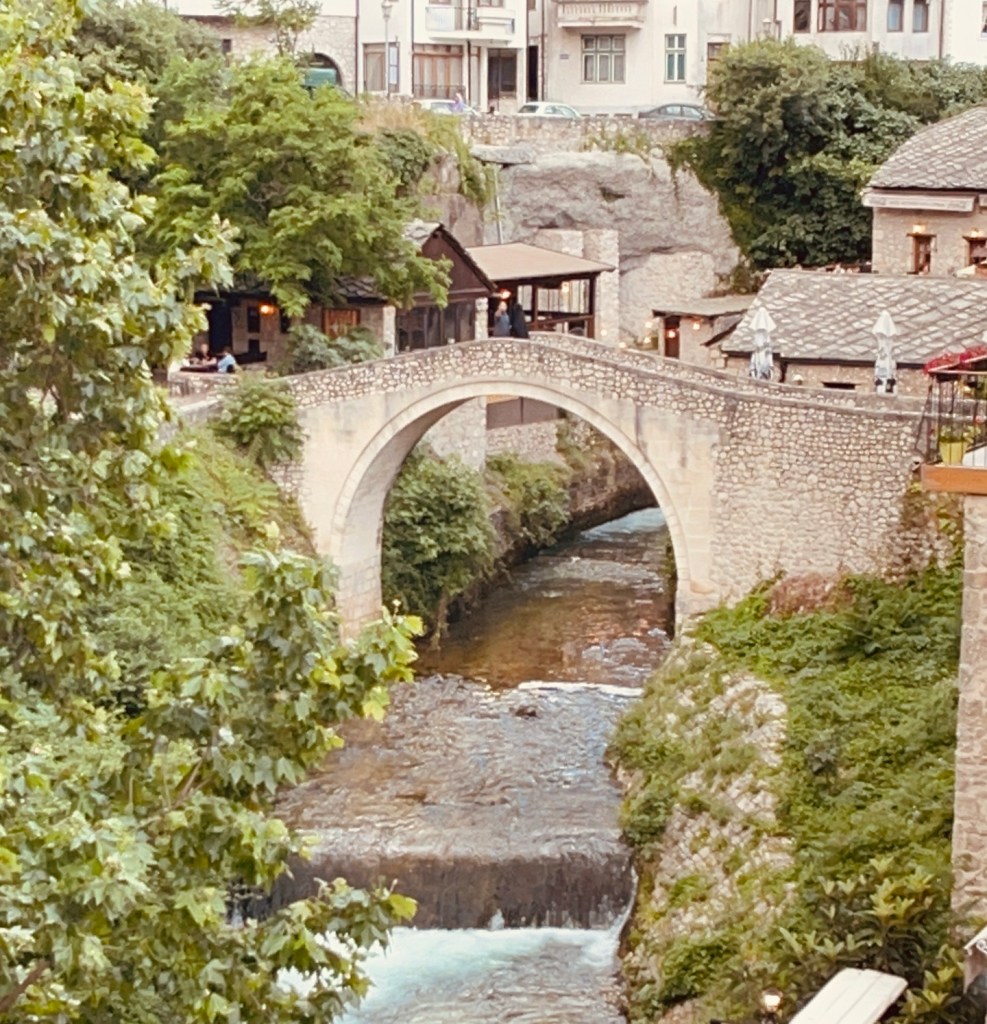
But enough about Mostar Bridge, I was able to view the original. The crooked bridge in the old town was the blueprint for its more illustrious sibling as it predates it by 7 years. The bridge is nestled in a quiet area lined with restaurants. Just a short distance from Mostar Bridge.
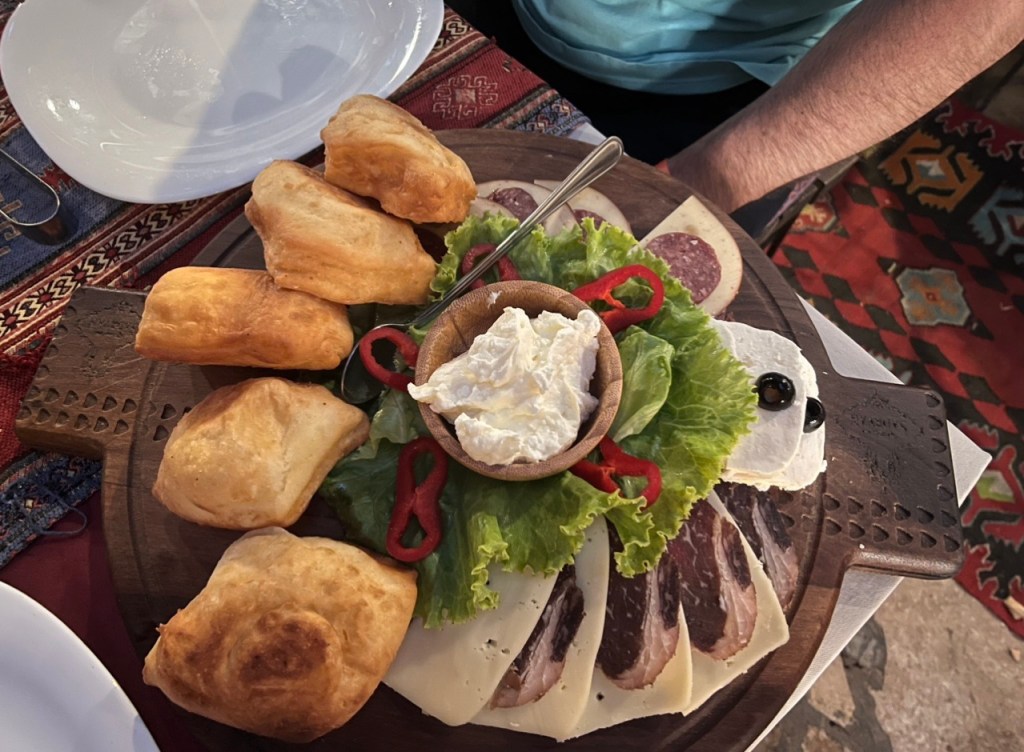
Eating in Mostar is not just a meal it is an experience with epic portions. A culinary journey that is as rich and varied as its past.

One restaurant that was recommended by several people was Sadravan, so I gave it a go. No river view but it’s certainly a popular restaurant. Situated in the heart of the old town serving local cuisine with absolutely humongous portions and warm hospitality.
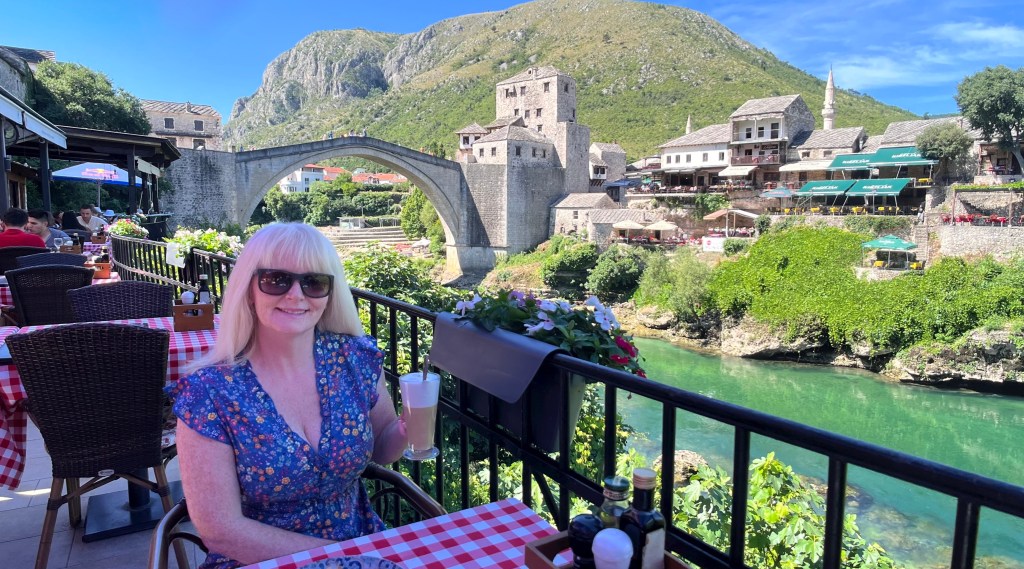
Breakfast the next morning the sun was shining. Sitting on the terrace, we were treated to sweeping views of the river and Mostar Bridge. Early morning you can virtually pick whatever table you want. There are plenty of restaurants with breathtaking views so no shortage of incredible vantage points to admire the stunning view.
Mostar’s cafe culture is vibrant and nothing is more traditionally authentic than grabbing a Bosnian coffee. This delicious nectar is like espresso on steroids. Having tried it earlier in the day I couldn’t pass up another opportunity to partake in a cup again.
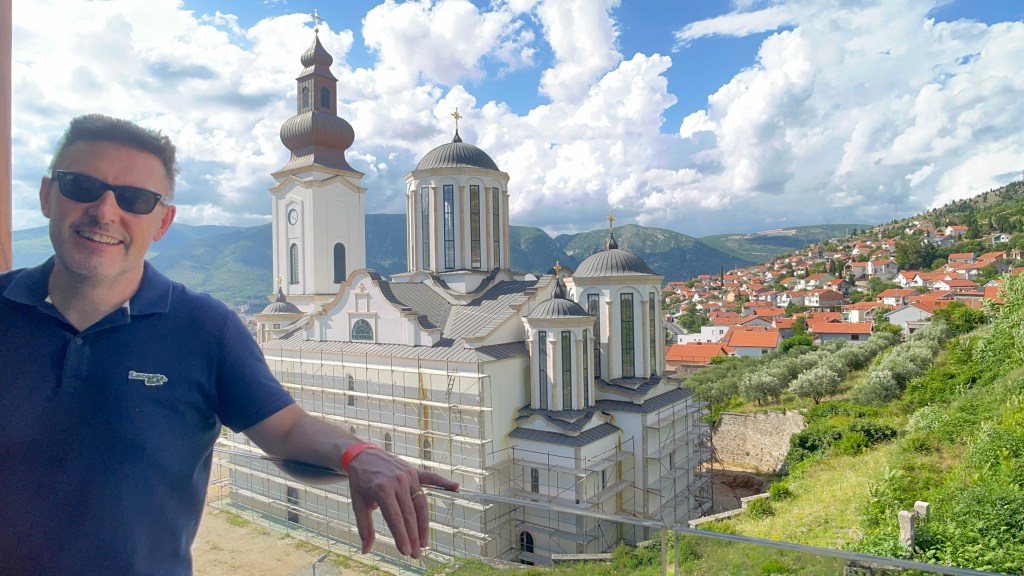
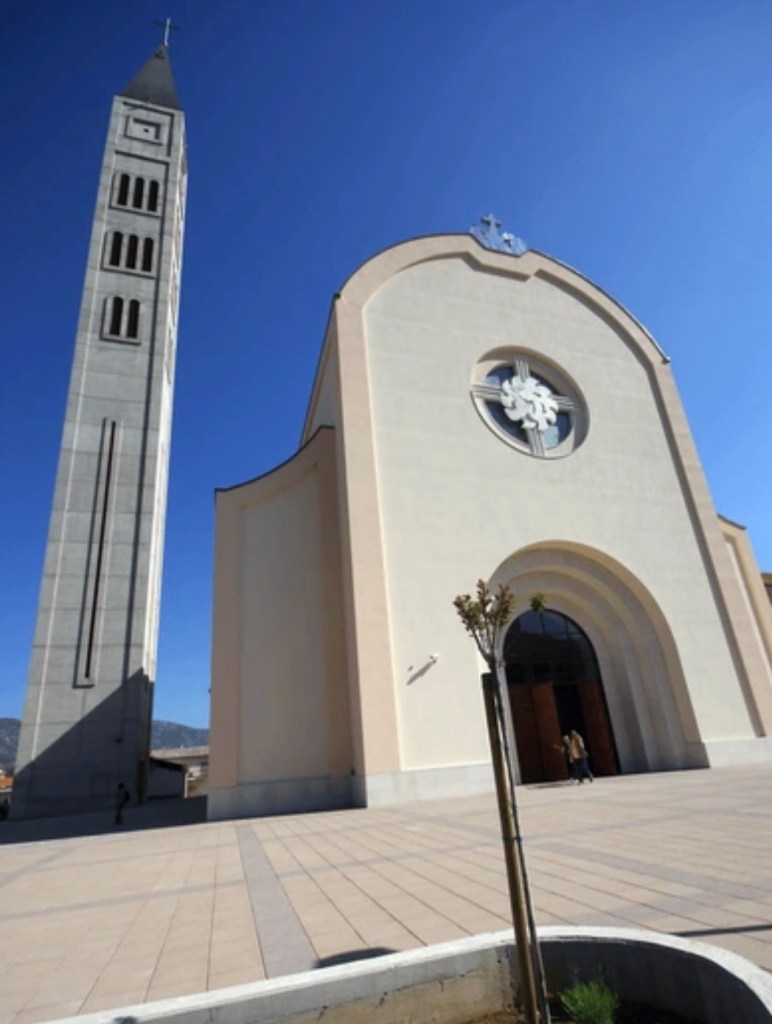
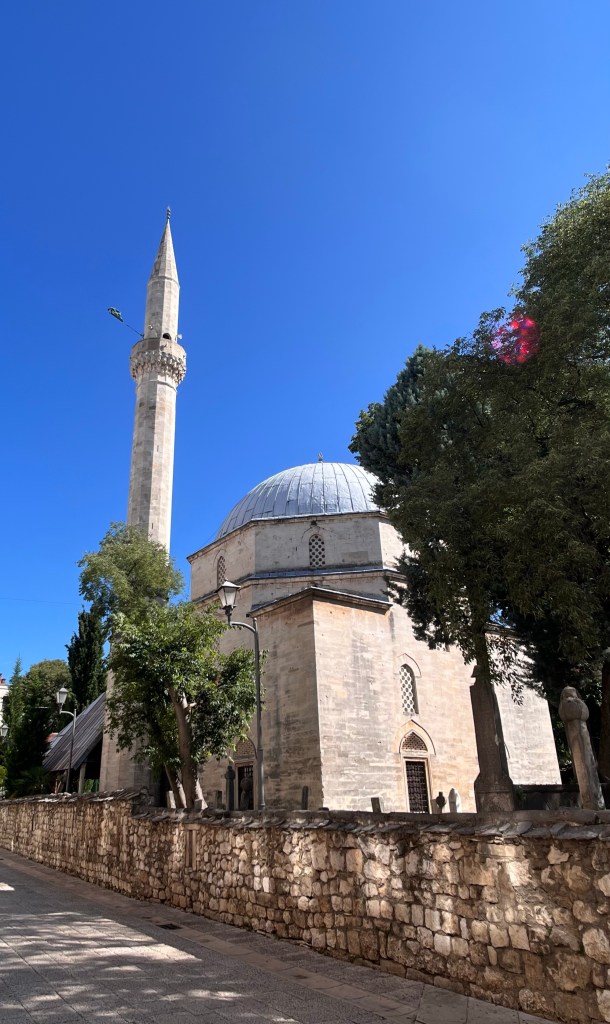
Mostar today bears no resemblance to the city that it was during the war, the most heavily destroyed city in Bosnia and Herzgavania. A city with a complex past where Muslims, Croats and Serbs all called the city home. You can find Catholic, Orthodox and Muslim places of worship in Mostar.
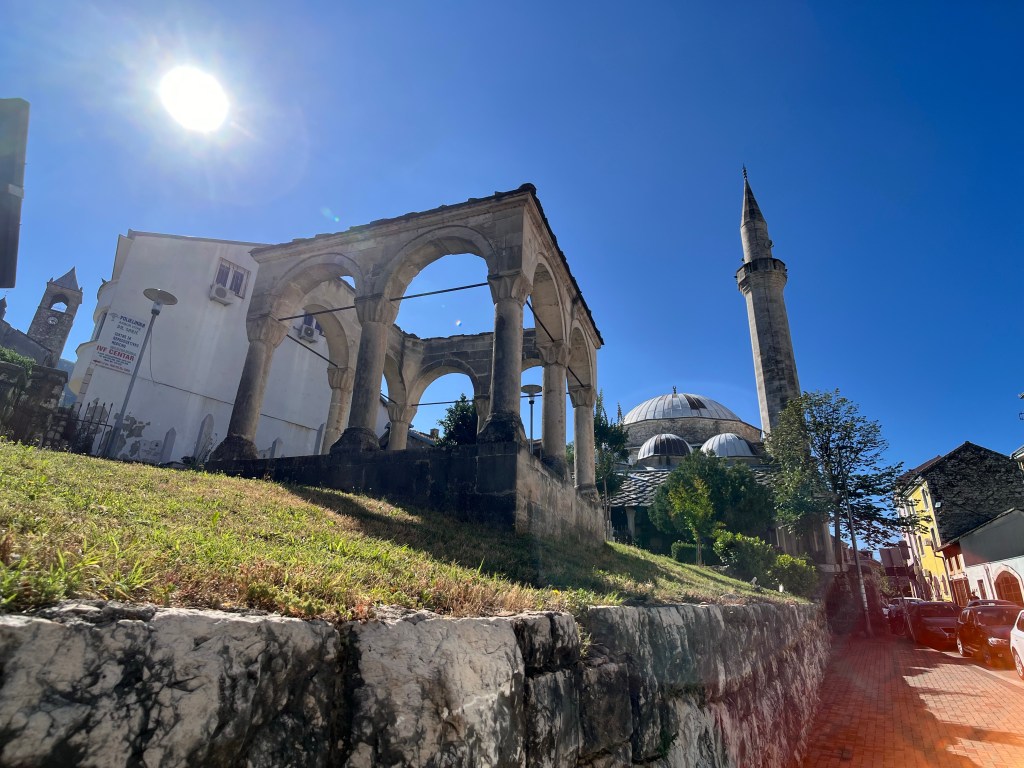
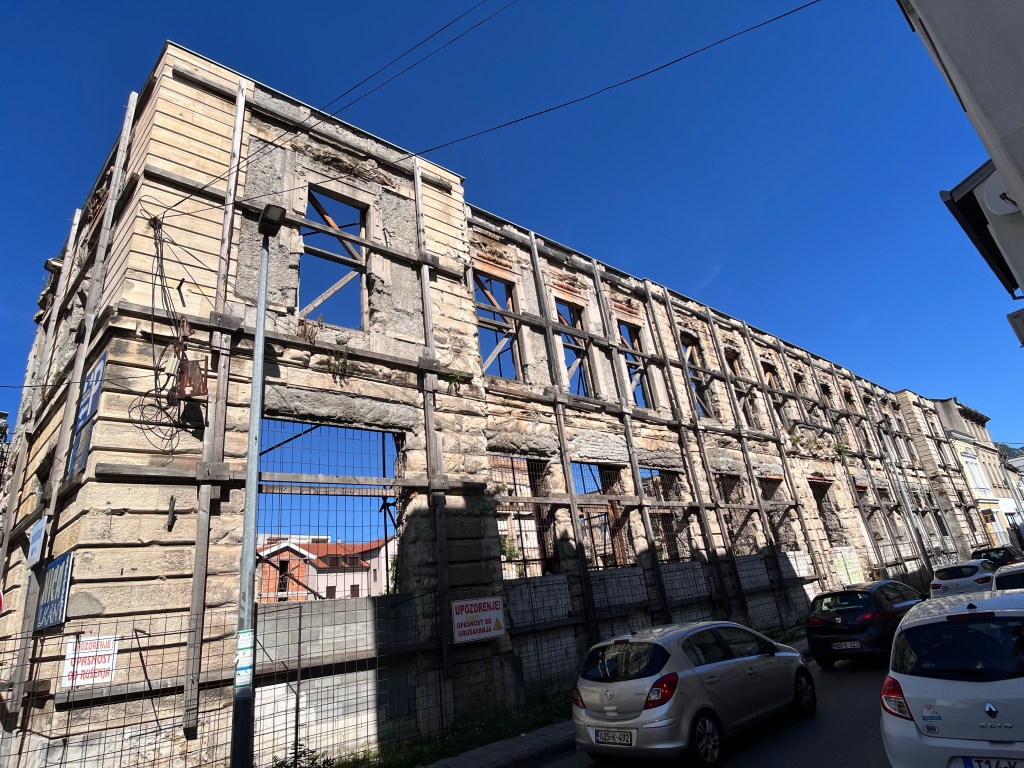
My experience with Mostar was much different than I anticipated. I had numerous preconceived presumptions about the city and the war, but ultimately it made me realize the cruelty of war and although the fighting has ended the effects can linger on.

Amongst the post-war scars, there is beauty to be found. Its lovely old town with old Europe cobblestone steps, fantastic restaurants, one very famous bridge, compact visitor-friendly location and the friendliest welcoming people I could wish to meet, make Mostar an ideal place to spend some time.
Brkic Winery
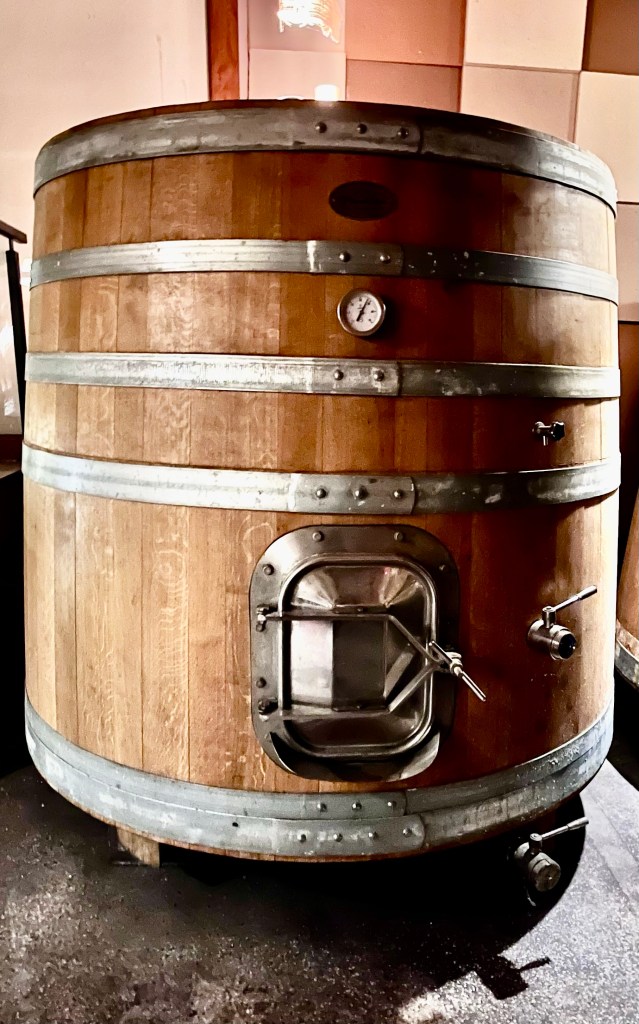
After our overnight stay in Mostar, our first stop of the day was a local winery. Herzegovina winemaking is still somewhat of a hidden secret like so many other things in this stunning country.
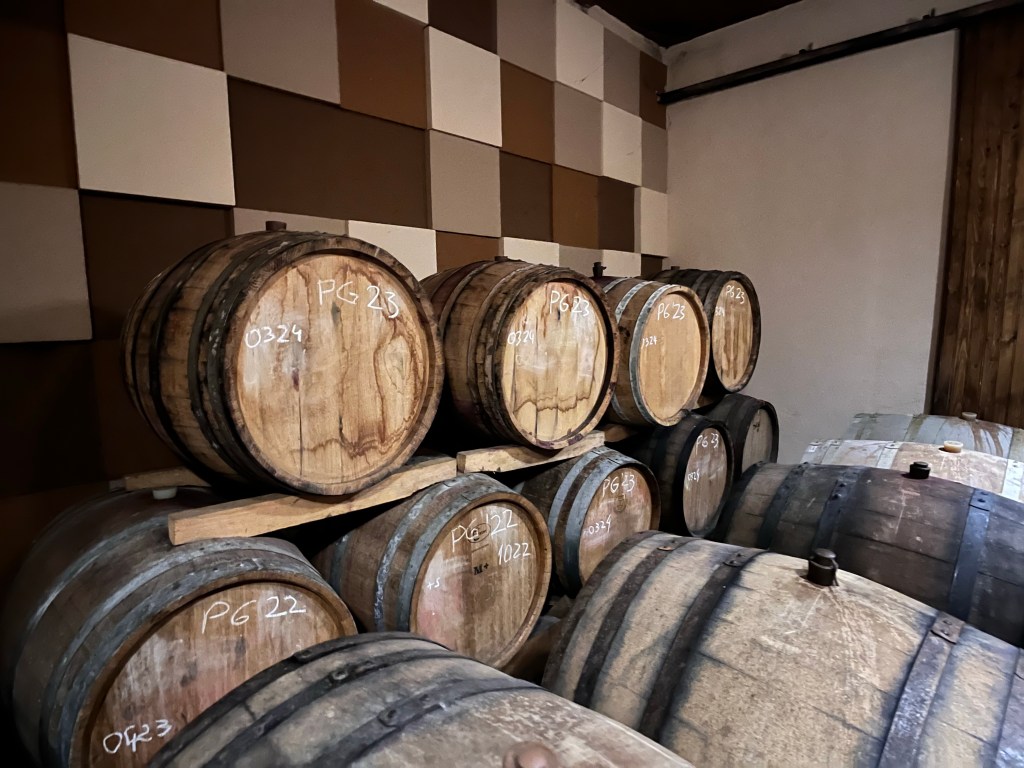
The Brkic Winery we visited is a family-run business. Where wine is made organically and biodynamic using natural methods, they are aged in local Bosnian oak barrels dealing with coopers in Bugojno who supply the family with authentic Bosnian oak barrels.
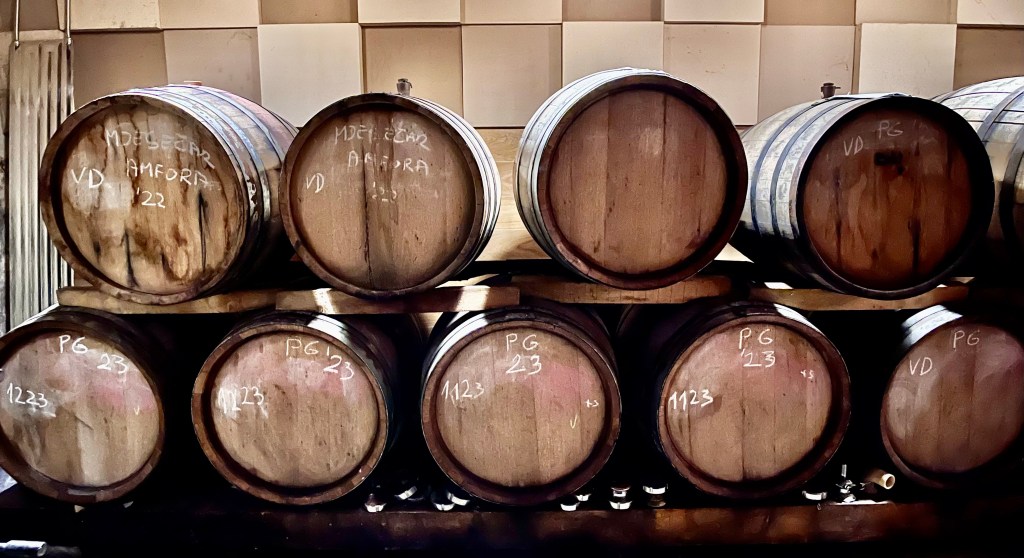
The wine at Brkic Winery is authentic and unique. Using only Indigenous grape varieties Zilavaka (white) and Blatina (red) These wines have been grown in the region for centuries and give the best results in Herzegovinian stone and sunlight. Herzegovina as a region is not polluted, the climate is perfectly suited to wine production.
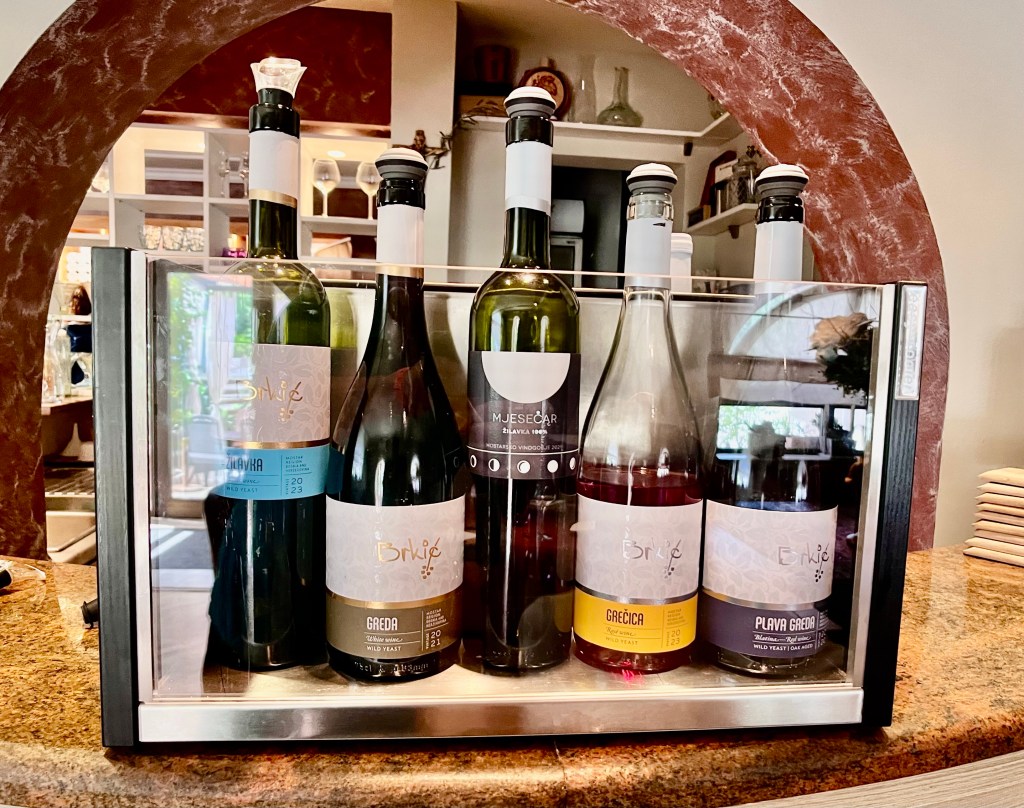
The wines are all made as naturally as possible. Strongly following biodynamic winemaking processes. A wide selection of different Brkic wine brands are made in a completely organic way without any additives that may impair the natural quality of the grape.

It has become a popular spot on the Herzegovinan wine trail. On our tour with Funky Tours, we had the opportunity to partake in some wine tasting. Although I don’t profess to be a wine connoisseur, I certainly enjoy my wine and in my humble opinion, these were wines of very high quality. A beautiful clean natural taste certainly no sulphates to be found at this winery.
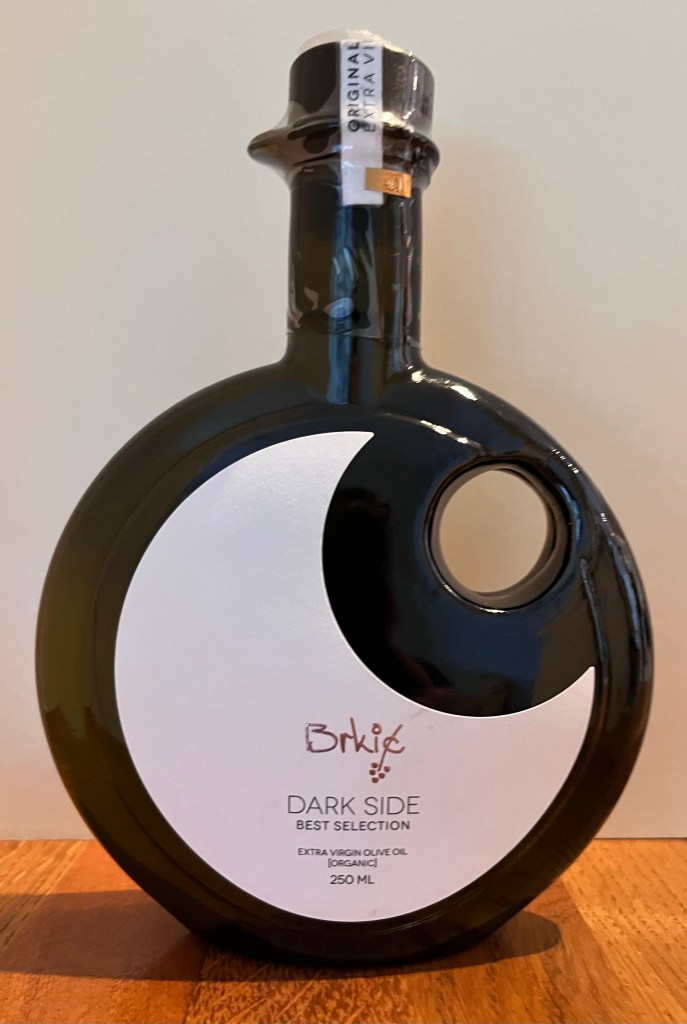
Besides wine, they also produce some other spirits and liqueurs like grappa and honey liqueur. They also produce exquisite olive oil which we tasted after wine tasting with some flavorful cheese, ham and bread and I bought a bottle to take home with me.
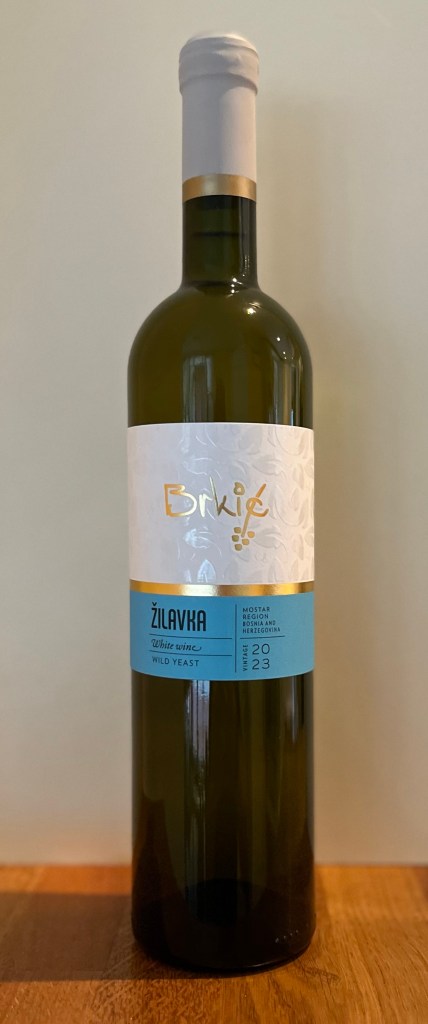
My only regret at the Brkic Winery is that they don’t ship wines to Wales 🏴 oh no!!!!! I did manage to buy a few bottles which I would have to take back with me on the plane. The local wine community want these quality wines all to themselves.
Radimlja Necropolis
The Radimlja Necropolis is one of the most valuable monuments of the medieval period in Bosnia and Herzegovina.

After the visit to the winery, our next stop was the Necropolis which is protected by UNESCO and designated as part of the World Heritage List. It is situated on the outskirts of Stolack.

At first glance, it reminded me of an abandoned graveyard which of course is what it is, but on closer examination there are about 135 white stone blocks, over 60 which are visibly carved.
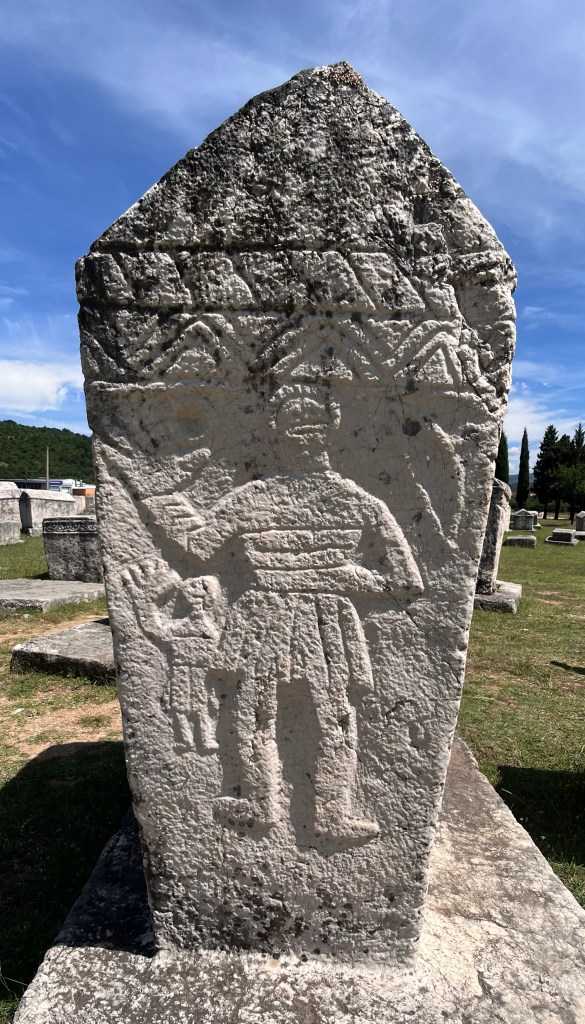
These are some of the country’s most important stecci (carved grave markers) Different ones depicting a message in how that person lived their life. A bow and arrow would depict a hunter, and grapes would depict someone involved with working the land. These would have been expensive to make so only the rich would have the means to have them.
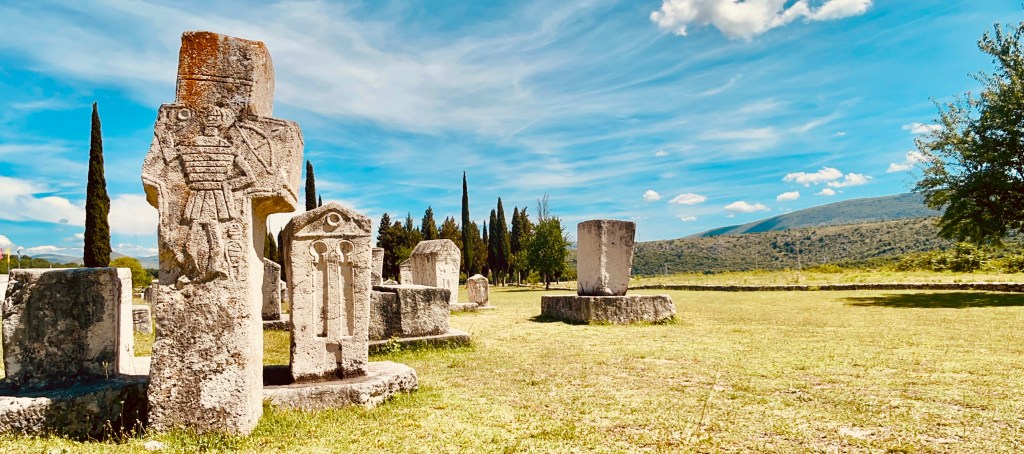
There are over 60,000 of these tombstones in Bosnia and Herzegovina although not all are as well preserved as this site. An interesting stop a location that I would not have visited independently. Giving an insight into the long history of this country.
Stolack

Stolac is situated near the border with Croatia and Montenegro. The town is home to several historical sites including Stolac old city, the Stolac Fortress and the previously mentioned Radimlja Necropolis. We walked up to Stolac Old City which was 10 minutes from the town up an incline.
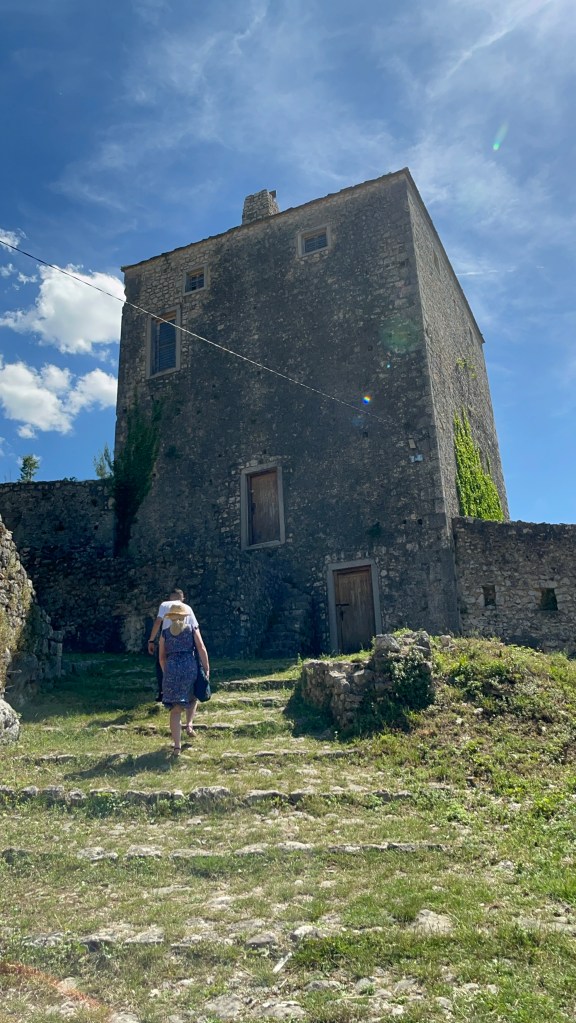
The old city is a historical monument that contains ancient walks, towers, gates palaces and mosques. This is one of Herzegovina’s historically important destinations yet is completely overlooked, despite it being close to Mostar and not far from the Croatian coast. We were the only visitors there which made for a very personalised tour with our guide Addis from Funky Tours.

Things may be changing soon in the area, a cultural tourist route is being set up to take advantage of its rich cultural and historical heritage. It has been set up with funding from the EU and World Bank. To put this undiscovered location firmly on the map.
The town itself has a charming mix of Ottoman and Austro-Hungarian architecture and acts as the cultural centre for the region with many historical sites nearby.
Traditional water mill
Our final stop on our two-day adventure was a late lunch at this rather charming water mill that had been converted into a restaurant.

Water is abundant in the area. The Bregava River provides a much-needed life essence to Stolac and irrigates the fertile land that surrounds the town. This mill was situated on an islet in the Bregava River
During the Ottoman period, Stolac became very important due to its waterways and strategic position, with many canals and watermills being constructed.
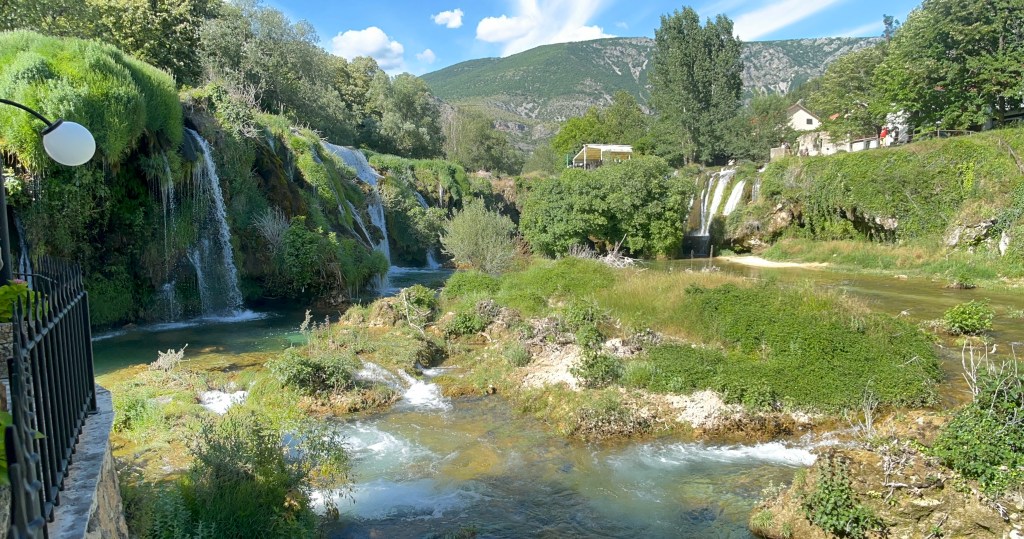
A perfect stop to enjoy a relaxing alfresco lunch, on the outside terrace with a fantastic view of the nearby Provalije waterfalls, peaceful and tranquil the soothing sound of the water cascading down beside us made this dining experience very memorable.

We had a shared platter of some traditional food. Local cheese, cured meats and traditional bread rolls that tasted like savoury doughnuts. Addis our guide explained that they are baked and then fried and served with a cheese spread. Eating in this country is certainly very calorific in terms of the food and the gigantic portion size.
In the blink of an eye, our mini adventure had come to an end. Our transfer back to the Dalmatian coast awaits. Bosnia and Herzegovina was not a destination on my travel itinerary, but I am extremely glad I went. It was well worth checking out.

 We were born to do more than go to work, pay bills and die. See the world while you are alive and kicking