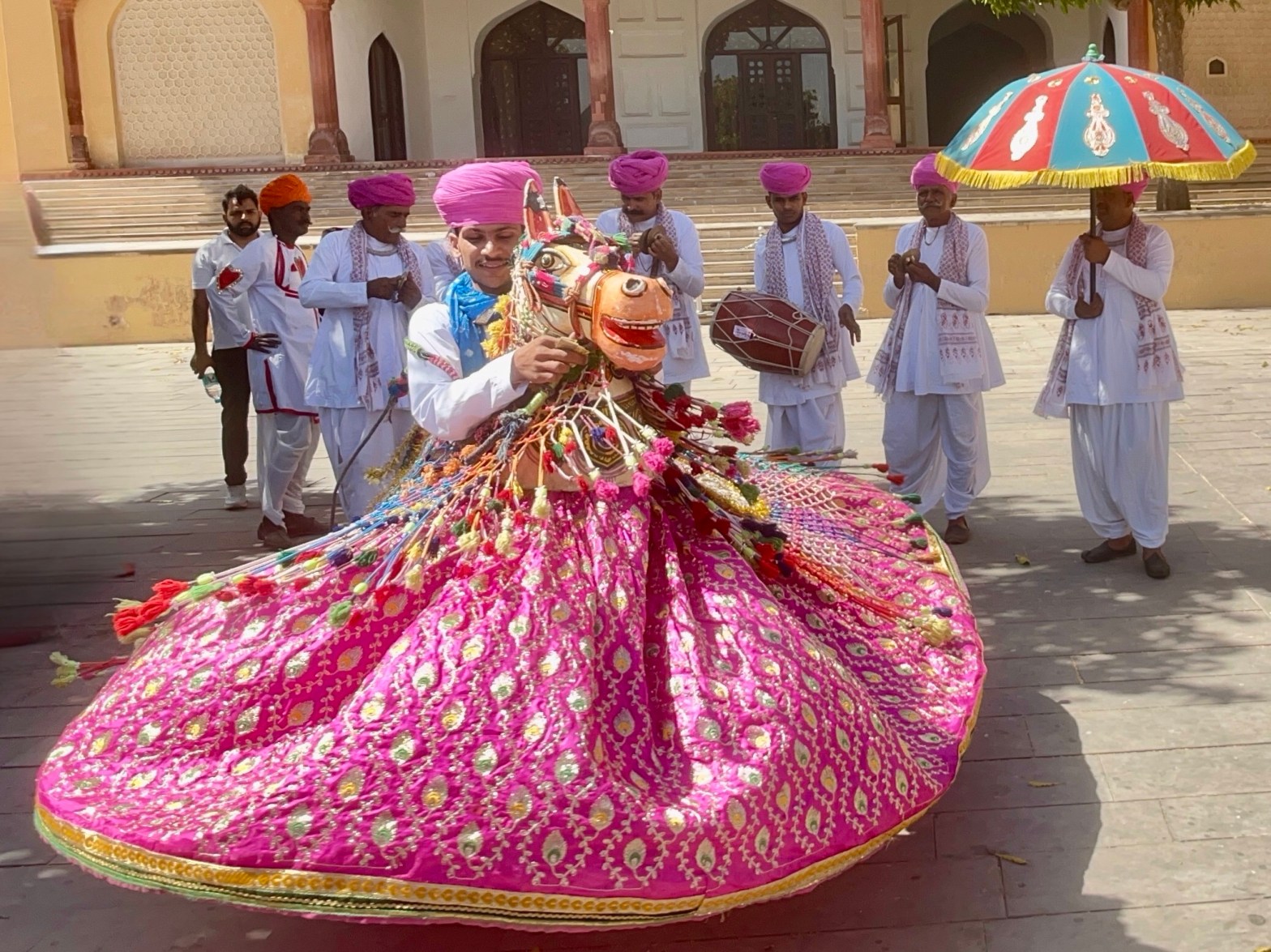
A bustling energetic place full to the brim with sights, sounds and flavours that unequivocally present Rajhistian in all its glory

Jaipur epitomises Rajhastan’s colour its regal heritage and its artisan culture. It was first painted pink to honour the visit of the Prince of Wales in 1876.
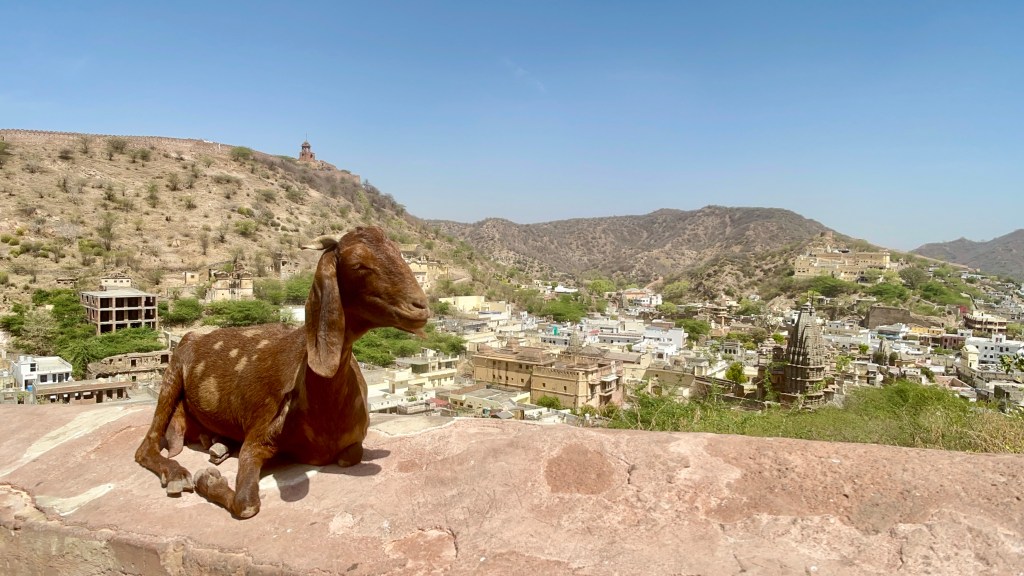
This very picturesque city with numerous forts palaces and historical monuments. Along with Dehli and Agra, it forms part of India’s famous Golden Triangle.

Jaipur is the largest city in Rajasthan and its capital. Although it has a rich heritage, it is a fast-developing city with many development projects ongoing.
Jaipur’s nickname The Pink City comes from its distinct pink-coloured buildings which were painted this colour to imitate the red sandstone architecture of Mughal Cities.
The present earthy red colours first came to prominence when buildings were repainted for the visit of the Prince of Wales in 1876. It was India’s very first architectural planned city.
Amber Palace
Jaipur has not one but six world heritage forts. Amber Palace is one of the most well-known.
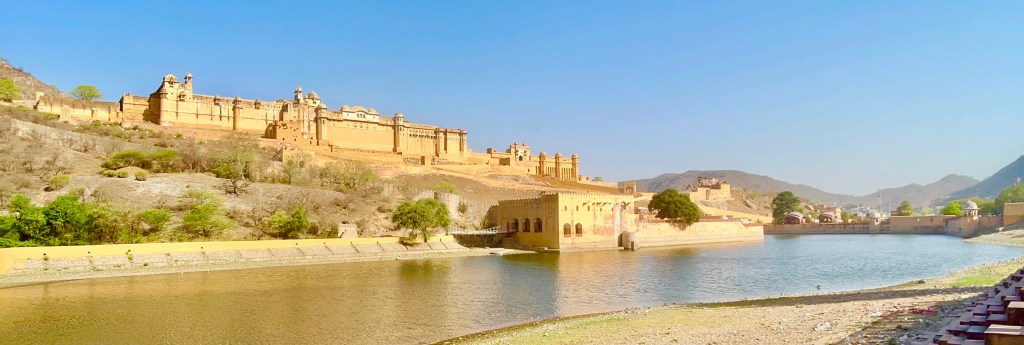
Towering majestically high on a hill above the village of Amber. This 16th-century fort blends perfectly with Muslim Mughal and Hindi Rajput elements.
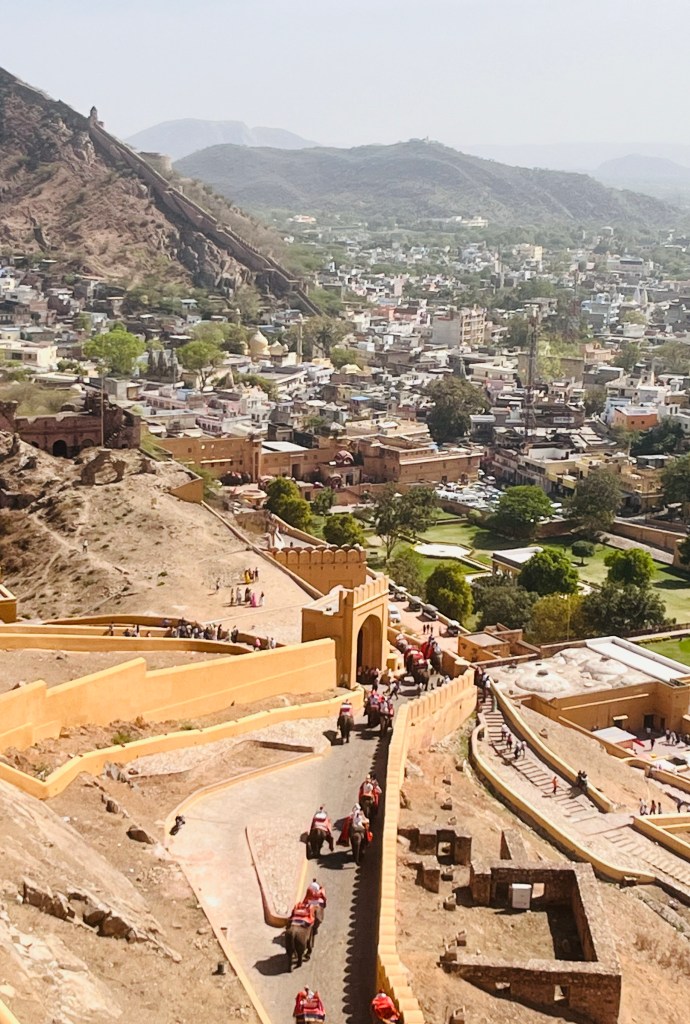
To get to the top there are a few options available you can walk, go by golf cart or go by Jeep. We choose the Jeep option. However, the road can get very congested and hectic.
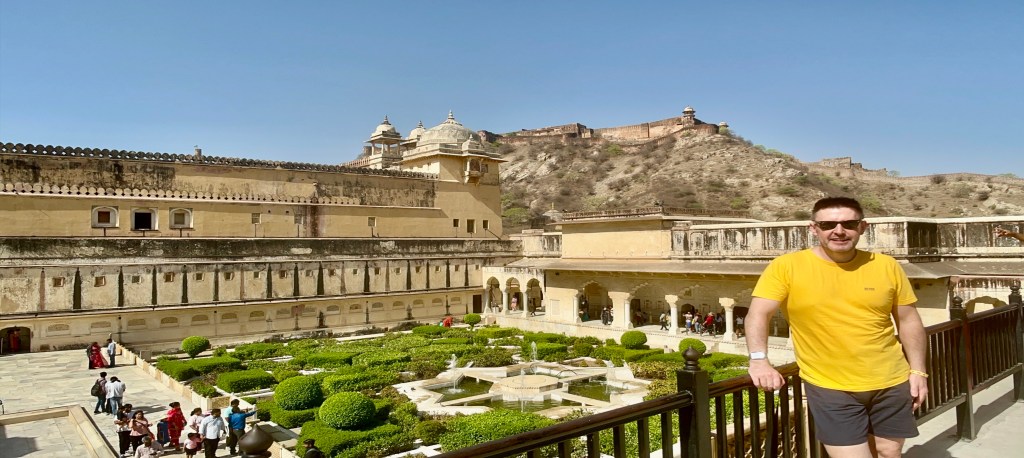
The fort was constructed in 1592 by Raja Man Singha, the Rajput commander of Akbar’s army. Improvements and additions were made by successive rulers over the next 150 years.

It is set amidst hills and overlooks Maota Lake. The lake was once the main water source for Amber Fort. In the centre of the lake is an island covered in a lush garden which was first planted in the 15th century.
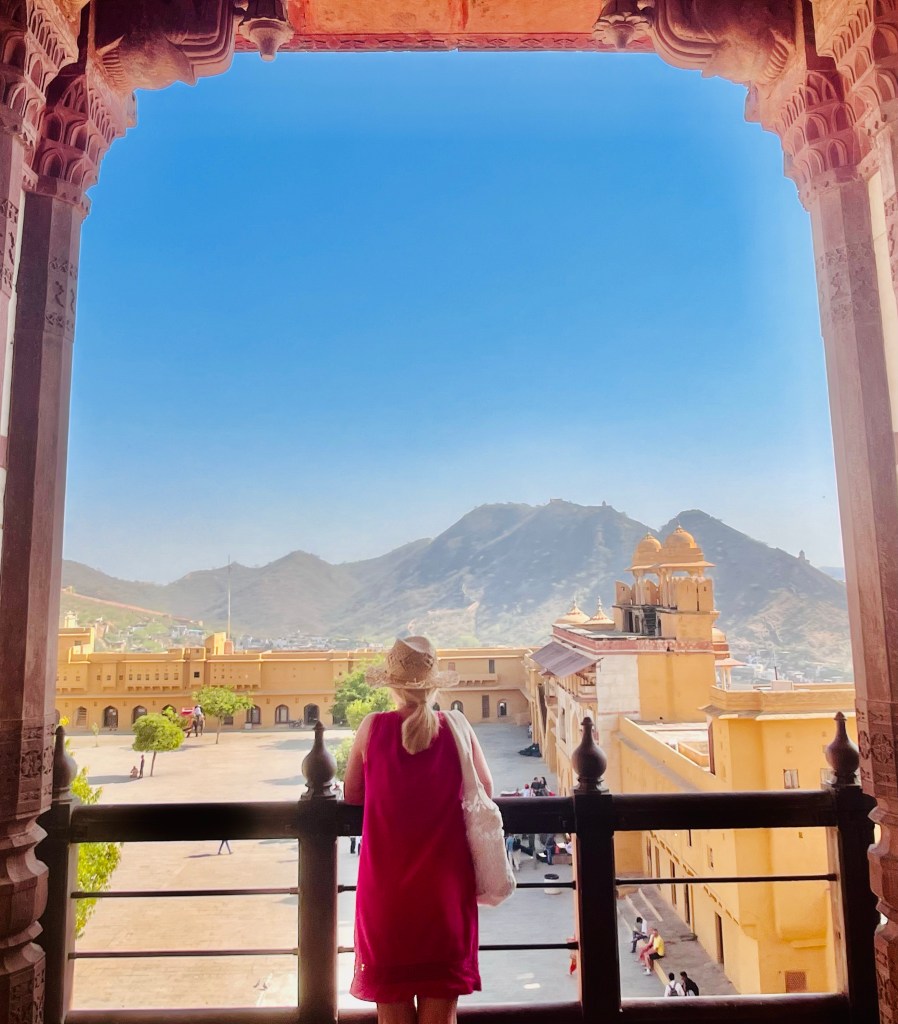
The fort is a gorgeous piece of ancient architecture which is constructed from red sandstone and marble. It has been a UNESCO World Heritage Site since 2013.
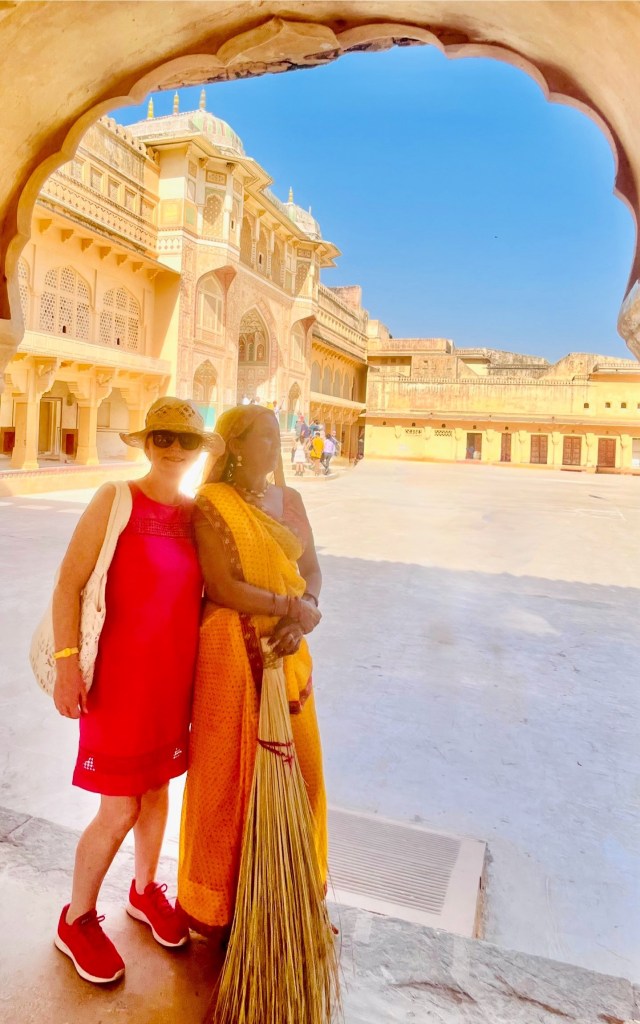
The complex is vast with four expansive sections to explore, we navigated through a maze of archways, cobbled paths, hallways and courtyards.

A guide is a must at one of Jaipur’s most incredible and popular attractions. There is just so much to see and our tour guide was very knowledgeable and had a great passion for the area. Which allowed us to get the most from our visit.
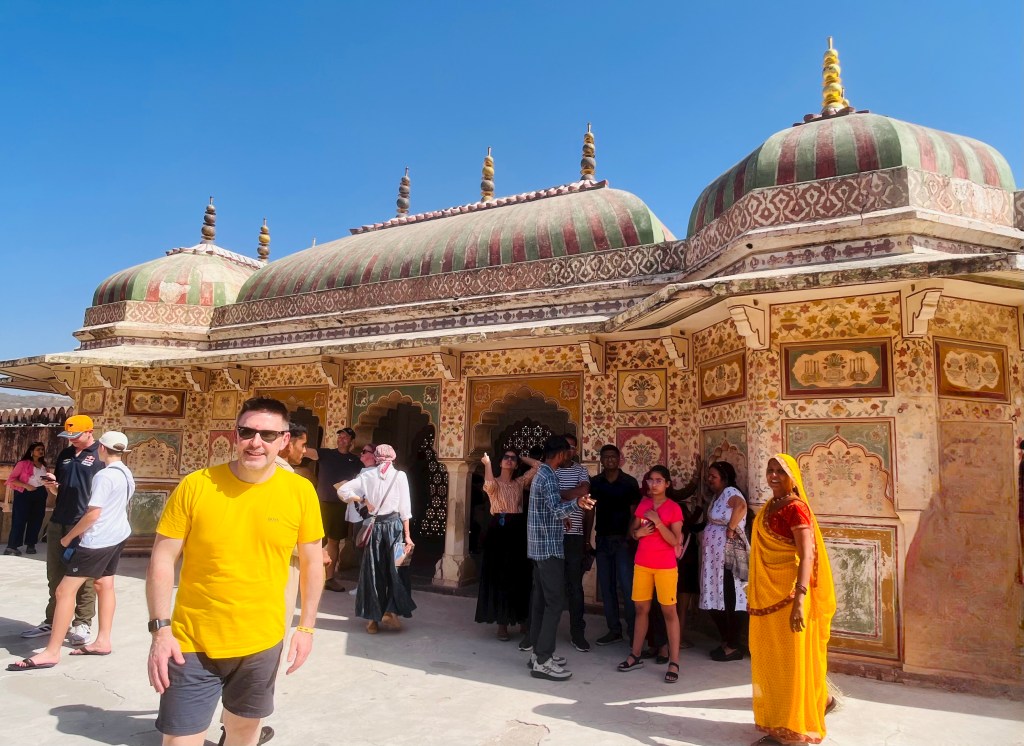
However with over 1.8 million visitors a year and over 215,000 during peak season. It requires careful management of the complex to best reserve Amber Fort for future generations.
Jantar Mantar
An astronomical observation site was built in the 19th century. It is a UNESCO World Heritage Site.
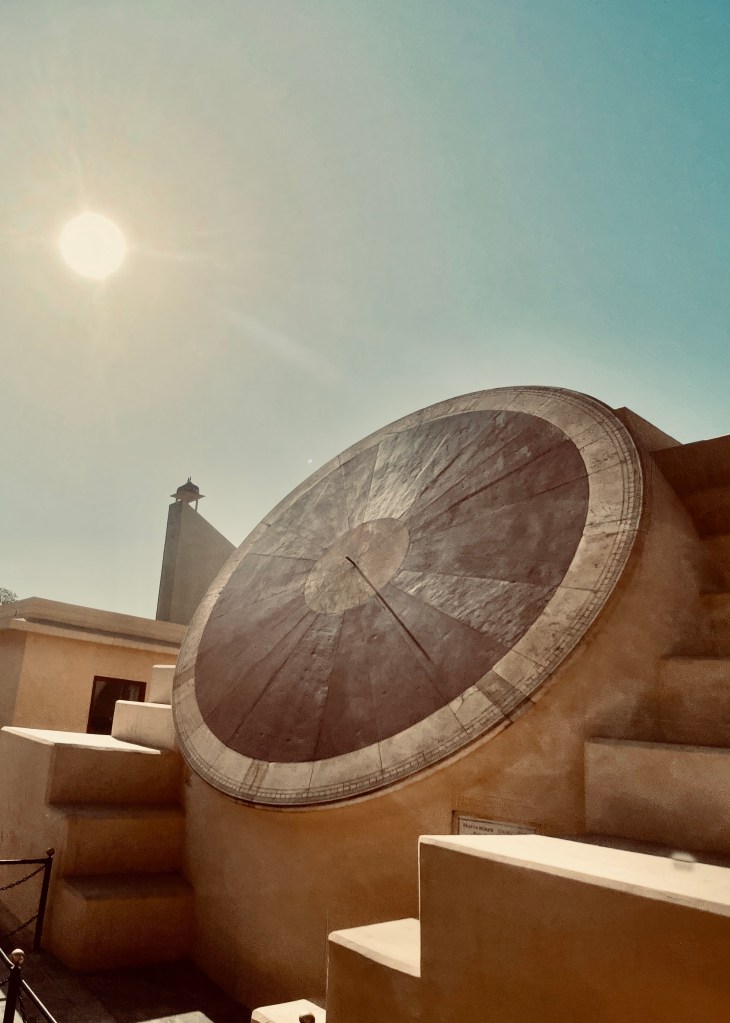
It features the world’s largest stone sundial (Samrat Yantra) a sundial which can tell the time within 2 seconds and is still used to this day.
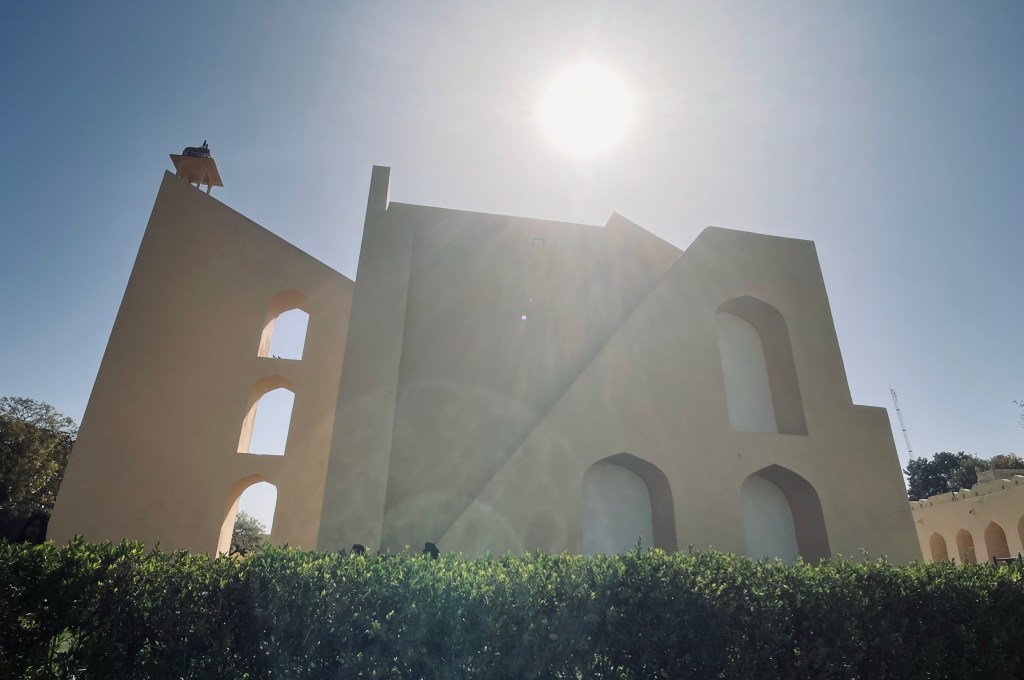
Each of the buildings in this sprawling complex was once used for a singular and specific purpose. That’s what made my visit so interesting as each of the buildings had a unique and fascinating history.
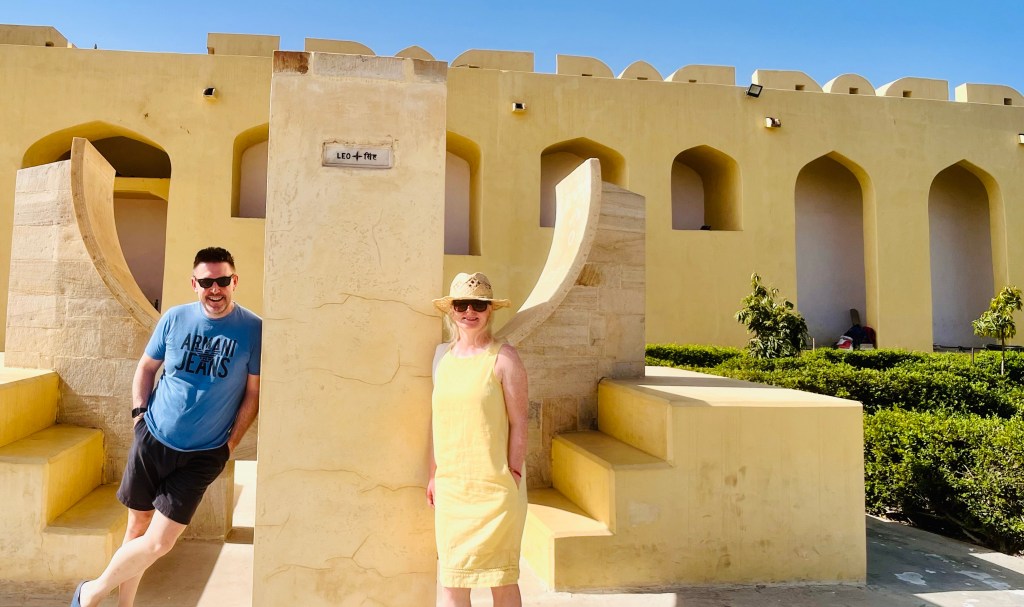
This was one of the stops on an organised tour and wouldn’t necessarily be a place of interest for me. But it was a very intriguing visit where we were able to marvel at one of the largest collections of astronomical instruments in the world.
City Palace of Jaipur
The City Palace Jaipur is a royal residence and former administrative headquarters of the rulers of Jaipur.
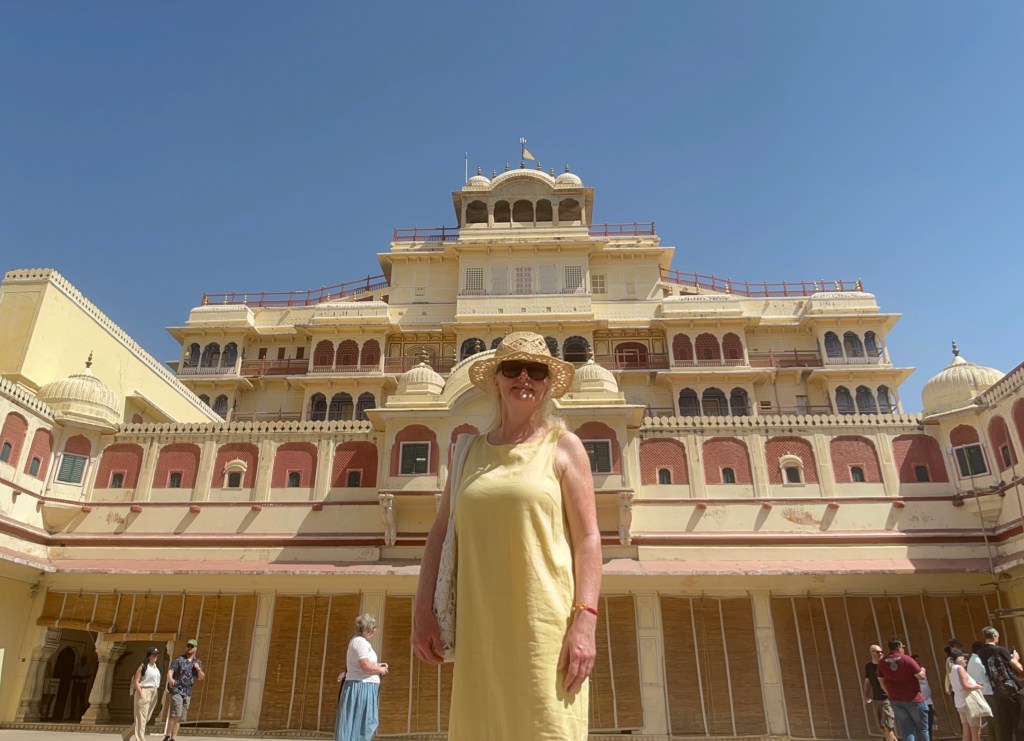
The palace was built by Maharaja Sawai Jai Singh II who moved his capital from Amber to Jaipur in 1727. Jaipur has remained the capital ever since and the palace was completed in 1732.
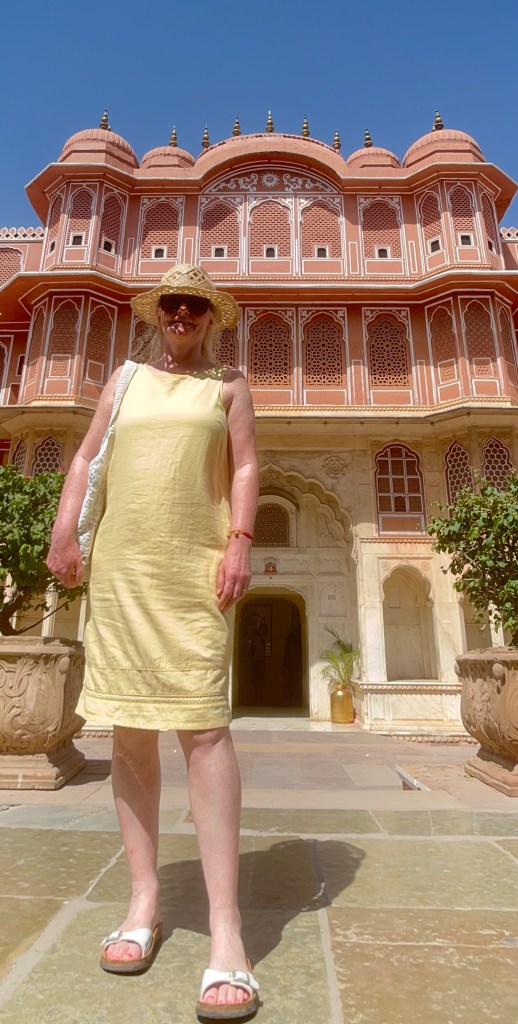
Today City Palace is one of Jaipur’s most famous buildings and is a very popular location with visitors. It conveys the regency of its past where countless Rajasthani royalty have been in residence.
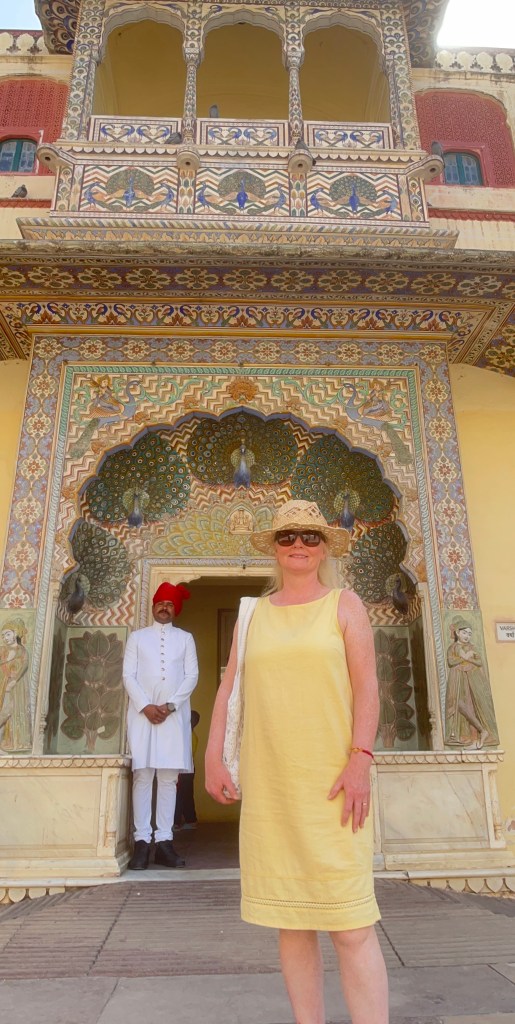
The palace is a combination of gardens, temples, palaces and pavilions. The unique architecture of the palace certainly makes for a fascinating visit.
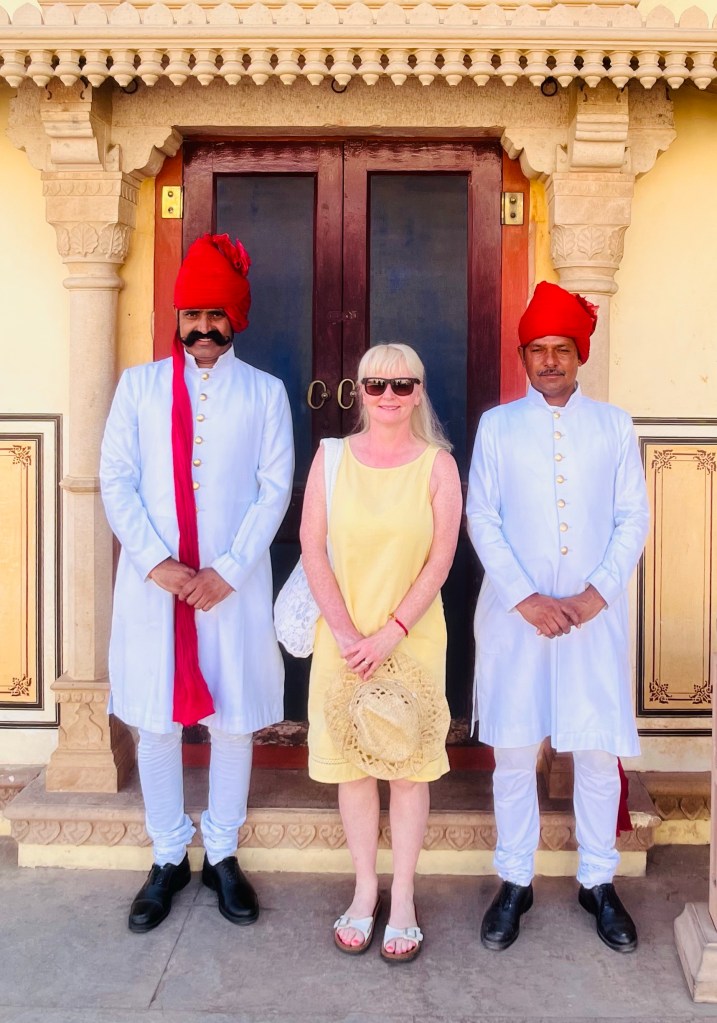
During our visit, we were propositioned by some very regal-looking guards. But it’s not because we have committed some cultural faux pas. They were open to giving us the perfect picture opportunity 😆

There are palace buildings from different eras some dating from the early 20th century. It is a striking blend of different architectural styles. Set in immaculately maintained gardens.
Pink City Gates
There are seven gates in total and they act as entry and exit points from the walled city. Today these gates are a great reminder of the great architectural legacy of yesteryear

The wall encircling the city was an important part of the plan laid under the supervision of Maharaja Sawai Jai Singh II and this is how it became the walled city.
Jal Mahal (Water Palace)
A palace that floats majestically in the middle of Sagar Lake.
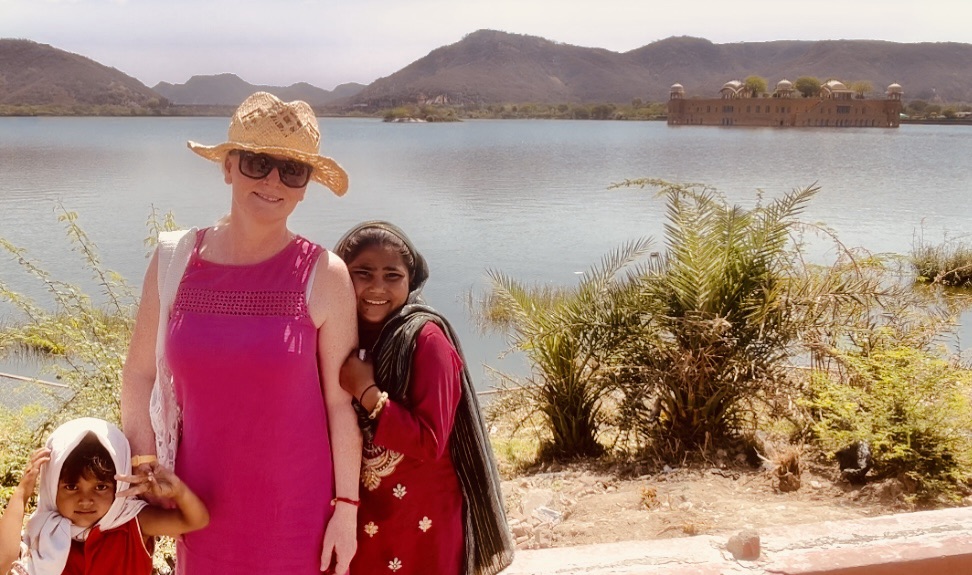
Constructed in 1799 as a summer retreat for Maharaja Jaib Singh II. It is not open to the public. It is now an upmarket hotel with plans to develop the palace and restore it to its former glory.
Hawa Mahal (Palace of Wind)
Completed in 1799 a World Heritage Site and one of Jaipur and indeed India’s most famous buildings.
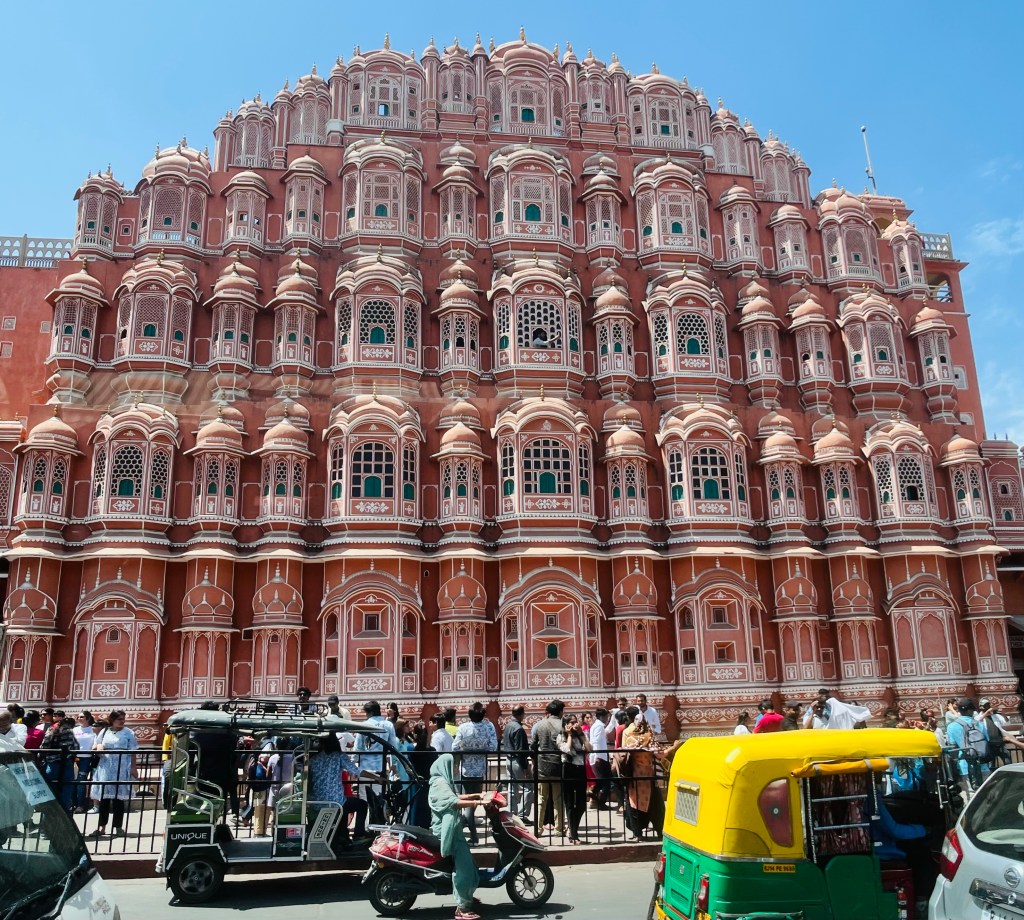
The main purpose of the building was to allow ladies of the royal family to observe the busy streets below without being seen by the common people.
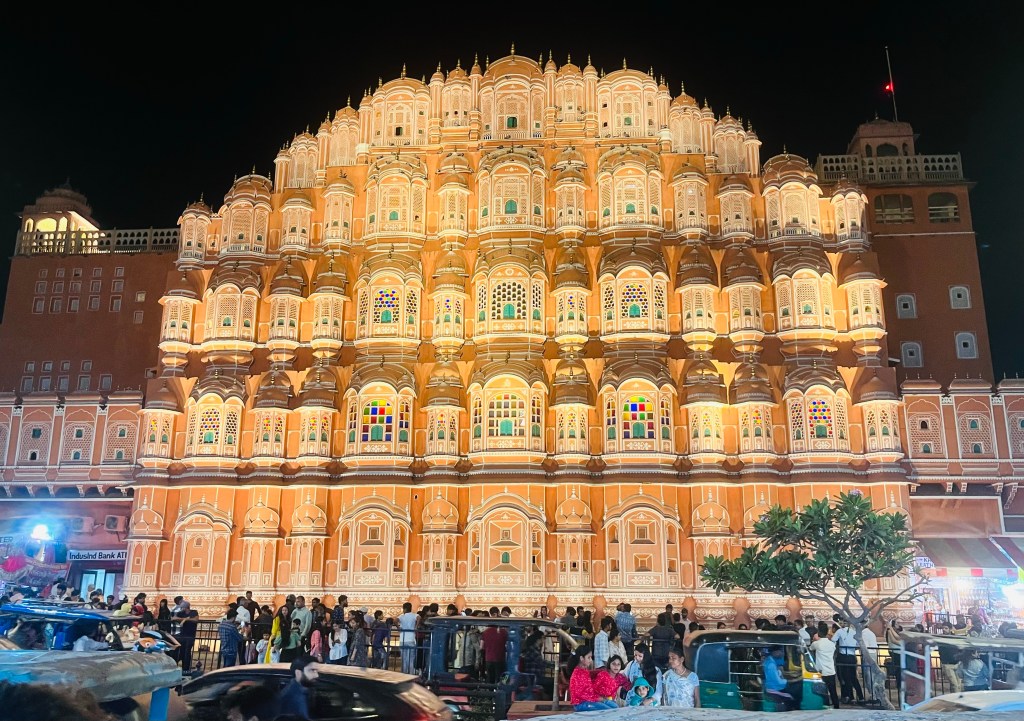
Made of pink and red sandstone, it is Jaipur’s signature palace’s, the unusual architecture is considered one the finest examples of Rajput architecture in India. The 933 windows undoubtedly make this building the world’s largest screened porch
Jaipur by night
A fantastic evening exploring Jaipur by night.
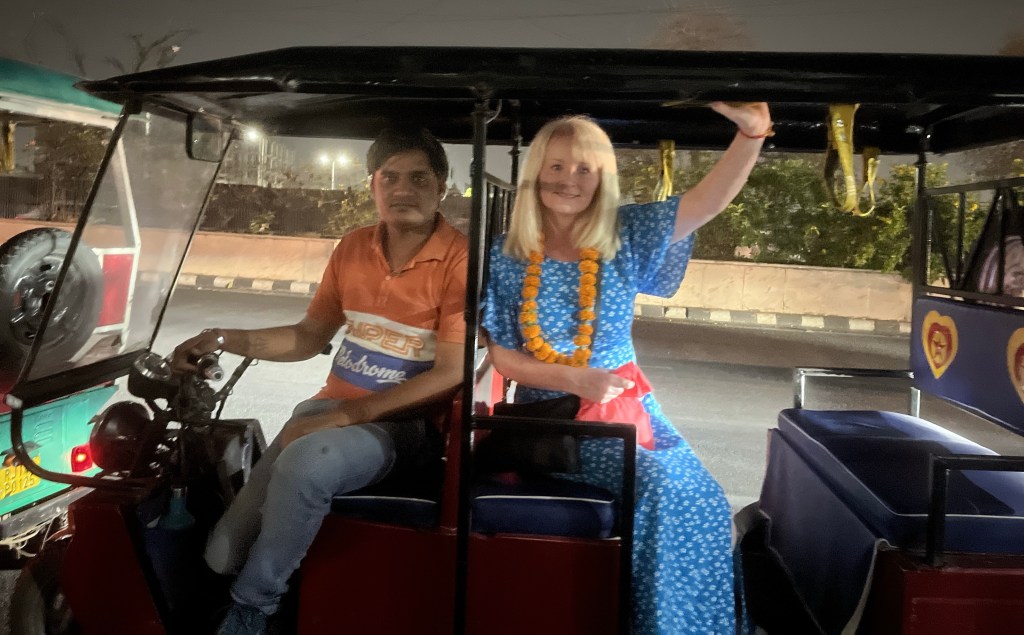
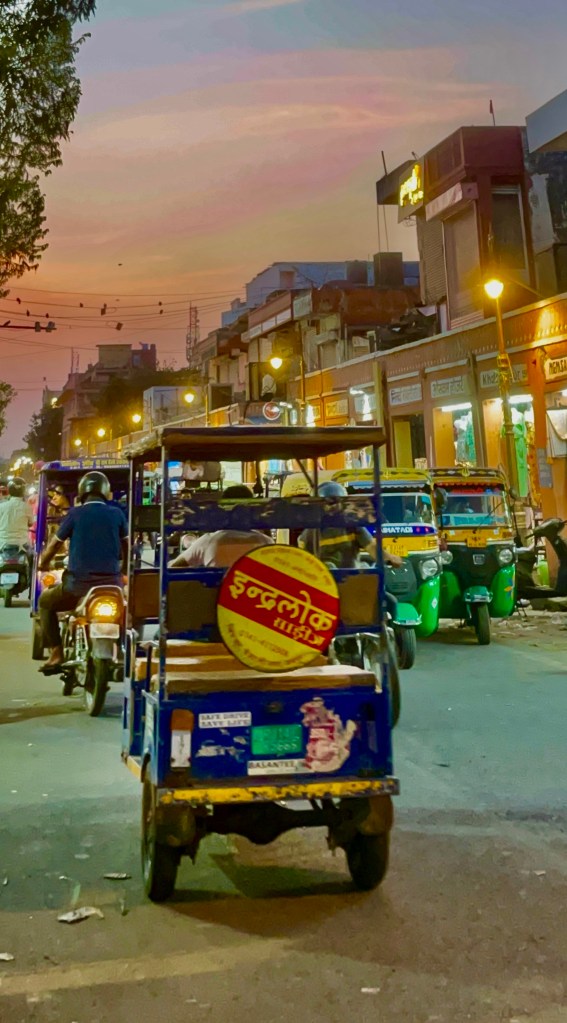
Our nighttime adventure included a battery rickshaw ride of Jaipur’s old city. They were surprisingly fast and are most commonly used as a form of public transportation.
With a gentle breeze caressing my hair or was that just the street hawkers trying to get my attention 😆 The frenetic energy of the city unfolding in front of us. It was a magical way to see the city unfolding in front of us.
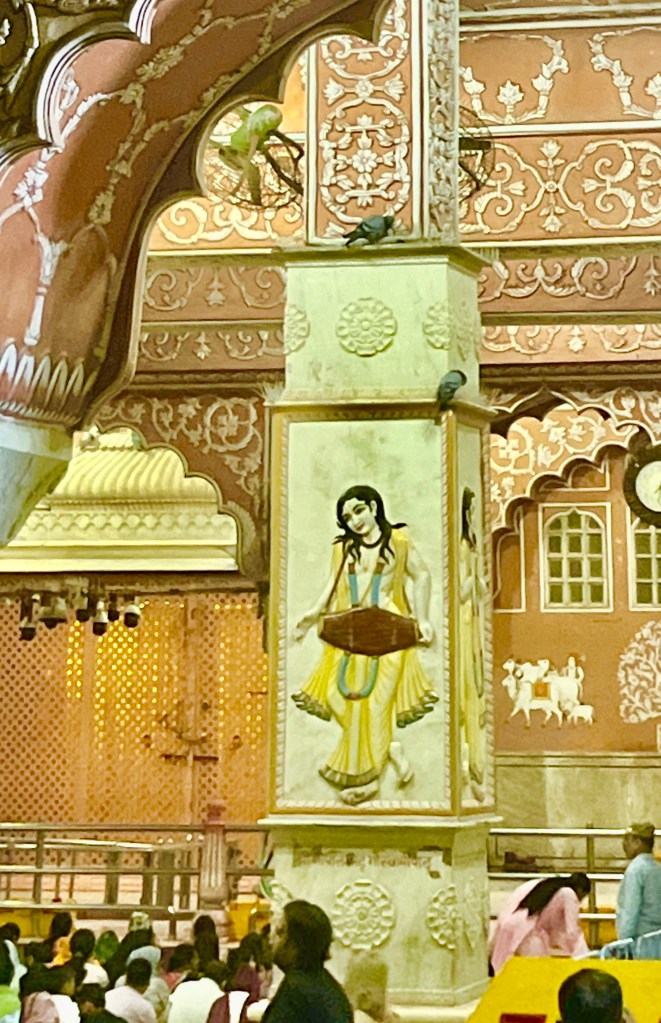
A tour of some of Jaipur’s popular and off-the-beaten-track locations. Discovering the city from a different perspective and experiencing the incredible atmosphere of Jaipur at night.
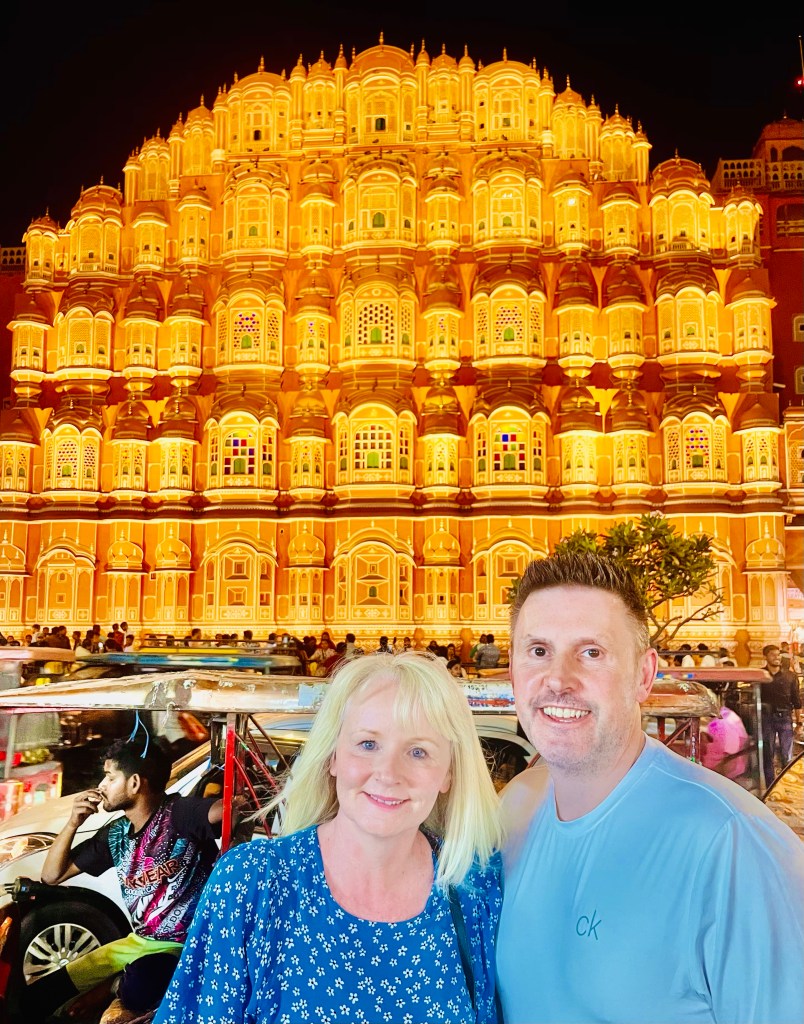
Although we saw the Hawa Mahal in the daytime it was equally memorising by night Experiencing it in the evening is a great way to enjoy its beauty from another perspective.
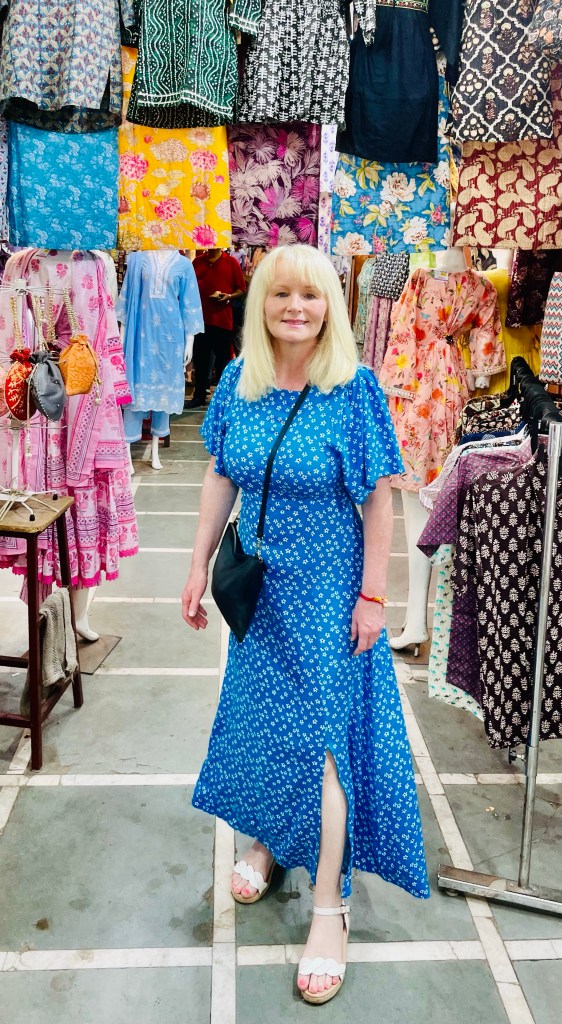
We visited a bustling local market where you can buy almost anything, although it’s probably not the best place to browse as vendors can be very wearing with their constant unsolicited approaches.
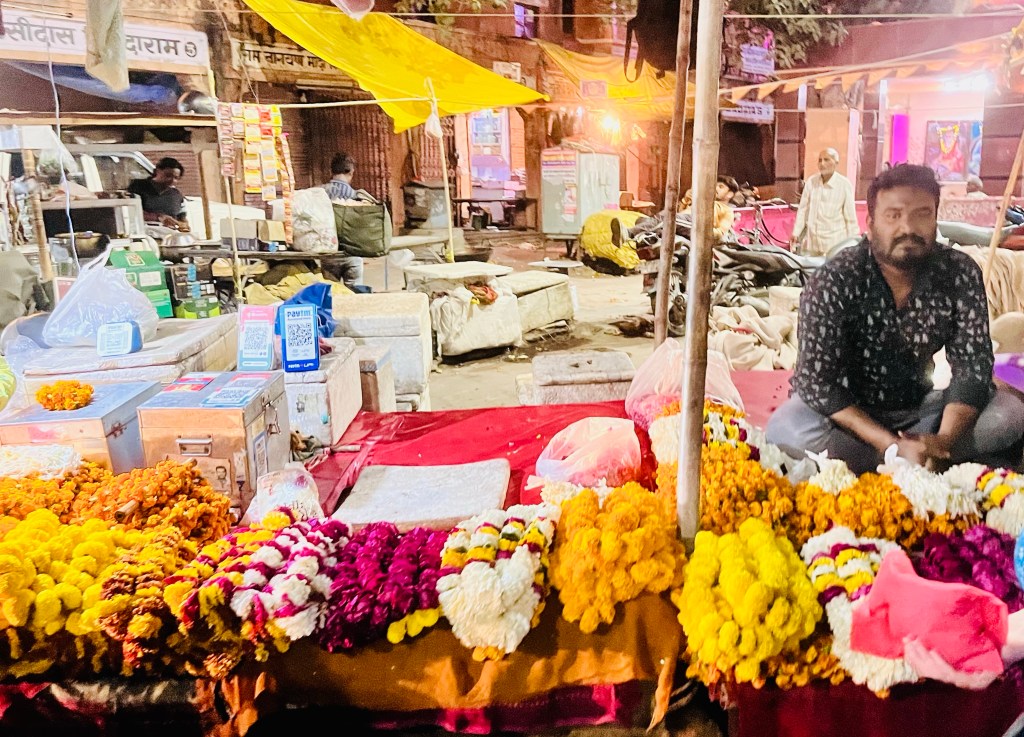
We then visited a flower market which was a much more relaxed affair. Flowers are a way of life in India as Hindus use them in offerings for daily prayers in temples, homes and offices.
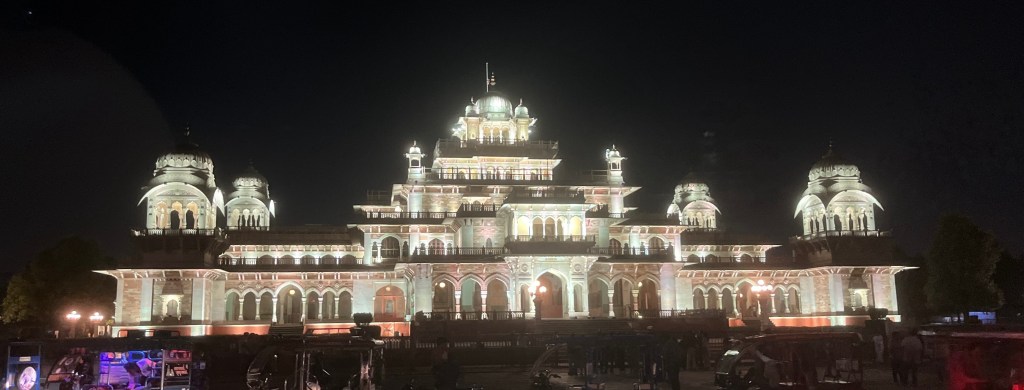
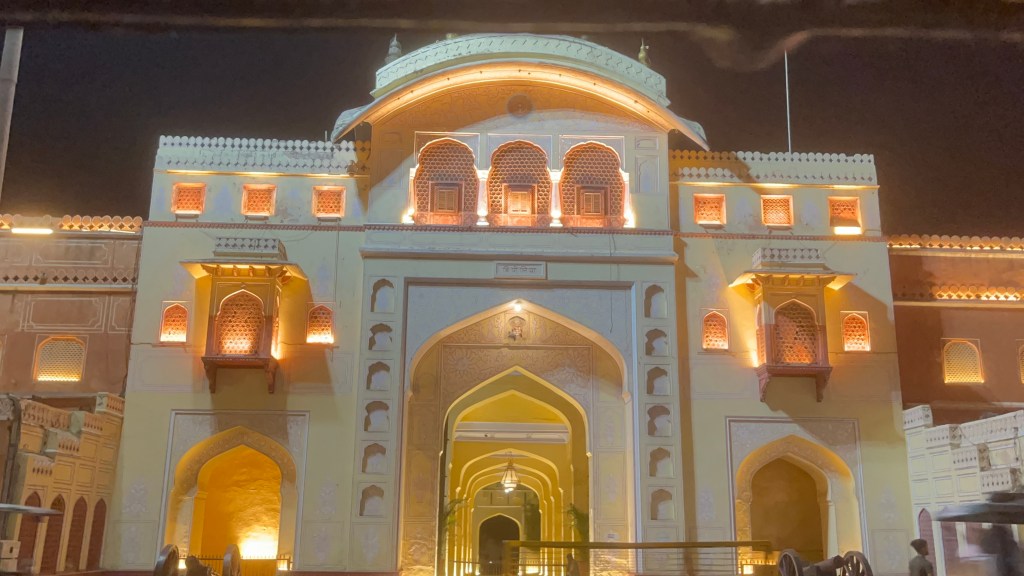
We captured the beauty of illuminated palaces, monuments and bustling markets. Unveiling to us a different side of the city which we would not have been able to encounter during the day.

 We were born to do more than go to work, pay bills and die. See the world while you are alive and kicking