The Coffee Region and The Cocora Valley
My next adventure in Colombia took me to the city of Pereira. This is officially known as the Coffee Axis. Pereira along with the rest of the area forms part of the UNESCO World Heritage Site which is known as the “Coffee Cultural Landscape of Colombia”
The area is so much more than being the centre of the Colombian coffee industry. Pereira is an influential tourist centre with many attractions within the coffee region. The most well-known of these is unquestionably Cocora Valley and the nearby town of Salento.
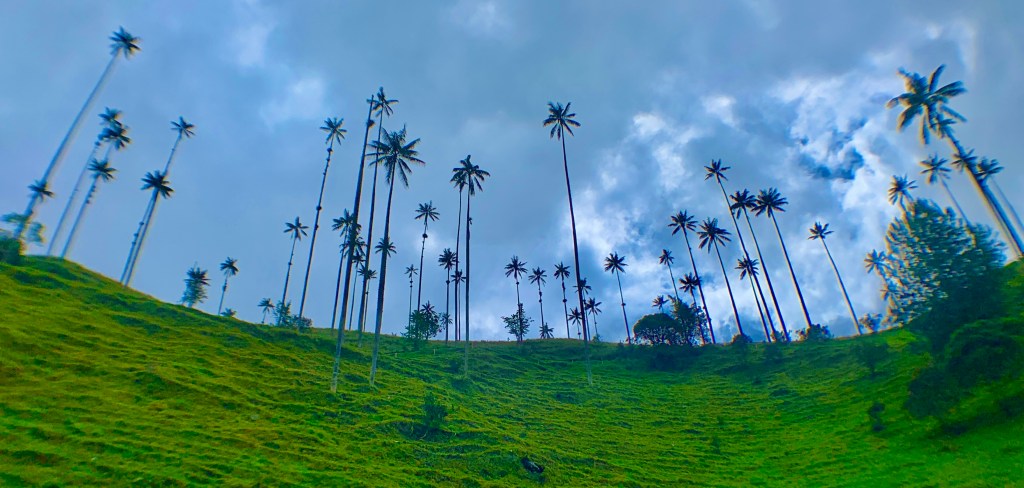
The Cocora Valley is famed for its giant wax palm trees 🌴 which are scattered over its captivating lush green hillsides. I discovered stunning landscapes quite unlike any other. It is truly a nature lovers’ paradise.
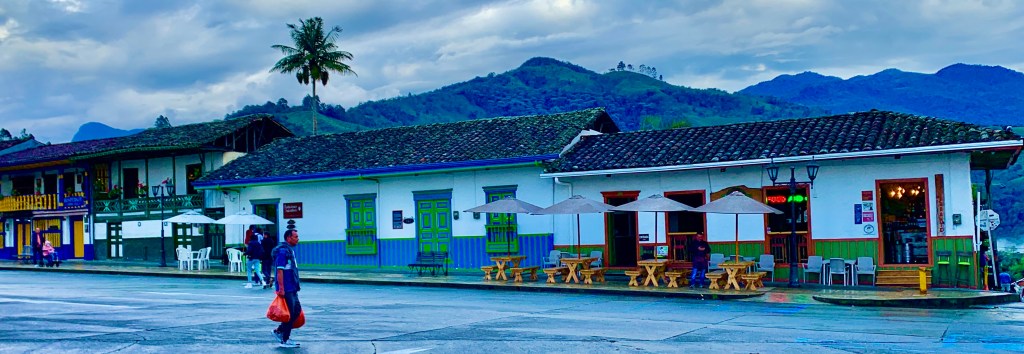
The nearby town of Salento is another popular location in the area with its quaint coloured houses and is one of the oldest towns in the area.
It hasn’t always been this way. The area used to be a stronghold for guerrilla fighters who had full control of the area. Salento was a place even Colombians wouldn’t visit, which obviously stopped any tourism activity.
Fortunately, as with much of Colombia, this has now changed. Any preconceptions of Coloumbia as an unsafe destination with a reputation for being a “narco-state” where violence and bloodshed are the norms is a very outdated opinion.
What you will find is an interesting vibrant country where people will warmly welcome you. Colombia is no more dangerous than any other location as long as you act sensibly.
The Coffee Region
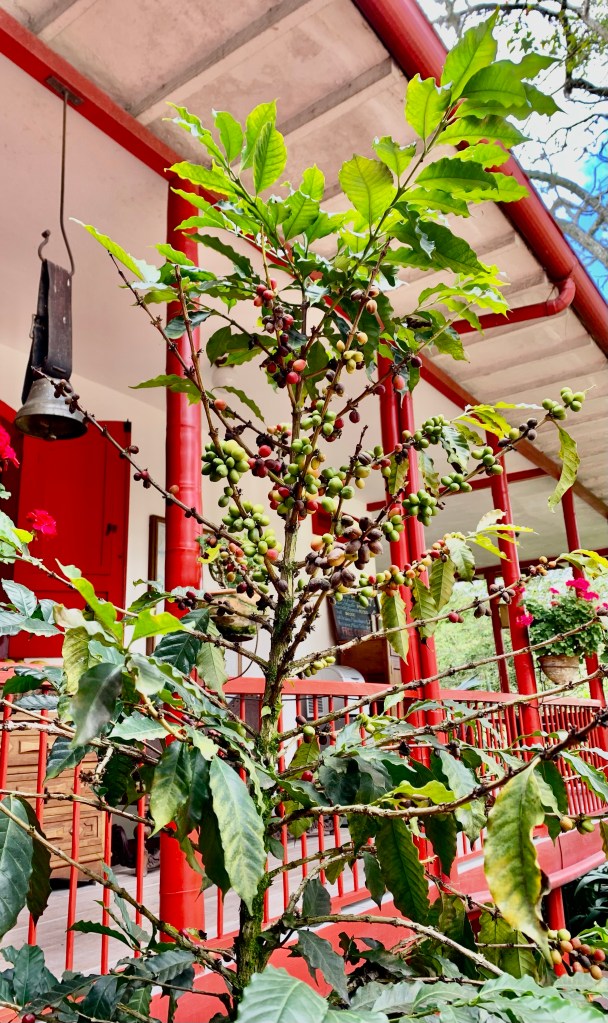
Colombia is one of the largest coffee-producing countries in the world. Pereria is the central hub of coffee production in Colombia. It is a UNESCO World Heritage Site due to its unique landscape.
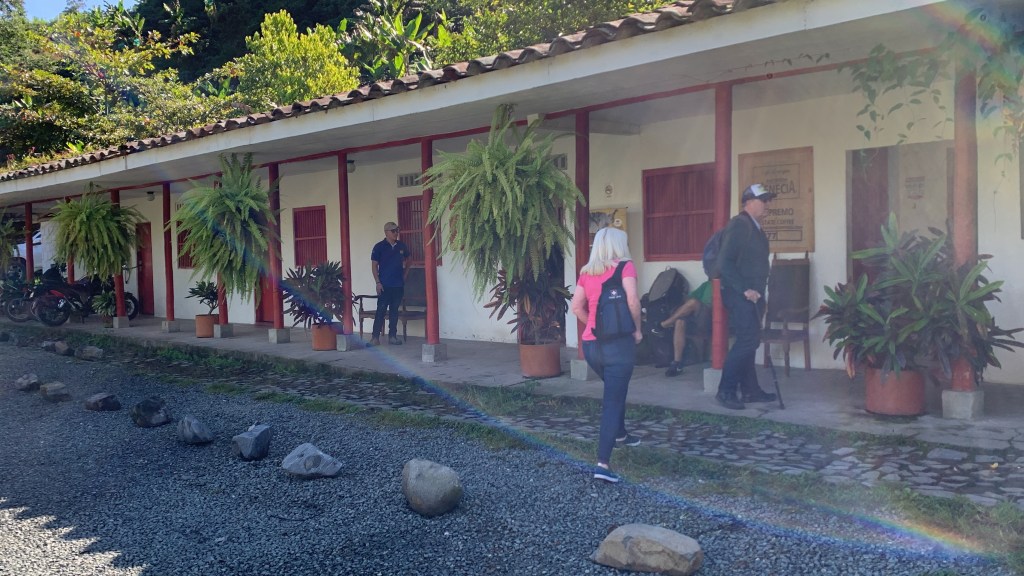
The choice of coffee plantation tours can be bewildering to say the least. You can book tours to large producers, family-run farms, tours on horseback, hiking tours, birdwatching tours and in conjunction with a trip to the Cocora Valley, so a bit of pre-planning is necessary to get the best out of your visit.
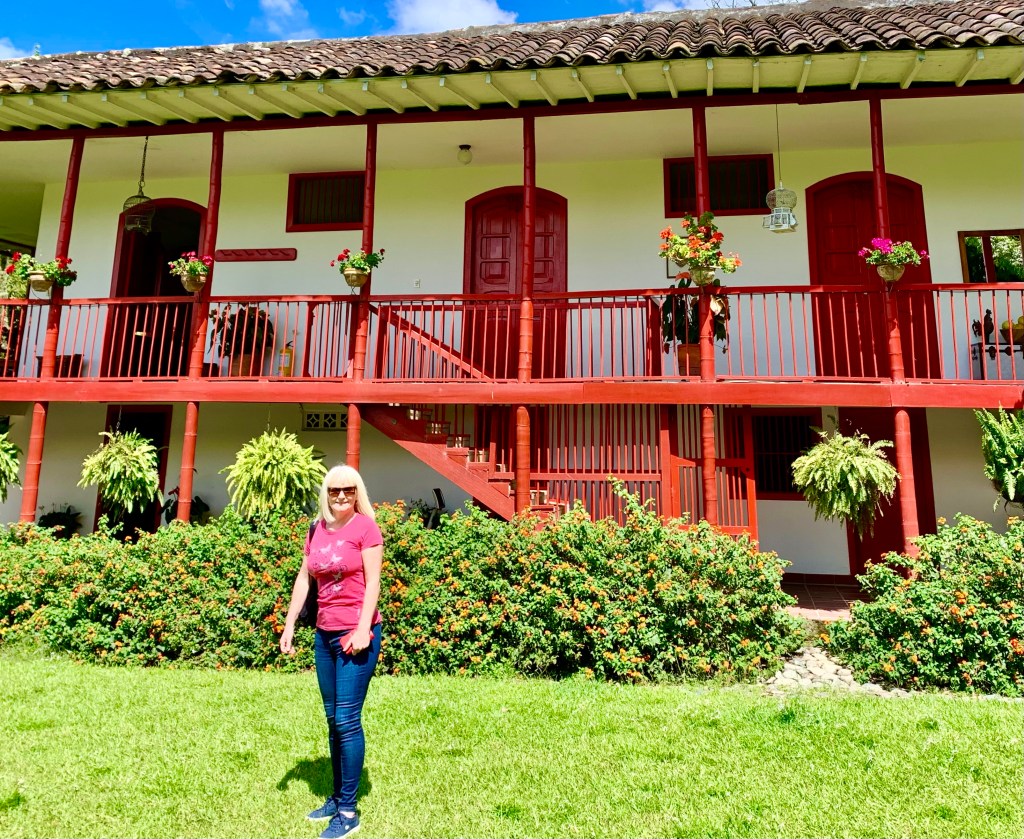
I had never visited a coffee plantation before so a full tour was the best option for me. The plantation we visited offers daily regularly scheduled tours with a guide. This can be done within a group or private tours. We had a private tour as it was included in our tour itinerary.
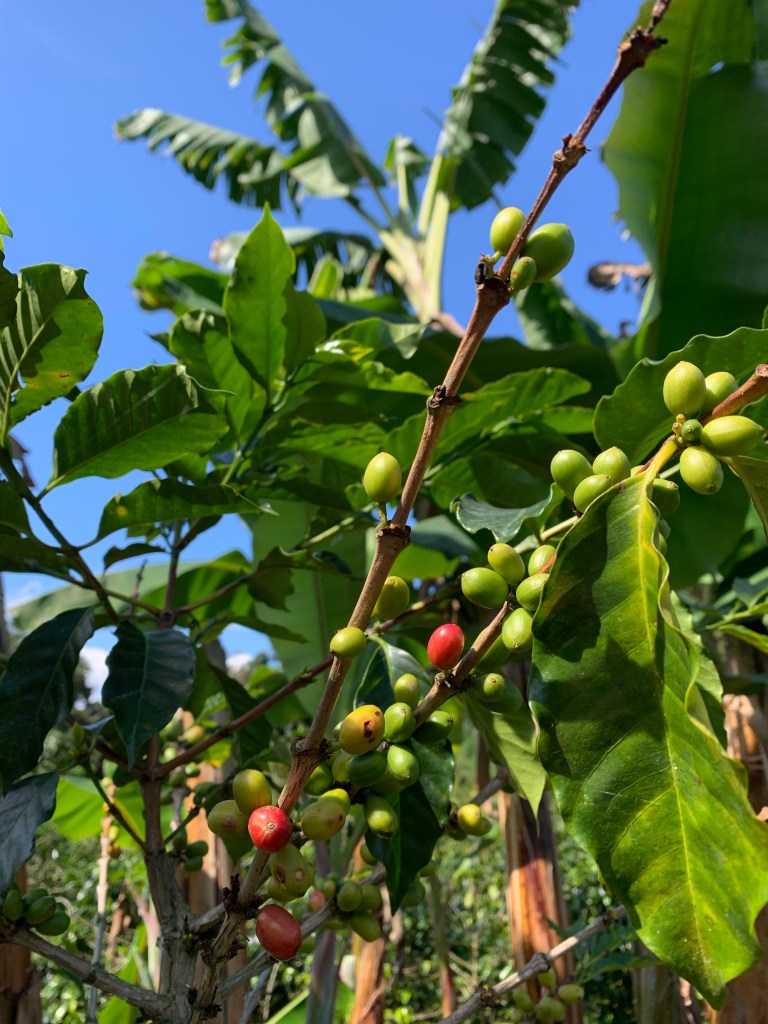
We had the full tour experience with our guide and lunch at the property. This needs to be booked in advance as it is a more in-depth experience and may include transport to the property. This option is more expensive than doing it independently, but it is a lot more convenient, especially if you are only staying in the area for a short time.
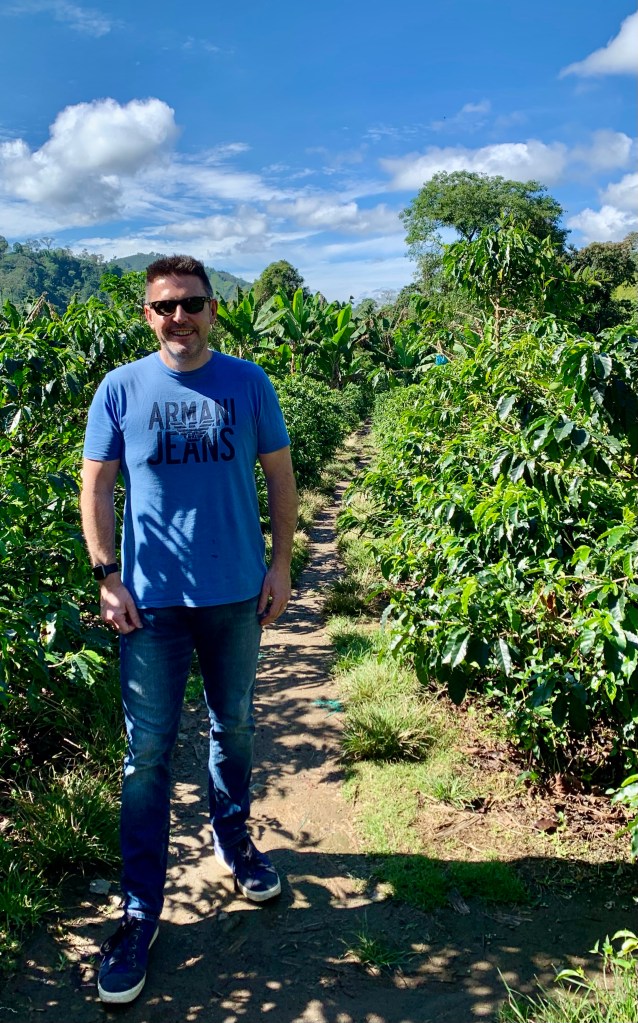
Our tour started with us wandering around the grounds. Our knowledgeable guide explained to us the ideal growing conditions that make this area so productive for growing coffee beans.

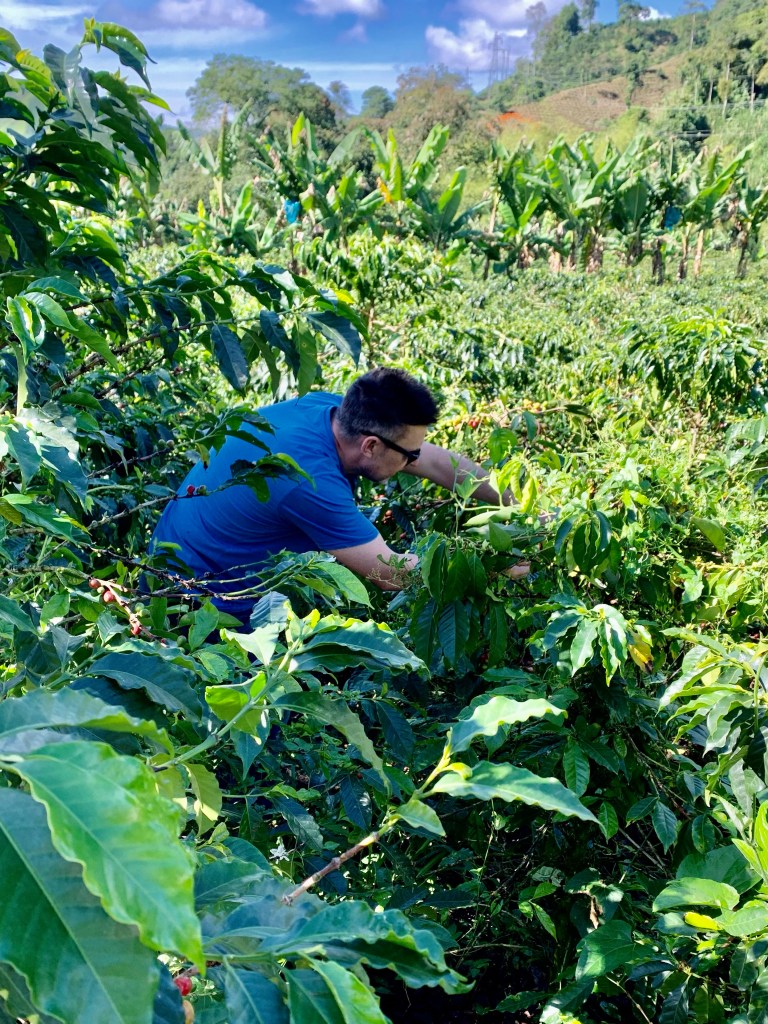
He showed us all the different stages of growing coffee plants and the right time to pick the beans and explained how experienced coffee pickers are much sought after as there is a big shortage of skilled labour in the area.
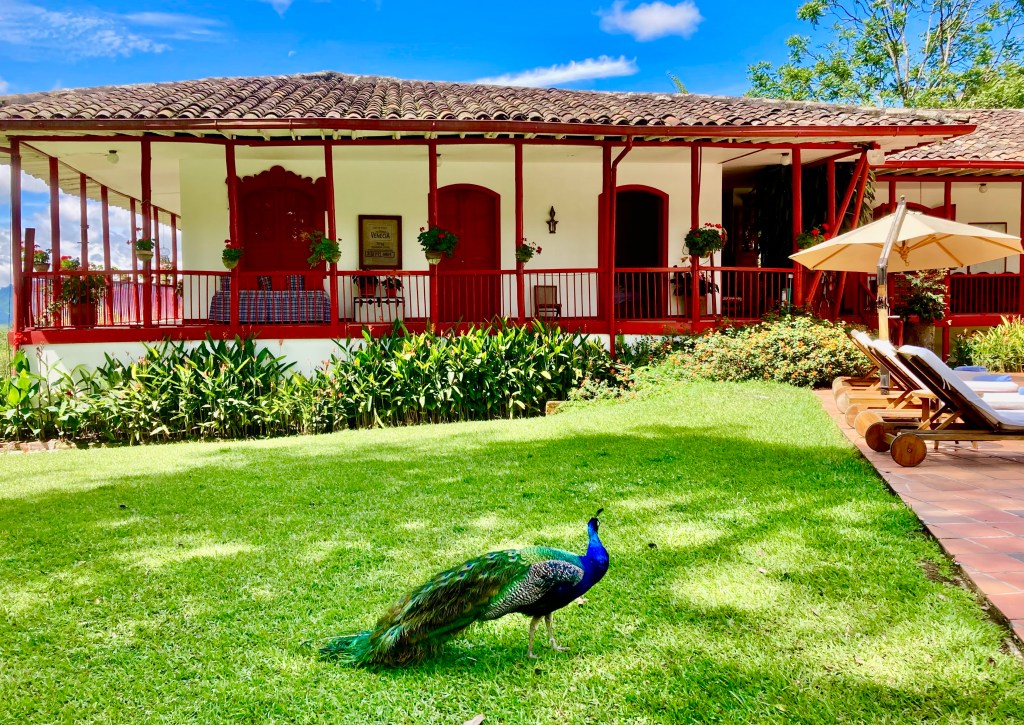
We were given a tour of the grounds and the plantation house, which is now a hotel and restaurant as the coffee farm is diversifying its income. Various birds and animals wander around the property.
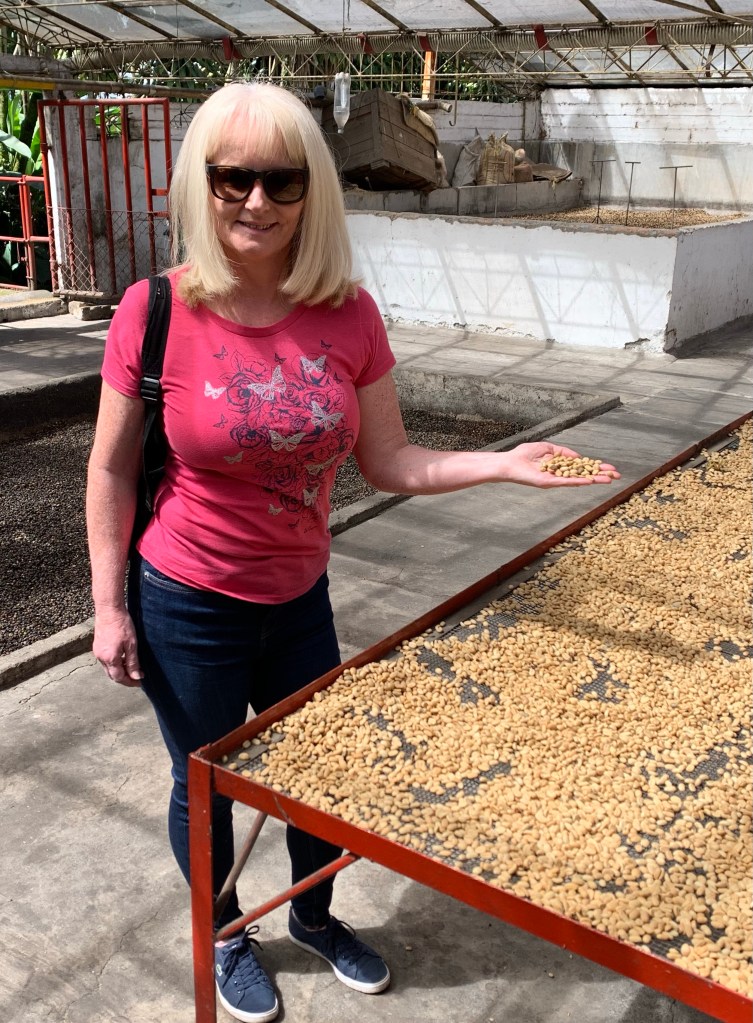
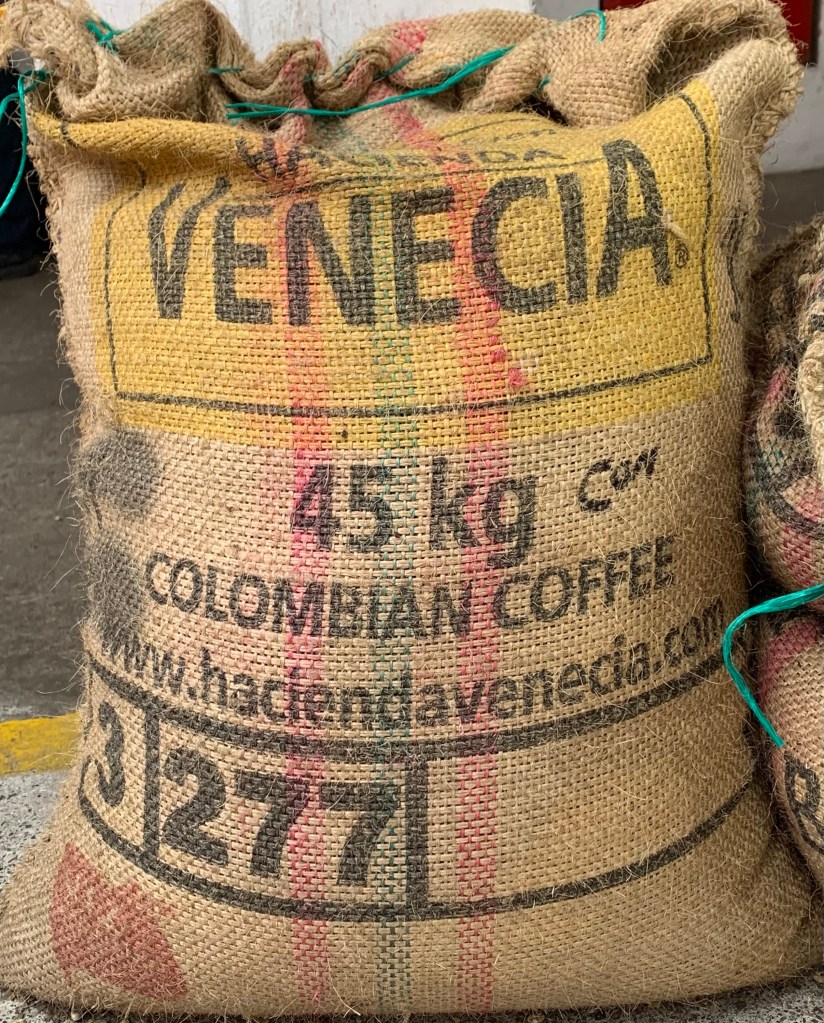
We were taken to where the coffee beans are dried out and how they divide the beans for quality. Certain coloured beans are more high quality than others.
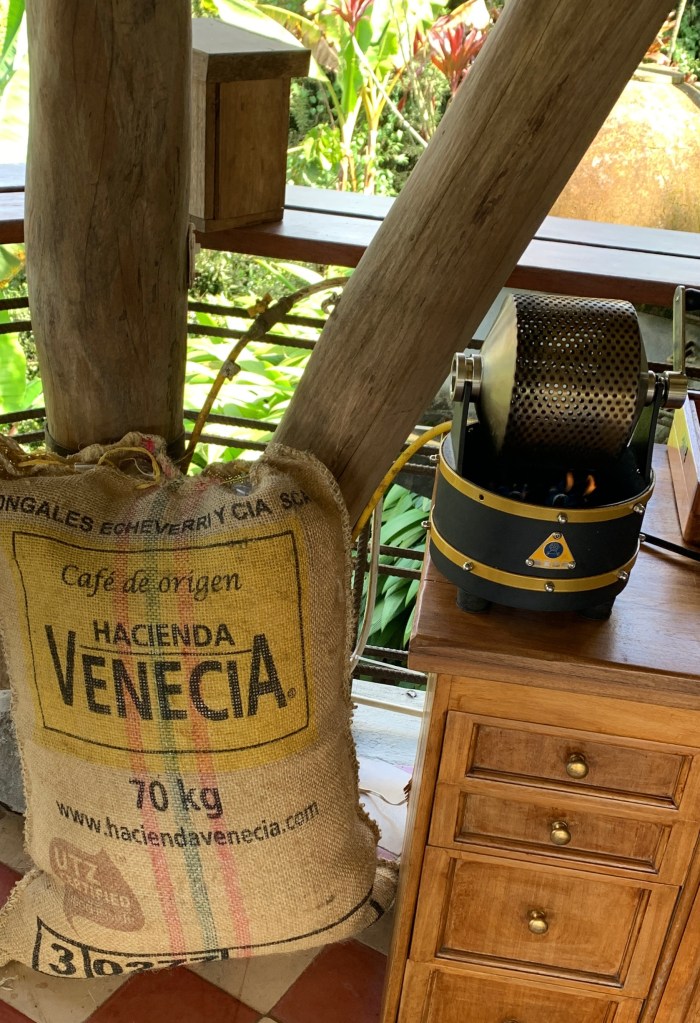
What really surprised me was the beans of a lower quality are kept in Colombia where they are roasted and sold. It now made sense to me as the coffee I had tasted in Colombia was ok, nothing exceptional. Now I understand the reason why the best coffee beans are exported.
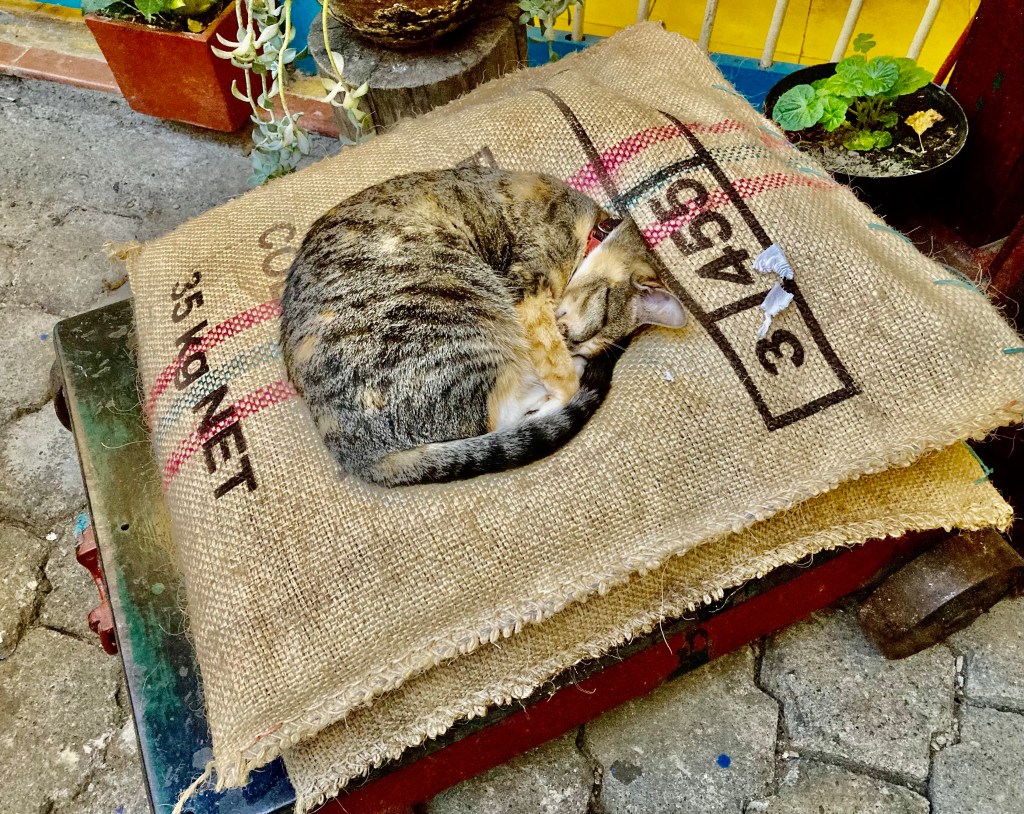
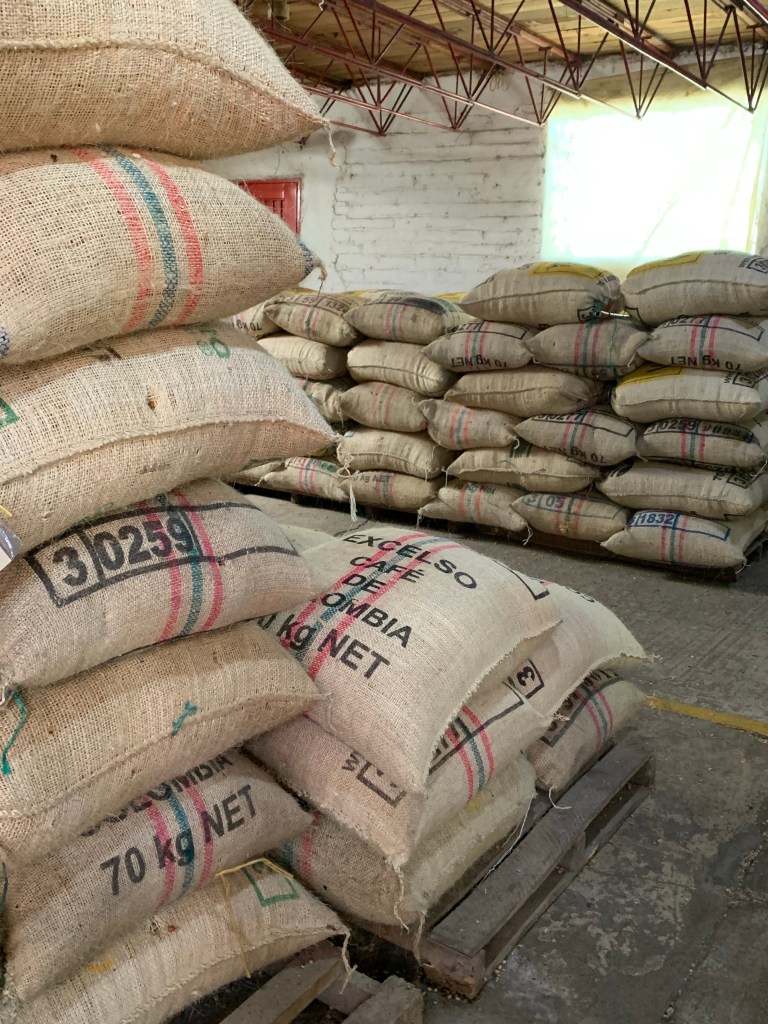
At the mill, there was evidence of this. The higher-quality beans are bagged and are ready for export to foreign markets such as North America, Europe and Japan, where they will command a much higher price as these markets are prepared to pay more for higher-quality coffee.
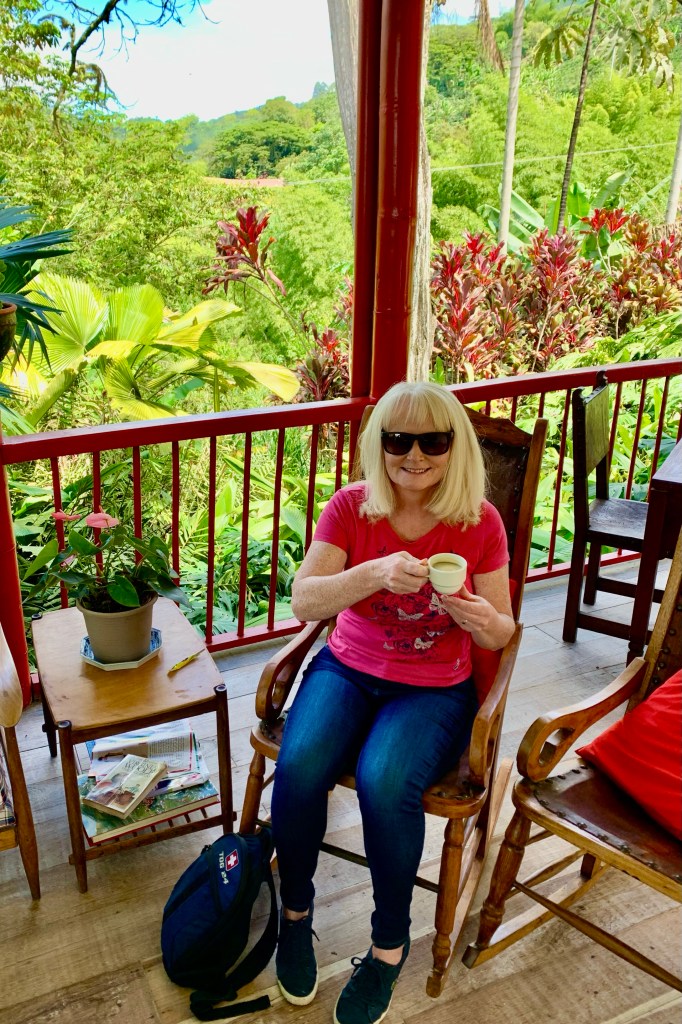
As our coffee plantation tour concluded, it was time to sample the end product. I don’t think asking for cream and sugar will go down that well after learning how much time and effort goes into producing the coffee that we take for granted.
Cocora Valley 🌴🌴🌴🌴
The Cocora Valley is part of the Los Nevados National Park. Incorporated into an existing National Park in 1985 by the Colombian Government. It is one of Colombia’s most visited natural attractions.

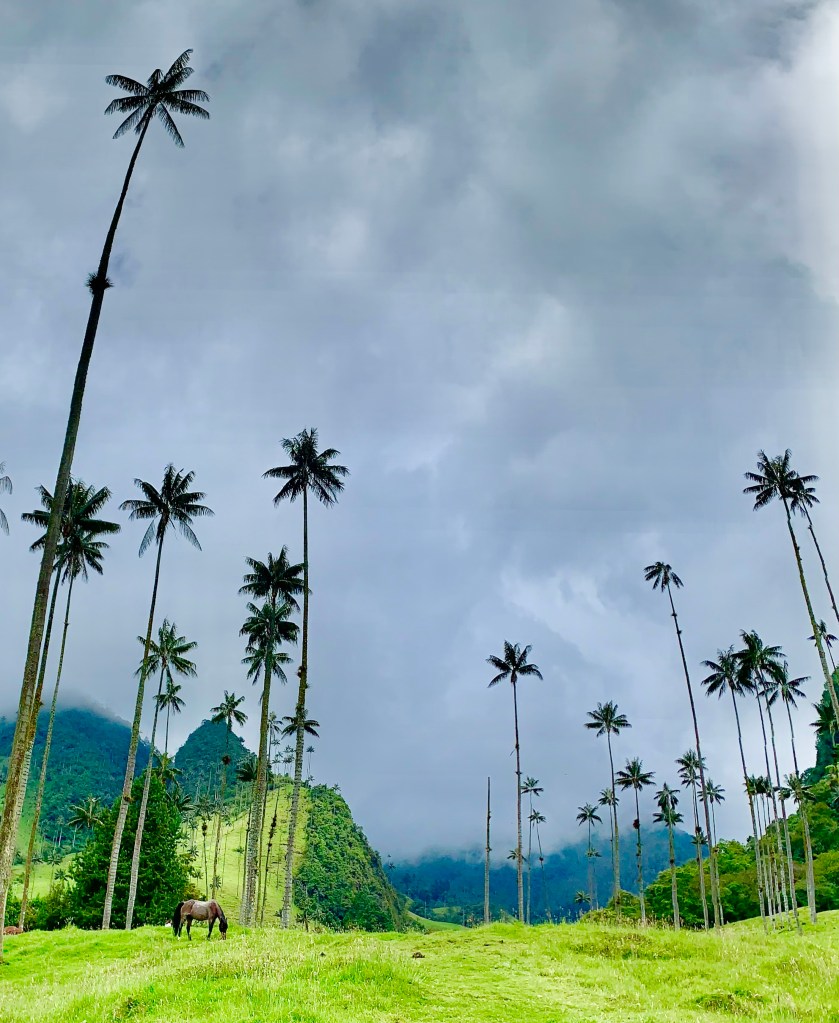
Nestled within the coffee triangle. This valley is filled with wax palms that rise over 70 meters (200 ft) in height. This is the main location of wax palms in Columbia. The wax palm tree is the national tree of Colombia
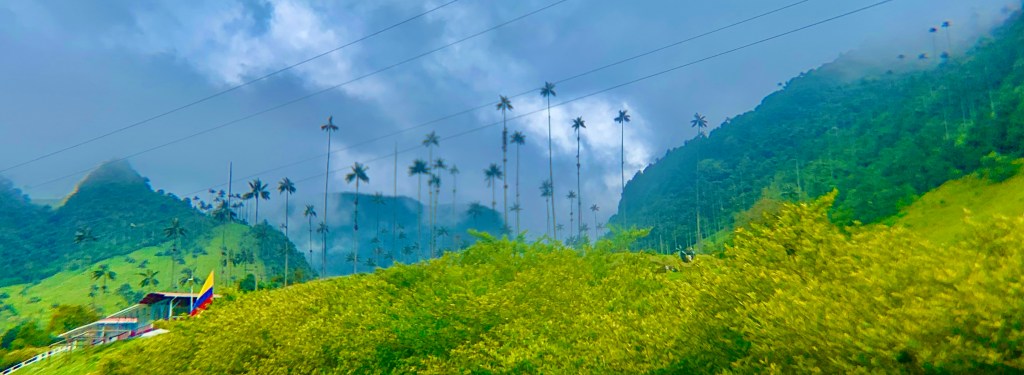
I couldn’t come to Colombia and not visit the Cocora Valley. Images of the valley are plastered everywhere on social media when searching online for Colombia. The peculiar skinny incredibly tall palm trees can be seen set against a backdrop of the glaring sun, enigmatic mist or the broad Andean mountains were instantly recognizable.

The Cocora Valley is one of the few places on earth to see them in their natural habit. The wax palms can grow up to 70 meters and hundreds of them can be seen in the valley randomly placed among the grassland towering above the grazing livestock.

How they have survived all these years is another natural wonder. Despite their impressive height the wax palm trees don’t seem to be the most robust tree. Even at the bottom, the trees are thin enough to nearly hug yourself around them, yet the tree feels as hard as concrete.

The wax palm trees certainly give you a view of something uncommon and arresting. The valley is 1800 meters above sea level, low clouds often fill the valley and the palms look as if they are scratching the bottom of the clouds.
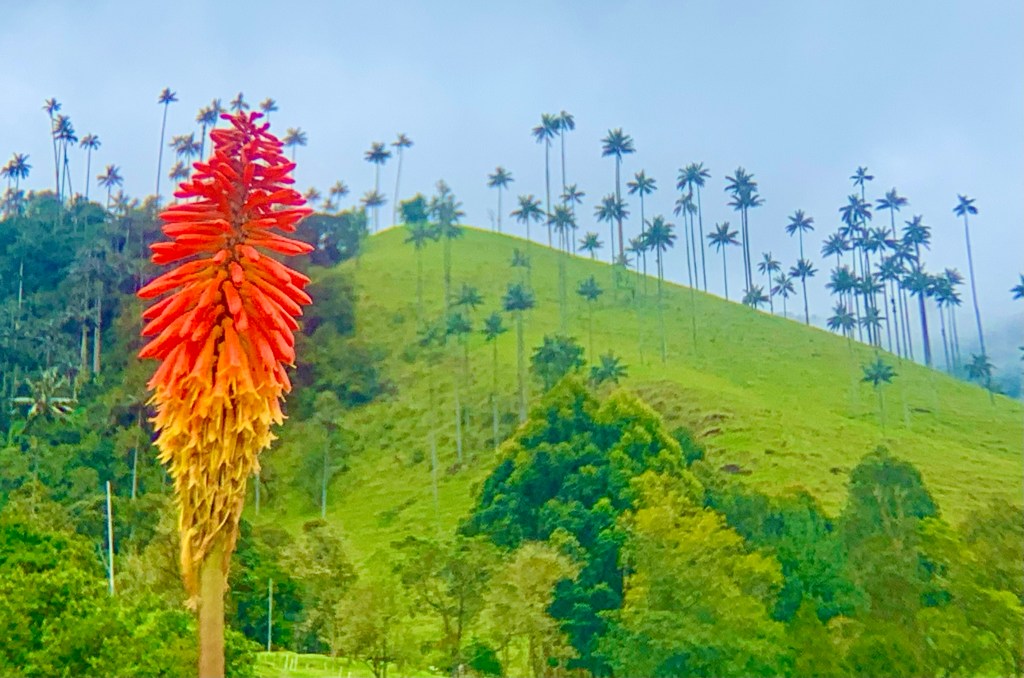
The curious beauty of the valley is immediate. It offers a fantastic trekking experience whatever your fitness as footpaths covers various distances. From 30 minutes in-and-out trail walk to a 12-kilometre valley hike which takes 5 hours. Whatever you choose you will be able to marvel at the beautiful and mysterious landscape.
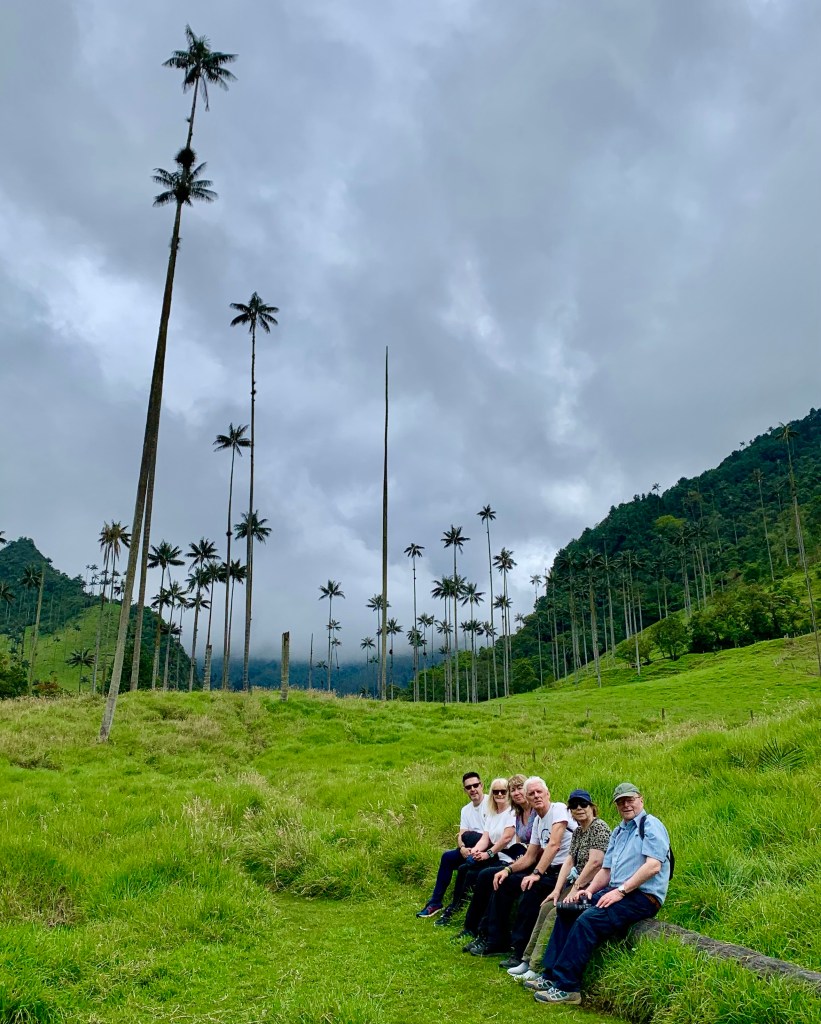
We spent about 2 hours exploring and we followed the clockwise trail. The trail starts through grasslands taking us directly to the palm trees. After this it’s a relatively easy uphill ascent.
The route then takes you up to some fantastic vantage points before making the ascent back down. These vantage points are popular stops so you won’t be alone there. The route back down is steep and slippery be careful with your footing. I went sliding down the mountain on my back much to the amusement of my wife, no harm was done other than one ruined white T-shirt, fortunately, our guide kindly gave me his sweatshirt. They are certainly very thoughtful people in Colombia.
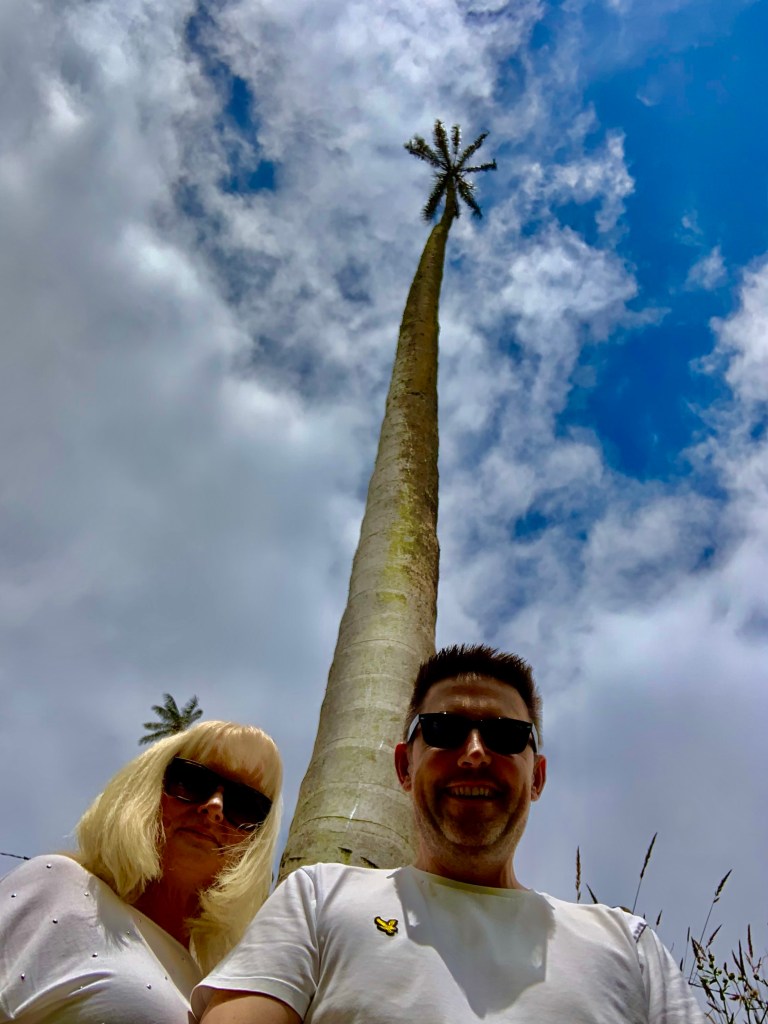
The Cocora Valley is a very popular tourist destination. Most visitors arrive from nearby Salento and come for the day, there are also extensive hiking and camping opportunities for the more adventurous. Trips are available from Pereira which is where we were based.
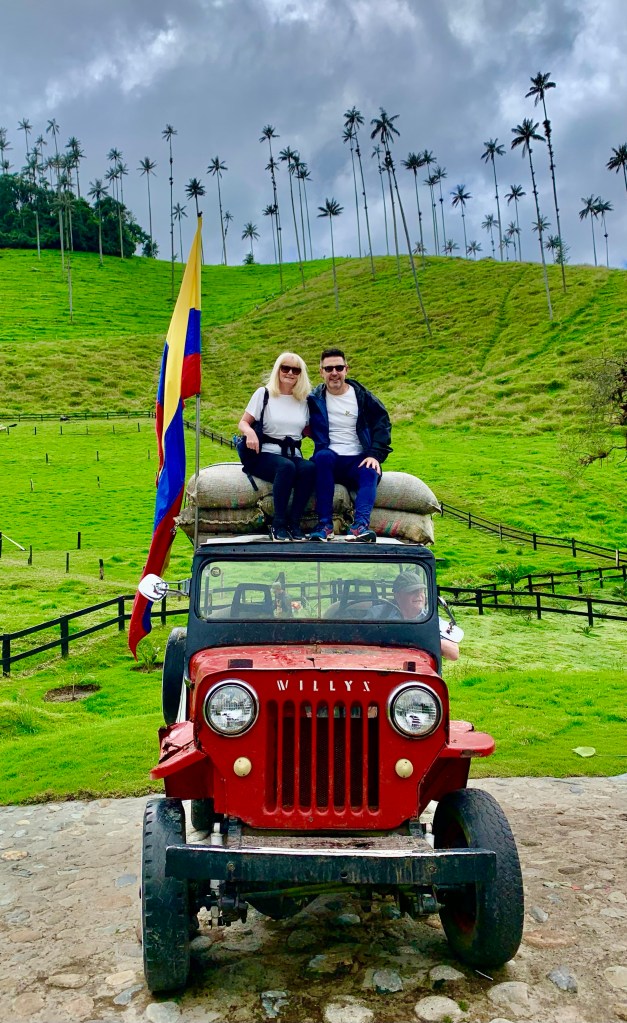
A ride in a Willys is a very popular way of getting there, it is an old jeep capable of transporting up to 12 people. If you are coming independently and don’t have a car this is the only way to get to the Cocora Valley other than by foot or horseback.
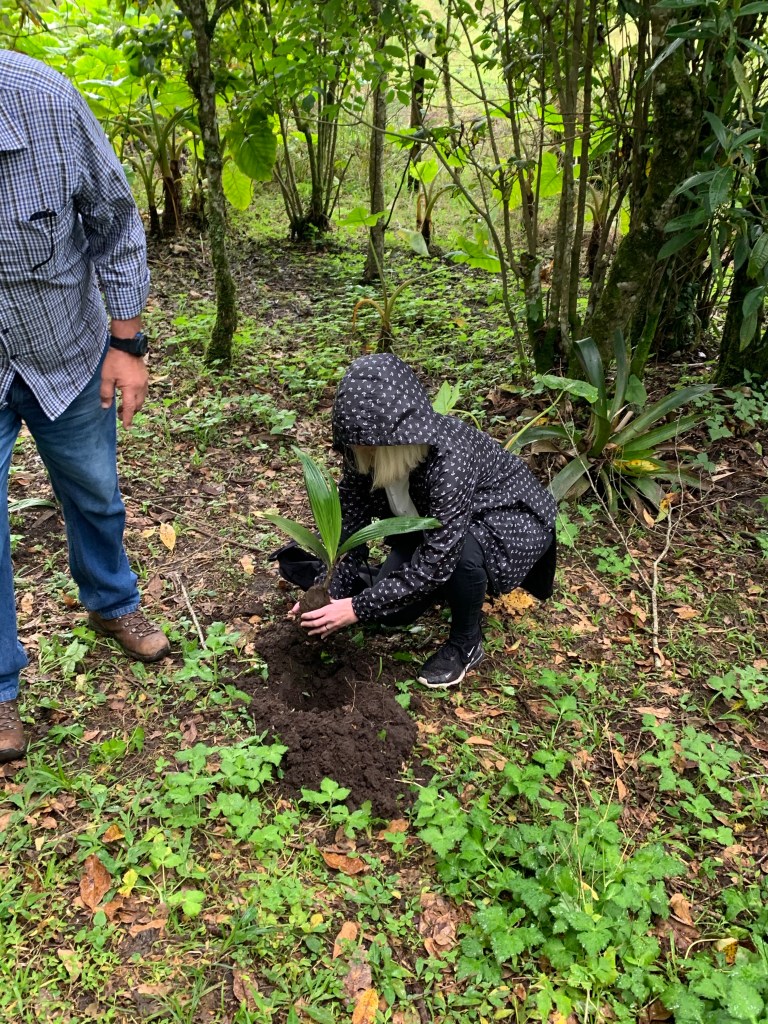
At the end of our tour, we met with a local ecologist. The tour company that we booked have a terrific programme where after every tour they plant a new palm tree. Sometimes I feel these are token gestures and good PR for the company. This is the only tour company that does this. I felt that their intentions are completely genuine.
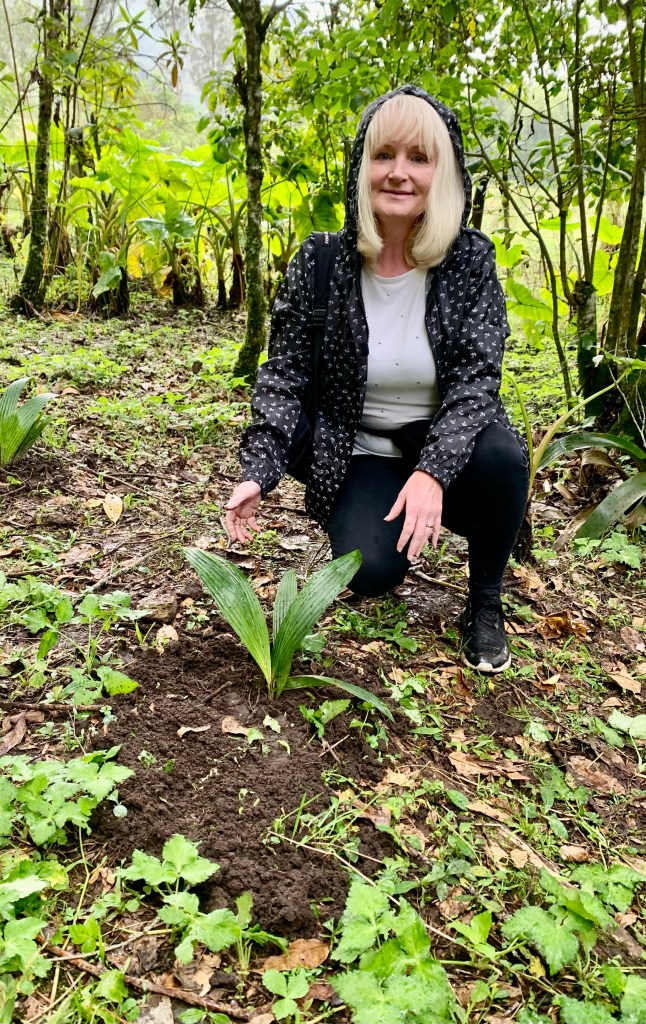
A lot of these magnificent palm trees are dying. Our local guide George who has been coming to Cocora Valley for 10 years said he had sadly seen a great reduction in these palm trees. In the past, this has been due to the cultivation of trees for their wax and the land being used for agricultural purposes. More recently environmental concerns have come to the fore. They became protected by the Colombian Government in 1985.
Salento
A town of many colours. Founded in 1850 it is one of the oldest towns in the area.
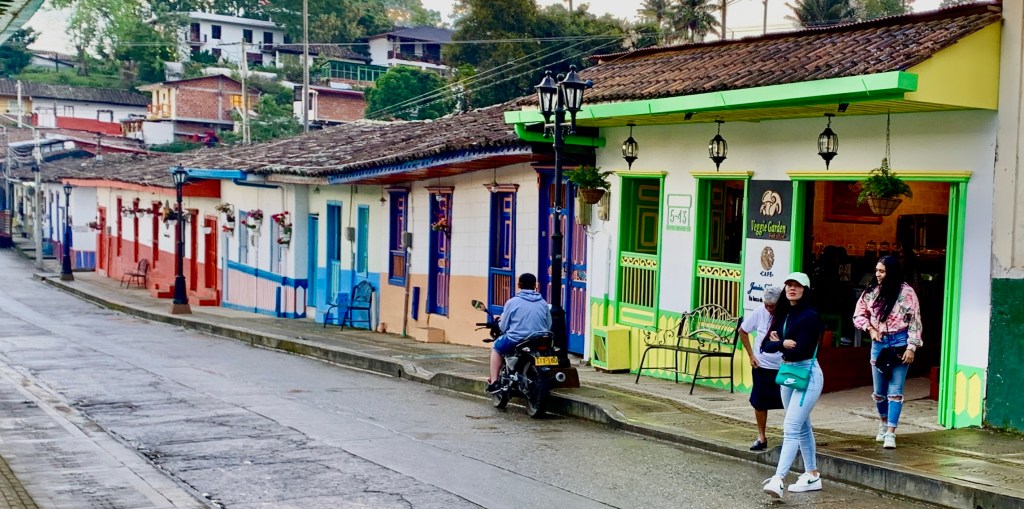
If visiting the nearby Cocora Valley and being in the heart of the Coffee triangle a UNESCO World Heritage Site is not enough, there is also the pretty little town of Salento to visit, often described as one of the prettiest in Columbia.
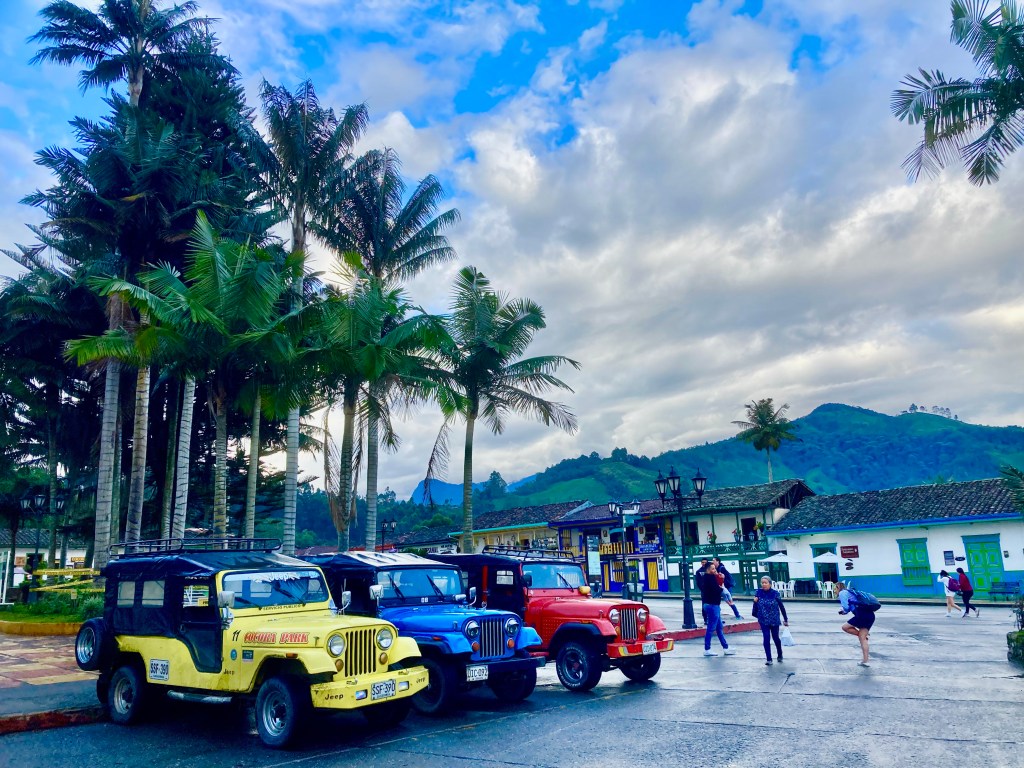
Salento functions as a base for trips to nearby Cocora Valley and its giant wax palms. You will find many businesses offering trips, where you can jump in a Willy (the original jeep and over 60 years old)
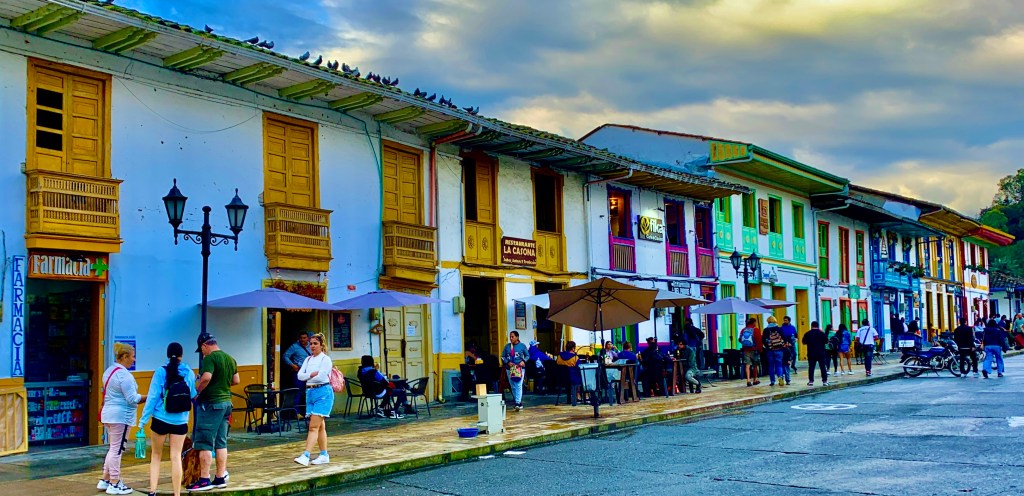
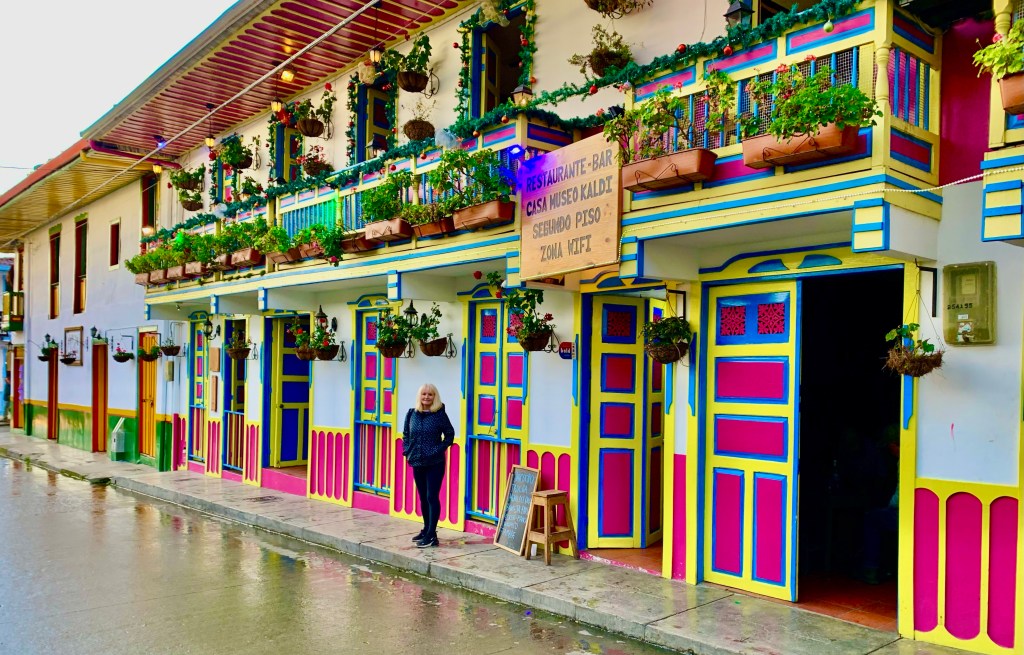
Although it is a bit of a tourist trap, it is not without charm and there is no denying it’s a photographer’s dream. If souvenir shops are not your thing then there are many independently owned coffee shops to relax in.
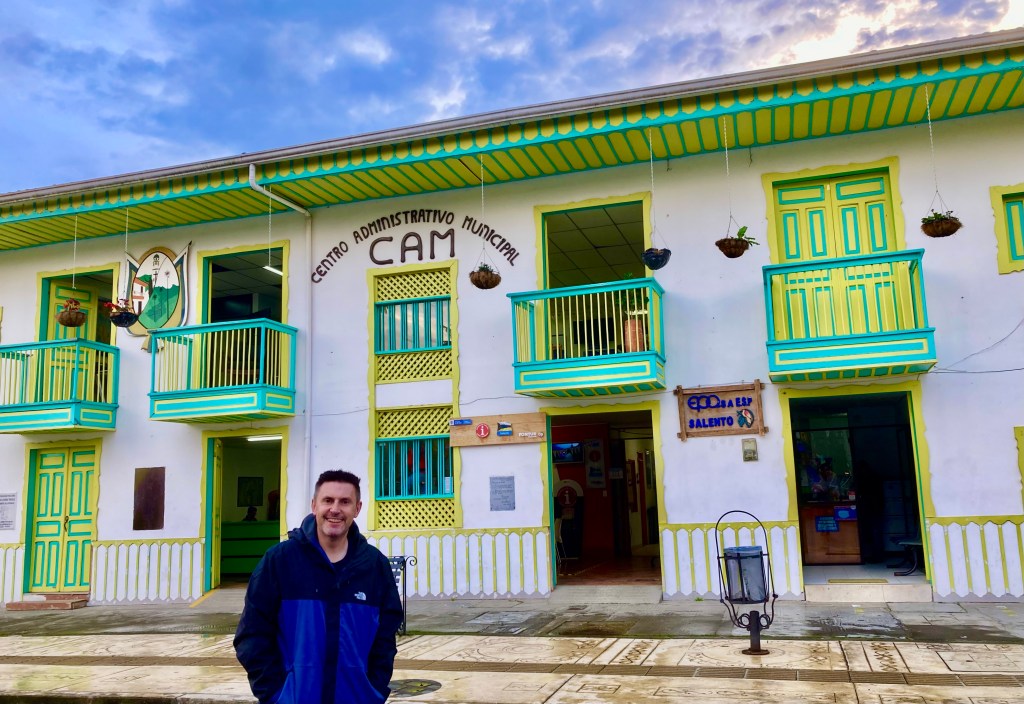
Salento is a small town that is easily navigable on foot and it is worth a visit as the painted colourful houses and tropical background nestled in the Andean foothills are certainly a visual experience to enjoy.
Tejo 💥 in Salento
As it started to rain this was a perfect time to head indoors and experience a game of Tejo.
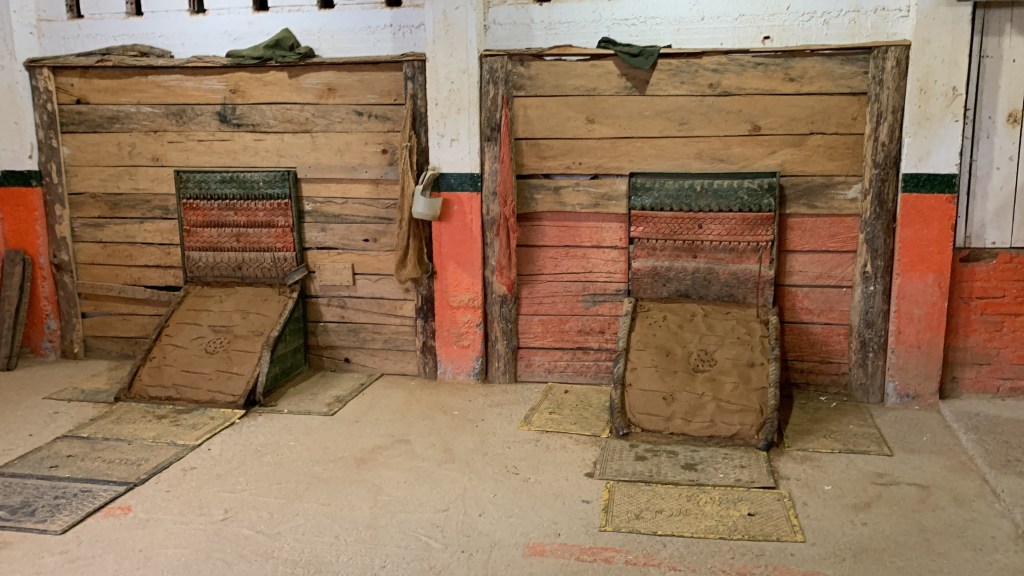
This game is widespread in Colombia, especially in this region. To me, it looked like a cross between bowling, darts and fireworks, with alcohol thrown in for good measure as it is a game that is usually played on licensed premises. Not a great combination for the uninitiated.
It is not unusual to see professional teams in cities and large towns as it is second only to football in popularity. It is played internationally in Panama, Ecuador and Venezuela although the game’s spiritual home is in Colombia.

The game involves tossing a steel ball at targets in the shape of stars loaded with gunpowder across the room. It can be played by up to six people so it is a very sociable game
Although the game looks simple, mastering it is a lot more tricky in practice as you have to hit the target full-on with the steel ball in order for the star, which is made of gunpowder to explode. You then get points which can vary from 1, 3, 6, and 9 if you hit the bullseye.
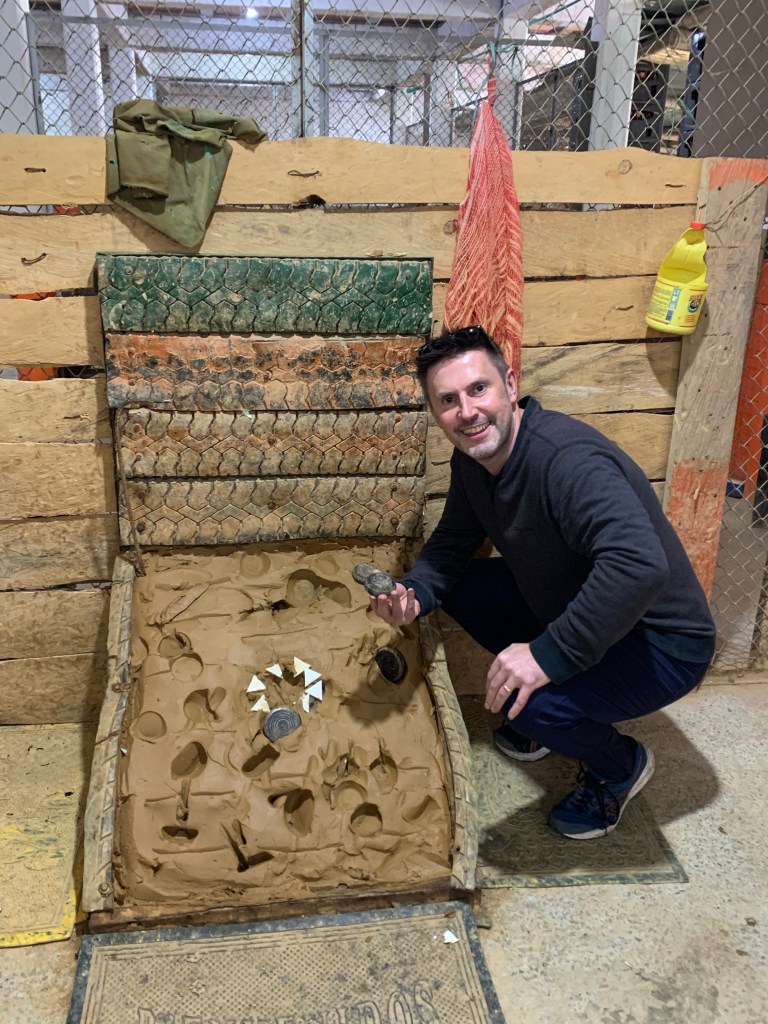
Although I didn’t win it was good fun participating in this uniquely Colombian game. Travel is all about broadening your mind and trying new experiences and playing Tejo definitely did that.
Accommodation in The Coffee Region


Accommodation options within The Coffee Region range from haciendas on coffee plantations to small hostels and boutique hotels. There are no shortage of options to choose from.
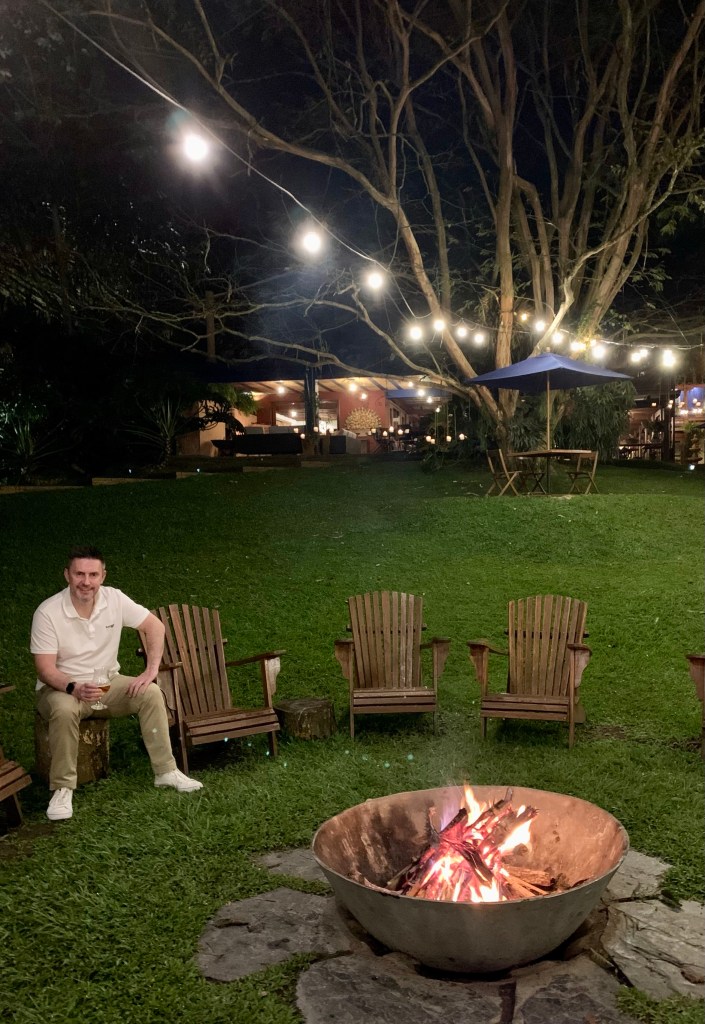
We were on a tour of Colombia and after busy days exploring all that the area has to offer, it was nice to relax in this boutique hotel. Situated within the heart of The Coffee Region and its cultural coffee landscape.
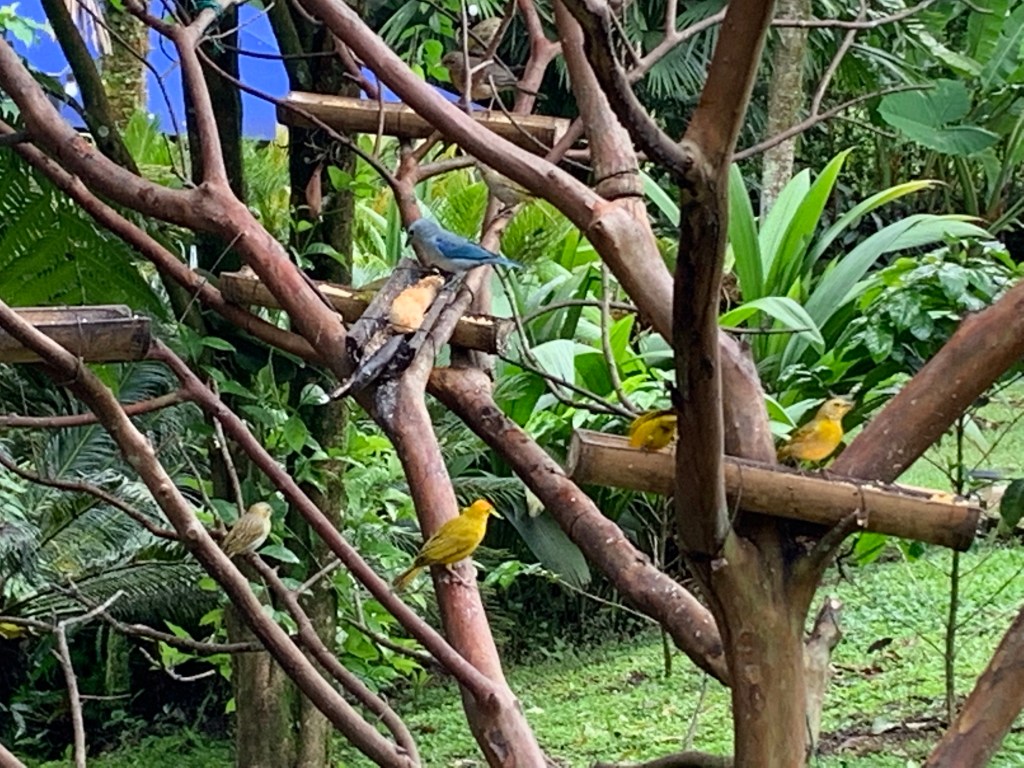
The hotel was more akin to being in a private house with its intimate, cosy and relaxing atmosphere surrounded by captivating gardens, flowers and birds
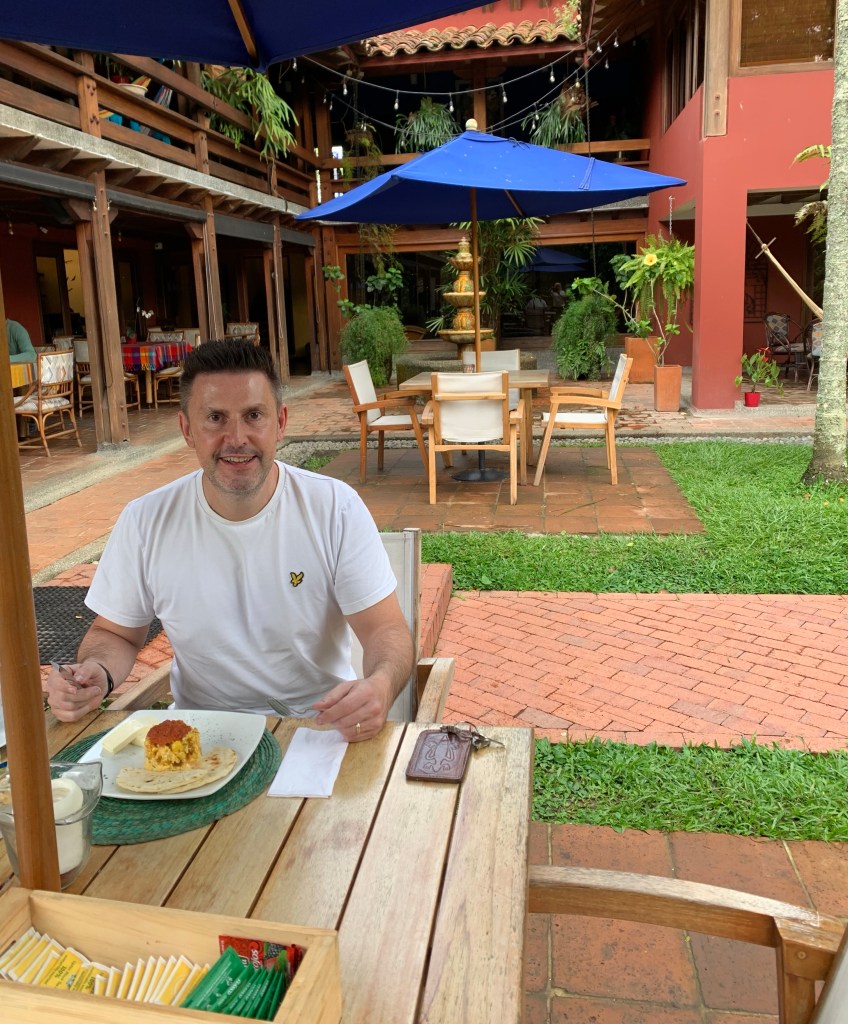
Despite the quiet, idyllic surroundings we were only less than 20 minutes from Pereira airport and centrally situated to visit all that this fascinating location has to offer. The Coffee Region and Cocora Valley certainly surpassed my expectations.

 We were born to do more than go to work, pay bills and die. See the world while you are alive and kicking