Some background to our visit
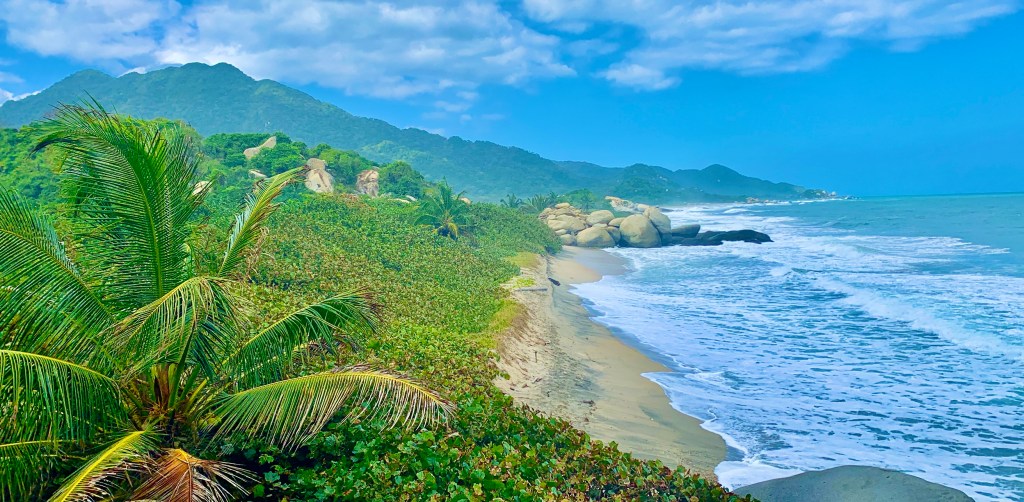
My visit to Colombia certainly enlightened me about its many natural treasures. None more so than Tyrona National Park. Lying on Colombia’s northern Caribbean coast, it offered us a complete contrast to Colombia’s bustling cities.
Although a visit will take some advanced planning, this remote tropical paradise is not the most straightforward to visit.
Factor in the costs and time, as the park closes at 17.00 pm unless you have an overnight permit. Our eco-lodge was less than three miles away and we planned to spend two days there. One day would suffice if you just want to visit a beach, longer if you want a more in-depth visit.

Other important tips would be to arrive early as there will be queues, bring cash with you for entry payments as cards won’t be accepted and you will also need a copy of your passport to gain entry. The whole process is slow and bureaucratic but it is what it is.
A walk in the park which is certainly no walk in the park. The coast is 5 kilometres from the entrance so it is worth paying £1 for a minibus transfer which will give you more much needed time inside the park. Minibuses run regularly from the main entrance.
Time spent in the park
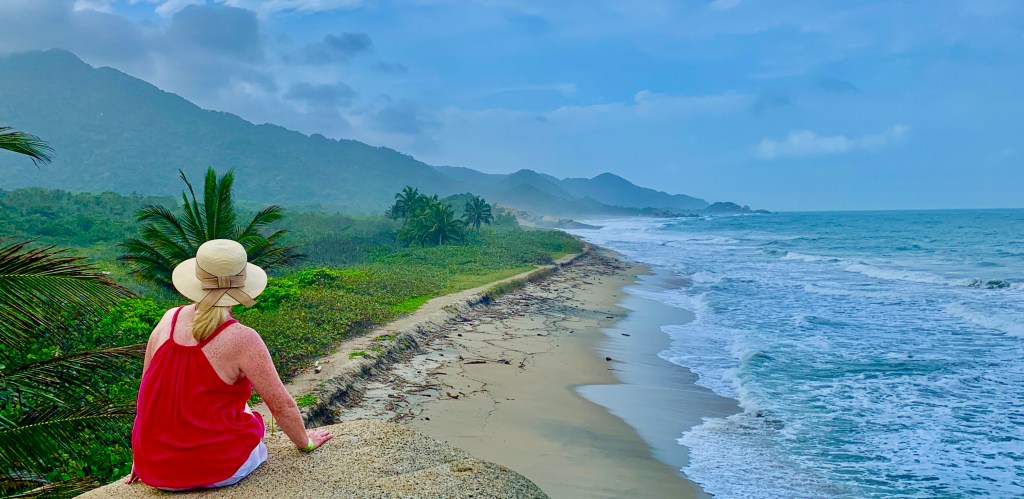
This coastal national park is where the Sierra Nevada de Santa Marta mountains converge on the Caribbean sea. First established as a national park in 1964, its well known for its spectacular scenery and incredible biodiversity.
Despite being a popular inclusion on many itineraries to Colombia, I knew very little about Tayrona. Having visited I realise what an important ecological location Tayrona National Park is and one of Colombia’s natural treasures.

When in the park be prepared to do some walking. The park covers 58 sq mi of land and 12 sq mi of maritime area in the Caribbean sea. It is very busy with just over 500,000 visitors in 2019.
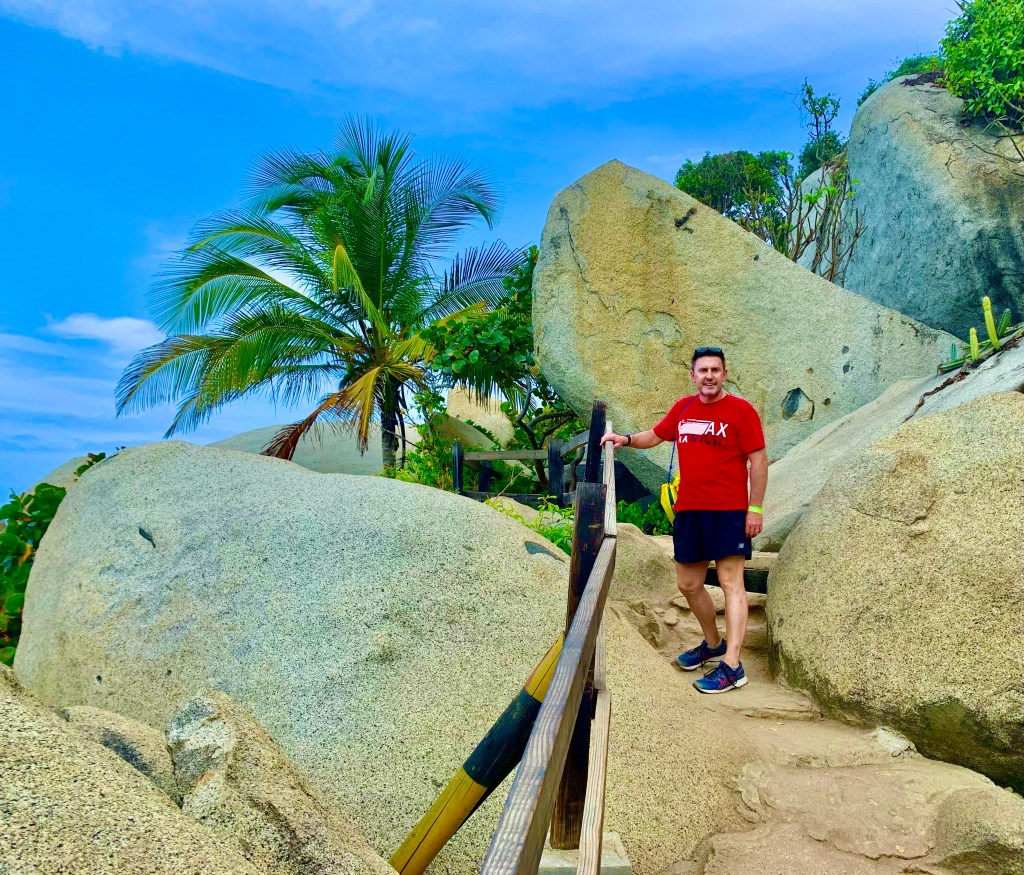
In many ways, Tayrona National Park resembles a miniature tropical paradise. Which involves hiking through a verdant jungle passing giant round boulders. Besides it’s natural beauty it’s also home to various indigenous communities and ruins of past settlements.
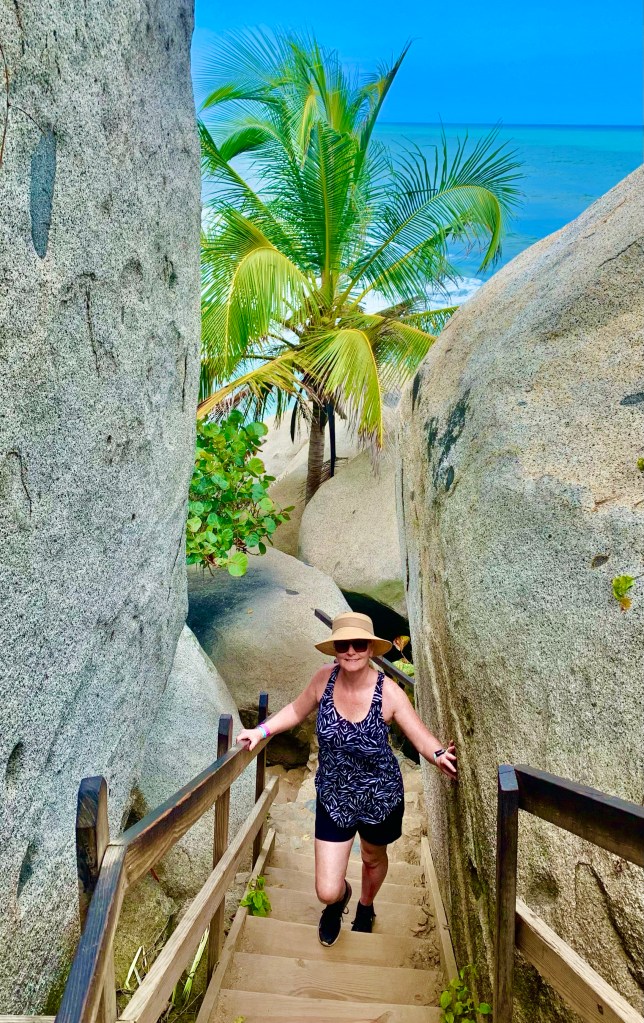
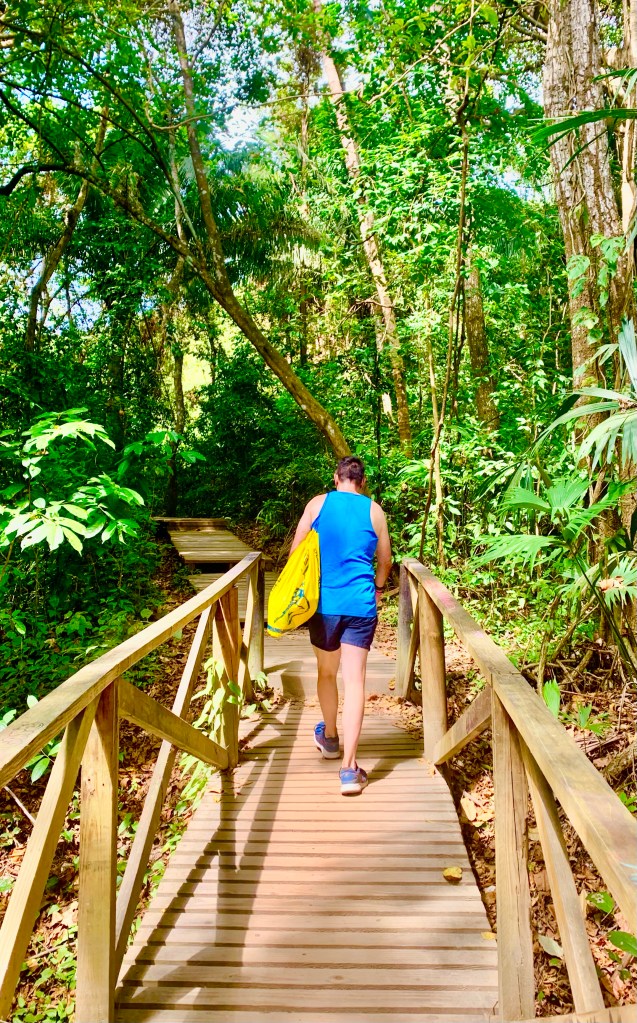
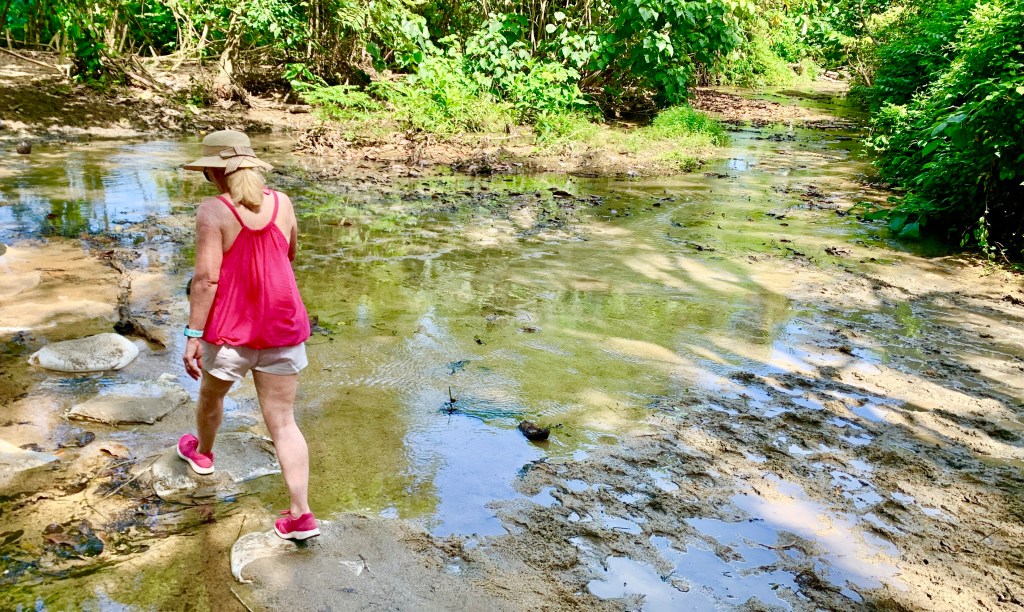
The park is spread over a large stretch of coast, so there is plenty to explore. We entered the park at El Zaino to get to Cabo San Juan. To get to this beach it is a 4.5-mile walk (after a 3-mile minibus transfer) through various terrain from boardwalks, steps, dirt paths, beaches, through water, over rocks and boulders. This took us about 1 hour and 50 minutes.
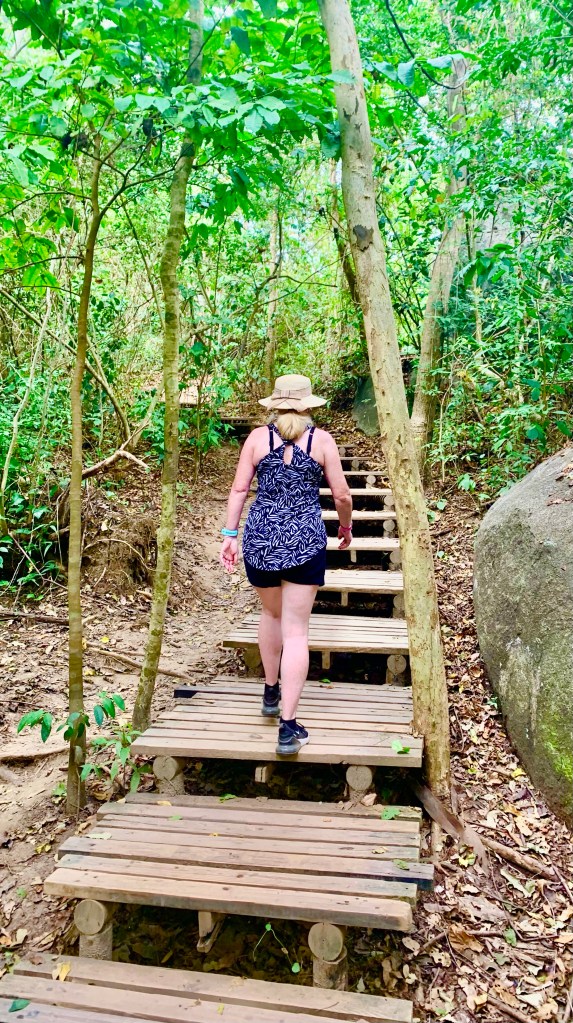
It is predominantly sheltered, so we weren’t walking in direct sunlight, but conditions are very humid and there are a few gradients to contend with not to mention various types of terrain. A reasonable level of fitness would be necessary to complete a hike to some of the more popular beaches. Appropriate footwear is also a must.
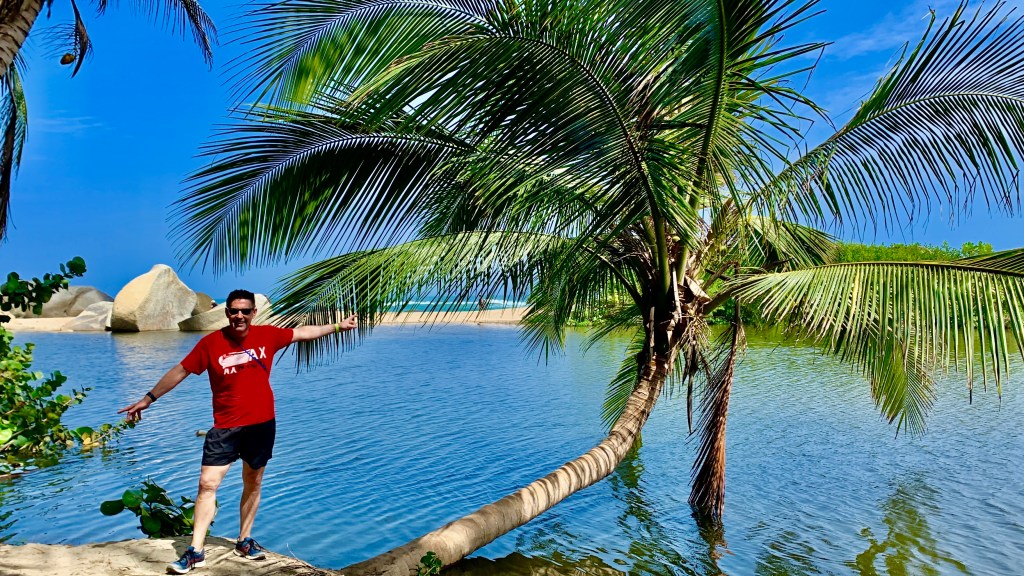
Allow plenty of time as there are lots to see along the way. It’s like walking in a green paradise. We got jungle vibes, tropical forests and endless palm trees. There was always something to see throughout our hike. A bit of preplanning will allow you to get the most from your visit.
In Tayrona National Park there are over 350 species of birds, condors and white eagles. There are fox dogs and even the mighty Jaguar resides here. One of South America’s apex predators.
There are in fact over 105 species of mammals, 70 types of bats, 31 reptile species, 110 different types of coral, 401 sea and river fish and more than 770 plant species. Tangible evidence that Colombia is one of the world’s most biodiverse countries, second only to Brazil.
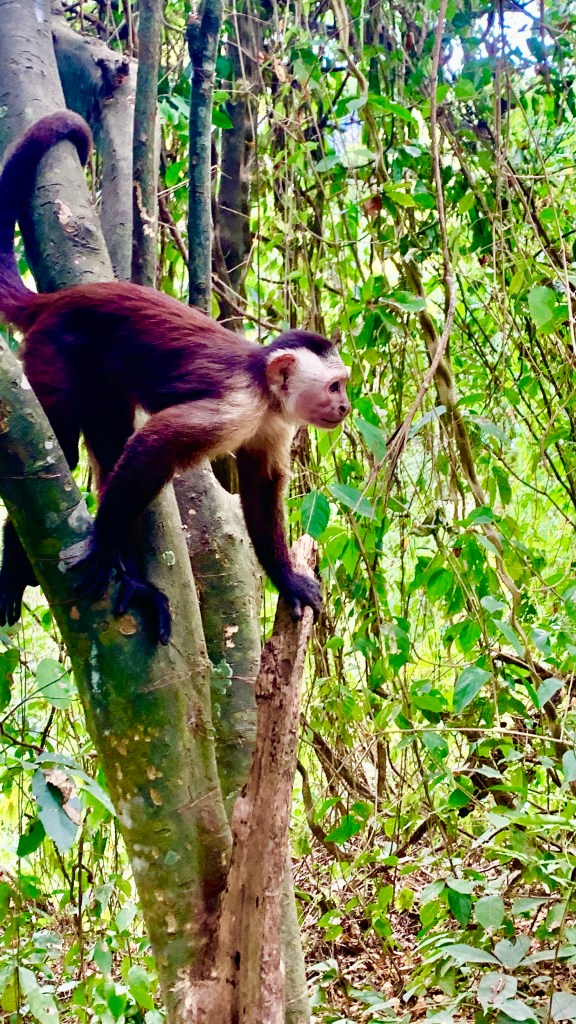
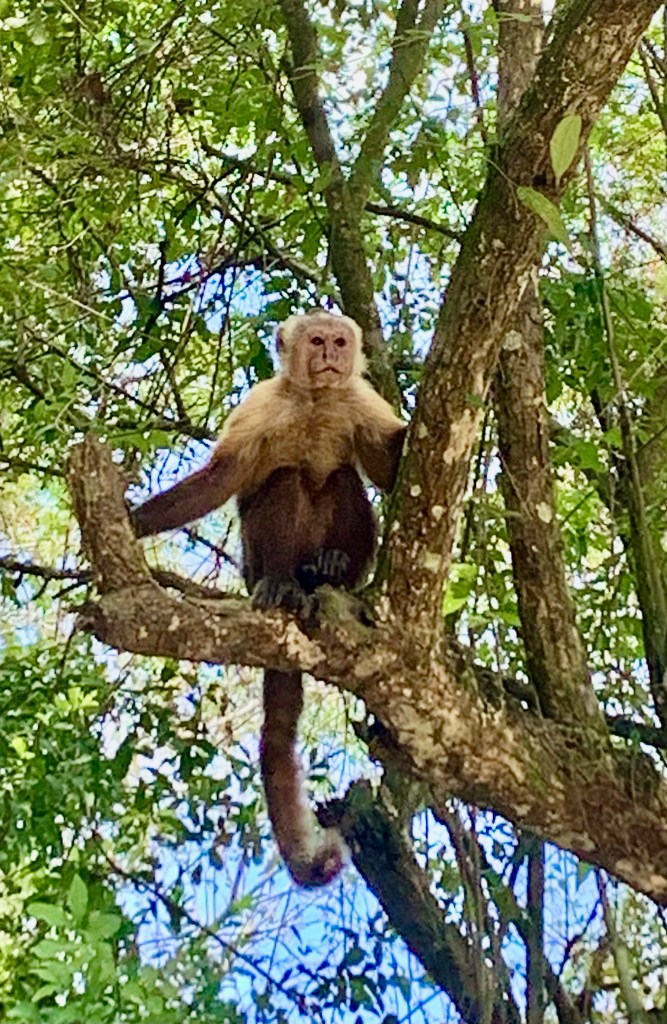
We did get to see plenty of monkeys. There are three species of monkey in the park, the red howler, the capuchin and the cotton-top tamarin.

While Tayrona National Park is a beautiful and picturesque place, treat it with respect for the benefit of future generations. It is a sacred place for many indigenous tribes,
These tribes are the guardians of the land. indigenous people close the park three times a year, protecting the park and the ecosystems it supports, allowing the park time to rest and replenish.
Indigenous groups also perform cleansing rituals and ceremonies. This is an excellent and necessary initiative that will hopefully protect the park for future generations.
Beaches in Tayrona National Park
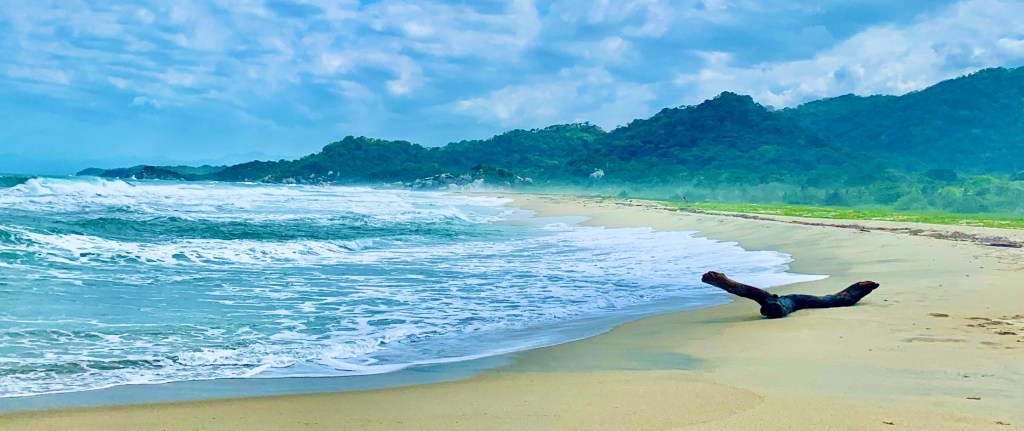
The combination of wild jungles, mountains and paradisical coastline makes Tayrona National Park a very unique destination. The park is famous for its beautiful untouched beaches. After all, we are on the Caribbean coast.
Cabo San Juan
Most probably the most famous beach in Tayrona National Park.
You can get to the beach from the main entrance at El Zaino, this is one of three entrances but the nearest one to our hotel. It is a 4.5-mile hike from the minibus drop-off and took us just under 2 hours with a few pictures stops on the way.
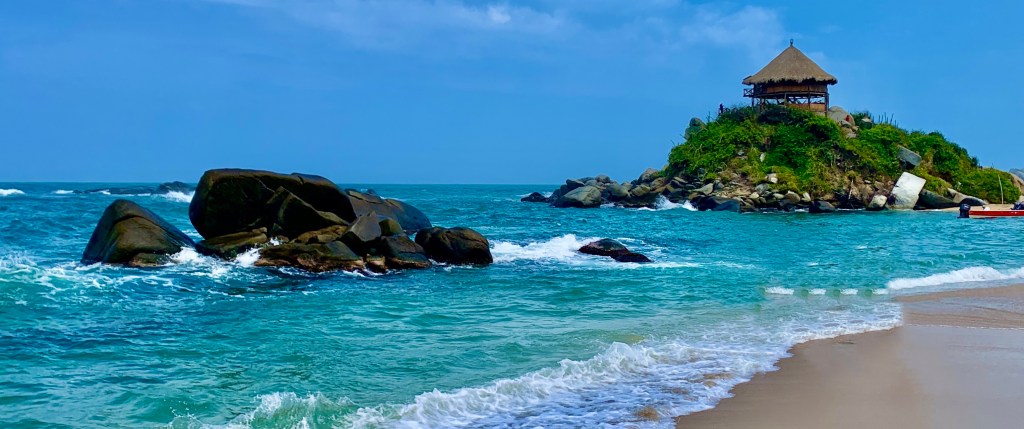
We decided to visit Cabo San Juan first, working our way back to the main entrance. As it’s the most famous and popular beach, and the furthest one away from the main entrance, this would allow us to maximise our time there and visit other beaches on another day.
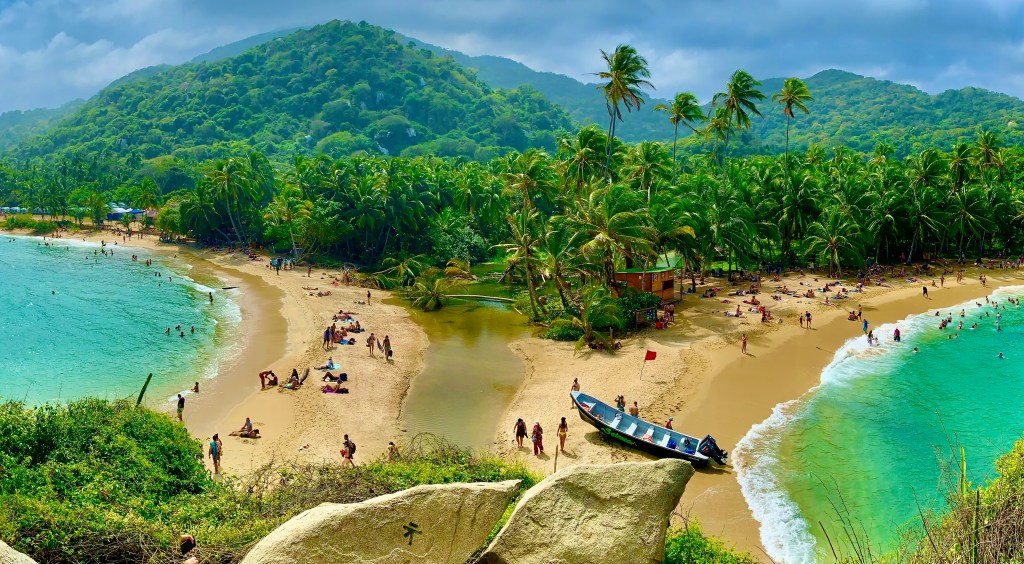
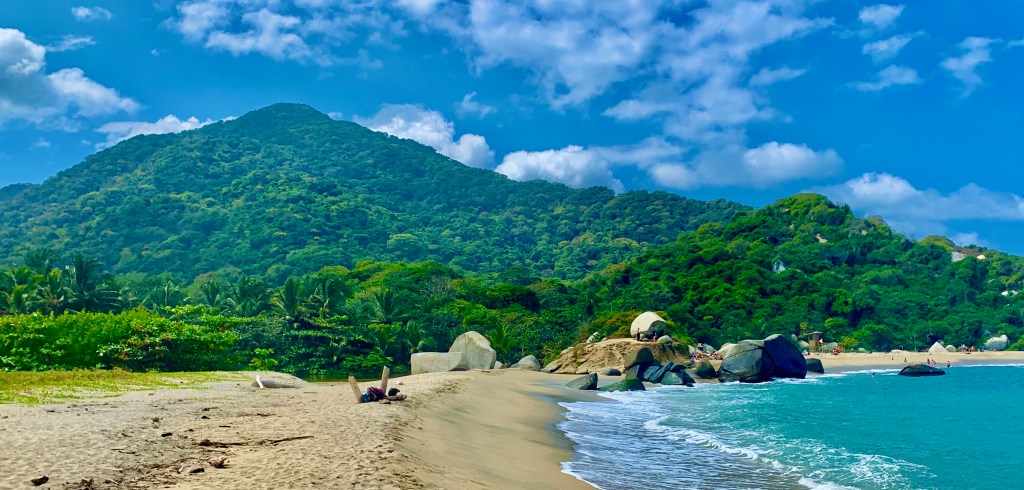
Cabo San Juan is very popular as it’s a very photogenic location with its double-sided beach and when looking from the bungalow above the beaches they appear to mirror each other.
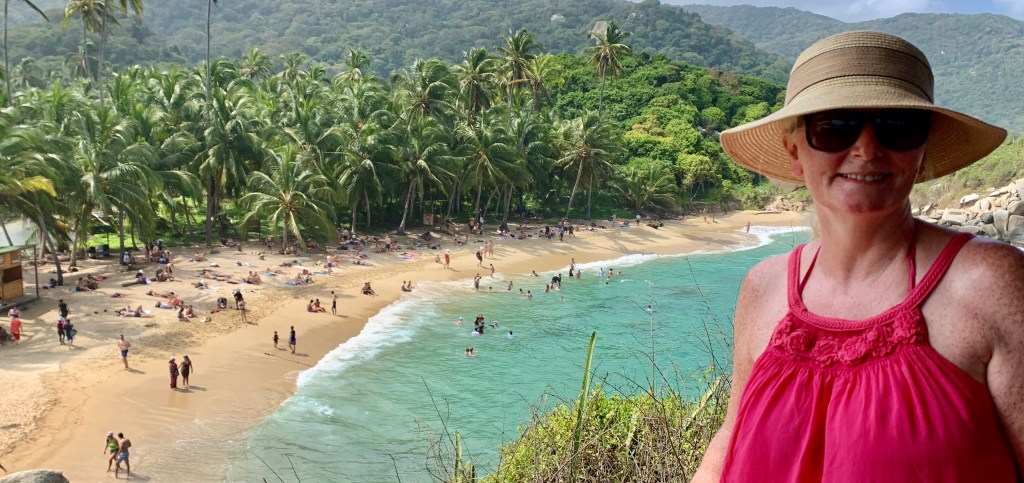
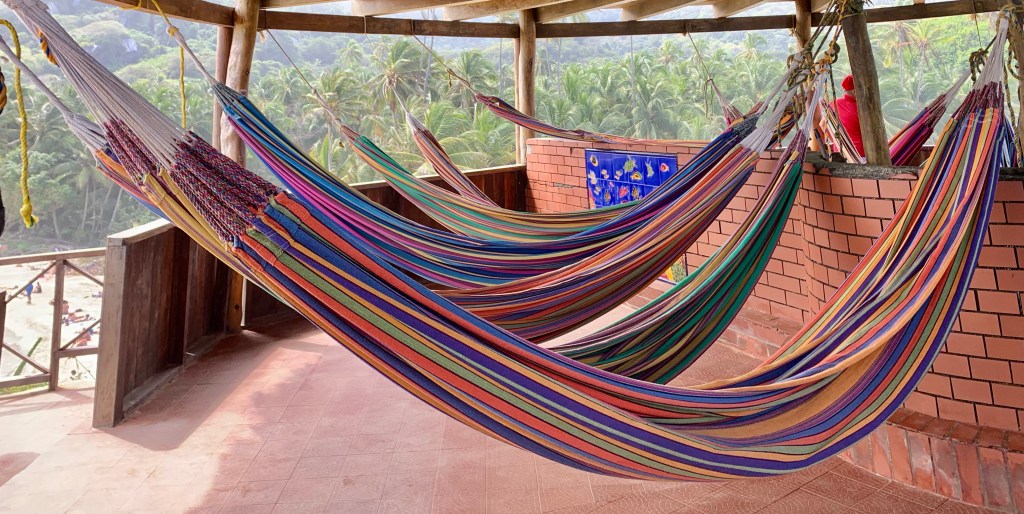
Another reason this beach is very popular is its accommodation options, camping or sleeping in a hammock it can be done here. You can swim here which you are not able to on many of the beaches within Tayrona National Park. There are also a few eating and drinking places located here. An option for a boat transfer from Santa Marta is also available.

The beach itself is in a semi-sheltered cove resulting in less exposure to currents and the large swell you will find on other beaches, there are also lifeguards in attendance, but despite this still take caution as the sea is still very unpredictable.
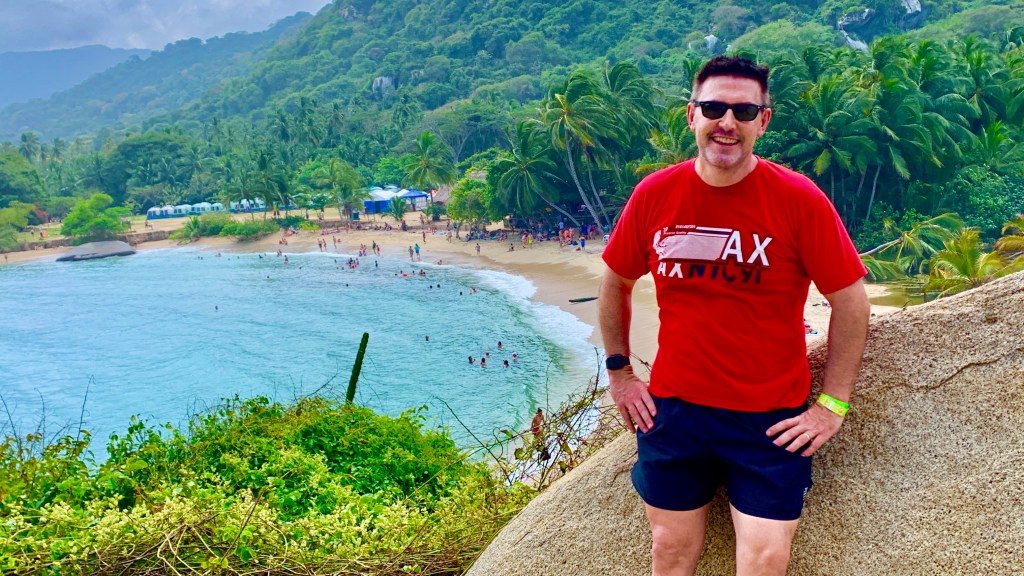
I had reservations about visiting the beach, not necessarily because of the location, it was absolutely stunning, but because it has become a victim of its own success becoming a tourist hotspot.
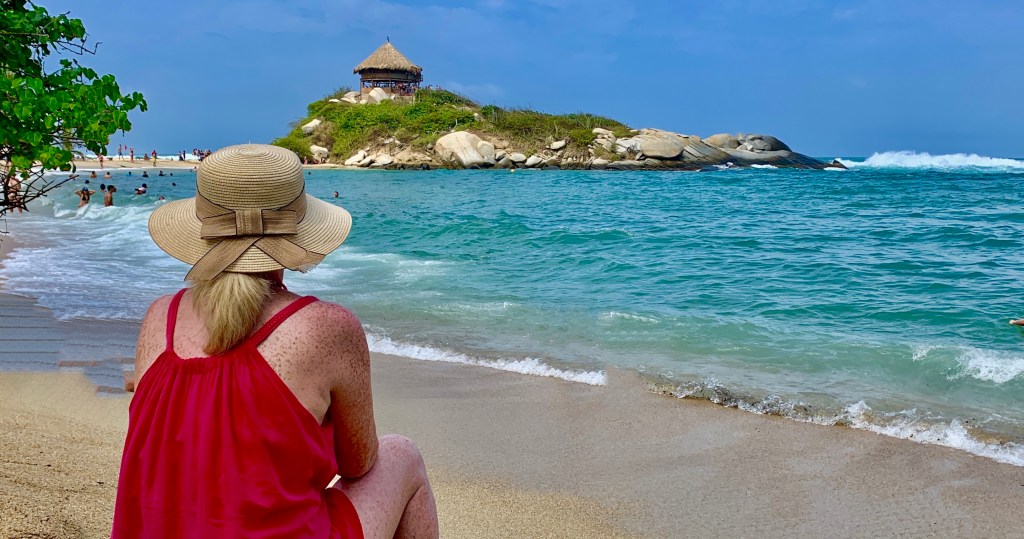
Although it was busy it wasn’t unduly crowded, we were still able to get that quintessential tropical beach experience, and it’s well worth the hike to get there. Just factor in enough time to get back because unless you are camping the park closes at 17.00 pm every day.
Arenilla
A very attractive beach situated within a cove framed by massive boulders.
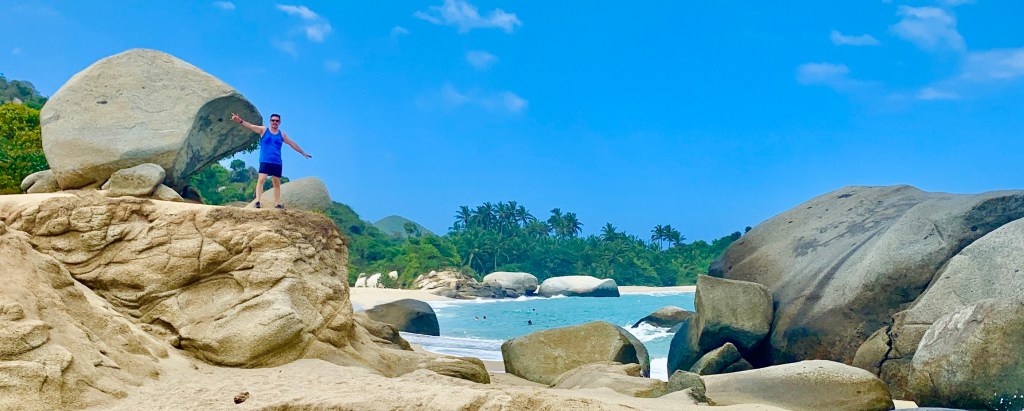
A great alternative beach to the very popular Cabo San Juan. Arenellia is a very pretty beach and it’s not as busy as Cabo San Juan.
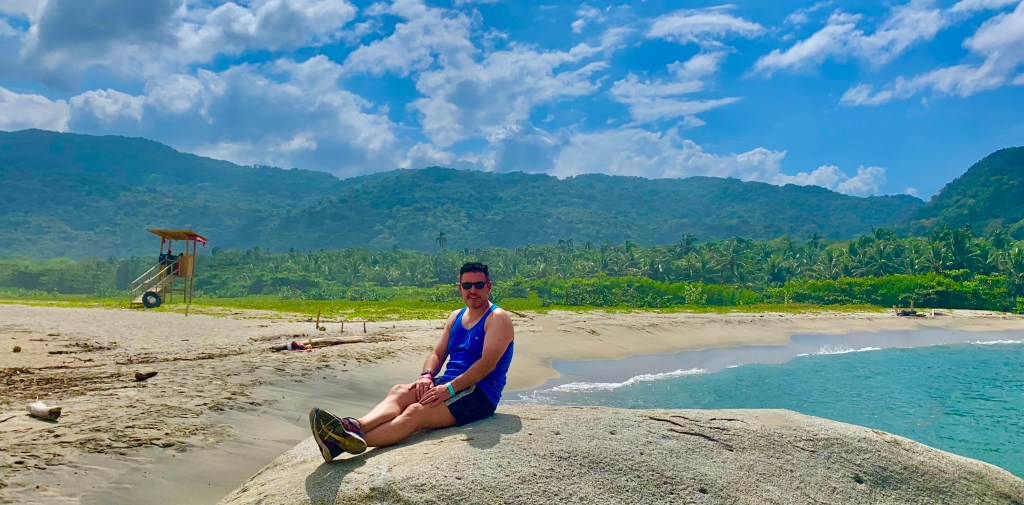
The palm trees offer plenty of shade from the sun and inviting clear water you can actually swim in. For me Arenilla was one of my favourite places in Tayrona National Park. Cabo San Juan is certainly a very beautiful beach, however Arenilla had a much more relaxed vibe and in my personal opinion equally as beautiful.
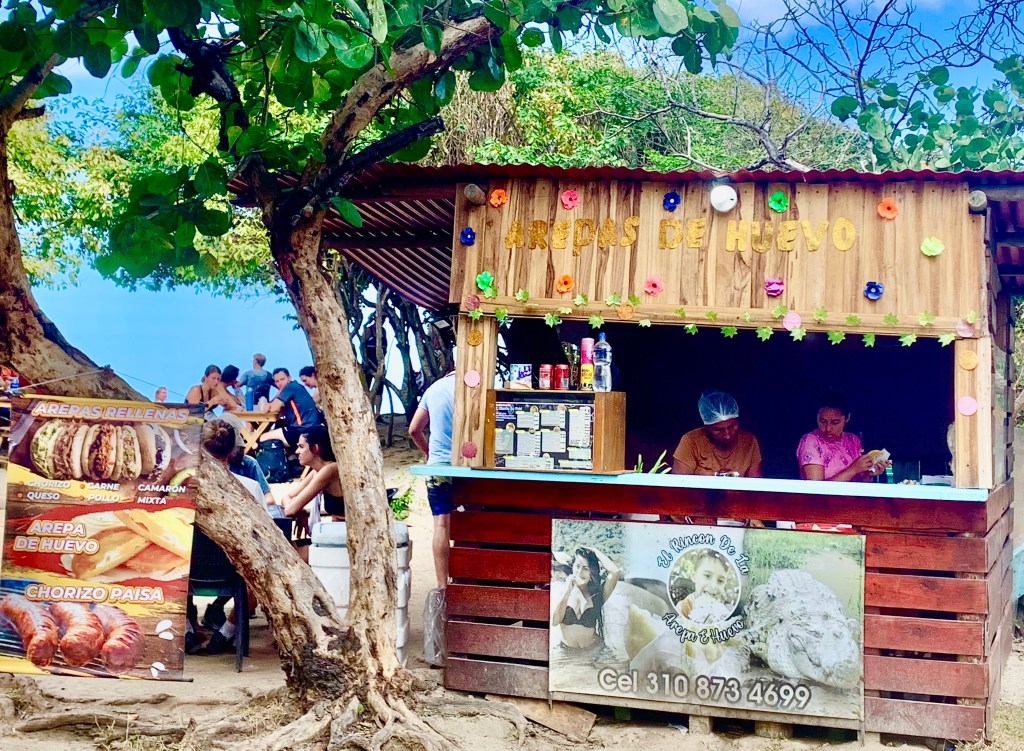
Arenilla is roughly a halfway point between Canaveral beach and Cabo San Juan, a few trails converge here and it’s a pit stop for visitors who are on horseback. So you will find a couple of restaurants located here and is the perfect spot for a drink or light lunch.

After a swim and some time spent at the beach, it was the perfect location to enjoy freshly prepared mango juice, before our hike back to the main entrance. Time was 15.00 pm more than enough time to get us back to the main entrance by 17.00 pm.
Canaveral
A very quiet beach and the closest one to the El Zaino main entrance.
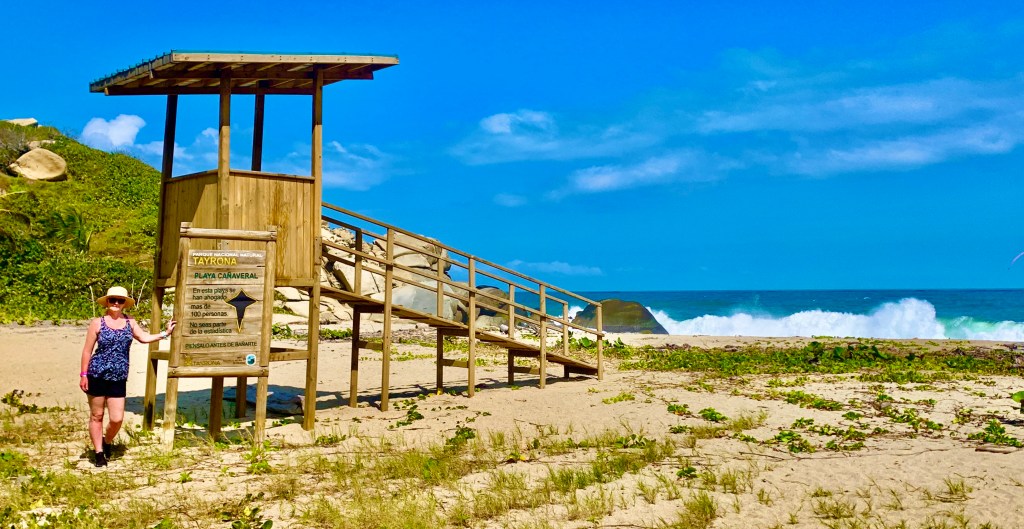
Only a 1-kilometre walk from the minibus dropoff. This is often overlooked compared to other beaches within Tayrona National Park. When we visited there was hardly a soul on the very big beach.
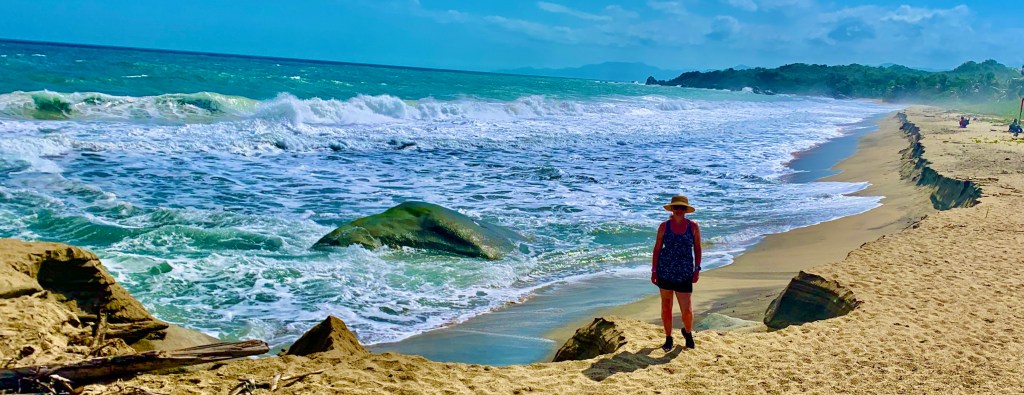
The beach at Canaveral is very beautiful a long stretch of golden sand and azure blue water. Unfortunately, there is a downside for us, there is no shade whatsoever and swimming can be very dangerous due to treacherous offshore currents.
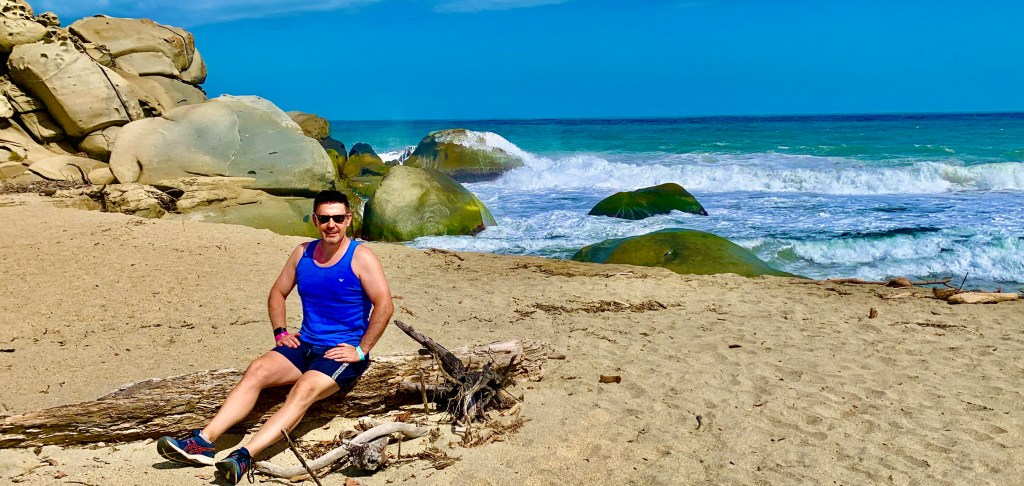
Canaveral Beach is a beautiful location if you want some quiet contemplation and we enjoyed our time there. An incredible location for a beachside walk where you can admire its wild rugged beauty, but if swimming or sunbathing is your thing, this isn’t going to be the beach for you.

Due to its reasonably close proximity to the main entrance and one of the few beaches with a road link, it is a popular place to stay with accommodation options other than camping available here.
Piscina
The clue is in the name. Piscina is Spanish for pool, and swimming is permitted here.
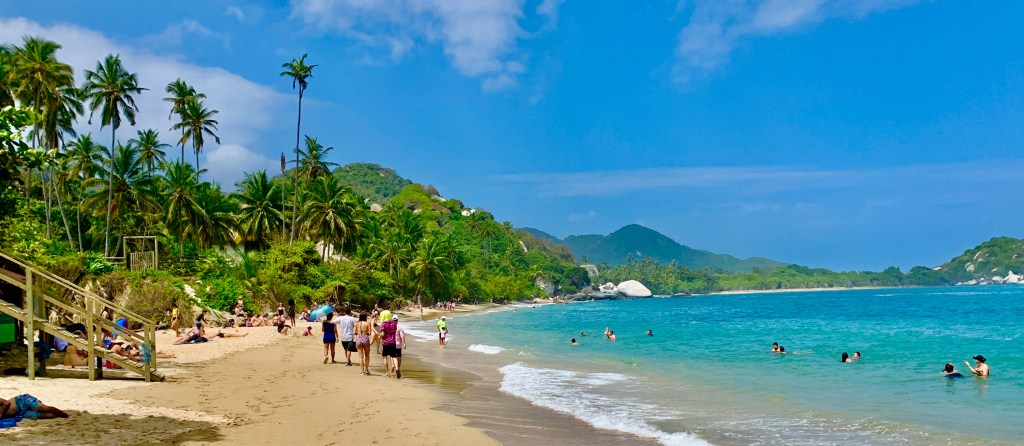
A popular beach within Tayrona National Park it’s mainly due to the fact that you can swim here, not always the case when you are at the beach at Tayrona. We didn’t stop here just took a few pictures.
Arrecifes
A beautiful beach, but a beauty which is deadly. There have been over one hundred drownings in this one location.

You feel as if you have hiked through the jungle to get here and the beach is surrounded by huge boulders. It’s a very naturalistic location where the full force of the sea can be seen as the waves violently crash onto the coast. It is a very captivating location but very brutal, best enjoyed from a safe distance.
This beach is now closed to the public. Its reputation had certainly proceeded itself and the park authorities are taking no chances with safety. This is the beach where it’s best to enjoy its beauty from afar. You will get some excellent views from the cliffs that surround the beach.
Accommodation in and around Tayrona National Park
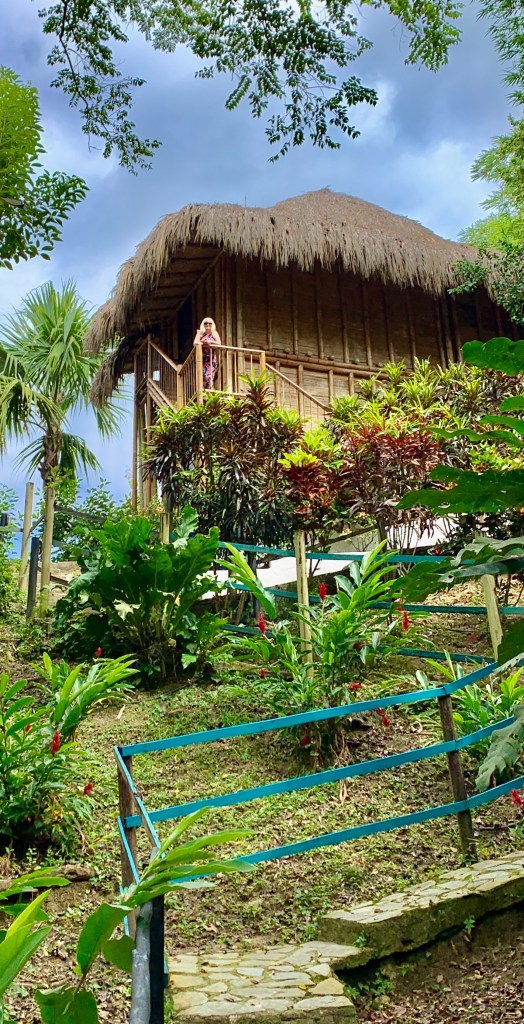
There are a few options available, you can stay in the park where there are camping sites available to rent or even a hammock for the more adventurous.
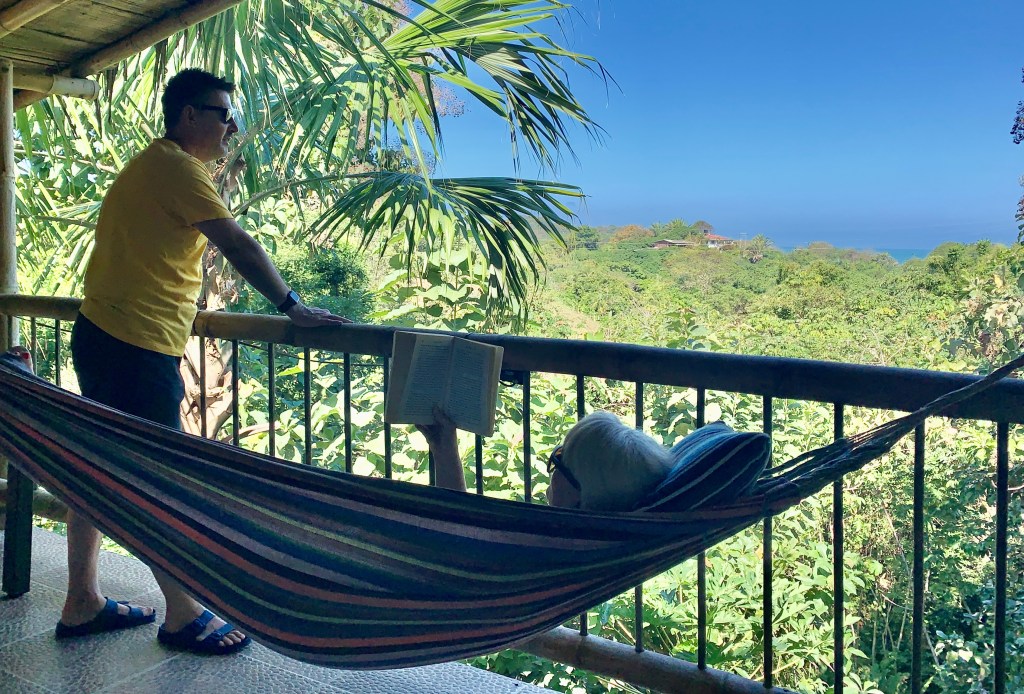
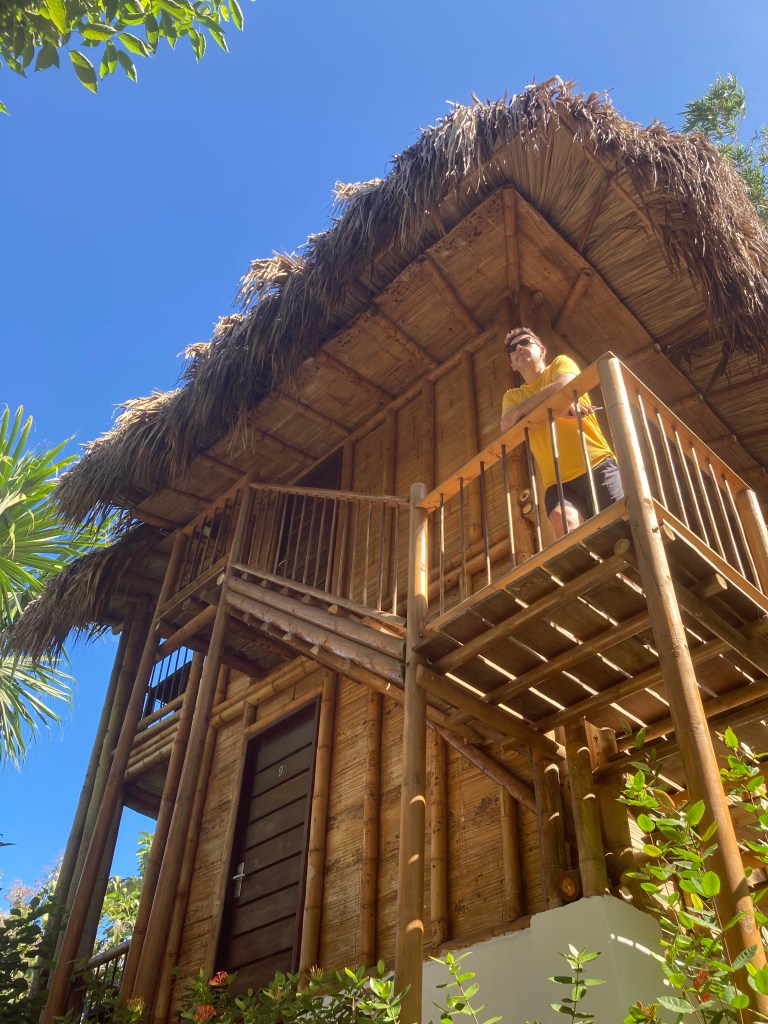
We choose to stay outside in an ecolodge. More expensive but it gave us a more comfortable relaxed stay while exploring the area.
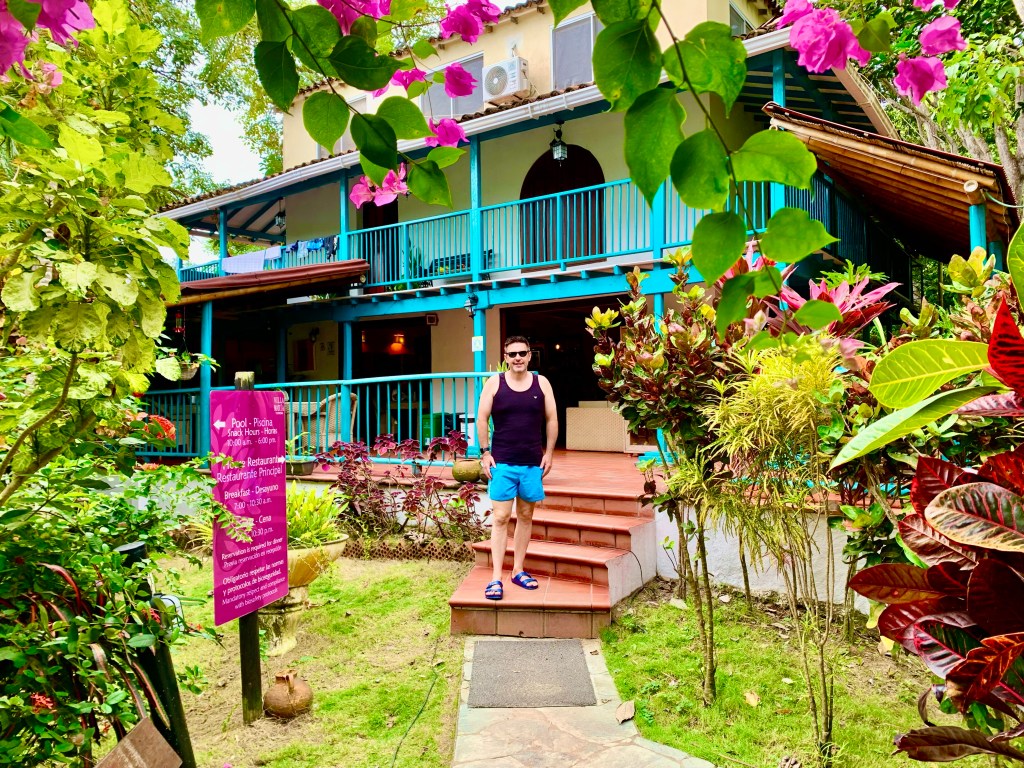
After a busy time discovering Colombia, it was the perfect location to relax and unwind at the end of our adventure. Its close proximity to Tayrona National Park gave us easy access to discover everything the park has to offer. It was less than 10 minutes away with a taxi transfer.

 We were born to do more than go to work, pay bills and die. See the world while you are alive and kicking