A country which is known for its unassuming beauty and gorgeous tropical climate. My first instalment takes me to M’Bour on the Petite Coast to fully understand Senegalese life.
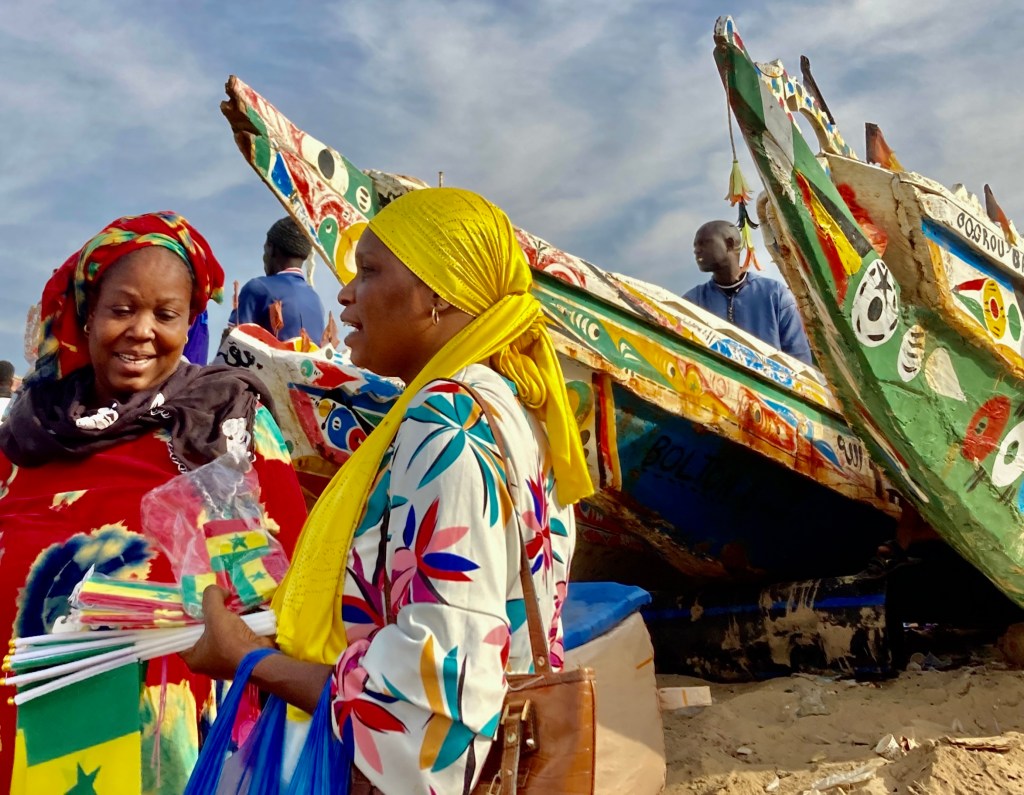
A first-time visitor to Senegal. Due to its French colonial history, the country for many English speakers has been very much under the radar. Although Senegal has been known as the Gateway to Africa and has been welcoming visitors for centuries.
This peaceful sub-Saharan country is one of the continent’s safest and most accessible, it’s also blessed with a rich culture, seven UNESCO world heritage sites no less, not to mention the dreamy beaches, wildlife, musical heritage and delicious cuisine.
Senegal is a predominantly Muslim country, although you needn’t worry about some of the usual protocols. In most areas, women don’t wear the hijab and you won’t be showing disrespect by not covering up. This is not set in stone so just be aware of the surroundings in which you may find yourself.

Another thing to consider is the language. There are 39 spoken languages in Senegal, Wolof is the predominant tribal language and French is spoken by some locals and is an official language. English is not widely understood, so it may be a good idea to brush up on some simple French and Wolof phrases.
M’Bour Petite Coast
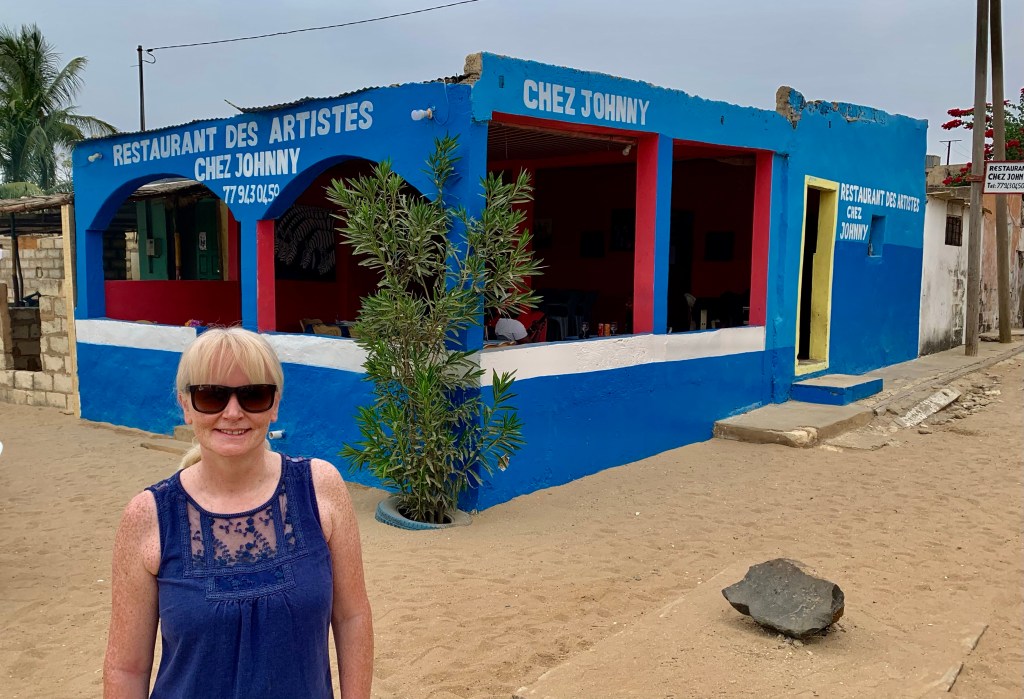
M’Bour is the major town in the area, about 90 kilometres from Dakar, it lies on the Petite Coast. The Petite Coast is the main tourist hub in Senegal where you will find lots of hotels, restaurants and miles of beaches. Nicknamed the Senegalese Riveria it has been a popular destination for French visitors for many years.
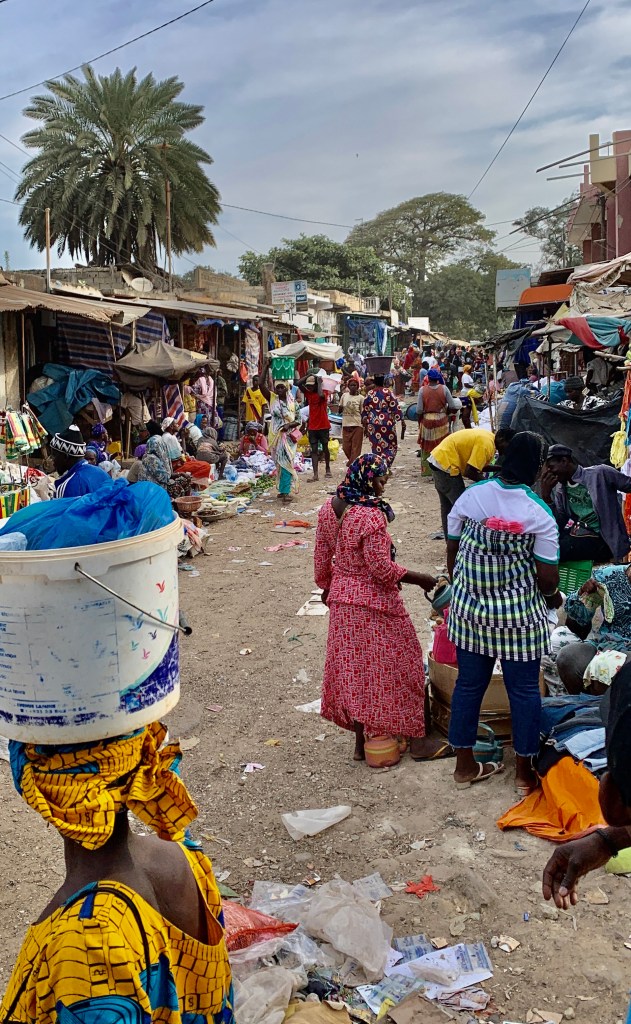
Travelling to an underdeveloped country can be somewhat of a culture shock for the uninitiated. Nevertheless, the positives of this for the traveller can include fresh cultural insights, friendly locals and affordable prices that can outweigh any possible difficulties.
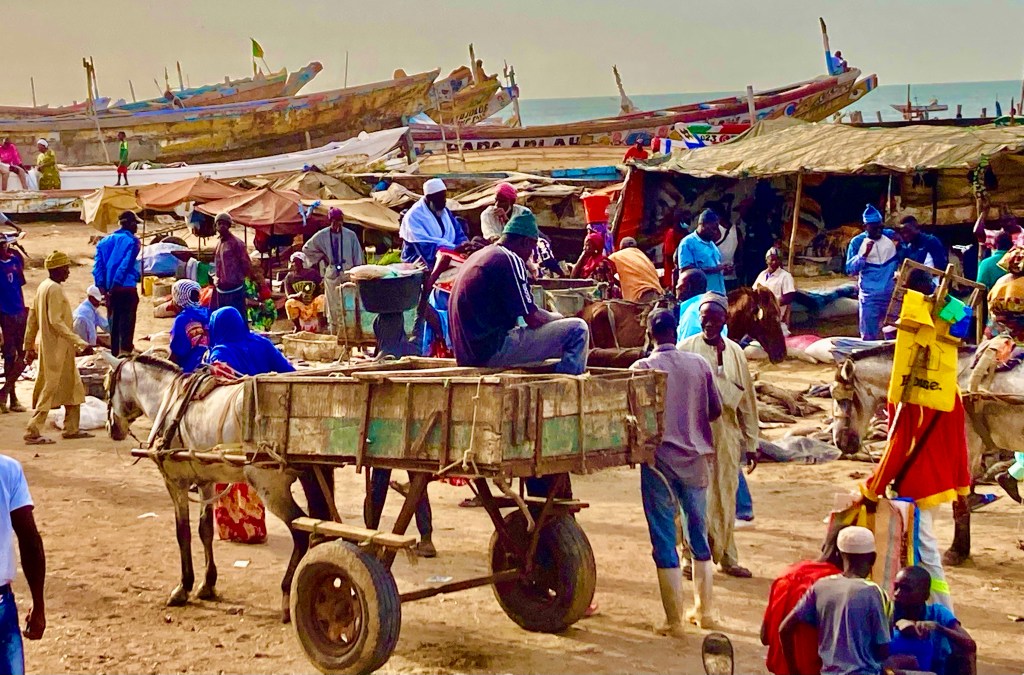
Don’t be surprised when you get there to find roaming goats, cows, chickens and horses and carts as well as buses crammed with locals all sharing the same roads with cars and pedestrians.
M’Bour market
I wasn’t quite sure where to start my Senegalese adventure. but what better place to start than a colourful Senegalese market where your able to buy a myriad of products.
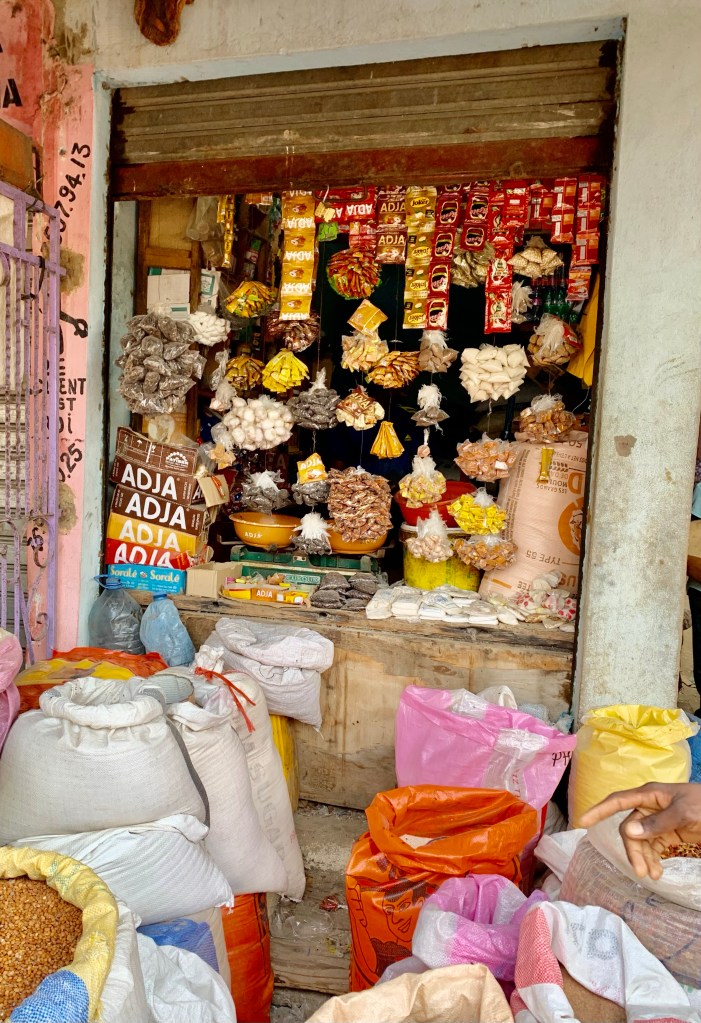
Discover the authentic Senegalese way of life by visiting a market at M’Bour. The colourful fishing and craft market was just a short distance from where we were staying at our hotel in Saly.
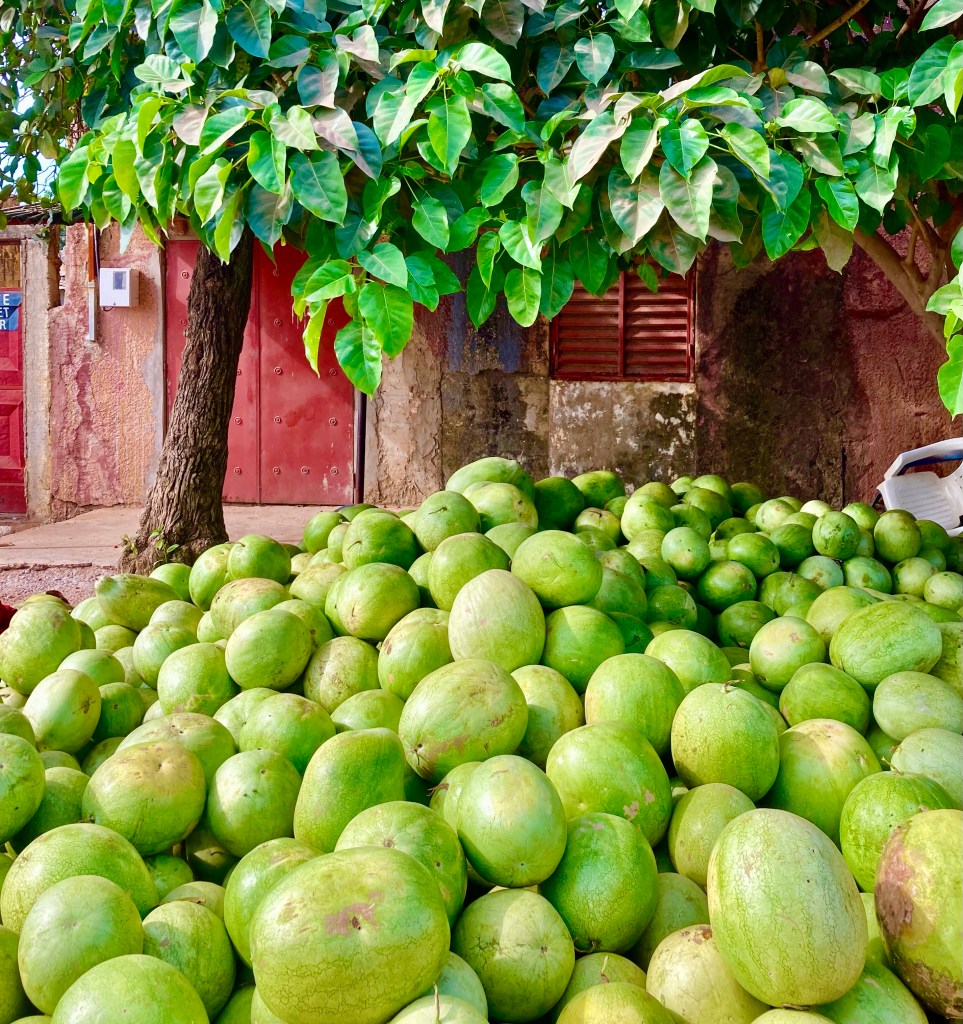
I have never seen so many watermelons. It is an ancient fruit native to Africa. Senegal has the perfect growing conditions for the fruit and is available in abundance, it’s fresh, deliciously sweet and very cheap, the perfect healthy snack on the go, and most vendors will prepare the watermelon 🍉 for you.
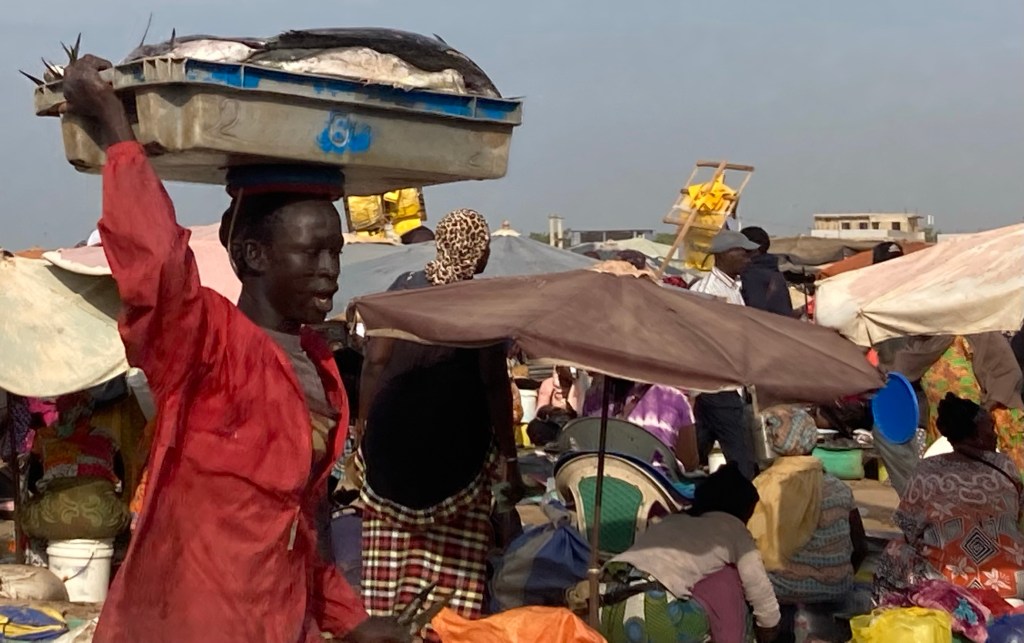
At the market, you will certainly find plenty of fish stalls. A staple food for many on the Senegalese coast. Where it can be purchased straight from the fishermen and sold fresh at the market.
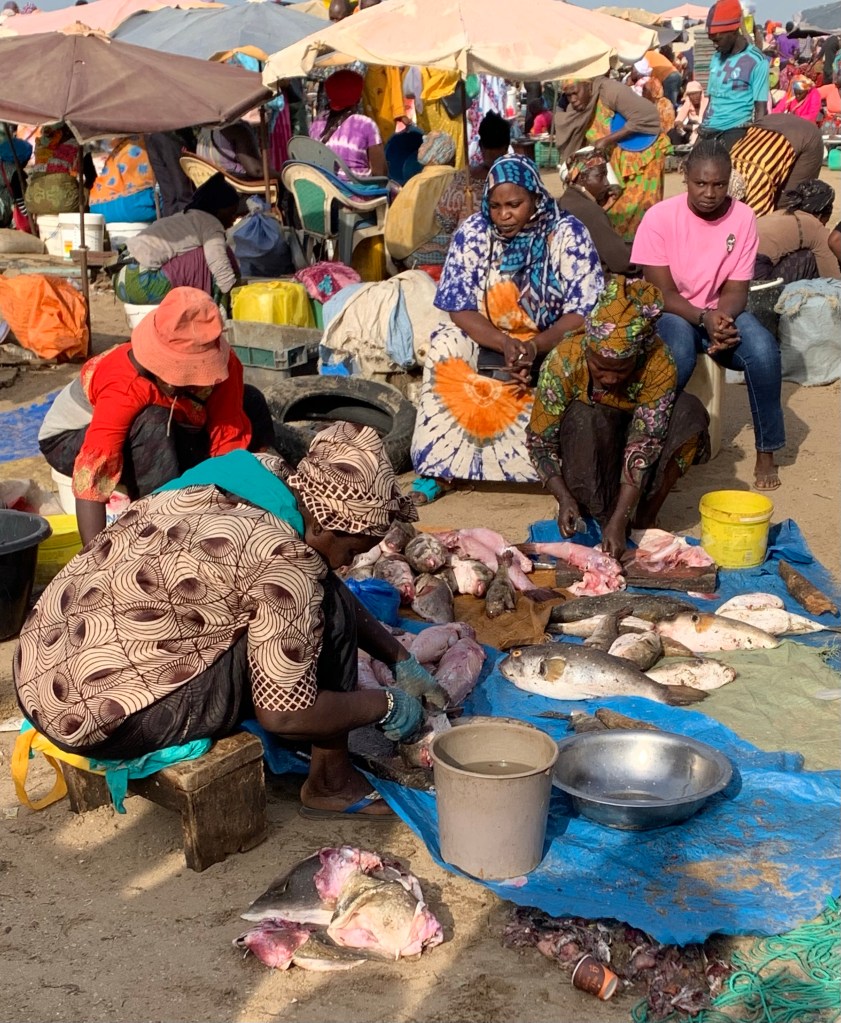
One particular dish you will commonly find is thieboudienne which is rice and fish it doesn’t sound very exciting however you will find hundreds of variations around the country.
Peanut and chicken dishes are also very popular. Senegal is a significant producer of peanuts and poultry is widely available so the food is relatively cheap to get.
M’Bour fishing harbour
M’ Bour has one of the largest fishing fleets in Senegal.
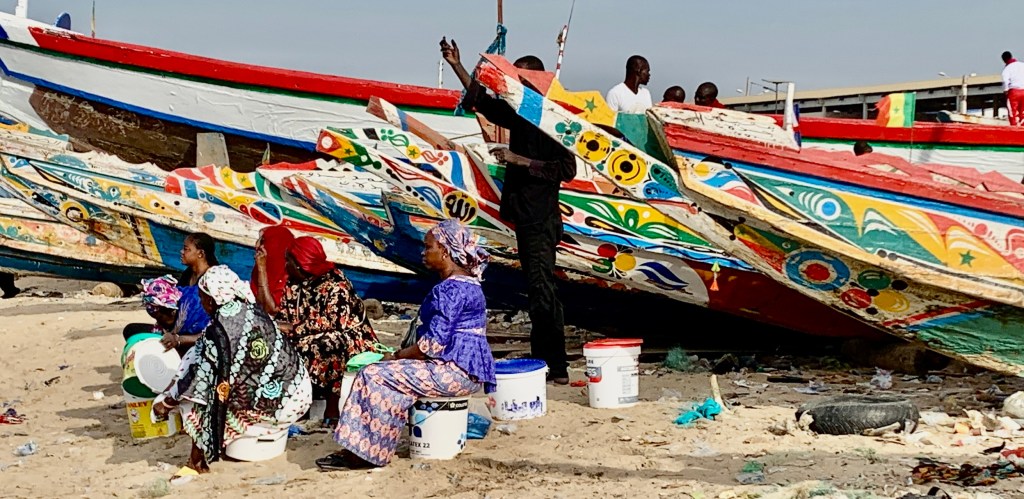
We were staying on the Petite Cote the centre of tourism in Senegal. M’Bour is the major town in the region and the centre of the fishing industry with its busy harbour.
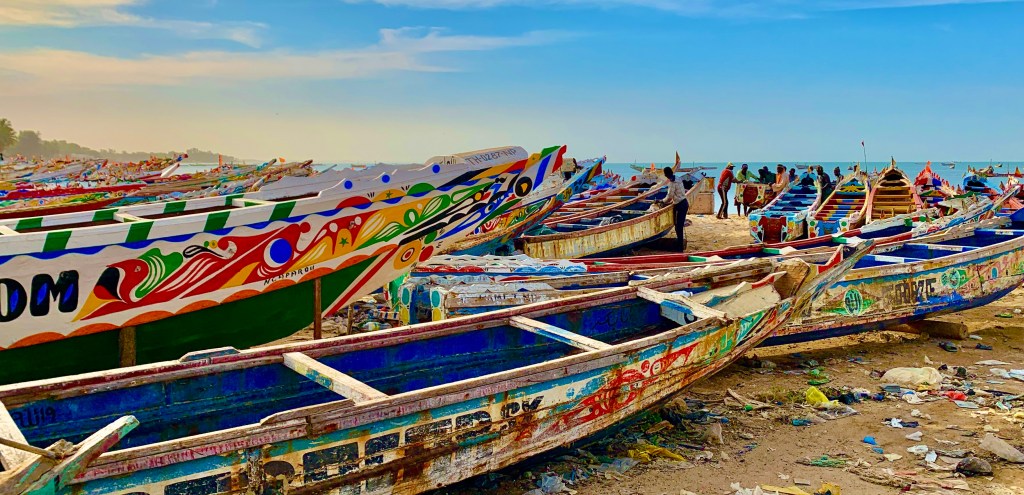
The first thing we noticed was the beautifully painted fishing boats. It’s impossible not to be impressed when you see the boats lined up on the beach all painted in their striking designs.
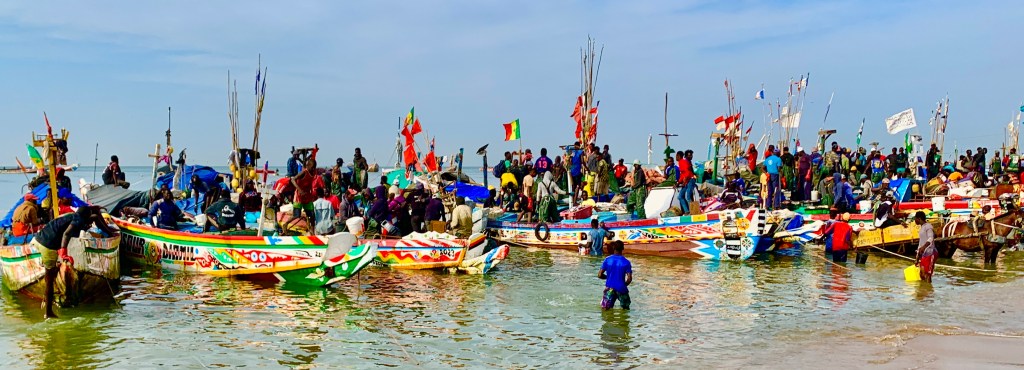
M’Bour’s bustling fishing harbour and its geographical location on Senegal’s central west coast, make the town one of the country’s busiest fishing ports. This is a working beach and not a place for pleasure. Whoever comes here comes with the intention of fishing or purchasing fish.
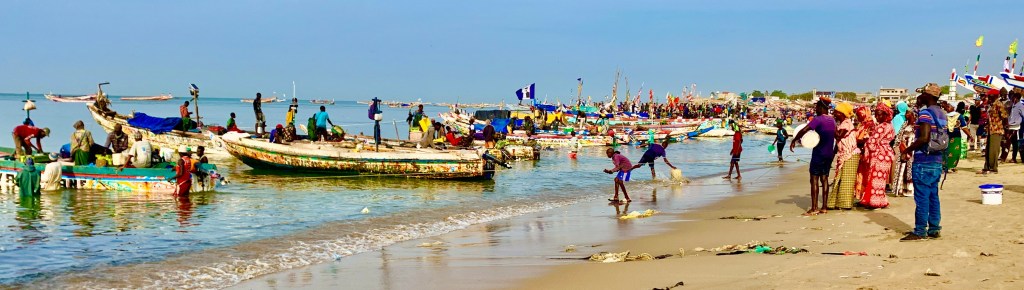
From when the sun rises in the morning till well past sunset the fishing harbour of M’Bour is a hive of activities. It is especially busy when the morning catch is coming to the port. Where the boats will hopefully be full of grouper, snapper, swordfish, mackerel, tilapia and many more varieties of fish.
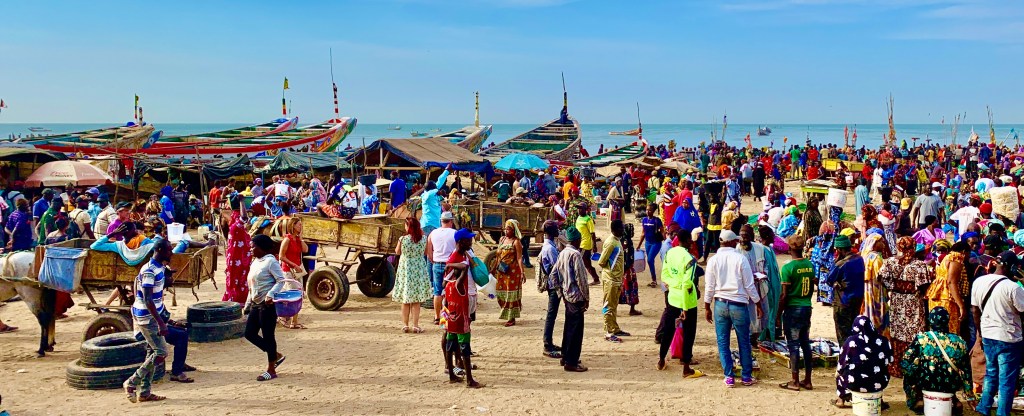
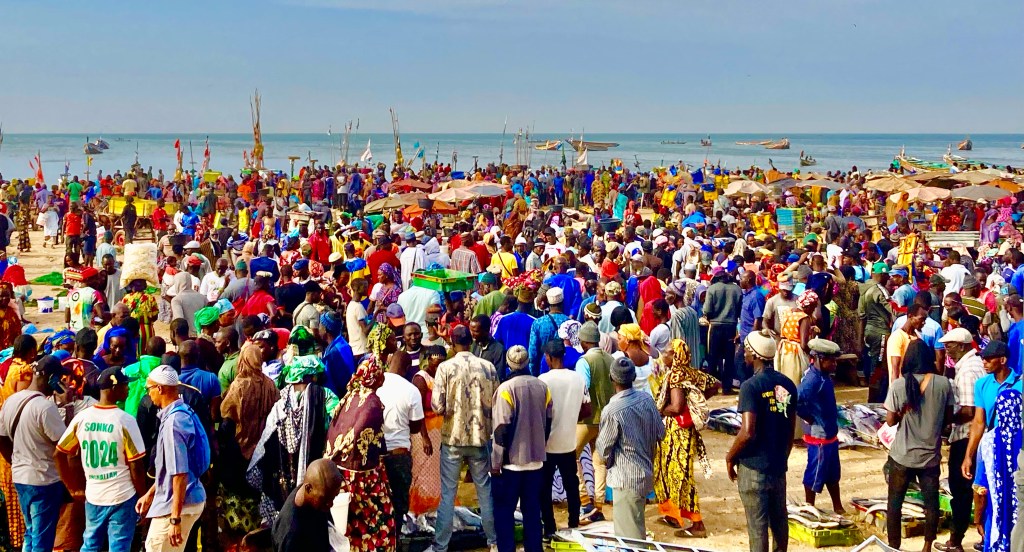
Fishermen, wholesalers and buyers will meet at this chaotic location where deals are continually being made, where fish are sorted by size and variety, before being transported to the market and beyond. A heaving mass of humanity tries to make a living amongst the chaos that ensues.

You can visit independently, but to get the best experience of the market and fishing harbour, it’s probably best to get a local guide. They will know the best times and locations to visit, will be able to speak to you in English and translate to locals, and keep away street traders although not aggressive can be very persistent with their sales patter.
Senegalese rural village
If all the hustle and bustle of the market and fishing harbour is getting too much. An all together different pace of life to experience

I sometimes feel a little bit uncomfortable with these sorts of excursions. As if I am some sort of voyeur peering into someone else’s life.
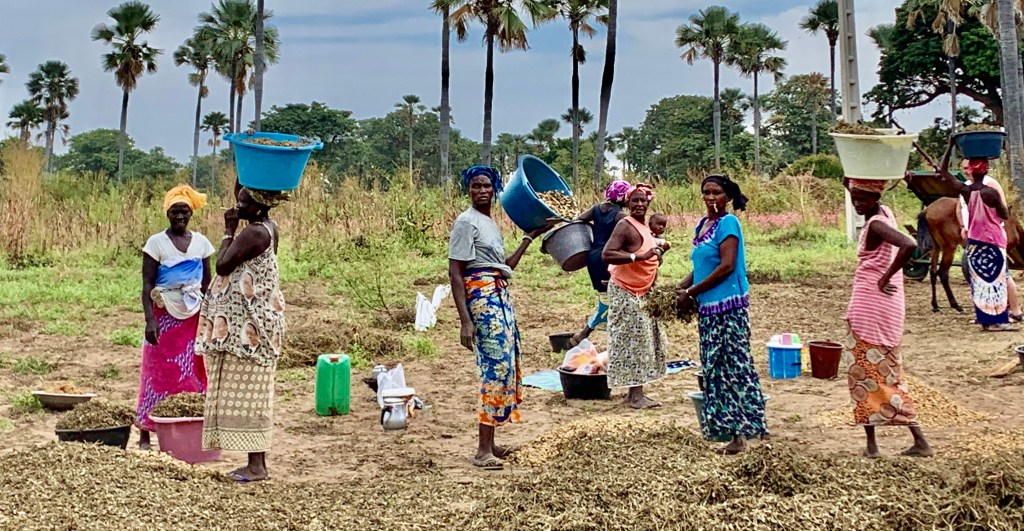
Nonetheless these tours are done very professionally, the company we used works closely with local communities and employs local people. I felt by visiting that we were providing a supplementary income besides farming, giving the community an opportunity that they can show visitors what a vibrant culture these rural villages have.
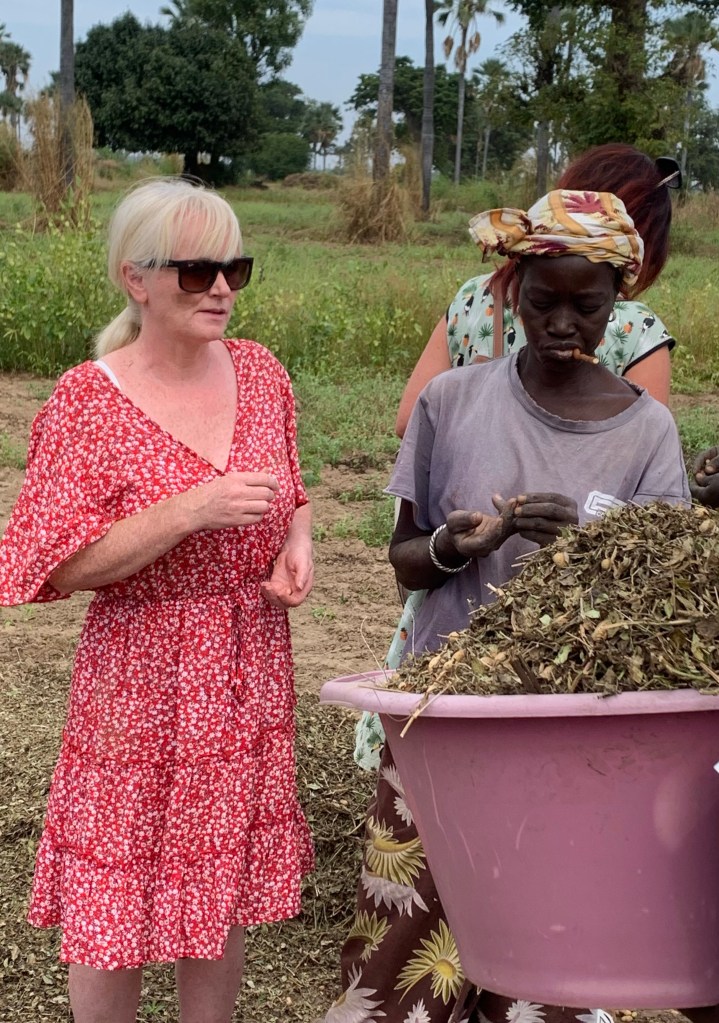
The guides giving us an insight about all the unique characteristics of the community. Being able to experience first-hand the tribe’s customs and how the community is organised, gave us a better understanding.

We were also very privileged and humbled to be able to share some moments with the people in these communities getting on with their daily lives. As they allowed us to experience some of the techniques they use when working the land.
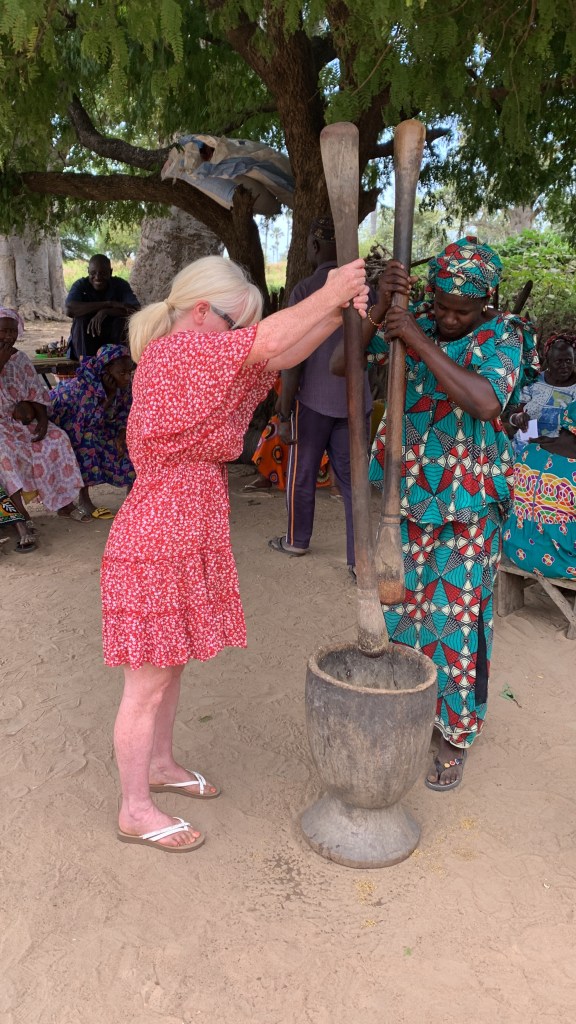
We were able to experience first-hand, villagers using traditional methods and techniques of farming and shepherding, which they have been employing for centuries, which to this day provide them with food and an income.
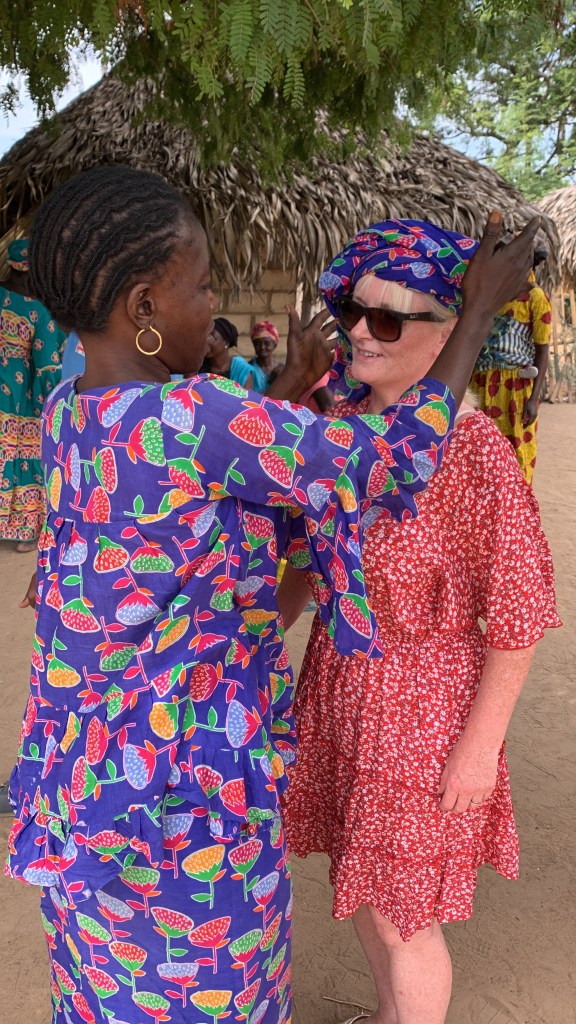
Senegal is known as a country of hospitality and as a visitor, you will get to experience the concept of “terenga” a Wolof word, it is a term that defies strict translation but loosely translates to “the way you treat the guest.
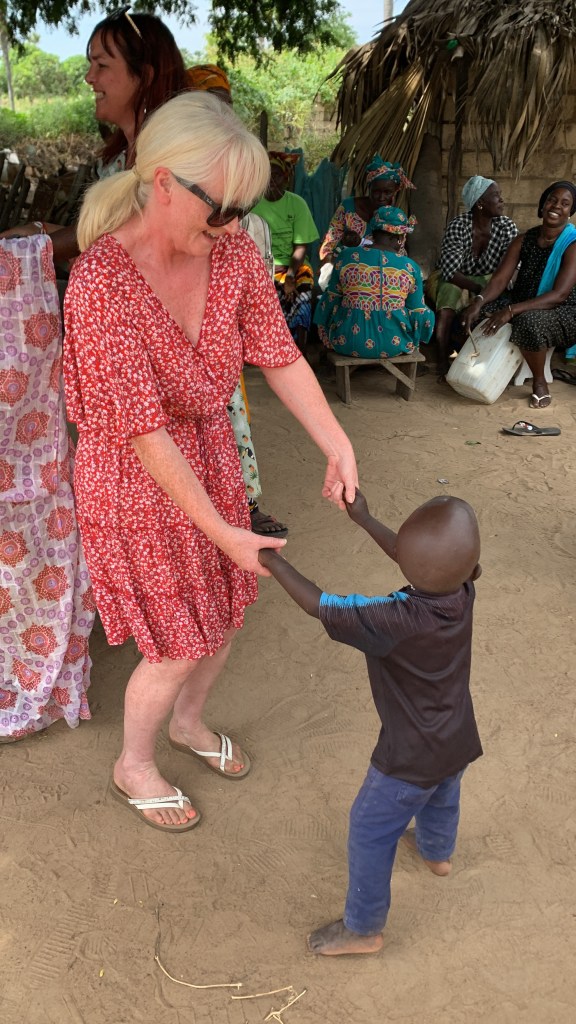
This philosophy of sharing and giving and inclusion extends to strangers as well. We visited a local village with a tour company that works closely with local rural communities. As guests, it is only right that we should offer something to our hosts as a token of our appreciation, although not necessary we brought food and some things for the children which was accepted by the villagers.
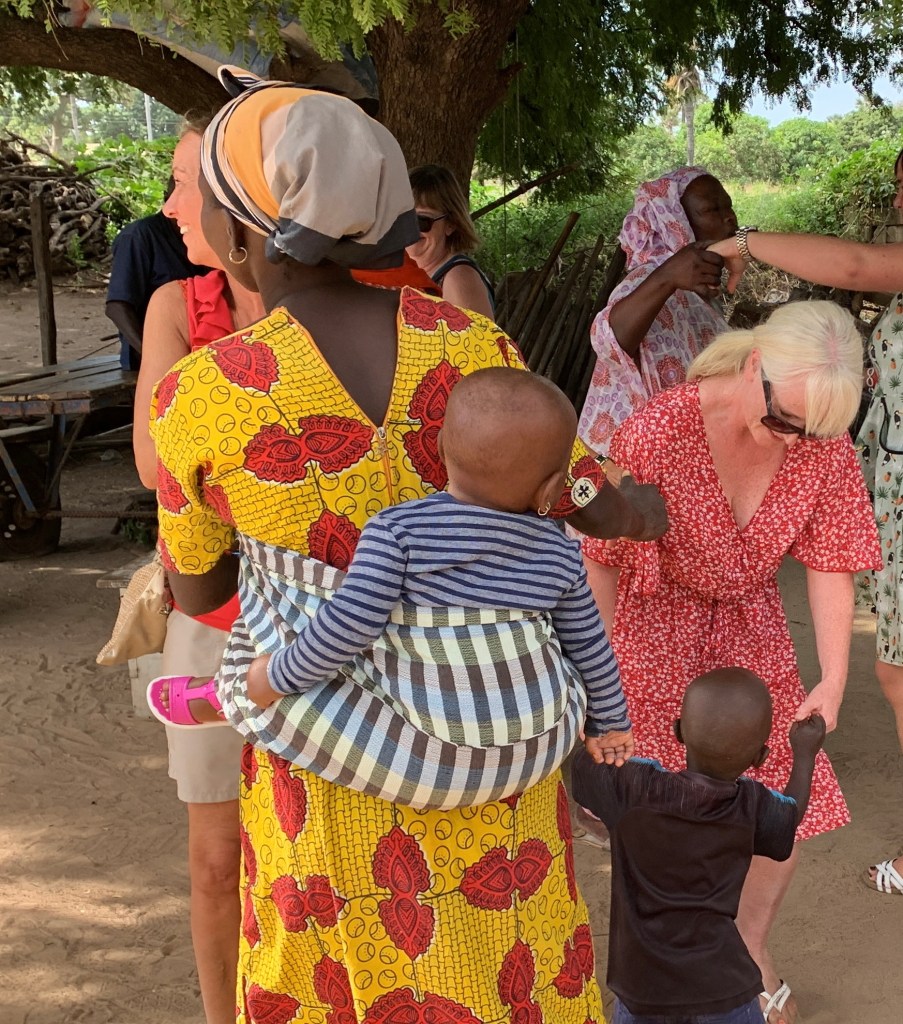
Our small party of guests were warmly received at the village. Using local organizations that value their communities, our trip felt more meaningful, visiting the village we were able to pay for a service they provided, but in a more personal and meaningful manner than superficial tourism provided by multi-national travel companies interested in profits only.
Moonlight, music and dining amongst the Baobab Trees
Senegal is known for its traditional music and cuisine. It has a rich musical culture, together with a delicious cuisine which combines local, Arab and French influences.

We combined both of these with a majestic setting of the star-lit sky and the brooding presence of the Baobab Trees, whose trees are native to Africa and Madagascar. The trees can grow up to a height of 30 meters and are one of Africa’s most ancient trees.
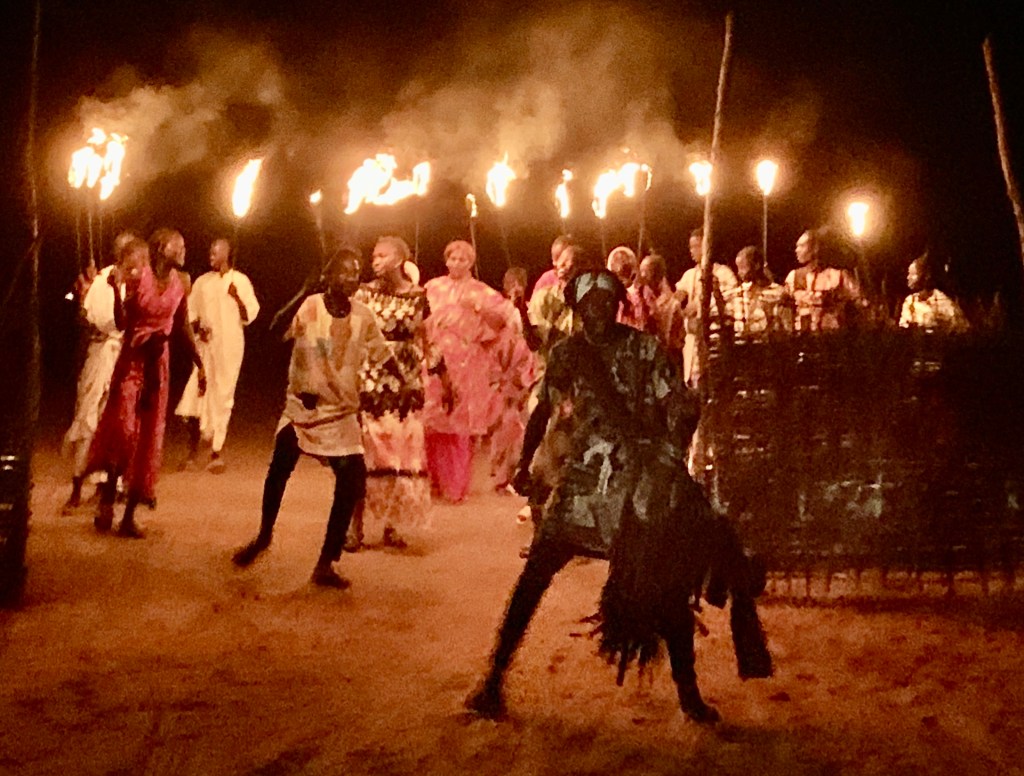
When we arrived at the village we were welcomed by a local welcoming party. If you want great music, stimulating culture and delicious cuisine, then Senegal certainly has all three in abundance.
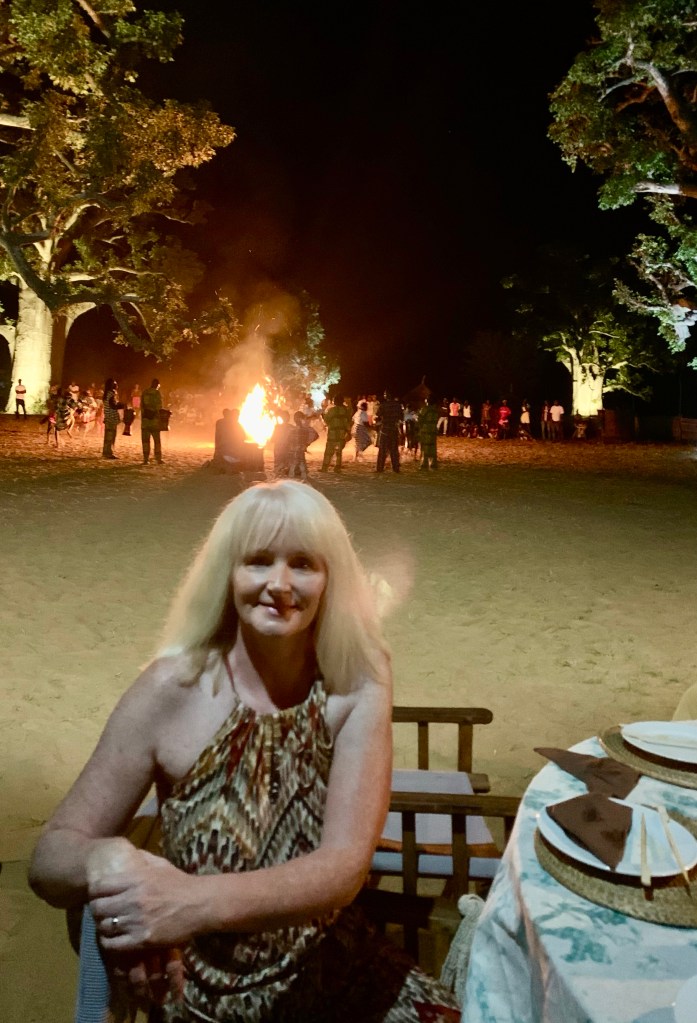
Classic African eats are accompanied by live African drumbeats and on this Senegalese evening, there was even some wrestling to watch which is the national sport, not football, in between much singing and dancing.
The drum beats provide the rhythm to Senegalese music, however, its close cultural connections to Arab, North Africa and Cape Verde can give the music a vibrant cosmopolitan sound.
Although during our evening musical entertainment we were in no doubt that the beating heart of this arrangement was the drums. These drums are unsurprisingly African drums, although their correct title is Djembe translated into English it means peace gather and its origins can be traced back to 1200 AD.
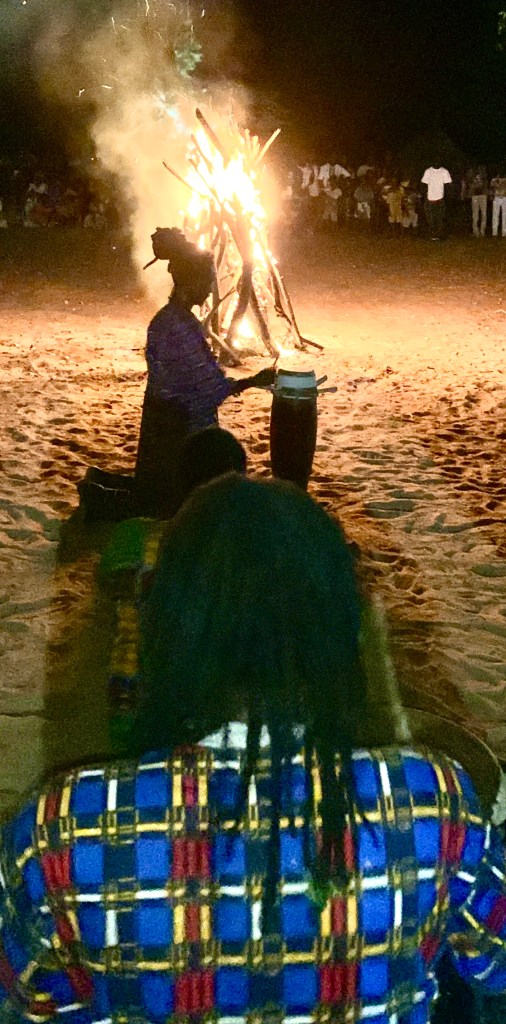
The performances were very entertaining a fantastic night of music and dance which exceeded my expectations. What could have been a very touristy Senegalese culture show which is usually little more than money earners for the tour operators, turned out to be very different giving us an insight into Senegalese culture, music and cuisine, who would have thought?

 We were born to do more than go to work, pay bills and die. See the world while you are alive and kicking