An unmissable visit to Pompeii, combined with an awe-inspiring trek up the top of Mount Vesuvius to see and (smell) the smoke that still rises from the crater.
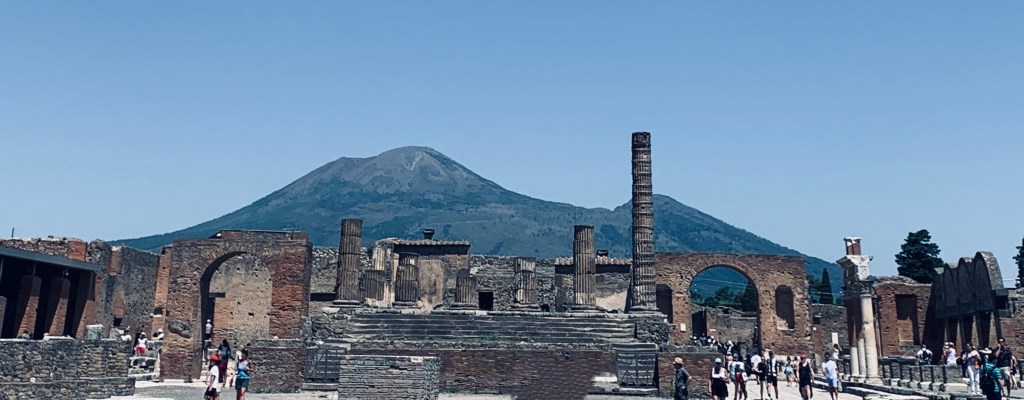
I had wanted to visit Pompeii and Mount Vesuvius in one day. Sorrento where we were based not being that far away, made this very achievable. There are a few ways of doing this.
You can do it independently or by booking a tour with a local company. We booked with a local tour company on a guided tour around Pompeii, it just saves the hassle of getting there, waiting for connections between the two locations and having to rely on public transport, all this has to be planned when doing it yourself, factor in that public transportation is not very reliable.
Although I spoke to people who did it independently and they enjoyed the experience but said it was rather a long day and they had to pay if they wanted a guide in Pompeii. There are pros and cons to both options so best do a bit of research first.
By doing it independently you have more control over what you want to see and do but have the aggravation of waiting for buses and you will have a few connections. By pre-booking a tour you are picked up from your hotel have a guide for the day and everything is scheduled for you. The downside to this is you have no control of your day and may want to spend more time in some places and less in others.
I would personally advise doing Pompeii in the morning and Mount Vesuvius in the afternoon. As Pompeii is a bit quieter in the morning and you will get a few more lunch options at Mount Vesuvius. This however was just my personal preference.
Pompeii
Largely preserved under ash, Pompeii offers a unique snapshot of Roman life frozen in time. A UNESCO World Heritage Site.
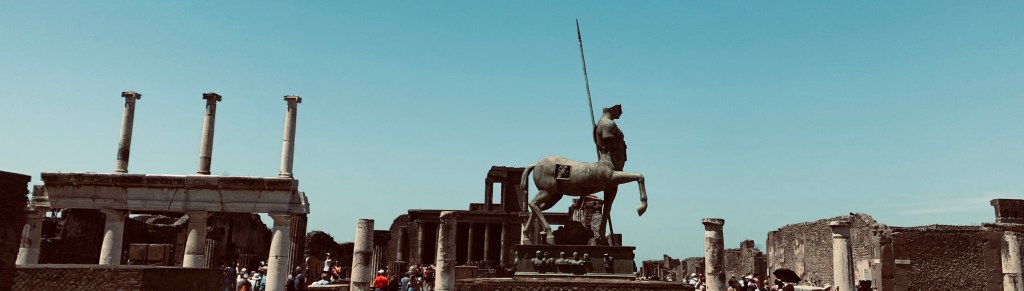
Today Pompeii is the major driving force behind the economy of the nearby town that bears its name. With many locals employed in the tourism and hospitality business which surrounds the area.
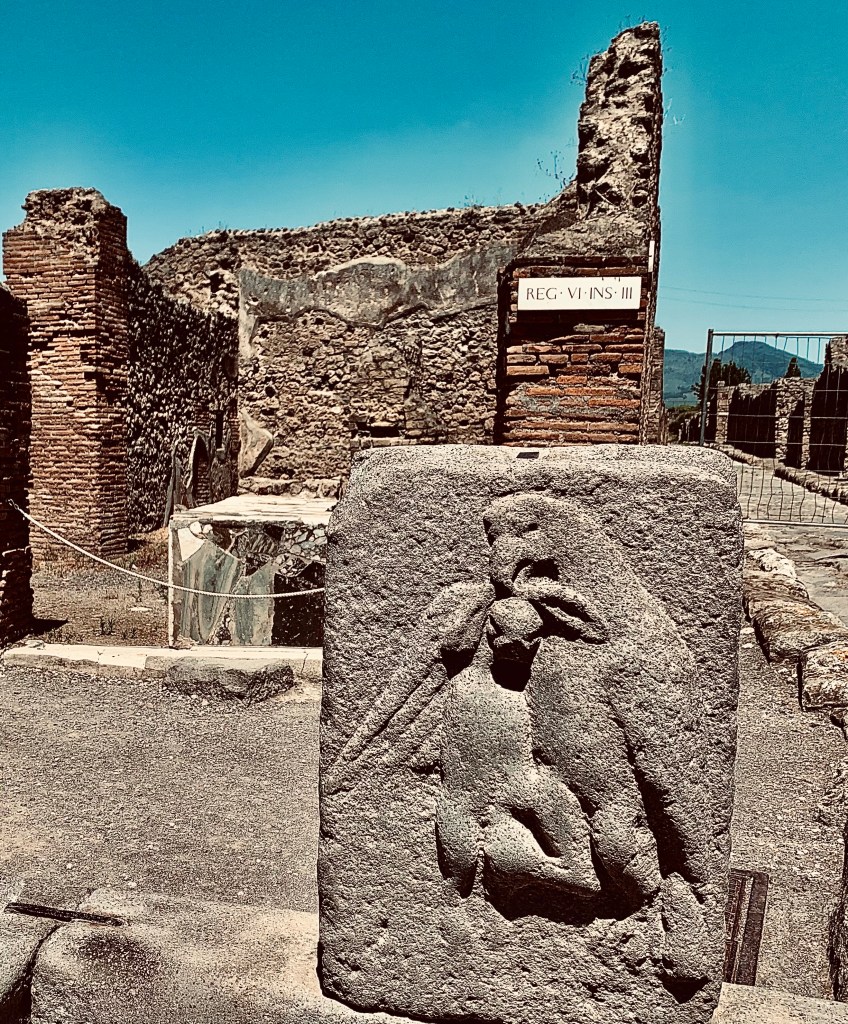
For many visitors, Pompeii is high on its travel agenda. It’s not hard to see why. Pompeii’s survival for nearly 2000 years makes it one of the Worlds historical, archaeological and human significance. It’s Italy’s second most visited “attraction”
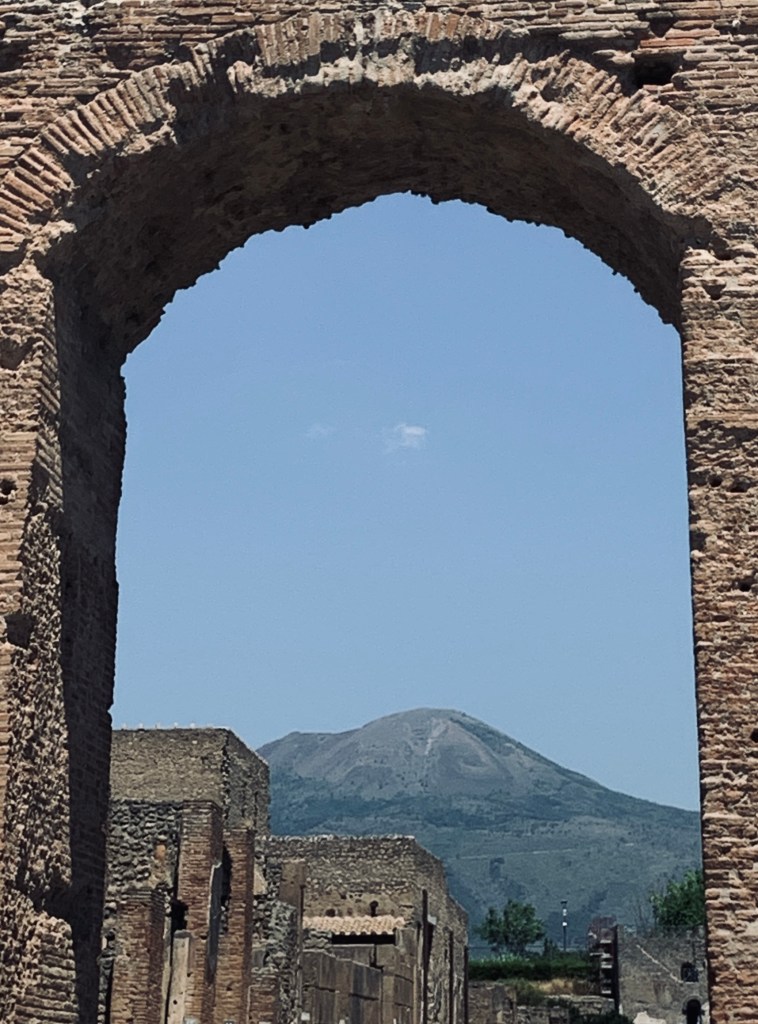
Mount Vesuvius which had laid dormant for over 700 years towered over Pompeii. The fertile soil, its proximity to Naples, and its access to the sea would have made this a pleasant and prosperous place to live and work. All this altered in 79AD when Pompeii was devastated in a day or two, when Mount Vesuvius erupted.
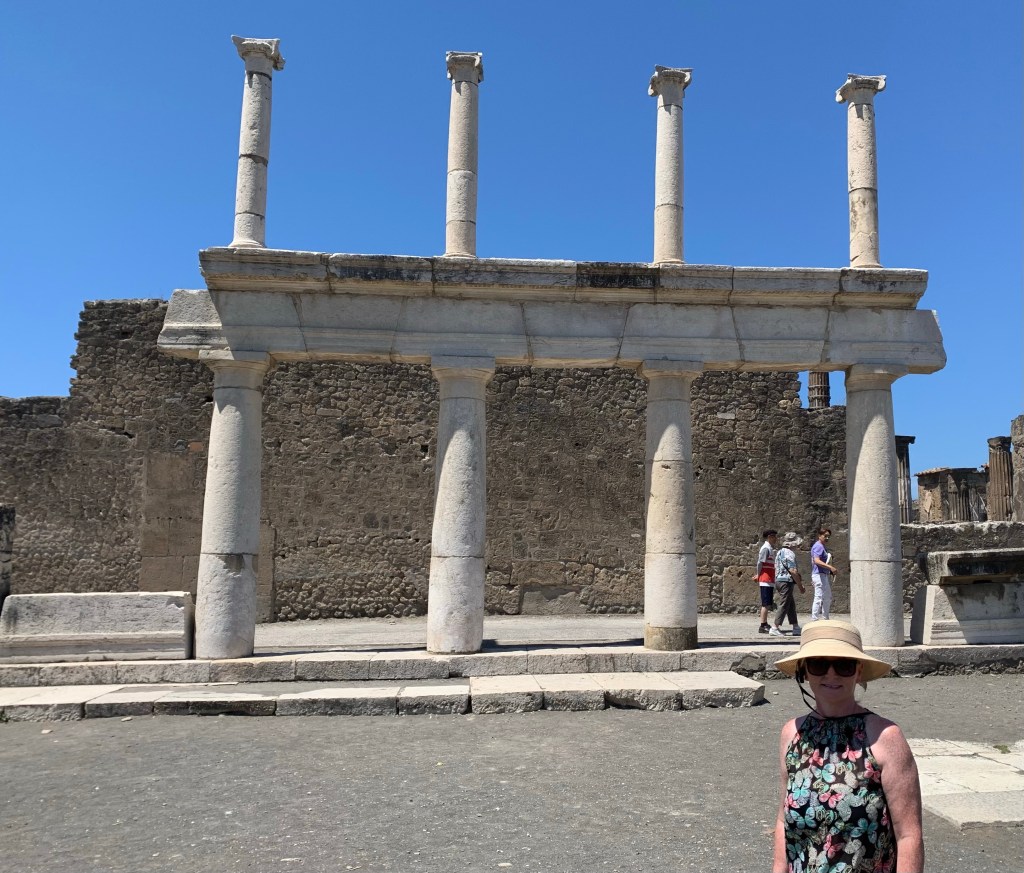
The site is huge! It covers an area of 163 acres, spread out and involves a lot of walking in the hot sun with little shade. How long you take is another contentious issue. Some people could spend days here, for me two and half hours was enough time with a knowledgeable guide to point out the main sites. Any longer I would start to get ruin fatigue and my interest would start to wane.
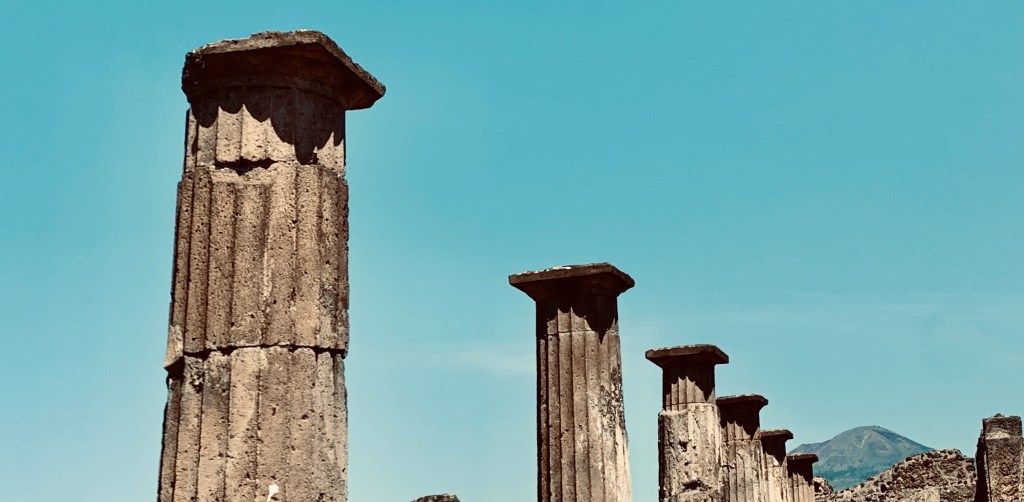
The site remained practically buried for over 17 centuries. It was not always forgotten though as Pompeii was marked on a 12th-century map, and briefly having been discovered in the 15th century during some aqueduct tunnelling. However, they were properly discovered in 1748 and for many was the start of the modern science of archaeology.
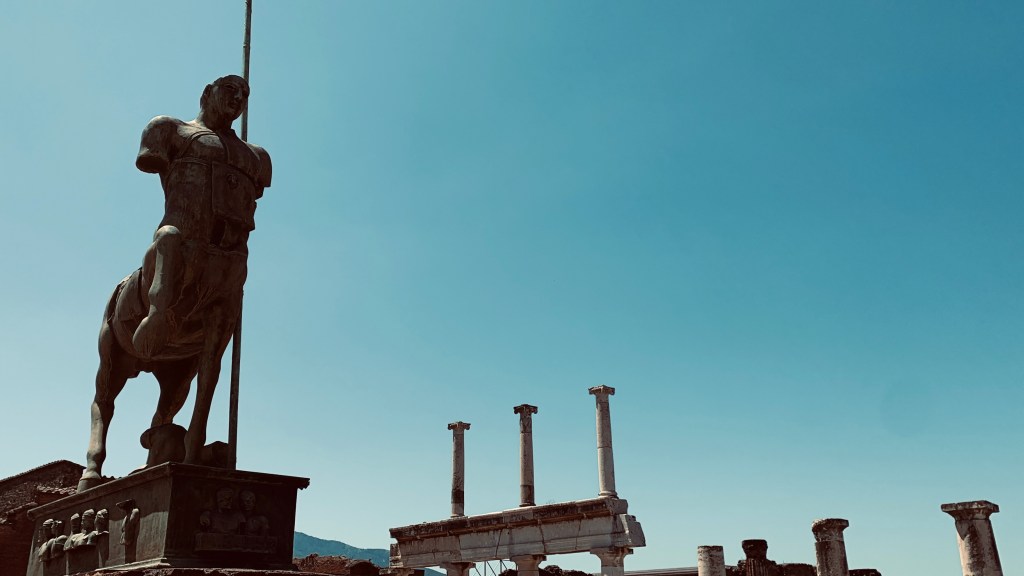
The significance of Pompeii cannot be overstated. Although there are many Roman ruins across Italy and Europe with impressive sites in Verona, Rome and Sicily to name a few, Pompeii’s importance strangely enough is due to its normality, as well as its age, fate and size.
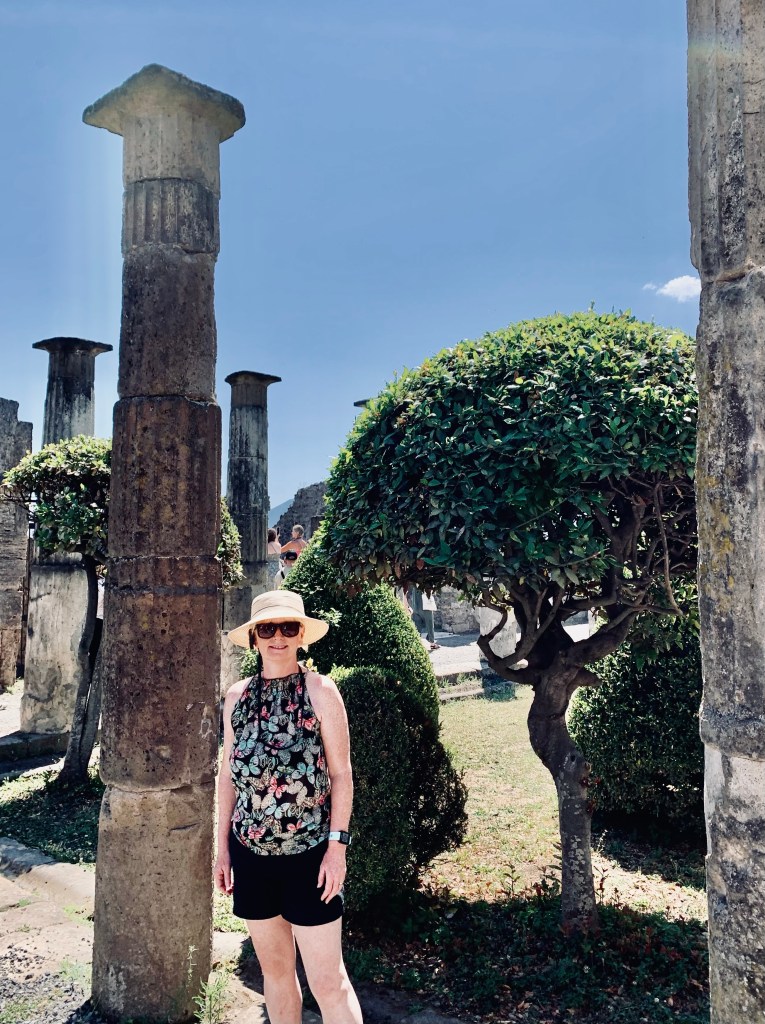
The fact that Pompeii is one of the few ancient sites that has been preserved in such great detail, everything from jars, paintings and people has been frozen in time, giving us the unprecedented opportunity to view how typical people lived over 2000 years ago, rather than the grand court of Emperor’s or stately royal castles which is usually the case.
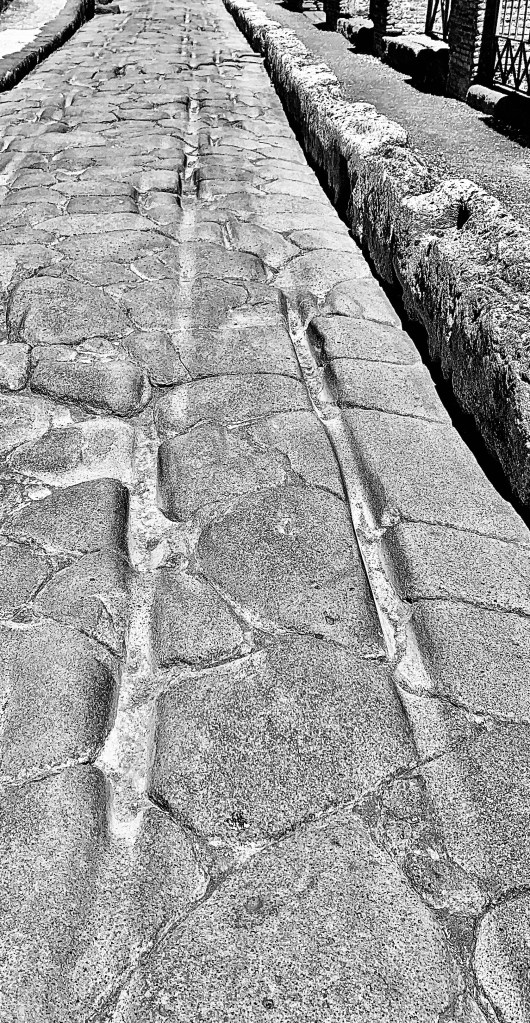
You will find the ancient Roman roads with grooves in them made by the trams that ran along them over 2000 years ago. Although today Pompeii is strictly walking only. Just be aware of the grooves in the roads as they can be uneven, a comfortable pair of shoes is a must, especially factoring in the size of Pompeii.
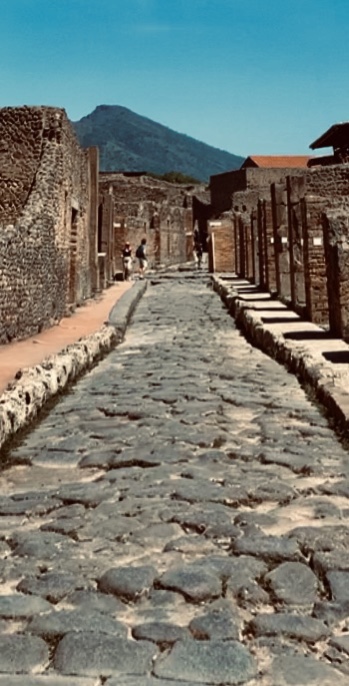
It is this vastness of Pompeii that is its saviour, some sections and side streets are blissfully isolated and separated from the crowds. This is probably the big plus point in discovering Pompeii independently, with our guided tour we stuck to the main sights! which were inevitably very busy, I couldn’t wander off somewhere which wasn’t on our tour itinerary. With over 2.5 million visitors a year, there is no getting away from the fact that Pompeii is a very busy place.

Due to the vastness of Pompeii don’t expect to see everything. Our visit was 2.5 hours which give us enough time to see the main sights which are reasonably near to each other, this was okay for me, but you could very easily spend a day here.
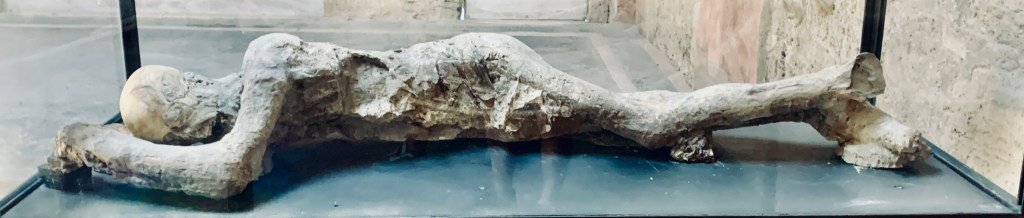
Although Pompeii seems a site of human tragedy, 2,000 people lost their lives that day, these were the ones that didn’t heed the warnings whether this was through necessity, infirmity or just plain stubbornness. It’s important to note that 17,000 people survived by heeding the warnings and packing up and leaving.
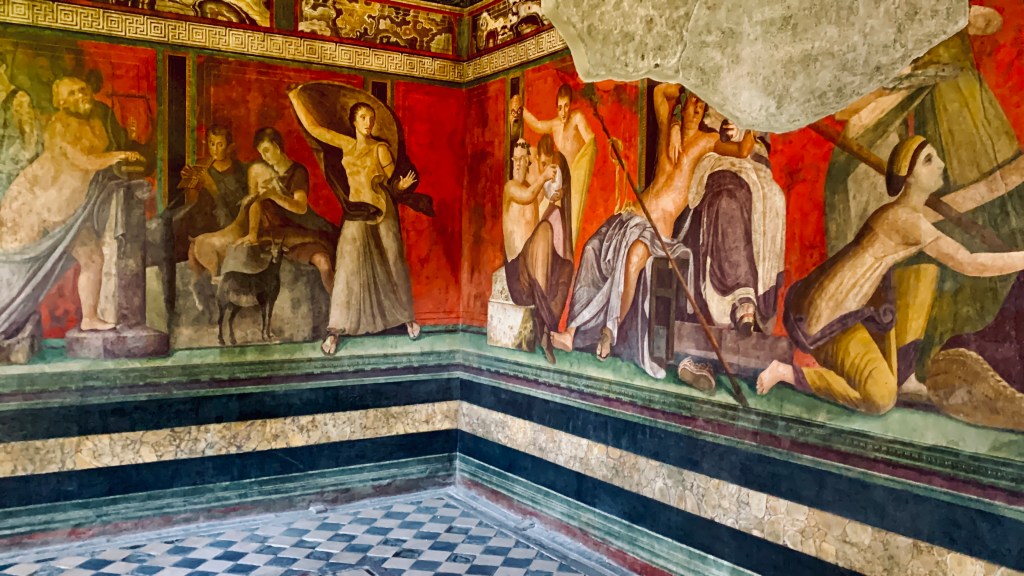
Another fascinating insight into life at Pompeii is the wonderful frescoes. This highlights the beliefs, customs and indulgences of the people. Frescoes we’re used throughout Pompeii in public and private buildings. A large number of rooms were small without windows, so frescoes added colour and light to otherwise dark drab spaces.
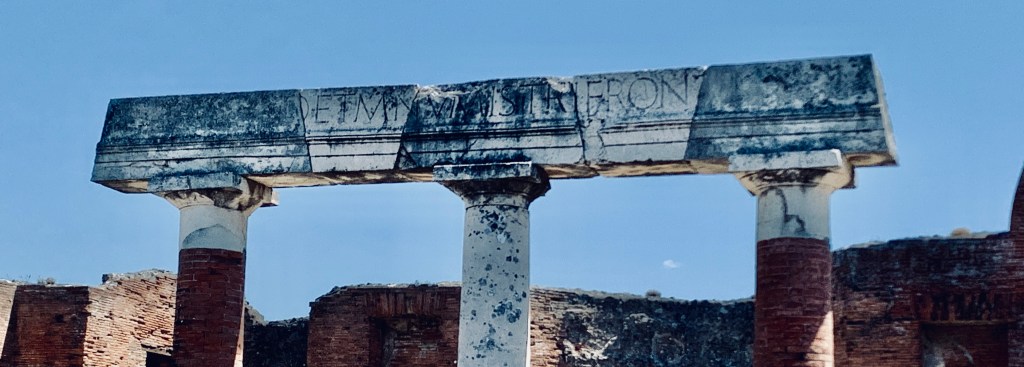
Even if you’re not a history buff Pompeii is well worth a visit. My personal prospective, unless you are a Roman history aficionado or a keen photographer for most people a morning is more than enough time to see the main sights and to get a feel for this historical landmark.
Mount Vesuvius
An afternoon trek up to the summit of an active volcano 🌋The ideal accompaniment to a morning spent in nearby Pompeii.
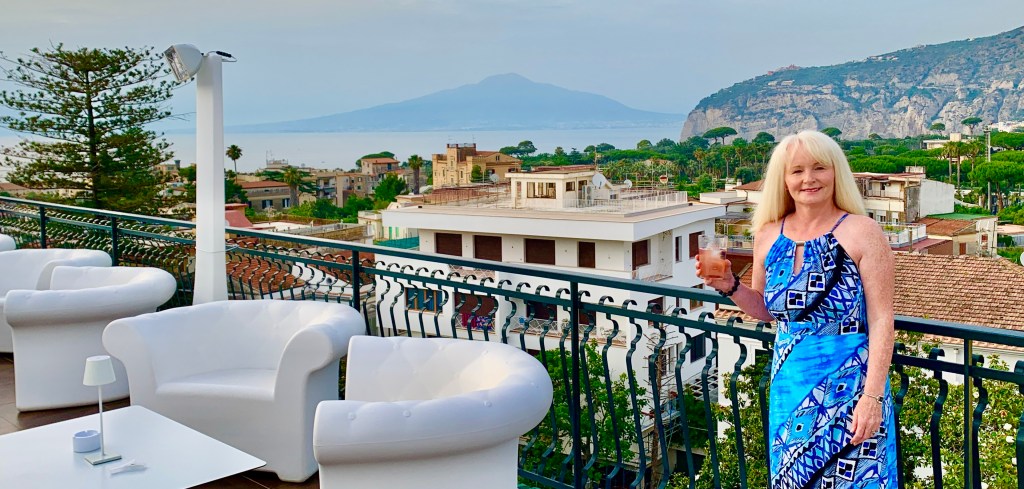
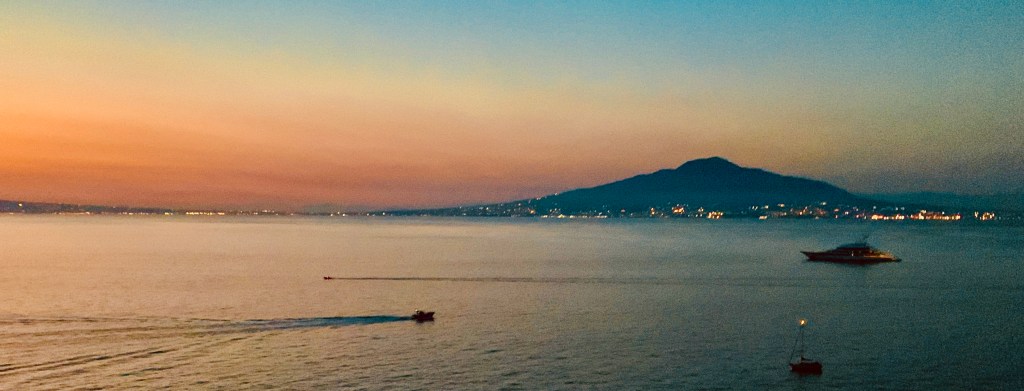
Wherever our location there was no escaping the looming presence Mount Vesuvius had over the Bay and city of Naples, the Amalfi Coast, Sorrento Peninsula and Capri.
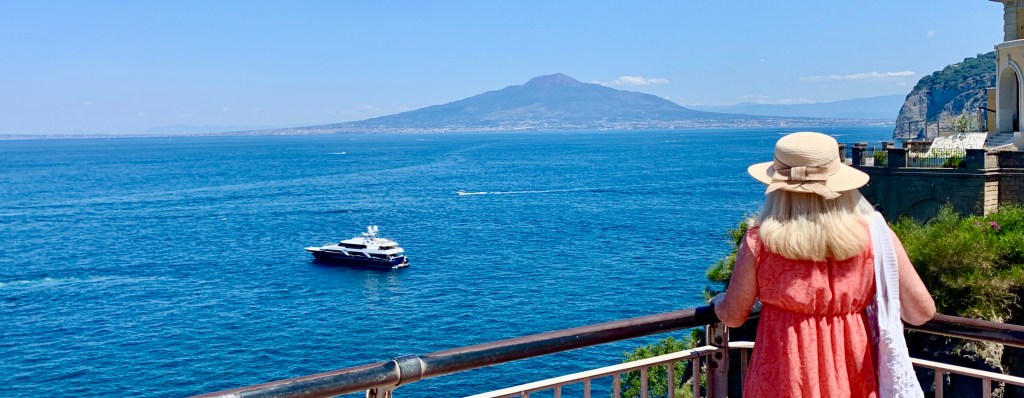
When visiting the area it was one of our must-do activities. It’s the perfect activity that can be combined with a trip to Pompeii. Appreciating the great outdoors with some incredible views. Unlike my visit to Pompeii in the morning, this trek up to the top of Mount Vesuvius was relatively quiet in comparison.
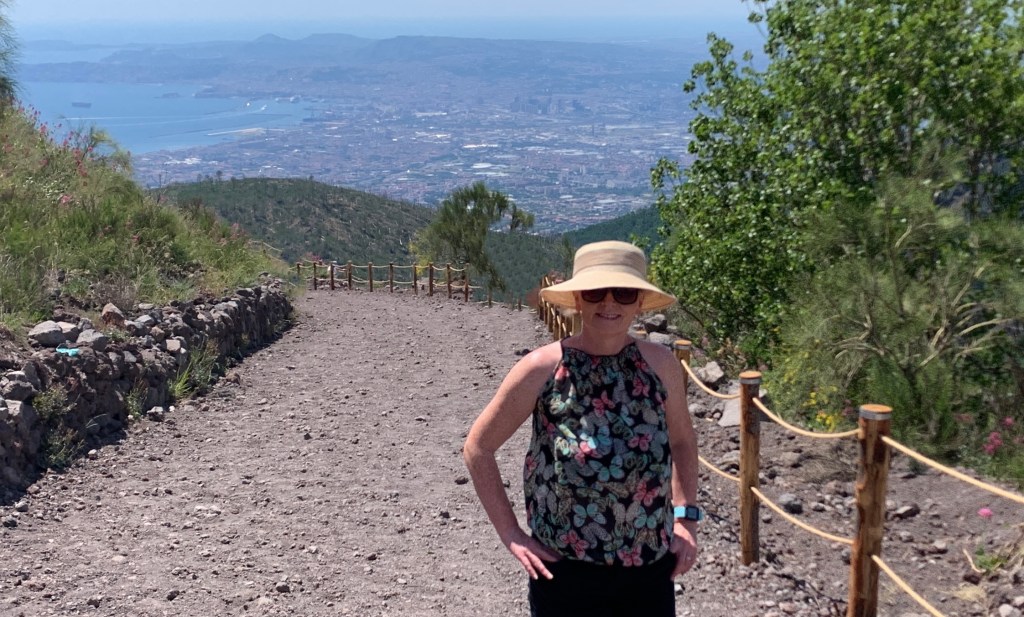
We were going to trek to the summit of Mount Vesuvius, to call it a trek is a bit of an understatement if I’m being honest. I’d call it more of a walk than a hike. Beginning at the ticket gates, entry costs €10, you will pass some stalls selling drinks and snacks etc before we started the walk on a gravel path.
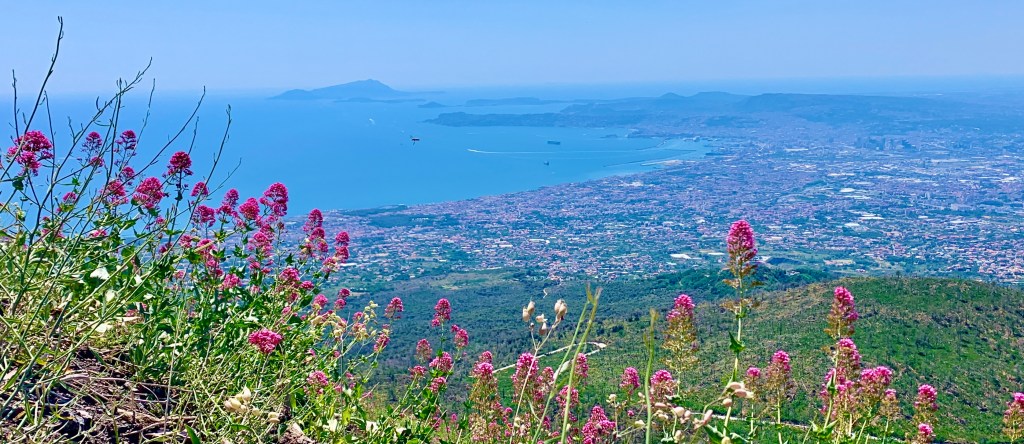
This section of the volcano is the hardest part of the walk, it’s only about 800 meters in distance but the elevation rises quickly. The views while you walk are stunning.

After about 25 minutes with a few stops for photo opportunities, we reached the first of three cafes at the summit. The walk evens out and is now reasonably flat, with a few marginal ups and downs with a small section of steps to climb.
Although in all honesty, we didn’t notice as we were distracted by the beautiful panoramic views of the Bay of Naples which was to our right, and the volcanic crater to our left.
One thing to take into account is that the walk is not a loop and you will have to take the same path down as you came up. The walk will be about 4, kilometres there and back, although the return journey will be quicker and easier as there is no incline to tackle.
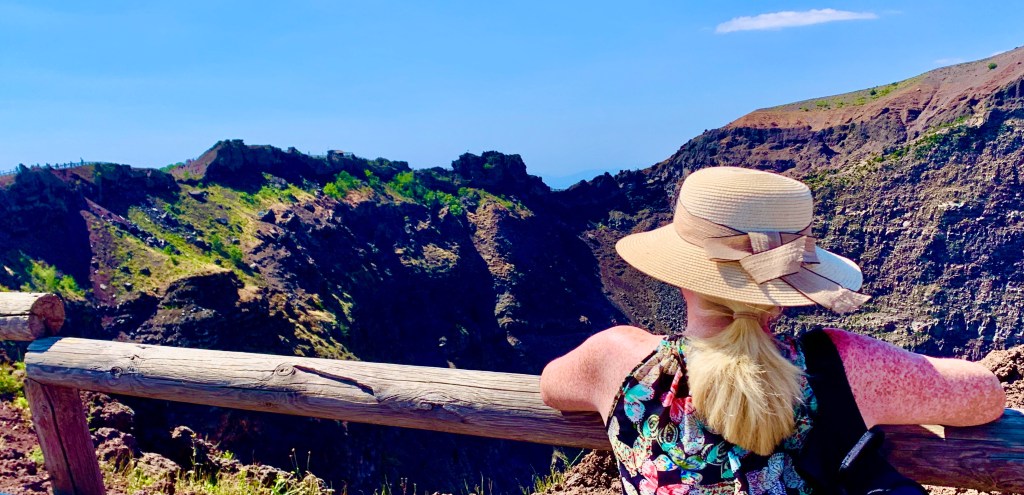
When looking into the crater try not to be too disappointed, unfortunately, nothing exciting is happening, like bubbling lava, or towers of flames 🔥 shooting towards the sky. But this is a good thing as I remembered what the volcano had done to Pompeii only 9 kilometres away.

A few facts about Mount Vesuvius. The highest point is 1281 meters (4203 ft) It last erupted in 1944, and it is regarded as one of the most dangerous volcanoes in the world because of the population of 3 million people living near enough to be affected by it. There are no toilets within the Mount Vesuvius national park 🥺, a fact I found out for myself unfortunately 🤣
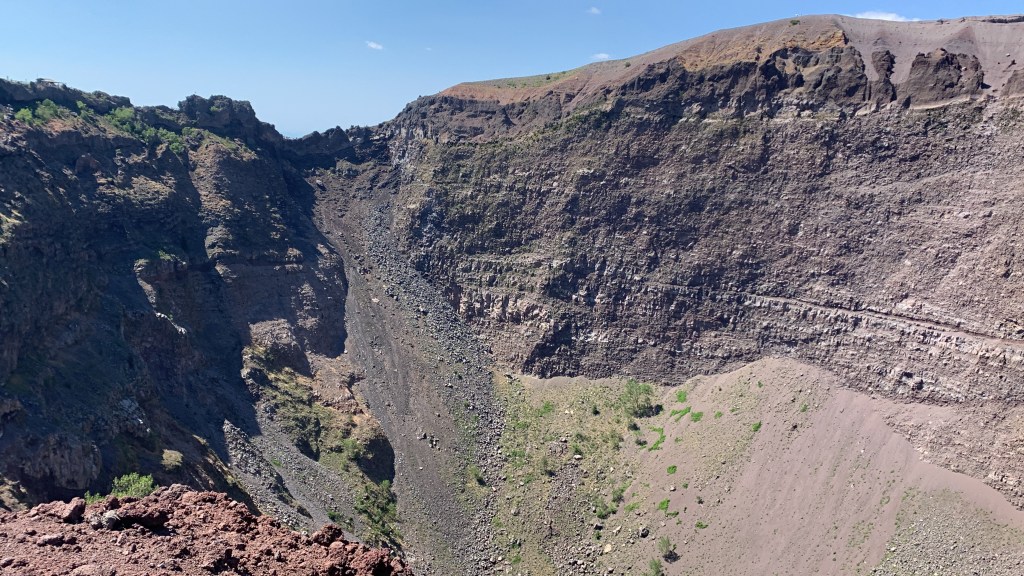
On a good day, the crater will release some steam or a subtle plume of smoke as a volcano tends to do. The crater resembles a giant cone. Currently, it has a diameter of 450 meters and a depth of 300 meters.
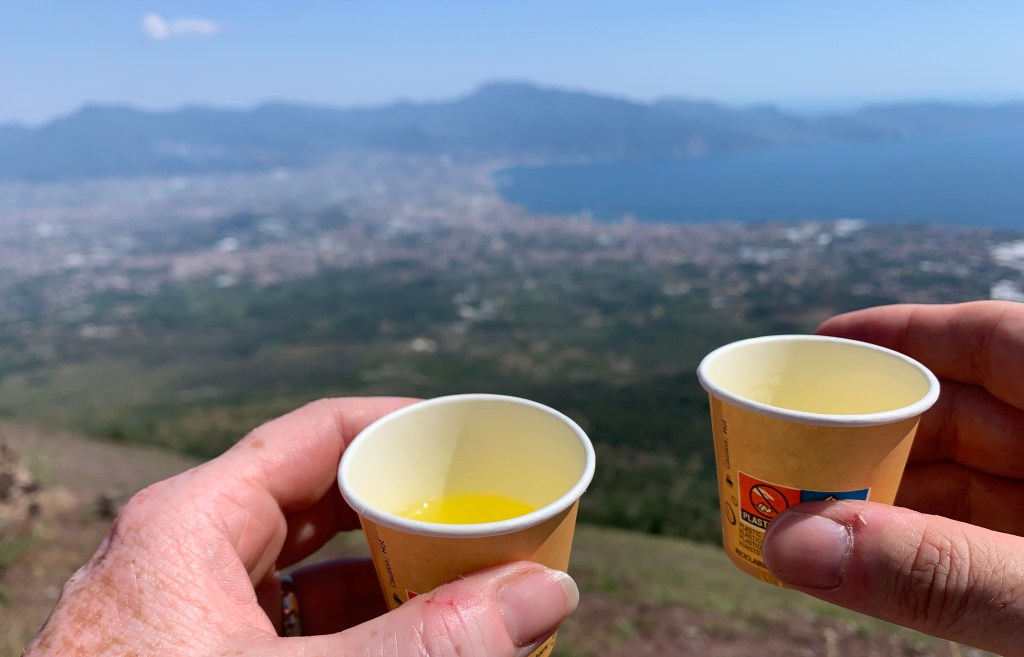
At the end of the walk, we found the third cafe/bar, this is a popular spot for a drink and has a good lookout point to view. Prices were very reasonable for the location and I thought an ice-cold limoncello was in order. It’s not every day I get to walk up to the summit of an active volcano. Just retrace our route back down to the entrance on what has been a very eventful day in Italy.

 We were born to do more than go to work, pay bills and die. See the world while you are alive and kicking