Exploring the Amalfi Coast, not by plane, train and automobile, but on foot, bus and boat
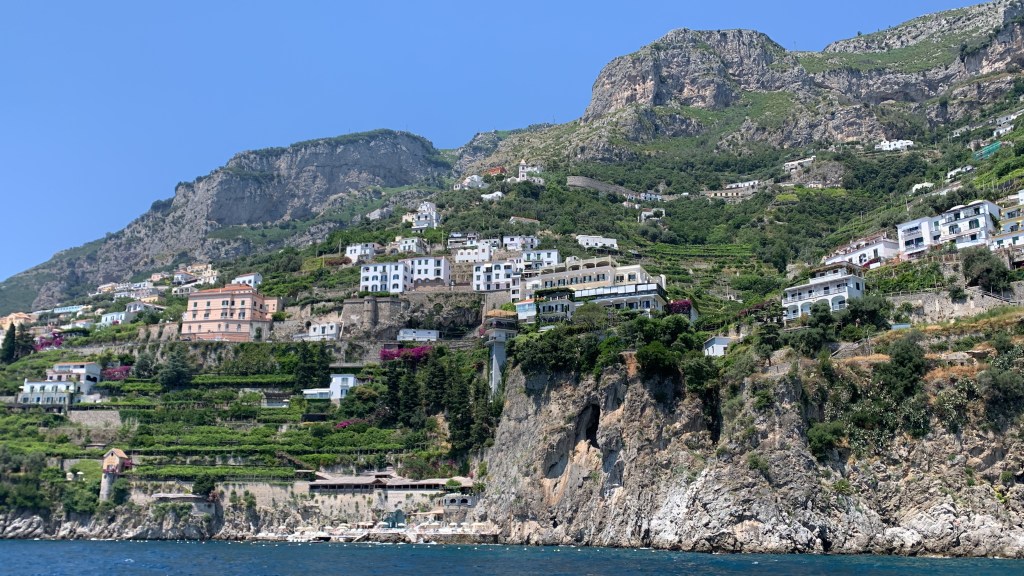
The Amalfi Coast is a glorious 50-kilometre stretch of coastline, along the edge of the Sorrentine Peninsula. A very popular destination due to its sheer cliffs rugged coastline and pastel-coloured fishing villages. It’s within easy reach of Sorrento and Naples.
How you visit is entirely up to you. By boat, on foot or by road,
We booked organised trips to best utilise our time. Booking these independently with local operators who were very knowledgeable and professionally run. Small groups on our trips so we had more personal service. Road trips and boat trips are available from Sorrento, or you can mix and match your itinerary, using both.
Path of the Gods
The Path of the Gods has been a popular walk for centuries. It provides pristine views of the Amalfi Coast from this cliffside path. The path certainly lives up to its name and is worthy of your time when visiting this delightful part of Italy.

You can do this walk independently, however from Sorrento, it requires a few bus transfers and the walk which should take a couple of hours turns into a full day. We opted for a guided walk, with a pick-up from the hotel and a stop for lunch before the transfer back to Sorrento, giving us some local insight into the Amalfi Coast. For us, this better utilised our time as we had a lot of places to explore.

A few things to consider, the weather it’s going to be hot in the summer, so the obvious advice is to have sun cream, bottled water and proper footwear. I wore trainers which were perfectly adequate but wish I had worn trail trainers or walking boots, the trail is not particularly difficult however the terrain can be unstable in parts.
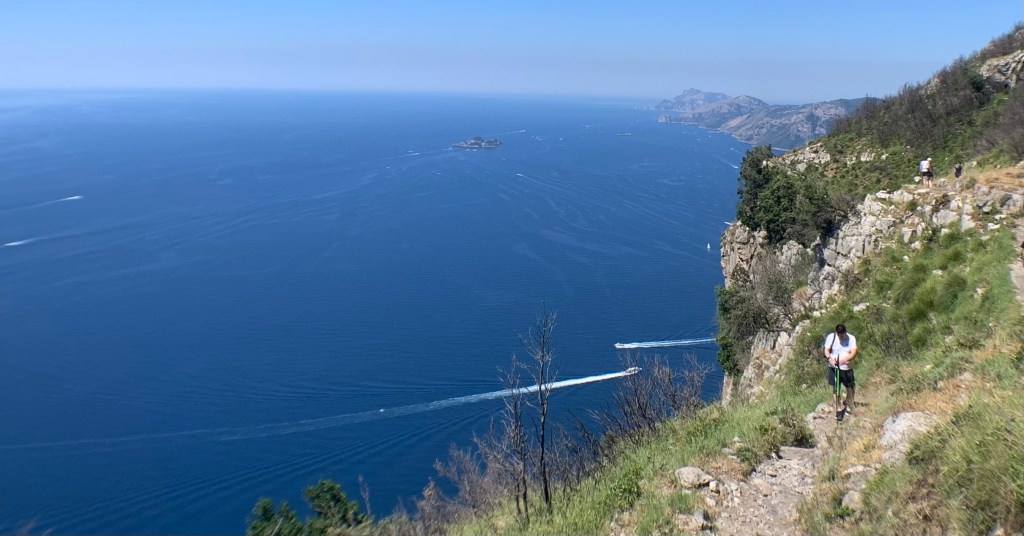
The trek is a perfect way to spend some time experiencing the beauty of the Amalfi Coast. It was certainly more serene than taking to the road or water.
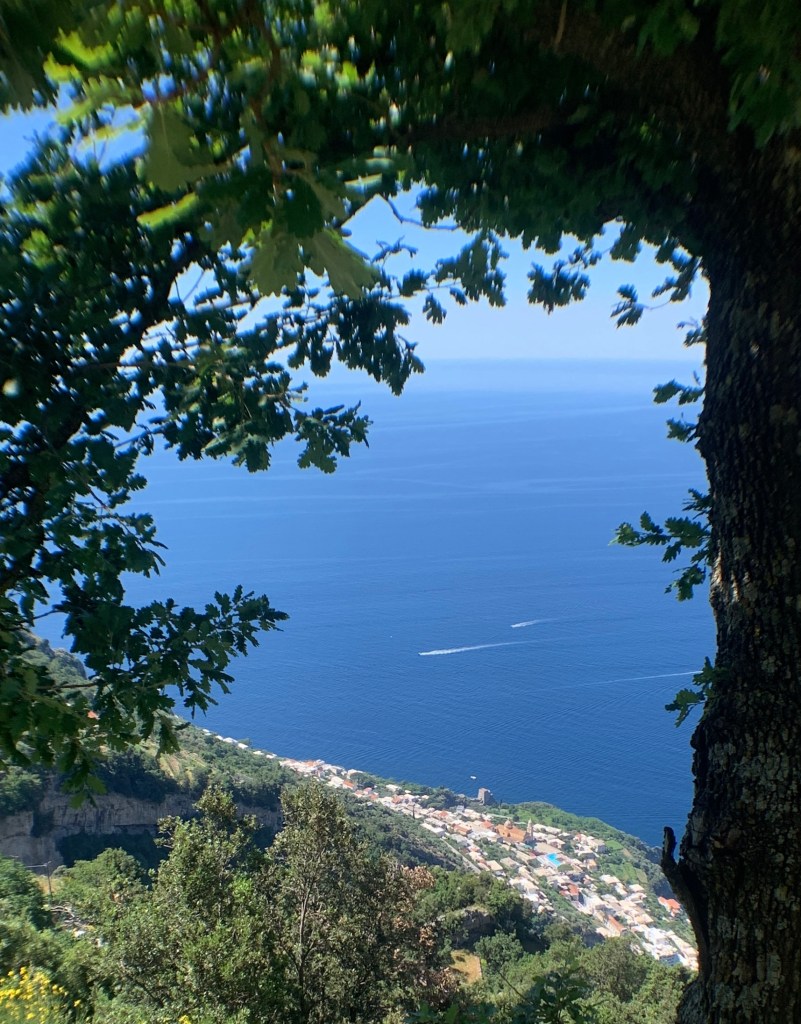
This trek will lead you above historic towns, following ancient mule routes, while as you go along serving up some of the most remarkable panoramas in Italy.
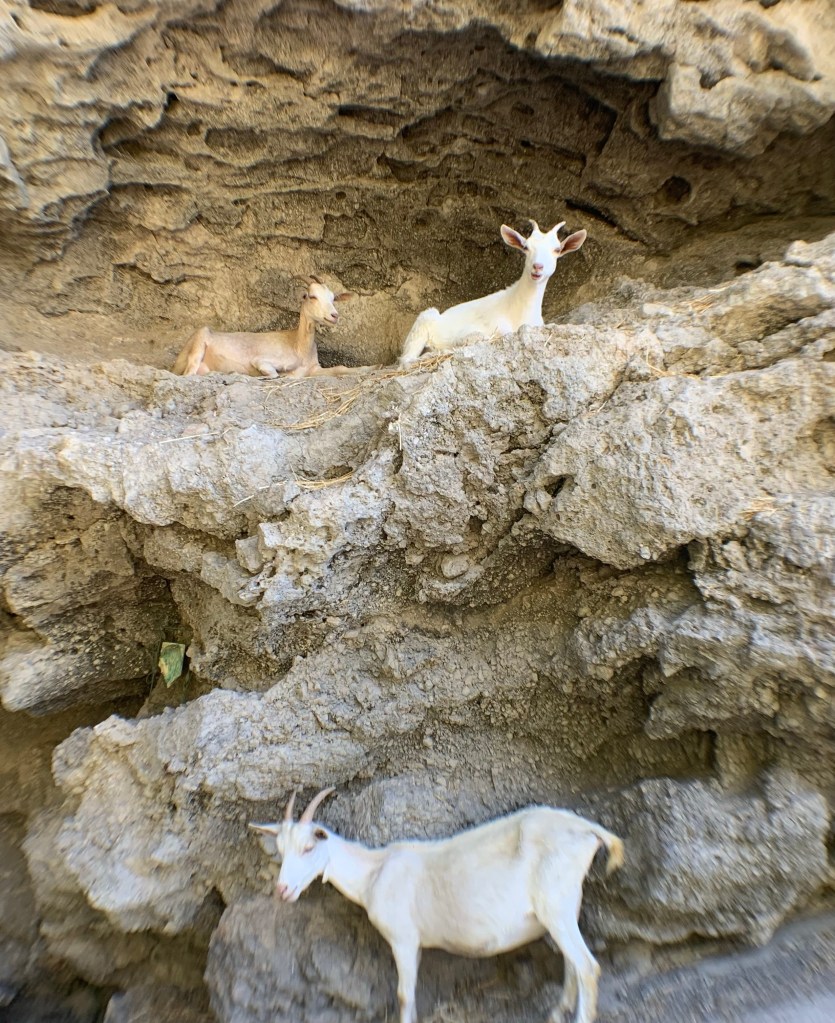
Goats and mules still roam the area as they would have centuries ago, giving the area a very rural domesticated feel.
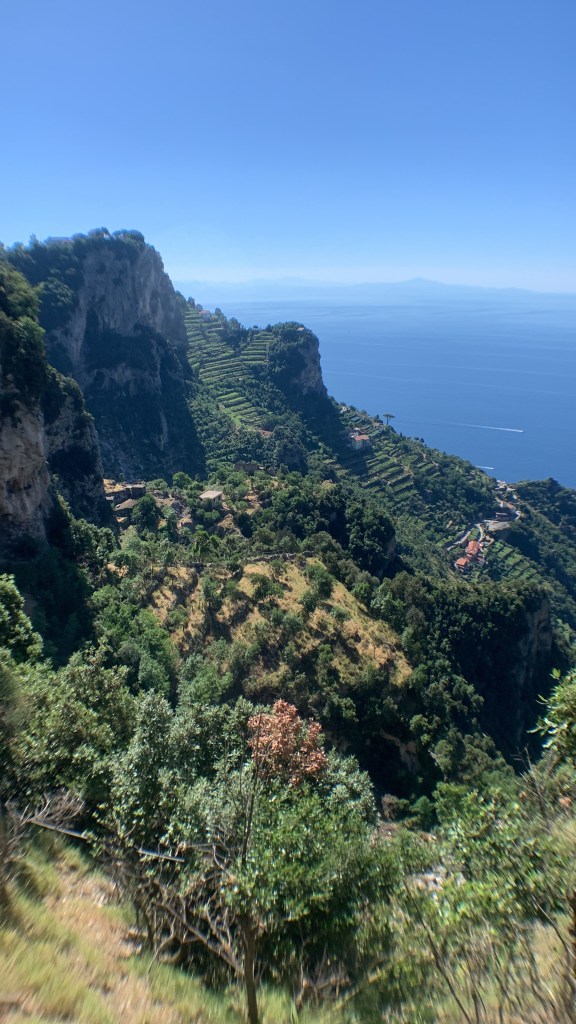
Surprisingly we were able to view a myriad of different terrains, we saw the scenery evolve from tiered hills rich with shrubbery and many different crops, including grapes, lemons, cherries and tomatoes to name a few.

Initially, we thought we were on a nice but rather ordinary coastal walk. Then the agriculture and forestry give way, and the terrain opens up into something more dramatic, revealing numerous cliff faces and hillsides with dazzling views of the ocean, beaches and ancient towns below.
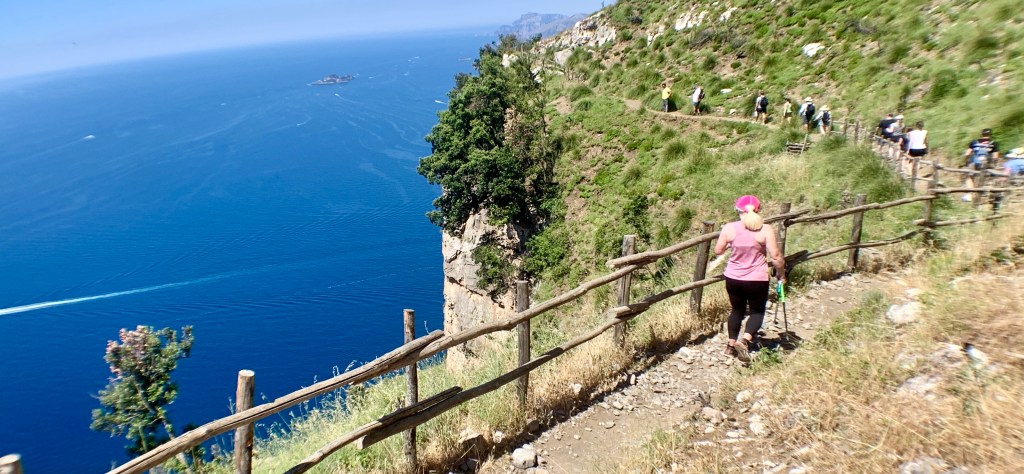
Now the course of the path starts to go up and down more abruptly, edges on cliff sides and the terrain varies in difficulty. We are coming to the most challenging part of the walk passing through Vallone Grarelle, we are now reaching our halfway point.
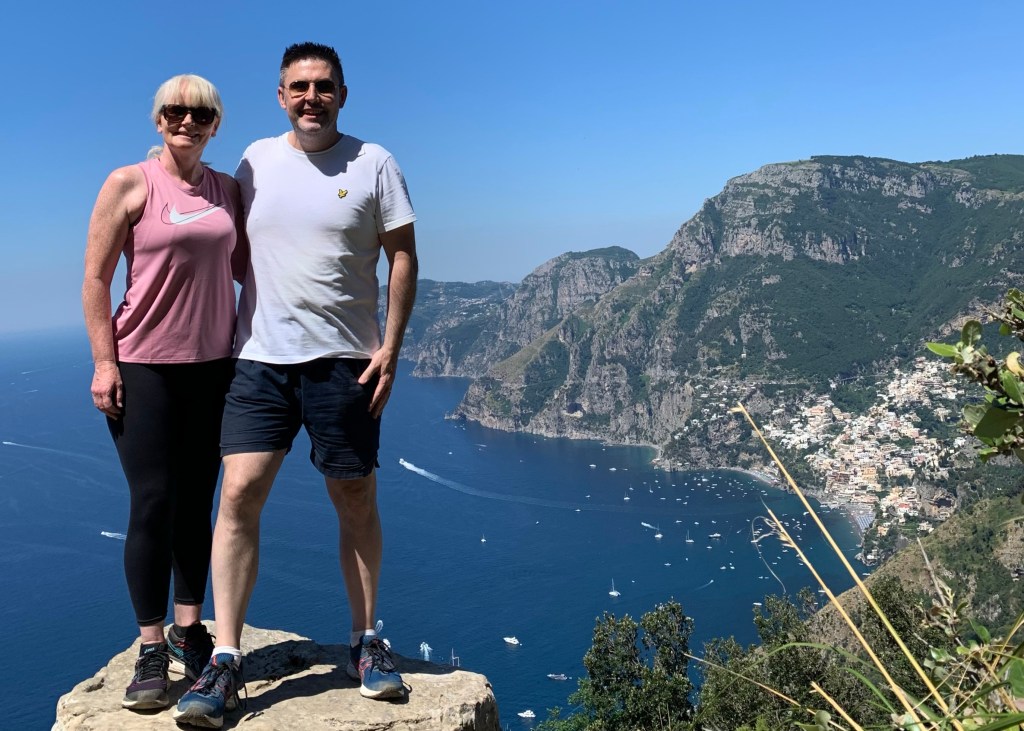
From here you can take the 1500 step staircase that leads to the village of Arienzo which is on the northern edges of Positano. We were looping back to the start of our walk. Positano was an adventure for another day. Just a brief stop to admire the beautiful panorama of Positano and the peninsula.
This section of the walk does offer some magnificent views of the Amalfi Coast. It had taken us about 90 minutes to reach this location, so it’s a good idea to bring a light lunch with you from one of the cafes, we had booked lunch in a local farmhouse which was less than 10 minutes from here.
We stopped at the farmhouse where we received some warm hospitality. A simple but delicious lunch of freshly baked bread, Caprese salad made from local mozzarella and tomatoes, with fresh cherries to finish. With some impromptu entertainment after lunch with even the dog joining in.
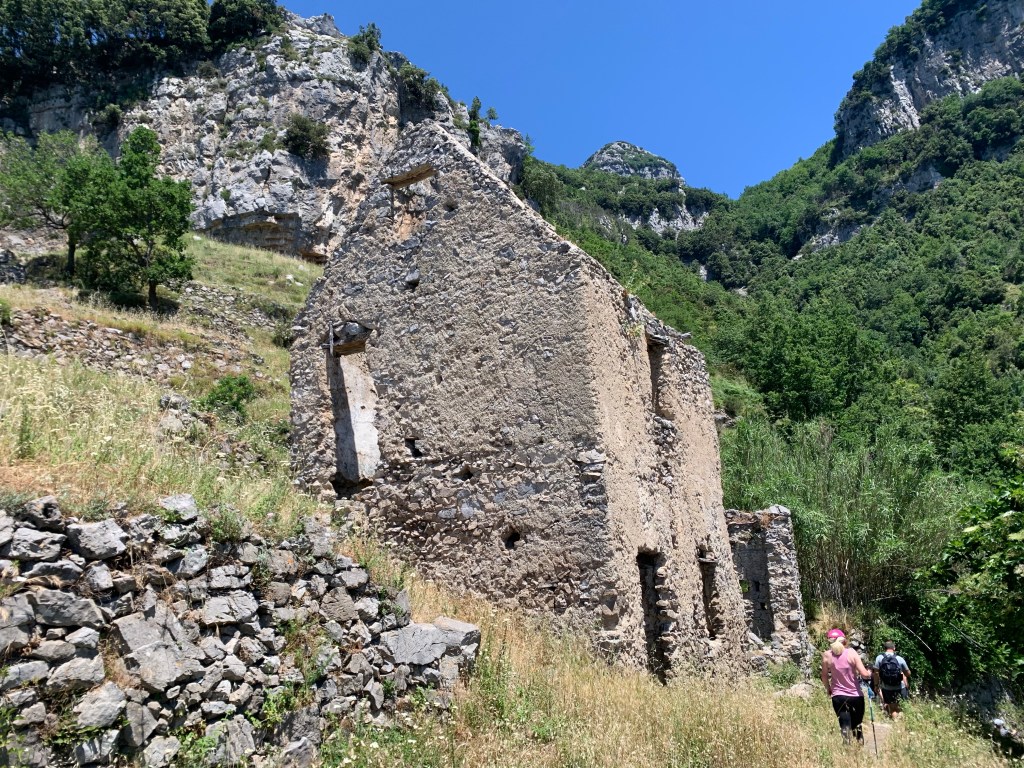
On the path, we experienced what life would have been like travelling from small village to small village, as you come across uninhabited buildings that are slowly being reclaimed by the natural environment.
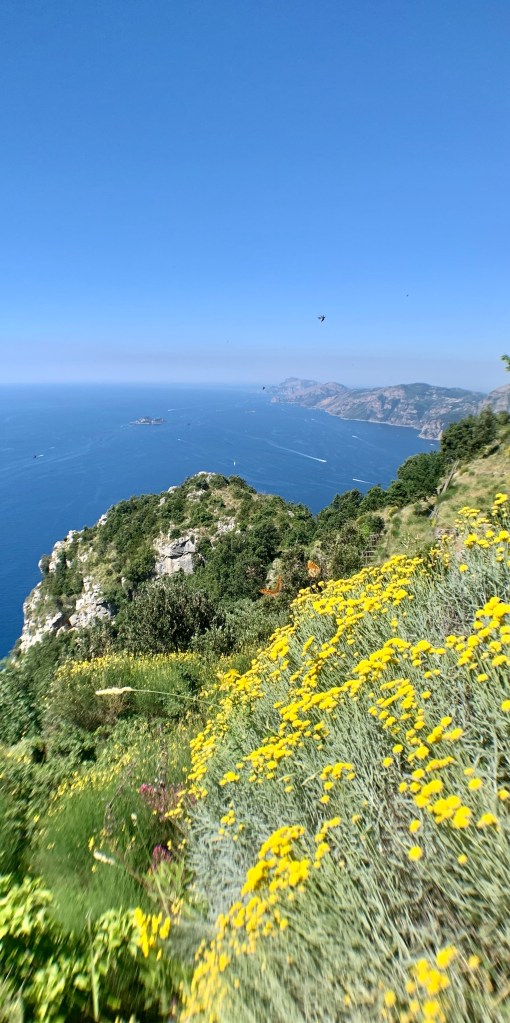
We were soon back at our starting location, the trek was about 8 kilometres, although there are different starting points and routes. Many walk to Positano and get transport back from there.
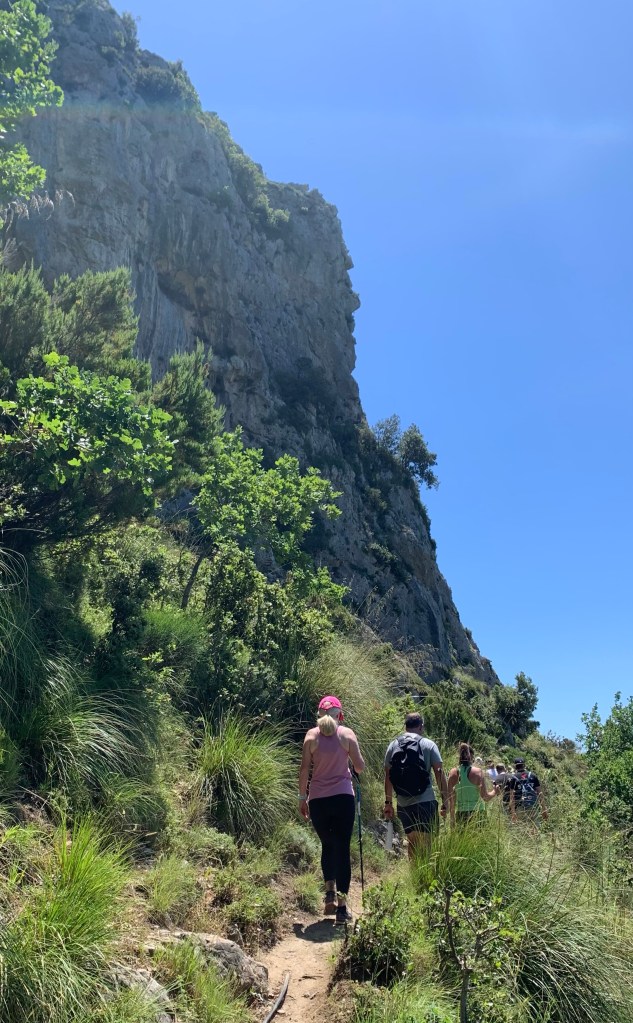
We did a loop back to our starting point, whatever you choose it’s worth the time and effort to view this beautiful location from an entirely different perspective, far removed from the busy crowds you will find in the towns and coastline down below.
Amalfi Coast by boat
Another less energetic way of viewing the Amalfi Coast is by boat. There are no shortage of itineraries to choose from, full and half-day tours from Sorrento, shorter cruises from the towns along the coast or even hire a boat for the less inhibited.
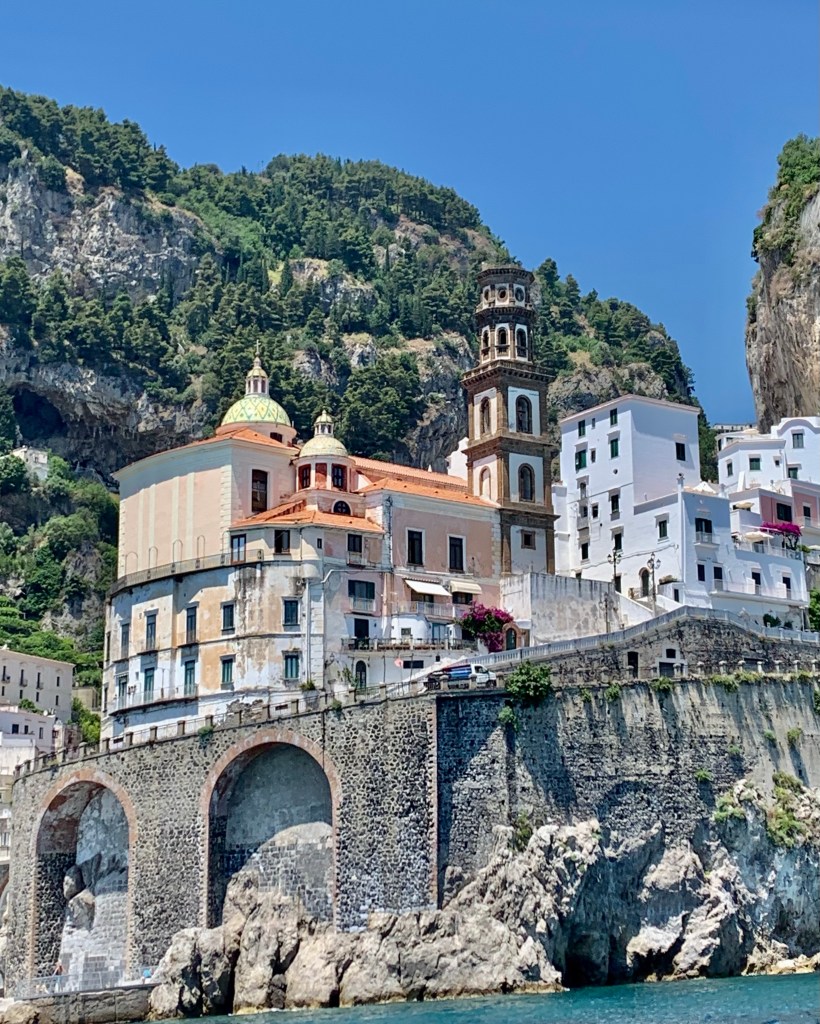
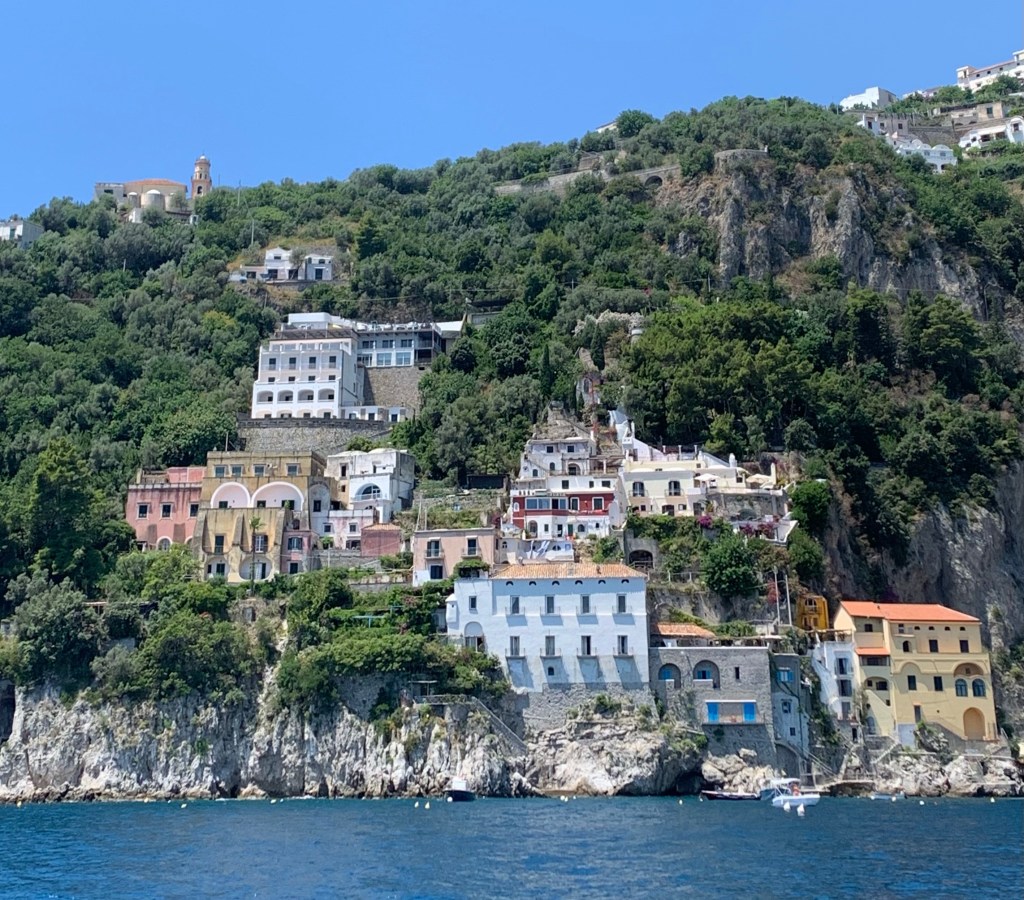
I was going to be brave and rent a boat, however, common sense prevailed and I thought an organised charter boat may be less stressful. The two most popular destinations are Positano and Amalfi. I decided to take a boat tour from Amalfi as I had viewed Positano while on the Path of the Gods and visited on foot.
To explore Amalfi by land is only half of the experience. I was able to get some incredible views from the ocean. The town was a maritime republic known as the Duchy of Amalfi. It still acts as the main port for the Amalfi Coast to this day.

Unrestricted views of the coast’s world-renowned cliffs give a backdrop to lush vegetation and the pastel-coloured town of Amalfi straddling the azure ocean. The town lies at the mouth of a deep ravine, at the foot of Monte Cerreto which at 1315 metres (4314 feet) towers impressively above the town.
These short tour cruises don’t break the bank either, I paid €10 for a 30-minute cruise which took in all the various points of interest around the town of Amalfi. Outstanding value as I admired the views of what many people regard as one of Italy’s most beautiful coastal locations.
Amalfi coast by road
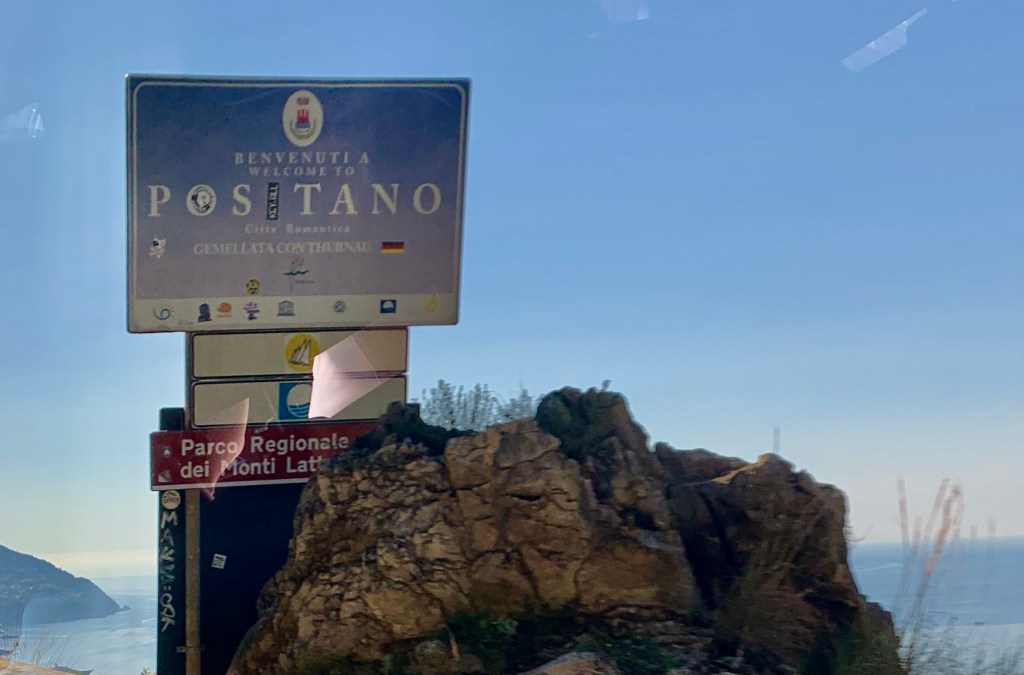
A fantastic day exploring the SS163? It doesn’t sound quite so romantic when you give the road its official name. Better known as the Amalfi Coast road. Possibly one of Europe’s most scenic roads.
So beautiful it has UNESCO World Heritage Site status, “ Not like the South Wales stretch of the M4 😆😆😆” Whether you take a coach trip, drive the road in a car or enjoy it on two wheels 😱 the views are truly spectacular.
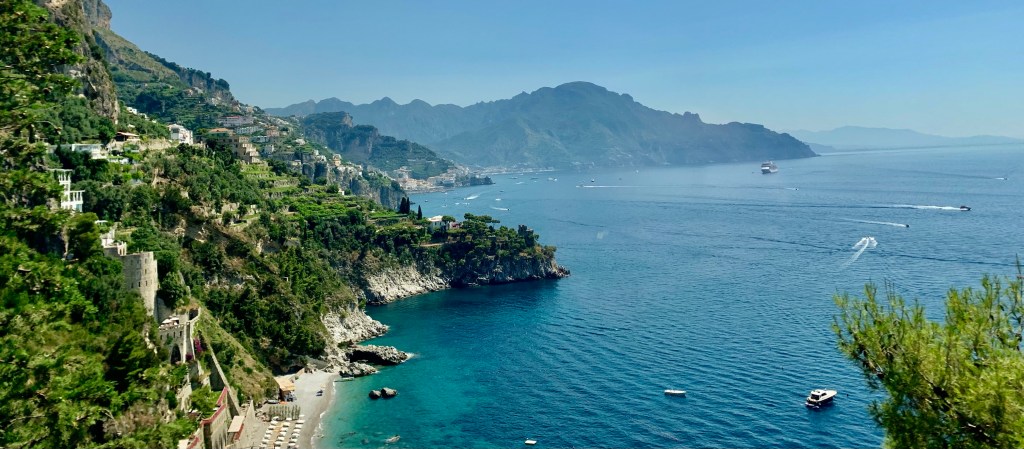
This is probably one of the few occasions for me where the road is the attraction. If traffic is a bit congested then I certainly won’t be bored with the view unless you are stuck in a tunnel, otherwise, the panoramas are going to be jaw-dropping.
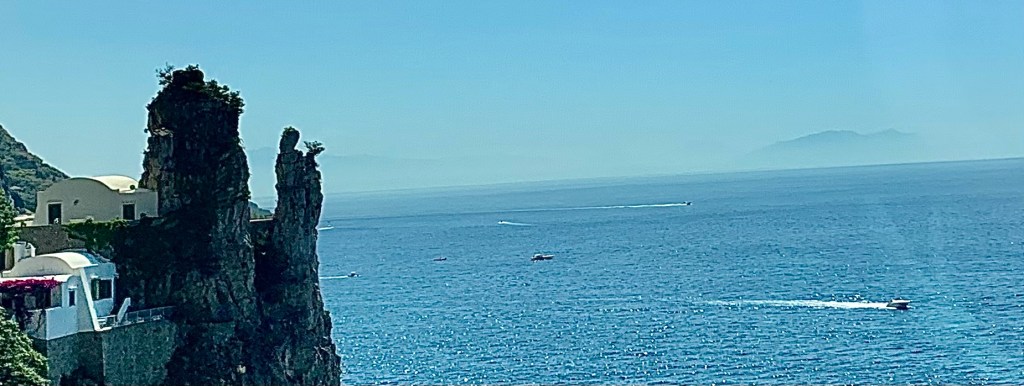
Public buses although inexpensive are not much good as you could be standing or sitting on the wrong side then all you have are some cliffs to gaze at, that’s before you take into account the bus’s continual late arrivals and long queues at the bus stops. Hire a car by all means but again you will be focussing on driving and parking is an absolute nightmare.
I reserved a trip with a local travel firm, picking us up from Sorrento. In a minibus with 8 passengers, with a small group, all passengers have the opportunity to rotate around the bus and appreciate the fantastic views, while an experienced driver keeps his eyes 👀 on the road.
Some towns on the Amalfi Coast
A selection of some of the more popular towns on the Amalfi Coast. This list is by no means a comprehensive list of towns in the area. Just a few I had the opportunity to explore. The entire Amalfi Coast is a UNESCO World Heritage Site. Coast highlights included Positano, Ravello and Amalfi.
Positano
I will start with the most part famous and iconic location on the Amalfi Coast Positano. The first town on the Amalfi Coast and the nearest to Sorrento and Naples.
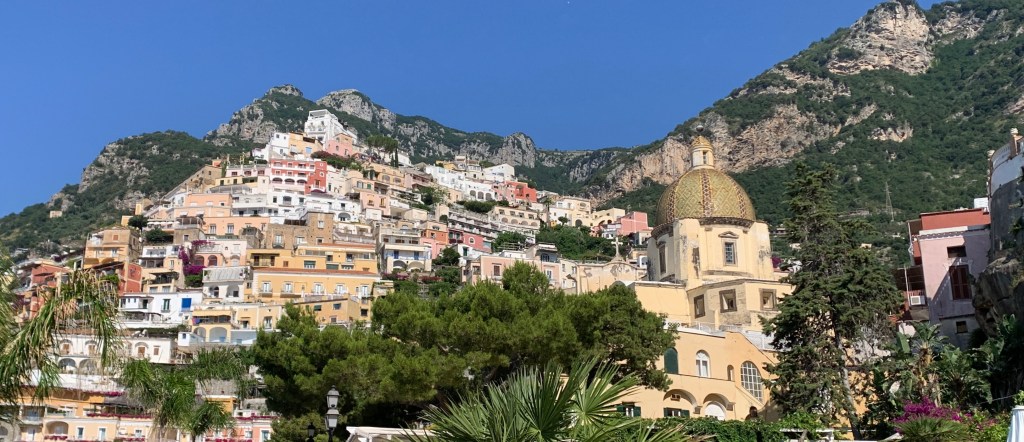
Positano was once a major part of the Amalfi Republic in medieval times. Though, by the beginning of the 20th century, it was a poor fishing village with more than half the population having emigrated.
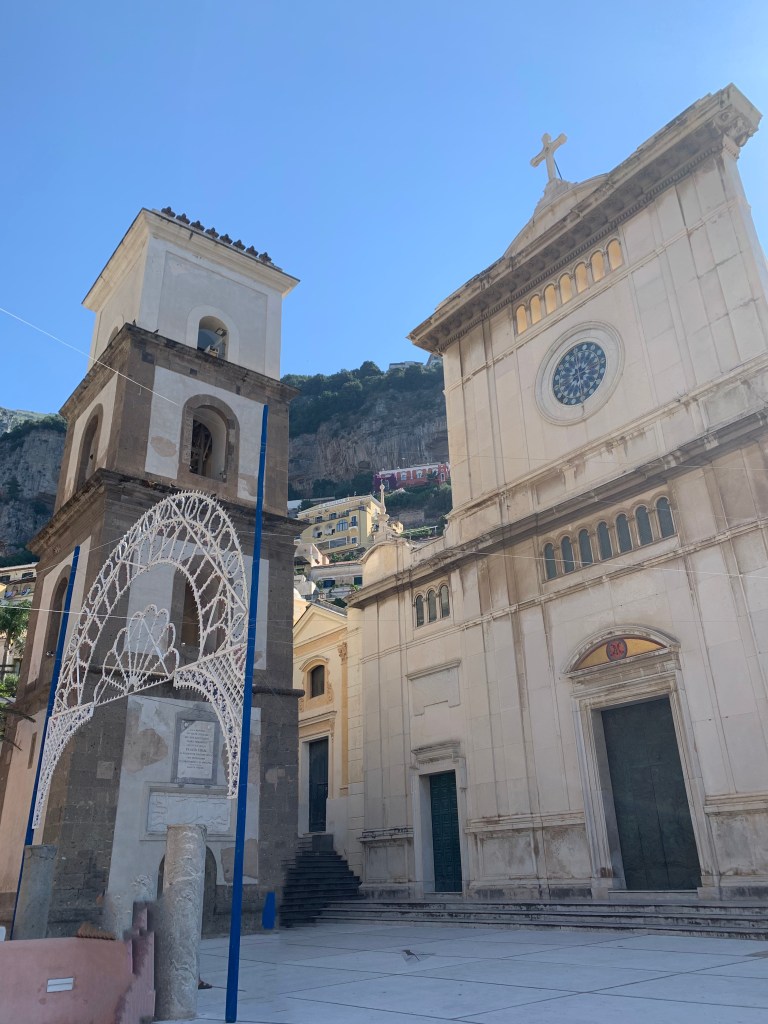
Fortune improved in the 1950s when it started to attract tourists, particularly after the author John Steinbeck lived there and wrote a novel about his time there. Suddenly this once sleepy fishing village was luring all the A-list celebrities of the day.
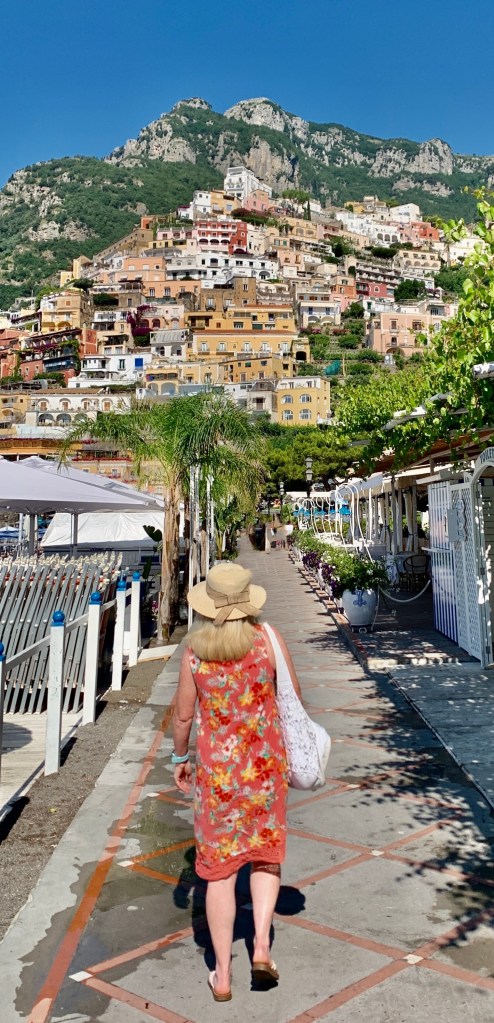
Today it is very much en vogue. The scenic splendour of the town hasn’t changed in centuries. It is a place to discover on foot as you meander your way up and down the stairs and alleyways of the town. Despite it being a popular location the town didn’t feel swamped and had a laid-back vibe.
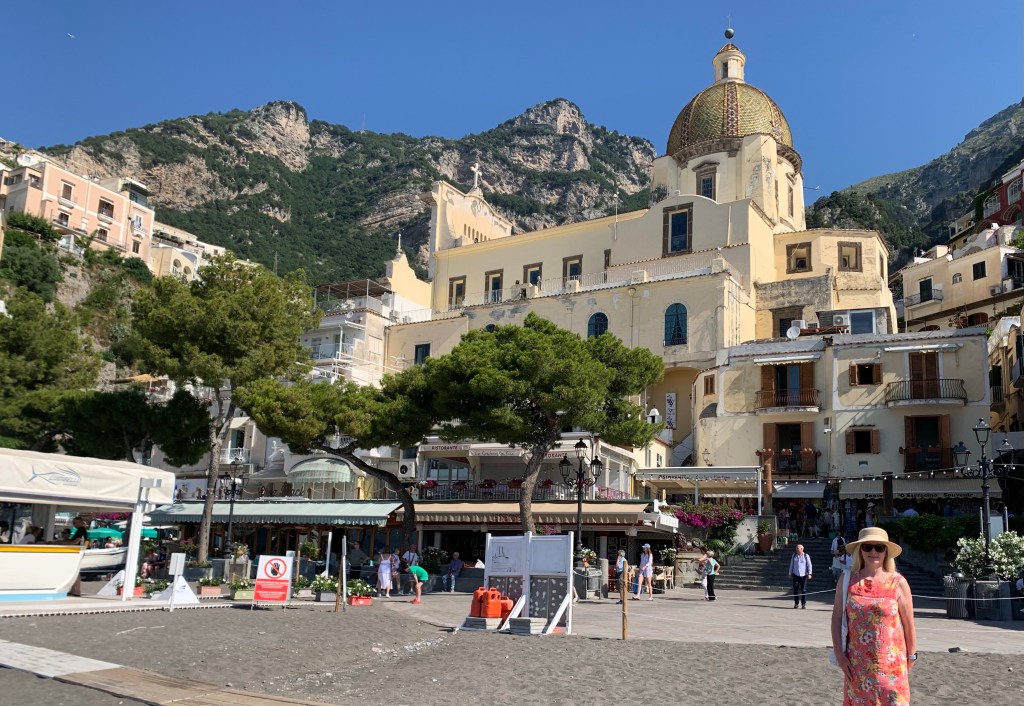
Although not your first thought when visiting it’s an excellent location for shopping with lots of artisan products for sale and of course plenty of lemon-themed products to buy. It’s a wonderful location for a bit of alfresco dining.
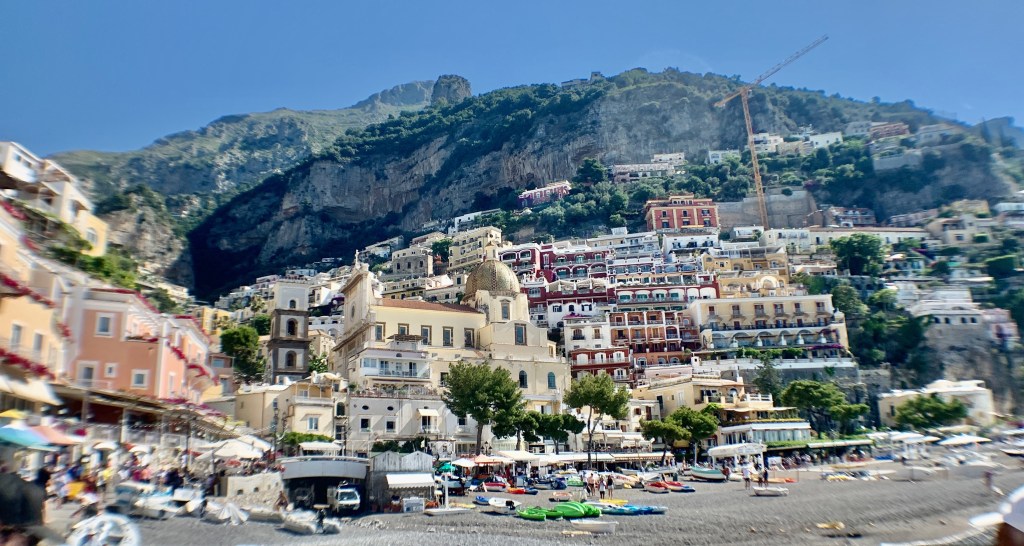
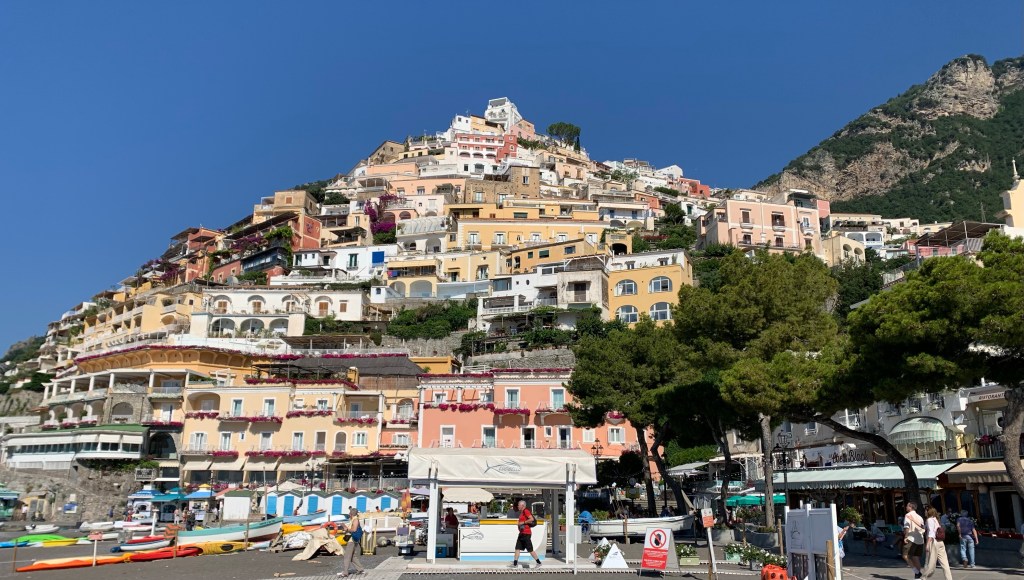
A view of Positano from Marina Grande beach. This is the most recognizable beach at Positano, other popular beaches nearby Fornillo beach and Arienzo beach. I came for its extraordinary setting but the beaches aren’t half bad either.
Amalfi
Amalfi is the main town on which the coast is named after. A former maritime republic, an important trading power between 839 to 1200s.
There is no getting away from the fact that Amalfi is a very busy congested town. The most crowded location I visited on the Amalfi Coast. The town is not without charm but to be honest I think it’s best viewed from the water to best appreciate the town.
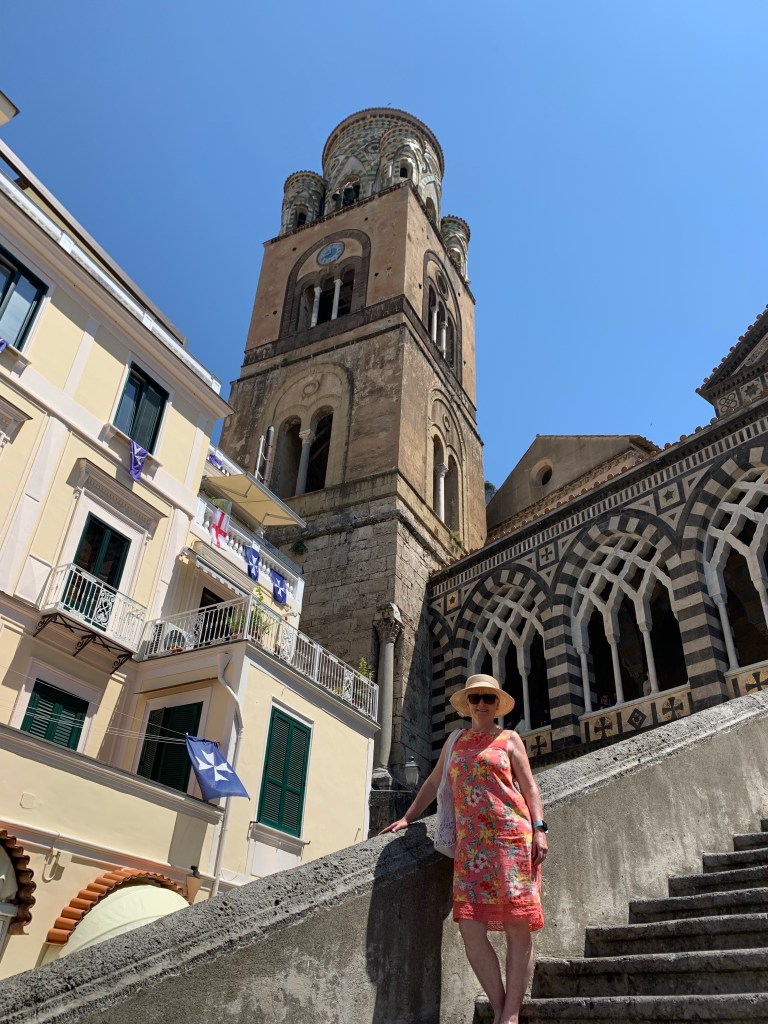
The town’s main attraction is the very impressive 11th-century St Andrews Cathedral. Amalfi was an important location in medieval architecture
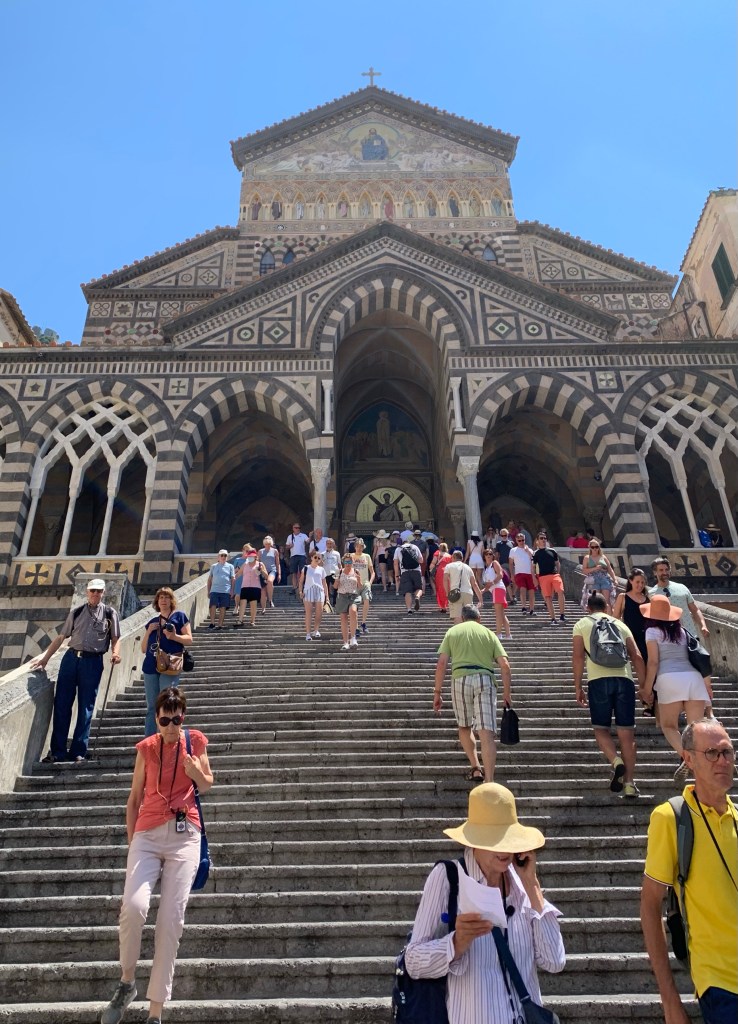
At the top of a rather busy flight of steps, Saint Andrew’s Cathedral overlooks the Piazza Duomo the heart of Amalfi, where you find an array of shops, cafes and restaurants.
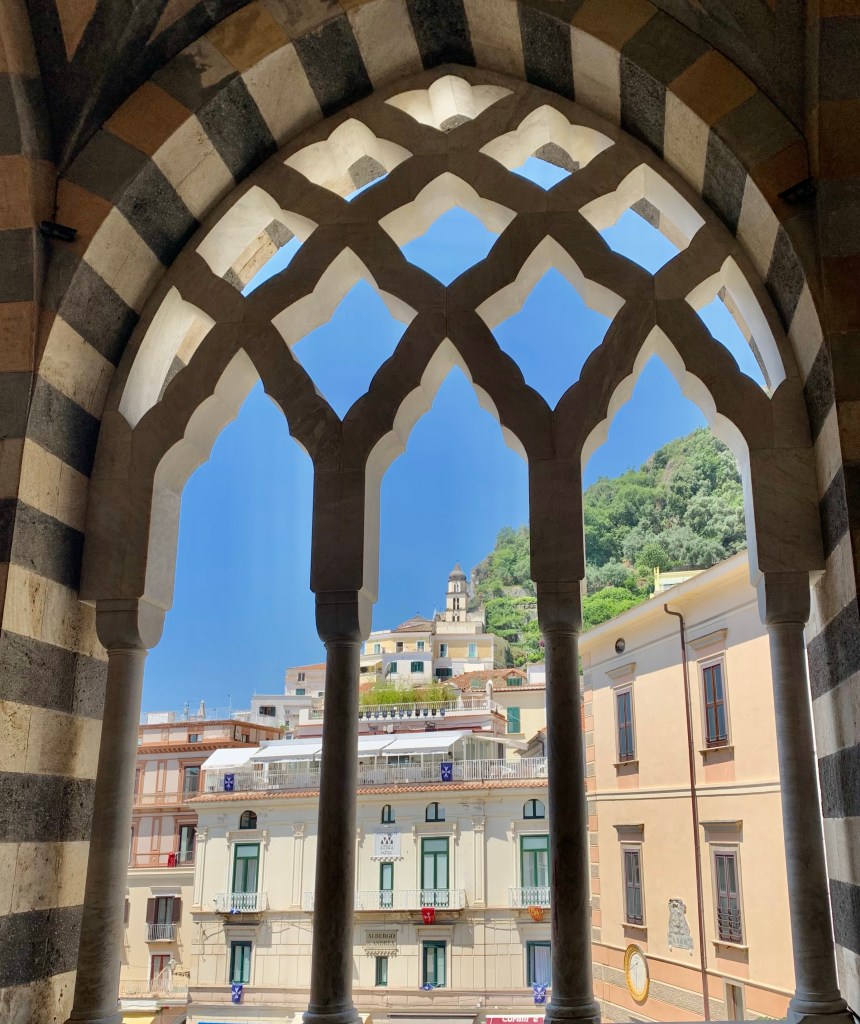
The town is small but is easily navigable. Its narrow alleyways are full of shops selling souvenirs, including every variation of the famous lemon 🍋 products imaginable.
Amalfi is the docking port for cruise ships, so the area does feel very commercialised and very, very busy. If I am honest Amalfi was my least favourite town which I visited. I’m glad I took the boat excursion to fully appreciate its coastal splendour.
Ravello
Ravello differs from other towns on the Amalfi Coast, it stands high above the sea rather than beside the sea, 365 metres (1200ft) above to be precise.
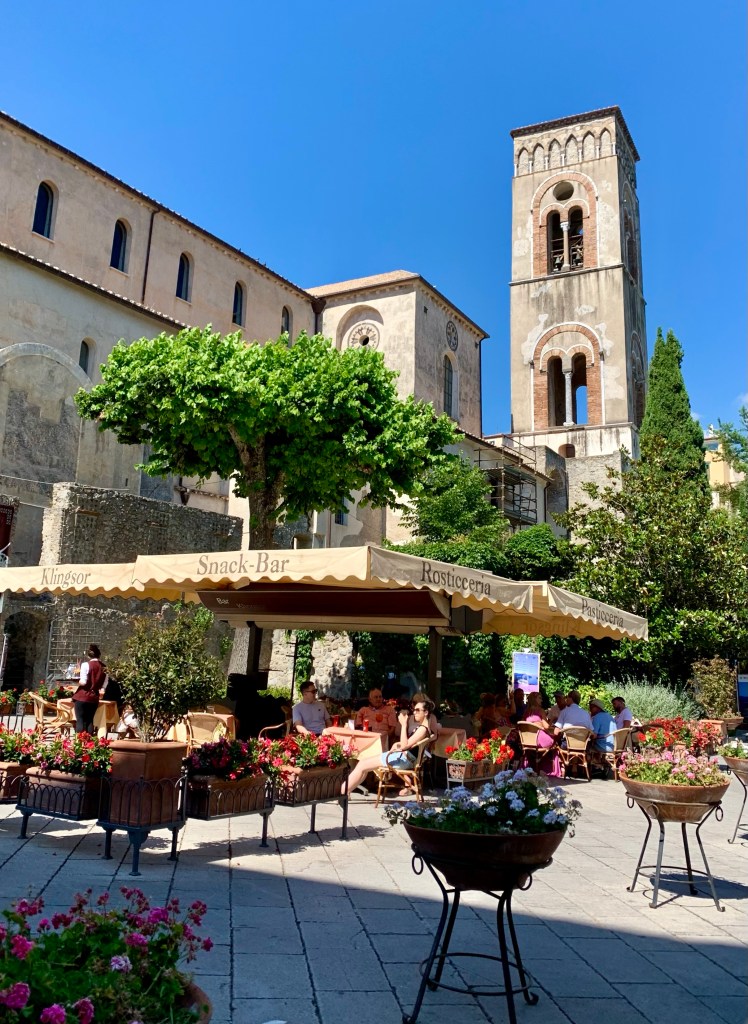
The town has a very laid-back feeling, it’s an artistic hub with many concerts and performances staged within the town. The ancient cobbled streets lead to Piazza Duomo the main square where you will find numerous cafes and restaurants to enjoy an aperitif and soak up the town’s old-world charm.
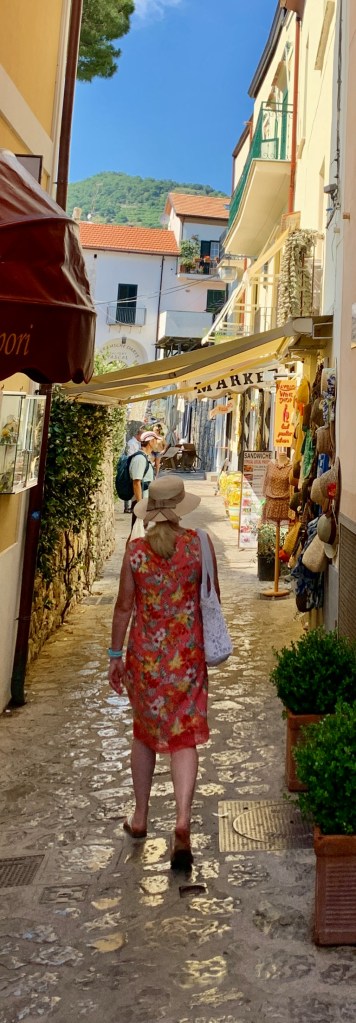
Running off the main square you will find elegant cobbled streets and pastel-coloured buildings. Where we were able to wander around in peace, Ravello is far removed from the crowds that flock to the sea towns of Amalfi and Positano.
Villa Rufolo
A historical villa constructed in the 13th century by the powerful Rufolo family. Just a short distance from the town’s main square.
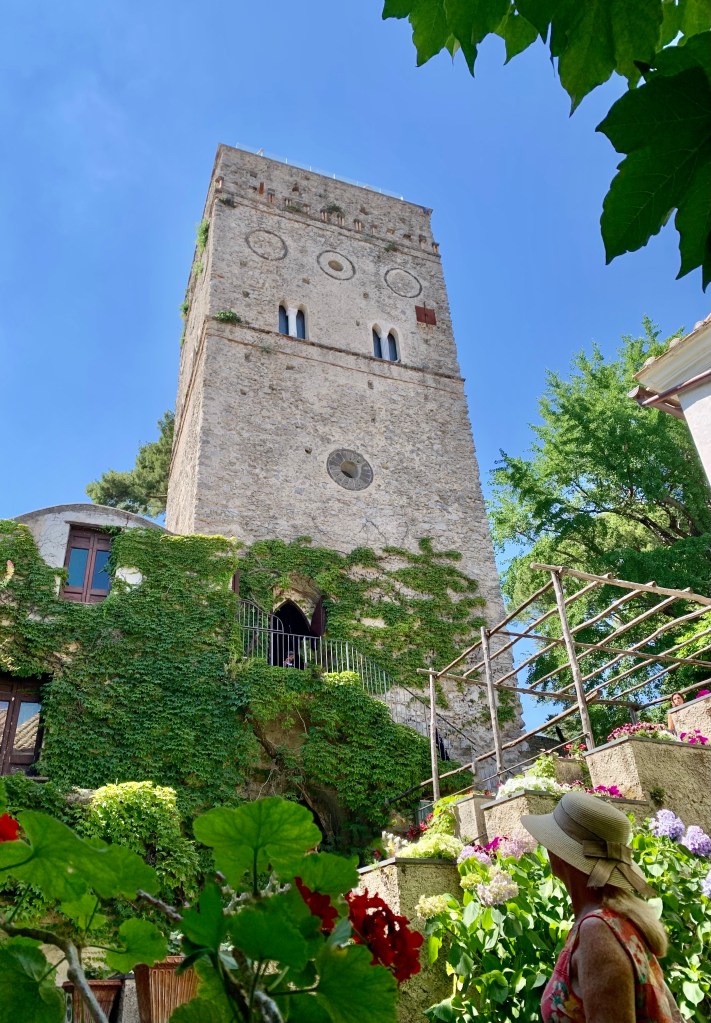
Villa Rufolo, one of the most important architectural masterpieces in southern Italy, has greatly contributed to Ravello’s worldwide fame.
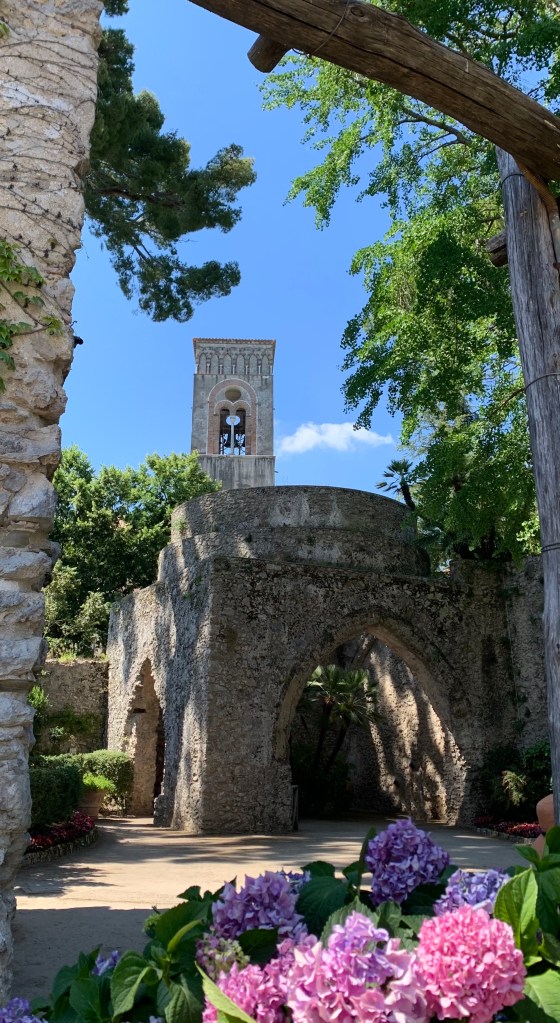
Both Moorish and Norman influences can be seen in the towers and cloisters. The villa has a rich and storied past. In its prime it was one of the largest and most expensive villas on the Amalfi Coast.

A view of the Church of Santa Maria delle Grazie, which was first constructed in 1163 and gives a fantastic backdrop as you view the ocean from high above at Villa Rufolo.
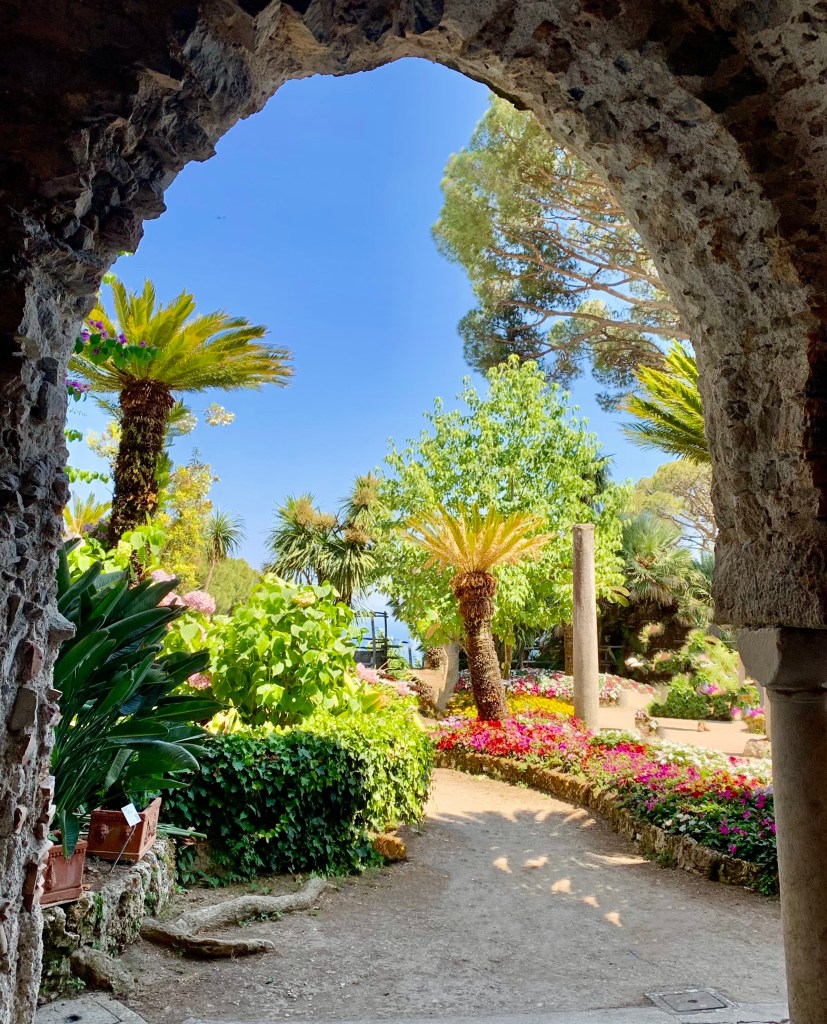
As if the architectural charms weren’t enough the villa is equally famous for its beautiful cascading gardens. Created by Scotsman Sir Francis Neville Reed in 1853.
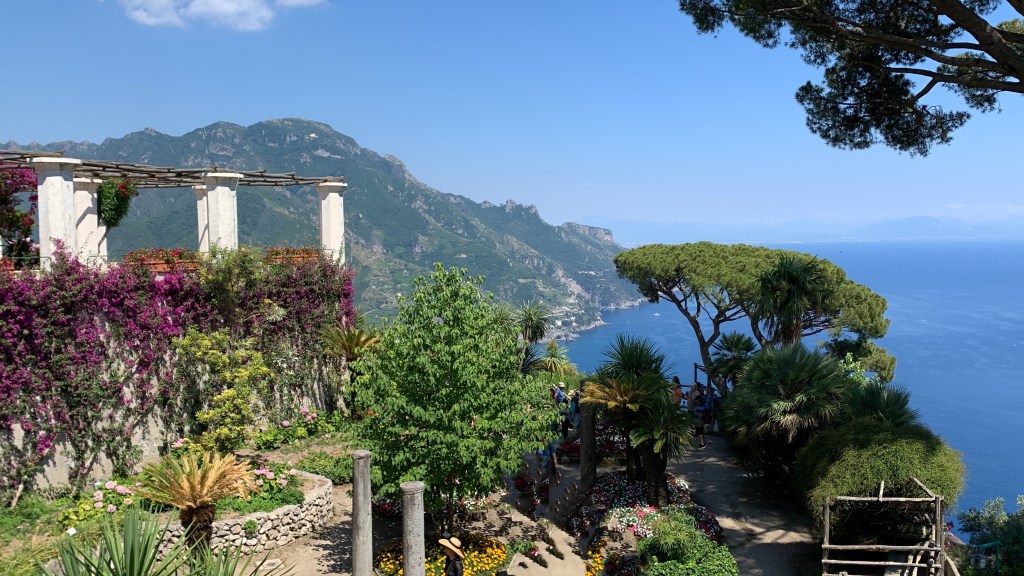
I am generally not a horticultural aficionado, however, these gardens are truly magnificent, commanding divine panoramic views packed with exotic colours.
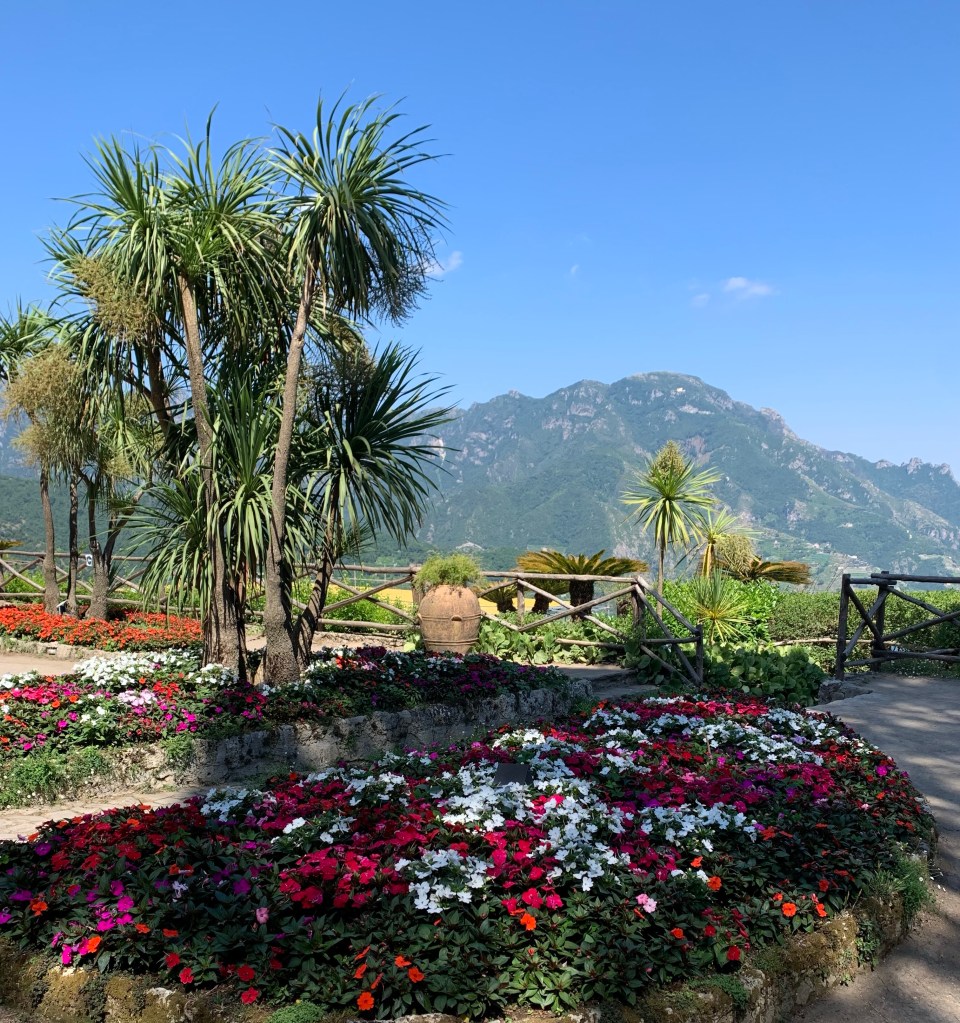
The gardens host world-class concerts on its terrace which unfortunately was closed during our visit for maintenance. The villa had close links with Richard Wagner who regularly used to stay in Ravello.
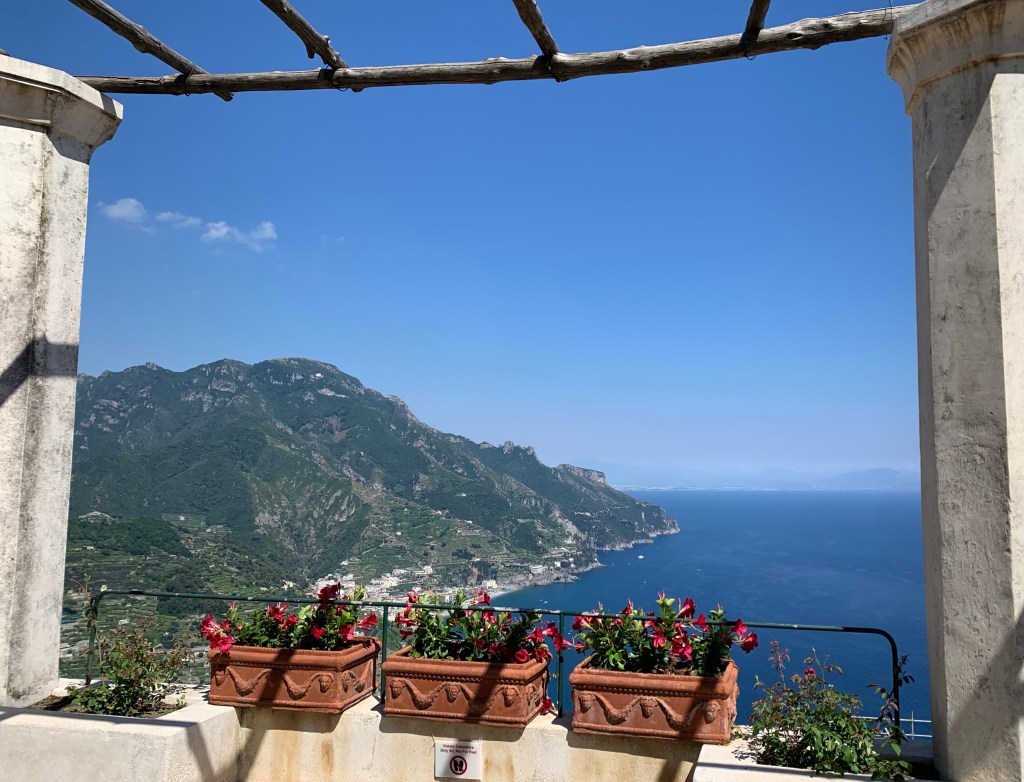
Ravello can be overlooked as not all local tour operators visit the town, concentrating on the coastal towns. We wanted to visit this beautiful location and it was the highlight of my visit to the Amalfi Coast, my only regret was we didn’t have enough time to explore this remarkable location.

 We were born to do more than go to work, pay bills and die. See the world while you are alive and kicking